Fitness
How to Exercise When It Feels Impossible


We’ve all been there. You set a goal to exercise regularly, but when the moment comes to get moving, your mind unleashes a torrent of excuses: I’m tired. It’s cold outside. I don’t want to spend money on a class.
These mental blocks may explain why it’s so hard to keep a New Year’s resolution for longer than four months. So how do you cut through them?
The first step, experts say, is to stop thinking of them as “excuses.”
Just using that word can suggest you failed and should feel bad about your willpower. Research has shown that self-criticism and shame can actually stop you from meeting your goals, said Katy Milkman, a behavioral scientist at the University of Pennsylvania and the author of “How to Change.”
Instead, reframe the reasons you aren’t exercising as genuine obstacles and devise a plan to overcome them, Dr. Milkman said. “Most of us don’t just need a goal,” she said, but specific steps and strategies to follow.
I asked experts in exercise science and psychology to share their best advice for conquering common reasons people struggle to build an exercise habit. Here are their time-tested solutions.
I have no time.
If you face a jam-packed daily schedule, try starting small, said Kate Baird, an exercise physiologist at the Hospital for Special Surgery in New York. Instead of carving out 30 to 60 minutes several times a week, plan several short bursts of movement throughout the day. “If you’re not able to do much, doing anything is going to be helpful in so many ways,” she said.
For example, walk a few laps around the block during lunch, she said, or sneak in a series of squats between meetings. Ideally, you want these bursts to add up to the recommended 150 minutes of moderate aerobic activity and 30-to-60 minutes of full-body strength training per week.
Or you could multitask: Try walking or using a resistance band while on a phone call or watching TV, she said. (Several of the experts I talked to were walking while being interviewed.)
If you want to have a dedicated workout window, Ms. Baird recommended taking a hard look at your calendar and asking yourself: Is there anything that could go, or anything you could trade for a dose of movement? Could you experiment with setting your alarm 30 minutes earlier?
I feel self-conscious.
If the thought of working out in front of other people makes you want crawl into a hole, know that you have options, said Kelly Roberts, a running coach and body-positive fitness influencer in New York City. “The gym is a really intimidating space,” even for experienced exercisers, she said.
For some people, a solution might be exercising at home. But for others, Ms. Roberts recommended taking a few steps to combat feelings of self-consciousness.
First, remind yourself why you’re there, whether it’s to feel stronger or to train for a race. Reconnecting with your goal can help to shore you up, she said. Second, designate a friend or family member who you can text in the moment, who can support you when you’re feeling vulnerable.
Third, try a different gym, class or group. If a space makes you feel uncomfortable in your own skin, it’s OK to leave, Ms. Roberts said. “Some spaces are more welcoming than others.”
The past few years have seen a burst of fitness offerings for people who may have historically felt unwelcome in gyms because of their gender or racial identity, body size or athletic ability, like pace-inclusive running clubs or gyms marketed toward L.G.B.T.Q. communities.
I don’t want to spend money.
You don’t need a fancy gym to get fit, said Grayson Wickham, a physical therapist in New York City. “There’s so much you can do just with body weight,” he said. “It’s pretty amazing.” Planks, push-ups, lunges, squats and pointers can all build strength, and regular stretching can cultivate flexibility.
For aerobic exercise, you can do jumping jacks, or consider spending a few dollars on a jump rope. If you have access to a safe outdoor space, you can walk, run or strength-train outside, Dr. Wickham said — and get the added benefit of spending time in nature. For expert guidance, download a free workout app.
It’s too cold — or hot.
A shift in temperature doesn’t have to be a bad thing. Think of the change in weather as an opportunity to try something new, or include more variety in your routine, said Dr. Edward Phillips, an associate professor of physical medicine and rehabilitation at Harvard Medical School.
“Maybe in the middle of the winter it’s a good time to bolster your strength training and work on your core, or finally engage in a Pilates class or sink your teeth into some yoga,” he said. Or embrace the weather and try snowshoeing. In the summer, consider trading your run for a swim.
“The idea is not to necessarily say, ‘But I’ve committed to running three miles a day, six days a week, forever,’” he added.
That said, as long as it’s safe to exercise outside and you dress for the weather, occasionally working out in less-than-ideal temperatures can cultivate mental and emotional strength, Dr. Wickham noted: “You’re getting even more mental challenge on top of your workout, and that’s just going to make you better and more well prepared at anything you’re doing in life.”
I don’t have the space.
If you have room for a yoga mat, you have enough space to get in a great workout. Dr. Phillips said. “You can get stronger and in better shape and more flexible” in just a few square feet, he said, as long as you can comfortably move your arms and legs without bumping into a wall or furniture.
Beyond doing yoga, you could jump rope, do body-weight exercises, lift dumbbells or kettlebells, stretch or use resistance bands, Dr. Wickham said.
If exercising in close quarters feels too claustrophobic, consider an outdoor space that you can make your gym, he said.
I’m in pain.
It might seem counterintuitive, but for those who struggle with forms of chronic muscle or joint discomfort — like low back pain, neck pain or pain from osteoarthritis and rheumatoid arthritis — physical activity will likely help to make it better, Dr. Phillips said.
“Chronic pain is awful, but for many people, being inactive is adding to that pain,” he said. While exercise may not alleviate all pain, it can help people complete daily activities with greater ease — and expand what they’re able to do comfortably from, say, walking to the mailbox to going for a stroll on the beach or playing catch with a child.
“If you do more, you can then do more,” Dr. Phillips said. “It’s not a cure, it’s a management.” And often, as you become stronger and more fit, the threshold for what causes pain goes up.
If you live with chronic pain of any kind and want to be more active, talk to a doctor or an expert in exercise science who can guide you on the safest and most effective movements for your condition.
I’m exhausted all the time.
When even the word “exercise” makes you feel tired, experts recommend meeting your body where it is — in a few different ways.
“I think the first practical way to approach this is to ask yourself, are you working out at the best time of day, or best time of the week, for your energy?” Ms. Baird said. If you know that you have the most energy first thing in the morning and generally feel wiped in late afternoon, try working out early in the day.
If getting started feels like a hurdle, Kelly McGonigal, a health psychologist and lecturer at Stanford University, recommends beginning with a mini workout designed to boost your state of mind. Exercising for the length of “one song is great, because a song will change your mood,” she said. “Do something that reminds you that it feels good to move.”
Remember that exercise doesn’t have to be intense for it to “count,” experts say. Stretching, yoga, Pilates, walking or jogging at a conversational pace are all great options. And finally, do what you can to ensure that you are getting enough sleep.
I just don’t like it.
If you have yet to find a form of movement that you enjoy, keep looking. “Exercise” doesn’t have to mean going to the gym — it can be as simple as dancing alone in your living room, playing pickleball or chasing after your kids or grandkids, Dr. McGonigal said. Basically, moving in any way that brings you joy.
Plus, research has found that when we prioritize fun in movement, we’re more likely to stick with it over time, Dr. Milkman said.
In the meantime, if you need an immediate incentive to move, try a trick Dr. Milkman came up with called “temptation bundling,” in which you save a riveting audiobook, podcast or TV show to enjoy while exercising — and only while exercising. Her research suggests doing so may keep you coming back for more.
I’m afraid of hurting myself.
Exercise carries some risks, but remind yourself that the benefits of physical activity outweigh them, Dr. Phillips said. On the flip side, “if you remain sedentary, your risk of deleterious health effects is 100 percent.”
If you’re new to exercise, recovering from an injury or haven’t been active in a long time, start slow, cautioned Dr. Tamanna Singh, co-director of the Sports Cardiology Center at Cleveland Clinic. The best way to avoid getting injured is to progress gradually, not taking on too much too soon. “Build confidence, and use that confidence as a motivator to continue exercising in the long term,” she said.
For extra peace of mind, check in with a sports medicine expert, who can advise on the safest and most effective approach for your body.


Les Mills, the New Zealand Olympian who opened an Auckland gym in 1968 that grew into an international group fitness brand, has died aged 91, his family confirmed.
Mills, a four-time Olympic athlete and former Auckland mayor, and his wife, Colleen, founded the first Les Mills gym on Victoria Street in central Auckland after a sporting career in which he represented New Zealand in shot put and discus.
More than five decades later, Les Mills workouts are used by clubs around the world.
The business, now run by later generations of the Mills family, became internationally known for choreographed group-exercise classes set to music.
Mills’s son, Phillip, joined the business full-time in 1980, and his partner, Jackie, helped develop the music-driven group-fitness model that became central to its global expansion.
Les Mills became an international fitness brand. (Supplied: Les Mills)
Phillip Mills said in a statement that his father had achieved a great deal in his life, but the common thread was that he always wanted to help others.
“Dad was immensely strong, driven, and always cared deeply for the less advantaged,” he said.
“He left a lasting impression on everyone he met, and his spirit lives on in gym workouts around the world, continuing to help people fall in love with fitness.“
Les Mills was born Leslie Roy Mills in Auckland in 1934.
He competed at four Olympic Games from 1960 to 1972 and won five Commonwealth Games medals, including discus gold at the 1966 British Empire and Commonwealth Games in Kingston, Jamaica.
Move into politics
He later moved into local politics and served as mayor of Auckland from 1990 to 1998.
Juliet Yates served on Auckland Council during his first term.
She told RNZ he brought others together.
“He was a very, very pleasant person to work with,” she said.
“He was really good at bringing people together and achieving things for the benefit of the city,”
she said.
“At the time, I think the achievements of the council he was mayor of were benefiting the whole of the city.”
He also remained active in sport as a coach, helping guide New Zealand discus thrower Beatrice Faumuina to the world title in 1997 and Commonwealth Games gold in 1998.
Les Mills was appointed a Member of the Order of the British Empire in 1973 for services to sport and a Companion of the New Zealand Order of Merit in 2002 for services to local government and sport.
Reuters

Chester County has an elaborate new outdoor gym, installed as part of a national campaign to encourage exercise and combat obesity.
The infrastructure is called a Fitness Court and it features seven stations that enable people to get a workout in seven minutes.
MORE: Most costly add-on procedures marketed to improve IVF success show little benefit, study says
The Fitness Court was funded by Independence Blue Cross as part of the National Fitness Campaign. The $100 million initiative will work in collaboration with schools and municipalities to build 5,000 outdoor gyms across the country by 2030.
“By investing in accessible, welcoming spaces like this, we’re helping remove barriers to healthier lifestyles and ensuring more residents across Chester County have opportunities to stay active and connected close to home,” Marian Moskowitz, vice chair of the Chester County Board of Commissioners, said in a statement.
Last year, approximately 37% of the people in the United States were obese, down slightly from a record-high of nearly 40% in 2022, a recent Gallup poll reports. The drop is due in part to the rise in GLP-1 weight-loss medications. More than 34% of adults and more than 15% of children in Pennsylvania are obese, according to statistics from the Obesity Action Network, a national nonprofit advocacy group.
Obesity is a chronic condition that increases the risk of high blood pressure, high cholesterol, type 2 diabetes, heart disease, stroke, cancer and other serious health issues.
The Fitness Court is located at Charlestown Township Park, which already had play structures, basketball courts, picnic pavilions and a one-mile paved trail. The new outdoor gym is designed for people 14 and older and adaptable to different fitness levels.
People can use the Fitness Court app for workout challenges and metrics to help people track their exercise goals and outcomes.
Horsham Township in Montgomery County also has a Fitness Court at Lukens Park at 540 Dresher Road.
Other municipalities, schools and organizations throughout Southeastern Pennsylvania that own accessible public space may apply for grants to help build Fitness Courts, according to IBX.

InnerCity Weightlifting volunteers find a sense of fulfillment by helping clients improve their fitness.
When people think about treating or managing their mental health, therapy, journaling and reading are often among the first solutions that come to mind. While those are all valuable tools, one of the most effective outlets is often overlooked: physical fitness.
At the Lift US Foundation, based in Oakland, leaders emphasize the mental benefits of exercise for adolescents through a strength-training-focused approach. Through its partnership with the NBA Foundation, the organization has expanded its efforts to empower young people and, as founder Mike Jenkins describes it, “create superheroes.”
“The need in the community is very foundational about strength and health in general, physical and mental,” Jenkins said. “I locked in on a term I like to call generational health, and what that means is the young people in our program become the healthiest in their families, and they take those values going forward in their own.”
As for InnerCity Weightlifting, which is based in Boston and Chicago, the organization uses personal training to help people affected by systemic barriers and past challenges build a new path forward. The nonprofit helps individuals with histories of gang involvement earn personal training certifications before connecting them with paying clients.
Though some people may not want to pursue personal training full-time, ICW still provides them with fitness tools they can carry throughout life while also helping guide their next steps into the workforce.
“Learn how to work out safely, learn how to give your friends a workout and then tell us what you need, what kind of jobs you’re interested in, what’s holding you back from some stability,” said ICW’s head of development Ian Kilpatrick.
Fitness to opportunity
From the ground up, Lift US focuses on teaching young people how to understand their bodies through fitness, nutrition education, counseling, mentorship and mental health support, all while helping them develop a future-focused mindset beyond the program.
Seeing a program participant progress through each phase and ultimately succeed is Lift US’s ultimate goal.
Rucker Johnson Jr. joined the organization at age 10 with a passion for science, art and drawing. Over time, he developed a love for weightlifting as well, eventually earning a spot on Team USA and setting his sights on representing the country at the 2028 Olympic Games.
“A complete human. A complete person, physically strong, mentally strong, academically strong, and not relying on getting a football or baseball scholarship. They are just doing it to empower themselves,” Jenkins said.
Johnson Jr. also branched out to the Hidden Genius Project, an Oakland-based nonprofit that trains and mentors young Black men in technology, entrepreneurship, and leadership. The organization has partnered with the NBA Foundation for several years.
Job pathways beyond fitness
As mentioned before, ICW ultimately helps place participants into jobs even outside the fitness industry, with their interactions with clients playing a key role.
The organization has seen numerous trainers transition into different industries simply by networking and performing well with the people they train. “We had guys get jobs at Toyota because a training client was a manager at Toyota, we’ve had a client start a dog grooming business and hire her trainer as one of the first employees,” said Kilpatrick.
The organization also builds partnerships with corporations such as UPS and Home Depot to streamline job pathways for participants.
Looking ahead, ICW is also focusing on creating more in-house managerial roles for participants who may not want to become full-fledged trainers. Either way, the organization provides volunteers with a sense of belonging and direction that helps them rebuild stability in their lives.
At their core, both organizations aim to build belonging and long-term success through fitness, which is a great place to start.
-
 Lifestyle34 minutes ago
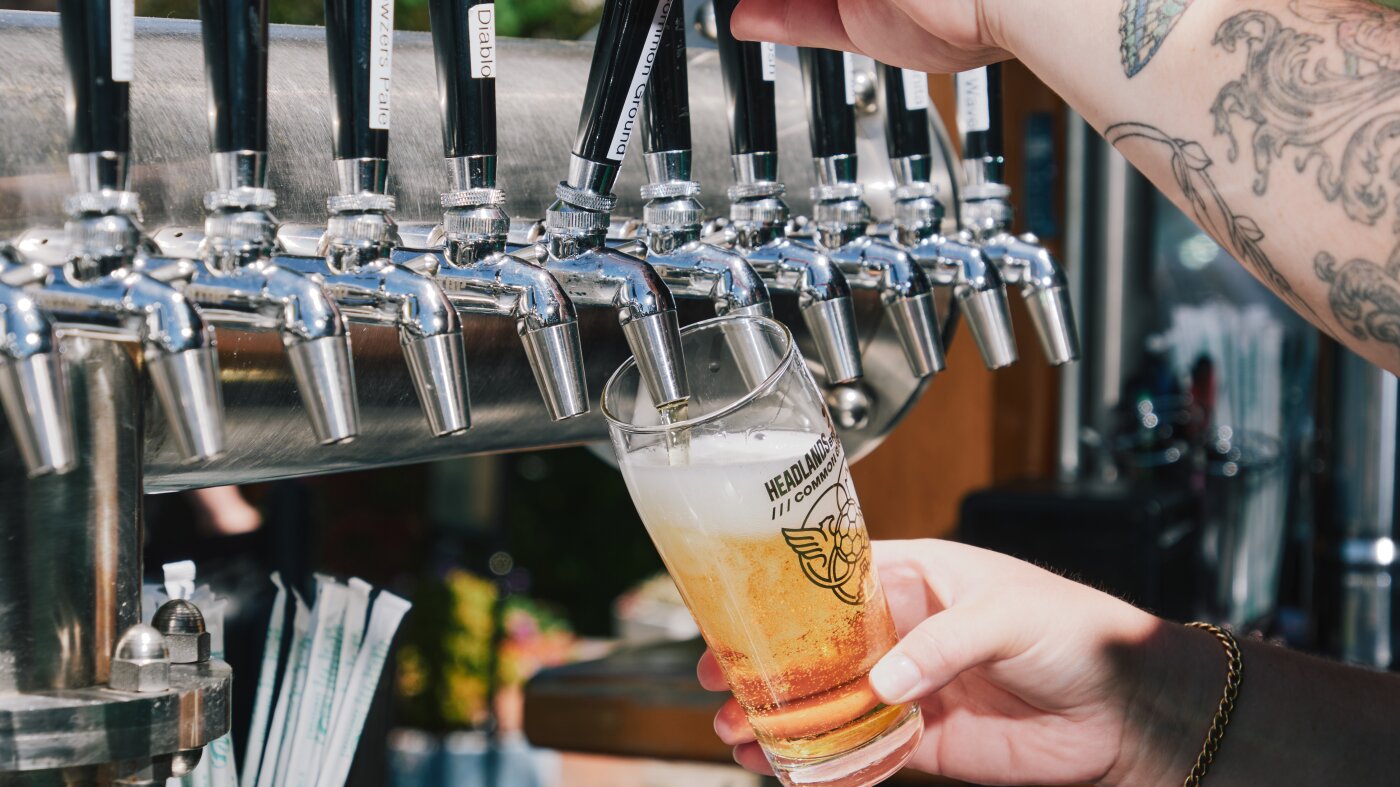
3 World Cup rivals find ‘Common Ground’ in a cross-border beer
-

 Technology46 minutes ago
The Flipper Zero creators’ Busy Bar productivity display will go on sale next month
-

 World49 minutes ago
Families watch in horror as skydiving plane crashes in France, killing all 11 aboard
-

 Politics54 minutes ago
DOJ launches grand jury probe into Marxist mogul Neville Roy Singham’s funding of leftist groups
-

 Health1 hour ago
America’s lifespan has doubled since 1776 — experts reveal what changed
-

 Sports1 hour ago
Thekla embarrasses Stardom’s Starlight Kid after retaining AEW World Women’s Championship at Forbidden Door
-

 Technology1 hour ago
AI may spot deadly heart risk in a routine ECG
-
 Business1 hour ago
SpaceX IPO sparks race for luxury housing in Southern California

