Business
Instagram boss defends app from witness stand in trial over alleged harms to kids

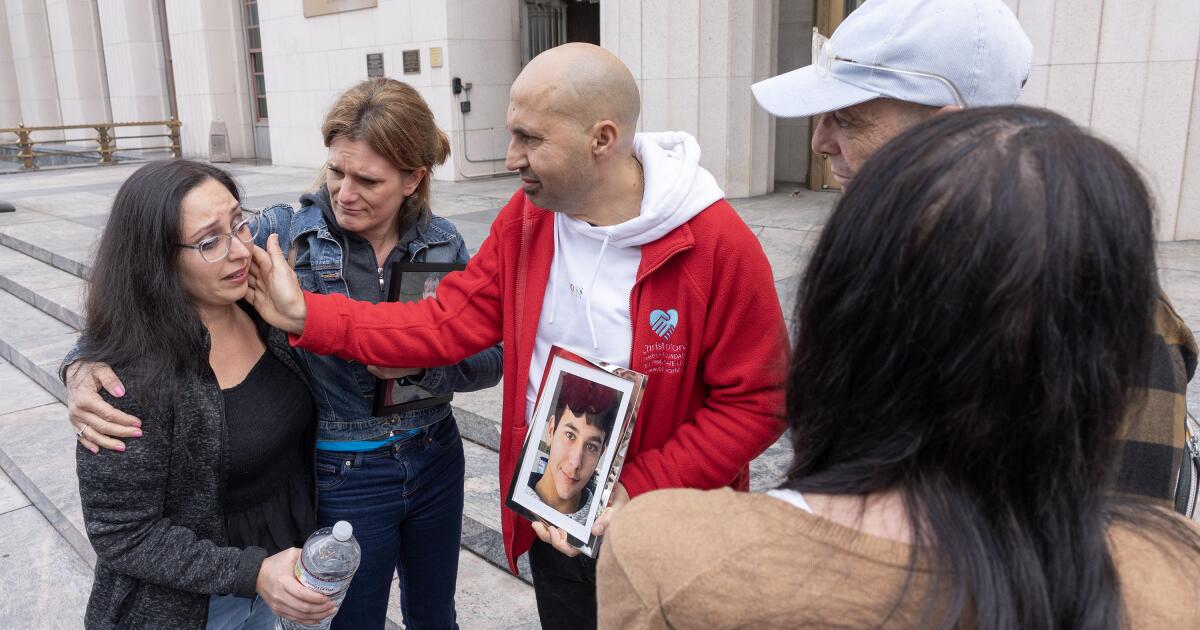
A Los Angeles County Superior Court judge threatened to throw grieving mothers out of court Wednesday if they couldn’t stop crying during testimony from Instagram boss Adam Mosseri, who took the stand to defend his company’s app against allegations the product is harmful to children.
The social media addiction case is considered a bellwether that could shape the fate of thousands of other pending lawsuits, transforming the legal landscape for some of the world’s most powerful companies.
For many in the gallery, it was a chance to sit face to face with a man they hold responsible for their children’s deaths. Bereaved parents waited outside the Spring Street courthouse overnight in the rain for a place in the gallery, some breaking into sobs as he spoke.
“I can’t do this,” wept mom Lori Schott, whose daughter Annalee died by suicide after a years-long struggle with what she described as social media addiction. “I’m shaking, I couldn’t stop. It just destroyed her.”
Judge Carolyn B. Kuhl warned she would boot the moms if they could not contain their weeping.
“If there’s a violation of that order from me, I will remove you from the court,” the judge said.
Mosseri, by contrast, appeared cool and collected on the stand, wearing thick wire-framed glasses and a navy suit.
“It’s not good for the company over the long run to make decisions that profit us but are poor for people’s well-being,” he said during a combative exchange with attorney Mark Lanier, who represents the young woman at the center of the closely watched trial. “That’s eventually going to be very problematic for the company.”
Lanier’s client, a Chico, Calif., woman referred to as Kaley G.M., said she became addicted to social media as a grade-schooler, and charges that YouTube and Instagram were designed to hook young users and keep them trapped on the platforms. Two other defendants, TikTok and Snap, settled out of court.
Attorneys for the tech titans hit back, saying in opening statements Monday and Tuesday that Kaley’s troubled home life and her fractious relationship with her family were to blame for her suffering, not the platforms.
They also sought to discredit social media addiction as a concept, while trying to cast doubt on Kaley’s claim to the diagnosis.
“I think it’s important to differentiate between clinical addiction and problematic use,” Mosseri said Wednesday. “Sometimes we use addiction to refer to things more casually.”
On Wednesday, Meta attorney Phyllis Jones asked Mosseri directly whether Instagram targeted teenagers for profit.
“We make less money from teens than from any other demographic on the app,” Mosseri said. “We make much more the older you get.”
Meta Chief Executive Mark Zuckerberg is expected to take the witness stand next week.
Kaley’s suit is being tried as a test case for a much larger group of actions in California state court. A similar — and similarly massive — set of federal suits are proceeding in parallel through California’s Northern District.
Mosseri’s appearance in Los Angeles on Wednesday follows a stinging legal blow in San Francisco earlier this week, where U.S. District Judge Yvonne Gonzalez Rogers blocked a plea by the tech giants to avoid their first trial there.
That trial — another bellwether involving a suit by Breathitt County School District in Kentucky — is now set to begin in San Francisco in June, after the judge denied companies’ motion for summary judgment. Defendants in both sets of suits have said the actions should be thrown out under a powerful 1996 law called Section 230 that shields internet publishers from liability for user content.
On Wednesday morning, Lanier hammered Mosseri over the controversial beauty filters that debuted on Instagram’s Stories function in 2019, showing an email chain in which Mosseri appeared to resist a ban on filters that mimicked plastic surgery.
Such filters have been linked by some research to the deepening mental health crisis in girls and young women, whose suicide rates have surged in recent years.
They have also been shown to drive eating disorders — by far the deadliest psychiatric illnesses — in teens. Those disorders continue to overwhelm providers years after other pandemic-era mental health crises have ebbed.
Earlier research linking social media and harms to young women was referenced in the November 2019 email chain reviewed in court Wednesday, in which one Instagram executive noted the filters “live on Instagram” and were “primarily used by teen girls.”
“There’s always a trade-off between safety and speech,” Mosseri said of the filters. “We’re trying to be as safe as possible but also censor as little as possible.”
The company briefly banned effects that “cannot be mimicked by makeup” and then walked the decision back amid fears Instagram would lose market share to less scrupulous actors.
“Mark [Zuckerberg] decided that the right balance was to focus on not allowing filters that promoted plastic surgery, but not those that did not,” Mosseri said. “I was never worried about this affecting our stock price.”
For Schott, seeing those decisions unfold almost a year to the day before her daughter’s death was too much to bear.
“They made that decision and they made that decision and they made that decision again — and my daughter’s dead in 2020,” she said. “How much more could that match? Timeline, days, decisions? Bam, she was dead.”



Business
Many indie festival films struggle to get distribution. Alamo Drafthouse is trying to change that
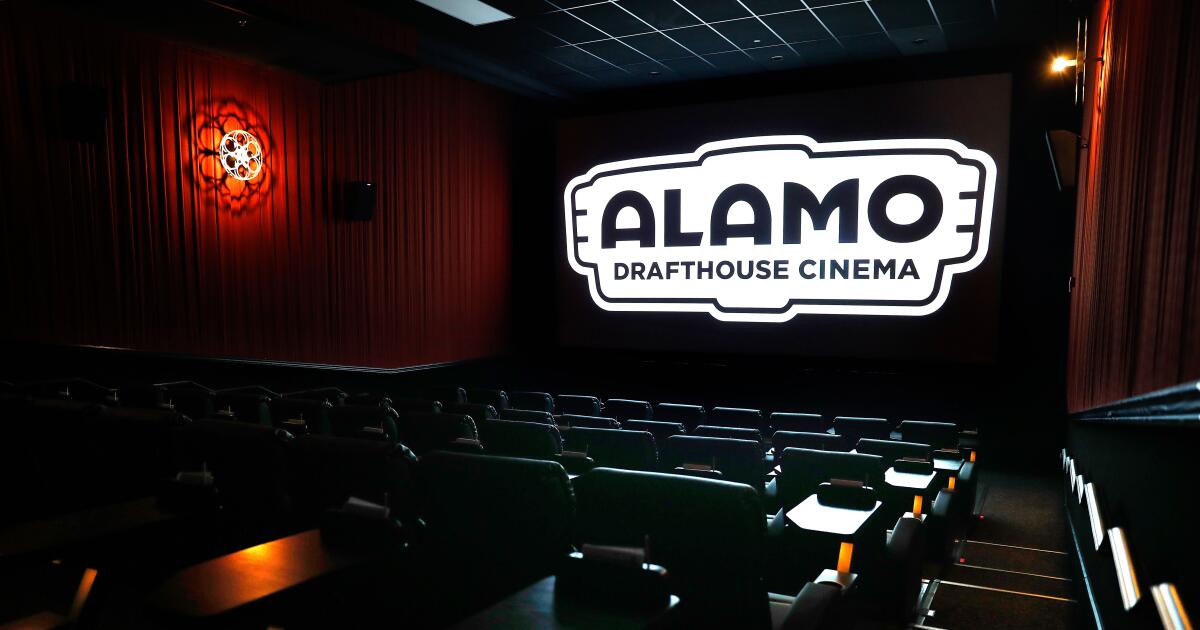
Dine-in movie theater chain Alamo Drafthouse Cinema is launching a new initiative to show unreleased independent films that had successful festival runs, a move that comes as specialty films have struggled to gain distribution.
The Alamo Exclusives program, announced Wednesday, will give limited theatrical runs to films that showed at festivals including Sundance, the Toronto International Film Festival, Tribeca Festival and South by Southwest festival, as well as Alamo’s own Fantastic Fest.
The idea is to help showcase films that received critical acclaim, but did not secure distribution or acquisition deals. The chain will not acquire these films, but instead will enter into agreements with filmmakers to exhibit their films on Alamo Drafthouse screens. By showing these films to audiences on the big screen, these films could get the momentum they need for further opportunities.
The program’s first film will be the documentary “Butthole Surfers: The Hole Truth and Nothing Butt,” which debuted last year at South by Southwest and chronicles the history of the punk rock band.
The film will be shown in Alamo Drafthouse theaters for a limited time later this summer.
The Austin-based chain, which is owned by Sony Pictures, has a long history of curating indie films for its audiences, giving Alamo Drafthouse confidence that its viewers want to see these kinds of movies, company chief executive Michael Kustermann said in a statement.
“Time and again, they’ve shown they’ll come out to support bold, original films when given the opportunity,” he said. The new Alamo Exclusives “gives us another way to champion filmmaker-driven films that deserve to be discovered and connect them with the wider Alamo Drafthouse audience.”
The initiative comes at a difficult time for indie films. Since the pandemic upended the movie business, traditional studios and distributors have had less appetite for risk, including betting on smaller indie films out of festivals.
And as the 2023 dual writers’ and actors’ strikes thinned out theatrical lineups, that aversion to uncertainty became a push for reliable and profitable hits.
“Too many incredible films premiere at festivals and then never receive the theatrical life they deserve,” Lisa Dreyer, director of Fantastic Fest and film innovation at Alamo, said in a statement. “We are actively searching for films across all genres, from horror to comedy, to everything in-between, to champion in this new, exciting way.”
The recall of a popular chip brand over salmonella concerns was recently upgraded to the U.S. Food and Drug Administration’s highest level, just ahead of the Fourth of July holiday and countless backyard barbecues.
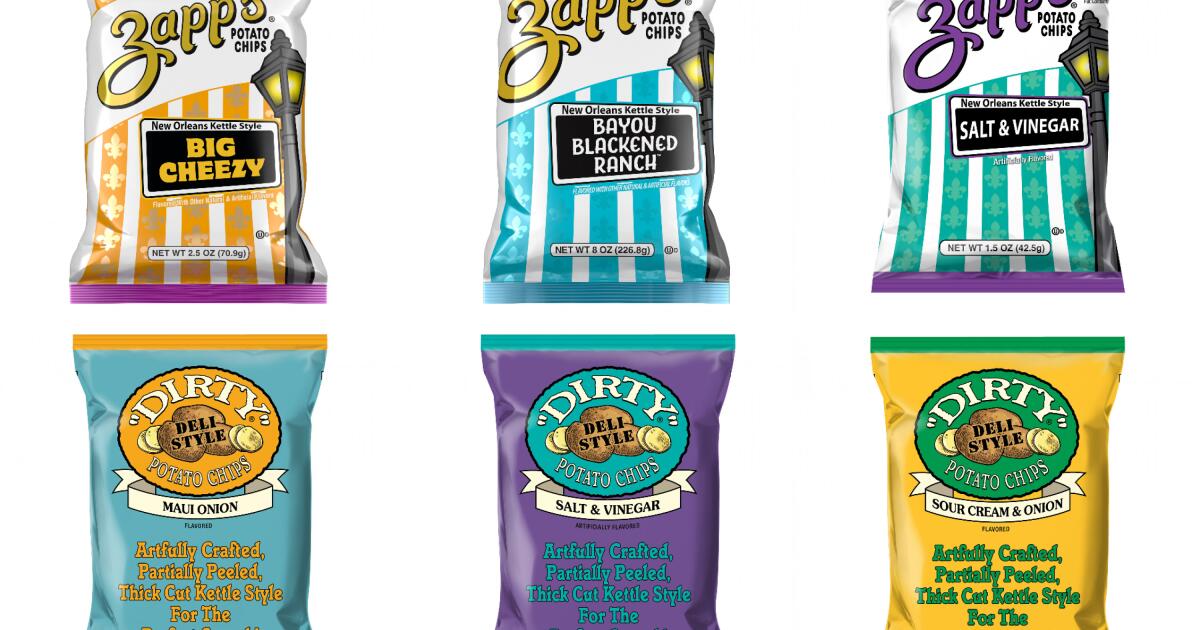
On June 24, the FDA designated the recall of several varieties of Zapp’s and Dirty brand potato chips as Class I, meaning it’s “a situation in which there is a reasonable probability that the use of or exposure to a violative product will cause serious adverse health consequences or death.”
FDA has classified the following items as Class I:
Zapp’s
- 1.5-ounce Zapp’s Bayou Blackened Ranch Kettle Chips
- 2.5- and 8-ounce Zapp’s Bayou Blackened Ranch Potato Chips
- 1.5- and 8-ounce Zapp’s Big Cheezy Potato Chips
Dirty
- 1.5- and 2-ounce Dirty Brand Salt and Vinegar Potato Chips
- 2-ounce Dirty Maui Onion Chips
- 2-ounce Dirty Sour Cream and Onion Potato Chips
The chips are produced by Utz Quality Foods, LLC, which on April 28 issued a recall after learning “that a seasoning containing dry milk powder, sourced from California Dairies, Inc. and supplied by a third-party supplier, may contain the presence of Salmonella.”
Salmonella can lead to sometimes deadly infections in elderly people, young children and those with weakened immune systems, according to the FDA.
More than 680,000 bags are included in the recall.
Anyone who has these products should not eat them and should discard them immediately.
What to look for
Salmonella is a foodborne illness that can be fatal to young children, pregnant women, older adults and people with weakened immune systems, according to the National Institutes of Health.
Symptoms may develop 12 to 72 hours after infection, according to the FDA.
The FDA said that people with strong immune systems infected with salmonella may experience fever, diarrhea (which may be bloody), nausea, vomiting and abdominal pain. The illness can last four to seven days.
In rare cases, the infection may produce more severe illnesses such as arterial infections, endocarditis and arthritis, the agency added.
What to do if infected
If you contract salmonella, the Centers for Disease Control and Prevention recommends drinking plenty of fluids to prevent dehydration.
The CDC advises consulting a doctor before taking antidiarrheal medicine or antibiotics. If severe symptoms continue after two days, seek medical help, the agency says.
Because those with diarrhea can spread salmonella to others, it’s also recommended to avoid sharing food or preparing meals for others, sexual contact and swimming in public pools, and to stay home while sick.
Times staff writer Jasmine Mendez contributed to this report.
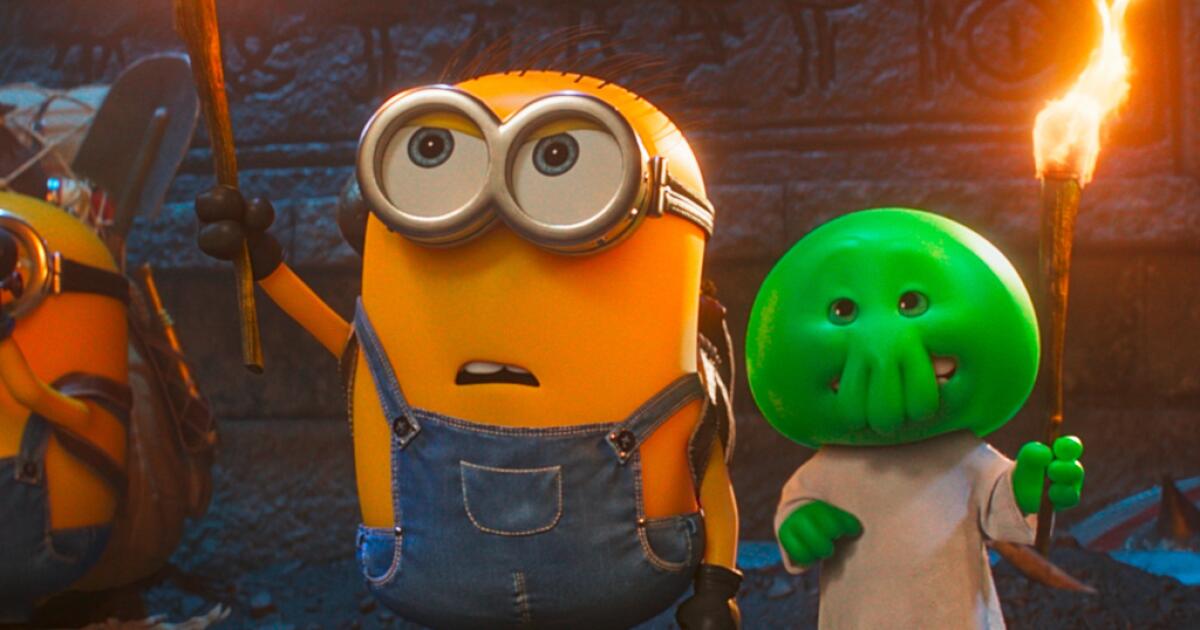
The Minions took over theaters this weekend as Universal Pictures and Illumination’s “Minions & Monsters” won the top spot at the box office, though with a lower-than-expected domestic haul.
The animated movie, which follows the Minions’ takeover of Hollywood, took in $61.4 million in the U.S. and Canada for the five-day Fourth of July holiday weekend, according to studio estimates. That haul was lower than analysts’ expectations for a domestic opening of about $68 million. The movie’s three-day total was $36.4 million.
But the Minions performed well internationally, bringing in about $85 million. In total, “Minions & Monsters” made $159.9 million worldwide on a production budget of about $85 million.
The film is the latest in the powerhouse franchise that began with “Despicable Me” in 2010. Across its previous six installments, the “Despicable Me” and “Minions” franchise has made more than $5.6 billion at the global box office. The last movie, 2022’s “Minions: The Rise of Gru,” made more than $940 million worldwide.
“Minions & Monsters” marks the lowest opening for the franchise. Part of the issue could be timing — the box office can be negatively affected when the Fourth of July lands on a Saturday, said Paul Dergarabedian, head of marketplace trends at Rentrak.
Walt Disney Co. and Pixar’s “Toy Story 5” came in second at the box office this weekend with a domestic three-day gross of $31 million. Angel Studios’ biopic “Young Washington” ($20.8 million), Warner Bros. and DC Studios’ “Supergirl” ($9.6 million) and Universal’s “Disclosure Day” ($6 million) rounded out the top five, according to Rentrak.
The haul for “Minions & Monsters,” coupled with the strong holdover performance of “Toy Story 5,” proved again that family films are making a dent in the summer box office.
“Toy Story 5” has now brought in a total of $764.3 million worldwide, and last month, Universal, Illumination and Nintendo’s “The Super Mario Galaxy Movie” crossed $1 billion at the global box office, becoming the first film of any kind to do so this year.
The rest of the summer theatrical lineup is also expected to bring in audiences and push domestic box office totals closer to pre-pandemic figures. Next week, Disney will release its live-action “Moana,” followed by Christopher Nolan’s “The Odyssey” and Sony Pictures’ “Spider-Man: Brand New Day.”
To date, the summer box office is now about $2.3 billion, a nearly 12% increase compared with the same period a year ago, according to Rentrak data. Compared with pre-pandemic 2019’s numbers, however, it is still down about 7%.
-

 Virginia4 minutes ago
How Virginia became the world’s data center capital and how it’s going – WTOP News
-
Washington6 minutes ago
Question of the week: What does Santana Moss think of Washington’s WR depth?
-

 Wisconsin11 minutes ago
Wisconsin Supreme Court puts ICE detainers suit on hold pending appeal
-

 West Virginia18 minutes ago
DEP Report: Parkersburg plant had prior fire containment issues
-

 Wyoming21 minutes ago
History of Laramie Jubilee Days: It Started As A One-day Fiddlers Contest And Chariot Race
-

 Crypto26 minutes ago
U.K.’s sanctions on cryptocurrency exchanges signal new focus on illicit digital financing – Compliance Week
-

 Finance33 minutes ago
UK Watchdog Urged to Consider Broader Oversight of AI Financial Firms | PYMNTS.com
-
Fitness36 minutes ago
How ‘exercise snacking’ can help you stay on track in winter


