Lifestyle
February may be short on days — but it boasts a long list of new books


In the United States, at least, February is a time for remembering — the feats of Black communities in America, the lives of its greatest presidents, the plight of a single large frightened rodent, even love itself (and its various totems that you’re expected to purchase).
Whew, that’s a whole lot of remembering to pack into the shortest month of the year. So, if only for the next few weeks, you have our permission to forget your guilt-inducing backlog of books and just dive right into the new stuff — which includes highly anticipated new releases from Michael Pollan, Tayari Jones and the late Nobel laureate Mario Vargas Llosa.

Autobiography of Cotton, by Cristina Rivera Garza, translated from the Spanish by Christina MacSweeney — Feb. 3
Rivera Garza won the Pulitzer Prize for 2023’s Liliana’s Invincible Summer, a “genre-bending account“ of her sister’s life and murder that blends elements of memoir, investigative journalism and history. Autobiography of Cotton is the second book from the Mexican author’s backlist to receive an English translation since her Pulitzer win, and it shares a characteristic disdain for compartmentalization. This time she weaves in enough historical fiction to warrant calling this Autobiography a “novel.” But that label doesn’t fit either, as this hybrid account of ill-starred cotton farmers in the U.S.-Mexico borderlands also contains enough historiography and personal family history — among other disciplines — to again twist its would-be shelvers into pretzels, in a good way.
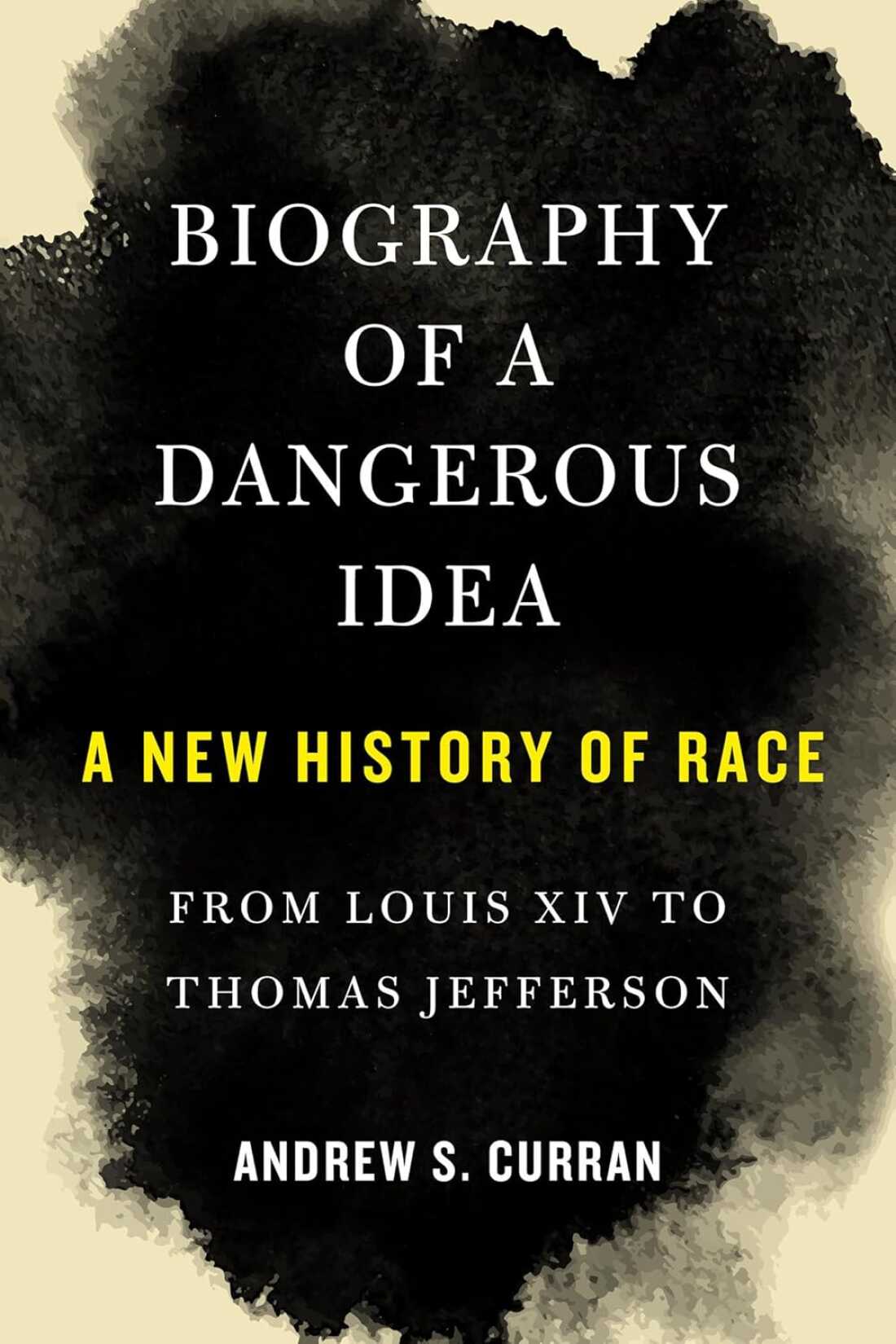
Biography of a Dangerous Idea: A New History of Race, from Louis XIV to Thomas Jefferson, by Andrew S. Curran — Feb. 10
There’s a curious thing that happens with ideas. Often it’s the most historically contingent ones — and occasionally the most pernicious — that claim to be eternal, universal or “self-evident.” In this new history, Curran, a scholar of the Enlightenment, offers a fascinating reassessment of that heady era of Western philosophy: how its towering thinkers came to invent the very idea of race as we know it today, and how that biological balkanization of humanity came to be passed down, quite misleadingly, as some sort of eternal truth.
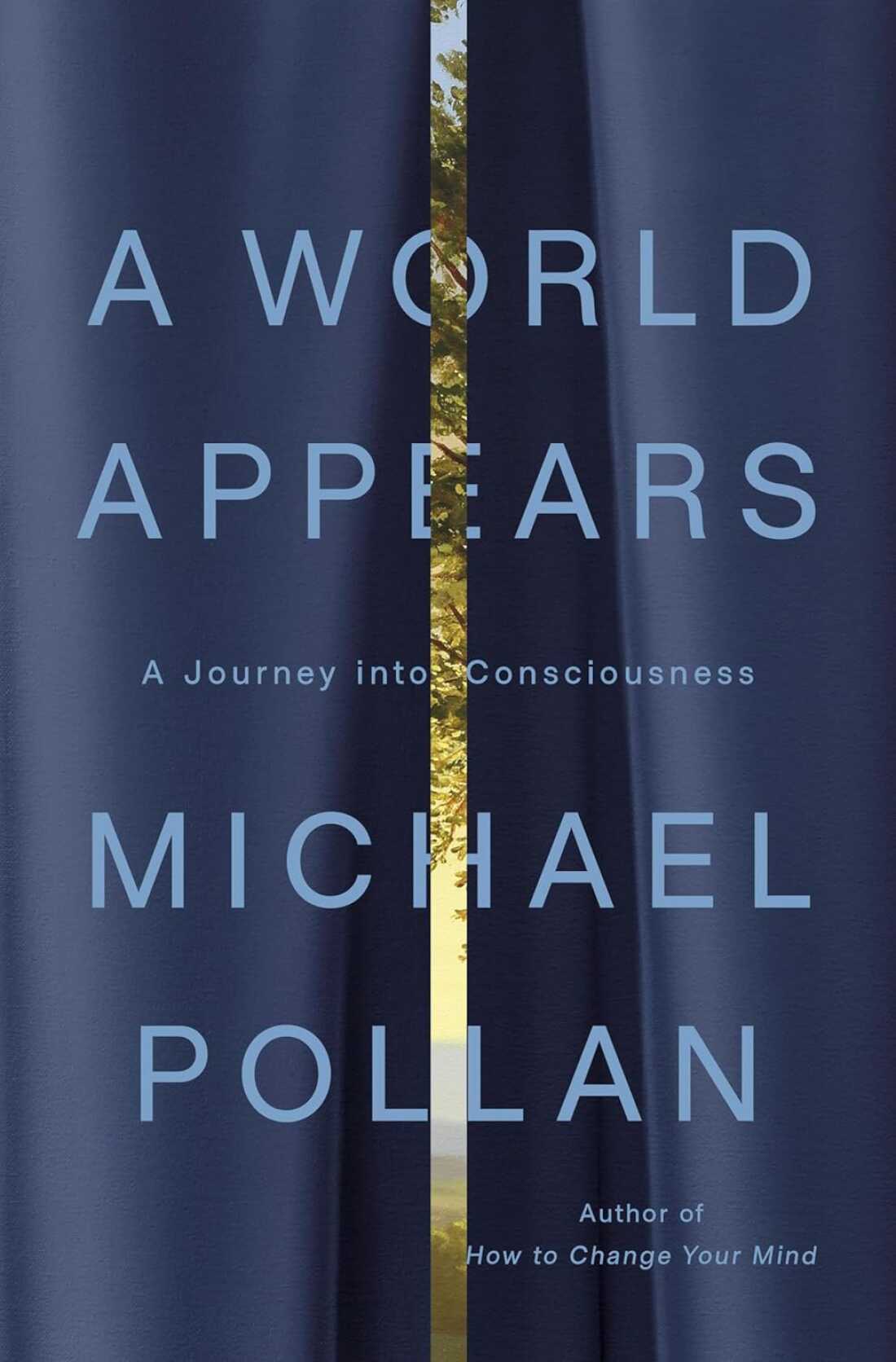
A World Appears: A Journey into Consciousness, by Michael Pollan — Feb. 24
Few journalists have spent as much time as Pollan thinking about the kinds of stuff we put into our bodies. The author of The Omnivore’s Dilemma has considered food intensively from every angle — how it’s grown, cooked, processed and consumed — as well as substances such as caffeine and mind-altering plants. Now, the “reluctant psychonaut” is training his gaze on thinking itself. His new book probes our understanding of what it means to, well, understand — a concept that’s as crucial to our notion of what it means to be human as it is elusive and downright paradoxical.
Farrar, Straus and Giroux
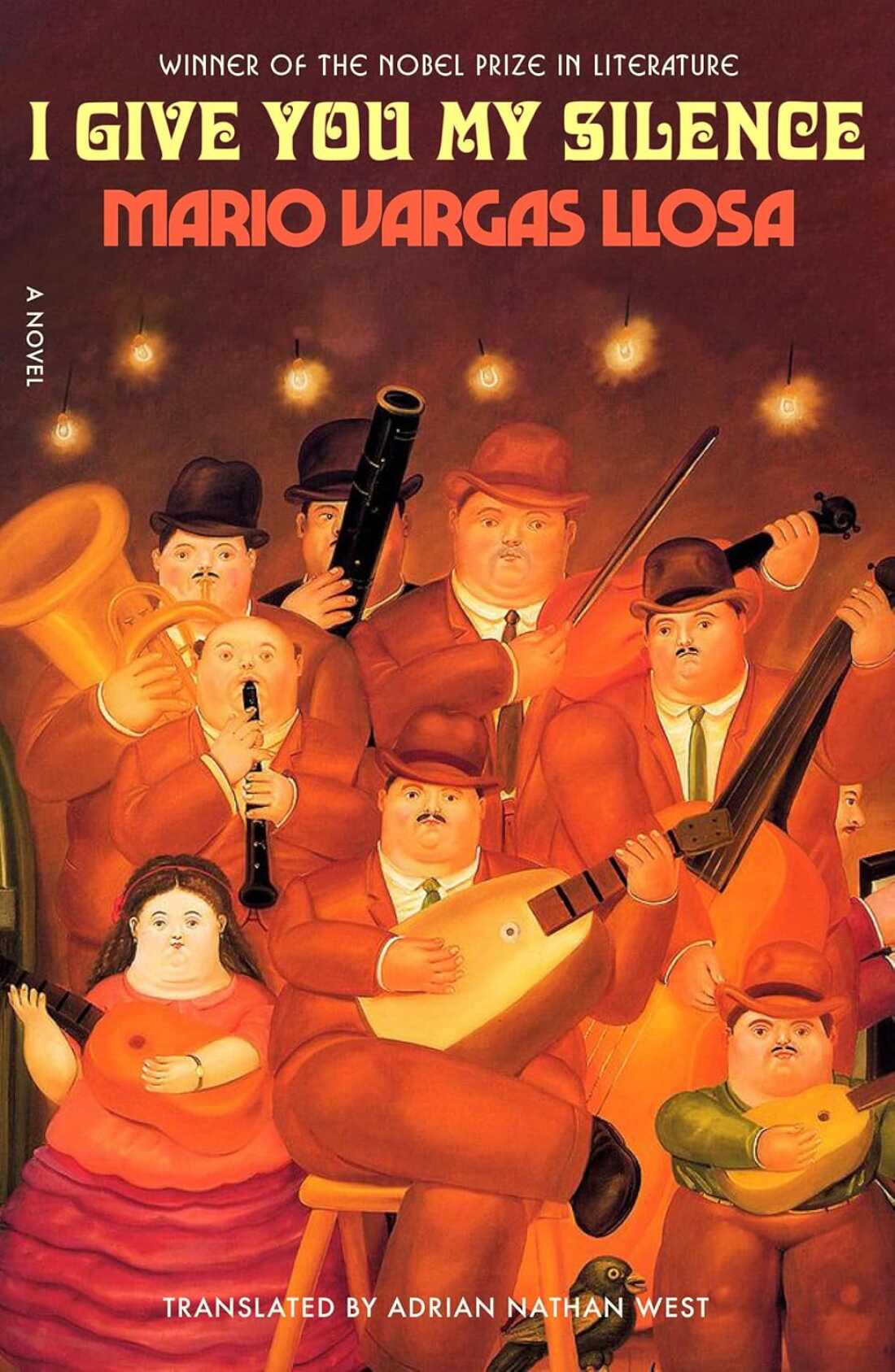
I Give You My Silence, by Mario Vargas Llosa, translated from the Spanish by Adrian Nathan West — Feb. 24
“Each book, for me, has been an adventure,” Vargas Llosa told NPR just hours after he won the 2010 Nobel Prize in Literature. Perhaps it’s fitting that the fruit of his final adventure, I Give You My Silence, reaches English-language readers only after his death last year at age 89. While he was alive, the Peruvian author (and activist, presidential candidate and alleged literary feuder) wasn’t often associated with silence. Vargas Llosa’s last novel centers a professor seeking the soul of his country in music. Published in Spanish in 2023, the book is now being brought to English readers by way of Adrian Nathan West, who also translated 2021’s Harsh Times.
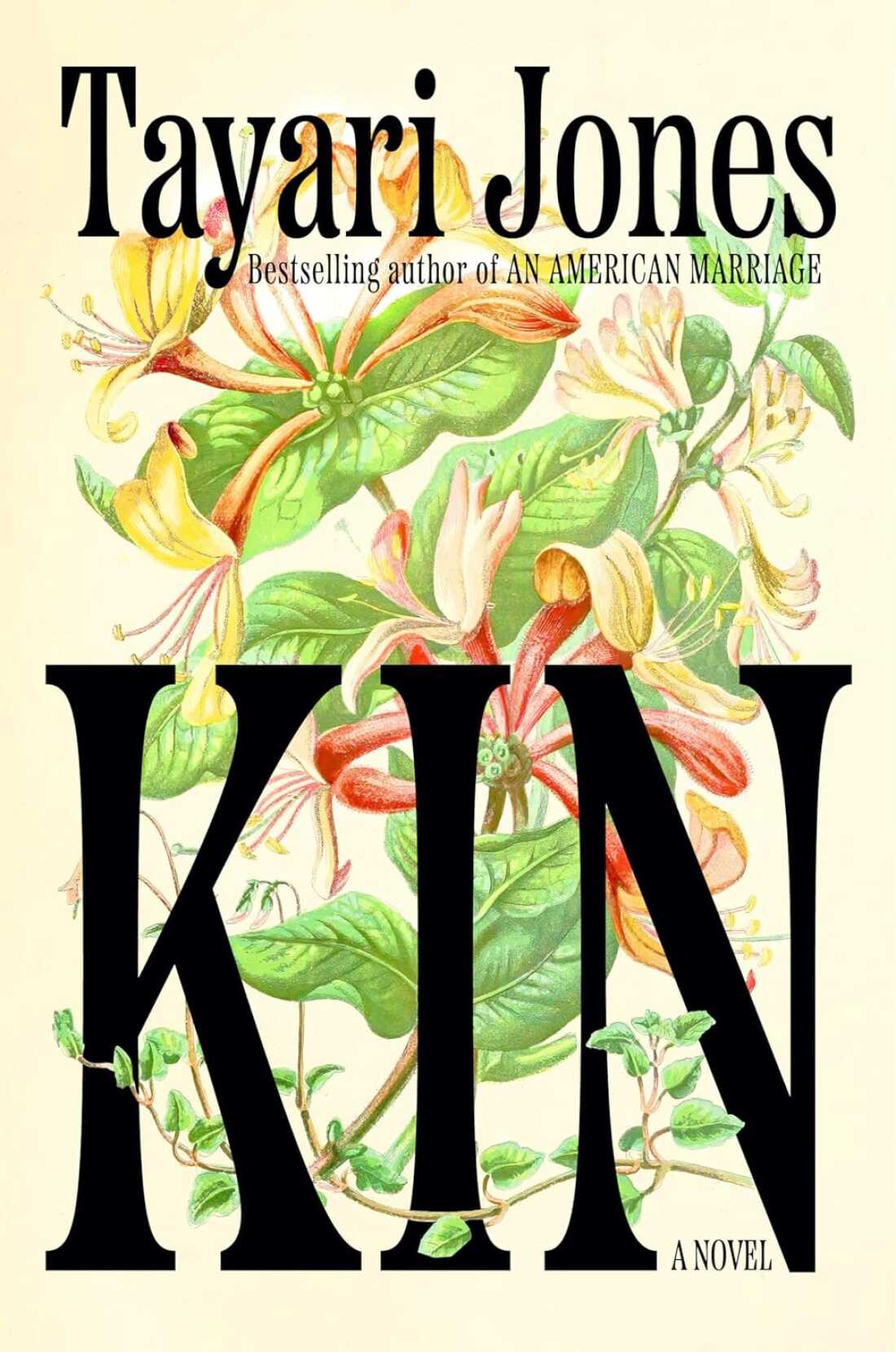
Kin, by Tayari Jones — Feb. 24
“Every true story is in the service of justice. You don’t have to aim at justice; you just aim for the truth,” Jones told me in 2019, just minutes after her previous novel, An American Marriage, won the Aspen Words Literary Prize. Judging just from back-cover synopses, Kin, Jones’ first novel since that portrait of love caught in the grinder of mass incarceration, would seem more concerned with character and the complexities of friendship than Justice with a capital J. But as Jones herself warned, such distinctions can be misleading. Here a single relationship between two black women, rendered with Jones’ care and capabilities as a writer, becomes a prism through which to view a complex generation in the American South.
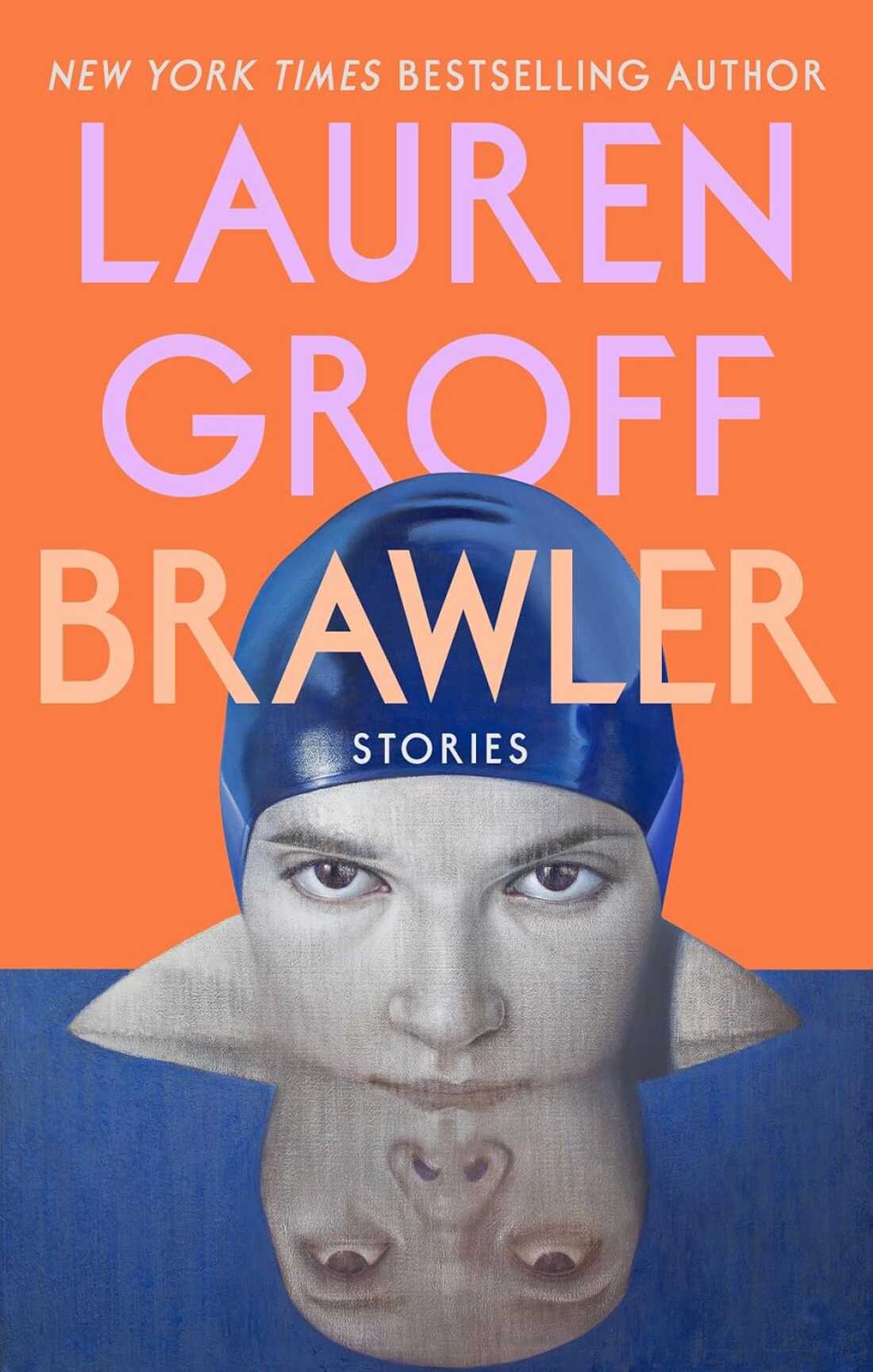
Brawler, by Lauren Groff — Feb. 24
Groff has previously proposed the idea of a “triptych” of novels, of which Matrix and Vaster Wilds would be the first two parts. “The third one is killing me, actually — I’m dying, it’s murdering me in my sleep at night,” she told NPR’s Andrew Limbong in 2023. To be clear, Brawler is not that third novel; it is instead Groff’s third short story collection, and her first since Florida, a 2018 National Book Award finalist. The new collection’s nine stories paint the world in vivid hues, as seen from the angle of a high school swimmer, a mother, an heir, among others. But also, here’s hoping, at least for Groff’s sake, that her work on that other, unfinished novel has moved past the ol’ “murdering me” phase.


In Alice and Steve, Jemaine Clement and Nicola Walker play long-time friends who turn on each other after he gets involved with her 26-year-old daughter.
Lara Cornell/Disney+
hide caption
toggle caption
Lara Cornell/Disney+
I grew up watching episodic shows on network TV, nearly all of them formulaic but some indelibly great. Then, like everyone else, I moved into the days of what my colleague David Bianculli dubbed Platinum TV, where series like The Sopranos and The Wire and Fleabag aspired to something higher. What both these eras had in common was that their shows were carefully crafted — they had an internal logic, and a tone, that held them together.
In recent years, though, there’s been a proliferation of shows that, possibly obeying some algorithm, care less for coherence than sensation. They lurch among tones, from cuteness to sentimentality to meanness, stirring in random plot twists along the way. Bouncing all over the emotional map, these shows depend on compelling actors and a few memorable scenes to make us overlook their loose construction.
A great example is Alice and Steve, an entertaining but sometimes exasperating six-part British comedy on Hulu about two 50-something best friends who turn on each other after he gets involved with her 26-year-old daughter.


While the premise is juicy, it’s also a tad yucky, and I mainly tuned in because its title characters are played by performers Jemaine Clement from Flight of the Conchords and Nicola Walker, whom I’ve raved up on this show more than once.
The series starts poorly with Steve and Alice going on a cutesy bender after a friend’s funeral. Now, I always hate drunk scenes, which are an invitation to overact. As Clement and Walker bray their lines, we learn that Steve’s a divorced celebrity hair stylist who can’t find a girlfriend while Alice is a clothes designer with a doting younger husband, nicely played by Joel Fry, a sweetie-pie of a teenage son — that’s Tyrese Eaton-Dyce — and, of course, that 26-year-old daughter, Izzy, who has inherited her mother’s willfulness. Played by Yali Topol Margalith, Izzy kickstarts the plot by flirting with Steve. Predictably, he succumbs.

Almost immediately, they think they’re in love. While the weak-willed Steve wants to hide their romance — he knows it’s inappropriate — Izzy just blurts out the facts to her mom. Alice flips. And from hereon out in this series where the women are as alpha as the men are hangdog, Alice drives the action. Betrayed and violently angry, she’ll do whatever it takes to break them up — no matter who gets hurt. Her antics unleash Steve’s own malice. We’re in Beef territory.
At its core, Alice and Steve hinges on the way that platonic friendships are often richer and more powerful than romantic ones. It’s a fascinating subject, which may be why I found the script by Sophie Goodhart so frustrating. I wanted her to dig deeper. While the show’s got some very funny bits — Alice’s sharp-tongued mother is a blast — it’s often annoyingly lax.

If Steve really does the hair of Charli XCX, how come he’s a clueless older guy whose pop culture references are Willie Nelson and Woody Allen? If Izzy truly adores her mother as she claims, why does she keep rubbing her relationship with Steve in her mom’s face? Halfway through, one character nukes the other’s career, but this life-shattering event has no real weight: It’s barely even mentioned for the rest of the series.
That said, Alice and Steve is worth seeing for scenes like the one in which Steve spinelessly sells Izzy out or the lacerating discussion between Alice and her husband when he fully grasps that he adores a woman who views him as a reliable but dull concierge, not a man she likes hanging with. Most touching of all may be the lovely sequence when Alice, wise for once, smooths a romantic crisis between her son and his would-be girlfriend, a pair who are the show’s emblem of hope. For once, we understand why people love her.

While most viewers will find Steve more likable than Alice — the show takes pains not to make him appear predatory or creepy — the role doesn’t give Clement a whole lot to do except play variations on shambolic dread and discomfort. The show gets its galvanizing zing from Walker, a beloved star in England with amazing, luminous eyes. Her Alice is the kind of complicated, volcanic heroine that you don’t see in movies and rarely see on TV, one who shows her apocalyptic rage freely and in many different forms.
At least once in every episode, something would lead me to say, “Man, is this show a mess.” But that wasn’t a deal breaker. I kept watching. After all, life is messy, too.


How to enter your Sporty Spice era.
Getty Images/quantic69/Olga Kurbatova/Anastasiia Zvonary/Photo Illustration by NPR
hide caption
toggle caption
Getty Images/quantic69/Olga Kurbatova/Anastasiia Zvonary/Photo Illustration by NPR
Reality dating and professional sports are not as different as you’d think.
Brittany is in her Sporty Spice era – she watched the NBA playoffs, she’s following World Cup games, and she’s watching the New York Liberty play their WNBA season. These games are daily – and so is the reality dating show Love Island. And she noticed that the two formats are not very different at all. Defector.com staff writer and co-owner Kelsey McKinney came to the same conclusion – so the two of them discuss why these games of athleticism and love can bring us together… and why they get valued differently in our culture.
For more episodes on sports and reality TV, check out:
Get rich or die trying: how sports betting is changing our love of the game
Is this the end of reality TV?
The ugly truth of America’s expensive homes
Support Public Media. Join NPR Plus.
Follow Brittany on Instagram: @bmluse
This episode was produced by Liam McBain. It was edited by Neena Pathak. Our Supervising Producer is Cher Vincent. Our Executive Producer is Barton Girdwood. Our VP of Programming is Yolanda Sangweni.

-

 Colorado5 minutes ago
Showers and thunderstorms forecast for Colorado’s high country as wildfires rage across the state
-

 Connecticut8 minutes ago
Eversource crews work to restore power nearly 48 hours after Independence Day storm
-

 Delaware13 minutes ago
Delaware County commissioners criticize Marion County prosecutor
-

 Florida20 minutes ago
Deadly July 4th shooting arrest; South Florida man accused of Miami stabbing attack
-

 Georgia23 minutes ago
Poll shows Georgia Democrats ahead in senate, gubernatorial races
-

 Hawaii28 minutes ago
$5 deal for National Fried Chicken Day
-
Idaho35 minutes ago
An Idaho mother who said her toddler twins died after vaccinations has been charged with murder
-

 Illinois38 minutes ago
Severed arm in Illinois lake: Court records say body parts found in freezer, half-brother claimed self-defense


