Entertainment
Teyana Taylor loves the debate over her ‘One Battle’ character: ‘Get it off your chest’


In this episode of The Envelope video podcast, Teyana Taylor describes the “slingshot” of success that’s come with “One Battle After Another” and shares her insights as to why fictional revolutionary Perfidia Beverly Hills does what she does in the film.
Kelvin Washington: Hello, everyone, and welcome back to The Envelope. Kelvin Washington, Yvonne Villarreal, we have Mark Olson as well. Hopefully you all have been great since the last time I saw you. Everybody been good?
Mark Olsen: Of course.
Washington: Well, I tell you what, there’s a list of folks who’ve been very good because they’ve been nominated for an Oscar. And obviously, you kind of get the usual suspects, if you will. And then you get some surprises out there. Some folks you go, “Whoa!” So I want to start with you. Either of you can jump in on this. Is there someone that maybe surprised you, a film or something that you were just excited about or maybe someone said, “Them again?” or “That film again?”
Olsen: I think it was very exciting that “Sinners” got the most nominations of any film ever with 16 nominations. It was nominated in every category that it was eligible for. To see a movie that has had commercial success and felt like a cultural moment now being recognized somewhere like the Academy Awards, it’s just exciting to see that all coming together and rolling along for that film, regardless of how it turns out at the show.
Villarreal: I was very excited to see Rose Byrne get acknowledged for “If I Had Legs I’d Kick You.” Because I was worried about that movie losing steam after all the raves it got at Sundance [in 2025] and it’s a smaller movie. I wasn’t sure, “Are people going to remember it?” But I just think she’s so great in that film.
I was sort of surprised that Chase Infiniti didn’t get nominated.
Olsen: Because of the nature of the movie, the whole lead / supporting business was tough, and also it being her first movie, it’s a little harder to get that nomination — especially in lead actress, faced with, say, Kate Hudson, someone who’s been in the business for a long time, is much beloved in the industry, has obviously family historical ties to Hollywood. It’s interesting to see even in the nominations this sort of alchemy of like, “a little of this, a little bit of that” as far as who the the Academy was choosing to recognize.
Washington: You know, I go back to something you said, Mark, when you go to “Sinners.” You mentioned the blockbuster feel of it, getting people’s butts to the theaters, spending money. And also kind of original. We’ve had vampire movies before, but, you know, you get the “Transformer 12”s and “Expendable 32”s. I think a lot of folks were excited to see something original that also had commercial success as well.
Another film that had a bunch of success is “One Battle After Another,” you had a chance to speak with a star from that film, who’s been a star in her own right musically, but now into the film world, with Teyana Taylor.
Olsen: That’s right. It’s so exciting. She’s nominated for best supporting actress. This is a long movie, it’s over two and a half hours long. She more or less exits the picture about 30 minutes in. So I think it says something about the strength of her performance that her character kind of hovers over the rest of that movie. You feel her in the movie, even though she’s actually not on screen. So at the Oscar nominees luncheon recently, we had a chance to sit down with Teyana and she was just so vibrant, so full of energy, really has a great attitude about this moment for herself. I mean, she just recently won a Golden Globe, she hosted “Saturday Night Live.” So much is like happening for her, seemingly right now and she’s just got this real like, taking it all in, very open to it [attitude]. It was really an exciting conversation.
Washington: A culmination of all her hard work. Here is Mark’s conversation with Teyana Taylor.
Teyana Taylor.
(Ian Spanier / For The Times)
Mark Olsen: You were just at the Super Bowl. About a week before that, you were a nominee at the Grammys. About a week before that you hosted “Saturday Night Live.” About a week before that you won a Golden Globe. And you’re here today as an Academy Award nominee. I’m sure I’m leaving some things out. I would say what’s the last year been like for you, but I feel like, what’s the last month or two been like for you? It feels like the rocket ship has really taken off.
Teyana Taylor: Yeah, it’s really taken off. I’m so blessed and I’m so honored and I’m filled with so much gratitude to just see so many prayers get answered all at once, where I’m also OK with one at a time. But it’s all happening, you know? And I’m just beyond blessed. And like we were talking about earlier, just how much fun I’m having with it. I’m really having a good time and I’m taking it all in because life is short and life is so fragile. So I just try and take time to enjoy life and enjoy my blessings and enjoy just being alive and well.
Olsen: Has there been a moment that felt the most surreal, like a “what is happening to me right now” moment?
Taylor: Honestly, all of it, because it reminds me of a slingshot, you know what I’m saying? It’s just like, here’s the way, here’s the way, here’s the way, here’s the way, here’s the work, here’s the prayers, here’s the tears, just here, here, here, here, here. And then whoosh — whatever the ball hit, it knocked down everything at once. And that’s what this feels like. It feels really good because literally everything is happening at the same time. So it’s not like only one moment or only two moments that’s making me feel this way. It’s everything. The small wins, the big wins, the medium wins. Every single win and every single blessing is a big deal to me. You know what I’m saying? Even my Ls. I’m not gonna win everything and I’m not gonna get everything and some things are not even meant for me. But even those are blessings. It’s preparation for something that is in store for me and something that is meant for me, because all of this is already written. What’s for you is for you and will be for you, because that’s just what’s written. So I have that mindset.
Olsen: You’ve been doing this since you were a teenager, at first as a choreographer and a dancer, a singer, an actor, you’re going to direct your first feature soon. What keeps you moving through all of this, through these different disciplines and pursuits?
Taylor: My babies. My support system. My village. My community. I love to make my people proud. I love to make my peers proud, my family. I just love to make everybody proud and that’s what keeps me going. Even right now, I’m also in culinary school. So it’s just juggling that, but taking out the little moments to just be quiet and cook and feed my people. So it’s a push. It’s understanding it’s a marathon and that it’s not a sprint. It’s a part of the faith walk. And I think that’s what keeps me going, to wake up and feel so blessed, how could I ever complain? How could I ever be like, “Oh, this is too much”? It is everything I’ve ever asked for. I’m never going to complain about answered prayers. What pushes me is just the reassurance from my support system, the reassurance from Father God himself, the reassurance for my babies. They keep me going. That’s who I do it for. I want to create generational wealth. So them babies are my reason. They are my why.
Olsen: To start asking you about “One Battle After Another,” your character, Perfidia Beverly Hills, she’s inspired a lot of conversation and some controversy. For you, was there something about that character that you felt you hadn’t seen on screen before?
Taylor: Yes. Perfidia is complex and she is also misunderstood. This is a woman who has been in survival mode, who has been fetishized, who has been ignored, not seen. We’re seeing this woman deal with that, where in movies we’re used to seeing us women have to be in capes all day and you see this woman rip this cape away and it’s just unapologetically herself — even in her weakness. And even like you said, with the controversy of her sexuality, I think her sexuality is her armor. It is also her power. She’ll give somebody what they want to get what she wants. And literally in the movie, she’s made selfish decisions. But if you think about her spirit and mentally and emotionally as a woman, it felt good to see a woman actually be selfish and put her[self] first, which we never really get to do because we have to be super this, super this, super this. Super mom, super wife, super woman, super chef; everything is always with a super in front of it. And you see this woman not really caring about what people think. Nobody can quiet her. And in this space of, “OK, you’re too loud, quiet down; you stand too tall, have a seat,” Perfidia is all of the things that they can’t make her do. She’s like, “I’m gonna stand tall, I’m gonna use my voice, I’m gonna use whatever I need to use to get what I want.” And she makes decisions that we don’t agree with, but I think one thing we all can agree on is that she’s a badass. And I can always respect anybody that’s unapologetically themselves.
Another thing that I feel like the controversy is proof of is how much of a non-factor postpartum depression is. Half of the mistakes we see Perfidia make is her dealing with postpartum depression. You see the moment where they say, “Perfida, she’s a runner. She comes from a long line of revolutionaries.” That in itself is a pressure on her to feel like she gotta keep that going. The revolution is instilled in her. It’s a part of her identity. So imagine getting pregnant and you’re feeling like, “Oh my God, does this slow down the revolution? Am I gonna play house with a person that’s ignoring me?” Nobody is really taking the time to think about what’s happening in her mind. We can’t control how a person handles postpartum depression. We hear her, through the door, cry, and then we see Bob put his ear to the door — and instead of him walking in, he walked away. And then what was the result of that? Her walking away. Even if it had to be walking away from Baby Willa, it’s something that she felt like she needed to do and that’s what postpartum make you do sometime. And every mother handles postpartrum depression differently. But I think that’s what I love about her character, because you get to see a harsh reality that I know is hard to take in. But when you watch it a few times you understand exactly what’s happening. … I think that’s what makes the letter at the end so important. Because you hear the pain, you hear the hurt, you hear the regret, you hear the accountability, “Do you have love? Are you happy? Will you try and change the world like we did? We failed, but maybe you will not.”
And that’s another thing. This is a story that Paal Thomas Anderson wanted to tell. It was Perfidia’s job to go and anchor this boat and stay there and create the path for Willa to take on these battles, because her past haunted Willa and Bob. That’s a part of Perfidia being supporting — supporting the next steps of what is for Willa. It’s for Willa to go on and to rise. So you see Perfidia in the beginning of the movie, you see her drive this boat, you see her get to the middle of the sea and you see her anchor herself. And from there, we have to continue the story. So I’m happy that the controversy around her can create dialogue like this, can create healthy dialogue or even uncomfortable dialogue. As long as it’s dialogue and we’re conversing and we are speaking and people are speaking from their point of views, I can absolutely respect that.
Olsen: Is that a conversation you expected to have? When you were making the film, were you and Paul, or you and your co-stars talking about the depiction of Black women in the movie? Or have you been surprised that’s been such a talking point now that the movie’s out in the world?
Taylor: Honestly, I’m not surprised of any of the talking. I think one thing that I said before the movie even dropped and we were doing our press junkets, I was always very boisterous about the fact that this movie, period, not just the character, would definitely shake the table, and it would definitely spark, whether it was great debates or — I love conversation and I like when we can converse. Get it off your chest, tell me how you feel. And I’m open to receive that. So I knew that it would shake the table. I also knew that it needed to be done. Postpartum depression is a big thing for me that I feel like it needs more light. It needs light around it. We need more solutions for it. And like I said, you see this person, this woman in survival mode. You see this woman be ignored. You see this woman be fetishized. And is that not the truth? Is that not what happens, especially in this place of a Black woman feeling the least protected? So I’m really happy that Paul put wings on that to be able to spread and fly with that. And like I said, I know it’s probably tough to take in, but that’s what we got to see because everybody is not wearing capes. Everybody is not handling things the way you may handle things, I may handle the things, the way that person or this person may handle things. So we all just got to give grace and take in the film. It’s a story that’s being told.
Olsen: To me, one of the biggest surprises about the movie is considering how cohesive and complete it feels, to learn how improvisatory and collaborative the process of making the movie was. Were you surprised by that? What was it like for you entering into the process of making this movie with Paul?
Taylor: I was shocked at how collaborative it was. And I loved every bit of it because one thing about it is, again, when you are telling a story that someone wrote — he’s been working on this project for 20 years. This is something that I consider to be his baby. And when you’re trusting me to take on a job like this, I don’t ever wanna walk into any set and feel like I’m doing what I want to do. I just want to be of good support. If you tell me, “Hey, let’s find this together,” I’m gonna find it together. If you say, “This is my vision of what that is and this is how I want it to be,” it’s my job to give you that vision of what you want it be, and then add my little sauce on top of it. But to be fully collaborative, I thought it was really dope. We found Perfidia’s layers and we color-coordinated those layers. And I’m really happy that he let me be a part of that.
Olsen: What do you feel you brought to Perfidia or you were able to add to the character?
Taylor: I was able to add a lot. Paul was very, very collaborative. And again, we found her layers, which was the most important, especially with such a complex character. And you know, I just came from “A Thousand and One.” So I came from being another complex character, but this one was complex to a whole other level, where we almost didn’t understand why we never see Perfidia cry. But you see these little moments, like little details, in her face that’s just like, it’s this strength, but the strength — because I also don’t really love the term “strong Black woman” — it’s this strength that you feel like she has to have because the strength is really survival mode. And again, like I said, you hear her crack down and you hear her vulnerable, and nobody stepped through that door. So when you see a strong Black woman, there is no grace, it’s, “Oh, she’s OK, she fine, she got it all figured out.” And then you hear her vulnerable and you still feel like even at her most vulnerable, she got this, she’s strong. And it’s just like, “Step through the door. Step in early. Step in the first time. Hear me the first time, see me the time, wipe the first tear away. Would she have walked out that door on baby Willa and Bob, had he walked through that door when he heard her cry?
Olsen: I’ve heard you a number of times when you’re talking about Paul, you always call him Paul “Let Him Cook” Thomas Anderson. What does that mean?
Taylor: Let him cook! Listen, because he to me is a master chef. And honestly, I’m very, very big on leadership. I respect the person that is a leader. What makes it so dope is because, with being in culinary school, I originally signed up for culinary school of course to learn the art of culinary, but to just cook, I love to cook and I wanted to learn the art of that. With being enrolled in culinary school, it’s a lot of writing work and a lot of discussion forums and a lot of quizzes and stuff like that. So you’re not only learning to cook, but you’re learning how to run a business. You’re learning how to navigate your staff, front of house, back of house, in the kitchen. You have to understand it’s a whole system in how you handle people in general. In the kitchen they call it like a “servant leader,” where your leader is in the kitchen with you, they’re cooking with you. They’re your mentor, they are your guidance, but they’re cooking with you. They’re not just pointing, “Do this, do that, boom, boom, boom.” And it’s just like his gentle servant leadership is something that I respect so much and something that inspires me as an upcoming movie director on how to handle and navigate my staff.
So it’s like the best of both worlds because I have PTA and then I have culinary school who’s teaching me how to be the best leader. Even in how we handle people, it’s bigger than just the people that work for us or with us. It’s also the people that come into this restaurant. It’s your customers. It’s just the hospitality of it all and the hospitality that he gives, it’s really amazing to see. I’m also a big sports girl. So even in regards to him being our quarterback, you know, he’s not on the side, pointing at what to do. He’s on the field with you. But he has an even bigger job because now he’s trusting that he’s going to throw this ball to you and you’re going to receive that ball. So we’re his receivers, we’re his wide receivers to take it to the touchdown. It’s all about being present. And that’s what I learned in culinary, it’s what I learned in sports, it’s just everything about being a leader as I prepare to lead my village and lead my community. That’s just so important to me. So I always respect people that are in the field with you. I become a warrior for you. You see Paul, you’re running in the battlefield, you look to your left, he’s with you. He’s not on a horse, he’s not on his high horse. He’s in the field with you. Let’s go, we got this! And it just makes you want to you want to go so hard for him. And that’s how I look at it. So I am a student. I am a teammate. I am a soldier. I am a warrior. That’s what I am with people that are great leaders.
Olsen: When you won the Golden Globe, your your speech was so moving and you specifically spoke to your “brown sisters and little brown girls” and said that their light does not need permission to shine. Can you talk more about that? What was it that made you want to say that in that moment specifically talking about this movie?
Taylor: I thought it was a very important moment on a very important stage. I wanted to use my voice and I wanted to use my platform. And in that moment, I had the voice and the platform to say just that. It’s nothing less than that. There’s nothing beyond that. Exactly what I said. We deserve space. What that night showed was that here’s the space. And I appreciated that. I was filled with so much gratitude. That moment hit hard for me because I was that little girl that sat on the floor on a TV watching the other queens on stage accept their awards. Like, “you can do it too, you can do it too.” And I knew that one day when it was my turn, I would tell my little queens, “You can do it too — all the little queens that look like me, you can do it too, you deserve space.” To know that also my daughters were watching as well, it’s everything to me. It’s everything for me to know that they embrace that as well. It’s so important. I’ve gotten so many women come up to me like, “Wow, that speech was just everything.” And that’s what it’s all about. That’s what is all about: to inspire, uplift and remind us that there is space.
Olsen: Before I let you go, you just bring it on red carpets time and time again. And the one thing I like is that you wear these really bold outfits and it never looks like the clothes are wearing you. Do you have tips for people? What do you do for confident personal style?
Taylor: Honestly, follow your heart. Follow your heart. If you see it and you like it, put it together. You might put it together and be like, “That didn’t work the way I [intended].” Practice. Play in clothes. I love to play in clothes — but also will walk in the store and redress a whole mannequin. I’ll also be like, “I like that tie, I think it should be a little bit tighter.” I dream about certain outfits. I dream of certain moments where I’m like, “Oooh. I already know what I feel like I want my Oscar dress to look like. I already know what I want my Golden Globes dress to look like.” It’s always a vision. Or sometimes you might have a base. You might see something and be like, “I like this, but I feel it could use this.” Add it. If you feel like something can use something, add it. Because before you know it, now you done created your own thing. So don’t hesitate. When I was younger, I used to hesitate and be like, “This looked pretty cool, but now I’m not gonna do it.” And then later on, I see somebody try it, and I’m like, “Oh, I should have just…” Always follow your gut and always follow you heart.


The Fetus, 2025.
Directed by Joe Lam.
Starring Bill Moseley, Lauren LaVera, Julian Curtis, Evan Towell, and Ariel Yasmine.
SYNOPSIS:
A couple become pregnant with a half-human, half-demonic fetus with a thirst for blood-and must uncover its terrifying origins before it’s too late.

In The Fetus, Alessa (Lauren LaVera) discovers she has accidentally gotten pregnant by her boyfriend Chris (Julian Curtis), but instead of this being a cause for celebration Alessa tells Chris that they must visit her father Maddox (Bill Moseley) instead of going to a hospital as Maddox insisted she do that if she ever got pregnant. Chris has his own reasons for not wanting a baby and goes along with her, but Maddox is not an easy man to get to know as he is blind and suffering from PTSD as a result of being in Vietnam.
However, there are bigger stakes here than just trying to impress your girlfriend’s father as it is revealed that Alessa’s baby is the result of a pact Maddox made with a demon decades before, and that his blindness was due to him not sacrificing Alessa to that demon. Now he has a second chance to appease the demon with the vampiric tentacle monster that keeps appearing to suck the blood of anyone who isn’t kin, and Chris has to step up and decide whether he wants to be a father or not.

Or something like that, as The Fetus is a little confused by its own mythology. Taking its cue from Larry Cohen’s It’s Alive!, The Fetus is a low-budget indie affair that has its star names to thank for lifting it up and out of the bin marked ‘utter nonsense’ and into the realms of watchable nonsense. What’s the difference? Well, there is no way to try and sell it as a serious horror movie as the premise is totally daft, the visuals give it the look of a Megadeth music video from the 1990s and it ties itself up in knots trying to tell us who needs to be sacrificed and why (although neither become very clear by the end of it), but Bill Moseley has made enough of these types of schlocky horror movies to know exactly what he’s doing and how to pitch it, plus Lauren LaVera has enough clout with modern horror audiences to give it some appeal and she proves once again why she is one of the best scream queens of recent times (although she is better than this movie), and so the combination of these two actors gives The Fetus more weight than it would have had if two lesser-known actors were in the roles.
Julian Curtis as Chris also lends an air of comic relief, although when the plot is as silly as it is you cannot help but deliver your lines with that sort of sarcastic smirk on your face (”You can’t get pregnant overnight” – well, she did and no one questions it). He plays off against Bill Moseley very well and, if nothing else, his character is the one that has the biggest arc, and if you wanted to dig deeper and salvage some sort of message about nature versus nurture, what it means to be a father, telling your girlfriend when the condom splits and that type of thing then it is there, but don’t stress too much if you just want to watch vampiric tentacles coming out from between Lauren LaVera’s legs because that is really what everyone is here for rather than social commentary.

The Fetus works because everyone involved knows exactly what kind of movie they are making, and that movie is a low-budget black comedy about a demonic baby with naff-but-passable effects and three lead performers who bounce off each other very well. Going into it expecting The Exorcist or The Omen levels of filmmaking quality is only going to lead to anger and disappointment, and you can’t really be angry at a movie that has a man sticking his you-know-what into a fiery hole in the floor to conceive a baby. Temper your expectations and go into The Fetus prepared to enjoy 84 minutes of diabolical baby B-movie hilarity and you’ll have a good time… maybe.
Flickering Myth Rating – Film: ★ / Movie: ★ ★ ★
Chris Ward
https://www.youtube.com/watch?v=embed/playlist
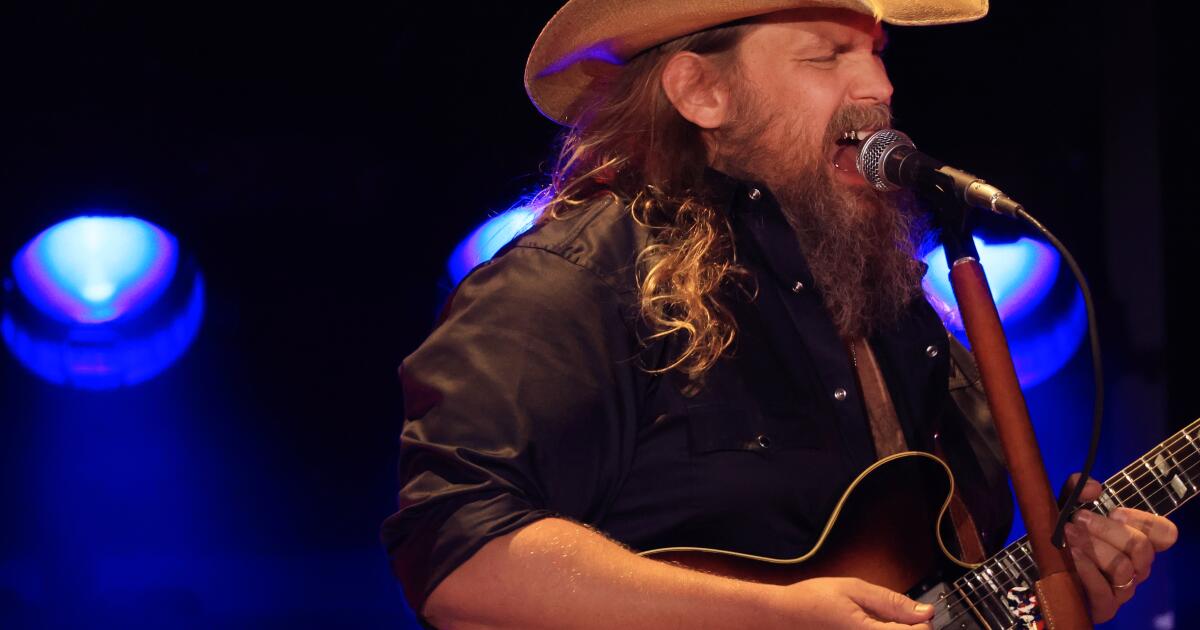
In New York, the Brooklyn Bridge went up in flames briefly during a fireworks display. In Washington D.C., stormy weather delayed a grievance-filled speech by President Trump.
And here in Los Angeles? On Saturday night, tens of thousands of Angelenos joined voices peacefully at the L.A. Memorial Coliseum to sing along with Chris Stapleton as the country star compared a lover to Tennessee whiskey.
A unifying cultural figure beloved by both liberals and conservatives, Stapleton was the headlining act at a Fourth of July benefit concert that also featured Smashing Pumpkins, Chaka Khan, Maren Morris and Queen Latifah. (I’d be surprised if those five names had previously appeared together in the same sentence.) The show, with tickets priced at $17.76, was presented by America250, a bipartisan commission that Congress created in 2016 to plan celebrations for the country’s 250th birthday; proceeds went to Feeding America, which calls itself the largest domestic hunger-relief organization in the United States.
-
Share via
“No politics — just purpose” is how America250 Chair Rosie Rios described the night in remarks from the stage, and it wasn’t hard to interpret the distinction she was seeking to draw between her group and Freedom 250, Trump’s rival semiquincentennial initiative that organized Saturday’s windblown event on the National Mall (not to mention an earlier concert by Vanilla Ice that was called off due to the threat of rain).
But here’s the thing: Compared with the president’s celebration, where he complained about his treatment by the justice system and suggested we should refer to his current term as his third, the show at the Coliseum really did feel like a politics-free zone — the somewhat rare occasion these days when folks from different walks of life come together just to listen to music and drink overpriced micheladas.
Said Stapleton not long into his set: “I won’t waste time talking.”
America250’s success was hardly a sure thing. Despite the relatively low price, tickets moved slowly in the weeks before the concert; one guy I talked to Saturday told me he’d paid six bucks for a discounted pass. Yet to my eyes the Coliseum was close to full by the time Stapleton came on.
The country singer was as solid and soulful as always, snarling gently through “Bad as I Used to Be,” then trading loving harmonies with his wife, Morgane, in “Millionaire.” He closed with “Tennessee Whiskey,” of course — a trusty yet somehow un-shopworn piece of Americana that’s earned a place on the shelf next to Ray Charles’ “Georgia on My Mind” and Willie Nelson’s “Angel Flying Too Close to the Ground.”
Smashing Pumpkins was perhaps a stranger fit for an explicitly patriotic event — “The world is a vampire,” frontman Billy Corgan sneered in “Bullet With Butterfly Wings” — yet the band sounded sharp and punchy in the ’90s alt-rock hits that have brought zoomers and even Gen Alpha kids into its audience.
Billed not inaccurately on the concert’s poster as “the legendary Chaka Khan,” the 73-year-old funk doyenne flexed her vocal chops in jammy renditions of “Ain’t Nobody” and “Tell Me Something Good” and got people hoisting their drinks for “I’m Every Woman.” Morris, who’d flown in from New York after attending her pal Taylor Swift’s wedding on Friday night, made an improbably smooth segue between her and Zedd’s synthed-up “The Middle” and the rustic “My Church.”
As the show’s host, Queen Latifah dispensed uplifting thoughts about American idealism throughout the evening but also got a slot of her own to do her classic “U.N.I.T.Y.” with help from a rambunctious drum line. It’s an unapologetic message song about demanding respect, and what was moving about hearing it here is that nobody seemed put off by that idea.
I’ll wave a flag for that.
Here are more photos from Saturday’s concert:
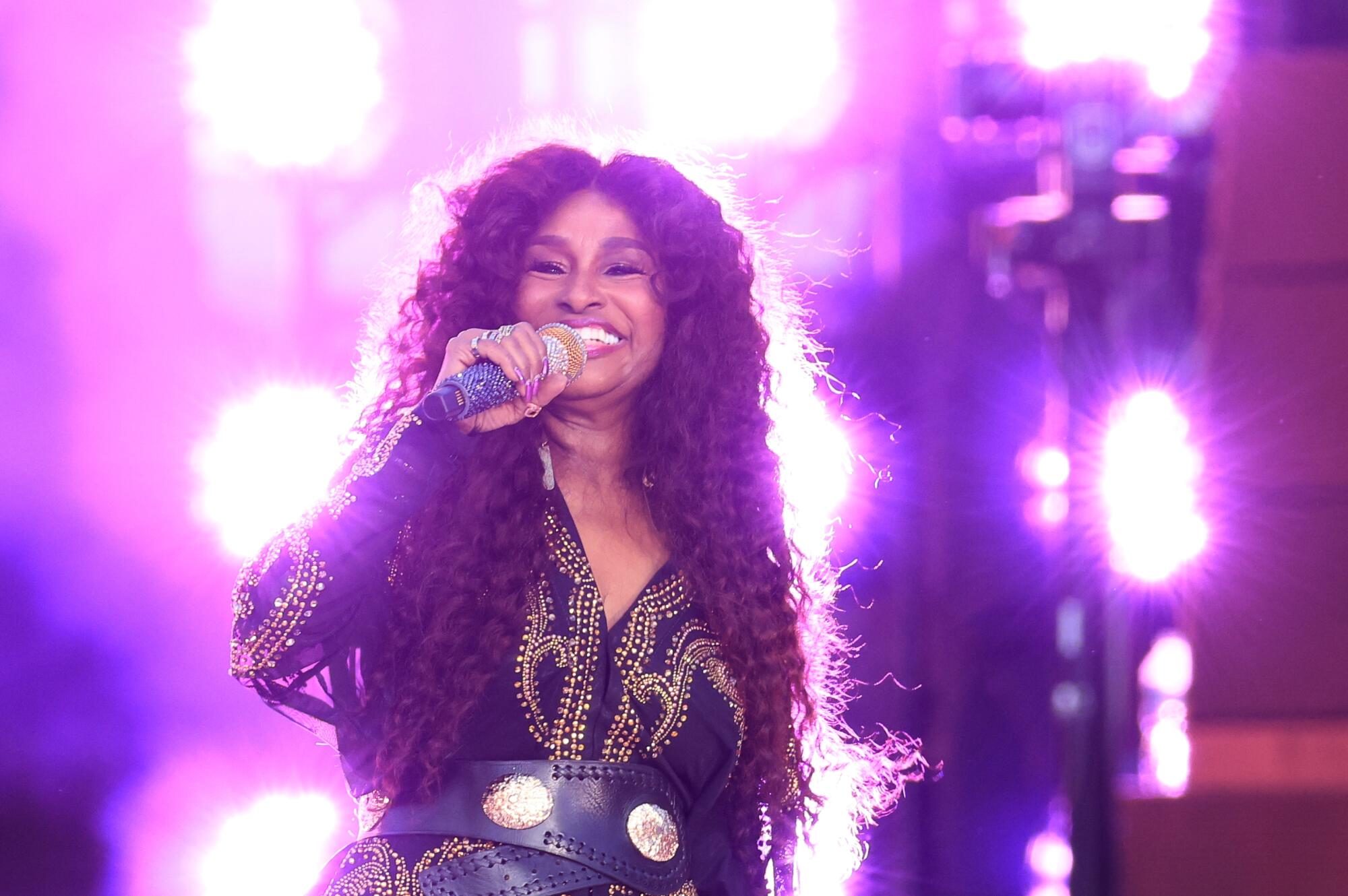
Chaka Khan performs.
(Myung J. Chun / Los Angeles Times)

Queen Latifah hosted the show.
(Myung J. Chun / Los Angeles Times)

A couple in patriotic garb share a kiss.
(Myung J. Chun / Los Angeles Times)

Smashing Pumpkins performs.
(Myung J. Chun / Los Angeles Times)

A concertgoer enjoys confetti.
(Myung J. Chun / Los Angeles Times)

Maren Morris performs.
(Myung J. Chun / Los Angeles Times)

It’s a good year when we get movies like Remarkably Bright Creatures and The Sheep Detectives at the same time. If there’s one type of emotional draw we’ll never say no to when it comes to the fiction we consume, it’s wholesome. The kind of movies and TV shows that leave you with a bit more hope than you expected. The kind of stories that make you believe that humanity isn’t as broken as it really is.
The Sheep Detectives is essentially tailor-made for anyone who loves a good whodunnit that’s rich with nuance and humor. The clever decision to shift the genre into something both kids and adults could appreciate together is no small feat, and that’s largely where its mass appeal lies. Murder is a heavy subject to deal with—as is grief—yet this story makes sitting with the weight of both a little easier. It could kickstart a number of thoughtful conversations while it simultaneously delivers plenty of laughs along the way.
For adults, there’s also a huge appeal in the casting—the voice actors especially. Anyone who knows me knows that Ted Lasso is the kind of show I’ll always put first, so hearing Brett Goldstein voice a sheep is the kind of A+ decision that’s effortless to appreciate. Hugh Jackman, Nicholas Galitzine, Molly Gordon, Nicholas Braun, Emma Thompson, Julia Louis-Dreyfus, Bryan Cranston, Bella Ramsey, Regina Hall, Rhys Darby, Patrick Stewart, Hong Chau, and the whole cast do an exceptional job as well, making every moment of The Sheep Detectives thoroughly entertaining.

It’s hard to imagine anyone coming out of the movie not thinking it’s one of the best things we’ll watch all year, and that’s a high compliment considering 2026 is full of gems like Project Hail Mary and the upcoming The Odyssey. It’s the exact kind of movie we could all use, but more than anything, the kind of story we could use more of. If there’s any sort of sequel, sign me up. Let’s make it a trilogy. Give us more of the sheep.
The cinematography is gorgeous, the writing is sharp, the performances are thrilling, and the message is a gem worth holding onto. The Sheep Detectives is the kind of feel-good treasure that does an excellent job of reminding us why movies like this will always matter. There’s a thoughtful message about how grief is meant to be shared and why it’s so important to carry those who’ve passed with us. Yes, it’d be convenient to forget our pain by sheer mental willpower, but we aren’t meant to do that. As humans and as animals, I imagine that the good, bad, and ugly are all part of what makes life beautiful, and that’s a comforting message to sit with.
The concept of a whodunnit featuring sheep solving a murder sounds so wild on paper, yet everything about it results in the kind of movie that should signal to Hollywood we want more creative approaches to what’s familiar. There’s a reason The Muppets are so popular, and we shouldn’t be afraid of making things that sound a bit too whimsical on paper. In other words, The Sheep Detectives embraces the whimsy, and it’s exactly what makes it so delightful.
The Sheep Detectives is now streaming on Prime Video.
First Featured Image Credit: ©Amazon MGM Studios
Related
-
 Politics12 minutes ago
Trump says he disputed U.S. star player’s suspension, calling it ‘stain’ on World Cup
-
 Science15 minutes ago
14 propositions that could remake California taxes, housing, healthcare and elections
-
 Sports20 minutes ago
Lakers lose Rui Hachimura, who signs two-year deal with the Clippers
-

 World30 minutes ago
Hungary could vote to oust president as early as next week
-

 New York2 hours ago
How a Museum Security Guard and Artist Lives on $51,000 in Parkchester
-

 Los Angeles, Ca2 hours ago
Heat advisory issued as Southern California temps near triple digits this week
-

 Detroit, MI3 hours ago
Detroit Battery Safety Provider Reaches to the Skies with Med Hawk
-

 San Francisco, CA3 hours ago
A Locals-Approved Modern Guide to Fisherman’s Wharf: Seafood, Beer Gardens + Iconic Bay Views

