Connect with us

Northeast

Shark attacks 2023: 6 US scrapes with predators in the sea

Published

on

Shark attacks 2023: 6 US scrapes with predators in the sea
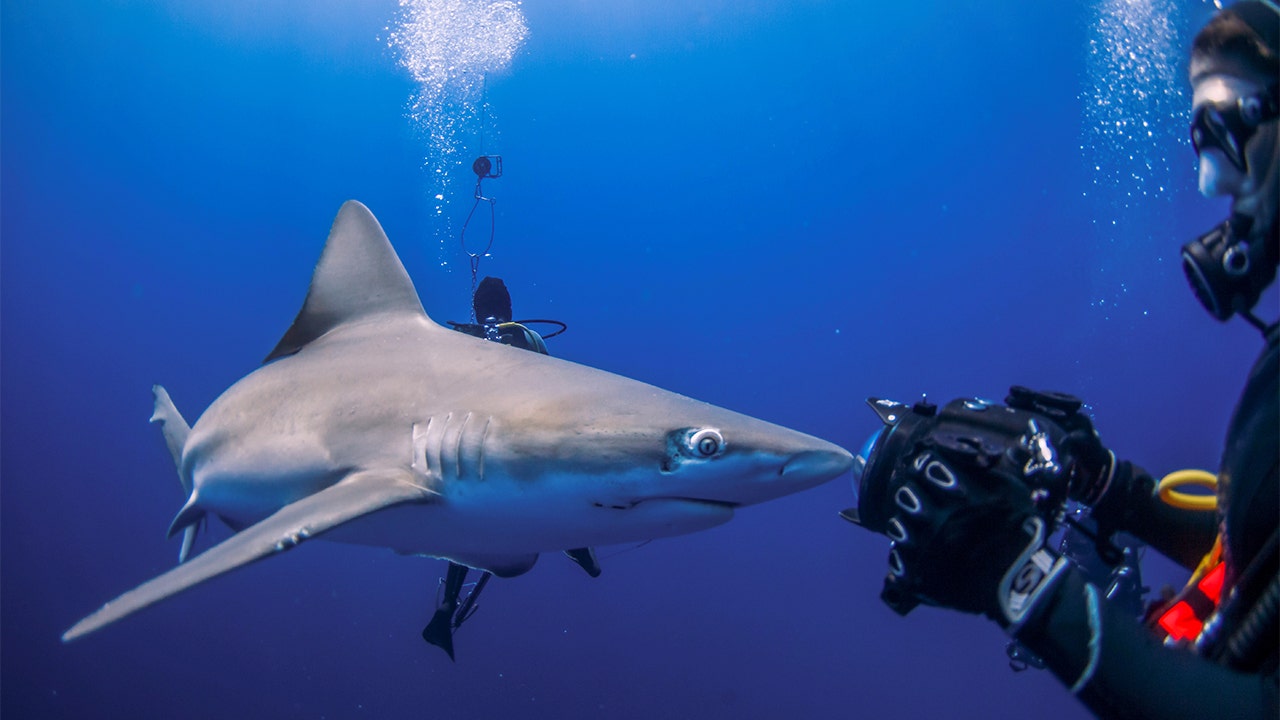
As of Dec. 15, there have been 80 shark attack bites recorded worldwide in 2023, per TrackingSharks.com – 13 of them were fatal. Half of this year’s shark attacks took place in the United States, with 20 in Florida, five in Hawaii, two in California, six in New York and three in South Carolina. 

Only one shark encounter in U.S. waters proved fatal this year, per the site.

Fox News Digital compiled six incredible stories from shark attack victims who lived to tell the tale.

Rockaway Beach in Queens, New York

New York’s Rockaway Beach was shut down after 65-year-old swimmer Tatyana Koltunyuk lost “approximately 20 pounds of flesh” to a roving shark, per the New York Post.

The outlet also obtained a grisly photo of the woman’s thigh with a large chunk of flesh missing after the Aug. 7 incident. She was transported to nearby Jamaica Hospital and survived the attack. 

Advertisement

Koltunyuk underwent at least five surgeries after the attack and faces permanent disability, per a GoFundMe set up by her family. 

SHARK WITH MASSIVE JAW CIRCLES NERVOUS PADDLEBOARDER IN ‘EERIE’ FOOTAGE

Tatyana Koltunyuk, 65, lost approximately 20 pounds of flesh from her upper left thigh when she was attacked by a shark on New York City’s Rockaway Beach on Aug. 7, according to officials. (GoFundMe)

Police respond to Rockaway Beach at Beach 59th Street in Queens, New York City after a swimmer was attacked by a shark on Monday, Aug. 7, 2023. (Photo by Gardiner Anderson for NY Daily News via Getty Images)

Ponce Inlet, Florida

Two swimmers were bitten at the same Florida beach over Labor Day weekend – both victims survived, and it is unclear whether they were attacked by the same shark. 

Advertisement

One victim, a 37-year-old woman from Apopka, Florida, was bitten on her right foot while swimming in shallow waters on Ponce Inlet, the Volusia County Beach Safety unit confirmed to Fox 35 Orlando at the time. She reportedly never saw the shark that bit her. 

The second victim, a man in his 30s, was bitten on his left hand near the Ponce Inlet Jetty. He refused medical attention at the scene and drove himself to an area hospital, the outlet reported. 

SHARKS: 12 INTERESTING FACTS ABOUT THE MARINE FISH

A shark runs into the lens of a photographer during an outing with scuba company Emerald Charters off Jupiter Inlet, Florida, May 18, 2022. (REUTERS/Sam Wolfe)

New Smyrna, Florida

Mark Sumersett of South Carolina, 38, detailed his unexpected meeting with the shark that bit his face on Sept. 12 during his Florida vacation.

Advertisement

“I got bit when I was a little kid by a dog, and it kind of felt like that, but like a bear trap closing in on me,” the surfer told Fox 35 Orlando of the interaction at the popular New Smyrna Beach. It was definitely a fight or flight situation.”

Sumersett got 12 stitches along his cheek and chin after the face-to-face encounter. 

“God has a reason for me to be here. And that’s to help other people on this earth,” he said. “I’m just so grateful.” 

SHARKS MIGHT BE CONSUMING COCAINE AS AMERICA’S DRUG CRISIS SPILLS INTO THE SEA

Mark Summerset is “so grateful” to be alive after a shark bit him on his face at a popular Florida beach in September. (FOX 35 Orlando)

Advertisement

Mark Summerset got 12 stitches to his cheek and chin after the attack, which he compared to a dog bite he sustained as a child. (FOX 35 Orlando)

St. Petersburg, Florida

A Florida woman swimming off the Gulf Coast in St. Petersburg on Sept. 30 said she is lucky to be alive after a shark clamped down into her midsection. 

Natalie Branda, 26, got 14 stitches across her backside and stomach after the near-death incident. 

“We were jumping off the boat, swimming around, floating for a few hours. Just having a fun day,” Branda told FOX 13 Tampa Bay. “I just felt pressure, and it released, and I was like ‘I got bit.’ I swam the fastest I ever swam to the boat.”

US TOURIST PADDLEBOARDING IN BAHAMAS KILLED BY SHARK: POLICE

Advertisement

Palm Beach, Florida

A drone-flying Florida YouTuber captured a bull shark’s attack on his friend’s boat late this July. Josh Jorgensen, who produces videos for the BlacktipH Fishing channel, caught the animal’s eight attacks on the small vessel off the Palm Beach coast. 

Jorgensen said he was following his boat with his drone because his friend was chasing down two Cobia, which he calls “the tastiest fish in the ocean.” But then, a bull shark appeared, turning its sights to the boat’s engine. 

“I didn’t think a shark could actually shake a boat like that,” boat driver Carl Torresson said in a later interview. “The boat was shaking like a bag of popcorn. Like, literally, I was shaking like an earthquake… I’m like ‘Are you kidding me? This is like a ride from Universal Studios.’”

After the ordeal, the men said, the entire engine had been ripped out entirely.

MASSIVE 1,700-POUND WHITE SHARK TRACKED JUST OFF U.S. COAST

Advertisement

New Smyrna, Florida

A Florida surfer credited his survival to his friend’s quick thinking after seeing the water “turn red” with the 21-year-old’s blood. 

Reece Redish was watching Chris Pospisil from the shore of a New Smyrna beach in July when a shark “came from under” the latter man and “tipped [him] backwards off [his] board.” “I saw my foot in his mouth, and it dragged me under,” Pospisil told FOX 35 Orlando. 

Redish immediately jumped into the water, swam out to his friend and pulled the surfer back onto his board. 


“I’m not going to leave my friend in the water,” Redish told the outlet. “I’m willing to put myself at risk to help out anyone.” 

Advertisement

The surfer sustained extensive damage to his left foot – seven tendons and a couple small arteries needed to be surgically repaired. A skin graft was created to cover the injury, and several pieces of the shark’s tooth were shattered and stuck in Pospisil’s bone. 

However, despite his ordeal, the 21-year-old intends to continue surfing, he told the outlet. 

Read the full article from Here

Continue Reading
Click to comment

Leave a Reply

Your email address will not be published. Required fields are marked *

This site uses Akismet to reduce spam. Learn how your comment data is processed.

New Hampshire

Episode 1: You don’t know about this?

Published

on

Episode 1: You don’t know about this?


A New Hampshire town finds out its water has been contaminated by a “forever chemical.” The source appears to be the nearby Saint-Gobain plant. Officials say the potential health effects are unclear, but most people can still drink the water. One resident doesn’t buy it and goes down a research rabbit hole. She soon learns all this has happened before.

Documents & Resources

We reviewed hundreds of documents for this project. We’ve included a few below.

  • The email to state regulators
    This is the email Ed Canning, Saint-Gobain’s then-Director of Environment, Health and Safety, sent to New Hampshire regulators on Feb. 26, 2016 — the day after Vermont announced it had detected PFOA in private wells near the company’s North Bennington plant. NHPR obtained this email through a right-to-know request.
  • The press release
    This is the press release the New Hampshire Department of Environmental Services sent out the following week on March 4, 2016, announcing that PFOA had been detected in samples of drinking water from Merrimack’s public water system.
  • Saint-Gobain’s response
    This is an April 13, 2016 letter from Saint-Gobain to New Hampshire state regulators. While it does not admit any liability, the letter outlines the steps the company initially agreed to take “to ensure that residents living near Saint-Gobain’s Merrimack facility… have drinking water without elevated levels of PFOA.”

Transcript

Mara Hoplamazian, narrating: Ben Peirce was driving home. He’d just dropped his kid off at daycare. And he noticed something kind of odd.

Ben Peirce: I remember coming down High Range Road and passing one of the neighbors houses up on High Range Road, and they were getting a water delivery.

Advertisement

Hoplamazian, narrating: Like, cases and cases of bottled water. The kind of delivery you’d see at a convenience store.

Peirce: And I remember just thinking like, “Wow, they really love the bottled water there! Like, I’m surprised that they have, like, special delivery of bottled water to their house.”

Hoplamazian, narrating: Ben’s family had just moved to Londonderry, a town in southern New Hampshire, in the summer of 2019. Now it was October. Ben was still new in town. The water thing was weird… but whatever. He kept driving.

Peirce: And I came around the circle and I drove down to our house and sitting right in our driveway was a whole massive pallet of water. Um, no explanation, no delivery person. It was just sitting there in the driveway.

[MUSIC IN]

Advertisement

Hoplamazian, narrating: Later, Ben did the math. Someone had delivered roughly 2,700 gallons of water to his house.

Hoplamazian, off mic: There wasn’t, like, a note?

Peirce: There was nothing, no. And I just assumed it had to be a mistake.

Hoplamazian, narrating: Ben remembered the delivery truck he saw. He decided to try and catch up to it.

Peirce: So, I hopped back in the car and I drove around the block and I said, [LAUGHING] “Hey, um, I don’t know if you made a mistake, but there’s all this water in our driveway. We didn’t order any water.” Um, and he kind of sheepishly said, like, “Oh, you don’t know about this…?”

Advertisement

[MUSIC OUT, CREEPY TONE IN]

Hoplamazian, narrating: For a lot of people… the Peirces, me, maybe you… tap water is a given, like the sky being blue or pavement being solid. Turning on the tap is a reflex, almost like breathing.

[MONTAGE OF WATER SOUNDS]

Hoplamazian, narrating: We do it when we shower. Fill the coffee pot. Boil pasta. When we brush our teeth.

After the surprise delivery, Ben made a few calls. And he discovered that the water he and his family had been using for months had something in it. Something that made it unsafe to drink or to cook with. Something you couldn’t boil out.

Advertisement

[WATER SOUNDS UP, THEN ABRUPTLY OUT]

Hoplamazian, narrating: So, instead of turning on the tap, they started cracking open plastic bottles. They explained to their two young kids, “Don’t drink out of the faucet. Don’t even use it to rinse your toothbrush.” One of the things Ben worried about most was the teeth brushing, especially with his 3-year-old, Kinsey.

Peirce: You know, it was a lot for her to just even manage a tube of toothpaste and a toothbrush, you know? So, to then ask her to… you know, unscrew a cap and pour a little bit of water on her toothbrush and then, you know, uh… I really didn’t think they’d be able to do it as kids.

Hoplamazian, narrating: They still used the tap for showering, but tried hard not to get the water in their mouths. They still used the sink for washing plates, but dried them off extra carefully. Their son Parker was 7 at the time.

Parker Peirce: Probably the most inconvenient part about it is remembering to tell people that haven’t been here before–

Advertisement

Ben Peirce, off mic: Yeah.

Parker Peirce: –‘Cause, like, it’s not like– We’re just kinda used to it. But, like, if I have friends over that haven’t been over before, then I– then we have to, like, remember to tell them that they can’t drink the water.

Hoplamazian, narrating: It’s been almost six years since the first pallet of water showed up in the Peirces’ driveway. Parker is almost a high schooler now. And they still can’t drink the water from their faucets.

Ben Peirce: I really don’t think that day that I realized that it was a life-changing event. [LAUGHS] You know? Like, I-I knew it was a big deal. Like, I, you, you knew that it was gonna change the house and the home value and, like, you had all the panic, but you didn’t realize that, like, as of this date, your whole existence is gonna change.

[THEME MUSIC IN]

Advertisement

Hoplamazian, narrating: How did this happen? What led to that water delivery at the Peirces’ house? That’s what I’ve been trying to figure out for a few years now.

What I found is a story about people who get stuck in the middle of something that doesn’t feel right…

Michael Hickey: And I started thinkin’, “Why are all these people always sick? You know what–?” ‘Cause in a smaller community like this, you know what the neighbor has for illnesses.

Hoplamazian, narrating: …Who have to find their own way through a maze of chemical companies, government regulations, and the limits of science.

Loreen Hackett: When there’s no answers, you’re just like, “Oh, okay… Got, just got dealt a really bad hand,” ya know?

Advertisement

Mike Wimsatt: It’s always a gray. And people hate gray, right? But the world of a scientist is a gray world.

Hoplamazian, narrating: It’s a story about the water in your faucet and the beginning of a problem that could last forever.

From the Document team at New Hampshire Public Radio, I’m Mara Hoplamazian. This is Safe to Drink.

[THEME MUSIC UP AND OUT]

Hoplamazian, narrating: It’s March 2016 – three years before Ben Peirce chased his water delivery driver down the street. And we’re one town over from where Ben’s family lives – in Merrimack.

Advertisement

Merrimack is like a lot of other places in southern New Hampshire. There are industrial buildings fanning out from the center of town and a main drag with a park, a library, a few places where you can get steak for dinner.

On this night, dozens of people are filing into a school gym, filling up the chairs that have been set up on a basketball court.

Town Moderator Lynn Christensen: I think we’re semi-under control here. DES is here, as well as a number of the town… [FADES OUT]

Hoplamazian, narrating: State officials called this meeting. They had just announced that something had been detected in Merrimack’s drinking water. A chemical called P-F-O-A. Perfluorooctanoic acid. They knew people would have questions.

[MUSIC IN]

Advertisement

Hoplamazian, narrating: I wasn’t in Merrimack that night. I didn’t even live in New Hampshire in 2016. But I’ve been watching the aftermath of this night unfold since I started working as a reporter here.

There’s a recording of the night on YouTube. The room has the atmosphere of a town meeting. It’s an annual tradition in New Hampshire.

Christensen: I’m gonna remind you that just like at town meeting, we have Merrimack manners. You guys have always been good about this. I wanna remind you that we’re still under those rules.

Hoplamazian, narrating: Town meetings can be kind of sleepy – a couple dozen dedicated citizens showing up to vote on how much to spend on the sewer system or whether to cut down and sell trees from a town-owned forest.

But on this night, the room is absolutely packed. People bring in extra chairs for the crowd, but there still aren’t enough. Eventually, the walls are lined with people standing. Everyone is looking around at each other, whispering to their neighbors. It seems tense.

Advertisement

NH DHS Commissioner Tom Burack: This is not a situation that any of us wanted, and I want to assure you that we here are as concerned about this as you are.

[OFFICIALS PRESENTING ON STAGE FADES UNDER NARRATION]

Hoplamazian, narrating: For an hour, state officials in suits give a presentation about this chemical that was found in the water – PFOA. A screen behind them ticks through slides full of acronyms, diagrams, color-coded maps.

They explain that this chemical is used to help manufacture Teflon products and that it’s part of a bigger family of chemicals… per- and poly-fluoroalkyl substances. Nickname – PFAS. They don’t occur naturally. They’re manmade.

Dr. Ben Chan, on stage: [FADES UP] As, uh, Mike said, my name is Dr. Chan. I’m with the New Hampshire Division of Public Health Services… [FADES UNDER]

Advertisement

Hoplamazian, narrating: New Hampshire’s state epidemiologist, Ben Chan, tells the crowd these chemicals are in stuff we use all the time… microwave popcorn bags, fast food wrappers, clothing.

He says basically everywhere scientists have looked, they’ve found these man-made chemicals in the environment. But officials say the levels in the water in Merrimack are higher than the background levels.

Even though PFOA is everywhere… it doesn’t really seem like anyone knows very much about it. Chan calls it an “emerging contaminant.”

Chan, on stage: So, the big question here is what does finding PFOA in the water mean for our health, your health, the health of your loved ones? Uh… The, the, the quick answer is that the long-term health effects, uh, are really unclear.

Hoplamazian, narrating: “The long-term health effects are really unclear,” he says. Researchers are still studying them. There’s a list of potential health effects in really small type up on the big screen.

Advertisement

Chan, on stage: [FADES UP] …uh, to show you the types of health effects that are being studied… [FADES UNDER]

Hoplamazian, narrating: Liver enzyme levels, total cholesterol, uric acid, sex hormones, thyroid hormones, immune function, obesity, birth weight, kidney function, diabetes… cancers.

Chan, on stage: [FADES UP] …uh, kidney cancer, prostate cancer… [FADES OUT]

Hoplamazian, narrating: But Chan says the studies aren’t all coming to the same conclusions. They’re difficult to interpret.

Chan, on stage: [FADES UP] …What do these ultimately mean for a person’s health? And the answer is we still don’t know. Um, as an example… [FADES OUT]

Advertisement

[MUSIC IN]

Hoplamazian, narrating: And here’s where things seem to get even more confusing. The officials tell the crowd… they don’t really know what levels of this chemical are safe to drink. But they’re also saying… for most people, including everyone on the public water system, there’s no reason to believe it’s unsafe to drink.

NH DES official Mike Wimsatt: This is why it’s very uncomfortable for us being involved in this project, because we usually have a clearly articulated standard that’s enforceable under the Safe Drinking Water Act that’s been fully vetted by all the toxicologists and physicians to make sure that it’s a safe and protective number. We don’t have that right now. So, we’re using the best information we have to make a decision in the interim here about who we’re gonna provide bottled water to.

Hoplamazian, narrating: In 2016, federal regulators hadn’t set a legal limit for PFOA in drinking water. The officials say New Hampshire has set its own limit out of, quote, “an abundance of caution.” And people in Merrimack with taps testing higher than the state’s limit would start getting bottled water delivered to their houses.

[MUSIC UP AND OUT]

Advertisement

Christensen: Bring the mic up so you don’t have to s–… [FADES DOWN]

Hoplamazian, narrating: After they finish their presentation, officials open the floor for questions. Everyone gets three minutes to speak.

Man: [FADES UP] Much better. Uh, so, my wife is currently pregnant. Are there any, uh, any extra precautions that she needs to be taking…? [FADES OUT]

Woman: [FADES UP]…and get into the ground system. For those of us who have gardens and are feeding our children from them, are the plants absorbing the PFOAs or do we know that?

Man: [FADES UP]…um, ya know, animals and stuff, fishing and everything else for – Are they safe to c–to consume… for hunters? [FADES OUT]

Advertisement

Hoplamazian, narrating: The meeting drags on into the night. And over and over again, the people up on stage don’t really have answers.

[MONTAGE OF OFFICIALS]

Official 1: We don’t know exactly what that level is…

Official 1: We don’t know what the levels of exposure that we’re seeing are…

Official 2: There’s a lot we don’t know yet. We’re still trying to put the pieces of this puzzle together…

Advertisement

Official 3: I don’t know what the levels in the pond are…

Official 4: We don’t know what that…

Official 2: I’m sorry. We’re going to have a frustrating answer on that. We don’t know. We only know what we know from the recent…

Woman, on mic: …And if we don’t know, why are you not telling us that we shouldn’t be drinking the water? Can I drink the water? Can my pregnant patients drink the water? [APPLAUSE, FADES OUT]

Hoplamazian, narrating: The question that sticks with me most from this meeting came from a woman who had lived in Merrimack for almost 30 years. She told the crowd her husband had recently died of prostate cancer.

Advertisement

Second woman, on mic: My husband was a big water drinker – tap water. He liked it room temperature. [PAUSES, VOICE BREAKS] And my concern is… I was the one that gave him that water to drink. I don’t know if I killed my husband… and that’s my feeling right now. I don’t know what to do about it now.

[MUSIC IN]

Hoplamazian, narrating: The gym emptied out after almost four hours, but there seemed to still be more questions than answers. What was this chemical? How did it get into Merrimack’s water? What was it doing to people’s bodies? And… what next?

Second woman, on mic, tearfully: Something and somebody has to be responsible for this.

[MUSIC UP AND OUT]

Advertisement

[MIDROLL BREAK]

Hoplamazian, narrating: From the start, suspicion fell on a local factory owned by the Saint-Gobain Corporation.

It was actually this factory that first detected PFOA in the Merrimack water supply, when they tested their own taps. That water was coming from the town’s supply. So, when the company found PFOA in that water, they reported it to the state.

Saint-Gobain was familiar with PFOA. They used it at the factory. But in letters to town officials, Saint-Gobain said they believed other sources, like a local landfill, caused the contamination. The company was basically saying… sure, their tests found PFOA in the town’s water, but it wasn’t their fault.

[MUSIC IN]

Advertisement

Hoplamazian, narrating: Saint-Gobain is a massive French manufacturing company, one of the oldest companies in the world.

By the way, a lot of people who worked there call it “Sahnt-Gobahn.” I’m going to say “Saint-Gobain” since that’s how most people say it in Merrimack.

The Merrimack plant was huge and a pretty big employer in town, but to Saint-Gobain, it was a tiny star in a big, global constellation. There’s a very good chance you’ve ridden in a car with a Saint-Gobain windshield or been in a building with Saint-Gobain siding or roofing or insulation.

In Merrimack, they were making coated fabrics.

Coated fabrics. It doesn’t sound that exciting. But the stuff they were making, it was kind of amazing. Think of all the things that make a material useful – lightweight, resistant to fire and water and sun. These fabrics could do it all.

Advertisement

Workers at the plant made those coated fabrics and then turned them into stuff like grill sheets for fast food restaurants and super-durable suits for emergency responders.

Right before Saint-Gobain bought the factory, it was owned by a different company called Chemfab. The plant had a few minutes of fame after they made fabric for a huge dome that was built in London to celebrate the millennium.

Millennium Dome Promo clip, Woman with British accent: [MUSIC FADES UP]…The dome at Greenwich, the biggest dome in the world and the first wonder of the new millennium… [FADES OUT]

Laurene Allen: So, everybody was like, “Whoa!” You know, “Look at this, the Millennial Dome! This is really cool.”

Hoplamazian, narrating: This is Laurene Allen. Merrimack resident since 1985. I’m not sure what determines who becomes an activist – some drive for fairness or a special brand of persistence. But whatever that thing is, Laurene has it.

Advertisement

[MUSIC IN]

Hoplamazian, narrating: For her, this all started on her couch. She was watching the local public TV station. They were broadcasting a meeting about the PFOA contamination. She remembers how state officials couldn’t – or maybe wouldn’t – answer most people’s questions.

Allen: I’m picking up this arrogant, a little mansplaining, a little… They were patronizing some of them and I know that. As a female in my generation, I know when somebody’s saying, “There, there, dear. Don’t worry about it. The men have this under control.” I recognize that feel and I, I immediately say, “Somethin’s going on here. Something’s going on here.”

Hoplamazian, narrating: Laurene felt unsettled. One of the things officials said was that these chemicals had been in use since the 1940s. She was like, “What do you mean we don’t know anything about them?”

So, she started spending her free time researching. By 2016, you could find a lot about PFOA with a Google search. There were health studies, news stories, lawsuits… Laurene began breaking a central rule of her sleep routine – no electronics upstairs. She started bringing her iPad to bed.

Advertisement

Allen: So, the more you’re going down Alice in Wonderland’s crazy world at a late time at night when everybody else is sleeping and you’re going, “Oh, my freaking word!” And you feel like you’re the only one who knows this… But somebody has to know it! But is anybody connecting all the dots?

Hoplamazian, narrating: Laurene’s a therapist – not a scientist. But she felt her brain begin to work like an encyclopedia, rattling off facts and acronyms that she didn’t even realize she’d learned. And she had a clear feeling – This stuff, PFOA, it really doesn’t seem like it’s safe to drink. So, why were officials saying it was fine?

[MUSIC OUT]

Hoplamazian, narrating: Laurene and a few other Merrimack residents started hosting meetings about the water at the town library and sometimes at Laurene’s house.

Hoplamazian, narrating: One of the other people who showed up was Wendy Thomas.

Advertisement

Wendy Thomas: We live in New Hampshire. We’ve got mountains, we’ve got lakes. You know, our water is beautiful. Um, I never– It never occurred to me that our water would be contaminated. It just never occurred to me.

Hoplamazian, narrating: Wendy raised six kids in Merrimack. By 2016, she already had experience with local activism. She’d organized to stop a gas pipeline from coming through town. But she didn’t know anything about PFOA. That is, until she heard Laurene talk about it at one of those library meetings.

Thomas: Boy, she knows her stuff. And she just rattled off all of these acronyms and all of these facts. And I was… I was like, “Wow.”

Hoplamazian, narrating: She remembers coming home from one of those meetings and telling her husband, “We need to get our well tested.”

[MUSIC IN]

Advertisement

Hoplamazian, narrating: Their house wasn’t on public water. Like about half of people in New Hampshire, Wendy’s family got their water from a private well on their property.

But getting tested was complicated. Wendy’s house was about three miles from Saint-Gobain’s Merrimack plant. The state was focusing their testing on wells within a mile and a half of the plant.

Wendy and Laurene were skeptical of that radius. To them, it seemed like the state was saying anyone further away doesn’t need to be concerned about this.

Thomas: Even my husband was like, “The state says it’s safe. You know, we, we–” And I was like, “I don’t care. We’re testing our water.”

[MUSIC UP AND OUT]

Advertisement

Hoplamazian, narrating: Okay, let’s step back for a moment. Maybe you’ve heard the saying, “The dose makes the poison.”

Doses of PFOA are measured in parts per trillion. You’re gonna hear parts-per-trillion a lot in this podcast – sorry.

The comparison used most often is that one part per trillion is like a droplet in about 20 olympic-sized swimming pools. It’s like one second in 31,546 years. Tiny, right? But you know what they say about the little things.

Remember, at the time all this was going down in Merrimack, the U.S. Environmental Protection Agency didn’t have official regulations or limits for how much PFOA could be in drinking water, but they did put out some guidance. It shifted around over the course of 2016 from 400 parts per trillion to 70 parts per trillion.

In Merrimack, Saint-Gobain’s PFOA testing on the town’s public water was coming back at about 30 parts per trillion. So, all good, right? But next door in Vermont, their standard was 20 parts per trillion. That was confusing.

Advertisement

Then, there’s the fact that PFOA bioaccumulates.

[MUSIC IN]

Hoplamazian, narrating: That means it builds up in your body over time if you keep ingesting it… like a bathtub with a clogged drain. With a steady drip, the tub eventually fills up. That’s part of how PFOA and the family of PFAS chemicals like it got their nickname, “forever chemicals.” They stick around in human bodies for a really long time.

So, it matters not just how much PFOA is in your water, but how long you’ve been drinking it. And before 2016, the EPA’s guidelines were only for short-term exposure – not for water you’d drink over the course of a lifetime.

[MUSIC UP]

Advertisement

Hoplamazian, narrating: For people not on the public water system in Merrimack, things were even more confusing. When the state started testing private wells within a mile of the Saint-Gobain plant, some of those levels were coming in much higher than the town – at 190, 360, 820 parts per trillion.

Saint-Gobain agreed to pay for bottled water or other solutions for houses that tested over the guidelines the EPA was using.

As for Wendy, her well tested at 40 parts per trillion. So, well under the EPA’s guidance of 70, but double Vermont’s limit of 20. Wendy told her kids not to use the taps. They started drinking bottled water and installed two kinds of filtration systems. All together, she was out more than $5,000.

[MUSIC UP AND OUT]

Hoplamazian, narrating: Water contamination isn’t the kind of fiasco that happens all at once. Months went by. The state and Saint-Gobain were negotiating. Many families were living on bottled water.

Advertisement

Merrimack was trying to get the chemical out of its public water. As the town tried to figure out their treatment options, they shut down the public wells testing highest for PFOA and kept others testing at lower levels online. For everyone on the public system, the word was, it was still safe to drink.

It seemed like people started settling into loose camps. There were some who trusted the official word – said, “Hey, I’ve been drinking the water. I’m fine.”

The other camp – Laurene, Wendy, and their friends – said, “No. We need to do something.” They started showing up to local government meetings, trying to get people to take their concerns seriously.

Thomas: And it was mostly driven by women. There were some men in this initial advocacy group, but we were hysterical women. We were fearmongerers. We were, you know, going to drive down the property rates in, in Merrimack. We were going to, you know, force businesses out of Merrimack. You know, we had better shut up if we know what’s good for us.

Hoplamazian, narrating: At one town council meeting, several councilors told Laurene’s group they shouldn’t say the town had contaminated water.

Advertisement

Allen: Old guy – [USES DEEPER VOICE] “Don’t say the word ‘contamination.’ It’s inflammatory language…!”

Thomas: And you better believe from then on, I only used the word “contamination” because that’s what it was. It is contaminated.

Hoplamazian, narrating: Another council member basically said, “This isn’t an Erin Brockovich situation.”

Town Councilor, on mic: I continue to drink the water. My wife does. My daughter does. My dogs do. Okay?

Hoplamazian, narrating: Town councilors were worried about jumping to conclusions. They were worried about the town getting a reputation.

Advertisement

Town Councilor 2, on mic: The last thing I want to do is scare anybody and overreact to something we need to deal with, but not to the point where we’re going to scare anybody.

[THEME MUSIC IN]

Hoplamazian, narrating: From where I sit… here in the future, there’s something eerie about looking back at this moment, this fight about the contamination – even the word “contamination” – in 2017. Eerie… because all of this had already happened before.

This unprecedented, emerging contamination… it had already played out in another community 100 miles away. Like two towns putting on the same theater production. The set looked a little different. The cast was local. But the script, the themes, the choreography… they were mostly the same.

The plays are so similar that in this other town, the person playing the role of Laurene, a-local-resident-turned-activist, is also named Loreen.

Advertisement

Loreen Hackett: I’m not an activist, but I was pissed off. I was beyond angry knowing that now this was done to us.

Hoplamazian, narrating: That’s next on Safe to Drink.

[THEME MUSIC UP AND OUT, CREDITS MUSIC IN]

Hoplamazian, narrating: Safe to Drink is reported by me, Mara Hoplamazian.

Additional reporting and production by Jason Moon.

Advertisement

Our editors are Daniela Allee and Katie Colaneri.

Editing help from our News Director Daniel Barrick, Rebecca Lavoie, Taylor Quimby, Elena Eberwein, and Lau Guzmán.

Fact-checking by Dania Suleman. Legal review by Jeremy Eggleton.

Jason Moon wrote all the music you hear in this podcast.

Photos by Raquel Zaldívar, which you can check out at our website, NHPR.org/SafeToDrink.

Advertisement

That site was designed by Sara Plourde. Nate Hegyi designed our logo.

Safe to Drink is a production of the Document team at New Hampshire Public Radio.

[CREDITS MUSIC UP AND OUT]


Source link

Advertisement
Continue Reading

New Jersey

Exclusive | Ex-NJ GOP aide still carries visible scars after she paid fetish artist to carve her up as part of Trump attack hoax

Published

on

Exclusive | Ex-NJ GOP aide still carries visible scars after she paid fetish artist to carve her up as part of Trump attack hoax


CAMDEN, New Jersey – The Maserati-driving ex New Jersey GOP aide accused of paying a fetish artist to carve into her skin in a staged anti-Trump attack still bears the horrific scars — even as she’s trying to make a “fresh start” in Florida after undergoing mental health treatment.

Glamorous former law student Natalie Greene, 26, arrived at Camden Federal Court Wednesday in her Italian sports car, wearing a dark green mini dress and clutching a Louis Vuitton bag while sporting an ankle monitor on her left leg – along with the ghastly healed gashes still visible on her neck and jawline.

The Ocean City resident, arrested in November, allegedly paid a body modification artist $500 to slash dozens of gruesome wounds into her face, neck, chest, back, and shoulders with a scalpel on July 21.

Natalie Greene, wearing an ankle monitor, attempts to shield her face with her hands while walking into the courthouse. Luiz C. Ribeiro for NY Post

Two days later, prosecutors said she staged a bogus attack at Egg Harbor Township Nature Reserve, claiming three assailants held her at gunpoint, mutilated her skin, and wrote “Trump Whore” on her stomach.

Advertisement

At a court hearing Wednesday, Camden federal Magistrate Judge Elizabeth Pascal approved Greene’s request to relocate to Fort Lauderdale, where she will live with – and be supervised by – a childhood friend who was previously busted for cocaine and riding an unlicensed vehicle in the streets.

Greene’s lawyer, Louis Barbone, argued that the accused fraudster was desperate to rebuild her life, saying she had struggled to find work due to the case, had received death threats and been stalked online.

“The prospect of Natalie Greene getting a job in this area is slim to none,” Barbone told the judge, adding that moving to the Sunshine State “gives her a fresh start and ability to act normal.”

Greene’s ghastly old gashes are still visible on her neck and jawline. Luiz C. Ribeiro for NY Post

He added that despite living with her ex-boyfriend’s mother in what he described as a tension-filled “hell hole,” the former Rutgers Law student has successfully completed her court-mandated mental health treatment.

Barbone said Greene, who has a job lined up in Florida, will continue mental health treatment, stay on electronic monitoring, and follow a curfew when she lives with Kristin Haughton-James, a twice arrested mom of two who appeared in court via video to confirm she can accommodate her former campmate.

Advertisement

Federal prosecutors argued that the request for Haughton-James to supervise the former congressional aide to Rep. Jeff Van Drew (R-NJ) was taking her from “the frying pan into the fire.”

Greene claimed three men attacked her at gunpoint, tied her up and carved her with a knife. U.S. Attorney’s Office
Greene was found by police with “Trump Whore” scrawled on her stomach. U.S. Attorney’s Office

“I don’t think it’s a better plan,” prosecutor Patrick Askin said, pointing to the Florida woman’s 2025 arrest for riding an ATV in the street as a “red flag for judgement” and a “lack of respect for the law.”

Haughton-James was also busted in 2013 at age 19 for possession of cocaine, for which she went through a treatment program. She currently uses medical marijuana daily to treat her anxiety and is on probation for her current arrest.

But Pascal found Haughton-James, a waitress, “incredibly credible and forthright.”

The childhood friend agreed to report any violations Green – whom she met two decades ago and later reconnected with on Facebook following her high-profile arrest – assured the court that she “completely understands” her new responsibilities as a legal custodian.

Advertisement

Greene and Barbone declined to comment upon leaving court, though the latter said he hopes to negotiate a plea deal with federal prosecutors after reviewing the evidence.

Natalie Greene, the GOP aide accused of staging a fake attack, was ordered to undergo inpatient treatment. Facebook / Natalie Greene

The suspected con artist worked for Van Drew’s office while also attending Rutgers Law School at the time of the alleged hoax attack.

Greene claimed three gun-wielding men approached her on the nature trail, hog-tied her with black zip ties, and held her down while slashing her face and body on July 23.

“TRUMP WHORE” and “Van Drew is a racist” were also scrawled on her body with black marker.

Kristin Elizabeth Haughton-James will serve as Greene’s new legal custodian in Florida. Instagram/Kristin

Prosecutors said Greene was taken to a hospital, where she and her accomplice gave police conflicting accounts of what happened and provided faulty descriptions of the phantom assailants.

Advertisement

Police also found zip-ties stashed in her Maserati SUV.

Greene is charged with conspiracy to convey false statements and hoaxes and making false statements to federal law enforcement.

She faces up to ten years behind bars and a $250,000 fine if convicted on both counts.


Source link

Advertisement
Continue Reading

Pennsylvania

Pennsylvania Lottery Powerball, Pick 2 Day results for Jan. 28, 2026

Published

on


The Pennsylvania Lottery offers several draw games for those aiming to win big.

Here’s a look at Wednesday, Jan. 28, 2026 results for each game:

Winning Powerball numbers from Jan. 28 drawing

21-35-40-46-68, Powerball: 11, Power Play: 10

Check Powerball payouts and previous drawings here.

Advertisement

Winning Pick 2 numbers from Jan. 28 drawing

Day: 4-0, Wild: 1

Evening: 4-0, Wild: 5

Check Pick 2 payouts and previous drawings here.

Winning Pick 3 numbers from Jan. 28 drawing

Day: 2-1-6, Wild: 1

Evening: 0-3-3, Wild: 5

Advertisement

Check Pick 3 payouts and previous drawings here.

Winning Pick 4 numbers from Jan. 28 drawing

Day: 3-3-6-0, Wild: 1

Evening: 7-8-7-3, Wild: 5

Check Pick 4 payouts and previous drawings here.

Winning Pick 5 numbers from Jan. 28 drawing

Day: 0-2-5-7-3, Wild: 1

Advertisement

Evening: 2-5-1-2-4, Wild: 5

Check Pick 5 payouts and previous drawings here.

Winning Cash4Life numbers from Jan. 28 drawing

06-11-12-37-48, Cash Ball: 01

Check Cash4Life payouts and previous drawings here.

Winning Cash 5 numbers from Jan. 28 drawing

17-30-31-39-41

Advertisement

Check Cash 5 payouts and previous drawings here.

Winning Treasure Hunt numbers from Jan. 28 drawing

01-08-09-11-22

Check Treasure Hunt payouts and previous drawings here.

Winning Match 6 Lotto numbers from Jan. 28 drawing

05-06-23-30-31-36

Check Match 6 Lotto payouts and previous drawings here.

Advertisement

Winning Powerball Double Play numbers from Jan. 28 drawing

03-27-34-42-47, Powerball: 03

Feeling lucky? Explore the latest lottery news & results

Are you a winner? Here’s how to claim your lottery prize

  • Sign the Ticket: Ensure your ticket has your signature, name, address and phone number on the back.
  • Prizes up to $600: Claim at any PA Lottery retailer or by mail: Pennsylvania Lottery, ATTN: CLAIMS, PO BOX 8671, Harrisburg, PA 17105.
  • Prizes from $600 to $2,500: Use a Claim Form to claim at a retailer or by mail: Pennsylvania Lottery, ATTN: CLAIMS, PO BOX 8671, Harrisburg, PA 17105.
  • Prizes over $2,500: Mail your signed ticket with a Claim Form or in person at a Lottery Area Office (9 a.m. to 4 p.m.).

Lottery Headquarters is currently not open to the public. Visit the PA Lottery website for other office locations near you.

When are the Pennsylvania Lottery drawings held?

  • Powerball: 10:59 p.m. Monday, Wednesday and Saturday.
  • Mega Millions: 11 p.m. Tuesday and Friday.
  • Pick 2, 3, 4, 5: 1:35 p.m. and 6:59 p.m. daily.
  • Cash4Life: 9 p.m. daily.
  • Cash 5: 6:59 p.m. daily.
  • Treasure Hunt: 1:35 p.m. daily.
  • Match 6 Lotto: 6:59 p.m. Monday and Thursday.
  • Powerball Double Play: 10:59 p.m. Monday, Wednesday, Saturday.

This results page was generated automatically using information from TinBu and a template written and reviewed by a Pennsylvania editor. You can send feedback using this form.


Source link

Continue Reading

Trending
