World
Minority groups in Bangladesh detail violence, mistreatment following government's collapse: 'scapegoats'


Members of minority groups in Bangladesh spoke to Fox News Digital about the violence and mistreatment they have faced following the government’s collapse earlier this month, all using false names for fear of reprisal.
Violence, even murder and the burning down of minority-owned businesses, places of worship and residences have been a major problem since the government of former Prime Minister Sheikh Hasina was overthrown following violent protests. Bangladesh is 90% Muslim, with some Christians but mostly Hindus and Buddhists making up the rest of the population.
Sathya, a Hindu from Chittagong, told Fox News Digital that the Hasina government “wasn’t the best” towards the Hindu minority, pointing out cases of land-grabbing of Hindu homes and temples under her governance, but suggested that they faced better treatment than under other governments – “the lesser evil,” but only when “we are out of options.”
“Hindus have always been the ‘scapegoats’ and were blamed whenever there was an economic crisis or other political issue that we had no control over,” Sathya said. Indian outlet the Deccan Herald reported that 278 Hindu-owned locations have been ransacked since Hasina fled the country.
BANGLADESH PROTESTS THREATEN SAFETY OF RELIGIOUS MINORITIES AS TEMPLES BURNED, HOMES RANSACKED
He claimed that if a Hindu home sat empty, squatters would intrude and start building, and the government and legal system would do little to help protect Hindu land rights. Mobs would walk in and take whatever they wanted, such as furniture, cash and food.
Even within the Muslim community, the Ahmadiya sect has faced persecution from the Sunni majority who call them “heretics,” Ali, told Fox News Digital. “Our group has also been increasingly targeted just like the Hindus and other religious minorities.”
Protesters surround a suspected sympathiser of ousted ex-premier Sheikh Hasina, near the house of her father Sheikh Mujibur Rahman, ‘Bangabandhu’, the first president of independent Bangladesh, in Dhaka on August 15, 2024, to mark the anniversary of his assassination. (Luis Tato/AFP via Getty Images)
A Bangladeshi citizen who now lives in the U.S., says that when he looks at his homeland, he sees “no law and order” and that “Hindus have to stay vigilant, especially at night, worried that our homes will be raided and looted.”
“The government seems to not care about minorities,” he said while withholding his name. “A hotline was provided for Hindus to call if they are targeted, but nobody answers the phone number provided.”
BANGLADESH STUDENT PROTESTERS TO MEET WITH MILITARY CHIEF AFTER OUSTING COUNTRY’S PM
“Even though the region in general is a Buddhist minority today, Buddhism originated not far from here in nearby Nepal and has had a very long history here and is one of the major world religions. We wonder why the rest of the world stays silent when we are in such a crisis,’ Rajarshi, told Fox News Digital.
He felt that the latest violence portrays that any group that is not Sunni is not safe. “What’s the use of all of us having fought for independence from Pakistan if we are told we have no place in this country now?”
In this handout photograph taken and released on July 25, 2024, by Bangladesh Prime Minister’s Office, Prime Minister Sheikh Hasina addresses the media at a vandalized metro station in Mirpur, after the anti-quota protests. (Bangladesh Prime Minister’s Office/AFP via Getty Images)
While Christians make up a tiny minority of the country’s population, Fox News Digital recently reported that the organization Open Doors, which tracks discrimination of Christians worldwide, ranked Bangladesh as having “very high” persecution levels, claiming that “converts to Christianity face the most severe restrictions, discrimination and attacks.”
“Religious beliefs are tied to the identity of the community, so turning from the locally dominant faith to following Jesus can result in accusations of betrayal,” the group wrote on its website. “Bangladeshi converts often gather in small house churches due to the risk of attack.”
PROTESTS SWEEP INDIA OVER RAPE AND MURDER OF DOCTOR
Earlier this week Indian Prime Minister Narendra Modi wrote on social media platform X that he had spoken with the country’s interim leader Professor Muhammad Yunus, and the duo had “exchanged views on the prevailing situation.”
“Reiterated India’s support for a democratic, stable, peaceful and progressive Bangladesh,” Modi wrote. “He assured protection, safety and security of Hindus and all minorities in Bangladesh.”
The Washington Post reported that Modi’s government had pressured the United States to ease up on criticism of then-Prime Minister Sheikh Hasina, and the Biden administration complied – even putting plans for further sanctions against the Bangladeshi government on hold.
The U.S. State Department told Fox News Digital that “Our sustained engagement on democracy and human rights in Bangladesh and around the world speaks for itself,” and added that “We do not comment on our private diplomatic communications.”
DEATH TOLL FROM LANDSLIDE IN SOUTHERN INDIA REACHES 151 AS SEARCH OPERATIONS CONTINUE
Bangladesh re-elected Hasina’s Awami League party in January, extending its rule, which had started in 2008, prompting student protests at universities that ultimately spilled out into nationwide demonstrations against the party’s rule.
Both the party and its leader have faced accusations of “iron-fisted” and authoritarian rule, with many claiming the 2014 and 2018 elections as “shams” since the opposition either boycotted or were reduced to a “hopeless minority,” according to the New Yorker.
Nobel laureate and Chief adviser of Bangladesh’s new interim government Muhammad Yunus arrives to meet relatives of people who went missing during the tenure of ousted Prime Minister Sheikh Hasina, in Dhaka on August 13, 2024. (Indranil Mukherjee/AFP via Getty Images)
Shrinking employment and high inflation marred the Awami League’s last term, and the economic stress proved too much for many, especially a new policy that implemented a quota for civil service work – thereby withholding coveted jobs in what the protesters claimed was a kleptocratic move.
Ultimately, Hasina resigned and fled to India, taking many by surprise but allowing the protesters to have the change they wanted, which included putting humanitarian and Nobel Peace Prize laureate Professor Muhammad Yunus in place as the chief adviser to the interim government ahead of fresh elections in November.
Student protesters plan to create a new party to contest the elections and end the two-party monopoly that has burdened the country for almost two decades, Reuters reported. The student groups at the center of the protest want to talk with citizens across the country before deciding on their platform and will finalize their decision in a month.
“We don’t have any other plan that could break the binary without forming a party,” Tamid Chowdhury, one of the student coordinators at the center of the push to oust Hasina, told reporters.
Another student said that the “spirit of the movement was to create a new Bangladesh, one where no fascist or autocrat can return.”
“To ensure that, we need structural reforms, which will definitely take some time,” Nahid Islam, a protester who took up a role in Yunus’s temporary cabinet, explained.
Reuters contributed to this report.


PHILADELPHIA (AP) — Jordan Walker wore his Cardinals hat backward, chewed a big wad of bubble gum and wore the top of his jersey splayed open as he dug in for his final Home Run Derby swing.
The picture of Cardinals cool, Walker chased down Kyle Schwarber, shut up a rambunctious Philly crowd and introduced himself to a much wider baseball world.
Walker used six swings to swat six homers, besting Schwarber in a dramatic final round that silenced all those boo birds and made him the first St. Louis Cardinal to win the Home Run Derby on Monday night.
Schwarber hit 11 homers during his 15-swing turn in the final round. Philly fans, who jeered everyone but Schwarber and Bryce Harper throughout the night, quietly headed toward the exits when Walker’s winning shot soared over the left field wall.
“I was once told you don’t boo nobodies,” Walker said. “So it feels pretty good.”
The 24-year-old Walker sported the Derby champions’ chain, slipped on a leather jacket and still wore his batting gloves as he broke down what it took to take down Schwarber on his home turf.
“My thought was Philly is brutal,” Walker said. “I mean, honestly. But I think it’s pretty special because they love their players and that’s what you want from your home, like, where you play. I mean, I’d never hear people cheer so loud for, like, Schwarber and Harper. And those guys did their thing, for sure.
“But, you know, I can’t hate them, because that’s their guy, so I just got to play the game.”
Walker played a pretty great game in the first half for the Cardinals.
Walker is a first-time All-Star and having a breakout season in St. Louis. He already has a career-high 22 homers this season after struggling with a combined 11 over the previous two years.
Those final six in Philly all flying high with Iron Man on his bat are now stamped on the Derby highlight reel.
His cap backward just like Hall of Famer and Derby great Ken Griffey Jr., Walker celebrated with his family immediately on the field. His father rejoiced in recalling how Walker started hitting long home runs when he was 6 years old.
“When things got tough, they were always there in my corner to talk to them about it,” Walker said of his family. “They kept the energy levels high. They kept the feelings high.”
He fulfilled this childhood dream in striking fashion. Walker hit his seventh homer with two swings remaining and his eighth on the next swing to earn bonus swings. Needing to hit four straight homers to win, the right-handed Jordan knocked one off the top of the center field fence 401 feet away. He reached 10 homers and Philly fans booed with all their might, only for Jordan to finish the sensational surge and celebrate as fireworks shot off around him.
“You can’t say enough about how he was able to kind of slow the moment down, too, and lock it in,” said Schwarber, a Derby runner-up for the second time. “All of our fans were we’re raring and trying to will me to it.”
A revamped Derby format delivered great drama
MLB ditched its timed clock this season and returned to a swing format, with each hitter continuing to swing if he went deep on his final one.
The extra time between swings gave hitters time to track their home runs — and Philly a smidge more time to unleash those throaty boos at Contreras and Walker.
Each player had 20 swings in the first round and the top four advanced. Hitters were seeded for the second round, where No. 1 faces 4 and 2 meets 3.
Each player got 15 swings in the second round, with batters homering on their final swings continuing until not homering.
Boston’s Willson Contreras, Tampa Bay’s Junior Caminero, New York’s Ben Rice and Kansas City’s Jac Caglianone, and Chicago White Sox first baseman Munetaka Murakami also participated.
Philly came ready to celebrate its slugging stars
Phillies fans were wildly optimistic that Schwarber and Harper could somehow reach the final and crown the franchise’s third Derby champion.
Harper hit only eight in the first round and was the final slugger to try and advance. Schwarber could only watch as Harper failed to join him. Schwarber, then with the Chicago Cubs, made the finals in 2018 at Nationals Park before losing to Harper when he played with the Nationals.
Schwarber and Harper — the first pair of teammates to participate in the Derby since 2018 — received roaring ovations when famed ring announcer Michael Buffer introduced them ahead of the competition.
As for the other six sluggers in the field, all wearing their home jerseys with red, white and blue uniform numbers?
Yeah, they were about booed out of the ballpark, with the loudest jeers saved for Rice. He gamely laughed as he walked out of his Liberty Bell entrance.
Harper — who said earlier Monday this would be his last Derby — waved his arms and exhorted the crowd to get louder as he walked to the home plate platform placed at second base. Harper about broke the ring ropes as he shook them like a pro wrestler, and the Philly crowd went bonkers for the star known as The Showman.
The ball-shagging kids in the outfield were even booed.
The Derby’s public address announcer implored the fans to cheer during some quiet stretches when homers — non-Phillies edition — were hit.
The fans did get a rise when Caglianone smoked one into Ryan Howard territory into the third deck in right field. Contreras socked ’em into the rarified air of the left field upper deck. One homer cleared the last row of stands in that section and bounced off the concourse in front of a bar. His 490-footer was the longest of the first round.
This was the first Home Run Derby and All-Star Game held at Citizens Bank Park since it opened in 2004 and the first derby in Philadelphia since Barry Bonds outslugged Mark McGwire in 1996 to win an afternoon event in front of thousands of empty seats at Veterans Stadium.
This derby was sold out and aired on Netflix for the first time, with the streamer getting into the game this season with a three-event package. Netflix already aired the opening night game, and the third attraction is the Field of Dreams game between the Minnesota Twins and Philadelphia Phillies on Aug. 13.
___
AP MLB: https://apnews.com/hub/mlb

NEWYou can now listen to Fox News articles!
The U.S.-designated terrorist Houthi movement that controls northern Yemen condemned Saudi Arabia for allegedly targeting the Sanna airport with airstrikes, sparking a possible new front with Iran’s terror-proxy.
While the Houthis agreed to a 2022 truce with the Saudi-led coalition that opposes its rule, the Houthis have frequently disrupted commercial shipping in the Red Sea since they joined Hamas following its invasion of Israel on Oct. 7, 2023. The latest flare up of military strikes could lead to a resumption of war between the Kingdom of Saudi Arabia and the Houthis.
Houthi military spokesperson Yahya Saree called the attacks “blatant aggression” and said they had ended a period of de-escalation. He said Saudi Arabia would bear the consequences and that the attack would not go unanswered. The Houthis threatened to strike King Khalid Airport in Riyadh in Saudi Arabia. Iran’s Press TV reported on its X account that, “Iran condemns Saudi attack on Sana’a airport as breach of law, Yemen sovereignty.”
US CLAWS BACK KEY CONCESSION TO IRAN AFTER FRESH ATTACKS ON COMMERCIAL SHIPS IN STRAIT OF HORMUZ
Smoke rises following an airstrike at Sanaa International Airport, in Sanaa, Yemen, July 13, 2026, in this screengrab taken from a video. (Al Masirah Handout via Reuters)
The official slogan of the Houthi movement (Ansar Allah) is: “God is great, Death to America, Death to Israel, Curse upon the Jews, Victory to Islam.”
Earlier on Monday, the government’s defense ministry said the runway at Sanaa International Airport had been targeted to prevent an Iranian plane from landing. An armed forces spokesman later said the aircraft had landed at Houthi-controlled Hodeidah airport.
Salman Al-Ansari, a prominent Saudi geopolitical analyst, told Fox News Digital, “The Iranian-backed Houthi militia is now in a desperate position, attempting to demonstrate its usefulness to its Iranian masters amid the ongoing U.S.-Iran war.”
Yemen’s Iran-backed armed Houthi group has warned they will move to shutter the Bab Al-Mandeb Strait through missile-drone attacks if Gulf nations join the US-Israel war on Iran. (Mohammed Hamoud/Getty Images)
He said, “This is an action taken by Yemen’s legitimate government in response to the violation of its airspace and sovereignty. It was not carried out by Saudi Arabia or the coalition. Yemeni forces struck the runway at Sana’a International Airport after the terrorist Houthi militia defied international law by allowing unauthorized Iranian flights into Yemen, despite measures intended to prevent the smuggling of weapons and explosives.”
According to Al-Ansari, “The Houthis know that these flights can land normally if they follow the agreed-upon route through a Jordanian airport, for inspection purposes. The Houthis are currently at one of their weakest points, particularly after Yemen’s legitimate government consolidated effective authority over 80% of the country’s territory. This is a marked departure from the past, when the legitimate government was fragmented between two rival camps.”
ISRAELI AMBASSADOR WARNS IRAN’S GRIP ON LEBANON IS A ‘WARNING SIGN’ FOR MIDDLE EAST PEACE
A Houthi rebel fighter fires in the air during a gathering aimed at mobilizing more fighters for their movement, in Sanaa, Yemen, Thursday, Aug. 1, 2019. The conflict in Yemen began with the 2014 takeover of Sanaa by the Houthis, who drove out the internationally-recognized government. Months later, in March 2015, a Saudi-led coalition launched its air campaign to prevent the rebels from overrunning the country’s south. (AP Photo/Hani Mohammed)
Saudi Arabia, the UAE, Israel, Lebanon and other Sunni Gulf countries have expressed concerns about the Iranian regime’s plan to establish a so-called “Shiite crescent” that stretches from Iran to Lebanon and includes such terrorist proxies as the Houthis and Hezbollah in Lebanon.
Al-Ansari noted that “By confronting the Houthis, Yemen’s legitimate government is not only defending its own sovereignty; it is helping safeguard the region and the wider world from Iran’s network of terrorist proxies.”
Nadwa Al-Dawsari, an expert on Yemen and an associate fellow at the Middle East Institute, told Fox News Digital that, “The Houthis’ warning that the strike on Sana’a airport ‘will not go unanswered’ should be taken seriously. But the significance of the incident extends well beyond the prospect of retaliation.”
She said, “The dispute was never really about civilian aviation or simply returning a Houthi delegation from Tehran. The Yemeni government had agreed to facilitate the delegation’s return aboard a Yemenia aircraft. The issue was the Iranian aircraft itself.”
Houthi terrorists walk over British and U.S. flags at a rally in support of Palestinians in the Gaza Strip, and the recent Houthi strikes on shipping in the Red Sea and Gulf of Aden on Feb. 4, 2024, on the outskirts of Sana’a, Yemen. (Mohammed Hamoud/Getty Images)
She added that “By proceeding with the Mahan Air flight despite Yemeni objections and ensuring that it reached Houthi-controlled Yemen anyway, Iran and the Houthis were sending a political message: Tehran intends to normalize direct and public ties with Houthi-controlled Yemen and is willing to challenge the restrictions that have governed access to the country since 2015.”
The U.S. government sanctioned Mahan Air for its role in supplying weapons and technology to terrorist groups such as Hezbollah.
Al-Dawsari said, “What we are increasingly seeing is a pattern in which Iran and its proxies create facts on the ground, betting that regional and international actors have little appetite for escalation and will eventually adjust to them. We have seen the same approach in the Strait of Hormuz.”
Pro-Iran protesters brandish billboards depicting the Iranian Supreme Leader Ali Hosseini Khamenei, flags of Yemen and Iran, weapons, and chant slogans as they take part in a rally held to condemn the US-Israel aerial attacks on Iran and killing the Iranian supreme leader and several military officials on March 1, 2026, in Sana’a, Yemen. (Mohammed Hamoud/Getty Images)
She said, “The episode also highlights the Houthis’ growing importance within Iran’s regional network. While other members of the Axis of Resistance have been weakened in recent years, the Houthis have emerged as Tehran’s most capable and strategically important partners, particularly in the Red Sea and the Horn of Africa.”
According to Reuters, the Saudi government’s communication office did not immediately respond to the accusations.
Muhammad Al-Farah, a member of the Houthi Political Bureau, wrote on Telegram, according to the Middle East Media Research Institute (MEMRI), that the alleged Saudi attack will lead to the Bab al-Mandab Strait joining the Strait of Hormuz with respect to disruption and possible closure. As a result, the price of a barrel of oil will rise to $200 and the attacks give the Houthis a reason to “strike back and liberate Yemen from occupation.”
President Donald Trump welcomes Saudi Arabia’s Crown Prince Mohammed bin Salman to the White House, Tuesday, Nov. 18, 2025, in Washington. (Mark Schiefelbein/AP)
A State Department spokesperson told Fox News Digital that, “We are aware of these reports and monitoring closely. The United States and Saudi Arabia share a strategic partnership that has only grown stronger under President Trump. The United States stands firmly with Saudi Arabia against Iranian aggression, including Iranian-supported Houthi attacks, and remains committed to the Kingdom’s security and regional stability.”
The spokesperson added, “We continue to actively enforce the Trump Administration’s designation of the Houthis as a Foreign Terrorist Organization and condemn Iran’s flagrant violation of Yemen’s sovereignty in support of their Houthi proxies.
CLICK HERE TO DOWNLOAD THE FOX NEWS APP
“The Administration’s National Security Strategy states that our core interests in the region include ensuring freedom of navigation in the Red Sea and preventing the export of terrorism. It is critical to continue efforts to counter the Iran-backed Houthis and other terrorist groups in Yemen who threaten these U.S. interests.”
Reuters contributed to this report.

Hungarian parliament passes amendment that would remove President Sulyok, appointed under ex-Prime Minister Viktor Orban.
Published On 14 Jul 2026
Hungary’s parliament has approved a constitutional amendment to remove President Tamas Sulyok from his largely ceremonial position, the latest move to dismantle the power of figures associated with former Prime Minister Viktor Orban.
The measure, passed on Monday with 139 votes in favour and only six opposing, would immediately bring an end to Sulyok’s term in office and pave the way for parliament to elect a new president.
list of 3 itemsend of listRecommended Stories
Hungarians voted out the right-wing nationalist Orban in April, with new Prime Minister Peter Magyar’s Tisza Party winning in a landslide. The election result ended 16 years of power for Orban’s Fidesz party, which had come to dominate many aspects of the country.
Since Magyar’s victory, he has sought to erode that power, including by removing the current president. The constitutional amendment also introduces a series of judicial reforms, creates a body to investigate alleged financial abuses under the previous government, and imposes a 12-year term limit on lawmakers.
Sulyok now has five days to sign the constitutional amendment passed by parliament. Magyar has said that parliament will launch an impeachment procedure against Sulyok if he does not sign it.
The president and other members of Fidesz boycotted Monday’s parliamentary session.
Sweeping away the old order
The parliament elected Sulyok, a former chief of the Constitutional Court of Hungary, in February 2024. He was nominated to replace Katalin Novak, who resigned after pardoning a man convicted of covering up child sexual abuse.
But days after Magyar’s centre-right Tisza Party won a two-thirds parliamentary super-majority in April, the new prime minister declared Sulyok “unworthy to embody the unity of the Hungarian nation” and demanded that he leave office once the new government was formed.
In June, after the deadline to resign had passed, Magyar branded the president a “puppet” of Orban and promised to strip him and other holdovers from office by constitutional means. Weeks later, he unveiled a reform programme, dubbed “Operation Cleansing Fire”, which seeks to install a new constitution, purge state institutions and establish an anticorruption office.
While the presidency is a largely symbolic post, it is empowered to approve laws and can refer them to the Constitutional Court for review, raising fears that Sulyok might use his presidential powers to stymie Tisza’s ambitious reform agenda.
-
Vermont5 minutes ago
VT Lottery Powerball, Gimme 5 results for July 13, 2026
-

 Virginia11 minutes ago
Pete Eshelman appointed to Virginia Tourism Authority by Gov. Spanberger
-
 Washington17 minutes ago
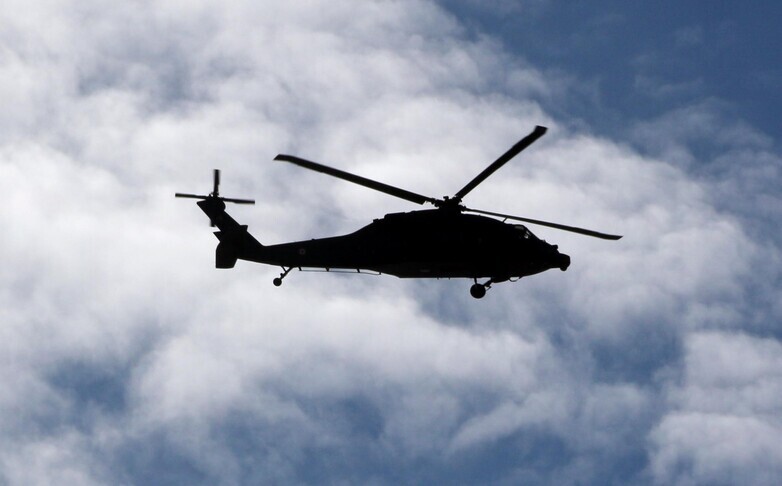
US Air Force helicopter makes precautionary landing in Washington
-

 Wisconsin23 minutes ago
Wisconsin Lottery Powerball, Pick 3 results for July 13, 2026
-

 West Virginia29 minutes ago
West Virginia Wildlife Center’s popular ‘Rendezvous’ celebration returns this month
-

 Wyoming35 minutes ago
July 13 recap: Wyoming news you may have missed today
-

 Crypto41 minutes ago
Why Early Legal Action Matters After a Cryptocurrency Investment Scam
-

 Finance47 minutes ago
Goldman Sachs Sets $1 Trillion M&A Record

