World
Kendrick Lamar’s Beef With Drake and J. Cole, Explained


Things weren’t always this tense between Kendrick Lamar and Drake. On March 25, the former shook the foundation with his uncredited verse on Metro Boomin and Future’s “Like That,” a cut included on the pair’s freshly released collaborative album “We Don’t Trust You.”
The internet immediately lit up: Lamar’s particularly fiery verse put his issues with other rappers in uncharacteristically plain terms, very clearly taking shots at Drake and J. Cole in response to their song “First Person Shooter,” included on last year’s “For All the Dogs.” On the track, Cole lumped Lamar with himself and Drake as the “big three”: “Love when they argue the hardest MC / Is it K. Dot? Is it Aubrey? Or me? / We the big three, like we started a league.”
In a tightly wound, entendre-replete, machine gun verse, Lamar fired back by refuting the designation and setting himself apart from his peers and former collaborators. “Yeah get up with me, fuck sneak dissing / ‘First Person Shooter,’ I hope they came with three switches,” he raps. “Motherfuck the big three, n—a, it’s just big me.” To add insult to injury, he referenced the contentious relationship between Michael Jackson and Prince, comparing himself to the latter and stating that his legacy will outlast their influence. “Your best work is a light pack / N—a, Prince outlived Mike Jack / N—a, bum, ‘fore all your dogs get buried / That’s a K with all these nines, he gon’ see ‘Pet Sematary.’”
It makes sense that Lamar would use his appearance on Metro’s new record as a platform to air his grievances — after all, Drake and Metro have recently had their own public reckoning. The two have worked together in the past — Metro helmed the majority of the tracks on Drake and Future’s 2015 album “What a Time to Be Alive” — but something shifted between the two in the years that followed.
Here’s where the speculation comes in. Some surmise that the lack of a promised sequel to “What a Time” led to bad blood; Drake instead released “Her Loss” in 2022, which did include a Metro production credit on “More M’s.” But others trace the first true indicator of tension to Metro’s song “Trance,” included on the producer’s 2022 album “Heroes & Villains.” Drake initially had a verse on the track, which features Travis Scott and Young Thug, but Metro removed it prior to album release. The version with Drake inevitably leaked; some think Drake himself released it as retaliation. Then, this past December, Metro tweeted and deleted that “‘Her Loss’ still keeps winning rap album of the year over [‘Heroes & Villains’]. Proof that award shows are just politics and not for me.” Drake went on a livestream soon after, shouting out the “tweet-and-deleters” and saying that “you guys make me sick to my stomach.” Metro unfollowed Drake on Instagram, and the beef simmered.
So it makes sense, then, that Lamar would take this opportunity with “Like That” as a podium for his own grievances with Drake and J. Cole. But it caught listeners off-guard that Lamar would so decisively lay out his issues with the pair. The three came up around the same time, and have consistently been considered foundational for that generation of MCs. They’ve all collaborated, and even went on tour together; Drake gave Lamar his own interlude on his 2011 album “Take Care,” and Cole and Lamar once teased a collaborative project in addition to releasing numerous collabs.
But the three have also long considered rap a competitive sport, and have been vying for the G.O.A.T. title for years. In 2013, Lamar gave a similarly show-stealing verse on Big Sean’s “Control,” also featuring Jay Electronica, where he ran through a laundry list of his peers’ names—Drake and J. Cole included—stating that “I got love for you all but I’m tryna murder you n—s” and asking “What is competition? I’m tryna raise the bar high.” In the years that followed, the subliminals flew, on songs like Lamar’s “King Kunta” and Drake’s “The Language” (hint: if you’re trying to find sneak disses in their discographies, there’s plenty to work with).
It was only a matter of time until their issues spilled into the open with such candor. So where does Future come into all of this? Drake and Future have been very frequent collaborators in the past. Beyond “What a Time,” the two have a huge pile of duets between them, so it came as a bit of a surprise that he’d co-sign Lamar’s verse by including it on “Like That.”
But once that track lit up the internet, fans started looking elsewhere on “We Don’t Trust You” for potential jabs at Drake. One person matched song titles as puns on Drake song titles. Some pointed to Future’s second verse on the album’s intro as a swipe: “You a n—a number one fan, dog / Sneak dissin’, I don’t understand, dog / Pillowtalkin’, actin’ like a fed, dog / I don’t need another fake friend, dog / Can’t be ’bout a ho, ’cause we sharin’, dog / In you feelings, n—a, why you playin’, dog.”
A bit of unpacking here. On Drake’s “What Would Pluto Do?,” included on “For All the Dogs,” he references Future’s nickname Pluto, stating, “Last time I saw her, she was fuckin’ with my n—a / So the question is, the question is, what would Pluto do? He’d f—k the ho, so I did it.” Not to mention that “in you feelings” could be a reference to Drake’s “In My Feelings.”
While it’s difficult to pinpoint the source of their issues, social media connected the dots to suggest that Drake and Future were beefing over a woman. One user on X (formerly Twitter) suggested that a song on “We Don’t Trust You” referenced the woman in question; Metro came in to shut down the theory. “Y’all n—s stop making stuff up for engagement and enjoy the music,” he wrote.
Regardless, Lamar’s verse on “Like That” has officially entered the pantheon of iconic diss tracks, and clearly set off a chain reaction that’s still going strong months later. Rap fans patiently waited for a response, and with the surprise release of his new album “Might Delete Later” on April 5, J. Cole was the first to fire back at Lamar on its closing song “7 Minute Drill.” On it, he dismissed much of Lamar’s catalog and claimed he “fell off like ‘The Simpsons.’”
“The rap beef ain’t realer than the shit I seen in Cumberland / He averagin’ one hard verse like every thirty months or somethin’,” he said, referring to the five-part “The Heart” series that Lamar has rolled out over the course of his career. “If he wasn’t dissin’, then we wouldn’t be discussin’ him / Lord, don’t make me have to smoke this n—a ’cause I fuck with him / But push come to shove, on this mic, I will humble him.”
Drake, meanwhile, has taken a harder approach. He first addressed Lamar’s verse during a brief diatribe during one of his shows. “A lot of people asking me how I’m feeling. The way I’m feeling is the same way I want you to walk out of here feeling tonight about your fucking self,” he told the crowd. “Because you know how I’m feeling? I got my head up high, my back straight, I’m 10 fucking toes down, and feeling like anywhere else I go, and I know no matter what, there’s not a n—a on this Earth that can ever fuck with me in my life.”
But then, Drake released his first diss track “Push Ups” after an early version of the track leaked to social media on April 13. A high-quality version of the song came later that day, and the rapper officially released it to streaming services on April 19. On the track, he came for Lamar, rapping, “How the fuck you big steppin’ with a size-seven men’s on?” referencing the title of Lamar’s 2022 album “Mr. Morale and the Big Steppers.”
Later on April 19, Drake released a follow-up diss entitled “Taylor Made Freestyle” to his social media profiles, featuring AI verses from Tupac Shakur and Snoop Dogg. On the song, he stated, “World is watching this chess game, but oh you out of moves Dot / You know that the OG never fucking doubted you / But right now it seem like you posted up without a clue / Or what the fuck you ’bout to do.” Soon after, Drake removed the song from social media after Shakur’s estate threatened to sue him.
Lamar took a minute to let the beef simmer, then fired back on “Euphoria,” which he officially dropped on April 30. “You not a rap artist, you a scam artist with the hopes of being accepted,” he rapped. “Tommy Hilfiger stood out, but Fubu had nеver been your collection / Know you a master manipulator, and habitual liar, too / But don’t tell no lie ’bout me, and I won’t tell truths ’bout you.”
Then, in a surprise move, Lamar hit back with a second diss track in a week with “6:16 in LA,” a play on Drake’s series of similarly titled songs. The tune, which he uploaded to Instagram in the early hours on May 3, came for Drake and his OVO crew and featured production from Jack Antonoff. The producer’s inclusion was considered a chess move from Lamar, whom Drake accused of keeping silent to avoid Taylor Swift’s new album from taking the spotlight. Antonoff produced on that album, “The Tortured Poets Department,” which shattered records in the wake of its release.
Just hours after “6:16 in LA” hit social media, Drake responded on Friday evening (May 3) with “Family Matters,” going after Lamar and flaming him for bringing up his son Adonis. Lamar fired back just moments after with “Meet the Grahams,” where he raps directly to Drake’s family members and suggests that he has a secret daughter. And as if that wasn’t enough, Lamar followed the next day with “Not Like Us,” which accused his foe of pursuing underage girls.
Will the saga continue? It’s tough to say. This has been going on for months, and Drake and Lamar aren’t slowing down the beef anytime soon. More to come, perhaps, as the tensions rise.



NEWYou can now listen to Fox News articles!
Someone was playing possum — or stuffed animal.
Among plush kangaroos, dingoes and Tasmanian devils ready to be bought by parents of antsy children, a live brushtail possum waited in a gift shop at an Australian airport this week.
The wild animal was first noticed by a shopper in the store on Wednesday, retail manager Liam Bloomfield of Hobart Airport in the state of Tasmania said.
“A passenger reported it to …. one of the staff members on shift who couldn’t quite believe what she was hearing,” Bloomfield told The Associated Press. “She then called the (airport) management and said we’ve got a possum in the store.”
TOURISTS IN LAS VEGAS PAY $1,000 FOR DINNER ON THE STRIP WHILE SHARKS EAT LIKE ROYALTY
A live Australian brushtail possum sits on the display shelf at a terminal shop at Hobart Airport in Hobart, Australia, on Wednesday. (Melissa Oddie via AP)
Staff at the airport were able to remove the animal without harming it.
“I’m imaging it saw some of the plush animals that were for sale on the shelf and it decided to make its home with those,” Bloomfield joked of why the possum was hiding with the stuffed toys. “It wanted to blend in.”
EXPERT SOUNDS ALARM AFTER STUDY FINDS POPULAR TRAVEL ITEM CARRIES FAR MORE BACTERIA THAN EXPECTED
The arrivals area at Hobart Airport in Australia. (Steve Bell/Getty Images)
“Can you spot the imposter?” the airport wrote in a Facebook post Thursday that showed the possum curled up in a cubby with its stuffed counterparts.
“This cheeky lost possum found a clever hiding place among the Aussie plushies in our retail store,” the airport continued. “Luckily it was safely relocated out of the terminal area and the space was cleaned.”
Passengers boarding a plane at Hobart Airport in Australia. (William West/AFP via Getty Images)
CLICK HERE TO DOWNLOAD THE FOX NEWS APP
Bloomfield said the possum not only found a way into the airport but also their hearts.
“We’ll have a little shrine to the possum,” he revealed, according to The Independent. “There will be a nice little photo; once it gets a name, we will put a nice little post in front of the store to make sure it’s remembered.”

Published on •Updated
From a start-up founded in Malaga in 2015 with a few thousand euros, Ly Company has become one of Europe’s fastest-growing multinationals, and a global leader in the sustainable water packaging sector.
ADVERTISEMENT

ADVERTISEMENT
With ten factories located across Europe, Latin America and the Middle East, Ly Company produces about 10 million bottles of water in cardboard packaging per month.
Unlike most competitors, Ly Company doesn’t owe its success to mass retail firms.
It sells personalised products to more than 3,000 brands, ranging from airlines and hotel chains to private transport companies and major events organisers. “There is a lot of water in sectors where no one thinks it is consumed”, notes Rodríguez. “An airline, for example, can consume 50 million bottles per year.”
The company is now targeting China and, above all, the United States.
Its positioning is also based on sustainability: factories powered by green energy, cardboard from responsibly managed forest, bioplastic made from sugar cane and water guaranteed to be microplastics-free. Part of the profits fund his “Agua y Vida” Foundation, which is involved in environmental and humanitarian projects.
“I’ve gone through some very difficult times. Now that I’m doing well, I want to give something back to society”, explains Curro Rodríguez.
Behind this rise lies a chaotic journey. While working as a first-responder in emergency medical services for twenty years, he was simultaneously launching businesses, sometimes risky ones. Two successive bankruptcies saw him resort to food aid and doing odd jobs for a while, before he reinvented himself.
“My passion is bringing projects to life”, explains Curro Rodríguez, who has founded a total of 39 companies, 23 of which are currently active within his holding company. “When things are done out of emotion, and not for money, they create value. The money follows. But you have to look for value first”, he concludes, a big smile on his face.

new video loaded: What Tunnel Entrances Reveal About a Key Iranian Nuclear Site
transcript
transcript
What Tunnel Entrances Reveal About a Key Iranian Nuclear Site
Satellite images show how Iran has tried to bolster its defenses at parts of the Isfahan nuclear facility.
-
What you’re seeing here are buried tunnel entrances at a nuclear facility in Iran. It’s one of the most important sites in the country for U.S. and Israeli forces. U.N. inspectors think that roughly half of Iran’s highly enriched uranium is buried here. And these three entrances are the only known ways to access it. If you think about nuclear sites in Iran, three main sites come to mind. They’re pretty well known: Fordo, Natanz and Isfahan. Natanz and Fordo, They were largely taken out in U.S. strikes last year. So I’ve been focusing on Isfahan. The uranium here is still relatively accessible. It’s actually a pretty large complex. This area here was very important for uranium processing, but it was heavily hit by the U.S. and Israel last June. If you go a little bit further north, that is underground and that requires tunnels to enter. In a terrain view, it gets quite interesting. There are three roads that lead to these tunnel entrances, and these tunnel entrances have become very important, both last year, but also right now. They lead to the underground facility where U.N. inspectors say uranium is stored and a new enrichment site could be located. If this falls into the wrong hands, that would be a problem in the long term. Here’s a great example of how very recent satellite imagery gives us new insights. This is from late January of this year, and what you see here is a line of trucks. And they’re filled with soil, and they’re lining up to go to some of these tunnel entrances. If you look a little bit closer here, you see another one of these trucks that’s just unloading some of the soil and some earthmoving equipment. Iran in preparation for any possible attacks at that point. They try to protect this facility a little bit more. So this is Jan. 29. And if you just look a few days later, we go to Feb. 2. This is the completely buried tunnel entrance, completely covered in soil to protect from any attack. And this is how it still looks in mid-March. The U.S. and Israel have basically two options here: The first one is to heavily bombard the entrances to this underground complex that would block any access, at least in the near future. They haven’t done that yet. So that’s very, very interesting — a little bit surprising. And it might point towards a second option: That would be to go in with ground forces and to extract the uranium. But that would require a really large amount of troops to secure the vast area, bringing in earthmoving equipment to clear the tunnels and a lot of time in hostile territory.

By Christoph Koettl and Alexander Cardia
March 20, 2026

CT Agency Picked To Lead Federal Career Training Grant Expansion

Delaware County uses AI traffic cameras to ease congestion on Lancaster Avenue

Rocket launch from Florida this weekend. Best places, beaches to watch

Georgia Tech gives chef Jose Andres $100K prize; more from Atlanta’s food scene

After devastating floods, Hawaii braces for more rain this weekend | Honolulu Star-Advertiser

Florida High School Football Rankings: Top 25 teams – Oct. 21

How old is Bo Nix? What to know about Oregon quarterback ahead of 2024 NFL Draft

Cleary's 21 help Le Moyne down Central Connecticut State 69-64 in OT

99th annual Pony Swim held in Virginia

Indiana Members Credit Union announced as new anchor tenant at Bottleworks District

Read the Ruling in The Times’s Lawsuit Against the Pentagon

NYC Mayor Mamdani’s wife glorified terrorists in online posts, criticized US military: report

Curro Rodríguez: from bankruptcy to global water empire
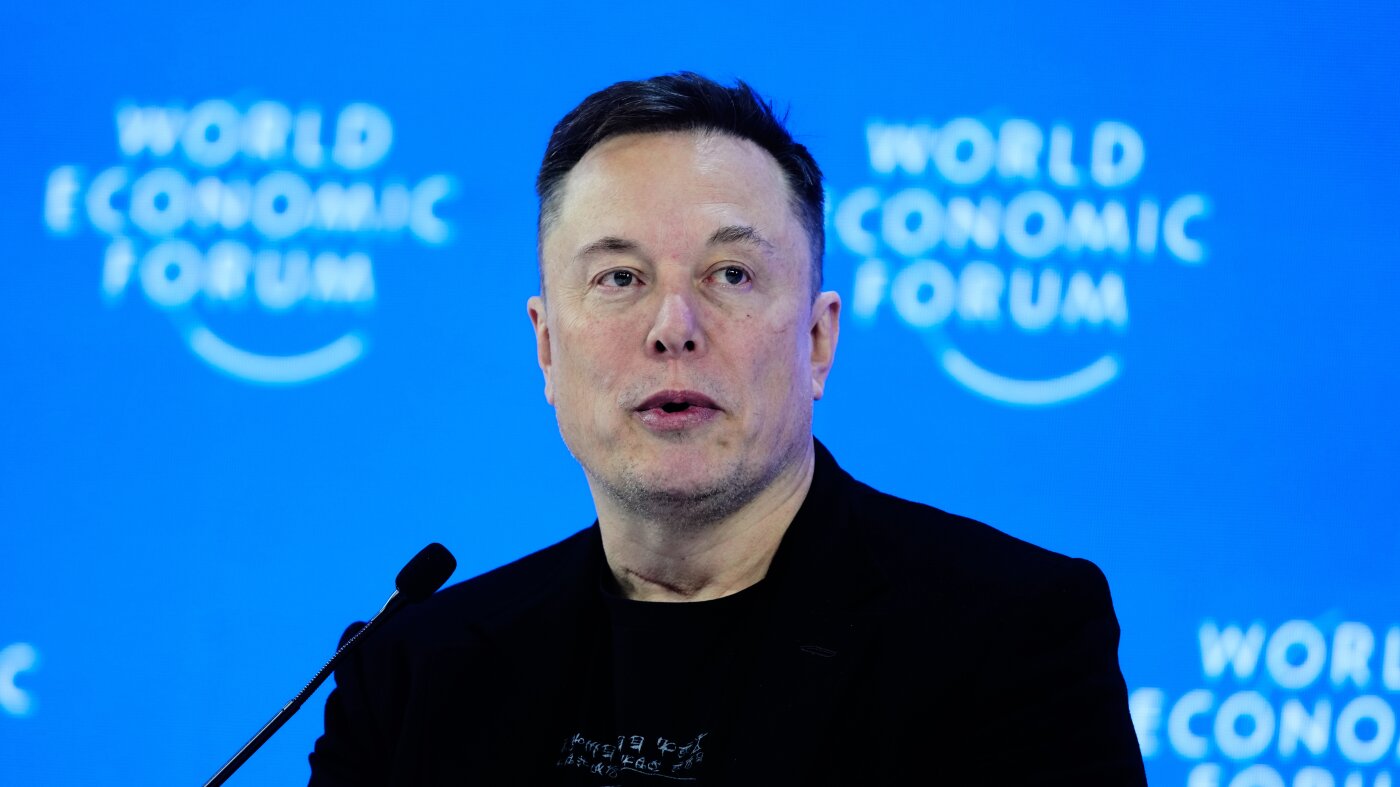
Jury finds Elon Musk misled investors during Twitter purchase

Pritzker pushes prosecutions of Trump officials as part of Dem ‘Project 2029’ agenda
-

 Detroit, MI2 days ago
Drummer Brian Pastoria, longtime Detroit music advocate, dies at 68
-

 Oklahoma7 days ago
Family rallies around Oklahoma father after head-on crash
-

 Nebraska1 week ago
Wildfire forces immediate evacuation order for Farnam residents
-

 Georgia5 days ago
How ICE plans for a detention warehouse pushed a Georgia town to fight back | CNN Politics
-

 Massachusetts1 week ago
Massachusetts community colleges to launch apprenticeship degree programs – The Boston Globe
-

 Alaska6 days ago
Police looking for man considered ‘armed and dangerous’
-
 Southwest1 week ago
Talarico reportedly knew Colbert interview wouldn’t air on TV before he left to film it
-

 Michigan1 week ago
Michigan-based Stryker hit with cyberattack