World
Jim Caviezel starring in Bolsonaro biopic, as son of jailed president launches 2026 campaign


NEWYou can now listen to Fox News articles!
A biopic about Brazil’s jailed former president Jair Bolsonaro is in production, his son Carlos has confirmed.
In a post shared on X — which came after his brother, Flavio entered the country’s 2026 presidential race — Carlos lavished praise on American actor Jim Caviezel, who stars as the ex-president in the film.
“Jim Caviezel, thank you for everything,” Carlos wrote, describing the Passion of the Christ actor as a figure whose legacy would be “admired by good people and envied by those who seek destruction.”
RUBIO WARNS BRAZIL OF US RESPONSE AFTER BOLSONARO’S CONVICTION FOR PLOTTING A COUP
Carlos added that working with Caviezel had given him “one of the greatest gifts” of his life, before closing with: “God, Jesus and Freedom.”
Caviezel himself has been linked to far-right conspiracy circles in the U.S. and has drawn scrutiny over the political messaging in some of his roles.
He also famously starred as Jesus in Mel Gibson’s The Passion of the Christ and The Sound of Freedom.
According to The Guardian, the biopic, titled Dark Horse, presents a heroic vision of Jair Bolsonaro and is based on Bolonaro’s successful 2018 campaign for the presidency.
TRUMP ADMIN SANCTIONS BRAZILIAN JUDGE OVERSEEING BOLSONARO COUP-PLOT PROBE
Jim Caviezel speaks on stage during Beyond Sport United – Workshops & Panels at Yankee Stadium on June 11, 2014 in the Bronx borough of New York City. ( D Dipasupil/Getty Images)
It is directed by Cyrus Nowrasteh and written by former Bolsonaro Culture Secretary Mário Frias.
Bolsonaro himself remains in prison after receiving a 27-year sentence for attempting to overturn the 2022 election results.
Authorities said he orchestrated a plot to invalidate President Luiz Inácio Lula da Silva’s victory, leading to his imprisonment in September.
In addition to his sentence, a separate ruling has barred him from holding office until 2030, effectively ending his political career.
TRUMP, BRAZIL’S LULA MOVE TO MEND FENCES AFTER TRADE CLASH, JUDICIAL FIRESTORM WITH ‘FRIENDLY’ CALL
Former Brazilian President Jair Bolsonaro speaks to the media at the Federal Senate in Brasília, Brazil July 17, 2025. (Reuters)
From prison, the former president issued a rare public endorsement naming Flávio as his preferred successor.
According to the Associated Press, Flávio, 44, has confirmed through his Senate office that he will run in the October 2026 presidential election against the candidate of the Liberal Party.
Flávio, who is the eldest of the brothers, described his decision to run as “irreversible,” setting up a direct challenge to President Lula, who is seeking a fourth nonconsecutive term.
“It is with great responsibility that I confirm the decision of Brazil’s greatest political and moral leader, Jair Messias Bolsonaro, to entrust me with the mission of continuing our national project,” Flávio wrote on X.
TRUMP DOJ TAKES ‘UNPRECEDENTED’ STEP ADMONISHING FOREIGN JUDGE IN FREE SPEECH CENTERED ON RUMBLE
Senator Flávio Bolsonaro has entered the 2026 Brazilian presidential race after father’s prison endorsement. (Evaristo Sa / AFP via Getty Images)
His office also confirmed he has visited his father in prison.
CLICK HERE TO DOWNLOAD THE FOX NEWS APP
Meanwhile, production on Dark Horse is expected to continue into 2026, with filming planned in both Brazil and Mexico.



These culinary staples consume cooking gas, which has become harder to get from India’s suppliers in the Gulf.

Farmers around the world are worried about their harvests as fertilizer prices rise. A third of the world’s fertilizer is shipped through the Strait of Hormuz.
Much of the energy they use to heat water comes from the Middle East.
To curb commutes and conserve fuel, Sri Lanka declared Wednesdays a public holiday, and Laos adopted a three-day class schedule.
The polyester in them is made from petrochemicals. Oil and gas prices are rising.
Qatar produces a third of the world’s helium, a byproduct of natural gas. As production and exports halt, balloon suppliers may run short.
With missiles targeting Gulf nations, competitions in Bahrain and Saudi Arabia were scratched.
Shakira, Christina Aguilera and others postponed shows in the region over security concerns.
Shutdowns in cargo hubs like Dubai and Doha threaten medicines that must be kept refrigerated.
Oil prices are driving fears of higher inflation, pushing up mortgage rates.
Sugar mills in Brazil, the world’s biggest producer, may switch to making more biofuel to cash in on high energy prices.
Airlines are paying more for jet fuel, and passing along the costs.
Usually a safe investment in turmoil, gold has fallen for myriad reasons including speculative investors cashing out gold investments.
With some airspace closed in the Middle East, carriers have had to suspend routes. At the same time, jet fuel costs are soaring.
The Trump administration loosened sanctions to help U.S. farmers.
A grandmaster withdrew from a major competition in Cyprus over safety concerns. A drone hit a British base there early in the war.
The war has depleted stocks of the U.S. interceptors used by Kyiv to fend off Russian attacks.
Government offices are required to cap air conditioner use to conserve energy.
To conserve energy, the Philippines asked civil servants to skip the elevator, and Egypt curtailed shopping hours five days a week.
Textile exports have also been disrupted by the canceled flights.
Worried about a price spike, drivers in San Antonio lined up for 30 minutes at a Costco.
World
US allows Russian oil tanker to reach Cuba amid blockade as Trump says island ‘has to survive’

NEWYou can now listen to Fox News articles!
The U.S. government will allow a Russian tanker full of crude oil to reach Cuba, effectively easing a blockade that has pushed the island into an energy crisis, according to a report.
The Russian-flagged tanker, the Anatoly Kolodkin, was headed for Cuba on Sunday, carrying an estimated 730,000 barrels of oil, The New York Times reported, citing a U.S. official who had been briefed on the matter.
The tanker Anatoly Kolodkin was just off the eastern tip of Cuba on Sunday, ship tracking data showed.
“We have a tanker out there. We don’t mind having somebody get a boatload, because they need … they have to survive,” President Donald Trump told reporters on Sunday when asked about the report.
CUBA’S ENTIRE ELECTRICAL GRID COLLAPSES, LEAVING WHOLE ISLAND WITHOUT POWER
The U.S. government will allow a Russian tanker full of crude oil to reach Cuba. (Evelyn Hockstein/Reuters)
“If a country wants to send some oil into Cuba right now, I have no problem whether it’s Russia or not,” he added.
Trump had sought to restrict oil shipments to Cuba in an effort to pressure its government.
The U.S. government has temporarily eased some sanctions on Russian oil shipments to help stabilize global energy markets amid disruptions in the Strait of Hormuz following U.S. and Israeli military strikes on Iran that began last month.
CUBAN OFFICIAL REVEALS MILITARY ‘PREPARING’ FOR CONFLICT AFTER TRUMP CONSIDERS ‘TAKING’ ISLAND
President Donald Trump had sought to restrict oil shipments to Cuba in an effort to pressure its government. (Mark Schiefelbein/AP Photo)
The Anatoly Kolodkin, which departed from Primorsk, Russia, could soon dock at the Matanzas port in Cuba if it remains on its current path, according to tracking services MarineTraffic and LSEG.
The oil would provide significant relief to Cuba, where President Miguel Díaz-Canel has said fuel shortages have persisted for months, forcing strict gas rationing and deepening the island’s energy crisis.
The U.S. capture of then-Venezuelan leader Nicolás Maduro in January stripped a key Cuban ally who had been providing oil to the island on favorable terms.
Cuban President Miguel Díaz-Canel has said fuel shortages have persisted for months. (PABLO PORCIUNCULA/AFP via Getty Images)
CLICK HERE TO DOWNLOAD THE FOX NEWS APP
The Trump administration then blocked all Venezuelan oil shipments to Cuba and vowed to impose punitive tariffs on any third country that supplied shipments to the island, forcing Mexico to stop its exports to Cuba.
Another ship, the Hong Kong-flagged Sea Horse, was also carrying about 200,000 barrels of Russian fuel to Cuba, but was rerouted to Venezuela.

Good morning and welcome to Monday – I’m Mared Gwyn.
ADVERTISEMENT
ADVERTISEMENT
Criticism has poured in from all corners of the world after Israeli police stopped the heads of the Catholic Church in Jerusalem from entering the Holy Sepulchre on Palm Sunday, preventing them from privately celebrating mass in what the Latin Patriarchate has said is a first in “centuries”. We have more in our top story below.
But first, G7 crisis talks: G7 energy and finance ministers as well as central bank governors will hold urgent online talks later today amid fears that the economic fallout of the war in Iran is about to hit a tipping point – with another release of strategic oil reserves under consideration.
The US’s European and Asian allies are most vulnerable to the looming economic shock, putting added stress on the fraught Group of Seven. Tensions brimmed to the surface when G7 foreign ministers met in France last week, with US Secretary of State Marco Rubio clashing with the EU’s foreign policy chief Kaja Kallas when she asked when US “patience” with the Kremlin would run out, according to an Axios scoop.
European markets opened lower on Monday, with futures pointing to declines across major indices.
With oil and gas prices already spiralling, there is now fear that a protracted conflict could upend global supply chains as key commodities including fertilisers are trapped in the Strait of Hormuz, the critical waterway which has been effectively closed since the conflict broke out a month ago.
Signs of inflationary pressure and soaring borrowing costs are now making the looming crisis hard to ignore for the G7, which is yet to jointly introduce radical measures to cushion the impact on their economies beyond the release of strategic oil reserves. Several developing countries are already rationing fuel and subsidising energy costs.
My colleague Marta Pacheco reports that EU energy ministers are mulling a cap on oil prices or taxing the windfall profits of energy companies to rein in prices ahead of a virtual meeting tomorrow, Tuesday. Officials in Brussels acknowledge that while the crisis is not yet as acute as that of 2022 in the wake of Russia’s invasion of Ukraine, there is more limited “financial manoeuvring room” this time. Marta has the details.
Marta also reports that agriculture ministers gather in Brussels today, with France leading calls for swift action to tackle insecurity in Europe’s fertiliser market by easing measures tied to the EU’s carbon border rules. Fertilisers are essential to food production and EU farmers are already hit by soaring prices since the EU banned these chemicals from Belarus and Russia in July 2025.
Paris wants the bloc to temporarily suspend the bloc’s Carbon Border Adjustment Mechanism – a pricing tool based on carbon emissions with which importers need to comply – on fertilisers and ammonia with retroactive effect from 1 January 2026.
An EU official told Marta that, should a suspension not get adequate political support, Paris could table a workaround which would involve compensating farmers using existing EU budget resources to cushion the impact of higher fertiliser costs.
France is also pressing the European Commission to accelerate work on a long-promised “European Fertilizer Sovereignty Plan” – a sign that concerns extend beyond short-term relief to the bloc’s long-term strategic autonomy.
Meanwhile, in the Middle East: The situation remains on a knife edge, with no warring party represented in talks on de-escalation between the top diplomats of Pakistan, Turkey, Saudi Arabia and Egypt in Islamabad on Sunday.
Discussions explored ways to reopen the Strait of Hormuz including introducing toll-like systems similar to the Suez Canal, Reuters reported, while broader diplomacy aims at a ceasefire and stabilising oil flows disrupted by the conflict. The mediators also contemplated the 15-point plan President Trump has passed on to Iran through Islamabad.
Yet, Trump has told the Financial Times in an interview that his preference is to “take the oil in Iran” by seizing the Iranian export hub of Kharg Island, all the while insisting that he is “pretty sure” that Iran will strike a deal.
The Washington Post meanwhile reports this morning that the Pentagon is preparing for a possible ground invasion into Iran. The Iranian parliament speaker accused the US yesterday of plotting a ground invasion in secret while publicly signalling appetite for talks, warning Tehran is waiting to “rain fire” on any American soldiers who enter its territory.
Outrage after Israeli police block Latin Patriarch from Palm Sunday mass
World leaders have voiced deep concern after Israeli police prevented the head of the Catholic Church in Jerusalem, Cardinal Pierbattista Pizzaballa, from entering the Church of the Holy Sepulchre for Palm Sunday mass, with the Vatican and Italy convening their Israeli ambassadors in response.
Both Cardinal Pizzaballa and the Custos of the Holy Land Father Francesco Ielpo were turned away by authorities in an incident the Latin Patriarchate has said “disregards the sensibilities of billions of people around the world”. It said the two were stopped while proceeding privately without any characteristics of a procession or ceremonial act, and had to turn back.
Italy’s Prime Minister Giorgia Meloni has led criticism, describing the Israeli police’s actions as an “offence to the faithful” and to “every community that recognises religious freedom”. French President Emmanuel Macron condemned the incident and said it fits in a pattern of a “worrying increase in violations of the status of the Holy Places in Jerusalem”.
Israel has claimed the priests were stopped due to “security concerns” amid the ongoing war with Iran. Prime Minister Benjamin Netanyahu said overnight that Cardinal Pizzaballa had been asked to “refrain from holding mass” out of “special concern for his safety”, but that Israel has since ensured he is “granted full and immediate access to the Church of the Holy Sepulchre in Jerusalem.”
Yet a spokesperson for the Latin Patriarchate has said that private masses have been taking place at the Church of the Holy Sepulchre since the start of the war, and that it remains unclear why the access of the two priests to Sunday’s Mass was any different.
Aadel Haleem and Orestes Georgiou Daniel have more.
Israel says it will crack down on settler violence in the West Bank, expands Lebanon incursion
A document seen exclusively by Euronews’ Sophie Claudet shows instructions by the office of Prime Minister Benjamin Netanyahu to the Israeli army and police to crack down on settler violence against Palestinians in the West Bank.
The instructions, shared in a non-public document titled “Prime Minister’s Directive on Combating Nationalist Crimes in Judea and Samaria,” are an exceedingly unusual move for the Netanyahu administration. Judea and Samaria are the biblical names of the area known today as the West Bank.
The army had announced last week it was diverting troops away from its ongoing offensive in Lebanon to the West Bank in order to rein in Jewish settler violence, in what would be the first time Israel pulls out forces from an active war front to dispatch them to a territory deemed far less dangerous or critical.
Yet since, Israeli Prime Minister Benjamin Netanyahu has ordered the military to “further expand the existing security buffer zone” in southern Lebanon, as its war against Hezbollah intensifies. Almost a fifth of Lebanon’s population has now been
displaced as a result of the conflict.
Read the full story.
More from our newsrooms
EU calls for Black Sea grain model to unblock Strait of Hormuz. The EU’s special envoy to the Gulf, Luigi di Maio, told Euronews in an interview in Doha on Friday that the EU wants to replicate the Black Sea deal agreed in the wake of Russia’s invasion of Ukraine to unblock global supplies of grain in the Strait of Hormuz. Aadel Haleem has thefull story.
Two unidentified drones crash in southeastern Finland in ‘suspected territorial violation’. Finland’s Prime Minister Petteri Orpo says they are likely Ukrainian drones that went astray due to Russian jamming of signals as Kyiv carries out drone attacks on Russian territories along the border with Finland. Malek Fouda hasthe story.
Huge crowds protest against Trump in ‘No Kings’ rallies in the US and abroad. Millions of people took to the streets across the US – and to a lesser extent worldwide – on Saturday to protest against what they see as Trump’s authoritarian style of governance, hardline immigration policies, climate change denial and the war with Iran. Lucy Davolou has the details.
We’re also keeping an eye on
- EU agriculture and fisheries ministers gather in Brussels
- Syrian President Ahmed Al-Sharaa in Germany for talks with Chancellor Friedrich Merz
That’s it for today. Marta Pacheco contributed to this newsletter. Remember to sign up to receive Europe Today in your inbox every weekday morning at 08.30.

Star bartender raised in VT hunts the ‘big shebang’ of a James Beard

Goochland residents sue county over Technology Overlay District approval

Rivian secures direct-sales win in Washington

Where Wisconsin men’s basketball 2026-27 roster stands before transfer portal

Upshur County Sports Calendar

Florida High School Football Rankings: Top 25 teams – Oct. 21

How old is Bo Nix? What to know about Oregon quarterback ahead of 2024 NFL Draft

Cleary's 21 help Le Moyne down Central Connecticut State 69-64 in OT

99th annual Pony Swim held in Virginia

Indiana Members Credit Union announced as new anchor tenant at Bottleworks District

Video: Iran to Allow More Oil Ships Through Strait of Hormuz, Trump Says

Dem senator warns deportation could let Virginia woman’s illegal immigrant killer ‘escape accountability’

Newsletter: G7 ministers to hold talks on war’s economic fallout
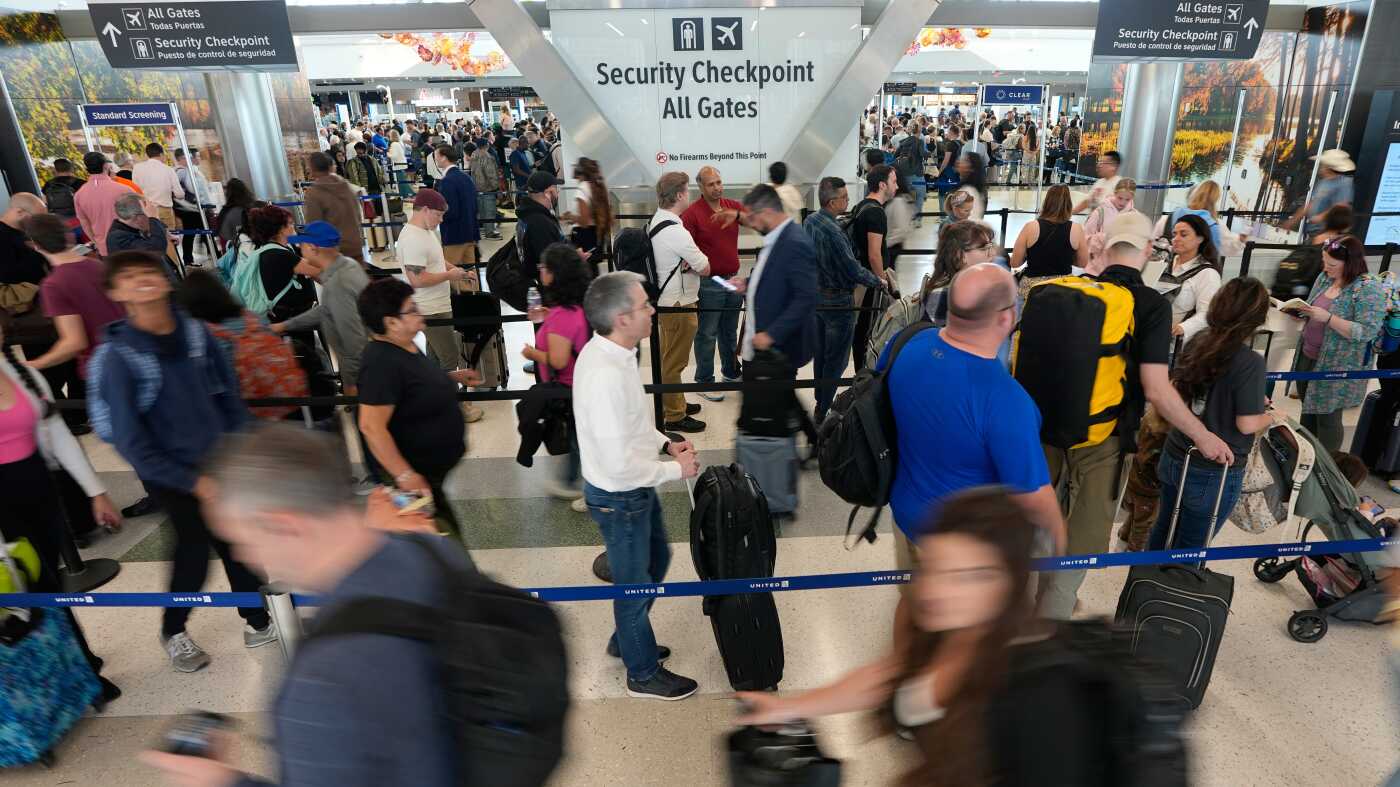
ICE officers could remain at airports after TSA workers are paid

Scathing report claims nation’s oldest labor union ‘betrayed’ MAGA members through ‘shocking’ spending
-

 Sports1 week ago
IOC addresses execution of 19-year-old Iranian wrestler Saleh Mohammadi
-

 Miami, FL4 days ago
Jannik Sinner’s Girlfriend Laila Hasanovic Stuns in Ab-Revealing Post Amid Miami Open
-

 New Mexico1 week ago
Clovis shooting leaves one dead, four injured
-

 Tennessee7 days ago
Tennessee Police Investigating Alleged Assault Involving ‘Reacher’ Star Alan Ritchson
-

 Minneapolis, MN4 days ago
Boy who shielded classmate during school shooting receives Medal of Honor
-

 Politics1 week ago
Schumer gambit fails as DHS shutdown hits 36 days and airport lines grow
-

 Science1 week ago
Record Heat Meets a Major Snow Drought Across the West
-

 Technology1 week ago
YouTube job scam text: How to spot it fast