


‘Monyová’
Courtesy of NovaTV


Israel says it safely rescued four hostages that were captured by Hamas during the Oct. 7 Hamas attacks.
The IDF said the hostages, three men and one woman, were rescued in the largest such hostage recovery operation since the war with Hamas began in Gaza.
Noa Argamani, 26, Almog Meir Jan, 22, Shlomi Ziv, 41, and Andrey Kozlov, 27, were rescued in two separate locations in a complex special daytime operation in the heart of Nuseirat in central Gaza. They had been held in captivity by the terrorist group for 246 days.
FAMILIES OF HOSTAGES TAKEN IN ISRAEL ON OCT. 7 PLEAD FOR PEACE AT INTERFAITH CONFERENCE IN NYC
Noa Argamani, 26, Almog Meir Jan, 22, Shlomi Ziv, 41, and Andrey Kozlov, 27, were rescued in two separate locations in a complex special daytime operation in the heart of Nuseirat in central Gaza. (IDF)
Argamani has been one of the most widely recognized hostages since she was abducted from a music festival in southern Israel. The video of her abduction was among the first to surface, images of her horrified face widely shared — Argamani detained between two men on a motorcycle, one arm outstretched and the other held down as she screams “Don’t kill me!”
Her mother, Liora, has stage four brain cancer and in April released a video pleading to see her daughter before she dies.
Officers of the National Police special anti-terror unit of Yamam along with Shin Bet agents simultaneously raided two Hamas buildings to pluck the hostages to safety. Argamani was rescued at one site, while Meir Jan, Kozlov, and Ziv were at the second location.
Chief Inspector Arnon Zmora was killed during the raid. (IDF)
During the operation, Chief Inspector Arnon Zmora, an officer in the special anti-terror unit of Yamam, was critically injured and later died from his injuries.
There are still 120 Israeli hostages being held by Hamas in Gaza. Forty-three of them have been declared dead and their bodies are still held by Hamas.
WHAT IS ISRAEL’S FIRST LINE OF DEFENSE, THE IRON DOME?
“Noa, Almog, Andrey and Shlomi – we are overjoyed to have you home,” Minister of Defense Yoav Gallant said in a statement.
“Our troops conducted a heroic operation to rescue four hostages held by Hamas, and brought them home to Israel.”
Hostage Andrey Kozlov walking out of a helicopter after being rescued from Hamas (Gideon Markowicz/TPS-IL)
“I followed the complex operation from the command and control center – IDF, ISA and Special Forces operated with extraordinary courage under heavy fire, and succeeded in completing their mission. Israel’s defense establishment will continue fighting until 120 hostages return home.”
Gallant later described the mission as the “most heroic and extraordinary operations” he had witnessed over the course of his 47 years serving in Israel’s defense establishment.
Almog Jan Meir reunited with his family (IDF)
The Hostages Families Forum Headquarters welcomed the news and praised the Israeli government.
“The heroic operation by the IDF that freed and brought home Noa Argamani, Shlomi Ziv, Andrey Kozlov, and Almog Meir Jan is a miraculous triumph,” a statement by the group reads.
“Now, with the joy that is washing over Israel, the Israeli government must remember its commitment to bring back all 120 hostages still held by Hamas – the living for rehabilitation, the murdered for burial.”
“We continue to call upon the international community to apply the necessary pressure on Hamas to accept the proposed deal and release the other 120 hostages held in captivity; every day there is a day too far.”
Noa Argamani is seen hugging her father, whose birthday is today. (IDF)
Rear Admiral Daniel Hagari of the Israeli Defense Forces said it was a “high-risk, complex mission” to rescue the hostages, which took place at around 11 a.m. local time.
“While under fire in the buildings and under fire on the way out from Gaza our forces rescued our hostages,” Hagari said. “Israeli forces have been preparing for this rescue mission for weeks… they risked their lives to save the lives of our hostages. This is what we do in Israel.”
He said Israel will not stop until all the hostages are rescued. Hagari said the four have been taken to hospital for medical examination and will soon be reunited with their families.
“They are back home in Israel, they are alive, they are well.”
All four hostages were kidnapped from the NOVA festival.
Minister of Defense Yoav Gallant approving the operation to rescue the hostages together with IDF Chief of the General Staff Lt. Gen. Herzi Halevi, Head of the IDF’s Intelligence Directorate, Maj. Gen. Aharon Haliva and Maj. Gen. (Res.) Nitsan Alon. (Ariel Hermoni/IMoD)
Noa Argamani is from Be’er Sheva and was kidnapped along with her boyfriend Avinatan Or, who remains in Hamas captivity. She is a yoga and art enthusiast who enjoys hiking and was studying information systems management at Ben-Gurion University of the Negev at the time of her kidnapping.
Almog Meir Jan is from Or Yehuda and was expected to start a job at a large high-tech company the day after the terrorist attack.
Shlomi Ziv, of Moshav Elkosh, was working as a security guard on Oct. 7. Ziv and his wife Miren have been living in the Moshav for about 17 years.
Andrey Kozlov, is from Rishon LeZion and was also working as a security guard on the day. Kozlov is a recent immigrant to Israel, having made aliyah by himself, without his family, about a year and a half ago. Aliyah is “the act of going up” towards the Jewish holy city of Jerusalem.
The Associated Press contributed to this report.
Benjamin Netanyahu in operation room during hostage mission ( ISA (Shin Bet))


The industry is getting “nervous about telling important stories.”
“It’s becoming extremely safe,” said Andri Omársson, CEO of the Icelandic production company Glassriver.“The line I always get is that ‘the news is horrifying to watch, so our productions should be entertaining and glossy.’ In Iceland, we are telling non-English stories, which makes it even harder to finance internationally.”
Opening up during the Berlinale Series Market panel “Changing the Narrative: Gender Balance in the Industry,” presented in partnership with Variety, Alicia Remirez said: “In Germany, if you develop a show, there’s a good balance of female and male producers and writers. But it’s mainly male producers who get commissioned. We need to take a closer look at who’s behind producing the shows. It’s not as balanced as it could, or should, be.”
Remirez, CEO of Constantin Film, agreed with Omársson. Wars, the pandemic and ongoing crises have convinced decision-makers that audiences need “light entertainment.” But it shouldn’t come at the expense of the female perspective.
“You can have ‘Barbie’ or ‘Bridgerton,’ which has a strong female perspective and is also very successful,” she pointed out.
New series “Monyová,” about a famous Czech writer who was murdered by her husband, combines entertainment and social issues. Just like Simona Monyová’s books.
“She wrote romantic novels, but she was actually very self-deprecating. After her murder, it became clear she was writing about her relationship and what she endured,” explained Barbora Námerová, one of the series’ creators.
“Her voice [in the books] was so strong it allowed us to portray her as more than a victim. I feel we gave Simona her voice back.”
Námerová, also behind features “Filthy” and “Nightsiren,” admitted it has become easier to tell stories about women and the violence they experience.
“When we were working on ‘Filthy’ it was before #MeToo and no one wanted to hear about rape or its aftermath. With “Monyová,” [co-creator and creative producer] Klára Follová had to be really brave. Not only because we wanted to talk about femicide, but also because she wanted to have an almost entirely female team,” she recalled.
“I think things are slowly changing. But we still needed this woman to push us through.”
Even in Iceland, which elected the world’s first female president, Vigdís Finnbogadóttir, gender balance remains a “big topic,” noted Omársson.
“Every producer, male or female, needs to constantly keep an eye on it. We need to ask ourselves: How can we nurture the female narrative and ensure that it thrives? Five years ago, we established strict guidelines in our company. We now have gender balance in our overall cast and crew, as well as in our higher-level roles.”
Certain storylines, especially those involving gender violence, require a more balanced group of collaborators. While Omársson-produced series “Cold Haven” was originally developed in Portugal by two female writers, the team has expanded.
“We added a male writer from Iceland and, once the storyline became abusive, we needed an Icelandic female perspective as well. We also had seven external editors to provide creative notes on this topic in particular. It took some time, but it felt important,” he said.
“In Iceland, two of our three commissioners are women. It’s a great shift, but we’re influenced by what the market is buying. We divide our slate into two categories: one that caters to market demand and the ‘passion projects.’ We shouldn’t forget the important stories we want to tell.”
While it’s easier to point out the lack of gender balance in certain societies, most problems –the lack of equal pay or male dominance in technical departments – persist.
“I’m of a Spanish background, and it’s easy to say that a ‘machismo’ society isn’t right for women. It’s so obvious. But just because things are more subtle, like in Germany, doesn’t mean they are any less painful,” noted Remirez.
“There’s still a lot of work to be done in Germany and diversity is an even larger issue. So many people are excluded from our industry. I really want us to grow, even if worldwide politics are so conservative right now. I think we are on our way – I just hope we don’t stop.”
With “Monyová” expanding into the documentary series “Love Doesn’t Hurt” about domestic violence, as reported exclusively by Variety, it’s also necessary to think about “who owns the stories,” said Námerová. Especially when it comes to true crime or trauma.
“There’s a huge debate about this in Czech Republic [connected to the film ‘Broken Voices’]. We need to think about the families of the victims, or even the perpetrators. I hope we will be more sensitive.”
Via a statement shared during the panel, the show’s director Zuzana Kirchnerová admitted she wanted the audience to experience Monyová’s emotions “alongside her”: “That’s why I often used close-ups of the lead actress’s face, keeping the camera in intimate proximity. The physical closeness of the camera reflects the character’s vulnerability and fragility.”
Remirez also noticed a shift in how sensitive or violent scenes are depicted.
“I was just talking to two young men, one a director and the other a screenwriter. They’re struggling to understand how they can become good partners to women in the industry. There is a movement, I feel. Open-minded men want to be allies, and this is the way to do it. You include people,” she observed. But having female commissioners is key.
“I am keen to speak to our commissioners and say: ‘You have to invest into female producing.’ The content might not be utterly different, but it might be different enough to actually make a difference.”
Omársson added: “I would also love it if we could normalize good behavior.”
“Even shows that aren’t gender-balance themed should be developed with these metrics in mind. It would be good for everybody.”
‘Monyová’
Courtesy of NovaTV

NEWYou can now listen to Fox News articles!
A Christian pastor arrested in Bristol, England, in November on suspicion of “inciting religious hatred” after delivering a street sermon is still awaiting a decision on whether he will face criminal charges, according to a legal advocacy group supporting him.
Pastor Dia Moodley, 58, was detained for eight hours and released on bail conditions that temporarily barred him from entering the city during the Christmas period.
ADF UK, the British arm of the faith-based legal organization Alliance Defending Freedom, is representing Moodley.
The group advocates for religious freedom and free speech rights and argues that the pastor’s case reflects what it describes as a broader pattern of police action that risks criminalizing lawful religious expression.
IRISH COMEDIAN SAYS UK PM STARMER HIDES FROM CULTURE WARS AS ‘ORDINARY PEOPLE’ FIGHT DAILY BATTLES
Pastor Dia Moodley, who has been involved in legal disputes over street preaching in Bristol, speaks with his lawyer in the United Kingdom, in this undated photo. (ADF UK)
Although the initial bail restrictions were later dropped, police visited Moodley again in January and invited him to attend a voluntary interview under caution as they continued to investigate the November incident.
The case marks the second time he has been arrested over his street preaching, ADF UK said, and follows previous disputes with police over restrictions placed on his public comments about other religions.
Avon and Somerset Police told Fox News Digital on Tuesday that they could neither confirm nor deny the identity of anyone arrested but, based on the date and location provided, issued the following statement:
“A 58-year-old man was arrested at about 2.30pm on Saturday 22 November in Broadmead, Bristol, on suspicion of assault by beating and of a racially/religiously aggravated public order offence,” police said. “He was later released on police bail until the end of December, with a condition not to attend areas of Bristol city centre including Broadmead. These conditions however were ultimately lifted by a supervisory officer in mid-December following representations from the arrested man.”
An outside shot of the Avon and Somerset Police headquarters in Bristol, England, on Sept. 27, 2017. (Matt Cardy/Getty Images)
The agency said the man is no longer on bail after being released under investigation in early January, adding that a counter-allegation has been recorded and inquiries are ongoing. The statement did not provide further details about the alleged assault.
The public order offense referenced by police falls under the Public Order Act 1986.
It’s defined by the government under Section 29B as, “A person who uses threatening words or behaviour, or displays any written material which is threatening, is guilty of an offence if he intends thereby to stir up religious hatred [or hatred on the grounds of sexual orientation].”
MARCO RUBIO VOICES CONCERN THAT AMERICANS MAY SOMEDAY BE ARRESTED FOR SOCIAL MEDIA POSTS WHEN VISITING EUROPE
Pastor Dia Moodley preaches on a street corner in Bristol, United Kingdom, where he has faced legal challenges regarding his public ministry, as seen in this undated photo. (ADF UK)
CLICK HERE TO DOWNLOAD THE FOX NEWS APP
Jeremiah Igunnubole, legal counsel for ADF International, said Pastor Dia’s arrest for “peacefully commenting on Islam and transgender ideology” shows police are using public order legislation to impose “de facto blasphemy laws” in the UK.
“This is far from an isolated incident,” Igunnubole said. “It is part of a clear pattern of behaviour from Avon and Somerset Police, who for years have targeted Pastor Dia for his peaceful expression in the public square and have failed in their duty to investigate serious crimes committed against him by those who objected to his speech.”

This week, the Israeli government approved a plan to designate large areas of the occupied West Bank as “state property”, shifting the burden of proof to Palestinians to establish ownership of their land.
The decision, which undermines the Palestinian people’s right to self-determination, has prompted regional condemnation, with many describing it as a de facto annexation which is illegal under international law.
In recent years, Israel has intensified its military incursions, expanded illegal settlements, and demolished Palestinian homes, all as part of a series of aggressive actions to steal more Palestinian land.
In total, at least 37,135 Palestinians were displaced across the occupied West Bank in 2025, a record high amid Israeli military incursions and settler attacks, according to figures compiled by the United Nations Office for the Coordination of Humanitarian Affairs (OCHA).
According to UNRWA, Israeli military incursions have forcibly displaced at least 33,362 Palestinians from three northern refugee camps: Jenin (12,557), Tulkarem(11,862) and Nur Shams (8,943).
In addition to those displaced during Israeli operations, at least 3,773 have been forced from their homes due to Israeli home demolitions, settler violence, and access restrictions.
The West Bank governorates with the largest number of forced displacements include:
As part of the 1993 Oslo Accords, signed by the Palestine Liberation Organization (PLO) and Israel, the occupied West Bank was divided into three areas – A, B and C.
This led to the formation of the Palestinian Authority (PA) – an administrative body that would govern Palestinian internal security, administration and civilian affairs in areas of self-rule, for a five-year interim period.
Area A initially comprised 3 percent of the West Bank and grew to 18 percent by 1999. In Area A, the PA controls most affairs.
Area B represents about 22 percent of the West Bank. In both areas, while the PA is in charge of education, health and the economy, the Israelis have full control of external security, meaning they retain the right to enter at any time.
Area C represents 60 percent of the West Bank. Under the Oslo Accords, control of this area was supposed to be handed over to the PA. Instead, Israel retains total control over all matters, including security, planning and construction. The transfer of control to the PA never happened.
Although Area C is the least populated part of the West Bank, with about 300,000 Palestinians compared with about 3 million in Areas A and B, the vast majority of home demolitions and settler attacks occur there, due to it being under full Israeli military and administrative control.
The Israeli Civil Administration rarely grants building permits to Palestinians in this area, so nearly all construction is considered illegal and subject to demolition.

Since Israel’s genocidal war on Gaza began in October 2023, violence by Israeli settlers in the occupied West Bank has steadily risen.
According to data from OCHA, settlers have attacked Palestinians more than 3,700 times in the occupied West Bank over the past 28 months.
The number of settler attacks has risen sharply since 2016, with 852 recorded in 2022, 1,291 in 2023, 1,449 in 2024 and 1,828 in 2025 – an average of five attacks per day, according to data from OCHA.
Every West Bank governorate has faced settler attacks over the past year.
Data from OCHA shows that between January 1, 2025 and December 31, 2025, the Ramallah and el-Bireh governorate recorded the highest number of settler attacks with 523 incidents, followed by Nablus with 349 and Hebron with 309.
Settlers are Israeli citizens living in illegal, Jewish-only communities, known as Israeli settlements, built on Palestinian-owned land that Israel occupied in 1967.
Benjamin Netanyahu – Israel’s longest-serving prime minister – has bolstered settlement expansions since he first came to power in 1996, undermining the 1993 Oslo Accords, which called for the freezing of settlements and a mutually negotiated two-state solution.
Today, roughly 10 percent of Israel’s Jewish population, totalling between 600,000 and 750,000 people, live in about 250 settlements and outposts dispersed throughout the occupied West Bank and East Jerusalem.
Many of these settlements are located near Palestinian population centres, often leading to increased tensions and restrictions on movement for Palestinians.





2026 IHSA Illinois Wrestling State Finals Schedule And Brackets – FloWrestling


Try This Quiz on Passionate Lines From Popular Literature
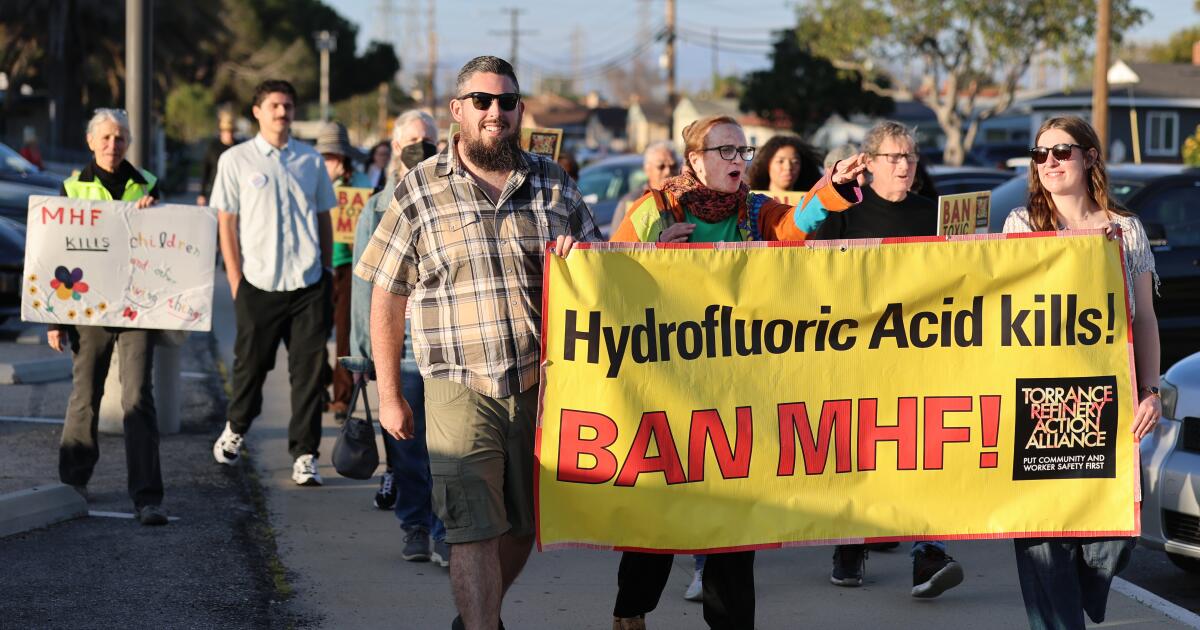
Torrance residents call for the ban of ‘flesh-eating’ chemical used at refinery


West Virginia worked with ICE — 650 arrests later, officials say Minnesota-style ‘chaos’ is a choice

TrumpRx is launched: How it works and what Democrats say about it


James Van Der Beek shared colorectal cancer warning sign months before his death


13 best fitness watches for 2026, tried and tested

Culver City, a crime haven? Bondi’s jab falls flat with locals