World
Fears remain this Easter that Christians in Nigeria are being ‘wiped out' by Muslim extremists


It’s going to be a wretched and fearful Easter for Christians in Nigeria.
The killing and persecution of Christians by Islamist militants intent on creating a muslim caliphate in this West African country is continuing apparently unchecked despite the population being 46% Christian.
“Nigeria’s Christians are being wiped out; we need to call it what it is — genocide,” Jeff King, president of International Christian Concern (ICC), a persecution watchdog, told Fox News Digital.
“Let’s start with the horrible attacks on April 2-3, 2025, in (Nigeria’s) Plateau State’s Bokkos County. Over 60 Christians (were) slaughtered, and 383 homes torched” King said. “Families were burned alive, and kids were left homeless. It’s gut-wrenching. The worst thing is that there’s nothing truly “special” about this attack. This has gone on for 20 years and has only expanded.”
LAUREN GREEN: 3 QUESTIONS ABOUT EASTER EVERY CHRISTIAN SHOULD AND CAN ANSWER
At least 51 Christians were killed in another attack in Nigeria’s Plateau State. (Reuters)
King believes Nigeria is a killing field for Christians, and that this isn’t random violence. He continued with figures, confirmed by local leaders on the ground in Nigeria.
“It’s a calculated push from the Fulanis to erase Christians from their homeland, Nigeria’s Middle Belt. Since 2001, up to 100,000 Christians have been butchered, and 3.5 million farmers have been kicked off their land by Fulani Islamist terrorists. They roll in with AK-47s, machetes and gasoline, and no one’s stopping them. For 20 years, the government has done nothing.
“This is a massive land grab disguised as a dispute or tribal spat. What we are witnessing is a massive and long-running stealth jihad.”
FRANKLIN GRAHAM SHARES HOPE MESSAGE IN EXCLUSIVE INTERVIEW ON EASTER SPECIAL: ‘GOD HASN’T FORGOTTEN THEM’
One woman widowed in an attack is reported to have told the ICC, “They want our land, our lives, our Jesus.”
Just last weekend, the ICC and local sources claim, another 54 Christians were slaughtered after celebrating at a Palm Sunday service in the village of Zikke, near Jos. The attack reportedly went on for a solid hour with no attempt by authorities to stop it.
Members of St. Leo Catholic Church hold a procession to mark Palm Sunday in Ikeja, Lagos, Nigeria, April 13, 2025. (Adekunle Ajayi/Getty Images)
Members of the Christian group Open Doors UK in Nigeria showed Fox News Digital a list of other attacks in Nigeria in the past month.
- March 24 — Dundu village, Bassa LGA. Militants ambushed three Christian farmers while they were cultivating their land.
- March 27 — Ruwi community, Bokkos LGA. Fulani militants killed 11 Christians attending a funeral.
- April 2. — Bokkos LGA, Militants attacked Tamiso village, where women were having a Christian fellowship meeting at a COCIN (Church of Christ in Nations) church, killing at least five. The village of Dafo was also attacked, killing two.
- April 6 — Militants killed four people in Pyakmula village in Bokkos LGA.
- April 7 — Harra village in the Bassa LGA killing three people.
- April 8 — Three separate attacks were launched, killing at least two in Bassa LGA.
- April 11 — Militants attacked Zogu village in Bassa LGA, killing three people, a father and his two sons. The father was beheaded by the militants, according to OD field contacts.
Nigeria ranks seventh on Open Doors’ 2025 World Watchlist, an annual index of countries where Christians face the most persecution.
“Christians in northern and central Nigeria face extreme violence from Boko Haram, ISWAP, (Islamic State West African Province) and armed Fulani militants who have killed thousands of believers, destroyed hundreds of churches and displaced entire Christian communities,” Ryan Brown, CEO of Open Doors US, told Fox News Digital. “The recent attacks in Plateau State represent yet another chapter in this ongoing crisis of religious persecution.
“These attacks have devastated communities that were still recovering from the Christmas Eve massacre that killed approximately 200 Christians in the same region in 2023.”
Nigerian soldiers secure the area outside St. Francis Catholic Church in the town of Owo, Nigeria, June 6, 2022, a day after an attack that targeted worshippers. (AP Photo/Sunday Alamba)
Families have lost male breadwinners, with women and children often sexually assaulted, Brown added.
“Survivors are now living in at least four displacement camps, facing food insecurity and unable to access education or worship safely,” Brown added.
Bishop Ayuba Matawal has profiled the Islamist killers. Matawal is chairman of the Nigerian Bokkos Internally Displaced People’s Welfare Committee.
“It appears that some of these extremists have been indoctrinated with an ideology of seizing land from Christian communities, continuing the legacy of Uthman dan Fodio’s vision of spreading Islam across Nigeria,” he said. “Although their numbers may be small, these extremists have inflicted severe damage on Christian communities.”
The ICC’s King told Fox News Digital he is calling upon the State Department to list Nigeria “as a Country of Particular Concern (CPC).”
This is a U.S. government label that means sanctions, pressure and real consequences.
King added that he believes the U.S. should “cut off all (financial and military) aid to Nigeria until we start to see a meaningful reduction in attacks, perpetrators arrested and lands restored.”
Rangers patrol at the Kainji Lake National Park in Nigeria’s Niger State in February 2023. (Nigerian Conservation Foundation via AP)
While not mentioning the attacks on Christians, a State Department spokesperson told Fox News Digital, “The United States remains deeply concerned by the ongoing violence in West Africa, including in Nigeria’s Middle Belt. We offer our condolences to the victims’ families of recent violence in Plateau State.
“We also continue to engage with the government of Nigeria at the highest levels to address (the) root causes of violence, and we strongly advocate for the protection of all citizens.
“We acknowledge (Nigerian) President Tinubu’s commitment to address the causes of the violence and urge the government to take meaningful and decisive steps to prevent further attacks, ensure accountability for perpetrators and foster long-term peace and stability “
In Nigeria, Bishop Matawal cautioned that, this Easter weekend, “Christian communities are on high alert, especially during church services and religious gatherings.”
“Nigerian Christians are carrying their cross every day, yet their hope rises like the resurrection,” King said. “Easter is all about life winning over death, and these Christians are living that out. But let’s raise a cry and say “we hear you, we are with you, hold on just a bit longer.”
Fox News Digital reached out to the Nigerian government but did not receive a response.


European Commission President Ursula von der Leyen, European Council President Antonio Costa and with South Korean President Lee Jae-myung celebrated the signing of new a digital trade agreement at a ceremony in Brussels on Wednesday.
ADVERTISEMENT

ADVERTISEMENT
The event marked the EU and South Korea’s 11th summit, with everything from security and defence to trade on the agenda.
“Korea is one of Europe’s closest partners in the Indo-Pacific region and on the global stage,” von der Leyen said. “In today’s uncertain world, stable and trusted partnerships like ours are more precious than ever.”
The trio released a joint statement extolling the value of the talks and committing the two sides to a firm and friendly relationship.
“We reaffirm our shared commitment to effective multilateralism, and to a stable and predictable rules-based free and fair economic order,” the statement reads.
The semiconductor factor
Both sides have an interest in diversifying their trade relationships at a time of growing tensions with both China and the US, and the EU-South Korea digital trade agreement comes more than a decade after a landmark free trade deal.
Since 2015, trade between the EU and South Korea has doubled, with goods trade reaching approximately €124.25 billion in 2025, according to figures from the European Commission.
“The European Union-Korea Free Trade Agreement remains one of the European Union’s most successful trade agreements since its entry into enforcement in 2011,” European Council António Costa said on Wednesday.
South Korea is becoming an increasingly important investor in Europe, particularly in strategic sectors such as batteries, electric vehicles and semiconductors.
For the EU, a key objective is to secure semiconductor supply chains while attracting further investment from Korean companies into Europe.
“Korea has a global leadership position in semiconductors,” an EU official said. “This is clearly an area with significant potential for cooperation that would benefit both sides.”
The digital trade agreement concluded on Wednesday is expected to complement the broader trade partnership by reducing “unnecessary barriers to digital trade” and providing greater “legal certainty” for businesses operating across the two markets, according to another EU official. It will facilitate cross-border data flows while prohibiting the mandatory transfer of source code.
The deal is also designed to establish robust online consumer protection rules, though both partners intend to maintain their respective levels of protection for personal data and privacy.
Economic security was also high on the summit agenda, with the two sides agreeing to establish a high-level dialogue on supply chain resilience.
Supply chains came under pressure last year following China’s restrictions on exports of strategic materials, including rare earths – essential for green technologies and the defence sector – as well as products linked to the chip industry, which are critical to automotive manufacturing.
Security and defence
One thing that did not get over the line was a security of information agreement, which had been touted by EU officials prior to the summit as a means of strengthening the flow of classified information between Brussels and Seoul.
“I hope that the security of information agreement will be adopted soon, so that Korea and the EU can share confidential information safely, which will allow the two sides to engage in industrial and research cooperation actively through information exchange exchange,” President Lee said on Wednesday.
The agreement would build on the Security and Defence Partnership agreement that South Korea and the EU signed in 2024. That deal was designed to facilitate cooperation in areas spanning maritime security, countering hybrid threats, fighting foreign information manipulation and interference, and more besides.
In the run-up to this week’s talks, a senior EU official said a key topic of the discussions will be nuclear non-proliferation, as North Korea continues to hold a small but concerning stockpile of nuclear-armed warheads.
North Korea (the DPRK) and Russia were considered “big questions” at the summit, the source said, with Brussels ready to share information on its support for Ukraine with Seoul.
The joint statement from the summit reiterates this, with words of condemnation directed at North Korea and other nations who enable Russia to sustain its war of aggression against Ukraine.
“We urge Russia and the DPRK to immediately cease all such activities and abide by the UN Charter and all relevant United Nations Security Council resolutions,” the statement reads.
World
World court prosecutor who went after Netanyahu for war crimes suspended over sexual misconduct

NEWYou can now listen to Fox News articles!
The International Criminal Court’s chief prosecutor has been suspended with immediate effect after the court’s governing body referred disciplinary proceedings against him to member states following a sexual misconduct investigation.
The ICC, based in The Hague, is a permanent international court created under the Rome Statute to prosecute individuals accused of genocide, war crimes, crimes against humanity and the crime of aggression when national courts are unable or unwilling to act.
Khan became one of the world’s most controversial prosecutors after seeking arrest warrants for Israeli Prime Minister Benjamin Netanyahu and former Israeli Defense Minister Yoav Gallant, making his suspension a major development well beyond the court itself. Israel and the United States have rejected the International Criminal Court’s jurisdiction, and neither country is a member of the court.
The Bureau of the Assembly of States Parties to the Rome Statute had decided to refer the disciplinary proceedings against Prosecutor Karim Khan to the full Assembly of States Parties, suspend him from duty pending a final decision and convene a special session to consider the matter, the International Criminal Court’s Presidency said in a Tuesday statement.
ICC PROSECUTOR BEHIND NETANYAHU ARREST WARRANTS STEPS ASIDE AMID SEXUAL MISCONDUCT PROBE
“The Court respectfully invites the Assembly of the State Parties to conclude the process with the highest priority,” the court’s presidency said.
Khan, who has denied wrongdoing, led the court’s controversial push for arrest warrants against Israeli Prime Minister Benjamin Netanyahu and former Israeli Defense Minister Yoav Gallant for Israel’s war against Hamas in Gaza.
The International Criminal Court’s chief prosecutor has been suspended with immediate effect after the court’s governing body referred disciplinary proceedings against him to member states following a sexual misconduct investigation. (Dimitar Dilkoff/AFP via Getty Images)
Khan’s suspension followed an 18-month investigation into allegations of sexual misconduct involving a lawyer in his office.
Khan’s lawyers have denied the allegations and called the decision “unlawful, procedurally unfair and unsupported by evidence.”
The findings have moved through several layers of review.
A U.N. Office of Internal Oversight Services investigation found evidence supporting the allegations, while a separate judicial review found the evidence was not enough to prove misconduct beyond a reasonable doubt, Reuters reported. The Assembly of States Parties Bureau, which oversees the court on behalf of member states, nevertheless found that Khan had committed serious misconduct involving nonconsensual sexual activity and recommended his removal, Reuters reported.
The disciplinary probe found Khan had engaged in “serious misconduct” and a “serious breach of duty,” The Associated Press reported.
The case now goes to a special session of the Assembly of States Parties, the International Criminal Court’s 125 member governing body. The final decision lies with the assembly and a date for the special session has not yet been set.
Liz Evenson, international justice director at Human Rights Watch, told Fox News Digital that, “The fact that states parties appear to be taking this seriously is important but the decision is confidential so we can’t comment on it. We will be monitoring next steps closely. Meanwhile, state parties should continue to support the court in its important work across its docket.”
CHIEF PROSECUTOR BEHIND ISRAEL WAR CRIMES CHARGES FACES DISCIPLINARY ACTION AMID SEXUAL MISCONDUCT ALLEGATIONS
Karim Khan was the ICC’s chief prosecutor. (Getty Images)
The International Criminal Court issued arrest warrants for Netanyahu and Gallant in November 2024 after Khan requested them months earlier. Israel and the United States condemned the move, accusing the court of equating Israeli leaders with Hamas terrorists.
The Trump administration sanctioned Khan in February 2025 over the court’s actions targeting Israeli officials, under an executive order targeting ICC officials involved in actions against the U.S. or its allies. The order authorized asset freezes and U.S. entry restrictions, and Treasury later added Khan to its sanctions list.
U.S. Ambassador to the United Nations Mike Waltz told Fox News Digital that the U.S. position on the International Criminal Court “has never wavered.”
“We oppose any overreach by the ICC against the United States or our allies. Period,” Waltz said. “And we expect our partners to stand shoulder-to-shoulder with us against these outrageous actions.”
Waltz said the U.S. is watching the disciplinary proceedings against Khan, while declining to comment on the specifics of the case.
“As for the situation with Prosecutor Karim Khan, this is a bit rich that this prosecutor sought to jail a democratically elected prime minister and now we are tracking his immediate suspension and the ongoing disciplinary proceedings,” Waltz said. “Of course, we aren’t going to comment on the specifics of that case while it plays out.”
The suspension drew immediate reaction from Israeli officials, who argued that the decision further undermines the court’s case against Netanyahu and Gallant.
“Want to divert attention from sex crime accusations? Just make up war crime accusations against Israel! Classic,” Netanyahu wrote Wednesday on X. “The ICC is corrupt to the core.”
TRUMP, CONGRESS LOOKING TO PUT SUFFOCATING SANCTIONS ON ‘KANGAROO’ ICC OVER NETANYAHU ARREST WARRANT
Prime Minister Benjamin Netanyahu and Defense Minister Yoav Gallant overseeing meeting at Israel’s Ministry of Defense following the IDF’s preemptive strikes against Hezbollah, August 25th. (Israel Government Press Office)
Israel’s ambassador to the United Nations, Danny Danon, told Fox News Digital that Khan’s suspension proves the International Criminal Court’s problems go beyond one prosecutor.
“The International Criminal Court’s decision to immediately suspend the Chief Prosecutor in The Hague, Karim Khan, following the UN investigation, proves that this body is rotten to the core,” Danon said. “Now is the time to cancel the absurd indictments against Prime Minister Netanyahu!”
Anne Bayefsky, president of Human Rights Voices and director of the Touro Institute on Human Rights and the Holocaust, told Fox News Digital that the scandal has damaged the credibility of the entire court.
“The astounding story of the world’s International Criminal Court and its lead prosecutor headed by a criminal, an allegedly rapist, is not just about one rotten apple,” Bayefsky said. “The entire ICC machine let the process to hold Khan to account drag on for two years after his crimes were first reported.”
Bayefsky argued that the court’s actions against Israeli officials should now face renewed scrutiny.
“ICC judges decided that Khan’s efforts to criminalize Israel’s Prime Minister and Defense Minister weren’t tainted by the clear evidence that Khan was trying desperately to use his attack on Israelis to save himself,” Bayefsky said. “Khan has taken the credibility of the whole shameful ICC apparatus down with him.”
US ANNOUNCES MORE SANCTIONS ON ICC OFFICIALS FOR TARGETING AMERICANS, ISRAELIS
The International Criminal Court building stands in The Hague, Netherlands, on April 30, 2024. (Selman Aksunger/Anadolu via Getty Images)
The Presidency said the court’s leadership remains committed to “independent and impartial proceedings,” recognition and redress for victims of mass atrocities, and the “dignity, rights and aspirations” of court personnel.
The statement also sought to defend the institution itself, calling the ICC “one of the most significant achievements of human civilisation” and saying the court has a duty to protect “the proper functioning of the Court as a whole and its reputation,” the integrity of judicial proceedings, the rights of victims and suspects, and the well-being of court staff.
CLICK HERE TO DOWNLOAD THE FOX NEWS APP
Flag with the logo of the of the International Criminal Court (ICC) on March 29, 2022, in Den Haag, Netherlands. (Alex Gottschalk/DeFodi Images via Getty Images)
The court did not say whether Khan’s suspension would affect the cases involving Netanyahu and Gallant.
Fox News Digital has reached out to the International Criminal Court and the U.S. Mission for comment.

Hegseth’s visit to Guantanamo Bay, Cuba, comes as the Trump administration increases pressure against Cuba’s government.
Published On 10 Jun 2026
Secretary of Defense Pete Hegseth has warned that Cuba could invite confrontation with the United States if it seeks to bolster its military capabilities with new purchases.
Wednesday’s comments come as US President Donald Trump continues to threaten possible military intervention on the Caribbean island.
list of 3 itemsend of listRecommended Stories
“It would be unwise of the government of Cuba to try to procure or get access to the types of weapons that could reach this base or the American homeland,” Hegseth said during a visit to the US military base at Guantanamo Bay, Cuba.
“They would be inviting the kind of confrontation not only do they not want but they could not stand. No country on Earth can match the capabilities of the United States of America.”
Hegseth did not offer specifics about the type of military weaponry Cuba might seek.
But his remarks follow a May report in the news outlet Axios stating that the country had acquired more than 300 military drones that could potentially be used against US forces.
Cuba sits roughly 140 kilometres, or 90 miles, from the southern tip of Florida, and the island’s communist leadership has long had a tense relationship with the US government.
Since the Axios report was released, Cuba has reiterated that it is not a threat to the US. It has also underscored that it has the right to defend itself, and it accused the US of “fabricating pretexts” and “creating and spreading falsehoods” to justify “potential aggression”.
Still, friction has increased between the two countries since Trump returned to office in 2025.
Following an attack on January 3 to abduct Venezuelan President Nicolas Maduro, Trump has threatened to take military action elsewhere in Latin America, including in Cuba.
He has also imposed a de facto energy blockade on Cuba, threatening tariffs against any country that supplies the island with oil. The resulting fuel shortages have caused energy blackouts across the country, as well as scarcities of other basic supplies.
Earlier this week, Volker Turk, the United Nations high commissioner for human rights, slammed the US restrictions as having an outsized impact on the most vulnerable members of Cuban society.
“Children are dying because doctors lack access to essential medical supplies and medicines,” he said. “This is unacceptable.”
But there are lingering concerns that the US may seek to escalate tensions with Cuba.
Since last year, the US has been increasing its military presence in the Caribbean Sea. In May, it deployed an aircraft carrier, the USS Nimitz, to the region, as well.
The US has repeatedly described Cuba as an “unusual and extraordinary threat” to its national security, and reports have emerged that Trump is seeking regime change on the island.
Hegseth’s arrival in Guantanamo Bay follows a visit last month from General Francis Donovan, the leader of the US Southern Command, which oversees military action in Latin America.
During Wednesday’s visit, Hegseth said the US is seeking a positive relationship with Cuba and implied change was imminent.
“Soon, we could be a friend of the leadership of the government of Cuba,” he said.
But he did not rule out the possibility of military action.
“For now, let’s see what happens. But the Department of War will give the commander-in-chief every single option he needs within that contingency,” Hegseth said.
“What happens with the future of Cuba is in the hands of … the president of the United States and the leadership of Cuba.”
-

 Sports2 minutes ago
Knicks miraculously overcome 29-point deficit to take commanding 3-1 lead in NBA Finals over Spurs
-

 Technology5 minutes ago
Do not click fake ‘account recovery’ Amazon email
-
 Business10 minutes ago
The FBI serves a search warrant at the Garden Grove chemical plant
-
 Entertainment17 minutes ago
Bill Cody, the voice of WSM Radio and the Grand Ole Opry, dies at 67
-

 Lifestyle20 minutes ago
Inside Farfetch’s Strategy for a New Era of Luxury Experience
-
 Politics25 minutes ago
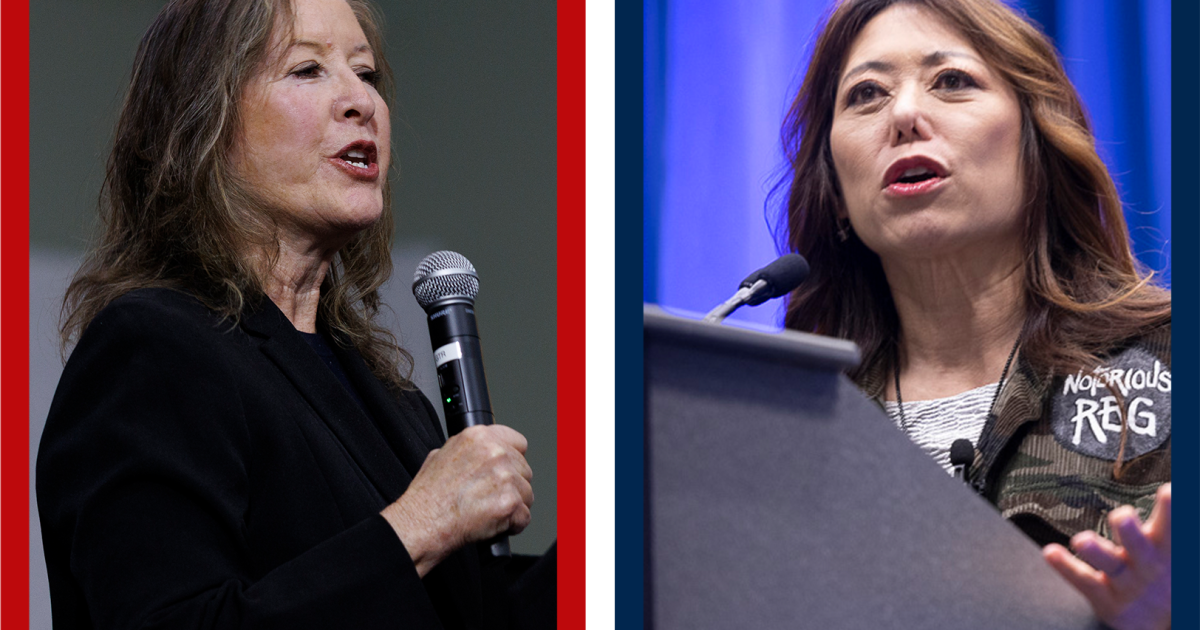
Democrat Fiona Ma, Republican Gloria Romero to face off in race for lieutenant governor
-
 Science32 minutes ago
UC Davis favored less qualified Black, Latino med school applicants, Justice Department claims
-
 Sports35 minutes ago
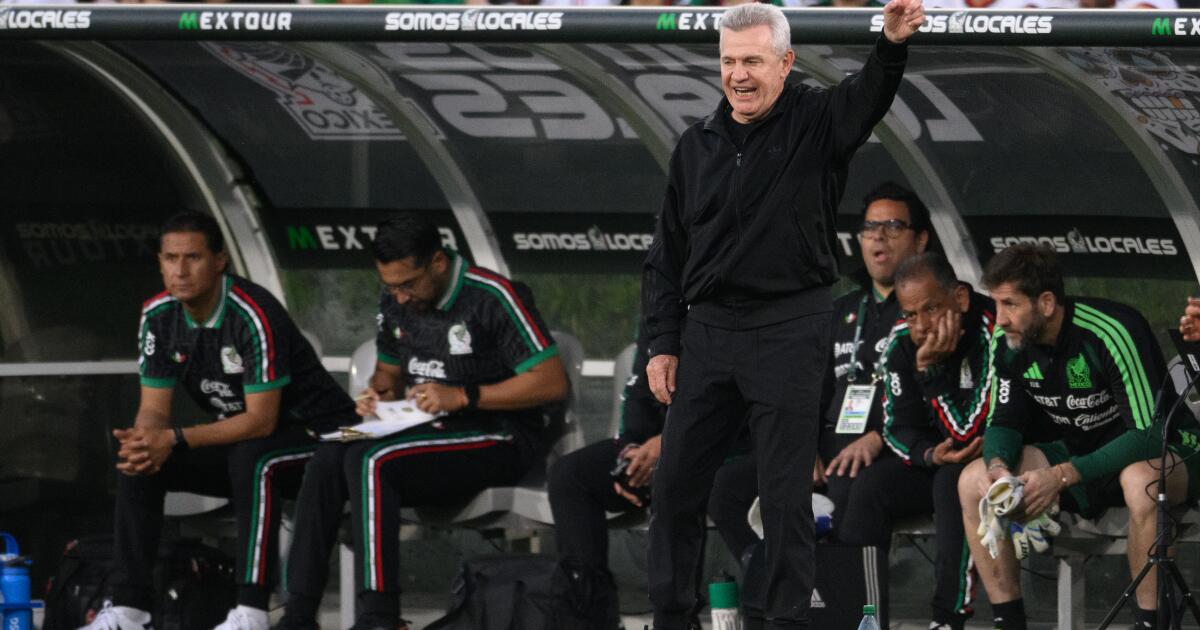
With eyes of world on Mexico City, El Tri kicks off 2026 World Cup against South Africa

