World
China's Belt and Road Initiative is bringing new risks to Europe


The opinions expressed in this article are those of the author and do not represent in any way the editorial position of Euronews.
China’s grand vision of the world-changing BRI may have not been realised, but something else is emerging in its wake — a powerful lever to bend authoritarian-leaning countries toward Chinese interests, Elaine Dezenski writes.
Hungary was the first European country to sign on to China’s trillion-euro Belt and Road Initiative. With Italy leaving the Belt and Road, or BRI, last year, and others in Europe expressing concern about engagement with China, Budapest may also soon be one of the last remaining links of the BRI to Europe.
By all appearances, the BRI is in retreat, with Chinese infrastructure spending down around the world as Beijing deals with a troubling track record of BRI corruption, waste, debt distress, and failing projects.
But as the infrastructure and ambitions for the BRI fade, something more dangerous may be rising up to take its place — an authoritarian alliance of security, surveillance, and repression that puts Europe at risk.
A railway worth a thousand years od debt
Hungary exemplifies this shift. Like many BRI countries, Hungary signed up for a massive infrastructure project it both didn’t need and couldn’t afford.
The €3.8 billion Serbia-Hungary railway project, financed by Chinese loans under the BRI, is expected to be completed by 2025, but some estimates suggest that it will take a further 979 years — or nearly a millennium — for Hungary to break even on the project.
Hungary’s BRI issues are not unique. As described in a new report on the BRI, “Tightening the Belt or End of the Road”, many BRI projects around the world face serious challenges, from hydroelectric dams with thousands of cracks in Ecuador, to promised infrastructure that was never built in the Democratic Republic of the Congo, to massive debt distress in Zambia.
But despite the problems for host countries and the large portfolio of failing loans for China, Beijing has still been successful at building influence across authoritarian-leaning regimes, who are eager to follow the Chinese model of single-party state control and high-tech domestic repression.
Venezuela, Ecuador, Bolivia, and Angola have all purchased AI-powered surveillance and facial recognition technology from China — presumably to track or intimidate political opponents.
Of 90 countries that could be categorised on a spectrum from “closed authoritarian” to “flawed democracies,” China had sold its surveillance tech to 54 of them — often under the banner of the BRI.
NATO and the EU facing an existential crisis?
Hungary, a member of both the European Union and NATO that has been sliding deeper into authoritarianism over the past decade, is a perfect target for Beijing’s security-based BRI aspirations — the export of political repression with Chinese characteristics. Viktor Orban’s right-wing nationalist government seems an odd match for Communist China, but they share a commitment to what Orban has himself described as an intentionally “illiberal state”.
Furthering their mutual interest in preventing domestic dissent, Beijing announced new bilateral cooperation between China and Hungary on “security and law enforcement capacity building under the Belt and Road Initiative”.
This new BRI security cooperation comes during a period where Hungary has been leveraging its position in European alliances to, water down or obstruct EU support for Ukraine, oppose EU efforts to criticise China for human rights abuses and impede and delay Sweden’s attempts to join NATO.
Hungary’s willingness to enter security arrangements with Xi Jinping and do the bidding of Vladimir Putin while, simultaneously, maintain membership in NATO and the EU is deeply troubling and presents an existential crisis for those alliances.
On top of that, Chinese economic integration in Hungary presents risks of its own. Already home to Europe’s largest Huawei logistics and manufacturing base outside of China, China battery giant, CATL, has announced plans to build a €7.3bn plant near the Hungarian town of Debrecen — allowing China to dominate electric vehicle supply chains from inside the EU.
This is similar to moves from other Chinese companies, like carmaker BYD, that are considering building factories in Mexico in an attempt to circumvent trade restrictions that would otherwise apply under the US-Mexico-Canada Free Trade Agreement.
It’s time to wake up to the risk of overreliance on China
As the US and its allies have awoken to the risk of overreliance on Chinese supply lines, Hungarian officials are taking the opposite approach, going so far as to call de-risking suicidal.
This position, however, doesn’t impact Hungary alone. The entire EU market is open to Chinese manipulations through the Hungarian economy, such as dumping of cheap goods to prop up the failing Chinese economy or undermining domestic European industries with subsidised competitors.
As German chemical giant BASF seeks to disengage from China’s Xinjiang region, leaked documents indicate that China is planning to build a chemical hub in Hungary.
 ADVERTISEMENT
China’s grand vision of the world-changing BRI may have not been realised, but something else is emerging in its wake — a powerful lever to bend authoritarian-leaning countries toward Chinese interests.
For Hungary, this is detrimental to its citizens, its neighbours, and Europe as a whole.
Elaine Dezenski is senior director and head of the Center on Economic and Financial Power at the Foundation for Defense of Democracies in Washington, DC.
At Euronews, we believe all views matter. Contact us at view@euronews.com to send pitches or submissions and be part of the conversation.



World
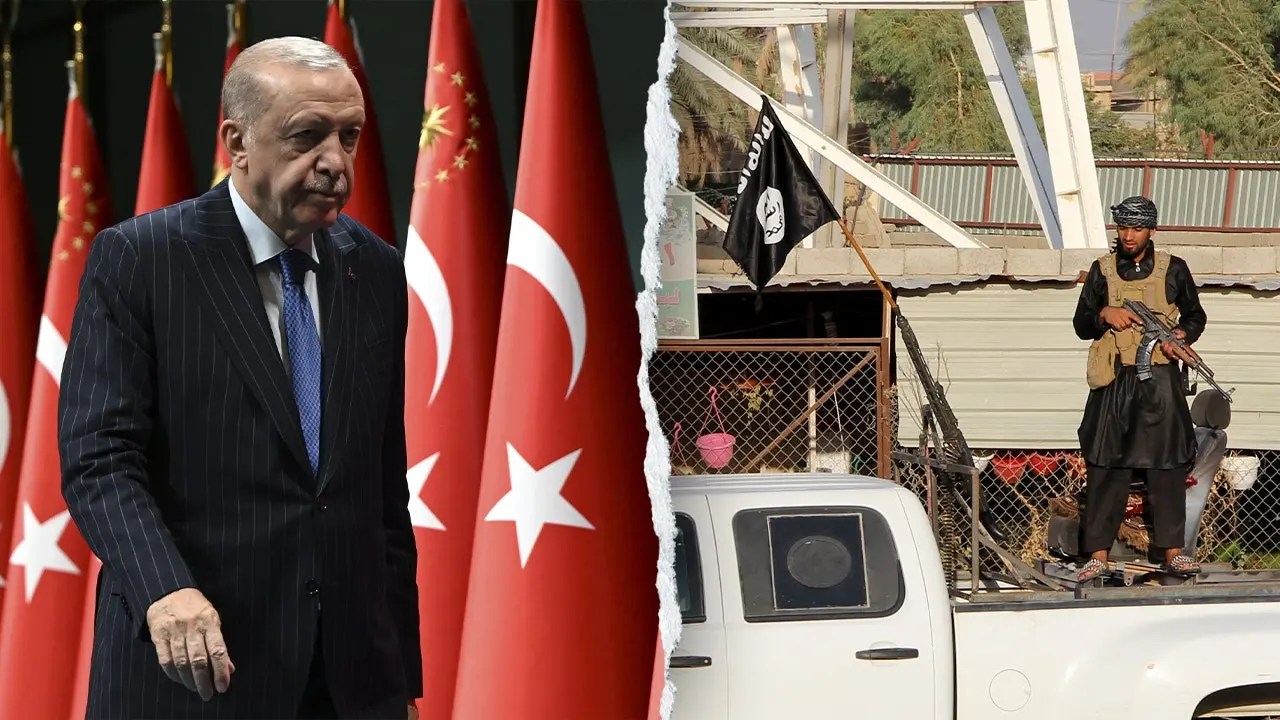
Turkey detains over 200 suspects, including alleged ISIS militants, in sweeping raid ahead of NATO summit
NEWYou can now listen to Fox News articles!
Turkish authorities reportedly detained more than 200 people, including suspected ISIS-linked militants, in a sweeping Tuesday raid in capital Ankara ahead of a July 7-8 NATO summit.
The raid came after Turkish authorities issued detention orders for 241 suspects, 209 of whom were taken into custody, The Associated Press reported, citing a statement from the office of Turkey’s chief prosecutor.
Among the 209 detained, 56 were allegedly ISIS militants, according to the AP. This comes after Turkish authorities said they detained 125 ISIS members in December.
The detention operations occurred just two weeks before a planned NATO summit in Ankara on July 7 that President Donald Trump is expected to attend.
TURKEY’S NATO ROLE UNDER SCRUTINY AMID NEW REPORT ON HAMAS, MUSLIM BROTHERHOOD TIES
President Donald Trump greets Turkey’s President Recep Tayyip Erdogan during a summit in Sharm El Sheikh, Egypt, on Oct. 13, 2025, to support ending the Israel-Hamas war in Gaza after a breakthrough ceasefire deal. (Evan Vucci/AP Photo/Pool)
Other militants scooped up were 35 alleged members of the Revolutionary People’s Liberation Party/Front, which a Turkish statement described as “a far‑left group known for armed attacks and assassinations in Turkey,” according to the AP.
The ISIS-combating operations demonstrate the terrorist group’s ongoing activity in the region, showing the group is still functioning despite the U.S. campaign during Trump’s first term to eliminate the group’s caliphate and its control of large swaths of territory in the Middle East.
Iraqi government forces celebrate while holding an Islamis Sate (IS) group flag after they claimed they have gained complete control of the Diyala province, northeast of Baghdad, on January 26, 2015 near the town of Muqdadiyah. (YOUNIS AL-BAYATI/AFP via Getty Images)
In recent years, ISIS has spread into the African continent, prompting a strong response from the U.S. In May, Trump authorized a series of strikes in Nigeria to combat the group.
PENTAGON SLASHES NATO COMBAT COMMITMENTS AS TRUMP PUSHES EUROPE TO DEFEND ITSELF
A May 16 strike killed ISIS leader Abu-Bilal al-Minuki, who was the group’s second-in-command globally.
U.S. and Nigerian forces conducted kinetic strikes against ISIS fighters in northeastern Nigeria on May 17, 2026, AFRICOM said. (X/U.S. Africa Command)
CLICK HERE TO DOWNLOAD THE FOX NEWS APP
“Abu-Bilal al-Minuki, second in command of ISIS globally, thought he could hide in Africa, but little did he know we had sources who kept us informed on what he was doing,” Trump wrote in a post on Truth Social after the strike. “He will no longer terrorize the people of Africa, or help plan operations to target Americans.”
The group’s renewed activity also includes a call to supporters to make attacks on U.S. soil during the World Cup.
The Associated Press contributed to this report.

By Euronews with AFP
Published on
Two whales were killed off the coast of Iceland overnight Sunday, two days after commercial hunting resumed, local media and animal rights activists reported Monday.
ADVERTISEMENT
ADVERTISEMENT
The kill ends a two-year pause and marks the first catches since 2023.
Icelandic public broadcaster RUV reported that two fin whales were killed. The fin whale is the second largest animal on Earth after the blue whale.
Before the vessels set off on Friday, a protester had attached himself to one of the masts in the port of Reykjavik, but climbed down and was escorted away by police.
Iceland, Norway and Japan are the only three countries that still openly permit whaling, despite international condemnation from the public and animal welfare organisations.
Iceland cancelled its whale hunt over the past two years, partly because economic problems had cut demand and the industry was not deemed profitable enough.
“The first fin whale deaths in Iceland’s hunt this year are devastating,” said Joanna Swabe, European senior public affairs director for animal rights group Humane World for Animals.
“Iceland has killed more than 1,000 fin whales in the past two decades — not only the second largest animal on the planet but also a species classified as globally vulnerable to extinction,” Swabe said in a statement.
Iceland’s government has said it is planning to introduce a bill aimed at banning whaling this autumn.
The International Whaling Commission banned the commercial killing of whales in 1986 amid alarm at the declining stock of the marine mammals.
Iceland’s Marine and Freshwater Research Institute has recommended that no more than 150 fin whales are caught in the 2026 season.
That represents a 28-percent drop on the annual quota it recommended for the period 2018–2025, it said.
The institute has set an annual catch of 168 animals for the minke whale hunt this year, a 23-percent drop on 2018-2025.

Paramount+ has commissioned a docuseries about shamed “X Factor” judge Tulsa from Dorothy Street Pictures, the producers behind Victoria Beckham doc “Victoria” and Pamela Anderson doc “Pamela: A Love Story.”
Tentatively titled “Tulisa: The Reckoning,” the unscripted series will follow the former pop star and talent show judge as she reflects on her journey, from her humble beginnings to soaring success as the frontwoman for the band N-Dubz, her pivot to “X Factor” judge and the scandal that saw her career come crashing down.
In 2013 an undercover U.K. tabloid journalist nicknamed the “Fake Sheikh” tricked the singer into “setting up a cocaine deal” which saw her arrested and charged. The trial collapsed after the journalist was found to have tampered with evidence (he was later convicted of perverting the course of justice).
Tulisa later revealed she had been entrapped by the journalist, who claimed he could bag her a role in a movie worth £3.5 million.
Although she was never convicted, Tulisa lost endorsements and jobs, including the “X Factor” gig and effectively disappeared from public life.
As well as telling her story, the three-part docuseries will follow the singer’s campaign for media regulation.
“This isn’t just a story of survival, it’s a reckoning,” reads the synopsis for the docuseries. “After years of reflection, Tulisa is ready to confront and change the system that once brought her down.”
Tulisa says of the project: “For years, so much has been said about me, but not always by me. This series is about taking back control of my story and speaking openly about everything I’ve been through, not just for myself, but for anyone who’s had similar experiences in the media spotlight.”
“Tulisa: The Reckoning” (working title) is set to land on Paramount+ in 2026.
-

 Health2 minutes ago
Video: Why Milder Symptoms Could Make This Ebola Outbreak More Dangerous
-
 Lifestyle17 minutes ago
Working hard as ever, Wendell Pierce aims for an annual trifecta: TV, film and theater
-

 Education24 minutes ago
The Patriot Housewife Whose Plays Helped Push America Toward Revolution
-

 Technology27 minutes ago
The best robot vacuum deals available during Prime Day
-

 World32 minutes ago
Turkey detains over 200 suspects, including alleged ISIS militants, in sweeping raid ahead of NATO summit
-

 Politics39 minutes ago
Trump foe wins crucial Dem primary as 2028 presidential speculation swirls
-

 Sports47 minutes ago
Wizards select AJ Dybantsa first overall in 2026 NBA Draft
-
Business57 minutes ago
SpaceX stock returns to Earth after record IPO


