World
Can Biden afford to lose the Arab and Muslim vote?


In 2020, Joe Biden won the state of Michigan by a much closer margin over then-incumbent President Donald Trump than the polls and pundits had predicted: just more than 150,000 votes.
Two partly overlapping sets of voters helped tip Biden over the line in Michigan and other vital swing states, including Pennsylvania and Wisconsin: Muslim Americans and Arab Americans.
Now, four years later, as Biden and Trump head towards a rematch in November, the current Democratic Party incumbent faces the mounting prospects of a backlash from those very same voters, many of whom are seeking to bleed his re-election bid.
Growing outrage over Washington’s support for Israel in its unprecedented bombardment of Gaza is many prompting Arab-American and Muslim voters to declare that they intend to stay away from the polls. As the US continues military funding for Tel Aviv, the number of Palestinians killed in the war on Gaza has risen to nearly 30,000 since October 7, many of them children.
In Michigan, where early primaries begin this week, one-time Biden voters have promised to send his administration a strong message by sabotaging the elections, even as the president’s aides have scrambled to meet and mend broken ties with community leaders.
Here’s what American Arab and Muslim communities want, why the two voting blocs are important for Biden, and the parts of the US where they are most influential:
What are Arab Americans demanding?
Arab and Muslim communities say they’ve called on the Biden administration to speak up and halt the killings in Gaza with no results. Some are Palestinians with families and friends in the besieged strip.
These communities have diverse demands, the main ones being that:
- The US support an immediate ceasefire in Gaza and work to see Palestinian political prisoners, as well as Israeli captives, freed.
- Washington stops military funding to Israel.
- The US pushes for sufficient aid to Palestinians and resumes paused humanitarian funding to UNRWA, the UN aid agency under investigation amid accusations its staff members took part in Hamas’s October 7 attacks when 1,200 Israelis were killed.
- The US government do more to fight rising anti-Arab and anti-Palestinian hate.
However, many say they’re not being heard and that Washington’s stance is particularly painful because of how they’ve supported Biden in the past. Communities in Dearborn, Detroit, and other major cities with significant Arab-American populations have successfully lobbied their local council leaders to pass unilateral resolutions for a ceasefire in Gaza.
While the local laws do not weigh on US foreign policy, Mai El-Sadany, director of the DC-based Tahrir Institute for Middle East Policy (TIMEP) told Al Jazeera that local resolutions are symbolic and are pointers to the concerns and priorities of American citizens.
“These spaces provide a platform for citizens to explain why this issue matters and how it affects them and their families,” El-Sadany said.
“[Local councils] have the potential to be mobilising spaces to bring like-minded individuals together, to create a larger sense of urgency and pressure on policymakers who do have foreign policy influence to reconsider their approach.”
What’s the ‘uncommitted’ option some voters want to go with?
Some Arab-American voters are choosing to pull a no-show in state primaries, and – if Biden does not call for a ceasefire – at the November polls. Community leaders in Minnesota launched the #AbandonBiden campaign in October.
Others say they plan to write “Free Palestine” on their unticked ballot papers.
Still others, particularly in Michigan, are planning to turn out for the Democratic primaries — not to tick Biden’s name, but rather to choose the “uncommitted” option on ballots.
The option signifies that voters support the party but are not attached to any of the listed candidates. An uncommitted vote will not count for Biden. At the same time, since Trump is not on the Democratic Party ballot, it will not count for him either. While there won’t be an uncommitted option in November in the general ballots, no-show votes and ballot papers not properly ticked from former Democratic Party supporters could reduce the vote count for Biden.
Lexis Zeidan of Listen to Michigan, a group that has organised call-a-thons to get thousands of “uncommitted” Michigan voters on board, told Al Jazeera the effort was “to put President Biden on notice” after protests had failed to change the White House’s stance on Gaza.
“You can’t weaponise this whole notion that because you’re not Republican, you’re the better party especially when you’re aiding a genocide and even more when you’re taking our taxes that could be reinvested in the communities that are suffering and you claim to care about,” said Zeidan, a Palestinian Christian who promises not to vote for Biden in November. The group is aiming for at least 10,000 people to vote uncommitted in the primaries, the same number of votes that helped Trump win Michigan in the 2016 elections, over Hillary Clinton.
“For us, at the minimum, that’s the margin of votes that we can showcase that we are able to swing Michigan in any direction,” she said.
Some 30 elected state leaders in Michigan have joined the movement, including Rashida Tlaib, the only Palestinian American in the US Congress.
Dearborn city mayor Abdullah Hammoud in a New York Times opinion confirmed that he’d vote ‘uncommitted’ in the primaries, saying that in doing so, he was choosing “hope that Mr. Biden will listen”.
Which states are Arab-American voting strongholds?
There are approximately 3.5 million Arab Americans according to the Arab American Institute, making up around 1 percent of the US population. About 65 percent are Christians, approximately 30 percent are Muslim, and a small number practise Judaism.
While these groups tend to vote based on varying interests, “there’s almost unanimous consensus on the need for a Gaza ceasefire,” said Youssef Chouhoud, a race and religion researcher with Virginia’s Christopher Newmark University (CNU).
Dearborn, Michigan, is home to the largest Arab-American community in the US — more than 40 percent of the city’s population. Georgia, Pennsylvania, Florida, and Virginia are also home to large Arab communities.
At least three of those states – Georgia, Michigan and Pennsylvania — are going to be battleground swing states in November, where the difference in support for Democrats and Republicans is marginal, and small shifts could swing outcomes.
Arab votes made the difference in the tight 2020 race. Biden pushed ahead of Trump by 154,000 votes in Michigan – credited majorly to the Arab-American community, which accounted for 5 percent of the vote. Michigan is home to an estimated 240,000 Arab Americans.
In Georgia, Biden won by fewer than 12,000 votes. The state is home to more than 57,000 Arab Americans.
However, soaring discontent in those communities means for the first time in 26 years, the Democratic Party is no longer a choice for many Arab voters, whether Christian or Muslim. Biden’s approval ratings among American Arabs went from 59 percent in 2020 to 17 percent in 2023.
How might non-Arab Muslims vote?
There are about 4.5 million American Muslims, and a majority — almost 3.5 million — of them are not of Arab ethnicity. Most are of Pakistani and Indian descent.
But non-Arab Muslim communities who’ve traditionally voted Democrat are losing faith in Biden, too.
In all, about one million Muslims voted in 2020, and 80 percent of them voted for Biden. According to the Council on American-Islamic Relations (CAIR), some two million Muslims are already registered to vote in the 2024 elections.
This time, though, only 5 percent of Muslim Americans say they’ll vote for Biden in November, according to a poll by Emgage, a Muslim civic engagement group.
American Muslims are concentrated in New York, California, Illinois, New Jersey, Texas, Florida, Ohio, Virginia, Georgia and Michigan.
What effects will no-show voting have?
Some analysts say that, whether they withhold their vote or go for Trump, the Muslim and Arab-American vote is not going to make a huge dent in Biden’s campaign as they only make up about 2 to 3 percent of the total voting population.
But no-shows or damaged votes, from those who will write on the ballot, for example, could put Biden at risk of losing tiny margins in swing states and could clear the ground for another Trump White House, Chouhoud of CNU said.
“It is well within the realm of reason that he will lose over 50 percent of the votes that he got in 2020 from Arabs and Muslims collectively, and that’s equivalent to the margin of victory that he got just from those two groups alone,” Chouhoud said. “He cannot count on their votes.”
Such a scenario, Chohoud added, would make it likelier for Trump to get elected. The former president has signalled he’d bring back a controversial ban on travel to the US from several Muslim-majority countries.
“That’s not to say that we should, quote-unquote, blame the Muslims,” Chouhoud said. “They’ve been telling you what they were going to do for months now. If the Democratic establishment really cared about a second Trump presidency as much as they say they do, they would have done something different. So, it’s really not on Arabs and Muslims, right?”
Other communities, too, might hurt Biden at the ballot box. Polls by the Pew Research Center show that 40 percent of Americans across party lines do not approve of Biden’s response to the war, particularly young people.
How well is Biden’s damage control working?
Biden’s campaign has tried to paint the president as frustrated with the situation in Gaza to appeal to Arab and Muslim communities, as well as other Americans across religious affiliations who support a ceasefire in Gaza.
According to an NBC news exclusive this month, Biden privately vented his frustrations with Israeli Prime Minister Benjamin Netanyahu’s unwillingness to agree to a ceasefire, and called the prime minister an “a******”. The president also told reporters at a February 8 news conference in the White House that the Israeli response in Gaza “has been over the top”.
But in moves contradicting the president’s alleged private stance, Washington has so far continued to back Israel’s war. In mid-February, UN Ambassador Linda Thomas-Greenfield was the sole hand to oppose, and veto, a resolution proposed by Algeria calling for an immediate ceasefire in Gaza. Thomas-Greenfield said that could jeopardise continuing negotiations aimed at freeing Israeli captives still held by Hamas and that an immediate ceasefire would derail US attempts to build a “lasting peace” in the region. It was one of several such vetoes blocking an end to the war since October 7.
In January, the US Senate also approved an additional $14bn package to fund Israel’s war on Gaza. Already, Israel receives the largest chunk of US aid, according to the Council on Foreign Relations – about $3.3bn a year. Nearly all of that funding goes to military operations.
In a flurry of activity in recent weeks, Biden representatives have attempted to soothe Arab leaders in meetings, with limited success. Dearborn officials were set to meet Biden campaign manager Julie Chavez Rodriguez in a sit-down but cancelled at the last minute after pressure mounted from community members who were against any talks regarding the elections. At another meeting with Biden’s senior advisors in February, Dearborn Mayor Hammoud said the community was not shifting from its demands for a ceasefire.



President Trump said Iran had agreed to the “highest level” inspections, hours after an Iranian official said there were “no detailed discussions on the nuclear issue,” as the two sides continued to present different narratives of their latest talks.
World
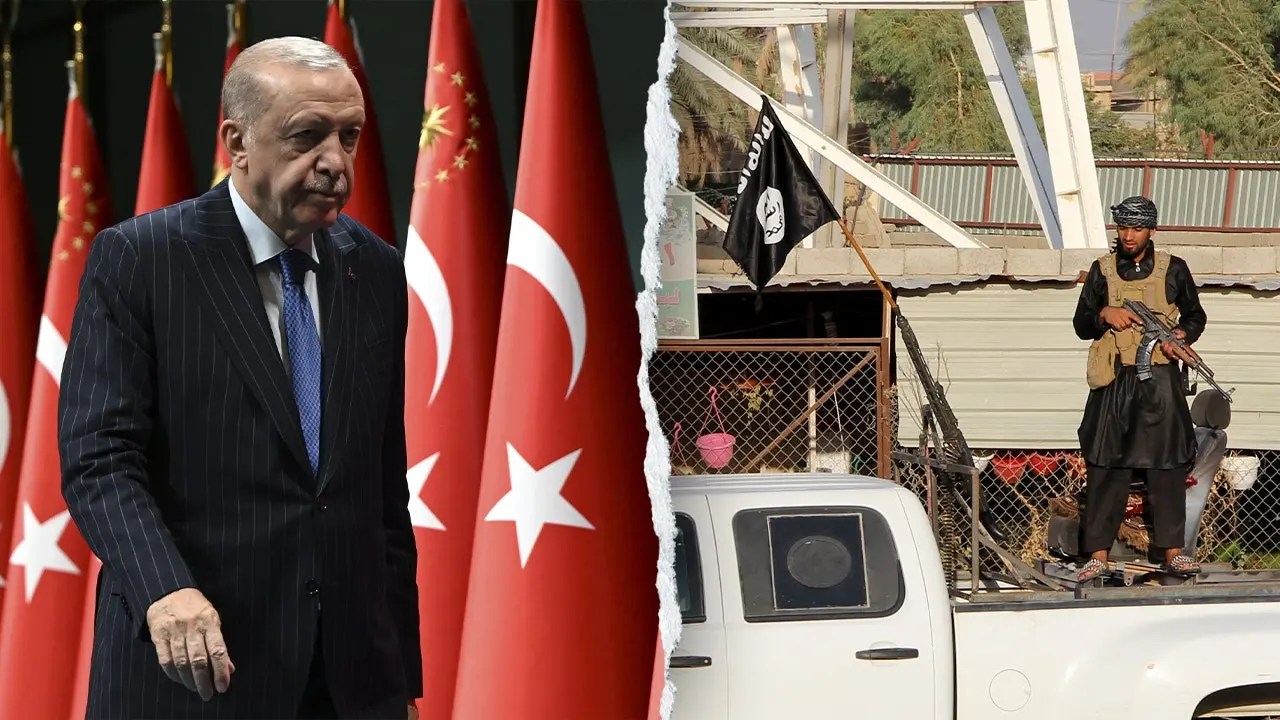
Turkey detains over 200 suspects, including alleged ISIS militants, in sweeping raid ahead of NATO summit
NEWYou can now listen to Fox News articles!
Turkish authorities reportedly detained more than 200 people, including suspected ISIS-linked militants, in a sweeping Tuesday raid in capital Ankara ahead of a July 7-8 NATO summit.
The raid came after Turkish authorities issued detention orders for 241 suspects, 209 of whom were taken into custody, The Associated Press reported, citing a statement from the office of Turkey’s chief prosecutor.
Among the 209 detained, 56 were allegedly ISIS militants, according to the AP. This comes after Turkish authorities said they detained 125 ISIS members in December.
The detention operations occurred just two weeks before a planned NATO summit in Ankara on July 7 that President Donald Trump is expected to attend.
TURKEY’S NATO ROLE UNDER SCRUTINY AMID NEW REPORT ON HAMAS, MUSLIM BROTHERHOOD TIES
President Donald Trump greets Turkey’s President Recep Tayyip Erdogan during a summit in Sharm El Sheikh, Egypt, on Oct. 13, 2025, to support ending the Israel-Hamas war in Gaza after a breakthrough ceasefire deal. (Evan Vucci/AP Photo/Pool)
Other militants scooped up were 35 alleged members of the Revolutionary People’s Liberation Party/Front, which a Turkish statement described as “a far‑left group known for armed attacks and assassinations in Turkey,” according to the AP.
The ISIS-combating operations demonstrate the terrorist group’s ongoing activity in the region, showing the group is still functioning despite the U.S. campaign during Trump’s first term to eliminate the group’s caliphate and its control of large swaths of territory in the Middle East.
Iraqi government forces celebrate while holding an Islamis Sate (IS) group flag after they claimed they have gained complete control of the Diyala province, northeast of Baghdad, on January 26, 2015 near the town of Muqdadiyah. (YOUNIS AL-BAYATI/AFP via Getty Images)
In recent years, ISIS has spread into the African continent, prompting a strong response from the U.S. In May, Trump authorized a series of strikes in Nigeria to combat the group.
PENTAGON SLASHES NATO COMBAT COMMITMENTS AS TRUMP PUSHES EUROPE TO DEFEND ITSELF
A May 16 strike killed ISIS leader Abu-Bilal al-Minuki, who was the group’s second-in-command globally.
U.S. and Nigerian forces conducted kinetic strikes against ISIS fighters in northeastern Nigeria on May 17, 2026, AFRICOM said. (X/U.S. Africa Command)
CLICK HERE TO DOWNLOAD THE FOX NEWS APP
“Abu-Bilal al-Minuki, second in command of ISIS globally, thought he could hide in Africa, but little did he know we had sources who kept us informed on what he was doing,” Trump wrote in a post on Truth Social after the strike. “He will no longer terrorize the people of Africa, or help plan operations to target Americans.”
The group’s renewed activity also includes a call to supporters to make attacks on U.S. soil during the World Cup.
The Associated Press contributed to this report.

By Euronews with AFP
Published on
Two whales were killed off the coast of Iceland overnight Sunday, two days after commercial hunting resumed, local media and animal rights activists reported Monday.
ADVERTISEMENT

ADVERTISEMENT
The kill ends a two-year pause and marks the first catches since 2023.
Icelandic public broadcaster RUV reported that two fin whales were killed. The fin whale is the second largest animal on Earth after the blue whale.
Before the vessels set off on Friday, a protester had attached himself to one of the masts in the port of Reykjavik, but climbed down and was escorted away by police.
Iceland, Norway and Japan are the only three countries that still openly permit whaling, despite international condemnation from the public and animal welfare organisations.
Iceland cancelled its whale hunt over the past two years, partly because economic problems had cut demand and the industry was not deemed profitable enough.
“The first fin whale deaths in Iceland’s hunt this year are devastating,” said Joanna Swabe, European senior public affairs director for animal rights group Humane World for Animals.
“Iceland has killed more than 1,000 fin whales in the past two decades — not only the second largest animal on the planet but also a species classified as globally vulnerable to extinction,” Swabe said in a statement.
Iceland’s government has said it is planning to introduce a bill aimed at banning whaling this autumn.
The International Whaling Commission banned the commercial killing of whales in 1986 amid alarm at the declining stock of the marine mammals.
Iceland’s Marine and Freshwater Research Institute has recommended that no more than 150 fin whales are caught in the 2026 season.
That represents a 28-percent drop on the annual quota it recommended for the period 2018–2025, it said.
The institute has set an annual catch of 168 animals for the minke whale hunt this year, a 23-percent drop on 2018-2025.
-

 Arizona1 minute ago
Arizona creates task force to crack down on cargo thefts
-

 Arkansas13 minutes ago
Razorbacks’ Guard Darius Acuff Selected No. Overall in 2026 NBA Draft
-

 California16 minutes ago
DOJ charges 10 Southern California defendants in largest federal healthcare fraud crackdown in US history
-

 Colorado21 minutes ago
Erie Town Council approves sale of Colorado mineral rights for major oil and gas development
-

 Connecticut28 minutes ago
Man charged with murder in death of Duxbury, Massachusetts woman in Connecticut home
-

 Delaware31 minutes ago
Vigil held for 2 teens killed in hit-and-run in New Castle County; driver in custody
-

 Florida36 minutes ago
Meet the Florida Democrats running for governor against David Jolly
-
Georgia43 minutes ago
Georgia Lottery Mega Millions, Cash 3 results for June 23, 2026

