Washington
Why Alabama chose Kalen DeBoer and what’s next for Washington


Kalen DeBoer has a tough act to follow.
Alabama will name DeBoer its next head coach, sources told ESPN on Friday, replacing Nick Saban and his more than 200 wins and six national titles at the school.
DeBoer, 49, is 105-12 as a head coach and was named AP Coach of the Year at Washington last season on his way to the national championship game.
Now he must transition into a tougher-than-ever SEC that adds Texas and Oklahoma next season.
So why did the Tide choose DeBoer to lead the next era of Alabama football? And what’s next for Washington? We answer some of the most pressing questions about the move.
Why did Alabama choose DeBoer?
Over and above everything else, Alabama wanted a proven winner, and DeBoer has won everywhere he’s been. He’s won 11 or more games in seven of his nine seasons as a head coach. He took Washington to a Pac-12 championship and the College Football Playoff national championship game in his second season at UDub.
Two of the other guys mentioned prominently in the Alabama coaching search, Dan Lanning and Steve Sarkisian, were a combined 0-5 against DeBoer over the last two seasons. DeBoer’s offenses were electric. The Huskies ranked 13th nationally in scoring this season and sixth in 2022. They averaged at least 36 points per game in both seasons, and look at the way quarterback Michael Penix Jr. blossomed under DeBoer at Washington.
It was important for Alabama to get someone with vast head coaching experience. DeBoer has been a head coach in the Pac-12, at Fresno State and in the Division II ranks with Sioux Falls. — Chris Low
What will be the biggest challenge for DeBoer?
Roster retention is going to be priority No. 1. A mass exodus of players to the portal could be crippling, especially since the ability to backfill won’t happen again until the portal reopens for non-graduates in the spring. Even then, most of the big names already made their moves. But setting aside that immediate concern, far and away the biggest challenge will be expectations. Not just wins and losses, but constantly being compared to Saban and how he did things.
While there’s no tower a la Bear Bryant to take down, DeBoer will have to walk a fine line implementing his process without appearing to step on Saban’s capital-p Process. Change too many things too quickly and the fan base and boosters might revolt. And in today’s game of NIL, you have to keep the donations coming. — Alex Scarborough
What is DeBoer’s first order of business regarding the roster?
DeBoer has some positives working in his favor when it comes to the roster. The first is that we just went through the early signing period and all but six of Alabama’s original commitments enrolled early.
Classes have already started at Alabama, which means the prospects in the 2024 class who enrolled early can’t be released from their national letter of intent, they would have to transfer to leave. To do that, players would use their one-time transfer, but also need to get admitted and enroll at a new school.
That could prove difficult with different institutions having different schedules and players may have to wait until summer to enroll.
DeBoer needs to ensure that the elite players who just signed want to stay and would fit in his system. The big piece of that class is five-star quarterback Julian Sayin, who was the No. 1 quarterback and the No. 3 overall prospect in the cycle. For depth, talent and competition, keeping Sayin on the roster is imperative.
He could be the quarterback of the future and make the transition a lot easier for DeBoer. He can show Sayin the success he had with Michael Penix Jr. and try to convince Sayin that he could do the same for him.
The next order of business would be evaluating the roster and ensuring any players that he wants to stay know that they are wanted. The players have a 30-day window to enter the transfer portal and explore other options. The players at Washington would also have a 30-day window to enter the portal since DeBoer left, so if there are some players he thinks could help him win at Alabama, he could try to bring them with him.
Alabama’s roster is already filled with stars and elite players, so there shouldn’t be much of a weeding out process. He’s inheriting a team that won an SEC championship and made it to the College Football Playoff, so his main goal needs to be retention and maintaining status quo, while adding in pieces to supplement an already excellent roster. — Tom VanHaaren
What is Saban’s new role at Alabama and how does it affect DeBoer?
Saban’s role and/or presence will be with the entire university and not just the football program. His office is going to be at Bryant-Denny Stadium, which means he won’t be chatting up coaches or players in the football complex and poking his head in the film room. Besides, that’s not his style.
Saban wants no part of being the former coach looking over somebody’s shoulder, but will always be open to giving his advice when asked. What he wants is to be a resource any way he can for the entire university in any number of ways. He’s made it clear how much Alabama means to him and his wife Terry. But he’s not going to be hanging around all the time, and the reality is that whoever the new coach was going to be at Alabama, Saban’s immense shadow was always going to be lurking whether Saban was physically present or not. — Low
Should Alabama expect to contend for a national title next year?
The expectation won’t change just because Saban is gone. And next year, why should it? Assuming the key pieces from last season don’t bolt for the portal (Jalen Milroe, Caleb Downs, Deontae Lawson, Kadyn Proctor to name a few) then this team still has what it takes to contend for an SEC title. If not for defensive breakdowns late against Michigan, they hold on to win the Rose Bowl and maybe send Saban out with a championship. And remember, the playoff is expanding, so even without a conference championship next season, you can still get in.
But the challenge will be significant, setting aside the difficulties that will accompany a coaching transition. Georgia and LSU aren’t going anywhere, Ole Miss is making a big push and Texas is coming into the conference with title expectations of its own. — Scarborough
What should Washington prioritize in its coaching search?
For UW, it’s simple: Ryan Grubb should be elevated from offensive coordinator to head coach immediately. If you are reading this and new UW athletic director Troy Dannen hasn’t already hired Grubb to replace DeBoer, he’s moving too slowly.
DeBoer deserves all the credit he’s received for what he’s accomplished in coaching, but Grubb has been with him nearly every step of the way (Sioux Falls, Eastern Michigan, Fresno State and UW). When Washington players talk about the offense and why it has been so successful, Grubb is the one they describe as the “mad genius” or with some other kind similarly flattering name.
He was the playcaller, he was the one who worked most closely with QB Michael Penix Jr. and he should be options A, B and C to replace DeBoer. This isn’t the same as Jimmy Lake inheriting the program from Chris Petersen. Grubb is ready. Building a staff will be a challenge because DeBoer and Grubb will inevitably want to lean on some of the same guys, but there will be a line of talented coaches who will want to be in Seattle. — Kyle Bonagura
Did DeBoer do enough to set up UW for sustained success as it enters the Big Ten?
With lax transfer rules in college football now, what’s left behind doesn’t matter as much as it once did. In theory, DeBoer’s exit could lead to an exodus. That’s the way the sport is structured.
What he does leave behind is an energized fan and donor base that — after getting a taste of the good life — should be more willing to help strengthen the school’s NIL opportunities than two years ago. If it wasn’t already understood, DeBoer showed UW has the infrastructure to compete at the highest level in the sport and that goes a long way in recruiting.
With most of its key players set to depart, there was already an expectation UW was going to take a step back next year as it moves to the Big Ten. But that was just part of the natural ebb and flow for a program that leaned on so many veteran players. — Bonagura


National stand guard near the Washington Monument at the national mall, during an Independence Day event honoring the nation’s 250th anniversary on Saturday.
Rahmat Gul/AP
hide caption
toggle caption
Rahmat Gul/AP
Washington’s National Independence Day Parade has been canceled, according to an announcement from organizers late Friday night.

The parade had been scheduled to mark the nation’s 250th birthday and begin at 10:30 a.m EST. Saturday.
Todd Marcocci, president of Under The Sun Productions, which was overseeing the parade, said the move followed consultation with the National Park Service, the D.C. city government and Freedom 250, the nonprofit overseeing the anniversary celebrations. “This decision was made after extensive and careful consideration of the safety of our participants, spectators, and staff as the top priority,” he said.
The National Weather Service (NWS) issued an extreme heat warning for the D.C. area, in effect from 10 a.m. to 9 p.m. ET Saturday. The agency said heat index values, which combine temperature and humidity, are expected to reach between 110°F and 115°F, and warned that “heat related illnesses increase significantly during extreme heat and high humidity events.”
The NWS said that alongside the high humidity, early morning low temperatures in the 70s and 80s would mean “little to no overnight relief.” The service also warned that “prolonged excessive heat may impact power, water, and transportation systems.” A separate Code Purple air quality alert — indicating “very unhealthy” — is also in effect for D.C. on Saturday.
The cancellation came hours after Washington recorded its hottest day in decades. Reagan National Airport hit 102°F on Friday afternoon, breaking a record of 101°F for that specific date, which had stood since 1966. Saturday’s temperatures are forecast to approach or match that figure, which would make it the hottest July Fourth on record for the city.
The parade cancellation affected participants who had traveled specifically for the event, including 80 students in the Grand Island Senior High marching band from Nebraska, who had been due to perform. Their school district confirmed to a local TV station Friday night the band would no longer participate.
The heat has already disrupted other celebratory events in the city. The Great American State Fair on the National Mall shut its doors for several hours Friday afternoon before reopening at 5 p.m. U.S. Capitol police also confirmed that entry to Friday night’s “A Capitol Fourth” concert was delayed.
Cancellations and disruptions extend nationwide
Multiple events in Philadelphia, where the Declaration of Independence was signed in 1776, were impacted by the extreme temperatures. A Friday Salute to Independence Semiquincentennial Parade was canceled, while a Saturday fireworks show was postponed until midnight.

People watch as the French Air Force acrobatic squad Patrouille de France perform a flyover during the International Aerial Review on Saturday in New York.
Sydney Schaefer/AP
hide caption
toggle caption
Sydney Schaefer/AP
Many communities in Colorado, including Durango and Vale, have canceled their fireworks displays due to the risk of wildfires.
In Haddon Township, New Jersey, authorities canceled the Independence Day parade due to “oppressive heat and humidity” that was predicted. Parades in Leesburg and Fairfax, Virginia, and in Takoma Park and Laurel, Maryland, were also canceled because of the heat.
The heat wave extends well beyond the capital region. Around 120 million Americans across a swathe of the eastern and southern U.S. are facing some form of major or extreme heat risk on Saturday, according to the NWS’ National Oceanic and Atmospheric Association.
The backdrop to all of this is an anniversary for which the Trump administration has spent months preparing. In a proclamation issued Friday from Mount Rushmore, President Trump marked the semiquincentennial by invoking the Founders, Washington’s crossing of the Delaware and Valley Forge.

Runners in patriotic-colored tutus participate in a run on Independence Day in Huntington Beach, Calif. on Saturday.
Jae C. Hong/AP
hide caption
toggle caption
Jae C. Hong/AP
He also outlined a series of future ambitions — returning Americans to the Moon, reaching Mars, and leading in artificial intelligence. The administration organized tonight’s National Mall celebrations under the Freedom 250 banner, drawing criticism from Democrats.
Saturday’s fireworks display, billed by the White House as the largest in the country’s history, remains scheduled and is set to begin at 10:30 p.m. from the Washington Monument grounds, after a presidential speech that Trump promised would be “really long.”

However the NWS also warned of the possibility of “severe thunderstorms” into the afternoon and evening, that could produce “destructive wind gusts up to 70 to 80 mph.”

There are some movies you admire. There are others that surprise you.
“Young Washington” grazes the first category while falling into the second.
I wasn’t expecting to be swept away by a relatively modest historical drama about George Washington before he became the father of a nation. And for a while, I wasn’t.
The film takes its time introducing the future president, and that deliberate pace occasionally borders on sluggish. The first half struggles to find its rhythm, and there are moments when the story feels more interested in checking historical boxes than pulling us into the drama.
But somewhere along the way, something changed.
I stopped watching a history lesson and started watching a young man trying to figure out who he wanted to become.
By the end, I found myself surprisingly invested. Not because “Young Washington” is a perfect movie. Because it reminded me why stories about imperfect people often make for the best history.
A surprisingly ambitious production
One of the first things that stood out was just how good this movie looks.
This isn’t a blockbuster with the budget of films like “The Patriot” or “The Last of the Mohicans.” In fact, when you consider what those productions cost – and adjust for inflation – the difference is enormous.
That’s what makes this film’s production value so impressive.
The costumes, locations, and battle sequences all feel authentic enough to transport you back to colonial America. There are moments where it’s clear the filmmakers had to be creative with their resources, but more often than not they make those limitations disappear.
It’s a reminder that good filmmaking isn’t always about having the biggest budget.
Sometimes it’s about knowing exactly where to spend the money you do have.
An uneven cast, but strong performances where it matters
The acting is a bit of a mixed bag.
There are performances that occasionally feel stiff and a few scenes where the dialogue doesn’t land with the emotional weight it’s reaching for.
Fortunately, those moments never completely pulled me out of the movie.
Ben Kingsley brings a welcome sense of gravitas whenever he appears, and Andy Serkis continues his remarkable ability to disappear into whatever role he’s given. Their performances help ground the film and elevate several key moments.
More importantly, the actor portraying the young Washington succeeds where it matters most.
He made me curious.
Rather than presenting Washington as the flawless hero we’ve seen in countless paintings and history books, the film allows him to be uncertain, ambitious and, at times, deeply conflicted.
That humanity gives the story life.
The best history asks bigger questions
What I appreciated most wasn’t simply learning facts about George Washington’s early life. It was watching the experiences that slowly shaped the leader he would become.
The movie explores questions that feel surprisingly relevant today.
Why do we chase success? Is ambition about building our own legacy? Seeking recognition? Or is it about leaving the world a little better than we found it?
Washington makes mistakes, he learns hard lessons and his failures become just as important as his victories.
Whether every conversation happened exactly as portrayed is almost beside the point. The film captures something emotionally true about leadership – wisdom is usually earned, not inherited.
That’s where “Young Washington” found its strongest footing.
A finale worth waiting for
For much of its runtime, I’d describe “Young Washington” as good. Not great.
The pacing continues to wobble, and I occasionally found myself wishing the story would move with a little more urgency.
Then came the final act.
Without spoiling anything, the emotional payoff finally arrives.
The themes the movie has been quietly building suddenly click into place, and what felt like a slow burn becomes something genuinely moving.
I left the theater feeling more invested than I expected, and that ending elevated the entire experience.
Sometimes a great conclusion doesn’t erase a movie’s flaws. It simply reminds you why the journey mattered.
What parents should know
“Young Washington” is PG-13, and that seems appropriate. There is no vulgar language, no sexual content, but it is a war movie, and it can get violent. It’s not gruesome or graphic, but there are battle scenes, deaths, and some blood. Young viewers may find it unsettling, and some older viewers may cover their eyes a time or two.
The violence is not romanticized but rather shown to depict the horrors of war.
Conclusion
“Young Washington” isn’t the definitive Revolutionary War epic.
It has pacing issues, some performances are uneven, and the script occasionally struggles to maintain momentum.
But I also found myself thinking about it long after the credits rolled.
In an era when so many historical films try to overwhelm audiences with spectacle, “Young Washington” focuses on something much simpler: the formation of character.
It asks how ordinary choices become extraordinary leadership. How failure shapes conviction. How service ultimately matters more than personal glory.
Watching it on the eve of the Fourth of July felt especially fitting.
As America celebrates 250 years, this movie serves as a reminder that the nation’s founding wasn’t accomplished by mythical figures who always knew the right answer. It was shaped by real people who stumbled, learned, and ultimately chose something bigger than themselves.
That’s a story worth telling.
And despite its imperfections, “Young Washington” tells it well enough that I walked away feeling just a little more grateful, and a little more excited, to celebrate this great country I have the opportunity to call home.

July 4 weekend is a quiet one for new indie releases, leaving the field to Angel Studios’ PG-13 wide release Young Washington on 2,700 screens.
From Angel and Wonder Project, the film, timed to the 250th anniversary of the founding of the U.S., stars British actor William Franklyn-Miller as the young man who would go on to become the nation’s first president.
Directed by Jon Erwin (I Can Only Imagine, Jesus Revolution), with Mary-Louise Parker as George’s mother, Ben Kingsley as Virginia Gov. Robert Dinwiddie, and Kelsey Grammer as wealthy nobleman Lord Fairfax. See Deadline review.
Synopsis: “Before he was the Father of a Nation, he was a soldier fighting to survive. A single misstep thrusts young George Washington into the center of a global conflict, testing his honor, loyalty, and courage. As alliances crumble and the frontier erupts into war, he must confront not only his enemies but the man he’s becoming.”
The action is set in the 1750s with Washington as a young man eager to fight, initially as a British officer in a period of complex loyalties. He enlists at 23 and leads a disastrous campaign against the French in Ohio but fights brilliantly and his career takes off.
Elsewhere this frame, Music Box Films is out with a 4K restoration of Ross McElwee’s Sherman’s March July 3-9 at Film Forum. It will lead into Venice award-winning Remake, McElwee’s new documentary, which premieres at the NYC art house July 10.
Sherman’s March, which won the Grand Jury prize at the 1986 Sundance Film Festival, was ranked as one of the highest-grossing documentary films of all time until the mid-1990s. In it, McElwee sets out to make a movie about Union Gen. William Tecumseh Sherman’s March to the Sea towards the end of the American Civil War, but keeps getting sidetracked by his own love life. He’ll appear in-person for post-screening Q&As on July 8-9.
Kino Lorber opens Sasha Waters’ Mary Oliver: Saved By the Beauty of the World, on the Pulitzer Prize-winning poet, at the IFC Center in New York today, expanding to select theaters nationwide in the coming weeks. The documentary includes new recitations of her work by fans as varied as Stephen Colbert, Lucy Dacus, Steve Buscemi and Oprah Winfrey and Helena Bonham Carter alongside stories from longtime friends like John Waters.
World premiered in March at the True/False festival in Columbia, MO, screened at DOC NYC Spring Selects, the Martha’s Vineyard Film Festival and the Miami Film Festival. Waters gained access to Oliver’s personal archives to make the film.
Citizen Kane is also back via Fathom Entertainment at about 900 theaters on July 5 and July 8. It’s for the 85th anniversary of the 1941 classic directed by and starring Orson Welles as publishing tycoon Charles Foster Kane. The rerelease includes exclusive insight from Leonard Maltin.
-
 Business3 minutes ago
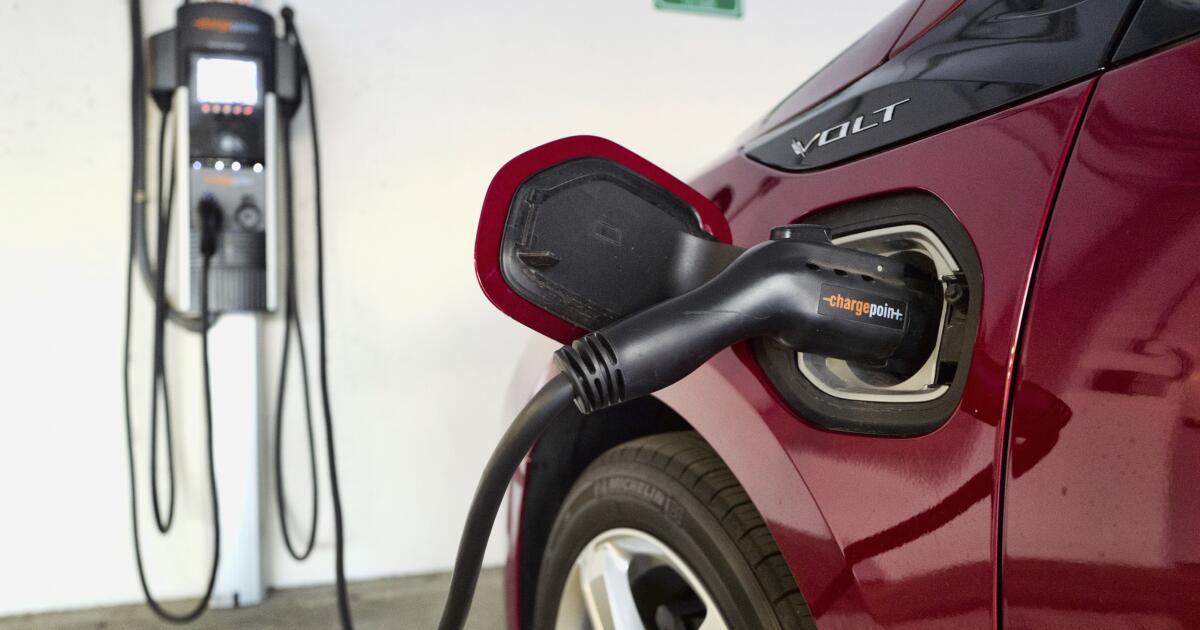
California is bringing back EV rebates. This is how to get one
-
 Entertainment10 minutes ago
Comedy saved her life. Now Teruko Nakajima’s ‘Made in America’ is saving others
-
 Politics18 minutes ago
Legal correspondent Paula Reid expected to join MS NOW after CNN departure
-
 Sports28 minutes ago
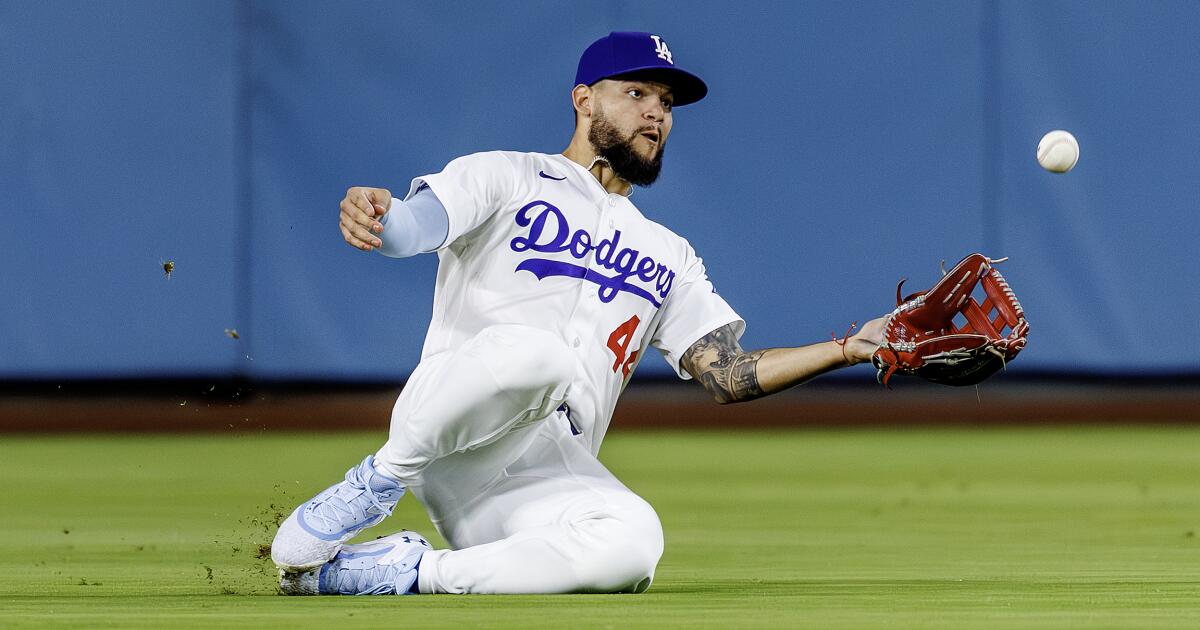
Four more Dodgers players selected as National League All-Stars
-

 World40 minutes ago
80 vials of fentanyl stolen from Rome hospital
-

 News1 hour ago
Crowds ordered to evacuate National Mall area as stormy weather slams DC
-

 Los Angeles, Ca2 hours ago
Motorcyclist struck, killed by driver making U-turn in L.A. neighborhood
-

 Detroit, MI3 hours ago
GameThread: Detroit Tigers vs. Texas Rangers, 4:05 p.m.

