Washington
3 of Washington's 6 citizen initiatives will get legislative hearings


Citizen-backed changes to police pursuit, state income tax, and parental rights laws will get their moment in front of lawmakers.
Democratic leaders in both the House and the Senate announced Friday they will hold hearings on three citizen-backed initiatives, while rejecting consideration of three others.
The ones moving forward:
Senate Majority Leader Andy Billig, D-Spokane, and House Speaker Laurie Jinkins, D-Tacoma, said they will hold joint public hearings on I-2111, I-2081 and I-2113 on Feb. 27 and 28. Exact times have not yet been determined.
Previous reporting from Kate Stone: Initiative to repeal police pursuit restrictions certified
Other initiatives head straight to the ballot
The Democratic majority in both chambers confirmed the other three initiatives will not be considered. That decision fast-tracks them to the November ballot for voters to decide.
- Initiative 2117 is a repeal of the state’s controversial Climate Commitment Act (CCA) that passed in 2021 and taxes the state’s biggest polluters.
- Initiative 2109 is a repeal of what’s known as the capital gains tax. Passed three years ago, it calls for 7% on profits from the sale of some financial assets like stocks and bonds, but not real estate. The first $250,000 is exempt.
- Initiative 2124 is also known as the long-term care tax. The legislature created the program in 2019, designed to help people in Washington pay for care as they age by taking a small percentage of each paycheck for the majority of full or part-time employees, unless they have already received an exemption. This initiative would allow people to opt-out of the program, which Democrats argue is tantamount to killing it.
A total of six initiatives are certified for the general election. Washington Secretary of State Steve Hobbs’ office confirmed they met the threshold of valid voter signatures.
All of them are spearheaded by conservative activist group Let’s Go Washington, which raised $7 million for the effort. The group’s founder Brian Heywood is a hedge fund manager and significant Republican donor.
Earlier coverage: More on Brian Heywood and Let’s Go Washington
“The fact Democrats in the legislature have scheduled three hearings is a step in the right direction,” Heywood said in a statement sent to KIRO Newsradio Friday. “Next, they need to pass those three initiatives into law to stop an income tax, restore reasonable police pursuit, and reestablish parents as the primary stakeholders in their children’s lives.”
Notably, the three initiatives that will not receive hearings all carry significant financial implications for the future state budget and expected costs for Washington citizens. The CCA is closely tied to the state’s current future transportation projects. The capital gains tax revenue is earmarked for childcare and K-12 education funding around the state, including new construction projects. And the long-term care tax is meant to alleviate some of the state’s burden to provide for seniors, by requiring them to fund at least part of their medical needs post-retirement.
Billig and Jinkins explained their decision in a joint statement Friday:
“The three initiatives we are not taking action on would have a dire effect on the day to day lives of every single Washingtonian. These would dramatically decrease quality of life and devastate progress on K-12 education, childcare, clean air, clean water, climate action, and aging with dignity – matters that are important to people across the state.”
Chair of the Senate Transportation Committee, and fellow Democrat, Marko Liias of Edmonds, warned the stakes of repealing the CCA are particularly high. Speaking to reporters this week, Liias emphasized that eliminating the cap-and-invest program would rip a $5 billion hole in the state’s transportation budget, take away free public transit rides for young people, funding for bus routes, and more.
Jinkins said the cost of dismantling the long-term care tax is equally problematic. “That would continue to force our seniors to spend themselves into poverty,” she told reporters in Olympia this week.
By contrast, the three initiatives Democrats greenlit for hearings are largely policy changes, which would not necessarily trigger immediate financial deficits.
“The effect of the remaining three initiatives is less obvious,” Billig and Jinkins said. “Hearings will allow us to gather more information and hear from the public and others so that we can make informed decisions.”
Heywood, in his statement, questioned the Democrats’ decisions.
“At the same time, voters who signed these initiatives have been asking why only these three are getting hearings,” Heywood said. “What about the hidden gas tax, the hidden income tax, and the mandatory payroll tax? It is intriguing to me that the pet projects of (Washington Gov.) Jay Inslee and his crony union bosses won’t be getting hearings. Voters have said that all six of these issues are important, and they deserve to be heard.”
From Dave Ross: Initiatives will be the stars of November ballot
What happens during the hearings
For the three initiatives moving ahead, the joint hearing will give lawmakers an opportunity to discuss the proposals.
They have three options: Pass the initiatives as-is (with no changes) — propose an alternative version that would appear next to the initiative on the ballot — or decide to take no action following the hearing.
If any of the initiatives do not pass in their current form, they will head to the ballot. Lawmakers cannot block that, no matter what.
Republicans like Sen. Chris Gildon, R-Puyallup, say the doomsday prophecies about the initiatives’ impacts are largely overblown.
“People have heard a lot of reports from the Department of Revenue that if these initiatives pass, it will blow a hole in the budget and the sky is falling and we’re not going to be able to fund K-12,” he said Friday on an episode of “The Elephant in the Dome,” the official podcast of the Washington State Republican Caucus. “From my perspective it’s a little bit of fearmongering.”
Gildon added that top priorities will get money before other items.
“We funded K-12 education before the capital gains income tax, we’re going to continue to fund it after,” he said. “You always fund your priorities first.”
A Crosscut/Elway poll conducted before the start of the legislative session in January shed some light on voters’ opinions of the initiatives. (A PDF of the poll results and report can be viewed here.)
While the poll did not specifically ask about the initiatives, it revealed nearly two-thirds of those surveyed support eliminating restrictions on when police can engage in pursuits of a suspected criminal.
An almost equal percentage said the supported giving parents the ability to review public school textbooks, obtain discipline records and opt their children out of sexual education courses.
A combined 57% favored repealing the state’s capital gains tax. The poll did not address the topics of state income or long-term care taxes, or the CCA’s future.
Regardless of the outcome of the hearings, all six measures are likely to take center stage in what could become a long political fight throughout the year.
“Washington voters will hear a lot between now and November on any initiatives that end up on the ballot,” Jinkins and Billig said. “It will be up to them to decide what sort of state they want to live in.”



Alicia Contreras was in Tunisia, working as the deputy country representative for Libya for USAID, when she received the news: she was fired. The Trump administration had ceased the cooperation agency’s operations and terminated most overseas staff. What she didn’t expect back then was that after a double major, an MBA and 17 years of experience as a public servant, she wouldn’t be able to find a job back at home.
Contreras moved back to the Washington DC area last September and immediately started her job search. She looked for positions in both the public and private sectors, in-person, hybrid and remote. She focused her search mostly on the US capital city and its two nearby states, Maryland and Virginia, because of her family commitments: she has two children, ages three and six. Six months later, none of her close to 100 applications have been successful.
“The job market is pretty bad here. I got a request to do like an AI video interview, but other than that, most of it has been rejections,” she said. “I feel like it’s saturated.”
Hers is not an isolated case. Washington DC’s unemployment rate is now the highest since August 2015, excluding the pandemic, according to the most recent data. More than 300,000 jobs have been cut from the federal government, the region’s largest employer, since 2024. The cuts came after Donald Trump led a purge of federal employees, a move he said was meant to “eliminate waste” and a task he assigned to Elon Musk and his “department of government efficiency” (Doge).
By January, federal public employment had fallen to its lowest level in at least a decade, affecting many other businesses and sectors. As a result, DC now has the highest unemployment rate in the country (6.7%), followed by California (5.5%). And the experts don’t believe the situation will improve in the short term.
According to data from Indeed, the job listings website, job openings reflect this situation. “If you look at our most recent data, DC job postings are 30% below where they were pre-Covid, and that is the softest among all states in the US,” said Laura Ullrich, Indeed’s director of economic research. “And it’s broad-based, especially if you compare it to some other states. In South Carolina, for example, we’re 28% above pre-Covid. There are still some sectors that are below pre-pandemic levels, but not many of them. In DC, there’s a pretty broad group of sectors.”
The federal government reduced funding for grants, generating a big fall in jobs in scientific areas and other sectors. Also, the administration’s efforts to shrink the federal government led to widespread termination of federal contractors. As a result, an employee of a consulting firm, who requested his name not be used, was fired in January last year, along with another 75 colleagues, representing 85% of the total workforce. “At the beginning, I got zero, nothing, not even a bite, not even a phone call. I was like: ‘What the hell is happening?’ But I was talking to a lot of people and a lot of friends, and they were all the same,” he said.
A year and two months later, he’s had about 15 interviews, but nothing has landed. “It’s been a very, very difficult process … especially with all of that education and training now being in this position”. He went to Bates College, a top-tier, small liberal arts college in Maine, and to the also top-tier private Georgetown University in DC, where he obtained a master’s in science and international development.
Something interviewees for this article mentioned is that many of their former colleagues or friends are having a hard time not only finding a new position, but finding something that offers equivalent pay to what they had before. Consequently, many are taking salary cuts, or are going from high-level senior positions to junior or mid-level positions.
“I’ve been told ‘you’re overqualified’ many times,” said Felipe Mendy, an Argentinian veterinarian and first-time father of a three-month-old who’s been unemployed for two years. “Firstly, I thought it was a matter of language or culture. I thought that maybe I needed a US degree … but then I started meeting many who went to very prestigious universities and also couldn’t find a job. Many highly qualified people with experience at organizations such as the Organization of American States or the World Bank are working at coffee shops.”
He experienced that himself. Mendy lived in Washington for the past six years, where he and his wife moved because of her job as an economist. After he lost his job in a US company specializing in animal nutrition, he helped coach a rugby team and walked neighbours’ dogs while applying for jobs that matched his qualifications, which include an MBA.
He did some consulting for a small recruitment firm too, where he clearly saw what was happening in the job market: he would publish a job position, and hundreds of people applied, something the firm had never seen, and which affected its business. “Many had nothing to do with the job, but applied.” At a certain point, many of their clients decided that they didn’t need help recruiting and the firm had to let him go.
A month ago, the couple decided to stop his job search and go back to Argentina, where he quickly found a position at a Danish multinational firm. “With just one salary, we couldn’t live in that city, it wasn’t viable. And we downsized, tightened our belts, but at a certain point we thought: ‘For what?’ After my US experience, I’m a lot more valuable back home.”
Affordability is a big issue for those searching for a position. DC is one of the most expensive cities in the US, where the average rent for a two-bedroom apartment is $3,100, according to the online rental marketplace Apartments.com. The high cost of living makes staying in the city while unemployed an expensive privilege. “We’ve had to budget a lot. My husband is working three jobs. He has no choice, because he has to make up for my salary, and we have to pay for childcare, our mortgage and food,” said Contreras, who feels lucky that her family is able to get healthcare through her husband’s job so they don’t need to pay for insurance out of pocket.
That budgeting and, therefore, spending cuts, also affect the city’s private sector, particularly services used by workers, from cleaners to gyms and restaurants, that hadn’t recovered from the pandemic in part because many people continued to work remotely.
José Andrés, a Spanish chef and owner of many local restaurants, wrote in a recent X post that restaurants in DC are closing at a higher rate in 2025 than in 2024. “What we need is stability … Tariffs, tourism, Ice etc are affecting negatively the economy …” he wrote.
According to the Washington Post, 123 private companies in the DC area announced job cuts in 2025, affecting more than 13,000 workers, the highest annual total since the pandemic.
But besides affordability, overqualification and their futures, many also struggle with the impact of the Trump administration’s decisions and, in particular, the erosion of institutions that have played important roles. For that reason, Contreras has decided to run for the Maryland house of delegates, the state legislature, representing her district. “Most of my life I’ve been a public servant, and I want to continue to serve people and help our communities. That’s why I decided to do it. I want to make sure that I’m not just standing around and watching things fall apart. I need to fight back.”

Washington’s Supreme Court has agreed to weigh in on the constitutionality of a portion of the recently passed income tax on high earners, also known as the “millionaires tax.”
The law includes a clause that prevents it from being repealed by voters through a method called a referendum, something that conservative group Let’s Go Washington has alleged is unconstitutional.
RELATED: Washington’s historic income tax on high earners is now law
“The framers of our constitution said, ‘We don’t like taxes,’ and then, they were very strict about the rules of what could be taxed and how it could be taxed,” Let’s Go Washington founder Brian Heywood said. “It’s mind-boggling… [to] say we’re going to make an exception to anything that’s tax-related and the people can’t do a referendum on it.”
Heywood and his group attempted to file a referendum petition on the new law last week, but the Secretary of State bounced their petition back, noting that a referendum was not allowed under this law. In response, Let’s Go Washington filed the lawsuit challenging the clause.
A referendum is a particular process that has to be filed within 90 days after the Legislative session has ended to repeal a law that was passed during that session. If 154,455 signatures can be collected by June, voters would have a chance to repeal the targeted law in November. Implementation of the law is frozen until voters have a chance to weigh in.
Senate Majority Leader Jamie Pedersen, who sponsored the tax, said the inclusion of a clause to bar a referendum isn’t unusual for legislation that involves taxes, and wasn’t put in to try to dampen voter participation. Many revenue-related bills often include a clause that prevents a referendum from being brought against them, because in the state constitution, revenue-generating bills are necessary to the functioning of government.
“That’s not some special measure to try to block public involvement in the process,” Pedersen said. “That is just a statement of fact under the Constitution, that this is a revenue measure and it’s not subject to referendum.”
RELATED: Is ‘millionaire migration’ really a thing? Lessons from states that already tax the rich
State constitution scholars agree.
Hugh Spitzer, a professor at the University of Washington School of Law and expert on Constitutional Law, said while there have been about a dozen instances over the past 100 years where the clause barring a referendum on a law has been challenged, the court has typically held that the clause is constitutional.
“The Legislature has to make tough choices about taxes and about budgets, and so it would interfere with the functionality of government if every time the Legislature adopted a tax or passed a budget bill, it went to referendum,” Spitzer said.
In the past, he said people have tried to bring a referendum against a number of laws, such as a law allocating money for highway construction, excise taxes on margarine, a timber tax — all had a clause barring a referendum petition, and the court did not rule that could be overridden.
“I would say that the petitioners or plaintiffs in this instance have an uphill climb to get the court to rule against the Legislature’s use of the existing public institutions clause,” Spitzer said.
The Supreme Court is expected to hold a hearing on the constitutionality of this clause at the end of April. If the justices rule the use of the clause is unconstitutional, Pedersen has said the Legislature may need to call a special session, as the state’s budget for the next four years was balanced partially with revenue collected from the tax.
RELATED: Coming soon: Lawsuit challenging Washington state’s ‘millionaires tax’
If the Supreme Court upholds the clause, there is still another opportunity for voters to weigh in.
Let’s Go Washington has said if their referendum petition is denied, they will be pursuing the initiative process to put a repeal of the law on the ballot, though an initiative requires twice as many signatures to be gathered.
“A referendum is a simple, easy to understand, up or down, yes or no vote,” Heywood said. “If it’s an initiative, you have to get people to understand ‘vote yes in order to vote no,’ and that’s a much harder sell.”

The White House Easter Egg Roll returns Monday with a patriotic theme to celebrate the United States’ 250th anniversary.
Road closures and parking restrictions near the White House went into effect early Monday and may affect your evening commute, too. See a full list below.
For the main event, children from across the country will use a wooden spoon to roll a real egg down the South Lawn at the White House. In addition to the roll, families can join fun activities, including writing cards to service members and egg hunts.
First lady Melania Trump, second lady Usha Vance and several Trump administration officials are scheduled to read stories to kids.
The egg roll is one of the oldest White House traditions, dating back to the 1870s.
Road closures and parking restrictions for White House Easter Egg Roll 2026
The Metropolitan Police Department released the following list of road closures.
On Monday, April 6, 2026, the following streets will be posted as Emergency No Parking, from 6:00 a.m. to 7:00 p.m.:
- 17th Street from Pennsylvania Avenue to Constitution Avenue, NW
- Constitution Avenue from 14th Street to 18th Street, NW
- 15th Street from F Street to Constitution Avenue, NW
- On Monday, April 6, 2026, the following streets will be closed to vehicular traffic, from 6:00 a.m. to 7:00 p.m.:
- 17th Street from Pennsylvania Avenue to Independence Avenue, SW
- 15th Street from F Street, NW to Independence Avenue, SW
- Constitution Avenue from 14th Street to 18th Street, NW
On Monday, April 6, 2026, the following streets will be restricted to local vehicle traffic only, from 6:00 a.m. to 7:00 p.m.:
- 17th Street from Pennsylvania Avenue to H Street, NW
- C Street from 17th Street to 18th Street, NW
- D Street from 17th Street to 18th Street, NW
- E Street from 17th Street to 18th Street, NW
- F Street from 17th Street to 18th Street, NW
- Pennsylvania Avenue from 17th Street to 18th Street, NW
- New York Avenue from 17th Street to 18th Street, NW
- Lower Pennsylvania Avenue/E Street from 14th Street to 15th Street, NW
- Upper Pennsylvania Avenue from 14th Street to 15th Street, NW (hotel traffic only)
- 15th Street from F Street to H Street, NW
- F Street from 14th Street to 15th Street, NW
- G Street from 14th Street to 15th Street, NW
- New York Avenue from 14th Street to 15th Street, NW
You can find timely updates on the DC Police Traffic X page.

Tennessee Basketball Loses A Freshman Guard To The Transfer Portal | Rocky Top Insider

Gov. DeSantis to join Texas governor for Texas Stock Exchange event in Miami

Taylor Frankie Paul faces protective order hearing in Utah after ‘Bachelorette’ cancellation

Hour-by-hour: See when to expect steady snow Tuesday in Vermont, New York

Former Virginia Gov Glenn Youngkin hints at political future, says he’s ‘chomping at the bit’ after exit

Florida High School Football Rankings: Top 25 teams – Oct. 21

How old is Bo Nix? What to know about Oregon quarterback ahead of 2024 NFL Draft

Cleary's 21 help Le Moyne down Central Connecticut State 69-64 in OT

99th annual Pony Swim held in Virginia

Indiana Members Credit Union announced as new anchor tenant at Bottleworks District

Ilhan Omar calls Trump an ‘unhinged lunatic,’ urges booting him out of office
Between Budapest and Brussels: Péter Magyar’s political tightrope
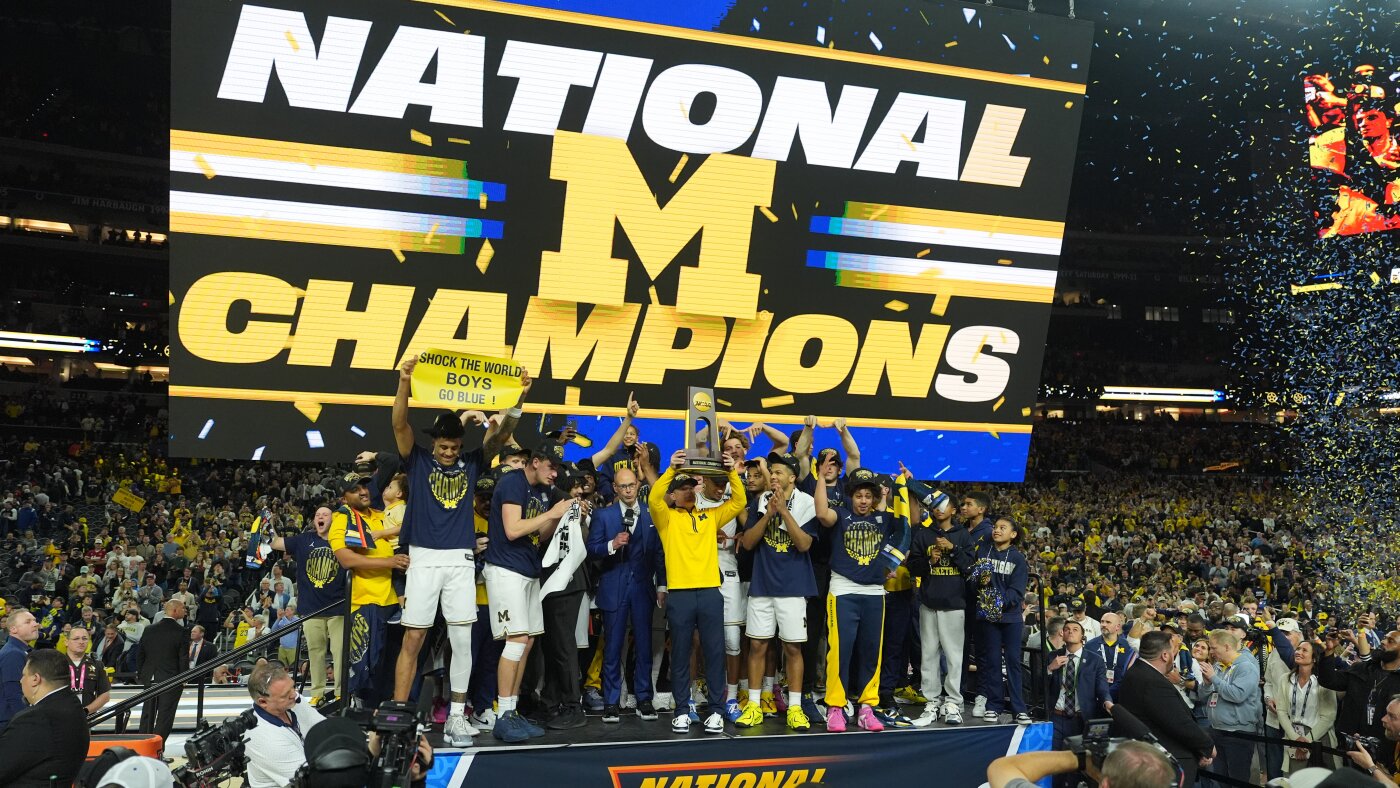
Michigan muscles its way to program’s 2nd NCAA basketball title, beating UConn

Map: Minor Earthquake Strikes Near San Diego

Trump claims he’d win as the president of Venezuela — just needs to ‘quickly’ learn Spanish
-

 Atlanta, GA2 days ago
1 teenage girl killed, another injured in shooting at Piedmont Park, police say
-

 South-Carolina1 week ago
South Carolina vs TCU predictions for Elite Eight game in March Madness
-

 Movie Reviews5 days ago
Vaazha 2 first half review: Hashir anchors a lively, chaos-filled teen tale
-

 Vermont1 week ago
Skier dies after fall at Sugarbush Resort
-

 Politics1 week ago
Trump’s Ballroom Design Has Barely Been Scrutinized
-

 Politics1 week ago
JD Vance says he was ‘obsessed’ with UFOs, believes aliens are actually ‘demons’
-
 Entertainment5 days ago
Inside Ye’s first comeback show at SoFi Stadium
-

 Politics1 week ago
Jeffries declines to break with indicted Democrat after ethics panel’s guilty verdict