Utah
‘It for sure feels special’: Bryson Barnes reflects on his time at Utah as he prepares to face his old school on Saturday


This article was first published in the Ute Insiders newsletter. Sign up to receive the newsletter in your inbox each Wednesday night.
By the time “College GameDay” rolled into town last October, Bryson Barnes had become something of a folk hero in Salt Lake City.
Hailing from Milford, Utah, where he grew up on a pig farm, Barnes starred on the gridiron for tiny Milford High, his 137 career touchdowns throws standing atop the UHSAA record books and his 11,525 career passing yards still ranking second in Utah high school football history.
His eye-popping stats, though, came against 1A competition, and as a result, Barnes was underrecruited out of high school, choosing to walk on at Utah, the school he grew up cheering for.
From the moment he arrived on campus in the foothills of Salt Lake City, Barnes knew that he’d have to earn everything and that nothing would be handed to him. For much of his time at Utah, he didn’t have a scholarship, paying his own way through school, and ahead of the 2021 season, Barnes was fighting an uphill battle to get playing time.
The Milford High quarterback was behind not just Charlie Brewer, who began the year as Utah’s starter before transferring midseason, and Cam Rising, who took over as the starting quarterback three games into the year, but other highly-recruited quarterbacks like Peter Costelli and Ja’Quinden Jackson.
But Barnes kept working and grinding away, and when Rising suffered a concussion early in the fourth quarter of the 2022 Rose Bowl against Ohio State, most thought it would be Jackson, who was listed as Rising’s backup on the depth chart, entering the game.
Instead, Barnes jogged onto the field in one of the biggest games in school history.
Later in the game, he lofted a ball to the back of the end zone and into the hands of Dalton Kincaid for a 15-yard touchdown that tied the Rose Bowl at 45 with less than two minutes left.
“What a story from nowhere,” ESPN announcer Chris Fowler said.
Though the Utes would go on to lose the game after a game-winning field goal by Ohio State’s Noah Ruggles, Barnes’ Rose Bowl experience validated the work he had put in.
Proving his worth
Even when the Utes brought in a couple more three- and four-star quarterbacks — Brandon Rose and Nate Johnson — effectively sending Barnes to the back of the line again, he continued to outperform them in practice, and as a result, became Rising’s backup once again.
He was needed in a key matchup against Washington State in 2022 when Rising was injured, throwing for 175 yards and a touchdowns and rushing for 51 yards in a 21-17 win that kept Utah’s Pac-12 championship hopes alive. When Rising injured his knee in the 2023 Rose Bowl, it was Barnes who once again finished the game, throwing for 112 yards, a touchdown and an interception in Utah’s 35-21 loss to Penn State.
Ahead of the 2023 campaign, playing without a scholarship (he would later earn one after the Florida win), Barnes considered transferring.
“I had kind of made up my mind that I didn’t really want to stay before about summer into the 2023 season,” Barnes told the Deseret News this week.
As had happened so many times before, though, his number would be called again after Rising missed the entirety of the 2023 season while rehabbing his knee. Once again, Barnes beat out the contenders during fall camp after being low on the depth chart during spring ball and started the season against Florida.
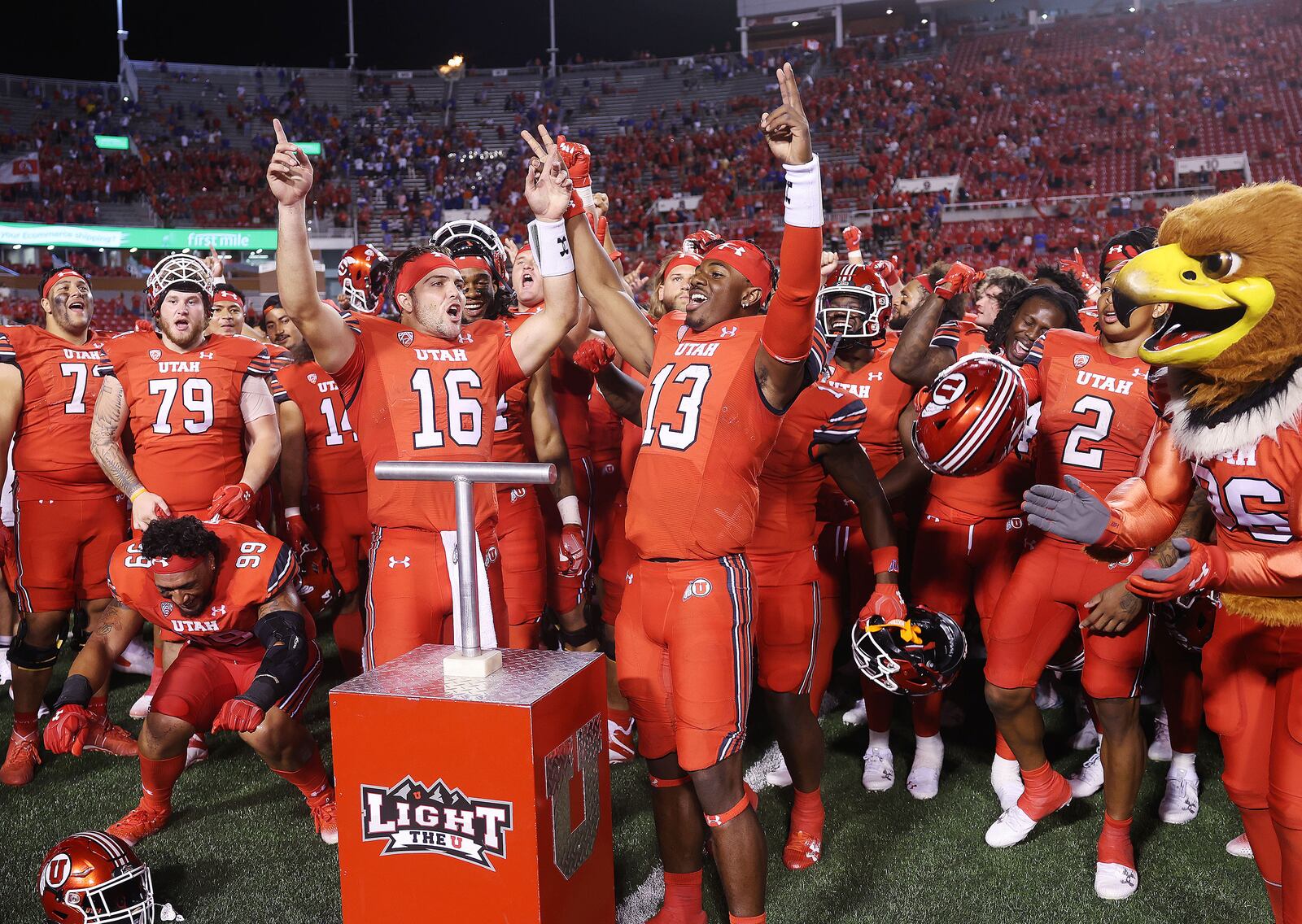
On his first play of the 2023 season, Barnes threw a 70-yard touchdown pass to Money Parks and managed the game well in Utah’s 24-11 win over the Gators.
“That’s pretty great. That stuff you talked about when you’re a little kid like, ‘Man, what if we threw a touchdown the first play of the game?’” Barnes said postgame.
Just like everything else in his career, the 2023 season didn’t come easy. Barnes was benched during the second game of the season against Baylor after a bad performance, and remained on the bench for the majority of the next three games as Johnson took over QB duties.
Then, Utah’s coaches sent Johnson to the pine after the offense failed to get anything going at Oregon State, putting Barnes back into the contest. Barnes’ second chance was cut short, however, when he was sent to the hospital after a hard, late hit to the chest from Oregon State’s Calvin Hart Jr.
Two weeks later, after a bye, his ribs had healed enough, and he was back under center for the Utes, leading them to a win over Cal.
‘A tough guy’
“He’s a tough guy. Bryson Barnes is a throwback and the guy that if he’s able to play at all, he’s going to be out there,” Utah coach Kyle Whittingham said postgame after the Utes beat the Bears.
Against No. 18 USC in Los Angeles the next week, Barnes had the game of his life, going toe-to-toe with Hesiman-winner Caleb Williams in a 34-32 victory. Barnes threw for a career-high 235 yards and three touchdowns and rushed for one more, adding 57 yards on the ground, including a 26-yard run that set the Utes up for the game-winning field goal.
“They’ve got a Heisman Trophy winner at quarterback, so they’re going to make some things. We got ourselves a pig farmer quarterback, so we’re proud of that guy, too,” Whittingham said after the game.
The victory over the Trojans catapulted Barnes to folk hero status. Whittingham wore a shirt emblazoned with Barnes’ likeness and “That’s my pig farmer” text. ESPN, which arrived in town for “College GameDay” ahead of No. 13 Utah’s huge matchup against No. 8 Oregon, ran a feature on him.
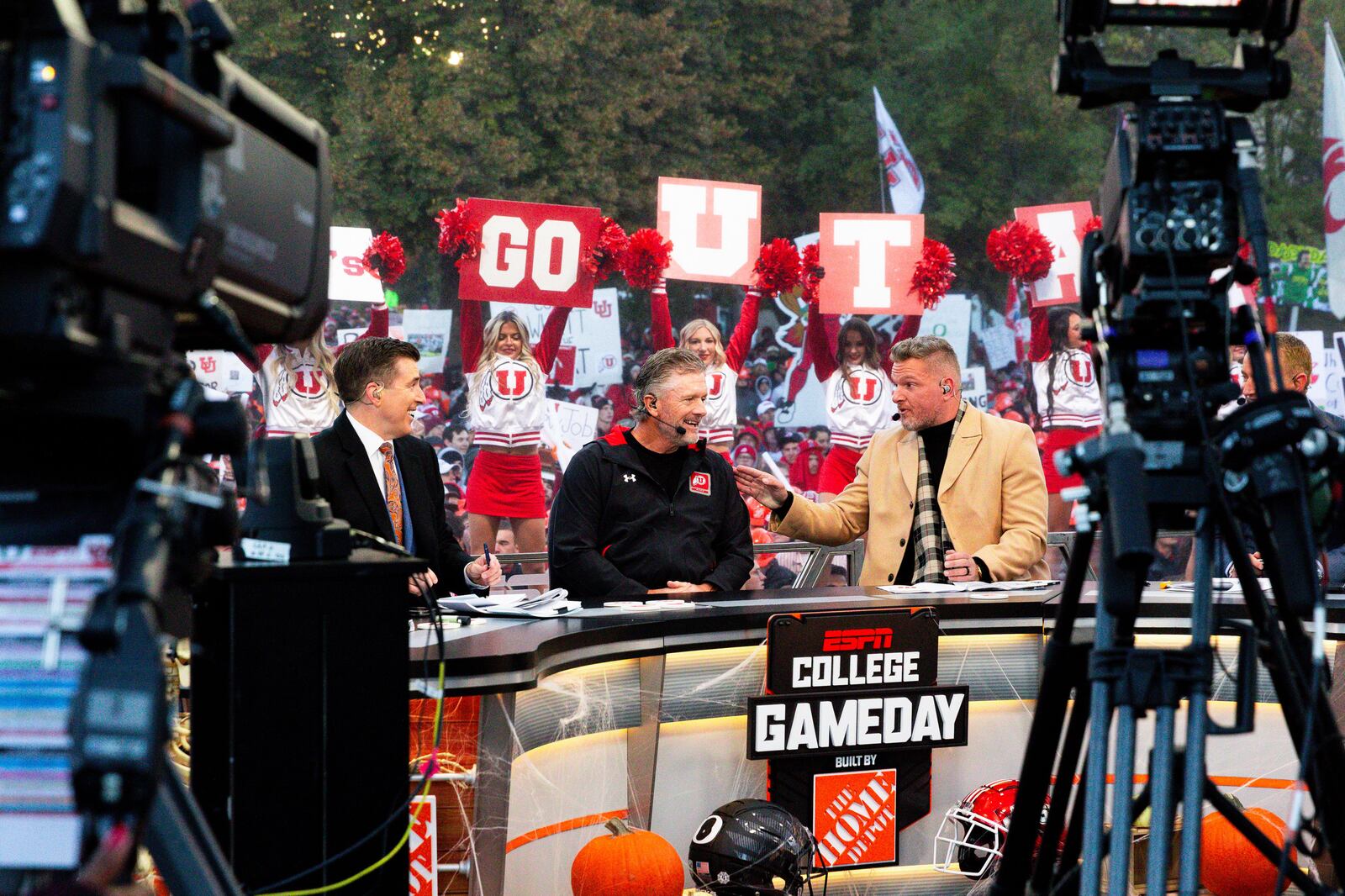
Barnes was on top of the college football world.
But it would be mostly downhill from there for Barnes and the Utes.
Utah’s offense was held without a touchdown in a 35-6 loss to Oregon as Barnes completed 52% of his passes for 136 yards and threw two interceptions.
Though he helped the Utes to a win over hapless Arizona State and had a great first half in Utah’s 35-28 loss at national runner-up Washington (238 yards and two touchdowns), Barnes struggled to spark the Utes’ offense in the second half of the season. The Utes finished 8-5, culminating in a 14-7 Las Vegas Bowl loss in which Barnes threw for only 55 yards with two picks.
Utah scored just 23.1 points per game (96th in the nation) and Barnes’ 142.9 passing yards per game ranked No. 94 in the country.
There was never a question about Barnes’ effort — he completed his heart out — but down the stretch of the season, it was clear that he couldn’t guide Utah’s offense to more production.
The Las Vegas Bowl loss wasn’t the ideal end to his Utah career, but the fact that an under-recruited former pig farmer from a town of 1,431 people went on to produce some of the most memorable moments in school history is something that Barnes can forever be proud of.
“He was a great member of our program, great teammate, called upon him several times to play for us and he responded. Beat SC last year,” Whittingham said this week. “He was our quarterback of course, when we beat SC, just a competitive, tough, high-character individual.”
‘It’s helped me become a better man’
Ahead of the Las Vegas Bowl, Barnes announced his decision to transfer from Utah. It made sense to move on with Rising returning for yet another season and Barnes wanting to see if he could start for another program.
That, combined with some things Barnes didn’t “fully agree with” about the “way I was particularly being treated” at Utah, led him to hit the portal.
“Just decisions made around quarterbacks and the way the quarterback battles always panned out,” Barnes told the Deseret News.
“I definitely always got the short end of the stick. … I didn’t get the reps that I felt like I deserved to be able to be prepared for when my moment came. It was more so just be prepared without reps and get thrown into the fire in about every circumstance that I was in.”
“I definitely always got the short end of the stick. … I didn’t get the reps that I felt like I deserved to be able to be prepared for when my moment came. It was more so just be prepared without reps and get thrown into the fire in about every circumstance that I was in.”
— Former Utah QB Bryson Barnes
Overall, though, Barnes is thankful for his time at Utah. It wasn’t always easy, but he had plenty of memorable moments, from playing in both of the school’s Rose Bowl appearances, to the win over Washington State in 2022 and the victories against Florida and USC in 2023.
“There was definitely a lot of trials, lessons that I learned from being at Utah. I’m super grateful for the opportunity that I had to go there in the first place, and it’s definitely developed me as a person and it’s helped me become a better man,” Barnes said this week.
“I believe the lessons that I’ve learned there are definitely going to help me throughout my life, but I am just super grateful to be a Ute.”
Barnes received interest from a number of schools when he entered the transfer portal, ultimately choosing the Aggies not just because of the opportunity to compete for the starting quarterback job and stay in the state of Utah, but also to continue his education.
The former Ute, who graduated from the Utah with a degree in Business Administration, is currently in Utah State’s MBA program.
“I ended up at Utah State because after football’s over, I needed a place that’s going to be able to set me up for the best of my career and my life,” Barnes said.
There was a healthy quarterback battle throughout spring camp in Logan, but Iowa transfer QB Spencer Petras was named the team’s starter following spring camp. Two of the four quarterbacks involved in that battle, Cooper Legas and McCae Hillstead, transferred during the spring window, but Barnes stuck it out, even though he was entering yet another season as a backup quarterback.
“Spring ball definitely didn’t go the way that I was told or thought it was going to go by any means, but at the end of the day, just like the lessons I learned at Utah, it’s just about what I can control and what I’m doing, and that’s the only thing that I can control,” Barnes said.
‘Really came together and bonded’
It was a tragic and tumultuous summer for the Aggies football program.
On July 20, Utah State defensive back Andre Seldon Jr. died in a drowning accident, becoming the third teammate of Barnes to pass away. At Utah, Barnes was part of the team that grappled with the tragic deaths of Ty Jordan and Aaron Lowe.
Two days prior to Seldon Jr.’s death, and less than a month before the season started, USU head coach Blake Anderson was fired, with the university citing “significant violations of his contractual obligations related to USU’s employee reporting requirements.”
While Anderson’s firing just weeks before the season started could have been a huge blow to players’ morale, the team ended up working even harder.
“You lose your head coach in the summer, and what I did really like about these guys up here is when we did get that news, we came back out, workout one in the summer and just started attacking it as if it never happened,” Barnes said.
“The team really came together and bonded through that because at the end of the day, you never know what’s going to happen with coaches, but player-run programs is what win championships.”
‘It was honestly just unbelievable’
Despite being the backup, throughout summer workouts and fall practices, Barnes prepared as if he was going to be the starter, knowing from his experience at Utah that he was just one play away from being inserted into the game.
A few drives into USU’s season opener against Robert Morris, Petras suffered an ankle sprain, and once again, Barnes was called upon to finish the game.
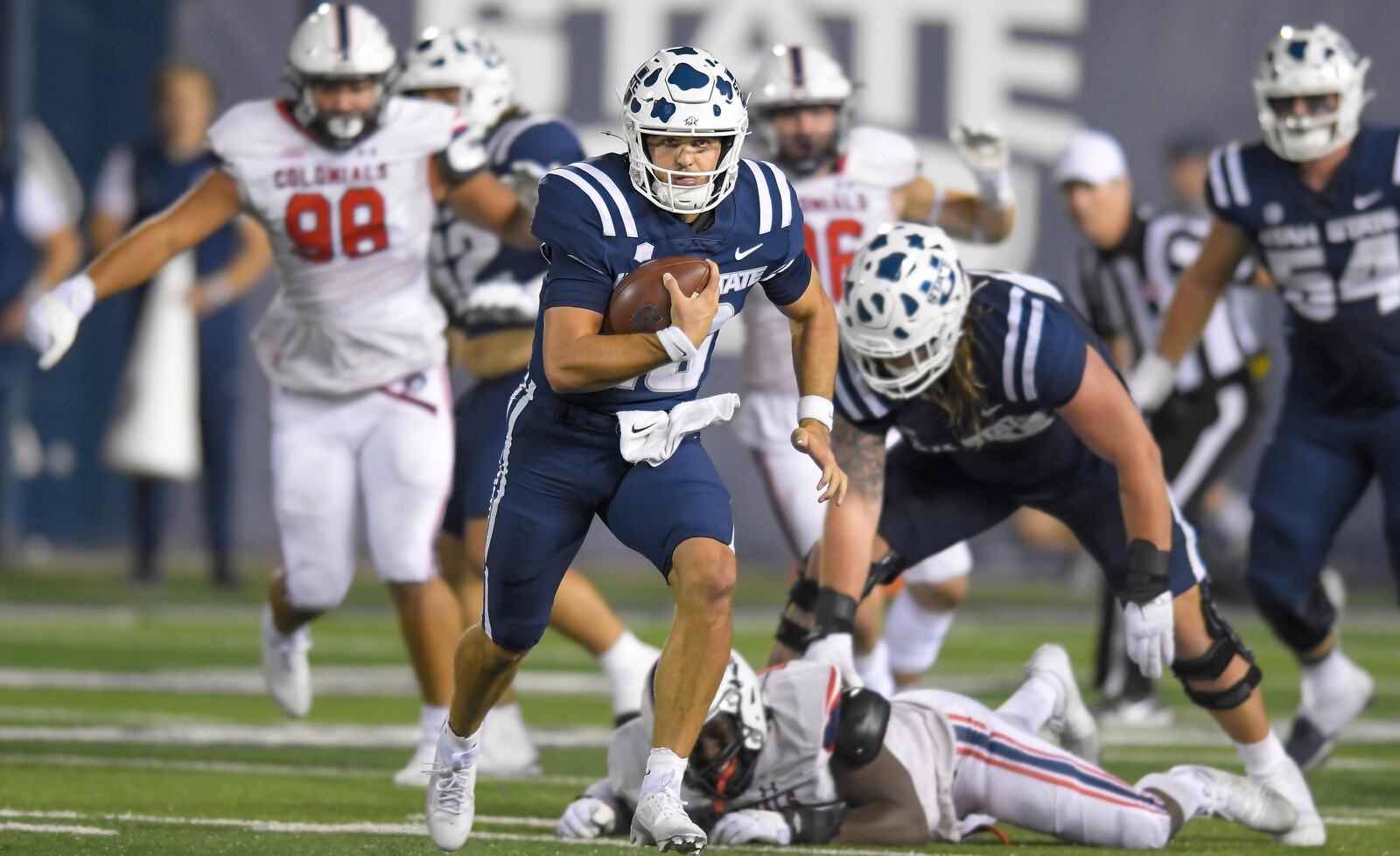
“It was honestly just unbelievable. I couldn’t believe it,” Barnes said.
After a bit of a slow start, Barnes — who was 2 for 7 and threw an interception in the first half — found his rhythm in the second half. He finished the game with two touchdowns and 198 passing yards, adding an additional 88 yards and a score on the ground.
The highlight of the night was Barnes’ 63-yard touchdown run, which put the Aggies up 26-14 early in the fourth quarter. Barnes dropped back to pass, then tucked the ball and ran up the middle. After getting past one Robert Morris defender, no one was going to catch him, and he sprinted to the end zone.
In a career full of unbelievable moments, Barnes authored another one in a 36-14 win.
“With Bryson, it’s the same thing why Utah loves him. He’s so tough. He’s going to find a way to make plays and he’s so mobile on his legs. Had a 70-yard run, one of the biggest plays of the game. The kid can just do it all and the team loves him,” Utah State interim head coach Nate Dreiling said postgame.
‘It for sure feels special’
It’s not just another week for Barnes as he prepares to face his old team.
After spending three seasons in Salt Lake City, Barnes and his Ute teammates built unbreakable bonds, and that’s not something that just disappears just because Barnes is now wearing Aggie blue instead of Utah red.
“It for sure feels special. Those are the guys that I spent three-and-a-half years with, and so to be able to see those dudes again, that’s definitely going to be fun,” Barnes said, adding that he still keeps in contact with some of his old teammates and they’ve been bantering back and forth this week.
Whether or not Petras returns as the starting quarterback this week, which is a possibility, one thing is for sure — Barnes is going to see playing time against his old team, either as the starter or in special packages.
“I’m sure Bryson will get some snaps and he is fired up for this week obviously,” Dreiling said.
Not too often in college football does last year’s starting quarterback play against his old team the very next year, but that’s what’s going to happen in Logan this Saturday.
The Aggies are a sizable underdog, and even with reports that Rising is unlikely to play, it’s going to be a longshot for Utah State, who lost 48-0 last week at USC, to pull off the upset.
Barnes does have the advantage of pretty much knowing Utah’s defense, which includes many of the starters from the 2023 team, inside and out, though defensive coordinator Morgan Scalley will disguise and change up things this weekend.
“That is the defense I played against for three-and-a-half years, and there’s definitely things that I see on tape that I saw in practice 75% of the year,” Barnes said. “Sometimes when (Utah) dudes are busting on defense in the film, I’m able to be like, ‘No, this is where this guy’s actually supposed to be,’ and it’s just all familiar.”
While Utah is the enemy this week, and Barnes and the Aggies will try their best to repeat the result the last time USU played Utah in Logan, after the game is over and the stadium clears out, he’s looking forward to talking with his old teammates.
“I really did just enjoy my time with the guys. Those dudes down there, the friendships and relationships that I built there, they’re going to last a lifetime,” Barnes said. ” … The memory of the games, those are going to go sooner or later, but the relationships, the memories you build with your teammates, those last forever.”
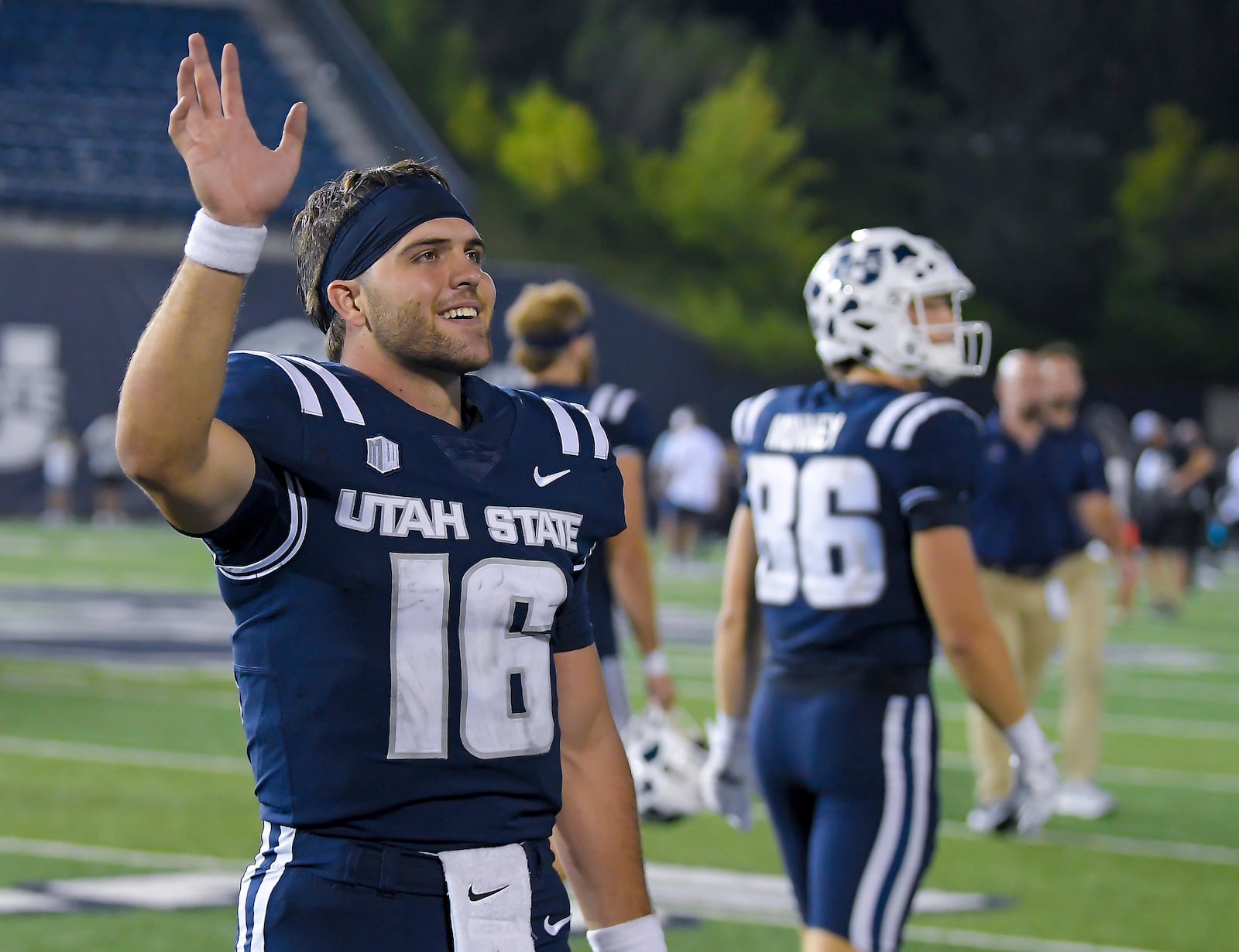
In case you missed it
True freshman quarterback Isaac Wilson finished the game against Baylor after starting quarterback Cam Rising left with a finger injury. If Wilson is called upon to start in Logan, Utah’s coaches have complete confidence in him.
From the archives
Extra points
- An incredible ‘kick six’ contrasts a lot of low moments for Utah’s special teams in win over Baylor (Deseret News)
- Party atmosphere at Rice-Eccles Stadium comes to a halt as Cam Rising exits with injury in Utah’s 23-12 win over Baylor? (Deseret News)



NHL, the NHL Shield, the word mark and image of the Stanley Cup and the NHL Conference logos are registered trademarks of the National Hockey League. All NHL logos and marks, including the foregoing, and NHL team logos and marks, as well as all other proprietary materials depicted herein are the property of the NHL and the respective NHL teams and may not be reproduced without the prior written consent of NHL Enterprises, L.P. © National Hockey League. All rights reserved.

WEST VALLEY CITY, Utah (KUTV) — A woman was killed in a crash after running a red light on Mountain View Corridor in West Valley City.
Police said the collision was reported just before 1:30 p.m. at the intersection of 4100 South.
Officers said a northbound tow truck entered the intersection on a green light when an eastbound SUV ran a red light and was T-boned.
Both vehicles reportedly caught fire after the impact.
The SUV driver was taken to a hospital, where she later died. Authorities are working to identify her.
The tow truck driver suffered non-life-threatening injuries.
Northbound lanes at 4100 South will remain closed for several hours while crews clear the scene and investigate the crash.
BE THE FIRST TO COMMENT
_____

SALT LAKE CITY (KUTV) — A little mid-level moisture will drift across Utah this weekend, but most areas will stay dry.
A few very isolated mountain showers are possible, mainly in the afternoons, but nothing widespread.
The big story is the heat. High pressure will build in, pushing temperatures 15–20 degrees above normal.
It will feel more like late spring, with many areas nearing or breaking March records, especially across central and southern Utah.
Overall, expect a warm, mostly dry weekend, with just a small chance for a quick mountain shower. Rain chances increase significantly later next week.
_______
![!∇∯$[+[!LIVESTREAMs!]+]Washington Wizards vs Portland Trail Blazers Game 𝐋𝐈𝐕𝐄 Stream Free ON Tv Channel](https://i3.wp.com/www.tvyayinakisi.com/wp-content/uploads/2021/01/sportstv.png?w=80&resize=80,80&ssl=1 "!∇∯$[+[!LIVESTREAMs!]+]Washington Wizards vs Portland Trail Blazers Game 𝐋𝐈𝐕𝐄 Stream Free ON Tv Channel")
Washington1 minute ago
!∇∯$[+[!LIVESTREAMs!]+]Washington Wizards vs Portland Trail Blazers Game 𝐋𝐈𝐕𝐄 Stream Free ON Tv Channel

Wisconsin7 minutes ago
What Wisconsin men’s basketball needs to target in the transfer portal this offseason

West Virginia13 minutes ago
West Virginia Mountain Bike Association holds Race to Lil Moe’s in Philippi

Wyoming19 minutes ago
JCSD1 Board Hears Board-Level Updates

Crypto25 minutes ago
Crypto ATM Count Falls to 38,928 as 597 Machines Exit the Market in Q1 2026

Florida1 year ago
Florida High School Football Rankings: Top 25 teams – Oct. 21

Oregon2 years ago
How old is Bo Nix? What to know about Oregon quarterback ahead of 2024 NFL Draft

Connecticut2 years ago
Cleary's 21 help Le Moyne down Central Connecticut State 69-64 in OT

Virginia2 years ago
99th annual Pony Swim held in Virginia

Indiana2 years ago
Indiana Members Credit Union announced as new anchor tenant at Bottleworks District

Politics2 hours ago
Scathing report claims nation’s oldest labor union ‘betrayed’ MAGA members through ‘shocking’ spending

World3 hours ago
Republican US lawmaker demands Congress vote on any Iran troop deployment

News4 hours ago
So you went to a No Kings protest. Now what?

Politics14 hours ago
JD Vance says he was ‘obsessed’ with UFOs, believes aliens are actually ‘demons’
World15 hours ago
The EU's recipe for trade deals : easy on beef, tough on wine
-

 Sports1 week ago
IOC addresses execution of 19-year-old Iranian wrestler Saleh Mohammadi
-

 New Mexico7 days ago
Clovis shooting leaves one dead, four injured
-

 Miami, FL3 days ago
Jannik Sinner’s Girlfriend Laila Hasanovic Stuns in Ab-Revealing Post Amid Miami Open
-

 Tennessee6 days ago
Tennessee Police Investigating Alleged Assault Involving ‘Reacher’ Star Alan Ritchson
-

 Minneapolis, MN3 days ago
Boy who shielded classmate during school shooting receives Medal of Honor
-

 Technology1 week ago
YouTube job scam text: How to spot it fast
-

 Politics1 week ago
Schumer gambit fails as DHS shutdown hits 36 days and airport lines grow
-

 Science1 week ago
Record Heat Meets a Major Snow Drought Across the West