Utah
‘He can do everything’: How Mikhail Sergachev has made Utah a serious playoff contender


SALT LAKE CITY — Bill Armstrong’s ability to work the phones this offseason is why Ryan Smith’s wouldn’t stop buzzing.
As GM of the Arizona Coyotes, Armstrong was charged with trying to build a franchise while remaining conservative in how he spent salary cap space — for a franchise that historically had mountains of it, but worked to stay near the cap floor.
With the club relocating to Salt Lake City, new owners Ryan and Ashley Smith wanted to make the sort of changes that went beyond the club having a new address, color scheme and name ahead of the Utah Hockey Club’s first season.
They wanted to send a message that their rebuild was done. They sent that message by pulling off a trade to get top-pairing defenseman Mikhail Sergachev.
“I got a text from a bunch of different people about him, getting Johnny Marino and some of the other players that we’ve got,” Smith said. “But you also don’t want to be dumb. You don’t want to come in right at the beginning and throw and push above where we are as a team.”
Landing Sergachev in a trade from the Tampa Bay Lightning was just the start of what Utah did in the offseason. In total, the UHC added five players who added an extra $19 million in salary cap space — another sign that the Smiths were willing to spend on a franchise that had historically had miserly ownership when it was in Arizona.
The long rebuild meant that the team came to Salt Lake City with a young core featuring captain Clayton Keller, Barrett Hayton, Lawson Crouse, Sean Durzi, Matias Maccelli and Nick Schmaltz. Now it was about determining what was the best way to supplement that core so it could take the next step in its evolution.
Sergachev’s arrival speaks to those aspirations. He’s a 26-year-old, two-time Stanley Cup winner that can log heavy minutes, create offense in one end, disrupt it in another, quarterback a power play and anchor a penalty kill.
He can now operate in all those roles as an undisputed No. 1 defenseman rather than as No. 1-in-waiting — which was the case when he was in Tampa Bay with Victor Hedman, the 2018 Norris Trophy winner and six-time finalist.
Going from a personnel logjam on one team and instantly becoming one of the new team’s most important players isn’t new. Yet what makes the Sergachev trade unique is it provides a window into how Utah could operate going forward.
This is why several people around the Utah Hockey Club are optimistic about Sergachev and the potential that he presents.
As for Sergachev himself? He understands why these expectations exist, but also believes that’s something he needs to earn rather than just have it handed to him.
“That all sounds great until you play,” Sergachev said. “You gotta deserve that role first of all and show it in the season. You can’t just be like, ‘We’ll give you 30 minutes.’ I’ve got to go in and show them that I’m ready for all those things.”
SOME OWNERS WANT to know everything about everything; some want to be hands off. Smith lives in the middle: he wants to know everything, so he can trust his people to do their jobs.
That particular philosophy comes from Smith growing up in Utah and later owning the Utah Jazz. Longtime Jazz owner Larry Miller was extremely involved with the team, which made an impact.
“I’ll never forget that Jerry Sloan was also here 18 years,” Smith said. “And the only reason Jerry Sloan was here for 18 years was because Larry was so involved he knew exactly what he was doing, how good and exactly what was going on. When you’re not involved, you make bad decisions. … When you’re not in the details, you can’t really see the work that’s going on.”
This offseason, Armstrong, Smith and Utah president of hockey operations Chris Armstrong had a conversation about the team’s needs. They all agreed that defense was a priority, which was the first step in the club getting Sergachev.
The next step was Armstrong calling every team in the NHL and asking them if they would be interested in trading their No. 1 defenseman. Armstrong said every GM was respectful — but there were some who chuckled because those trades aren’t exactly common. “We planted seeds,” Armstrong said. “Those guys are impossible to get. Nobody wants to give up their best defenseman at a young age. We kind of moved past it and moved on to plan B, and were starting to look at some other trades. And then the phone rang.”
The Lightning were on the other end of the call. They presented Armstrong with a proposal involving Sergachev. Armstrong said the initial proposal was turned down, but it didn’t take long for both sides to reach an agreement.
Sergachev headed to Utah, with defenseman J.J. Moser, prospect center Conor Geekie, a 2025 second-round pick and a 2024 seventh-round pick (Noah Steen) going in the opposite direction.
Armstrong said moments like the trades to land Sergachev and John Marino speak to how the franchise is no longer in a rebuild and is ready for something more.
“It’s hard, man. It’s hard to find those guys. It’s almost pretty much impossible,” Armstrong said. “When you’re building a team and trying to win a championship, nobody wins unless you have a No. 1 goalie, a No. 1 defenseman and a No. 1 center. We try to get those No. 1 building blocks in place. That is the first key for us.”
SERGACHEV FRACTURED THE FIBULA and tibia in his left leg on Feb. 7, which kept him out until the first round of the Stanley Cup Playoffs in April.
Prior to the injury, Sergachev was practically an every-game player for the Lightning. He played in 70 or more games in five of his first six seasons in Tampa Bay; the lone season he didn’t hit 70 games was the 2020-21 campaign, when he skated in all 56 of the club’s games in the pandemic-impacted season.
He had 19 points in 34 games last season before he sustained the leg injury, which allowed him to rethink his priorities during a long layoff.
“I was focusing on the wrong things,” Sergachev said. “I was focusing on [playing on the] first power play and focusing on not playing 27 minutes but playing 23. Stuff like that was the wrong focus. The main focus should be playing the game the right way, and helping the team win. And if they give you the first-team or second-team power play, you take it and run with it.”
Sergachev projected as a top-pairing defenseman as a prospect, and the Montreal Canadiens drafted him ninth overall in 2016. That projection led the Lightning to trade for him a year later — with Jonathan Drouin heading the other way — although they already had a franchise legend in place as their No. 1 blueliner, in Victor Hedman.
Sergachev scored 40 points as a rookie and continued to score 30 points or more over the next four seasons. By his third season, he was beginning to average more than 20 minutes per game while becoming a presence on both special teams units.
Hedman, by comparison, had more assists than Sergachev had total points from 2017-18 through 2021-22.
“I was wanting to be ‘the guy’ there, and I was focusing on that,” Sergachev said. “Victor has been on that team forever. He’s won a Norris Trophy, he’s won Cups, he’s won the Conn Smythe — he’s won everything. He’s a rock. He’s impossible to move.”
Sergachev said everything changed during the 2022-23 season. The Lightning moved him to the top power-play unit. That led to him finishing with a career-high 64 points, with 27 of them coming with the extra-skater advantage.
Hedman finished with nine goals and 49 points that season. Aside from the pandemic-shortened 2019-20 season, it was the first time since the lockout-shortened 2013 season that Hedman finished with fewer than 10 goals. Hedman’s 14 power-play points that year were also his fewest since the 2015-16 season.
“I feel like he felt uncomfortable too, for sure,” Sergachev said of Hedman. “When they put me on the first power play two years ago, that must have felt uncomfortable. It felt uncomfortable for me last year that I wasn’t given a chance. It’s kind of like a back and forth of unneeded stress for him and unneeded stress for me.”
Anaheim Ducks left winger Alex Killorn, who spent 11 seasons with the Lightning, said Hedman and Sergachev were close, and there was never animosity between them.
“They got put in tough situations where maybe one guy gets taken out of the first power play for the other guy,” Killorn said. “It causes [no problems] between them, but guys are competitive in the NHL and they want to be in those spots.”
Sergachev echoed that sentiment.
“Oh no. He’s my best friend. I love him to death,” Sergachev said. “He’s been so great to me and I’ve learned a lot from him. Everything I know now and do on the ice is from him.”
SPEAKING IN OCTOBER, Sergachev spoke cautiously about his role with the Utah Hockey Club. He understood that he could be asked to serve in several roles, while acknowledging that nothing was promised to him despite the blockbuster trade that brought him to the team.
Come December, he’s been as good as advertised. He leads Utah with 25:24 in average ice time, which ranks fifth in the NHL. He’s second among all NHL skaters in short-handed minutes, while he’s 11th among defensemen in power-play-minutes.
Sergachev is projected to finish with what would be his first 20-goal season, while his 55 points would be the second most he’s recorded in his career.
“He is a top-of-the-line NHL defenseman who can play in just about every style and just about do everything on the ice,” said Utah defenseman Ian Cole, who was also Sergachev’s teammate in Tampa Bay. “He’s well put together. He’s strong. He can play hard. He can play skillfully. He can shoot the puck. He can score goals. He can run the power play. He can kill penalties. He can do everything. I think that’s why he gets paid the salary he does and it’s why he’s in demand as he is.”
Cole, Marino and Sergachev were brought in this offseason to reinforce a defensive unit for a roster that could have a chance at making the playoffs in its first season; the group took a hit when Marino and Durzi were both injured in October, and are not expected back until the spring. The team promoted Maveric Lamoureux from the minors, and traded for veteran Olli Maatta to help absorb the blow.
Utah’s defensive zone performances have played an instrumental part in the club establishing its identity throughout the first quarter of the season. Natural Stat Trick’s metrics reveal that Utah is allowing the second-fewest high-danger goals per 60 minutes, the seventh-fewest high-danger scoring chances per 60, the eighth-fewest scoring chances per 60 and the ninth-fewest shots allowed per 60.
Having that defensive consistency has served as a counter to the offensive challenges that the UHC has faced. As of Dec. 9, the UHC was tied for 19th in goals per game (2.93), and has scored more than three goals in just 11 of its first 27 games.
“That’s a locker room that maybe hasn’t done a ton of winning, but you can see they’re trending the right way,” Killorn said. “[Sergachev is] going to be a big piece for them going forward.”
If Utah remains in the hunt for a playoff spot, they are in position to make a significant move ahead of the March 7 trade deadline. PuckPedia projects Utah will have $23.6 million in deadline day cap space, and could use any of its 26 draft picks over the next three years to facilitate a deal.
Armstrong said that last season saw the team go through “some good, some bad and some ugly,” with the idea that they’d learn from the struggles. He said their start last season proved they have the talent, and that the 14-game losing streak showed why it was important to always strive for consistency.
“[Last season] left scar tissue,” Armstrong said. “I’m excited to see what we do with that scar tissue.”



Now over halfway into the 2025-26 regular season, the NBA trade deadline now sits just under a month away from transpiring. And if this year’s edition looks anything like last February, the Utah Jazz are bound to include themselves in a few trade talks, even if the moves to be made are minor ones in the grand scheme of the shuffling around the league.
Last season, the Jazz made five total trades at the deadline, largely to bring in future second-round draft capital and shed some of their veteran talent from the roster. They also found their way into multiple deals around the league as a third team, with the biggest of those being the blockbuster that sent Luka Doncic from the Dallas Mavericks to the Los Angeles Lakers..
We might not see a trade of that magnitude for this year’s trade deadline, but for the Jazz in particular, a few names around the roster stick out as players to watch who could be on the move if the right deal comes across the table.
With that in mind, here are three Jazz players to watch on the trade market before the NBA deadline strikes in February.
1. Jusuf Nurkic
One of the more pleasant surprises on the Jazz’s roster this season, Nurkic has found his way into being a strong contributor when he’s on the floor, having started in 27 games on the year since Walker Kessler’s gone down with his shoulder injury to average a double-double of 10.4 points and 10.0 rebounds a night, while also leading the team in total rebounds (320).
However, over their past couple of games, Nurkic has been deemed a DNP-coach’s decision despite his solid production. It could be a sign of the Jazz wanting to lean further into their younger talent, a desire to move off of their veteran big man in the coming weeks via buyout or trade, or a combination of both.
Regardless, Nurkic’s age, expiring contract, and quality production through the first half of the year make him an appealing trade candidate to watch before the deadline hits. Considering his contract nets him $19.3 million, a trade could be tougher to iron out compared to a simple buyout.
So both directions for a split remain on the table, though ultimately a move out of Utah appears to be more and more likely the deeper into the season we get.
2. Kyle Anderson
Another veteran that’s been productive when given an opportunity this year is Kyle Anderson, who has only played 14 games for the Jazz within their first half of the season, but has been a quality veteran fill-in during those minutes. He’s averaged 7.9 points, 3.8 rebounds, and 3.0 assists, shooting 51.8% from the field.
Anderson hasn’t gotten the PT he’s probably deserved due to the Jazz’s broader intentions of getting their young talent extended opportunities, but based on his sample size from this season, Anderson could have a spot on a competitive team as a depth component in the frontcourt, and perhaps could have some trade value because of it.
Anderson’s contract, like Nurkic’s, could complicate things. He’s due $9.2 million on the books this season, and could be due $9.6 million come next year, though that year of his deal is non-guaranteed. If a team finds his presence as a value add, though, they could find that investment worthwhile.
Therefore, don’t be surprised to see him as a moving piece for the Jazz in a trade over the coming weeks.
3. Svi Mykhailiuk
Svi Mykhailiuk, one of the Jazz’s more productive veterans of this season, is in a similar position as his big man teammate Jusuf Nurkic. He’s been a quality starter for over half of the year in his opportunities, but with the bigger rebuilding implications in play for Utah, he’s seen his recent share of minutes decrease quite drastically.
Despite averaging 9.0 points per game while shooting 46.6% from the field and 38.5% from three in 36 appearances, he’s been a DNP in four of the Jazz’s past five showings. A good floor-spacer and experienced vet on the wing, there might be a market around the league for someone of his caliber, and especially on the team-friendly contract that he’s signed to.
Mykhailiuk is making $3.6 million this season, $3.8 million for the year following, and is on a team option worth just over $4.0 million in the summer of 2027. Especially in an NBA world of the new CBA and the cap-constrained teams that come with it, there could be some added traction on the Jazz’s veteran guard as a plug-and-play wing who can be added for a cheap cost.
Of all of the Jazz’s trade candidates, I’d circle Mykhailiuk as the most intriguing option to keep an eye on, and perhaps the most likely of all to find a new home before February 5th.
Be sure to bookmark Utah Jazz On SI and follow @JazzOnSI on X to stay up-to-date on daily Utah Jazz news, interviews, breakdowns and more!


Michigan football coach Kyle Whittingham introduced to Crisler crowd
Michigan football coach Kyle Whittingham introduced to Crisler Center in Ann Arbor on Friday, Jan. 2, 2026.
The Michigan football family has landed a new addition.
Salesi Moa, a recruit previously committed to Utah who entered the transfer portal on Monday, Jan. 12, has committed to the Wolverines, he announced at the Polynesian Bowl in Honolulu on Friday, Jan. 16.
The 6-foot-1, 190-pound athlete from Ogden, Utah, was one of the premiere recruits in the class of 2026. The four-star recruit is the No. 1 player in Utah, No. 3 athlete in the nation and No. 45 player overall, according to 247 Sports’ composite rankings.
Moa is the fifth former Utah player or recruit to come to Michigan since the program hired Kyle Whittingham on Dec. 26.
Moa was aggressively recruited by the previous Wolverines staff. He had U-M in his final handful of schools and visited Ann Arbor during U-M’s 27-9 loss to Ohio State on the final weekend of November. He then committed to Tennessee, then flipped to Whittingham in his home state.
That was before Whittingham stepped down as the Utes’ head coach. Since than, he has been hired in Ann Arbor, and brought with him EDGE coach Lewis Powell – Moa’s uncle.
There could be more family connections to come: Moa’s brother, Aisea, a linebacker who previously played for Michigan State, has also been targeted by the Wolverines this cycle.
Whittingham also brought former Utah wide receivers coach Micah Simon with him. Listed as an athlete, Salesi Moa projects to play wide receiver – the position he was going to play for Simon in Provo. U-M’s previous staff originally recruited him as a defensive back.
Moa starred at both Weber and Fremont high schools, amassing 226 career catches for 3,757 yards and 44 touchdowns. That included a 2025 senior campaign in which he had 63 catches for 1,272 yards (20.2 yards per catch) and 16 touchdowns. He also played defense as a senior and recorded 57 tackles and three interceptions.
“Productive two-way athlete with slick athleticism that could play on either side of the ball in college, but might make the most sense at wide receiver,” wrote 247 Sports’ Andrew Ivins. “Finds ways to slip behind defenders and race into the deeper third as he’s a technically advanced route runner that can mix gears and create separation.
“Might not profile as a true WR1, but can emerge as a trusted option at the Power Four level with his skill set.”
Michigan has loaded up on wide receivers this cycle, first landing former Texas wideout Jaime Ffrench Jr. and more recently receiving a commitment from former Utah tight end JJ Buchanan, who will also join Simon’s unit.
The Wolverines have made a concerted effort to surround quarterback Bryce Underwood with talent – they brought back five of their top offensive line recruits plus running back Jordan Marshall, then added five-star incoming freshman Savion Hiter into the backfield with him.
Tony Garcia is the Wolverines beat writer for the Detroit Free Press. Email him at apgarcia@freepress.com and follow him on X at @RealTonyGarcia.

Astrid Tuminez, Utah Valley University’s seventh president, will step down at the end of the semester. She announced the decision on Wednesday during a State of the University address, speaking to a packed audience of students and faculty.
Tuminez, 61, said in an interview that the decision to step down had been building for some time. “There’s never a good time,” she said. “I love UVU so much.” The choice, she explained, came with a mix of grief and relief. “It is a swirl of emotion. I am heartbroken on one hand, but also happy and excited on the other, because life has its rhythms.
“I cried a lot last night, and I am not crying today,” Tuminez said, as she told the crowd she planned to leave the role in early May.
The decision follows a year marked by personal grief and institutional crisis. Her husband, Jeffrey Tolk, died suddenly in February 2025. “My heart was broken. There’s no other way to describe it,” Tuminez told the Guardian. In a later interview, she described the loss as leaving her “disconsolate and desolate”.
Months later, on 10 September 2025, the day that would have marked her husband’s birthday, Tuminez was travelling to Rome on a planned spiritual pilgrimage when news broke that Charlie Kirk, a 31-year-old far-right commentator and founder of Turning Point USA, had been assassinated on campus.
“Our bodies feel these things,” Tuminez later told the Guardian. “Just utter shock, like my whole body was on fire.”
The killing thrust Tuminez and the university into the centre of a national political crisis, as political violence in the US intensified and the Trump administration escalated pressure on universities over campus speech.
Utah Valley University is still reckoning with the aftermath of Kirk’s death. Many faculty, students and state officials remain divided over how to remember Kirk, with some Republican leaders and university officials pushing to memorialise him, while others have warned against politicising the campus tragedy.
Tuminez, who became president in 2018, was the first woman, the first person of colour, and the first immigrant to lead Utah Valley University, located in one of Utah’s most conservative counties. She has described her ascent to the role with characteristic understatement. “I’m an accidental university president,” she said. “I never planned for this. It wasn’t even on the list.”
Trained as a scholar of Soviet politics, Tuminez has worked across academia, government and international institutions, an experience that shaped her approach to leading the university through an increasingly polarised national moment. She has argued that universities remain central to the American project, describing them as “facilitators of the American dream”, and has said they should prepare students to grapple seriously with questions of civic discourse.
Her nearly eight years as president, one of the longest tenures in Utah’s public university system, were marked by significant growth and institutional change. During her time in office, enrolment increased by more than 20%, the university’s endowment more than doubled from $55m to $129m, graduation rates rose sharply, fundraising expanded and new centres were established in applied artificial intelligence, fintech and constitutional studies.
Her departure comes as universities across the US face mounting political pressure from the Trump administration, including heightened immigration enforcement and deportation of many students, visa restrictions affecting dozens of countries and growing fears among international students. Tuminez, herself a former international student, said she remained concerned about what a more closed US could mean for higher education.
“One of the superpowers of America is our influence globally,” she said. “We educate people who go back and lead in their home countries.” She said she had hoped to expand UVU’s international student population, arguing that openness benefits both local students and those who come from abroad. “I had to get my own F-1 visa,” she added. “It was very, very difficult. “I think it’s good for Utahns, and it’s also good for these students, to have this experience, to be educated here.”
She framed the moment as political flux rather than sound policy, suggesting decisions driven by fear or politics risk long-term harm. Tuminez said she was concerned that fear among international students and a more closed immigration posture could erode one of the US’s defining strengths: its openness to the world. When asked about her next chapter, Tuminez was clear about one thing: she plans to pause. “I need a break,” she said. “This is not the kind of job you do for seven and a half years and feel rested.”

WATCH: Kentucky’s postgame press conference after beating Tennessee

Louisiana football ends transfer portal period with more losses

Maine pauses issuance of undercover license plates after request from border security

Maryland and Virginia Youth Charities Shut Down After Candy Bar Fundraising Scheme – The MoCo Show

Michigan fends off undermanned Oregon to sweep trip out west

Florida High School Football Rankings: Top 25 teams – Oct. 21

Cleary's 21 help Le Moyne down Central Connecticut State 69-64 in OT

How old is Bo Nix? What to know about Oregon quarterback ahead of 2024 NFL Draft

99th annual Pony Swim held in Virginia

Video: ‘It Didn’t Have to Happen This Way:’ U.Va. Faculty Call for Review of Police Response to Protests

Spanberger takes swipe at Trump admin, says Virginians worried about ‘recklessness coming out of Washington’

Thousands take part in ‘Hands off Greenland’ protests in Denmark

They quit their day jobs to bet on current events. A look inside the prediction market mania

IRS confirms Trump-ordered $1,776 ‘Warrior Dividend’ for 1.45M troops is tax-free

Myanmar military-backed party leads after second round of election voting
-

 Montana1 week ago
Service door of Crans-Montana bar where 40 died in fire was locked from inside, owner says
-

 Delaware1 week ago
MERR responds to dead humpback whale washed up near Bethany Beach
-

 Dallas, TX1 week ago
Anti-ICE protest outside Dallas City Hall follows deadly shooting in Minneapolis
-

 Virginia1 week ago
Virginia Tech gains commitment from ACC transfer QB
-

 Montana1 week ago
‘It was apocalyptic’, woman tells Crans-Montana memorial service, as bar owner detained
-

 Minnesota1 week ago
ICE arrests in Minnesota surge include numerous convicted child rapists, killers
-

 Oklahoma6 days ago
Missing 12-year-old Oklahoma boy found safe
-
 Lifestyle3 days ago
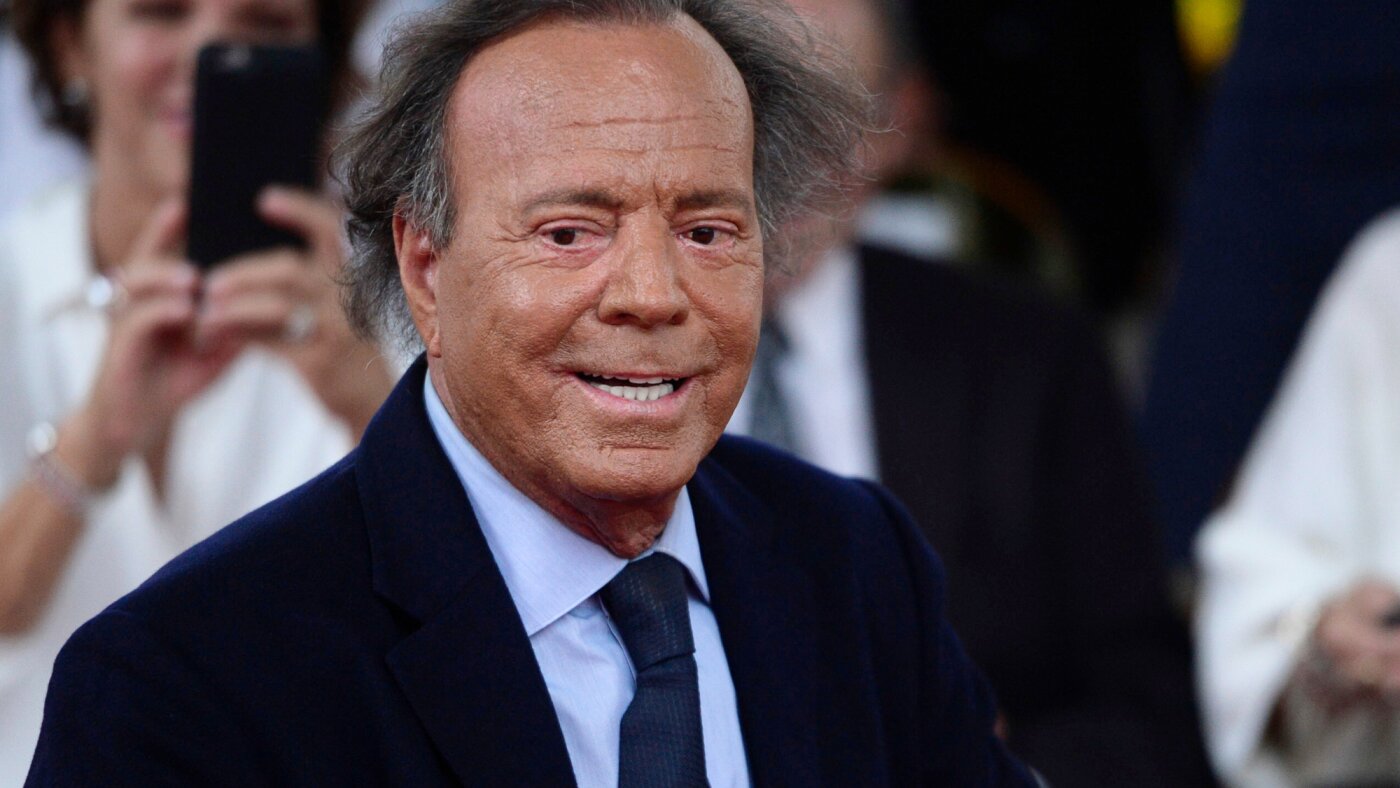
Julio Iglesias accused of sexual assault as Spanish prosecutors study the allegations