Lifestyle
Writers are competitive. Could I handle my girlfriend’s criticism?

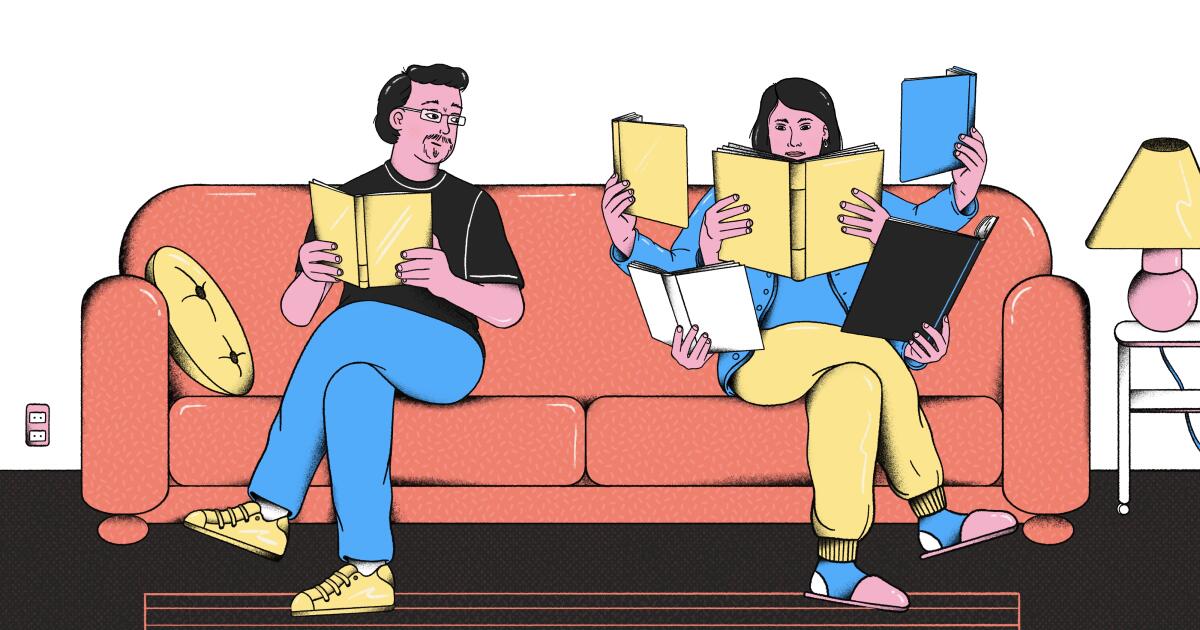
When I ask my girlfriend about the book she’s reading, it’s a given I’ll spend the next couple of minutes in utter confusion.
Yesterday Ami responded to my query by saying her latest read made her “fall in love with horses.”
The night before, she’d been lost in Andre Gide’s “Immoralist.” I knew the novel was about hidden desires, but I had no idea Gide had taken things into the stable.
After a lot of back-and-forthing, it turns out she was referring to Cormac McCarthy’s “All the Pretty Horses.”
That’s because whatever book I last saw her reading has invariably been finished and replaced by three new books.
She reads six books at any given time. Classics to sci-fi potboilers. The latest bestsellers to ancient Greek poems. And she inhales them at a rate that makes me wonder if she actually has the job she claims to have or spends all day curled up with the Modern Library.
Her “ideal day” is to go to the Iliad Bookshop in North Hollywood, “visit” the cat who sits on the register and prowl the aisles until she finds three books to bring home.
Given that I’ve made my living as a writer for 45 years, you might think it’s wonderful to have a partner who shares an adoration of the written world.
Actually, it’s a torment.
Many professional writers limit their reading. George R.R. Martin and Joyce Carol Oates “quarantine” themselves so other voices don’t creep into their work, as was the case with McCarthy and J.D. Salinger.
Like my literary betters, I sometimes worry that reading distracts me from writing. But unlike them, I live with someone who consumes words at an unimaginable pace.
When I see my girlfriend devour books faster than the popcorn she keeps within arm’s reach, I feel guilty — and envious. It jolts me into remembering how much I love the printed page.
As a kid, my favorite place was library stacks. I’d brush my fingers across the spine of the books, as if they were holy artifacts. But over the years, I’d lost that delight. Nowadays, I spend more time reading friends’ screenplays than I do literature. I began to envy how my girlfriend could lose herself in words just for the joy of it the way I used to.
So, now, when Ami settles in with a book in the living room chair, I do the same. But I’m flustered by how relentless her focus is. How quickly her pages turn.
I know reading shouldn’t be a competitive sport. I really do. But writers are competitive by nature.
I was irritated by how much more she seemed to enjoy reading than I did. The instant she finished a novel, she would extol its virtues and demand we go to the Iliad or the Last Bookstore to get the author’s next offering.
Meanwhile, I was struggling to get through “Ready Player One,” a novel that had been collecting dust for years. Not wanting to be one-upped by my speed-reading girlfriend, I threw myself into it. As we lay in bed together reading, my sighs and muttering about “frickin’ three cliches in one paragraph” caused her to throw sideways glances my way.
I realized this showed a basic difference between us. My girlfriend finds something to enjoy in everything she reads. I, on the other hand, can be nitpicky and hypercritical when I peruse the copy on the back of a cereal box.
Even worse is when she reads something of mine. All I can think is I’m in a wrestling match with all the great writers she cheats on me with.
Last weekend, my girlfriend and I visited the Valley Relics Museum in Van Nuys, a repository of cultural artifacts mostly from the ’80s and ’90s. Ironically, for all my complaints about “Ready Player One,” it had inspired me to suggest the visit. We had a wonderful time, strolling through the aisles and playing the vintage arcade games.
A few days later, lying in bed, I made the mistake of mentioning that I’d written a 2,000-word essay about how the memorabilia — the giant Bob’s Big Boy statue, the cast of E.T., the arcade games — linked to events in my life in unexpected ways.
“I would like to read that,” Ami declared, her eyes not moving from the book resting on her lap.
The way my heart clenched up, you might have thought she was a mugger in an alley saying, “I would like to have your wallet.”
Flop sweat collected on my brow. I was up against her current lineup of Doris Lessing, Ursula K. Le Guin and Frank Norris. That’s a daunting standard to be judged by. And I am so critical, I know I would have torn my own essay apart if someone had handed it to me.
At the same time, I secretly longed to hear her speak about my writing in the same loving tones that she mentioned other writers.
Given that written words are the way I engage with the world, this seemed like a critical moment in our relationship. I read the piece over and over. Although it had been sent to my editor long ago, I made numerous tiny changes.
Finally, I emailed it the next morning and braced for a response.
Per usual, she finished the essay in less time than it takes me to address an envelope. Her judgment was cutting: “Cute, but I’m not into it. So C-minus.”
I cannot communicate how much this hurt. It was like a hundred paper cuts to my soul.
If the person I cared most about in the world despised my efforts, how could I hope that anyone else would like it? Had I been a fool to devote half a century to a craft I was incompetent at? Had I finally been found out?
Stifling my wounded pride, I typed out a measured response: “So what exactly about it weren’t you into?”
Her response confused me even more. “Huh?” was all Ami said.
I looked up her previous email and realized I had misread it.
She had written: “Cute. But I’m not in it. So C-minus.”
And thus I wrote this piece.
As I said, I’m competitive. I simply can’t go through the day with only a C-minus.
The author is a freelance writer in Sherman Oaks. He received an A-minus on this story; Ami deducted half a point because it didn’t mention she’s hot.
L.A. Affairs chronicles the search for romantic love in all its glorious expressions in the L.A. area, and we want to hear your true story. We pay $400 for a published essay. Email LAAffairs@latimes.com. You can find submission guidelines here. You can find past columns here.


Inde Navarrette and Michael Johnston in Obsession.
Focus Features
hide caption
toggle caption
Focus Features
Two big horror films, Obsession and Backrooms, just smashed all box office expectations. So much of their success has been driven by Gen Z, which is now the biggest moviegoing demographic. But what makes a movie a Gen Z movie? Today we’re bringing you an episode of NPR’s It’s Been a Minute. Host Brittany Luse talks about this trend with Sam Adams and Reanna Cruz.
If you want to hear more about these movies, check out these episodes:
In ‘Obsession,’ love hurts. It really, really, really hurts.
‘Backrooms’ brings YouTube horror to the big screen
Zendaya brings ‘The Drama,’ we bring the spoilers
Connect with Pop Culture Happy Hour:
Letterboxd / Facebook
Our weekly newsletter
Support Pop Culture Happy Hour+

I regret to inform you I’ll need to keep this introduction brief. Not because there’s any lack of things to say about July’s crop of notable new releases; it features award-winning journalists and several different flavors of anxiety about our bleak ecological future and data-dominated present, as well as the welcome returns of several beloved novelists.
No, these books certainly deserve some love, dear readers. It’s just that I’m finding it a bit tough to type while bearhugging a box fan. And since it seems that may be my last best chance to get through this latest U.S. heat wave here on the east coast without sweating through my shirt, I feel some urgency to get back at it.
So enough with the ado. With any luck, you’ll soon be cracking open one of these great reads on the beach — or in front of a decent air-conditioning unit, at any rate.
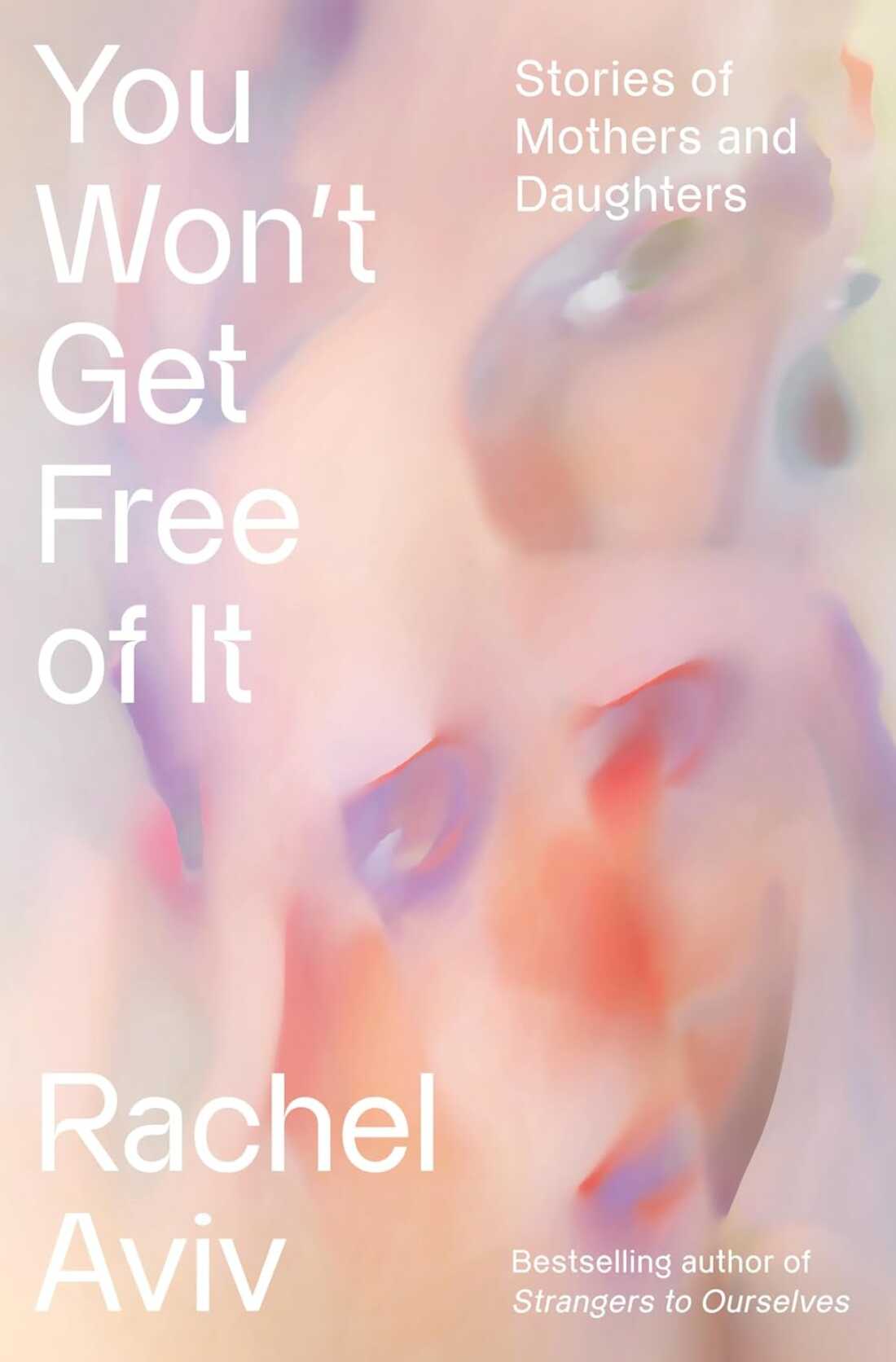
You Won’t Get Free of It: Stories of Mothers and Daughters, by Rachel Aviv (July 7)
Aviv, New Yorker staff writer and finalist for this year’s Pulitzer Prize, has a fairly extensive purview in her role as reporter at large. Still, when reviewing her latest work, Aviv noticed a crucial throughline: “I realized that, to some degree, I’d been writing about mother-daughter pairs for the last decade,” she explained to the Paris Review. Seeing this, she decided to collect and revise half a dozen of those stories, which cover ground from a daughter’s troubling fugue states to the immigrant nannies who must leave their own children behind, to Alice Munro’s daughter, whose claims of sexual abuse went unheeded yet regularly resurfaced in her mother’s fiction.
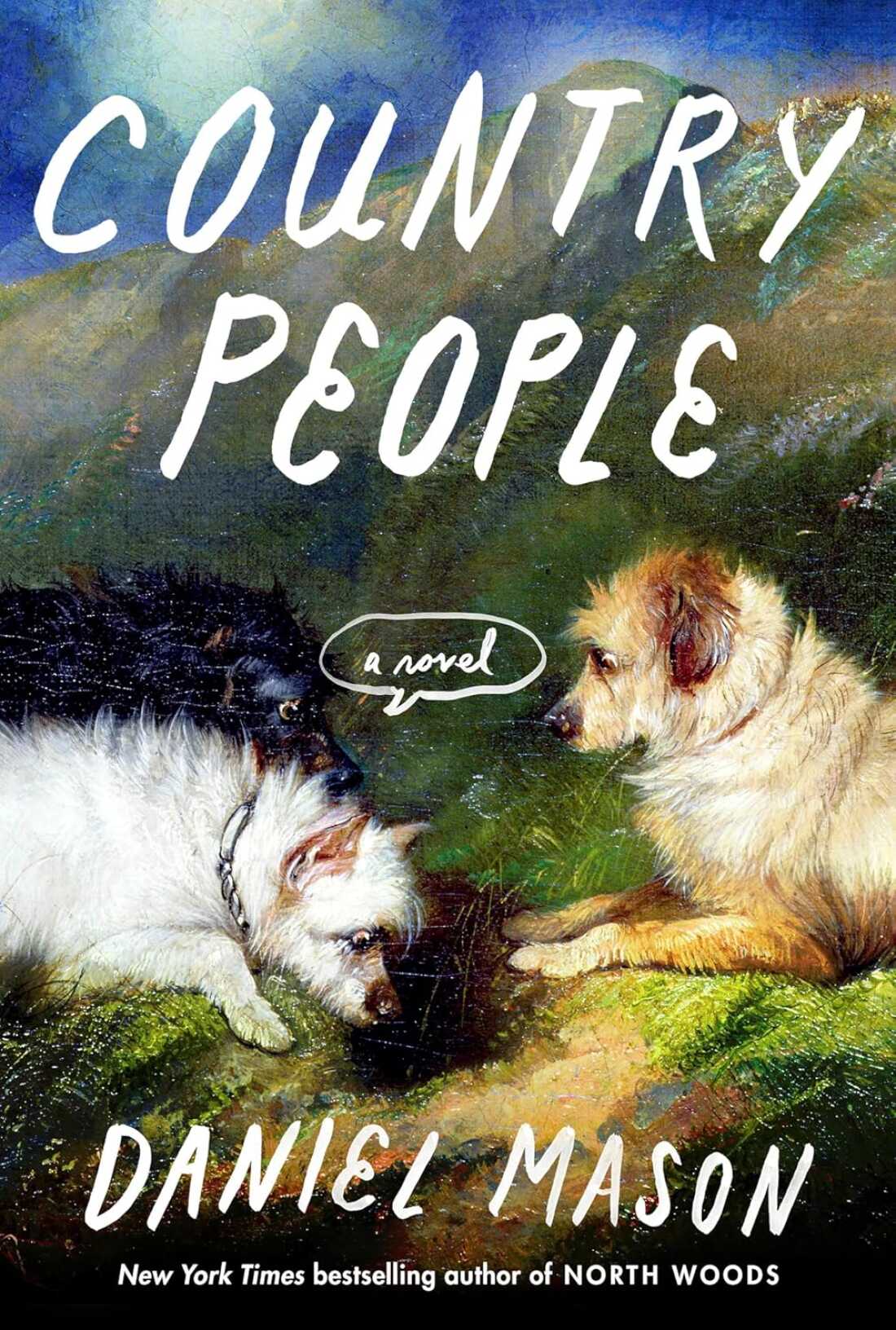
Country People, by Daniel Mason (July 7)
In Mason’s first novel since North Woods, 2023’s critical darling and book club stalwart, readers are plopped right back in the New England woods but the time scale has shrunk considerably. Whereas North Woods spanned centuries, his new novel confines itself to a single year, during which Miles, loving family man and lackadaisical Ph.D. candidate, plans to finally buckle down on that derelict degree of his and reassert his worth to one and all! At least, that’s the idea. But plans don’t stand much of a chance when there are eccentric neighbors to befriend and mysterious local legends to investigate.

Catch the Devil: A True Story of Murder, Deception, and Injustice on the Gulf Coast, by Pamela Colloff (July 14)
This is the first book from Colloff, a veteran investigative journalist for ProPublica and The New York Times Magazine. She has won multiple National Magazine Awards for stories focused on miscarriages of justice – such as her 2019 piece about Paul Skalnik, a grifter, fabulist, sexual predator and snitch, whose fabrications can be linked to dozens of wrongful convictions in Florida, including some sending the innocent to death row. Here Colloff expands upon that investigation, which gets a lot more room to breathe in the transition from magazine article to full-length book. What emerges in this disturbing account is a portrait of one man’s callous cruelty, and the law enforcers who had no problem tolerating a deal with the devil, provided it kept juicing the conviction rate.

Cloudthief, by Nathaniel Rich (July 14)
Though it’s his fiction we’re discussing here, it’s important to note Rich’s reporting has earned plaudits, too, as well as a few film adaptations. No matter the medium, climate change is usually on his mind, as well as the blunt, rather bleak, prognosis he offered on Fresh Air in 2019: “There’s a huge range of outcomes … ranging from the not very good to the apocalyptic.” Which is to say I’m surprised to find myself describing his newest response to global catastrophe as a rollicking good time – and not just because I’ve never said those words, in that order, in my life. This spry, funny caper features a freelance environmental reporter who inadvertently breaks bad, careening under the influence of lust and a light wallet toward the novel’s big centerpiece: the planned heist of a massive data center.

Data Empire: The Power of Information to Organize, Control, and Dominate, by Roopika Risam (July 14)
And now, for another book centered on data – albeit from a rather different angle. This illuminating history from Risam, a Dartmouth professor, traces the practice of collecting information – and the power conferred by possessing it – from the bones that were humans’ first archives, to the omnipresent systems that shape (or outright determine) life today. As Risam asks, “What has it meant – and what will it mean – when records that once served only to help us remember, come to rule?” A pressing question (see: those data centers), which you’re probably better served trying to answer with the help of Risam than, say, Alexa or Claude.

It Will Come Back to You: Stories, by Sigrid Nuñez (July 14)
For someone with nine novels to her name, Nuñez got a later start than you might expect, having published her first book when she was already in her mid-40s. More than three decades later, now a spry 75 years old, the National Book Award winner has gotten around to publishing her first collection of short stories. The 13 stories here have been culled from across her career, but each one resonates clearly with the warm timbre of her voice: simple, unadorned prose and mundane setups, from which she consistently manages to tease out glimpses of truth, elusive and profound.

They Stole a City: Wilmington’s White Supremacist Coup and the Families Who Live with Its Legacy, by Lauren Collins (July 14)
The only coup d’etat to succeed on U.S. soil is, at most, a distant historical afterthought these days. To be honest, I can’t recall reading a single textbook entry that even remarked on the 1898 race massacre in Wilmington, N.C., an action led by white supremacists that left many (historian estimates say up to 300) Black Wilmingtonians dead and permanently scarred a community newly aware of its simmering animus and vulnerability to violent overthrow. So I’m grateful for Collins’ new chronicle of the infamous event, which fills in some serious gaps in the American collective memory and explains how its perpetrators cultivated the disorienting silence that persists in the historical record today.

Yellow Pine, by Claire Vaye Watkins (July 21)
I don’t think I’ve ever actually laid eyes on the Mojave Desert but after reading Watkins’ latest novel, it feels like I can picture it more vividly than some streets I’ve actually lived on. No, it’s “not a beginner’s wilderness,” as Watkins concedes in Yellow Pine, but this landscape so redolent of death is also deceptively robust with life, if only you’re patient enough to find it. Too bad, then, that it’s also on fire. And choked by drought, irradiated by military test sites and soon to be sacrificed to a massive new solar array named, inexplicably, Yellow Pine. But those aren’t the only complications confronting the book’s main character, Rose, whose aspirations of becoming a kind of climate hermit warp a bit under the pressure of a rekindled love and the pendulum swing of rage and despair at the state of the world.

Cool Machine, by Colson Whitehead (July 21)
Ray Carney is back, for what regrettably appears to be the last time. The lifelong Harlemite, hard-luck furniture dealer and ambivalent crook starred previously in Harlem Shuffle and its sequel, Crook Manifesto. His perspective is our window on the changing eras of the historically Black neighborhood, from the mid-1950s on. In this, the final installment in Whitehead’s brisk, exceedingly entertaining Harlem Trilogy, readers catch up with Carney around the start of the 1980s, following him deeply into Reagan’s decade. The novel also represents the end of an era for Whitehead, whose attention has been exclusively occupied with these characters since he won Pulitzer Prizes for consecutive novels, The Underground Railroad and Nickel Boys.

Beginning Middle End, by Valeria Luiselli (July 28)
The gifted young Mexican writer returns this month with her fourth novel, the second she has written in English and her first since Lost Children Archive launched to widespread plaudits more than seven years ago. Her new book, like her previous one, also concerns the travels of a small family – only this time, the road leads not through the American Southwest but Sicily. And the history sought by its mother-daughter main characters is not a record of bureaucratic cruelty but something much more intimately personal: the links shaped and tested by generations of shared heritage and experience.



-

 Los Angeles, Ca1 hour ago
Bicyclist killed by hit-and-run driver in Long Beach
-

 Detroit, MI2 hours ago
Child shot while riding bike outside home on Detroit’s west side, police say
-

 San Francisco, CA2 hours ago
Bay Area restaurant has strict policy on acceptable children behavior
-

 Dallas, TX2 hours ago
Detroit Pistons trade Marcus Sasser to Dusty May’s Dallas Mavericks
-

 Miami, FL2 hours ago
The offseason has been a massive success for the Miami Heat
-

 Boston, MA2 hours ago
Can’t afford Boston’s priciest restaurants? Try these instead. – The Boston Globe
-

 Denver, CO2 hours ago
City of Denver says images of piling waste a case of illegal dumping
-

 Seattle, WA2 hours ago
14-year-old dies in electric motorcycle crash at Seattle bike park

