West
US Supreme Court upholds controversial anti-camping laws used against homeless people in Oregon city

- The U.S. Supreme Court upheld anti-camping laws in Grants Pass, Oregon, allowing authorities to prevent homeless individuals from sleeping in public parks and streets.
- The court’s 6-3 decision reversed a lower court ruling that enforcing these laws without available shelter violated the Eighth Amendment’s prohibition on cruel and unusual punishment.
- Grants Pass ordinances prohibit sleeping on public streets with blankets or bedding, imposing fines and possible jail time.
The U.S. Supreme Court upheld on Friday anti-camping laws used by authorities in an Oregon city to stop homeless people from sleeping in public parks and public streets – a ruling that gives local and state governments a freer hand in confronting a national homelessness crisis.
The justices ruled 6-3 to overturn a lower court’s decision that found that enforcing the ordinances in the city of Grants Pass when no shelter space is available for the homeless violates the U.S. Constitution’s Eighth Amendment prohibition on “cruel and unusual” punishments. Various jurisdictions employ similar laws.
The court’s conservative justices were in the majority, while its three liberal members dissented.
TRUST IN SUPREME COURT PLUNGES AHEAD OF KEY DECISIONS ON PRESIDENTIAL IMMUNITY, JAN. 6
Homelessness remains a complex problem for public officials in the United States as many municipalities experience chronic shortages of affordable housing. On any given night, more than 600,000 people are homeless, according to U.S. government estimates.
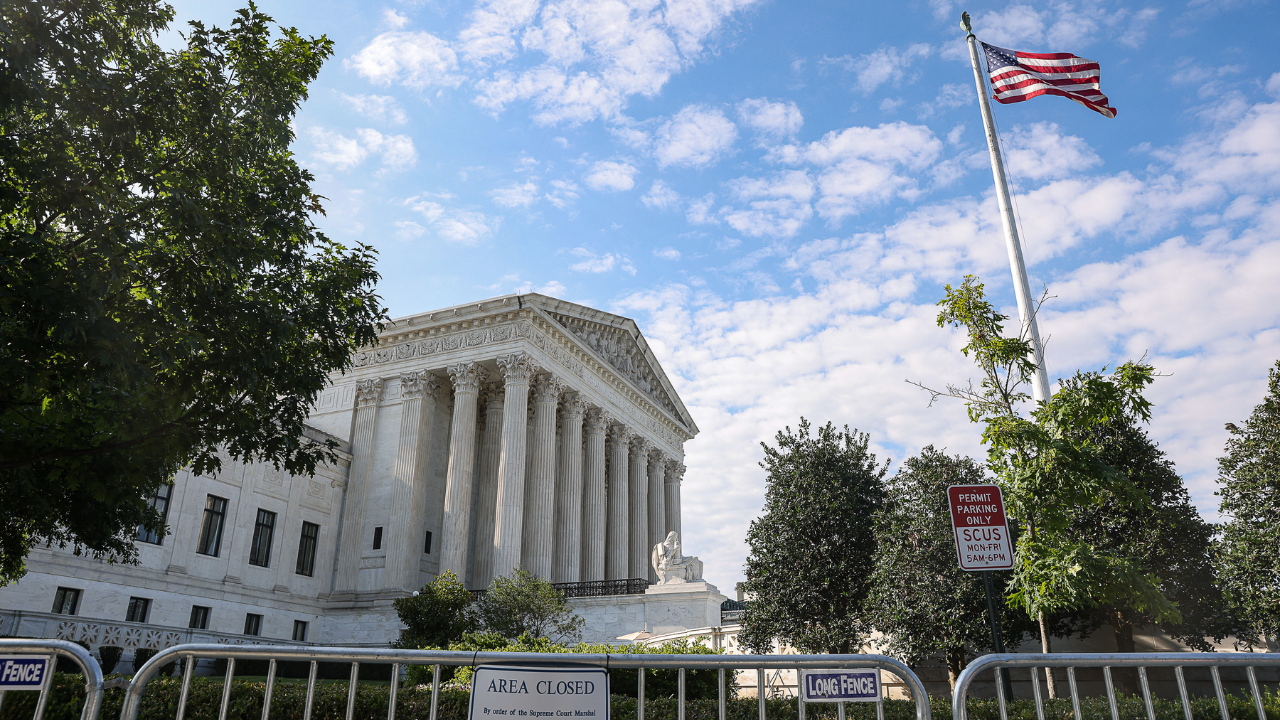
The U.S. Supreme Court is seen in Washington, DC, on June 28, 2024. The U.S. Supreme Court upheld on Friday anti-camping laws used by authorities in an Oregon city to stop homeless people from sleeping in public parks and public streets – a ruling that gives local and state governments a freer hand in confronting a national homelessness crisis. (Valerie Plesch/Bloomberg via Getty Images)
The case focused on three ordinances in Grants Pass, a city of roughly 38,000 people in southwestern Oregon, that together prohibit sleeping in public streets, alleyways and parks while using a blanket or bedding. Violators are fined $295. Repeat offenders can be criminally prosecuted for trespass, punishable by up to 30 days in jail.
Advocates for the homeless, various liberal legal groups and other critics have said laws like these criminalize people simply for being homeless and for actions they cannot avoid, such as sleeping in public. They point to a 1962 Supreme Court ruling that the Eighth Amendment barred punishing individuals based on their status rather than their conduct.
SUPREME COURT RULES ON CHALLENGE TO BIDEN ADMIN’S EFFORT TO INFLUENCE SOCIAL MEDIA
A point of contention during the Supreme Court’s arguments in the case in April was whether homelessness can be deemed a status that would prohibit enforcing local laws.
President Joe Biden’s administration agreed with the plaintiffs that Grants Pass cannot enforce an “absolute ban” on sleeping in the city – which effectively criminalizes homelessness – but suggested the rulings by the lower courts against the city were too broad and should be reconsidered.
Proponents, including various government officials, have called such laws a necessary tool for maintaining public safety.
The case, which began in 2018, involved three homeless people who filed a class-action lawsuit seeking to block the measures impacting them in Grants Pass. One of the plaintiffs has since died.
U.S. Magistrate Judge Mark Clarke ruled that the city’s “policy and practice of punishing homelessness” violates the Eighth Amendment and barred it from enforcing the anti-camping ordinances. The San Francisco-based 9th U.S. Circuit Court of Appeals upheld Clarke’s injunction against the ordinances.
The city had defended itself in the case in part by noting that homeless people have alternatives outside the city, including nearby undeveloped federal land, county campsites or state rest stops. The judge said that argument “sheds light on the city’s attitude towards its homeless citizens” by seeking to drive them out or punish them if they stay.
Read the full article from Here


One person is dead and two others are missing near Alcatraz Island in San Francisco Bay after a boat with 19 people aboard capsized Tuesday afternoon, officials said.
A vessel was reported to be on fire around 600 yards off Alcatraz around 3:35 p.m., and police found a capsized three-deck pontoon boat, San Francisco Fire Chief Dean Crispen said.
The incident was initially reported as a fire, but no first responders reported witnessing a blaze, Crispen said.
Everyone on the boat is believed to have been adults, Crispen said. A dog was also on board and is dead, he said.
Thirteen people were safely rescued, and another three were transported to hospitals, Crispen said.
Firefighters are “in full rescue mode,” with 11 boats and divers as part of the response, Crispen said.
“We are going to continue for hours to make sure that we find these two missing people, if possible,” Crispen said.
“It seemed like a recreational-type vessel, but that’s all we know at this point,” Crispen told reporters.
The vessel reportedly launched from a yacht club, and investigators were still gathering information, he said.
Helicopter footage from NBC Bay Area showed responding rescue boats and debris floating in the water. Video from the station appeared to show some of the rescued with blankets on shore.
Local police departments and private vessels also responded to the incident, Crispen said.
“This is an all-hands-on-deck search and hopefully rescue,” San Francisco Mayor Daniel Lurie said.
When first responders arrived, some people were in the water, others were on the sinking boat, and others were falling into the water, Crispen said.
Alcatraz Island is the site of the famous prison located in San Francisco Bay, around 1 mile offshore. It was closed as a federal prison in 1963 and is now a National Park.
Crispen said the search would be extensive.
“Our standard operating procedure is to continue to search, as long as it’s safe enough for us to search,” he said.
He said divers were in the water, helicopters were above, and officials were searching areas where survivors in the water would tend to move to.
“This search will go on for some time,” Crispen said.


After so many disappointing seasons with the interior offensive line, the Seattle Seahawks made a commitment last offseason to improve the unit. They started one big step at a time by drafting North Dakota State guard Grey Zabel in the first round, 18th overall pick, of the 2025 NFL Draft. This one was one of the last steps for the Seahawks to create one of the most productive offenses in the NFL.
Zabel wasn’t perfect in his rookie season, but he was good enough to validate the decision to draft him in the first round, and he showed improvement. Zabel is already a favorite among some Seahawks fans and some media outlets as they love his determination and spirit. It was a big jump from the FCS collegiate level to the NFL and this season, he has a chance to show why he might be a top-half-of-the-league guard.
Why Zabel Could Be Ranked Higher?
The Seahawks wanted a determined workhorse when looking for a guard. That’s exactly what they got in Zabel. Last season, he appeared in 1,051 snaps, which is only 10 fewer snaps than right tackle Abraham Lucas, who had the most offensive snaps. Zabel got better as the season progressed. Pro Football Focus gave him an overall grade of 81.5 and a run-block grade of 81.2 in Week 14 through the NFC Championship Game.
There were times last season when he looked like a monster against several defenders. He was pushing some defenders completely out of the way on pulling plays and even ran to defenders after the pass-catcher caught the ball. This is the mentality the Seahawks expect him to have going into his second season in the league. He has more experience and the complete trust of the team to be a franchise player on par with Lucas and left tackle Charles Cross. If he continues to improve, he will be another steal for the Seahawks.
Why Zabel Could Be Ranked Lower?
There were times last season when he didn’t quite catch up to the learning curve of the NFL. Zabel allowed two sacks, four hits and 24 pressures in 2025. The Seahawks expect those numbers to decrease significantly as he is experienced and capable of playing at an efficient level. While Zabel is impressive, he might not be the best player the Seahawks have selected in the 2025 NFL Draft. That honor belongs to slot cornerback Nick Emmanwori, who is stepping up to be the steal of the draft.
Zabel is easily one of the best second-year players and is one of the top offensive linemen, but there are players behind him because they haven’t proven to be consistently explosive for the Seahawks. There is going to be even more pressure on him this upcoming season. The Seahawks hired a more run-friendly coach in Brian Fleury as offensive coordinator. His ranking at the end of the season might be much better if he improves, or worse if he fails to reach expectations.
— Enjoy free coverage of the Super Bowl champions from Seattle Seahawks On SI —
Sign Up For the Seahawks Daily Digest – OnSI’s Free Seattle Seahawks Newsletter
 Add us as a preferred source on Google
Follow
-
 Business2 minutes ago
Commentary: Trump greenlights California’s dumbest water project
-
 Entertainment8 minutes ago
‘Hail Satan? Not me.’ Charley Crockett fires satanic duo Twin Temple, so Jack White hires them
-
 Lifestyle14 minutes ago
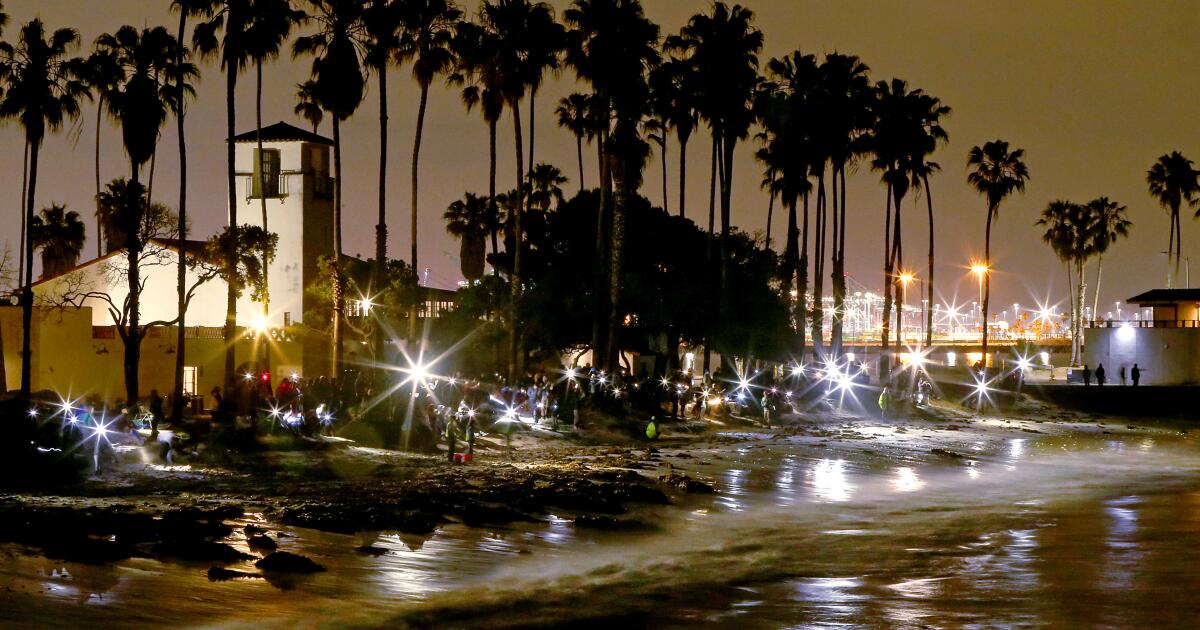
It’s time for the night trip to the beach — the grunion are running
-
 Politics20 minutes ago
After lawsuit, ICE pauses construction of Bay Area detention facility
-
 Science26 minutes ago
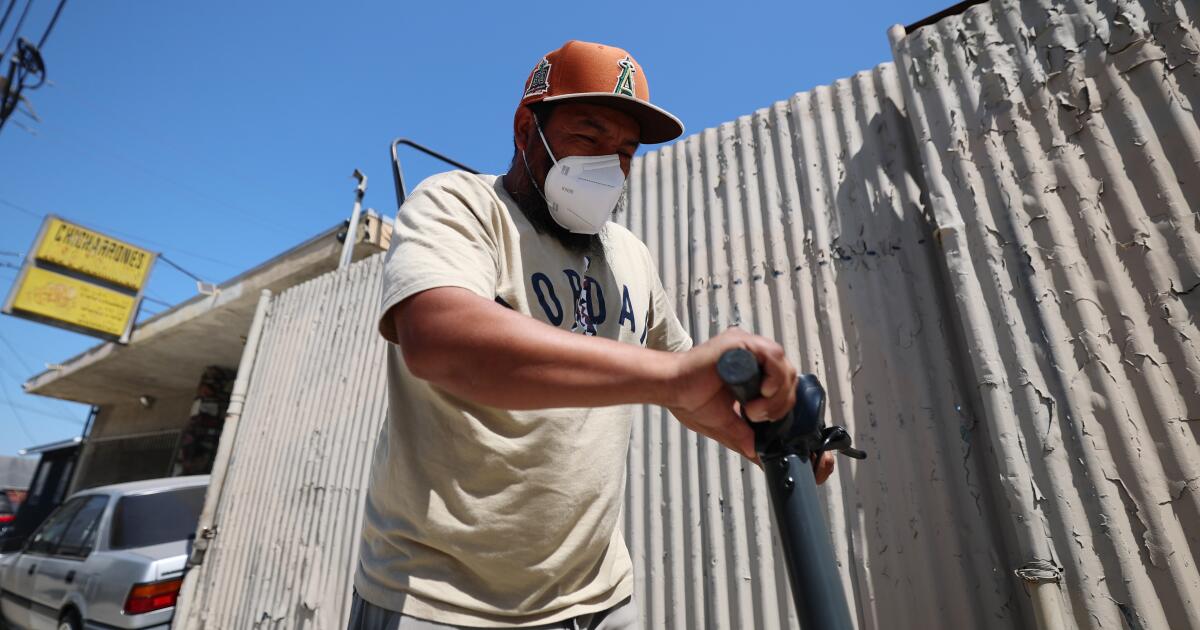
Anger grows in Boyle Heights as warehouse fire leaves stench, flies and vermin in its wake
-
 Sports32 minutes ago
Spain delivers surprise rout of France, clinches berth into World Cup final
-

 World44 minutes ago
US says latest Iran strike wave over, IRGC claims damage to US Naval HQ
-
 News1 hour ago
Supreme Court Justices give chilling accounts of threats to their safety

