West
University of California campuses see dramatic rise in students identifying as transgender or non-binary

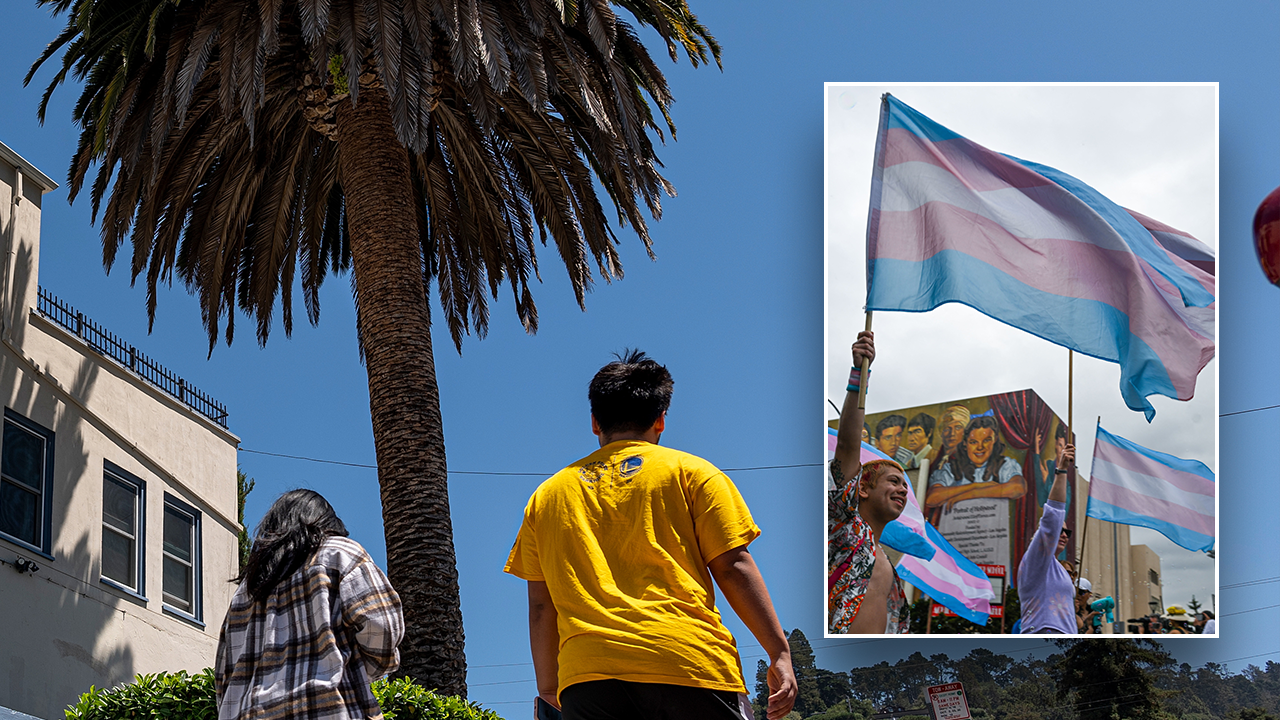
The University of California system is seeing a staggering increase in the number of students who identify as either transgender or non-binary.
According to data released in January, the number of undergraduate students identifying as non-binary across UC system campuses rose by over 2,000 from 2019 to 2023.
The San Francisco Chronicle noted that last year, the UC changed its data collection processes and consolidated the terms “non-binary,” “genderqueer” and “gender non-conforming” into a singular “non-binary category.”
“Even taking into account that shift, the number and percentage of students identifying as trans or non-binary increased significantly,” the paper noted.
The percentage of students identifying as gender non-conforming, non-binary or transgender has also tripled over the last four years (.06% in 2019 to 1.9% in 2023). Most of the students fell under the non-binary category, while transgender men and women were identified as the smallest demographic in 2023, at .2% and .1%, respectively.
POLL FINDS AMERICANS DON’T THINK BIOLOGICAL MEN SHOULD COMPETE IN WOMEN’S SPORTS: ‘PENDULUM HAS SWUNG TOO FAR’
A pedestrian walks by a sign in front of the U.C. Berkeley campus on July 22, 2020, in Berkeley, California. ((Photo by Justin Sullivan/Getty Images))
UC Berkeley reported a major uptick in the number of students identified as transgender or gender non-conforming, rising from .2% in 2019 up to 1.8% in 2023.
The university’s Director of LGBTQ Advancement and Equity, Em Huang, said a systemwide rule allowing students to use a name of their choice and gender identity on nearly all official documents may have made the school more appealing to transgender and non-binary students.
The university is also in the process of converting many gendered bathroom stalls into gender-neutral bathrooms.
UC Santa Cruz had the largest non-binary and transgender undergraduate population in 2023 (4% and 1.1.%).
The data on UC schools comes after the results of the 2022 U.S. Transgender Survey Early Insights report, the largest survey of transgender people in the United States, was released.
FOX NEWS POLL: VOTERS WANT SCHOOLS TO TEACH MORE ABOUT GOOD CITIZENSHIP AND LESS ABOUT GENDER IDENTITY
Students walk past Sather Gate on the University of California at Berkeley campus in Berkeley, Calif. (AP Photo/Ben Margot, File)
Ninety-four percent of respondents who had lived at least part of their life in a different gender than their birth sex reported they were “a lot more satisfied” or “a little more satisfied” with the quality of their life.
Only 1% of respondents said they were “a little less satisfied” with their life and only 2% said they were “a lot less satisfied.”
However, 39% of those surveyed said they had been harassed on social media because of their gender identity in the last year. Thirty percent also reported verbal harassment over the same period.
Sixty-two percent of respondents admitted they were “very uncomfortable” or “somewhat uncomfortable” talking to police or asking for help when they experienced issues related to their gender.
The new report also determined that the unemployment rate among those surveyed was almost five times the U.S. national average (-18%).
Read the full article from Here

San Francisco, CA
People’s Budget Coalition Claims Victory After San Francisco Budget Restores Most Proposed Service Cuts – Davis Vanguard

By Vanguard Staff
SAN FRANCISCO — The San Francisco People’s Budget Coalition declared a major victory this week after the San Francisco Board of Supervisors’ Budget and Appropriations Committee advanced a budget proposal restoring nearly all of Mayor Daniel Lurie’s proposed cuts to community organizations and workers providing essential services throughout the city.
The coalition credited months of organizing by labor unions, community organizations, residents and advocates for reversing many of the reductions initially proposed in the mayor’s budget. The committee-approved budget now moves to the full Board of Supervisors and then to Mayor Lurie for final approval. According to the coalition, few, if any, additional changes are expected during that process.
The coalition said thousands of San Francisco workers, residents and community members participated in neighborhood town halls, marches, rallies, phone banks, letter-writing campaigns and demonstrations to pressure city leaders to restore funding for programs serving vulnerable populations.
“This budget represents a remarkable victory for every single San Francisco resident,” said Anya Worley-Ziegman, coalition coordinator for the San Francisco People’s Budget Coalition.
“And it shows that public pressure works. Showing up works. Organizing, going out into communities where people will see their lives impacted by cuts, where people feel like their government and their representatives aren’t listening to them, and giving people an outlet to make their voices heard can make real change.”
Worley-Ziegman credited “the thousands of people, workers, unions, community and advocacy organizations, as well as the leadership of Budget Chair Connie Chan and Supervisors who fought for their districts’ priorities” with helping restore “tens of millions of dollars for essential programs serving our city’s most vulnerable populations.”
“Dr. Martin Luther King Jr. reminds us that budgets are moral documents, and today, City Hall seems to agree,” Worley-Ziegman added.
According to the coalition, many of the mayor’s proposed reductions affecting LGBTQ+, immigrant, student and homeless services were restored through the city’s annual budget “add-back” process during the Budget and Appropriations Committee’s final meeting, chaired by Supervisor Connie Chan.
The coalition said restorations include tens of millions of dollars for senior services, housing and rent assistance, Free City College, HIV services, immigrant services and other community programs.
The organization argued that many of the programs initially targeted for reductions serve communities that are already facing challenges resulting from actions by the federal government. The coalition said restoring those programs demonstrates continued city support for immigrants, LGBTQ+ residents, Black, Indigenous and other communities of color, as well as individuals struggling with mental health, substance use disorders or homelessness.
The coalition said investments in those communities strengthen the city and help maintain San Francisco’s reputation as a welcoming and inclusive city.
Despite celebrating the committee’s actions, the coalition said significant fiscal challenges remain. It noted that not all proposed reductions were fully restored and that city officials project next year’s budget deficit to exceed this year’s.
The coalition argued that San Francisco possesses substantial wealth, particularly amid the city’s growing artificial intelligence industry, and said city leaders should pursue additional revenue sources to sustain public services rather than relying on service reductions.
“San Francisco is one of the wealthiest cities in the wealthiest country in the world, and with the AI boom, it’s only getting richer,” Worley-Ziegman said.
“The fact that we need to exert this much time and energy fighting for such a small slice of the pie is, frankly, as ridiculous as it is shameful.”
“We should be laser focused on expanding the pie. We need to be talking about IPO taxes, wealth taxes, mansion taxes, and every policy tool available to close future deficits,” Worley-Ziegman continued.
“It feels like every year our leaders tell the most vulnerable communities to eat cuts and make ‘hard choices,’ while simultaneously opposing comically small taxes on the city’s wealthiest and well connected residents.”
“It should not be this hard to get an immigrant mother on the cusp of eviction $50 to make rent, or a senior living with HIV on our streets counseling or a hot meal.”
Worley-Ziegman concluded by urging advocates to continue organizing beyond this year’s budget process.
“Yes, let’s celebrate this win, but don’t forget that there’s so much more work to do if we want to move San Francisco forward without leaving its most vulnerable residents behind.”
Follow the Vanguard on Social Media – X, Instagram and Facebook. Subscribe the Vanguard News letters. To make a tax-deductible donation, please visit davisvanguard.org/donate or give directly through ActBlue. Your support will ensure that the vital work of the Vanguard continues.
Categories:
Breaking News San Francisco
Tags:
budget advocacy community services Connie Chan Daniel Lurie People’s Budget Coalition San Francisco budget
Denver, CO
Even without extension talks, Nikola Jokic has reiterated his desire to stay long-term in Denver
Despite the possibility of Nikola Jokic holding off on extension talks for now, per The Stein Line, Jokic has reiterated a desire to stay long-term in Denver in recent talks, league sources told HoopsHype. If Jokic waits until next summer, he’s eligible for an additional year on an extension, which should be noted.
HoopsHype

Here are three more coyote sightings reported to us in the past few days:
SATURDAY MORNING: Dwight emailed us this report:
At 9:53 this morning I saw a coyote walking down Brace Point Drive towards the Josslin building. He saw me and quickly changed direction and headed up California Drive. He looked healthy and happy, not starved and miserable .
THURSDAY EVENING: These next two came in almost simultaneously just after 8:30 pm Thursday via texts – this one, from 38th SW and SW Raymond:
This one, from 37th SW and SW Juneau:

You can browse our past sighting reports here.
-
 News27 seconds ago
Three firefighters killed on Colorado-Utah border as wildfires intensify
-

 Los Angeles, Ca1 hour ago
6 members of suspected South American burglary crew arrested by Irvine police
-

 Detroit, MI2 hours ago
Detroit Tigers seek split in home series vs Houston Astros on Sunday
-

 San Francisco, CA2 hours ago
People’s Budget Coalition Claims Victory After San Francisco Budget Restores Most Proposed Service Cuts – Davis Vanguard
-

 Dallas, TX2 hours ago
Dallas weather: June 28 morning forecast
-

 Miami, FL2 hours ago
Where to watch Miami Marlins vs St. Louis Cardinals: TV channel, start time, streaming for June 28
-

 Boston, MA2 hours ago
Police: Man killed in crash caused by wrong-way driver on I-93 in Boston – Boston News, Weather, Sports | WHDH 7News
-
Denver, CO2 hours ago
Even without extension talks, Nikola Jokic has reiterated his desire to stay long-term in Denver

