Lifestyle
They set out to elevate karaoke in L.A. — and opened a glamorous lounge that pulls out all the stops


Brothers Leo and Oliver Kremer visited karaoke spots around the globe and almost always had the same impression.
“The drinks weren’t always great, the aesthetics weren’t always so glamorous, the sound wasn’t always awesome and the lights were often generic,” says Leo, a former bassist of the band Third Eye Blind.
As devout karaoke fans, they wanted to level up the experience. So they dreamed up Mic Drop, an upscale karaoke lounge in West Hollywood that opens Thursday. It’s located inside the original Larrabee Studios, a historic 1920s building formerly owned by Carole King and her ex-husband, Gerry Goffin — and the spot where King recorded some of her biggest hits. Third Eye Blind band members Stephan Jenkins and Brad Hargreaves are investors of the new venue.
Inside the two-story, 6,300-square-foot venue with 13 private karaoke rooms and an electrifying main stage, you can feel like a rock star in front of a cheering audience. Want to check it out? Here are six things to know.
The Kremer brothers hired sculptor Shawn HibmaCronan to create an 8-foot-tall disco-themed microphone for their karaoke lounge.
1. Take your pick between a private karaoke experience or the main stage
A unique element of Mic Drop is that it offers both private karaoke rooms and a main stage experience for those who wish to sing in front of a crowd. The 13 private rooms range from six- to 45-person capacity. Each of the karaoke rooms are named after a famous recording studio such as Electric Lady, Abbey Road, Shangri La and of course, Larrabee Studios. There is a two-hour minimum on all rentals and hourly rates depend on the room size and day of the week.
But if you’re ready to take the center stage, it’s free to sing — at least technically. All you have to do is pay a $10 fee at the door, which is essentially a token that goes toward your first drink. Then you can put your name on the list with the KJ (karaoke jockey) who keeps the crowd energized throughout the night and even hits the stage at times.

Harrison Baum, left, of Santa Monica, and Amanda Stagner, 27, of Los Angeles, sing in one of the 13 private karaoke rooms.
2. Thumping, high sound quality was a top priority
As someone who toured the world playing bass for Third Eye Blind, top-tier sound was a nonnegotiable for Leo. “Typically with karaoke, the sound is kind of teeny, there’s not a lot of bass and the vocal is super hot and sitting on top too much,” he says. To combat this, he and his brother teamed up with Pineapple Audio, an audio visual company based in Chicago, to design their crisp sound system. They also installed concert-grade speakers and custom subwoofers from a European audio equipment manufacturer called Celto, and bought gold-plated Sennheiser wireless microphones, which they loved so much that they had an 8-foot-tall replica made for their main room. Designed by artist Shawn HibmaCronan, the “macrophone,” as they call it, has roughly 30,000 mirror tiles. “It spins and throws incredible disco light everywhere,” says Leo.

Karaoke jockeys Sophie St. John, 27, second from left, and Cameron Armstrong, 30, right, get the crowd involved with their song picks at Mic Drop.
3. A concert-level performance isn’t complete without good stage lighting and a haze machine
Each karaoke room features a disco ball and dynamic lighting that syncs up with whatever song you’re singing, which makes you feel like you are a professional performer. There’s also a haze machine hidden under the leather seats. Meanwhile, the main stage is concert-ready with additional dancing lasers and spotlights.

Brett Adams, left, of Sherman Oaks, and Patrick Riley of Studio City sing karaoke together inside a private lounge at Mic Drop.
4. The song selection is vast, offering classics and new hits
One of the worst things that can happen when you go to karaoke is not being able to find the song you want to sing. At Mic Drop, the odds of this happening are slim to none. The venue uses a popular karaoke service called KaraFun, which has a catalog of more than 600,000 songs (and adds 400 new tracks every month), according to its website. Take your pick from country, R&B, jazz, rap, pop, love duets and more. (Two newish selections I spotted were Raye’s “Where Is my Husband” and Olivia Dean’s “Man I Need,” which both released late last year.) In the private karaoke rooms, there’s also a fun feature on Karafun called “battle mode,” which allows you and your crew of up to 20 people to compete in real time. KaraFun also has an entertaining music trivia game, which I tested out with the founders and came in second place.

The design inspiration for Mic Drop was 1920s music lounges and 1970s disco culture, says designer Amy Morris.
5. The interiors are inspired by 1920s music lounges mixed with ‘70s disco vibes

A disco ball hangs from the ceiling.
If you took the sophisticated aesthetic of 1920s music lounges and mixed it with the vibrant and playful era of 1970s disco culture, you’d find Mic Drop.
When you walk into the lounge, the first thing you’ll see is a bright red check-in desk that resembles a performer’s dressing room with vanity lights, several mirrors and a range of wigs. “So much of karaoke is about getting into character and letting go of the day, so we had the idea to sell the wigs,” says Oliver. As you continue into the lounge, the focal point is the stage, which is adorned with zebra-printed carpet and dramatic, red velvet curtains. For seating, slide into the red velvet banquettes or plop onto a gold tiger velvet stool. Upstairs, you’ll find the intimate karaoke studios, which are decorated with red velvet walls and brass, curved doorways that echo the building’s deco arches, says Mic Drop’s interior designer, Amy Morris of the Morris Project.

Sarah Rothman, center, of Oakland, and friend Rachel Bernstein, left, of Los Angeles, wait at the bar.
6. You can order nontraditional karaoke bites as you wait for your turn to sing
While Mic Drop offers some of the food you’d typically find at a karaoke lounge such as tater tots, truffle popcorn and pizza, the venue has some surprising options as well. For example, a 57 gram caviar service (served with chips, crème fraîche and chives) and shrimp cocktail from Santa Monica Seafood. For their pizza program, the Kremer brothers teamed up with Avalou’s Italian Pizza Company, which is run by Louis Lombardi who starred in “The Sopranos.” He’s the brainchild behind my favorite dish, the Fuhgeddaboudit pizza, which is made with pastrami, pickles and mustard. It might sound repulsive, but trust me.
As for the cheeky cocktails, they are all named after famous musicians and songs such as the Pink Pony Club (a tart cherry pomegranate drink with vodka named after Chappell Roan), Green Eyes (a sake sour with kiwi and melon named after Green Day) and Megroni Thee Stallion (an elevated negroni named after Megan Thee Stallion).



Lonnie Bunch III is the 14th Secretary of the Smithsonian. He’s pictured above in September 2017.
J. Scott Applewhite/AP
hide caption
toggle caption
J. Scott Applewhite/AP
In a memo addressed to staffers sent Tuesday, the secretary of the Smithsonian, Lonnie G. Bunch III, defended the institution after the White House issued a 162-page report that characterizes the National Museum of American History as a place which has become “subject to institutional capture by a radical, activist ideology that is fundamentally opposed to telling the noble, honest story of the great country we know and love.”
In his email, which NPR has obtained, Bunch wrote in part: “While there will always be room for improvement, this report is not a fair characterization of the work and totality of the National Museum of American History. At the Smithsonian, our work is driven by scholarship, accuracy and an uncompromising commitment to tell the fullness of America’s story. As public servants and the keepers of this institution, we are charged with helping a nation find understanding, hope and clarity and as part of that duty, we are dedicated to excellence, reflection and growth.”

He continued: “We remain focused on what grounds us: a steadfast commitment to scholarship, nonpartisanship, independence, accuracy and integrity. For nearly 180 years, the Smithsonian has worked alongside partners across government — from the White House to Congress to our governing Board of Regents — guided by our enduring mission to increase and diffuse knowledge. That purpose remains: to pursue knowledge with rigor and to serve the American public with clarity and care.”
The White House report was issued on July 4 by the Domestic Policy Council under the title “Saving America’s Story: How Ideological Capture at the Smithsonian Institution’s National Museum of American History Erases Our Heritage.”

The council faults the National Museum of American History on a multitude of fronts, saying it underemphasized the Founding Fathers and early colonial and Revolutionary history; was not sufficiently celebratory of the country’s 250th anniversary; and that it engaged in “anti-white,” “illegal alien” and transgender activism.
It also accuses the museum of trying to “indoctrinate” teachers and students through its exhibitions, programming and teaching resources.
In the report, the council also specifically criticizes museum director Anthea Hartig, who has led the National Museum of American History since 2019 and is concurrently the president of the Organization of American Historians, calling her “an activist advancing an ideological agenda contradictory to the museum’s founding purpose of fostering patriotism.”
The Trump administration has made the Smithsonian museums one of its primary targets in its efforts to reshape cultural narratives to align with its viewpoints. In August 2025, the White House requested a “comprehensive internal review” of eight Smithsonian museums, including the National Museum of American History, following an executive order issued by President Trump in March 2025 in which he called for the removal of “improper ideology” from the Smithsonian’s offerings.
According to the Smithsonian’s charter, all of its 21 museums, 14 education and research centers, and the National Zoo are meant to be run independently of the federal government. The Smithsonian is overseen by Bunch and a board of regents, which includes Vice President Vance, Supreme Court Chief Justice John Roberts and other members appointed by Congress.
In an interview with NBC’s Meet the Press on Sunday, Bunch spoke about the Smithsonian’s 250th anniversary special exhibition at the Smithsonian Castle, which is called “American Aspirations.”
He told NBC: “It’s really important for people to understand that America is much an ideal as it is a place, that it’s a series of aspirations that have really shaped who this country is. And so for me, what is so powerful is to say, ‘Let us honor the words of Thomas Jefferson and the founders, but let us use those to challenge us to be better.’”
Jennifer Vanasco edited this story.

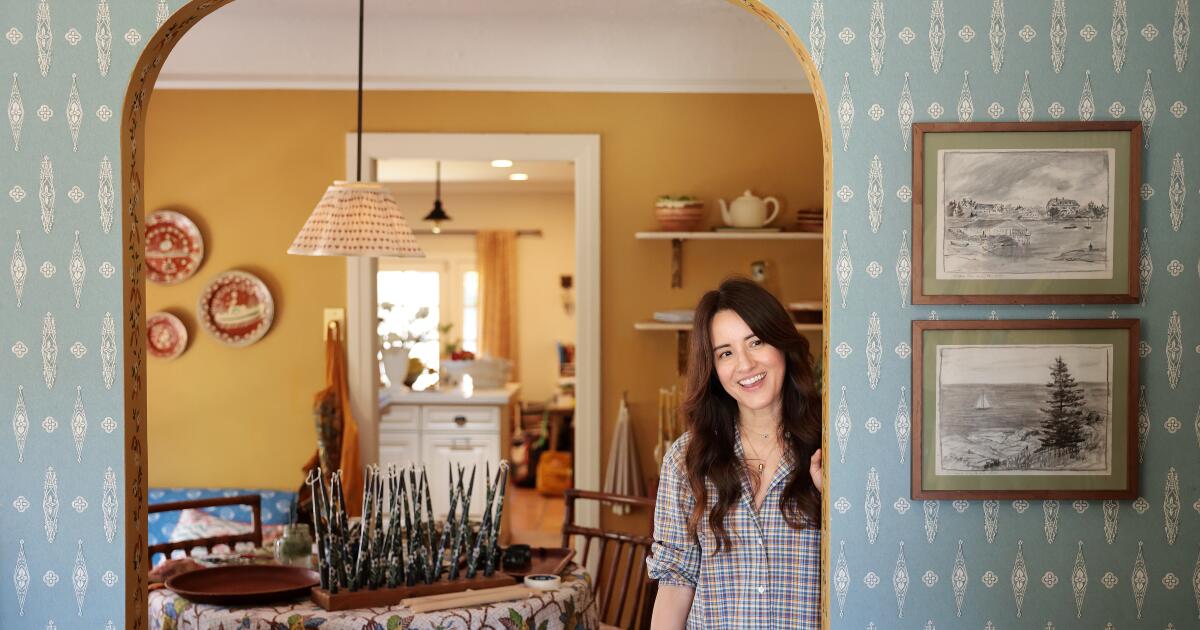
It was after the death of her son, Laith, that Esme Saleh decided to become a folk artist.
She had always been creative, experimenting with watercolors and learning to sew and embroider at a young age.
“I had a creative inkling,” she said, “but I never pursued it.”
Everything changed on Aug. 17, 2013.
In this series, we highlight independent makers and artists, from glassblowers to fiber artists, who are creating original products in and around Los Angeles.
When Saleh was nine months pregnant, she woke up with stomach pains and presumed she was in labor. She and her husband, Nasim, immediately went to the hospital, where doctors checked her and put the baby on a heart monitor. Saleh’s blood pressure was high, however, and the baby’s heart rate kept dropping. After about an hour, his heartbeat stopped. Doctors rushed her in for an emergency C-section, but it was too late. Laith did not survive.
Saleh lost a tremendous amount of blood and developed postpartum HELLP syndrome, a dangerous form of preeclampsia, but doctors were able to stabilize her.
When she woke up, the first thing she asked was, “How’s my baby?”

After losing her son in 2013, Esme Saleh left her job as a television producer. Since then, she has sold her hand-painted candles to local designers in Los Angeles and to LVMH in Paris.
“Aug. 17, 2013, was the most difficult day of my life, and Aug. 22 was the second most difficult, the day we drove home with an empty car seat,” she said of her and her husband’s new reality.
They named their son Laith Finn Saleh.
“His first name means ‘lion’ in Arabic. His middle name is an ode to Huckleberry Finn — sharp wit, kind heart, strong moral compass — all the attributes he’s imparted on us in spirit,” said Saleh, 45.
After such a devastating loss, she found it difficult to trust the world again. “It was hard to trust anything,” she said. “The medical system. Myself. It made me realize the fragility of bringing anything to life. We take so much for granted.”
So after years of working as a television producer, Saleh left broadcast journalism and leaned into her creative spirit.
She grew up in San Diego. Her mother was raised on a farm in Mexico, and her father moved from Tijuana to Los Angeles to be near her mother, who started working for a family in Sherman Oaks at 16. They eventually settled in San Diego, where Saleh’s father, now a church deacon, worked as a car salesman.


“The word Mystic has also become a driving force of what this journey means to me,” Saleh says. “A magical, otherworldly journey that has led me to some beautiful friendships, projects and unlimited well of curiosity. When I paint each pair of candles, it feels like I’m imparting a piece of that magic.”
“He always wanted to be a weatherman on TV,” she said, explaining how he hoped to get his big break on television by doing a weather report from the car lot.
Saleh wanted to be a broadcast journalist as her father had. After graduating from San Diego State, she interned in the sports department at CBS affiliate KFMB-TV although she didn’t know much about sports. She enjoyed sharing information with people, learned how to write plays of the week and felt she had found the right career.
But during a summer class at Mesa College, she started to think journalism might not be for her.


Saleh’s home is filled with her artwork. “My home expresses a lot of the things that I do,” she says. “If it works here, then I feel like I can put it out in the world.”
“I’m an empath — a sensitive soul — so when I was reading news about death and destruction, my eyes could not lie,” she said. Her professor told her, “This may not be your thing.” But when she arranged flowers on camera, she really came alive. She decided to work behind the scenes as a producer.
Her professor helped her get her first network news job in 2003, and she moved to Los Angeles, working on hard news and entertainment coverage.
After losing Laith a decade later, she couldn’t keep doing red-carpet interviews and acting like everything was fine. “It all felt so different, superficial and hard,” she said. “I felt like there was a bigger purpose out there for me. It’s in the small things that we find the big things.”
She started by painting folk art-inspired invitations for a friend’s baby shower. She painted delicate flowers, oranges and leaves on glass, leather and even lampshades. She created a logo. “I was just trying to say yes to things that were really scary,” she said. “Laith gave me the courage to do that.”

“I was just trying to get out of hole,” Saleh says of taking up painting after her son died.
Her first son, she said, became “a catalyst for painting.”
Then, at the first Thanksgiving during the COVID-19 pandemic when people could gather again, she had a light-bulb moment. “I was setting the table and didn’t have flowers or anything to add to decorate, so I thought, ‘I have these candles. I’m going to paint them and make them fancy,’ ” she said.
Her guests were impressed.
As time went on, painting taper candles helped her find joy again, and others noticed too.
“The one thing I hear when people pick up a pair of my candles is, ‘This makes me so happy. It makes me feel like there’s life here,’ ” she said.
1

2

3

1. Saleh sometimes leads painting workshops where participants can decorate items like ornaments and lampshades.
2. Leather napkin rings Saleh has painted for Nathan Turner. 3. Saleh’s hand-painted candles retail for approximately $42 to $50.
One of the hardest parts of losing a child “is that you’re not just grieving the person, you’re grieving the future you imagined with them,” said Chicago-based grief specialist Carla Harvey. “A lifetime of love suddenly has nowhere to go. Creating art doesn’t erase grief, but it can become a way to carry it.”
Saleh created her brand Mystic by Esme in 2021, but it took her some time before she could gather the courage to try to sell them.
When she brought a shoebox full of samples to Nickey Kehoe, the L.A. store agreed to carry her candles. “I was beside myself,” Saleh said.
“Her candles were absolutely beautiful, and she had a fantastic spirit that made selling them a no-brainer,” said interior designer Todd Nickey, co-founder of Nickey Kehoe.

Saleh gets a surprise kiss from her dog Olive while painting candles at her dining room table.
Saleh viewed her new side project as a way to earn extra money for piano lessons for her 11-year-old son Linus, who is an entrepreneur like his mother. “I felt proud painting the candles while he was in lessons in the next room,” she said. “It became this circular economy, and it led to bigger opportunities for me.”
Last year, luxury conglomerate LVMH commissioned Saleh to paint 465 pairs of candles, or 930 candles in total, for its Chaumet jewelry brand. The collection was unveiled at an elaborate event at the Abbaye des Vaux de Cernay, just outside Paris.
“It was fun,” Saleh said about the process, which took six months from conception to delivery. “I felt like I was dressing my candles up for a party.”
Always a hard worker, which she attributes to being a first-generation child of immigrant parents, Saleh has now created a candle collection for Pierce and Ward in Los Feliz, leather napkin holders for interior designer Nathan Turner and pomegranate wrapping paper for Olive Ateliers. The candles retail between $42 to $50 for a pair, and recently, she developed a handsome pewter candle shaver that will be released in the winter.

Her dining room can sometimes feel like “an assembly line,” Saleh says.

Saleh holds a pair of candles she has embellished with florals.
Occasionally, she leads painting workshops, and she loves helping others tap into their creativity. The most meaningful one for her was an ornament workshop attended by several victims of the 2025 Los Angeles wildfires. “Without saying anything, we understood each other,” she said. “I understood that they were trying to create memories.”
Saleh knows what it means for things not to last — “impermanence,” she calls it — whether it is homes, candles or life itself.
She paints every day in the art-filled dining room of her home (unless it’s Little League season), surrounded by her family, candles and her two dogs, Lennon and Olive. ”Painting is like meditation,” she said. “You can sit in your dining room and tune everything out and just be in the moment.”

Even the family’s summer bucket list receives an artistic flourish.

An arch inside Saleh’s home receives a personalized touch.
She knows painting candles isn’t new, but she believes her motivation and the care she puts into each candle makes them special beyond their looks.
She has learned to look at the world that way, that painting in her dining room has offered her healing and joy, that she can trust herself and her body, that continuing to be inspired by her two boys — “one in spirit and the other here on Earth” — means that Laith will always be with her.
Many people think healing means moving on, said grief specialist Harvey, but “it’s really about finding ways to move forward while keeping the people we love woven into our lives. That’s what I see in her candles, not an ending, but an ongoing relationship with her son.”
“I feel like my son is channeling through this medium,” Saleh said, her voice breaking as she painted a taper. “He’s whispering to me, ‘Mom, this is your path.’ That has been my driving force. We’re going to grow this together.”
Lifestyle
Terry Tempest Williams on why women with big ideas get labeled ‘crazy’ : Wild Card with Rachel Martin
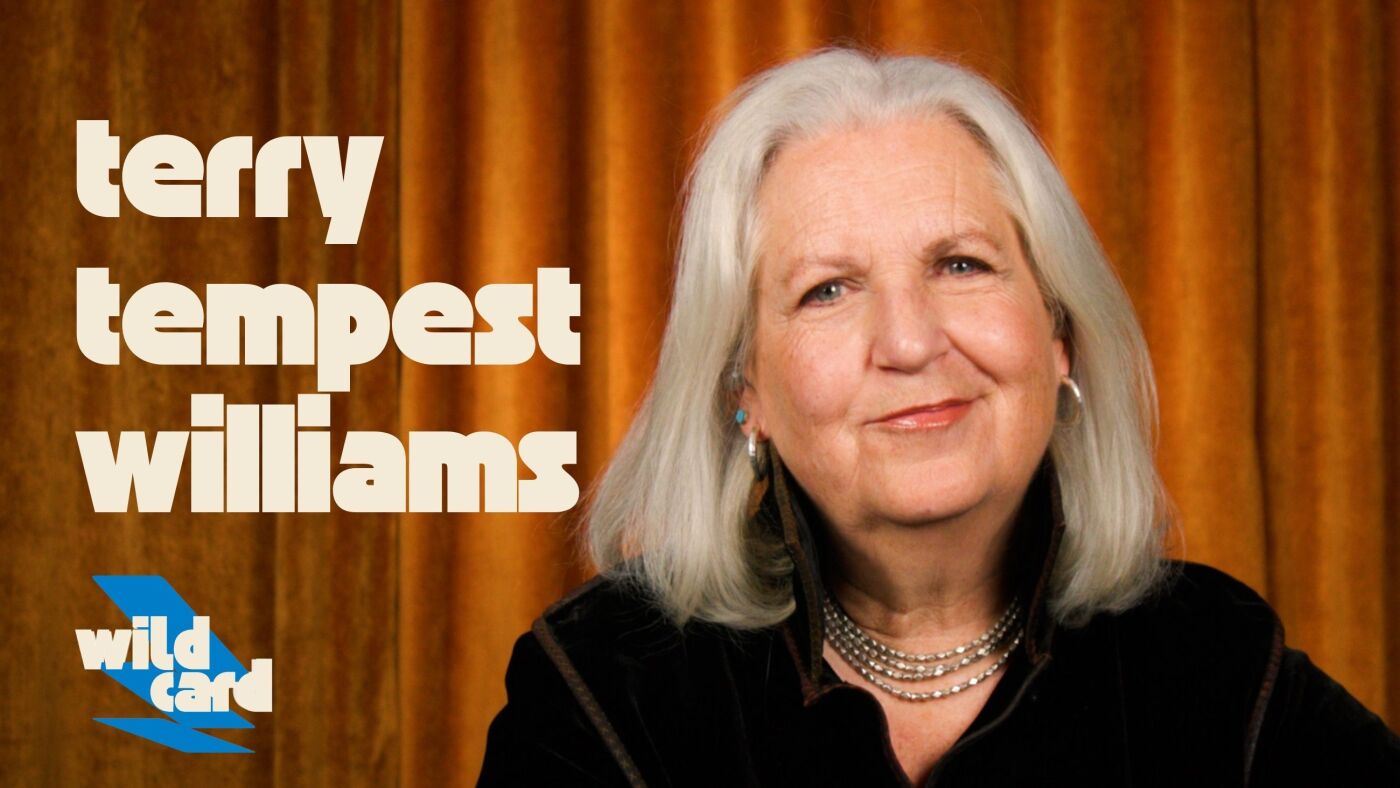
A note from Wild Card host Rachel Martin: I met Terry Tempest Williams about 25 years ago at a writer’s conference in Yosemite Valley. I was a young reporter who was there to do a story about how literature was addressing climate change and she made such a huge impression on me. I had never heard someone talk about the natural world the way Terry did and she had a spiritual depth I hadn’t encountered in my life at that point.
To this day, Terry’s writing always reorients me towards what is good, what is beautiful, and what is true. Her newest book is called “The Glorians.”
-

 Oregon5 minutes ago
Illicit massage businesses shut down in Washington County
-
Pennsylvania12 minutes ago
Man arrested over alleged antisemitic threats to Gov. Josh Shapiro | The Jerusalem Post
-

 Rhode Island15 minutes ago
Aquatic Weed Treatments Planned for 2 RI Ponds, 1 Lake
-

 South-Carolina20 minutes ago
South Carolina Lottery Pick 3, Pick 4 results for July 9, 2026
-

 South Dakota27 minutes ago
Iverson Ford Welcomes the 2027 Ford Expedition to Drivers Across Eastern South Dakota
-

 Tennessee30 minutes ago
Tennessee Highway Patrol holds open house at Jackson district office
-

 Texas42 minutes ago
Longhorns Daily News: Texas coach Steve Sarkisian named among Dodd Trophy watch list
-

 Utah45 minutes ago
Utah Jazz vs Washington Wizards recap: Darryn Peterson is only a man

