West
Trump admin squashes controversial Biden rule forcing foster homes to affirm children’s LGBTQ+ status

NEWYou can now listen to Fox News articles!
A rule implemented during the Biden administration, requiring prospective foster homes to prove they will support a child’s gender transition, or lesbian, gay or bisexual status, in order to retain federal funding, has been formally rescinded by the Trump administration Friday.
A Notice of Proposed Rulemaking (NPR) was published in the federal register Friday morning to formally rescind the 2022 rule titled, “Designated Placement Requirements Under Titles IV-E and IV-B for LGBTQI+ Children,” which a court in Texas already vacated in June.
The move follows a warning letter sent to all 50 states, telling them that as long as they receive federal child welfare funding, they are obligated to ensure the removal of any kid from their home must be grounded in “objective evidence of harm or imminent risk,” citing reports of states removing children from their parent’s homes because the parents disagreed with their children’s gender transition.
Assistant Secretary for the Administration for Children and Families Alex Adams told Fox News Digital that there has been a record year-over-year decrease in the number of foster families nationally. He said that the Biden-era rule is a main issue for religious-oriented families, boxing them out of the foster care system.
NEW YORK AG ORDERS MANHATTAN HOSPITAL TO RESUME GENDER-TRANSITION TREATMENT FOR TRANSGENDER YOUTH
President Donald Trump’s administration took a pair of actions this week to ensure parents and kids are not being impacted by LGBTQ activism by the foster care industry. (Getty Images)
“There’s 57 homes for every 100 kids that come into the system. We can do better, and we must do better, and we must do more to send a welcoming message that the red carpet will be rolled out to every family willing to step forward and welcome a child into their home and open their heart and open their home to these kids,” Adams said. “Your most likely families to raise their hand and volunteer as a foster family are those who have sincerely held religious convictions. So the message that you send is so important. The message we’re trying to send is we’re going to roll out the red carpet for everybody. We need more foster homes.”
By rescinding the move in the federal register, that “officially” takes it off the books, “so that nobody tries to breathe life into it,” according to Adams.
The final move to squash the 2022 rule, follows pressure the Trump administration had already been placing on states. At the end of last year, ACF sent a letter to 13 states, expressing concern about families being turned away from fostering because they refuse to give up their sincerely held religious beliefs. At least one of those states, Massachusetts, amended their policy amid the scrutiny.
It also follows a November 2025 executive order telling the Health and Human Services Department to “modernize” the foster care system within 180 days, maximize partnerships with Americans of faith, and a litany of other measures. Trump also issued early executive orders during his presidency challenging left-wing gender ideology and pushing a return to “biological truth.”
President Trump took on transgender activism early in his second term, including through Executive Order 14187, which prohibits sex-change surgeries for anyone under the age of 19. (Getty Images)
SUPREME COURT RULING ON SECRETIVE CALIFORNIA GENDER POLICY COULD RESHAPE PARENT RIGHTS FIGHTS NATIONWIDE
Public reports, including one as recently as this year, illustrate examples of kids being taken from their homes in states like California and Ohio, because their parents have been accused of abuse, or of denying appropriate medical care to their kids. These claims have also been brought up in divorce and family custody hearings as well, sometimes resulting in the parents losing custody.
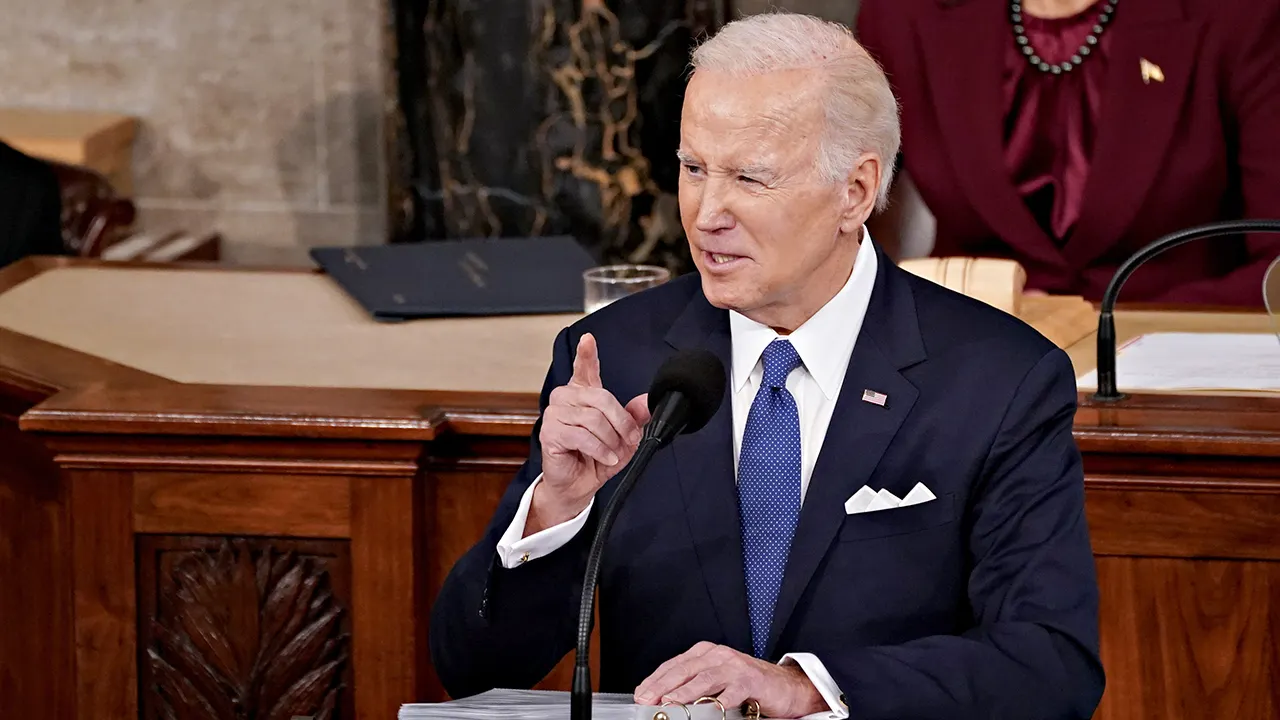
Meanwhile, Trump highlighted the issue during his State of the Union address last month, when he told the story of the parents to Sage Blair, who a judge ripped from their custody over alleged abuse after the family did not immediately recognize their daughter as a boy.
Sage Blair and her mother, Michelle Blair, stand in the gallery during President Donald Trump’s State of the Union address after he highlighted her case involving alleged school gender transition policies. (Pool)
Earlier in the week, Adams and ACF told states that while they have a duty to protect children from abuse and neglect, they are cracking down on any states conflating that with a parent’s choice about how they parent their child who expresses a desire to transition genders, or a desire to be romantically involved with the same sex. While related to Fridays NPR, it is a separate action.
CLICK HERE TO DOWNLOAD THE FOX NEWS APP
“We’re basically putting states on notice that if they violate our interpretation of abuse or neglect, we would take appropriate action, which could include pulling back CAPTA funds,” Adams told Fox News Digital.
Read the full article from Here



FILE – OpenAI CEO Sam Altman speaks during the OpenAI DevDay event on Nov. 6, 2023, in San Francisco, California. (Photo by Justin Sullivan/Getty Images)
SAN FRANCISCO – San Francisco police are investigating a fire caused by a Molotov cocktail overnight Friday at the home of OpenAI CEO Sam Altman, authorities and the company confirmed.
According to OpenAI, the suspect also made threats to the company’s San Francisco headquarters.
Fire at OpenAI CEO Sam Altman’s home caused by incendiary device
What we know:
Police say firefighters were called to the home near Jones and Leavenworth streets just before 4 a.m. Friday for a fire.
The fire occurred at an exterior gate of the home.
According to SFPD, the fire had “self-extinguished” by the time they had arrived, though officers found evidence of an incendiary device.
It’s unclear if Altman was home at the time.
“We deeply appreciate how quickly SFPD responded and the support from the city in helping keep our employees safe,” OpenAI said in a statement.
Police say the cause of the fire is now under investigation.
No injuries were reported.
Altman purchased his San Francisco home in 2020, according to the San Francisco Standard.
Threat to burn OpenAI headquarters in San Francisco
Dig deeper:
After throwing the Molotov cocktail at the home, police say the suspect then fled on foot.
A short while later, just after 5 a.m., officers responded to a business on the 1400 block of 3rd street, where a suspect was threatening to burn down the building.
Police say they identified the 3rd Street suspect as the same person who was at the home the hour before.
The suspect, only identified as a 20-year-old man, was then taken into custody.
Police say charges are still pending.
OpenAI is headquartered in San Francisco’s Mission Bay neighborhood at 1455 3rd Street.

OpenAI amends Pentagon deal, CEO Sam Altman says
OpenAI is revising its contract with the Pentagon following criticism that the agreement could enable mass surveillance of Americans.
According to Axios, CEO Sam Altman sought to add explicit protections against monitoring Americans.
The Source: San Francisco Police Department and OpenAI

A seismic shift has come to the Colorado Rockies.
The Penner Sports Group, which owns a controlling interest in the Denver Broncos, has joined the Rockies ownership group in a move that will have a major impact on Colorado’s Major League Baseball franchise. Rockies chairman and CEO Dick Monfort and owner/general partner Charlie Monfort announced the move on Friday.
Penner Sports Group — the family entity of Greg and Carrie Walton Penner that holds a large stake in the Broncos — now becomes the largest minority partner of the Rockies. Sources told The Denver Post that the Penners are purchasing a 40% share of the Rockies.
Greg Penner will remain CEO of the Broncos, and fellow primary owner Carrie Penner, his wife, will continue on in her various roles with the team. The Penners will have no day-to-day involvement running the Rockies, a source said.
“We are excited to expand our commitment to the Denver sports community through a minority partnership with the Colorado Rockies,” the Penners said in a prepared statement. “This investment from Penner Sports Group reflects our deep appreciation for what the Rockies mean to this region, the passion of their fans and our confidence in the future of the franchise.”
According to Forbes, the Rockies are valued at $1.68 billion, ranking 25th among Major League Baseball’s 30 teams. The Penner Sports Group’s investment has been formally approved by MLB.
The Penner’s investment will help the Rockies become a bigger player in baseball’s current, uneven financial landscape, in which big-market teams like the Los Angeles Dodgers and New York Yankees outspend mid-market teams like the Rockies.
Renck: Rockies hit a home run for Colorado fans by bringing in Broncos owners
According to the Rockies, the Penners’ investment allows the franchise to retire all outstanding debt and provides additional capital for the team.
Dick Monfort will continue in his role as chairman and CEO, Charlie Monfort will remain as owner/general partner, and Walker Monfort (Dick’s son) will remain as the club’s president, running day-to-day operations.
“Speaking personally, on behalf of Charlie and our family, our other partners and the organization, we’re excited to welcome Greg and Carrie Penner into the Colorado Rockies ownership group,” Dick Monfort said in a statement. “I’ve had the pleasure to build a strong relationship with Greg and Carrie over the past few years. For many reasons, including their recent success with the Broncos, we know we are gaining much more than just financial support in this partnership with Penner Sports Group.
“Greg and Carrie have proven that they share the same passion for our region and a strong commitment to compete at the highest level. We are thrilled to add them to the Colorado Rockies’ ownership group as we best position this franchise for long-term sustained success.”
Negotiations between the Monforts and Penner have been ongoing for months, sources told The Post.
The Walton-Penner Family Ownership Group, led by Greg Penner, Carrie Walton Penner, and Rob Walton, purchased the Broncos for $4.65 billion in August 2022. The Broncos are in the early in the process, but knee deep on the way to building a new stadium and entertainment complex at Burnham Yard.
“Our family’s had such a positive experience with the Broncos, reinforcing our interest in partnering with another team in this dynamic sports market,” the Penners said. “We’ve enjoyed getting to know the Monforts and are grateful to join Dick and Charlie in the Rockies’ ownership group along with the other partners.
“While our focus remains firmly on the Broncos, we look forward to being supportive, long-term partners of the Rockies and Major League Baseball.”
Dick and Charlie Monfort became the Rockies’ majority owners in 2005. Forbes first valued the Rockies in 1998, just five years after their inception, at $303 million. Since then, the club has appreciated by more than 450%.

Lucha Luna
Brilla Brilla
(Self-Released)
One of Seattle’s most interesting new groups, Lucha Luna consists of vocalist Eva Vazquez and percussionist/synth manipulator Thomas Arndt. You may know Arndt as percussionist for exceptional eclecticists Day Soul Exquisite and Vazquez for her time in Toxic Tears and Savi. On their debut album, Brilla Brilla, they team up for a tantalizing fusion of reggaeton, punk, cumbia, and EDM.
In a 2024 Slog post on Day Soul Exquisite, Arndt revealed their immersion in Brazilian music, and the intro to opening track “Ritmo Eternal” appears to contain an arresting riff on berimbau, a single-stringed Afro-Brazilian instrument that produces a wonderfully warped twang. Eventually, a beautifully eerie keyboard melody sparkles over a menacing yet celebratory rhythm and synth bass, as Vazquez sings in Spanish with steely resolve. Throughout these seven songs, she’s a commanding presence on the mic, ranging from punkish agitation to heart-fluttering featheriness. “Manzana Prohibida” is as exhilaratingly tense as PiL circa Metal Box, as Vazquez sings with a gripping urgency. On “Camino por la Noche,” unusual, metallic percussion timbres and ill Roland 303 blurges cohere into a vibrantly dirge-y cumbia white-knuckler. With its superb dynamics and arrangements, interesting array of instruments, and extranjero percussive timbres, “Camino por la Noche” exemplifies Lucha Luna’s specialness.
A lot of Latin-diaspora music sounds cloyingly cheerful (I know, it’s a me problem), but Lucha Luna add a welcome degree of edginess and distortion to these styles. They excel at threading post-punk darkness with Latin American rhythmic sabor. There just isn’t much in Seattle that sounds like Lucha Luna. ¡Respeto!
Black Viiolet
Dark Blue
(Adrenalin Fix)
Nicole Laurenne plays organ and sings with the Darts, a femme-powered Seattle quartet who kick garage rock into vibrant new life with fishnet-stocking-clad legs, as evidenced by their new album, Halloween Love Songs. But moonlighting as Black Viiolet, the multi-instrumentalist/songwriter goes off on a radical tangent into torch-song trip-hop.
Like an American Amy Whitehouse fronting a jazz-loving Morcheeba, Black Viiolet traipses into familiar territory, but she imbues Dark Blue’s songs with alluring mystique and lyrics informed by the ache of being away from your new lover while you’re doing something you love, i.e., touring. Laurenne wrote these 13 tracks in the Darts’ van while on the road, and you can feel the longing in them. Absence makes the words burn brighter.
Laurenne’s nuanced singing—which would make the late David Lynch stub out his cigarette with gusto and pay close attention—dominates, but her deft keyboard playing and beatmaking elevate the music to the top 10 percent of this overcrowded field. Drummer Gregg Ziemba, double bassist Evan Strauss, trombonist Basile Conand, trumpeter Jean-Gatien Pasquier, and saxophonist Paul Cadier fill out the noir-ish portraits with restrained, impressionist daubs and a soupçon of funk. The result makes any listener feel way more sophisticated and rich than they have a right to. Even Dwarves’ notorious hell-raiser Blag Dahlia appears on vocals and arrangement on a remix of the elegantly lubricious “One” and can’t break the enchanting spell.
Seattle-area musicians can send music to NewSeattleMusic@TheStranger.com for possible coverage.
Related

This everyday drinking pattern could quietly raise liver disease risk

Minor league team plates 10 runs in one inning on just one hit, zero errors in frigid conditions

Google search led to a costly scam call

Blank Street lands on the West Coast

Review: ‘You, Me & Tuscany’ is an Italian rom-com fantasy, empty carbs but delicious

Florida High School Football Rankings: Top 25 teams – Oct. 21

How old is Bo Nix? What to know about Oregon quarterback ahead of 2024 NFL Draft

Cleary's 21 help Le Moyne down Central Connecticut State 69-64 in OT

99th annual Pony Swim held in Virginia

Indiana Members Credit Union announced as new anchor tenant at Bottleworks District

NASA’s Artemis II prepares for splashdown on Earth

Trump proposes painting executive office building white

Rep Randy Fine joins House Freedom Caucus: ‘Strongest group of conservative patriots in Congress’

Trump issues NATO ultimatum to reopen Strait of Hormuz ‘within days’

Women are getting most of the new jobs. What’s going on with men?
-

 Atlanta, GA6 days ago
1 teenage girl killed, another injured in shooting at Piedmont Park, police say
-

 Movie Reviews1 week ago
Vaazha 2 first half review: Hashir anchors a lively, chaos-filled teen tale
-

 Education1 week ago
Video: YouTube’s C.E.O. on the Rise of Video and the Decline of Reading
-

 Georgia3 days ago
Georgia House Special Runoff Election 2026 Live Results
-

 Education1 week ago
Video: Toy Testing with a Discerning Bodega Cat
-

 Pennsylvania4 days ago
Parents charged after toddler injured by wolf at Pennsylvania zoo
-
 Milwaukee, WI4 days ago
Potawatomi Casino Hotel evacuated after fire breaks out in rooftop HVAC system
-
 Entertainment1 week ago
Inside Ye’s first comeback show at SoFi Stadium