West
Todd Snider cancels tour following hospital arrest after alleged ‘violent assault’ in Salt Lake City

NEWYou can now listen to Fox News articles!
Todd Snider canceled his tour after sustaining “severe injuries as the victim of a violent assault” in Utah, his team stated online.
Snider, 59, called off his High Lonesome and Then Some Tour after the alleged assault and was treated at Holy Cross Hospital, NBC News reported. He was allegedly discharged against his will.
After his hospital stay, the “Just Like Old Times” singer allegedly returned to the medical center and was arrested on suspicion of disorderly conduct, trespassing and making a violent threat, according to the Salt Lake County Sheriff’s Office.
COUNTRY STAR GAVIN ADCOCK FALLS OFF STAGE DURING CONCERT
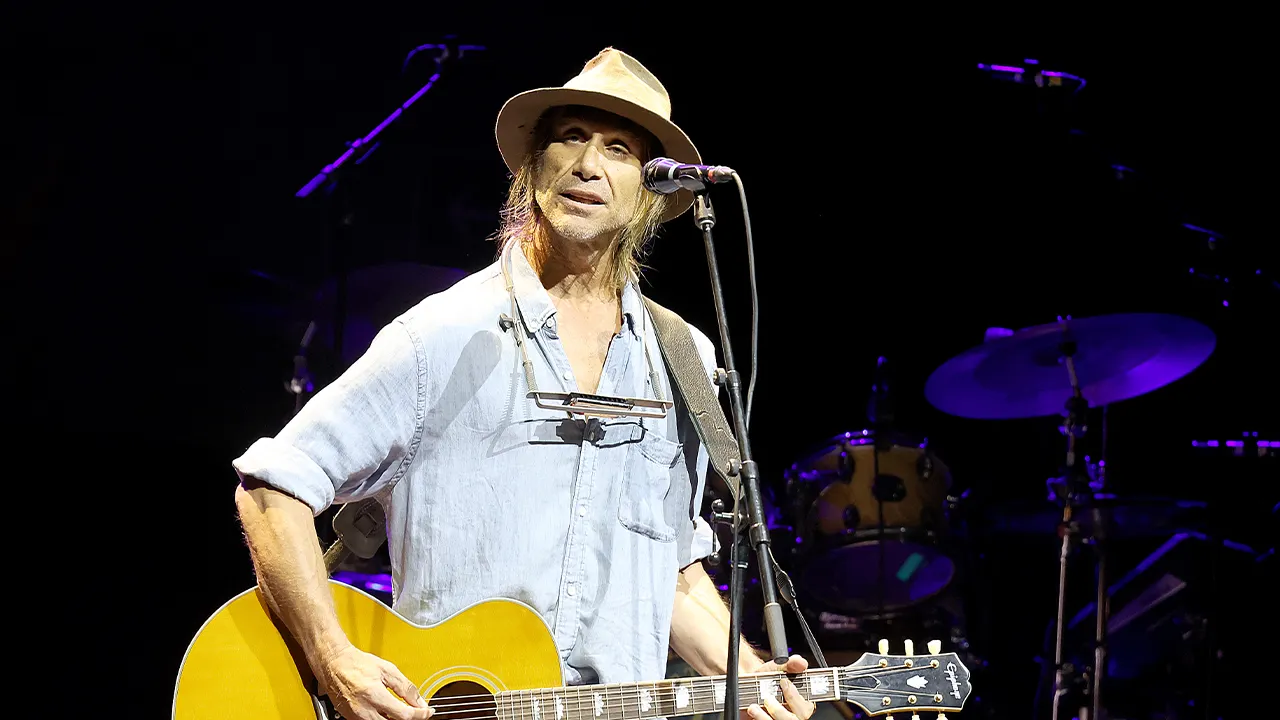
Todd Snider canceled his tour after an alleged violent assault and arrest in Salt Lake City, Utah. (Gary Miller)
“We are heartbroken to announce the cancellation of the High, Lonesome and Then Some 2025 Tour dates,” Aimless Inc. shared on Snider’s profile.
“Ahead of Todd Snider’s show in Salt Lake City, Todd sustained severe injuries as the victim of a violent assault outside of his hotel.
LIKE WHAT YOU’RE READING? CLICK HERE FOR MORE ENTERTAINMENT NEWS
“Todd will be unable to perform for an undetermined amount of time. We deeply apologize for the cancellation and any inconvenience it causes.
APP USERS CLICK HERE TO VIEW POST
“We appreciate your understanding as Todd receives needed medical treatment. We hope to have more information on new dates soon.”
Snider’s representatives did not immediately respond to Fox News Digital’s request for comment.
Salt Lake City police told the outlet they were investigating “an alleged assault of a 59-year-old male at the Commonwealth Room,” where Snider had been slated to perform.
After his hospital stay, Snider allegedly returned to the medical center and was arrested on suspicion of disorderly conduct, trespassing and making a violent threat, according to the Salt Lake County Sheriff’s Office. (Rick Kern)
Det. Michael Ruff told the outlet Snider had “returned to the hospital and made threats that he was going to assault members of the staff.
“By this point he had been treated and released.”
Snider embarked on his tour last week in Colorado. The “Too Soon to Tell” musician was set to perform in Phoenix Monday with a stop in Hollywood Tuesday and a handful of West Coast dates scheduled for later this month.
It’s unclear if and when the tour will resume.
CLICK HERE TO DOWNLOAD THE FOX NEWS APP
Read the full article from Here



McMinnville man John Nelson rescued in Mount Jefferson Wilderness
Retired McMinnville doctor John Nelson was rescued from the Mount Jefferson Wilderness after going missing, the Marion County Sheriff’s Office said.
Beaches from Tillamook Head to the Columbia River will close to razor clam harvesting on July 15.
The closure happens annually on all Clatsop County beaches, an 18-mile stretch of Oregon’s northernmost coast, to allow juvenile razor clams a summer growth window.
The harvest is expected to resume on Oct. 1, “unless there is a closure for toxin levels,” the Oregon Department of Fish and Wildlife explained.
According to ODFW shellfish biologist Matt Hunter, 90% of Oregon razor clams are harvested along this stretch of coast. The closure, first established in the late 1960s, protects juvenile razor clams that utilize the summer months to feed on phytoplankton – a staple food source.
The closure doesn’t apply to razor clams below Clatsop beaches. Alternative harvesting spots include Agate Beach, Waldport Beach, Whiskey Run Beach and Meyers Creek Beach. Bay clams and muscles will remain open for harvesting.
A shellfish license is required to harvest clams and crab in Oregon. Clammers must have their own container and dig for their own clams. The daily limit is 15 clams, regardless of size or condition.
Before clamming, people should call the Shellfish Biotoxin Hotline at 1-800-448-2474 or check ODFW’s recreation report for biotoxin closures.
Riley Ellis is an outdoor intern at the Statesman Journal. He can be reached at rellis@statesmanjournal.com.

Not only the Utah that we are today, but the Utah that we can choose to become.
(Rick Egan | The Salt Lake Tribune) Gabriel Meneses makes one of the limited edition flags for the United States 250th anniversary at Colonial Flag in Sandy on Monday, June 1, 2026.

Jazz Chisholm Jr. hit a two-run homer in the ninth inning to lift the New York Yankees over the Washington Nationals 5-3 on Friday night.
WASHINGTON (AP) — Jazz Chisholm Jr. hit a two-run homer in the ninth inning to lift the New York Yankees over the Washington Nationals 5-3 on Friday night.
The Yankees and Nationals rank 1-2 in the major leagues in home runs, and all but one run in this game came via the long ball. Ben Rice hit his 29th of the season for the Yankees, and Jasson Domínguez and Austin Wells also went deep for New York.
Keibert Ruiz and James Wood homered on consecutive pitches in the seventh to give Washington a 3-2 lead, but in the ninth, the Nationals brought in left-hander Matt Krook — who had allowed 22 earned runs in 12 2/3 big league innings dating to 2023. Krook (0-1) yielded a one-out single by Domínguez, and Chisholm followed with his 13th homer.
Wells added a solo shot off Justin Lawrence to make it 5-3.
David Bednar (3-3) won in relief, working the final two innings. The Yankees remained four games behind first-place Tampa Bay in the AL East.
Rice homered in the first off Carson Palmquist, but the New York designated hitter fouled a pitch off his right leg in the fifth and was shaken up. He was able to stay in the game.
By that time, Domínguez had given the Yankees a 2-1 lead with a homer off Zack Littell (8-6) in the fourth.
The game was delayed two hours at the start, and a wet field might have prevented Washington from tying it in the sixth. New York starter Ryan Weathers allowed a one-out double to CJ Abrams. Then Jacob Young followed with a single. Abrams looked likely to score, but he slipped rounding third and had to stay there.
Fernando Cruz then replaced Weathers and struck out the next two hitters to strand both runners.
New York’s Paul Goldschmidt singled in the first to snap an 0-for-34 drought, and he also reached on an infield hit in the sixth.
Amed Rosario of the Yankees struck out in all three of his plate appearances and made two errors at third base before being lifted for a pinch-hitter.
Up next
Cam Schlittler (9-5) was scheduled to start for New York on Saturday against Miles Mikolas (3-7) of the Nationals.
___
AP MLB: https://apnews.com/hub/mlb
Copyright
© 2026 The Associated Press. All rights reserved. This material may not be published, broadcast, written or redistributed.
-

 Oklahoma19 seconds ago
How Will Oklahoma Softball Benefit From SEC Revenue Distribution?
-

 Oregon5 minutes ago
Razor clam harvesting set to close soon on north Oregon Coast
-

 Pennsylvania12 minutes ago
Pennsylvania Wins “Best in Show” at The Great American State Fair – Tri-State Alert
-

 Rhode Island15 minutes ago
How Federal Hill became Rhode Island’s iconic Little Italy food hub
-

 South-Carolina20 minutes ago
Editorial: SC Legislature left DUI and THC bills for dead; DUI restrictions can be revived
-

 South Dakota27 minutes ago
South Dakota GFP Commission Holds July Meeting
-

 Tennessee30 minutes ago
Forward Chris Washington Talks First Month With Tennessee Basketball | Rocky Top Insider
-

 Texas35 minutes ago
Texas Man Finds Hidden GPS Tracker in His New Truck: “They Didn’t Want Me To Find This”

