Seattle, WA
Drayer: Seattle Mariners weren't done – How Polanco addition fits


After the Seattle Mariners’ trades that brought in Mitch Haniger, Anthony DeScalfani and Luke Raley to the Seattle Mariners three weeks ago had been completed, there was a clear air of relief in a reply to a question posed to president of baseball operations Jerry Dipoto.
Mariners Trade Breakdown: Who is new 2B Jorge Polanco?
“I feel like today is the first time all offseason that we can say if we were playing the opening day game tomorrow, we feel good about the team that we have,” Dipoto said in the media call later that Jan. 5 evening. “It’s a complete team.”
While some interpreted that as “the Mariners are done this winter,” in reality it was a statement of fact – and a significant accomplishment given the turn the offseason had taken early on, with Dipoto and general manager Justin Hollander needing to subtract from the roster before they added due to financial constraints.
For the vast majority of the offseason there were missing pieces – vital pieces. And no, the plan was not to just fill them with utility players. Nonetheless, it was an uncomfortable place to be.
On Jan. 5, they felt they could at least field a good team with the numbers adding up at most positions, some via the platoon, but the hope was they could add.
The target: Jorge Polanco.
Mariners make trade with Twins for All-Star Jorge Polanco
“He’s a guy that we have liked and tried to acquire for years,” said Hollander. “I think I personally made more calls on this trade than I ever have on any trade before at the behest of both my own want to add him to our group, so a really big day for us. (I) feel like it makes us a lot better and excited to add him.”
The addition of the switch-hitting Polanco at second base will eliminate a planned platoon at that position, likely moving it to third base where the platoon can be better utilized with Luis Urías and Josh Rojas.
Instant Reaction: Drayer with Wyman and Bob on trade for Polanco
“The switch-hit is huge for us the way our team is constructed,” said Hollander. “To have a guy who’s platoon neutral who can hit in the middle of our lineup from either side is a big advantage for Scott (Servais) as he stacks the lineup up to be able to go left, right, switch.”
Polanco, who hit primarily in the top three spots of the order for the Twins in recent years, could slide into the No. 3 spot for the Mariners, solidifying the top of the order before mixing and matching through the middle. The addition gives length to the lineup, and it builds a stronger bench. One of Mitch Haniger, Dominic Canzone or Luke Raley will be available off the bench each night, plus utility player Dylan Moore, catcher Seby Zavala, and Rojas or Urías.
The addition did come at a price both in the immediate and perhaps future, though, with outfielder and top-100 prospect Gabriel Gonzalez and pitching prospect Darren Bowen included in the trade. Off the big league roster, the Mariners could afford to lose the recently acquired DeScalfani, but key reliever Justin Topa will need to be replaced.
“I definitely do want to take a moment to praise Topa on this call,” Hollander said to the media Monday night. “Justin Topa was awesome for us last year. From Day 1 of spring training, he showed up. He was open to coaching, he was open to new ideas, worked his butt off to make sure he stayed on the mound every day. He was available to us and got huge outs for us all year long. Topa was great, we’ll have to replace that. I think it most likely will be internally with a possibility, like always, that we could add externally as well.”
The bullpen does appear to be thin in established talent, but a strength of the Mariners in recent years has been in uncovering pitching gems. Is the next Topa or even Paul Sewald in the current group of spring training invitees? There are candidates with Jackson Kowar, Carlos Vargas and Prelander Berroa all possessing stuff, though none have yet put it together at the big league level.
Time will tell how it all shakes out, but on paper – multiple projection systems ranked the Mariners second in the division before Monday’s trade – this team is better than the team that finished last season.
Pitchers (and it’s very worth noting the starting five was kept intact) and catchers report to spring training in just over two weeks.
More on the Seattle Mariners
• Mariners sign utility player who is married to Hollywood star
• Baseball America’s Glaser: Mariners prospect Emerson ‘on a rocket’
• Video: Grading Seattle Mariners’ offseason with Mike Salk and Shannon Drayer
• Close Look: Two Mariners legends set to enter Baseball Hall of Fame race
• The fun story of how Cal Raleigh heard about Haniger’s Seattle Mariners return



SEATTLE – Wednesday will be another warm day with highs in the mid to upper 80s for parts of western Washington. Eastern and central Washington will reach near 100F with high fire danger. The coast and north interior will be cooler, only in the 60s to 70s.
Wednesday will be another warm day with highs in the mid to upper 80s for parts of western Washington.
Fire Weather Watch
A Fire Weather Watch goes into effect Wednesday evening through Thursday evening for thunderstorms and gusty winds. Lightning strikes could create new fire starts and, with very dry conditions in place, any new fire could spread quickly.
A Fire Weather Watch goes into effect Wednesday evening through Thursday evening for thunderstorms and gusty winds.
What’s next:
An upper level low will move into the Pacific Northwest, bringing scattered showers and a chance of thunderstorms. The heaviest showers will be in the morning hours and will turn more scattered into the evening hours.
An upper level low will move into the Pacific Northwest, bringing scattered showers and chance of thunderstorms.
Looking Ahead:
High pressure will build again Friday and into the weekend, increasing temperatures and sunshine. We will start to see highs reach the upper 80s to low 90s by early next week.
High pressure will build again Friday and into the weekend, increasing temperatures and sunshine.
MORE NEWS FROM FOX 13 SEATTLE
6-year-old Bellingham, WA boy dies from injuries after beach driftwood accident
Grandmother thwarts Pike Place kidnapping, Seattle police make arrest
‘Transfer Fire’ near Lake Chelan, WA hospital prompts evacuation notices
Here’s where WA wildfires are currently burning
Seattle office vacancy crisis shifts tax burden onto homeowners
Thurston County, WA couple desperate to find dog after Rover sitter vanishes
Husband of pregnant wife killed in Seattle sues King County homeless authority
To get the best local news, weather and sports in Seattle for free, sign up for the daily FOX Seattle Newsletter.
Download the free FOX LOCAL app for mobile in the Apple App Store or Google Play Store for live Seattle news, top stories, weather updates and more local and national news.
The Source: Information in this story came from the FOX 13 Seattle Weather Team and the National Weather Service.

After so many disappointing seasons with the interior offensive line, the Seattle Seahawks made a commitment last offseason to improve the unit. They started one big step at a time by drafting North Dakota State guard Grey Zabel in the first round, 18th overall pick, of the 2025 NFL Draft. This one was one of the last steps for the Seahawks to create one of the most productive offenses in the NFL.
Zabel wasn’t perfect in his rookie season, but he was good enough to validate the decision to draft him in the first round, and he showed improvement. Zabel is already a favorite among some Seahawks fans and some media outlets as they love his determination and spirit. It was a big jump from the FCS collegiate level to the NFL and this season, he has a chance to show why he might be a top-half-of-the-league guard.
Why Zabel Could Be Ranked Higher?
The Seahawks wanted a determined workhorse when looking for a guard. That’s exactly what they got in Zabel. Last season, he appeared in 1,051 snaps, which is only 10 fewer snaps than right tackle Abraham Lucas, who had the most offensive snaps. Zabel got better as the season progressed. Pro Football Focus gave him an overall grade of 81.5 and a run-block grade of 81.2 in Week 14 through the NFC Championship Game.
There were times last season when he looked like a monster against several defenders. He was pushing some defenders completely out of the way on pulling plays and even ran to defenders after the pass-catcher caught the ball. This is the mentality the Seahawks expect him to have going into his second season in the league. He has more experience and the complete trust of the team to be a franchise player on par with Lucas and left tackle Charles Cross. If he continues to improve, he will be another steal for the Seahawks.
Why Zabel Could Be Ranked Lower?
There were times last season when he didn’t quite catch up to the learning curve of the NFL. Zabel allowed two sacks, four hits and 24 pressures in 2025. The Seahawks expect those numbers to decrease significantly as he is experienced and capable of playing at an efficient level. While Zabel is impressive, he might not be the best player the Seahawks have selected in the 2025 NFL Draft. That honor belongs to slot cornerback Nick Emmanwori, who is stepping up to be the steal of the draft.
Zabel is easily one of the best second-year players and is one of the top offensive linemen, but there are players behind him because they haven’t proven to be consistently explosive for the Seahawks. There is going to be even more pressure on him this upcoming season. The Seahawks hired a more run-friendly coach in Brian Fleury as offensive coordinator. His ranking at the end of the season might be much better if he improves, or worse if he fails to reach expectations.
— Enjoy free coverage of the Super Bowl champions from Seattle Seahawks On SI —
Sign Up For the Seahawks Daily Digest – OnSI’s Free Seattle Seahawks Newsletter
Add us as a preferred source on GoogleFollow

SEATTLE – High pressure continues early this week, leading to more sunshine and warmer afternoon temperatures. Skies will be sunny, warm and dry through the middle of the week.
High pressure continues early this week, leading to more sunshine and warmer afternoon temperatures.
What’s next:
Highs today in the low to mid 80s for parts of western Washington, with highs in central and eastern Washington getting close to 100 degrees. The coast and northern interior will remain in the 70s with mostly sunny skies.
Highs today in the low to mid 80s for parts of western Washington.
Fire Risk Levels
The Fire Risk Levels this week will continue to elevate as we see warming temperatures and increased chance of thunderstorms. East of the cascades is already dry and warm, so the increased chance of new fire starts will be something to watch with the storms.
The Fire Risk Levels this week will continue to elevate as we see warming temperatures and increased chance of thunderstorms. (FOX 13 Seattle)
Looking Ahead:
Temperatures will continue to warm for western Washington through midweek, before we see another low pressure system swing inland Thursday. This low will increase changes of showers and isolated thunderstorms on Thursday, and temperatures will be back to normal for this time of year. This cool down is short-lived as high pressure builds again and highs warm back up into the 80s by the weekend.
Temperatures will continue to warm for western Washington through midweek, before we see another low pressure system swing in Thursday.
MORE NEWS FROM FOX 13 SEATTLE
Seismologists track 100 earthquakes of magnitude 4.5 or greater
6-year-old Bellingham, WA boy dies from injuries after beach driftwood accident
Grandmother thwarts Pike Place kidnapping, Seattle police make arrest
‘Transfer Fire’ near Lake Chelan, WA hospital prompts evacuation notices
Here’s where WA wildfires are currently burning
Seattle office vacancy crisis shifts tax burden onto homeowners
Thurston County, WA couple desperate to find dog after Rover sitter vanishes
Husband of pregnant wife killed in Seattle sues King County homeless authority
To get the best local news, weather and sports in Seattle for free, sign up for the daily FOX Seattle Newsletter.
Download the free FOX LOCAL app for mobile in the Apple App Store or Google Play Store for live Seattle news, top stories, weather updates and more local and national news.
The Source: Information in this story came from the FOX 13 Seattle Weather Team and the National Weather Service.
-

 Utah4 minutes ago
Muslim man in Utah was targeted in stabbing because of his religion, police say
-

 Vermont11 minutes ago
Hazy, hot, and humid: Wildfire plumes give southern Vermont skies an odd glow
-

 Virginia16 minutes ago
Five charged after Virginia Beach Police conduct human trafficking operation
-

 Wisconsin29 minutes ago
Flood relief grant applications now open for nonprofits, churches in Northeast Wisconsin
-

 West Virginia34 minutes ago
New law allows employers to provide benefits for independent contractors in West Virginia
-

 Wyoming40 minutes ago
Election Q&A: Jessica Crowder for Wyoming House District 43
-

 Crypto47 minutes ago
Blackrock Becomes World’s First $15 Trillion Asset Manager, Unleashes Tokenization Blitz
-
 Finance52 minutes ago
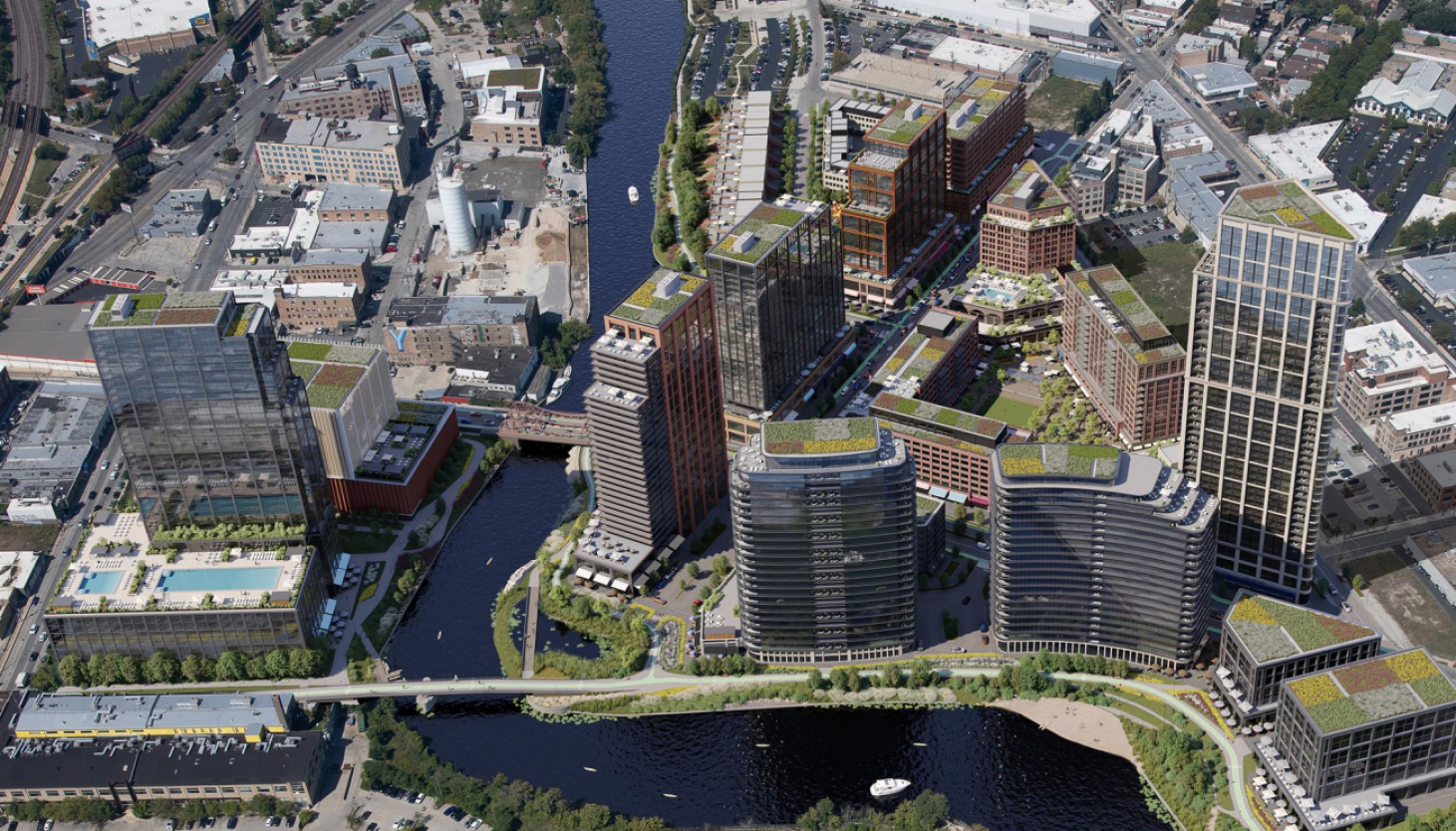
Big financing steps forward for The 78, Foundry Park projects

