San Francisco, CA
The photographer who captured Black San Francisco in the 1960s: ‘We wouldn’t have seen it without him’


David Johnson saved a portrait he took as a teen of his younger brother and a relative while they were growing up in segregated Florida in the 1940s.
Johnson, who was the only person who could read and write in his household, knew nothing about photography then, he recalled in 2017, but something told him that one day he would be a photographer.
His decision would prove to be prescient. Johnson’s interest in the field led him to San Francisco in the 1940s, where he would become the first Black student of Ansel Adams, an accomplished documentarian of the city’s Black community and an activist.
Johnson captured iconic images of the Fillmore district, a thriving community for San Francisco’s Black residents before they were forced out by government “redevelopment” initiatives in the 1960s. He also documented the civil rights movement, including the 1963 March on Washington, and photographed high-profile figures such as WEB Du Bois, Langston Hughes, Thurgood Marshall, Nat King Cole and Eartha Kitt.
“He was quite a man,” Candace Sue, Johnson’s stepdaughter, said in an interview. “There are very few people who in their lifetime can achieve even one of the things he managed to achieve in his 97 years.”
Johnson died last month at age 97, but lived to see a renewed appreciation for his work. In recent years, Johnson’s photos were inducted into the Library of Congress and the Bancroft Library at the University of California, Berkeley, and featured in an exhibit at city hall. The Bancroft is home to Johnson’s archive, which serves as a primary source material of the era.
“[Johnson] is this great story of when a masterpiece finally finds its moment,” said Christine Hult-Lewis, the library’s pictorial curator.
Ansel Adams told him: photograph what you know
Johnson, born in Jacksonville, Florida, in 1926, was interested in photography from an early age. He got his first camera as a prize for selling magazine subscriptions as a teen, he said in an interview at the Bancroft Library in 2017.
He fell in love with San Francisco when he visited after being drafted into the US navy during the second world war. When his service was over, Johnson knew he wanted to study photography and wrote to Ansel Adams, who was overseeing a program at the California School of Fine Arts.
“[I] wrote a telegram and said ‘Dear Mr Adams, I’m interested in studying photography. And by the way I’m a Negro.”
Most schools in the south didn’t admit Black students, and Johnson didn’t want to travel across the country only to be turned away. “I had to cover my bases,” he said.
When a spot opened up, Adams offered him admission to the program and invited Johnson to stay with him until he could find a place to live. He was met by the acclaimed photographer Minor White, who would become his mentor. White and the other photographers around Adams’ home at the time wanted him to have a better camera and pooled together their old equipment, Jackie Sue Johnson, Johnson’s wife, told the Guardian.
“He was thrown in a group of people that didn’t look like him – they were all white, but they gave David all of their equipment that they weren’t using,” she said. “They taught him a lot. They just took him and really supported him.”
Adams and most of the other photographers were interested in nature, Jackie Sue Johnson recalled, but that was never David’s passion. “He didn’t have a car, and if he had a car he didn’t have gas money, so he couldn’t go to Yosemite and Muir Woods and take this wonderful nature photography.”
White and Adams told him to photograph what he knew. “What David knew is he knew his people,” said Jackie Sue Johnson, who along with her husband authored a book on his life.
Johnson headed to the Fillmore. Sometimes called the Harlem of the West, the Fillmore also had a thriving jazz scene before redevelopment ousted thousands of people. He remained in the neighborhood for years, and went on to work as a photojournalist.
His work centered people – a couple dancing close in a juke joint, men chatting outside a record shop and, in one of his favorite photos, a little boy in a cap sitting on steps.
“The pictures have this real poignancy of a place that just doesn’t exist in the same way any more,” Hult-Lewis said. The influence of Adams and his education can be seen in the quality of Johnson’s prints, she said, and the beautiful composition of his photos.
One of his most famous images is the Fillmore from four stories up. He climbed up the scaffolding of the Bank of America to capture a quick photo of a street corner from above, with street cars and vehicles in motion and pedestrians making their way from one side to another. Earlier in the day, he had taken a moving portrait of a disabled man on a skateboard.
“Athletes will say that when they hit several home runs, it was kind of their day. There are instances in my life and photography where it was just my day,” Johnson said in the 2017 interview. “The images just sprung out of nowhere. It was almost saying – that’s it, go for it.”
Johnson had a gift for capturing a single moment, Jackie Sue Johnson said. In another one of his more well-known photographs, a boy holding a flag sits in the lap of an Abraham Lincoln statue at a civil rights demonstration in San Francisco. “Lincoln, the flag, everything was there. It was almost like the gods set it up for me,” Johnson recalled.
‘More than just a photographer’: a foray into activism
For a time Johnson operated a studio in the Fillmore, but he eventually stopped working as a photographer and turned to other jobs to support his family, Hult-Lewis said. He worked at the University of California, San Francisco, where he co-founded the Black caucus to advocate for the rights of Black workers, Candace Sue said. Johnson and the NAACP sued the San Francisco unified school district to demand school desegregation as required by law.
“My personal saying is David was more than just a photographer,” Jackie Sue Johnson said. “He loved photography. It’s all he could talk about, but he was [also] a civil rights activist. He was always an activist. He was always trying to help or advocate for the underdog.”
Into his 90s, he would visit the San Francisco board of supervisors to advocate for legislation, particularly those supporting people with mental illness, his family said.
He never had exhibitions while he was working as a photographer, but his work has been rediscovered and recognized widely in recent years after it was featured in the 2006 book Harlem of the West.
“When I found his work I went hallelujah because it had a much more expansive description of this neighborhood,” said Lewis Watts, a co-author of the book, photographer and professor emeritus at the University of California, Santa Cruz.
“He was an incredible artist and an incredible person,” said Watts, who said he viewed Johnson as a friend, colleague and mentor. “The humanity in his work is reflected by the person that he was.”
In the years since, his photos have been included in a KQED documentary on the Fillmore District and exhibited at the San Francisco Museum of Modern Art, as well as city hall. It’s been a slow build, Hult-Lewis said, but Johnson was thrilled to witness it.
Johnson will be remembered for his civic contributions, Candace Sue, Johnson’s stepdaughter, said, and his documentation of the Fillmore.
“We remember and can see the joy and vibrancy of the Fillmore and what it was like before it was destroyed,” she said. “He documented what is no more and I don’t think we would see it the way we see it today without having that lens of the past.”


Ahmed Ali Mazen can’t remember the last time he missed the call to prayer.
Five times a day, he heads out the back of his restaurant, Old Jerusalem at 25th and Mission streets, and climbs the stairs to his rooftop, which overlooks the Mission and Bernal Heights.
He always concludes the routine with a Marlboro Gold and a scorching-hot cup of tea with fresh mint.
It’s a lifetime away from the farm where Mazen, now age 58, was raised, one of 11 children, in a small village named Saffa in Ramallah, Palestine. His family grew cucumbers, tomatoes, watermelon and, on the village’s mountaintop, olives.
The Mazen family raised cows, sheep and goats. Mazen had his own pet donkey, which he said he loved dearly.
“Donkeys were for those who couldn’t afford horses,” he said. “Those who couldn’t afford donkeys walked.”
Mazen’s donkey was his most prized possession. He would use it to plow the family’s land and carry produce back from the top of the mountain.
He looks back on his childhood fondly, remembering the village’s ceremonial olive harvest and the fiercely competitive soccer matches.
He and his friends would wait outside the nearby girls’ school in the afternoons, each picking who they said they would one day marry.
“Of course, we never had the guts to go up to them and introduce ourselves. It was just fun to love from afar. That’s what kids do.”
Mazen was 19 during the first intifada in 1987, a political uprising against Israel in which more than 1,100 Palestinians, many of them children, were killed.
“Nothing was ever the same,” he says.
He was still in his teens when he left to start a new life in the United States. In San Francisco, he worked all sorts of odd jobs: Bagging groceries at Mike’s on Mission Street, tow-truck driver, and endless kitchen gigs.
Next came an arranged marriage. “She had seen a photo of me beforehand, I didn’t, but I didn’t really care,” he recalled. “I just wanted to get married.”
His bride was another Palestinian from Ramallah, possibly one of the girls he’d admired from afar during his school days.
He said falling in love and wanting to raise a family motivated him to be self-sufficient by starting his own business. Mazen felt there was a gap to be filled, that existing Middle Eastern restaurants weren’t serving “true” Palestinian food.
One day, Mazen noticed a new “for sale” sign in a window on his commute home. The asking price was far above his price range, but with loans from a bank, family and friends, he cobbled together enough money to buy it.
Old Jerusalem Restaurant opened in 2005. At first, business was so slow that he had to borrow another $40,000 loan from a friend, but eventually it picked up.
Now, 21 years later, Old Jerusalem offers authentic Palestinian dishes like pistachio-crusted lamb chops and Nablusi kunefe, a dessert made of crispy, shredded phyllo, layered with melted cheese and soaked in sweet, fragrant syrup.
“We serve the food I ate growing up, no compromises,” Mazen said.
On its face, Mazen’s story is one of the many successful stories of Palestinian immigrants. He has a wife and three kids, all of whom went to college, and a longstanding business.
He has friends in the Palestinian community here, like Sami Rami, who owns the nearby Middle Eastern market. These days he goes to countless weddings for his friends’ grown children. And he has come to love this sanctuary city.
“This place has everything you need to love it,” he said. “There is so much diversity here: Arab, Chinese, Black, you name it. If you want to get to work in this country, there’s also the money for it.”
Yet Mazen longs for the life he left behind. The annual olive harvest has become nearly impossible due to the current conflict, he says, but he still visits home about once a year to check in on his mother.
“Do you want me to tell you what is good for the story, or do you want me to be honest?” he asked. “I’m so grateful for what God has given me, but if I could go back 20 years from now, I would have never left.”
“The biggest mistake anyone can make is to leave their country,” he said.
“Money doesn’t fix anything. It doesn’t fix that feeling of comfort hearing the mosque’s call to prayer, or seeing your children gather with your nephews, and grow up alongside their cousins. No matter how much money you make, you’ll never be able to get what you once had at home.”
San Francisco, CA
San Francisco Pride kicks off with rainbow lasers, ValQueeries celebrate at Valkyries Pride Night

San Francisco kicked off Pride weekend with the return of the Market Street Pride lasers, while the Golden State Valkyries celebrated Pride Night alongside the ValQueeries, an LGBTQ fan group building community through basketball.
San Francisco, CA
Newlyweds celebrate Pride-themed weddings inside SF City Hall as parade preparations underway

SAN FRANCISCO (KGO) — On Friday in San Francisco, hundreds of newlyweds began the next chapter of their love story at City Hall.
As they got married inside, Pride preparations were also underway outside of City Hall.
These Pride-themed City Hall weddings were all happening as the setup for the Pride celebration at Civic Center were wrapping up in preparation for Pride Saturday and Sunday.
More than 250 couples arrived for Pride Friday, some of them getting commemorative Pride marriage licenses.
2026 SAN FRANCISCO PRIDE PARADE: How to watch exclusively on ABC7, what to know
Couples like Chris Parker and Jared Duensing got a very special officiant: San Francisco Mayor Daniel Lurie.
“This is such a wonderful day, and so happy to finally be married after four years of knowing each other in such a wonderful location. Being married by the mayor was so special,” said newlywed Chris Parker.
“Just happy and excited for those couples, and I’m happy and excited for our city to show off what makes San Francisco so great — and our LGBTQ+ community is a huge part of why San Francisco is so special,” Lurie said.
All of this leads to a huge weekend in San Francisco.
The stage being set up just outside of City Hall will mark the end of the parade route — but there’s a lot happening before that.
MORE: San Francisco Pride insiders reveal their must-know tips for the weekend
On Friday afternoon, the annual Trans March takes place at Dolores Park.
On Saturday, both the Trans Ally March and Rally and the Dyke March will take place.
On Saturday, performers will start taking the stage at Civic Center Plaza starting at noon.
All of this, of course, is leading up to Sunday’s big parade when thousands will line Market Street.
Zach Fuentes will be hosting SF Pride Parade coverage only on ABC7 Eyewitness News this Sunday with Drew Tuma, Cameron Bopp and Tara Campbell — as well as with our community guest hosts.
Copyright © 2026 KGO-TV. All Rights Reserved.
-

 Health19 minutes ago
This Protein Smoothie Trick Helps Women Over 40 Lose Twice as Much Fat
-
 Lifestyle34 minutes ago
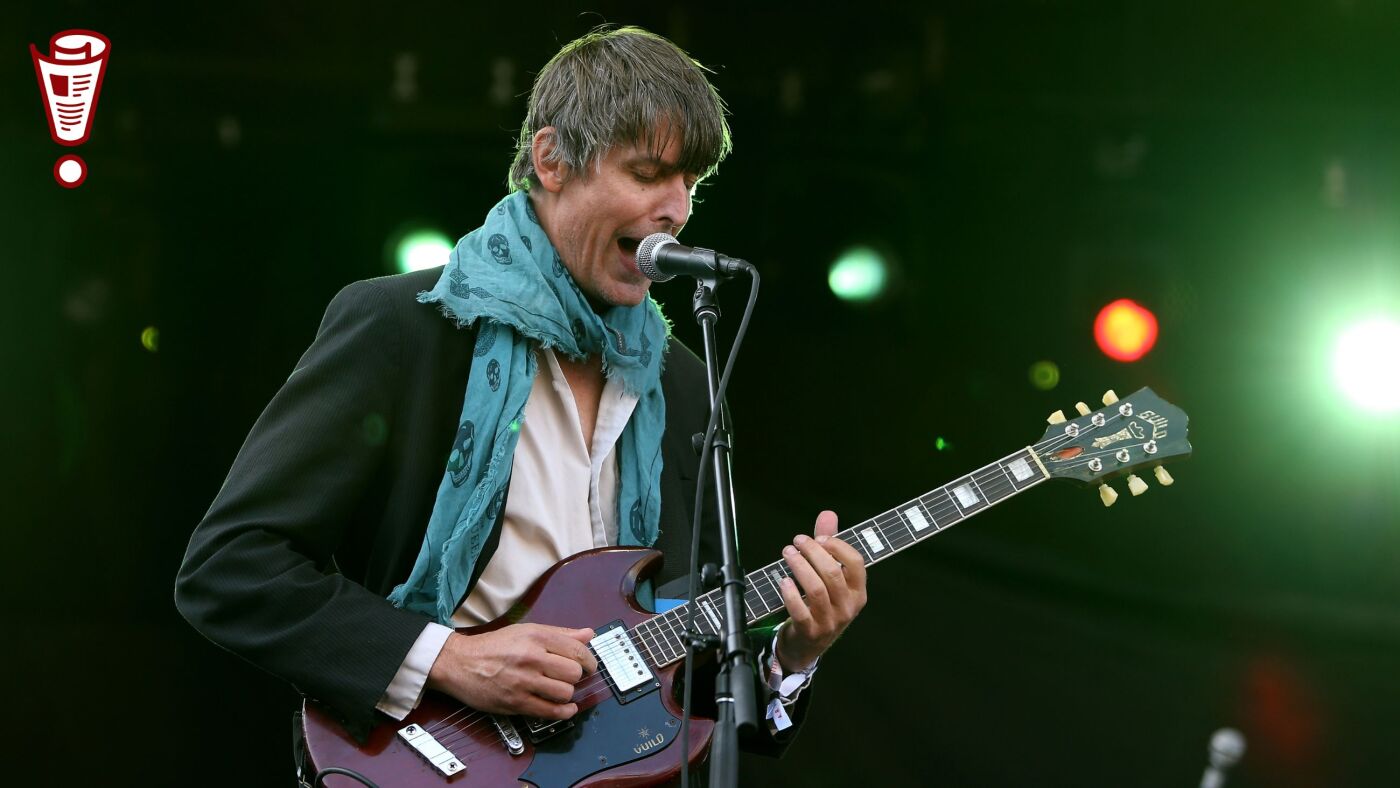
‘Wait Wait’ for June 27, 2026: With Not My Job guest Stephen Malkmus
-

 Technology44 minutes ago
Margaret Atwood says the problem with AI is ‘garbage in, garbage out’
-

 World49 minutes ago
Gulf countries strongly condemn Iran’s drone attack on Bahrain as rising tensions threaten MOU
-

 Politics56 minutes ago
Jeffries welcomes Democratic Socialists into the fold as critics warn party is revealing ‘exactly who it is’
-

 Health59 minutes ago
These leafy greens could help protect your lungs, study suggests
-

 Sports1 hour ago
Knicks hand Mamdani-backed candidate cease and desist letter for using team’s logo in campaign: report
-

 Technology1 hour ago
Empty envelopes in your mailbox? Do not scan that code

