San Diego, CA
Alleged drunken driver accused in 8-year-old girl’s death in East County has prior DUI conviction


A man accused of driving a pickup while intoxicated, crashing head-on into a car in rural East County and killing an 8-year-old girl over the weekend, was in the country illegally and had been previously convicted of being the driver in a DUI crash that left a person paralyzed, according to authorities.
Brayan Josue Alva Rodriguez, 25, pleaded not guilty to charges of murder and gross vehicular manslaughter in connection with Sunday’s crash on county Highway S-2, also known as San Felipe Road, near Ranchita, according to the District Attorney’s Office. He was among several injured in the crash and was arraigned in the hospital this week.
Alva, a Guatemalan national, was arrested by Border Patrol in Calexico in 2018 and released after being served with a notice to appear before an immigration judge, according to U.S. Immigration and Customs Enforcement.
While in immigration proceedings, he was charged in connection with a DUI crash in 2020 and later convicted.
An immigration judge ordered him removed from the country in 2023, but he did not leave, ICE said.
“Now an innocent life has been lost in a tragedy that could have been prevented,” ICE’s San Diego office said on social media.
The girl who was killed Sunday was identified in court documents as Aria T. Her full name has not been released.
The crash occurred around 3 p.m. Sunday, when a 2025 Toyota Tacoma, allegedly driven by Alva, crossed over the solid double-yellow line on San Felipe and struck a southbound Toyota Camry head-on, according to the California Highway Patrol. The truck then crashed into the right side of a Ford F-350 pulling a utility trailer ahead of him that was also driving north, officials said.
The Tacoma then rolled over and caught fire. Alva and a 24-year-old passenger were able to get out of the burning truck on their own, according to Cal Fire.
All occupants of the Camry were taken to hospitals: the driver, a 26-year-old man from Yuma; his front passenger, a 28-year-old woman; and three children in the back, a 5-year-old boy, a 4-year-old boy and the girl who died.
A 13-year-old rear passenger in the Ford truck also sustained minor injuries, the CHP said.
Besides murder and gross vehicular manslaughter counts, Alva, an Oceanside resident, also faces two additional charges of driving while intoxicated within 10 years of a DUI conviction.
In the 2020 crash, at least four people, including a child under the age of 5, were injured, according to the complaint. One victim “suffered paralysis of a permanent nature,” the complaint says. Further details about that case, including Alva’s sentence following conviction, were not immediately available.
At this week’s arraignment, a district attorney’s spokesperson said bail was set at $2 million. Alva was expected to be booked into jail upon being released from the hospital. The extent of his injuries was not released. The next court hearing has been set for Jan. 7.
ICE officials said they would be requesting an immigration detainer — which would allow federal agents to take a person into custody before their release from a local jail.
The California Values Act, or Senate Bill 54, limits cooperation between local law enforcement and immigration agencies, although there are exceptions for those who have been convicted of certain serious or violent felonies.
Staff writer Karen Kucher contributed to this report.



Some people living in remote North County may have felt shaking from an earthquake on Monday afternoon.
The epicenter of the 3.1 temblor that hit at 3:51 p.m. was a little under 2 miles from Lake Henshaw, according to officials with the United States Geological Survey.
Lake Henshaw is about 25 miles east of Valley Center and near Highway 76, which is often traveled by people headed north to Palomar Mountain.
Representatives of Cal Fire and the San Diego County Sheriff’s Office said the agencies had received no reports of any problems caused by the temblor.
San Diego, CA
Deputy ID’d Who Died In Baker Run | Jeep Launches Off Bridge | Protest Turns Violent: SoCal In Brief

SAN DIEGO, CA — As we head into the new work week, we’ve rounded up the stories you may have missed Saturday through Monday to prepare you for the week ahead.
But before we jump into Southern California’s top stories, residents should expect the Southland’s long period of record-breaking heat to ease this week with more seasonal weather for early spring, according to the National Weather Service.
“A cooling trend will begin on Monday, with near normal temperatures expected Tuesday through Thursday,” NWS Los Angeles forecasters wrote Sunday.
Find out what’s happening in San Diegofor free with the latest updates from Patch.
“Gusty onshore winds will affect the area at times, along with chances of light rain. Weak to moderate offshore winds with warming and drying will follow Friday and Saturday.”
In other news, a deputy died after suffering a medical emergency while participating in the Baker to Vegas relay race; a man died of an apparent drowning near a pier; two people were killed when a speeding Jeep launched off a bridge and landed in a river; and one person was killed when a three-vehicle crash sent one car careening into a cemetery.
Find out what’s happening in San Diegofor free with the latest updates from Patch.
Plus, large crowds participated in No Kings rallies across Southern California as part of a nationwide day of demonstrations against the Trump administration that organizers called the largest single-day pro-democracy turnout on record.
A record 94,000 people participated in 21 separate No Kings protests in San Diego County. Thousands of similar gatherings took place Saturday throughout country. In Los Angeles, police said 74 people were arrested for allegedly failing to disperse after the demonstration in downtown LA turned violent, with some protesters throwing chunks of concrete at federal officers and one spray-painting a death threat near the Metropolitan Detention Center.
Here are some of the stories you may have missed:
1 Killed In Crash On 215 Freeway In Riverside Involving Babies
A witness told the CHP that the sedan was demolished and a witness said two babies and two adults were inside.
1 Killed In Fiery, 2-Vehicle Crash On 91 Freeway In Orange County
It involved a white “work truck” and another vehicle, with at least one of the vehicles catching fire, the CHP said.
1 Person Injured At Switzer Falls, Airlifted To Hospital
Falling rocks may have been involved, according to reports.
“If you do spot one of these animals, keep your distance. There’s absolutely no reason to approach one whatsoever.”
2 Found Dead In Home After Fire In San Diego’s North County: Authorities
The bomb and arson unit and the homicide unit for the San Diego County Sheriff’s Office are investigating the incident.
4 Boats Carrying Migrants Detained Off San Diego Shore
Twenty-nine migrants suspected of attempting to enter the country illegally were detained off San Diego in four incidents, officials said.
The arrests included 66 adults and eight juveniles, according to the Los Angeles Police Department.
Iconic Actor Known For ‘Back To The Future,’ ‘Top Gun’ Dies At 94
He also spent 25 years in the New York theater scene and was part of the original cast of “Glengarry Glen Ross.”
LA Deputy, 30, Dies After Medical Emergency During Baker To Vegas Relay
“His loss is deeply felt across our Department, and he will be greatly missed.”
Large Crowds Gather Throughout Riverside County For ‘No Kings’ Protests
The demonstrations were part of a nationwide day of “No Kings” protests against illegal immigration enforcement and other federal policies.
Long Beach Police Arrest Teen, Tow 5 E-Bikes After Street Takeover
The teen was arrested on suspicion of reckless driving-related charges.
Man Fatally Struck By SUV After Running Into Lanes Of Traffic In Long Beach
Paramedics rushed the man to a hospital, where he later died from his injuries.
Man Killed In Santa Monica Fight
Officers rendered aid to the wounded man until paramedics arrived to take him to a hospital, where he died, officials said.
Missing Swimmer Found Dead Near Oceanside Harbor Beach
A man died of an apparent drowning near the Oceanside Pier, authorities said.
A record 94,000 people participated in 21 separate “No Kings” protests in San Diego County on Saturday, organizers said.
9 Sickened In E. Coli Outbreak Tied To A California Company’s Raw Milk And Cheese
Two cases in California were added Thursday to the outbreak first announced March 15, bringing the total number of ill people in California.
185 New Speed Cameras Coming To CA Roads: See Where
Speed cameras have already caught hundreds of thousands of speeding drivers in the first two cities to install them.
CA Could Soon Start ‘Certifying’ Certain Groceries In Its War On Junk Food
California wants to be the first state in the nation to give a seal of approval for healthy foods and require grocers to promote them.
CA’s Most Spectacular Super Bloom In Years Is Underway: How To See It Before It Wilts
The super bloom in California may have peaked in the southern part of the state, but spring flowers are still blooming in stunning fashion.
CA Women Earn 63 Cents For Every Dollar Earned By White Men, Study Finds
Women’s earnings still lag far behind those of white men, with no significant improvement in that gap in 14 years.
Get more local news delivered straight to your inbox. Sign up for free Patch newsletters and alerts.

Two families were displaced from their Carmel Valley townhome after it went up in flames earlier this afternoon.
This happened just before 3 p.m. on Moratalla Terrace. Fire investigators said the fire started inside a garage unit because of faulty electrical equipment and robotics projects. One neighbor said she’s thankful for the quick response.
“The people that own the house were in the driveway calling 911, and within, I think within five minutes of me smelling the smoke the fire trucks were here,” said Nikki Briggs. I’m just thankful that everyone was okay, and that it didn’t keep spreading. Like if it would have been a wildfire, that would have been terrible.”
Firefighters say most of the damage was contained in the garage. A total of nine people were displaced by the fire. Five people lived inside the unit that burned. Thankfully all of them made it out safely without any injuries.

Laura Dern will play journalist who investigated Jeffrey Epstein crimes in a new series

In a frenetic digital era, he’s helping Angelenos rediscover the classic cassette player
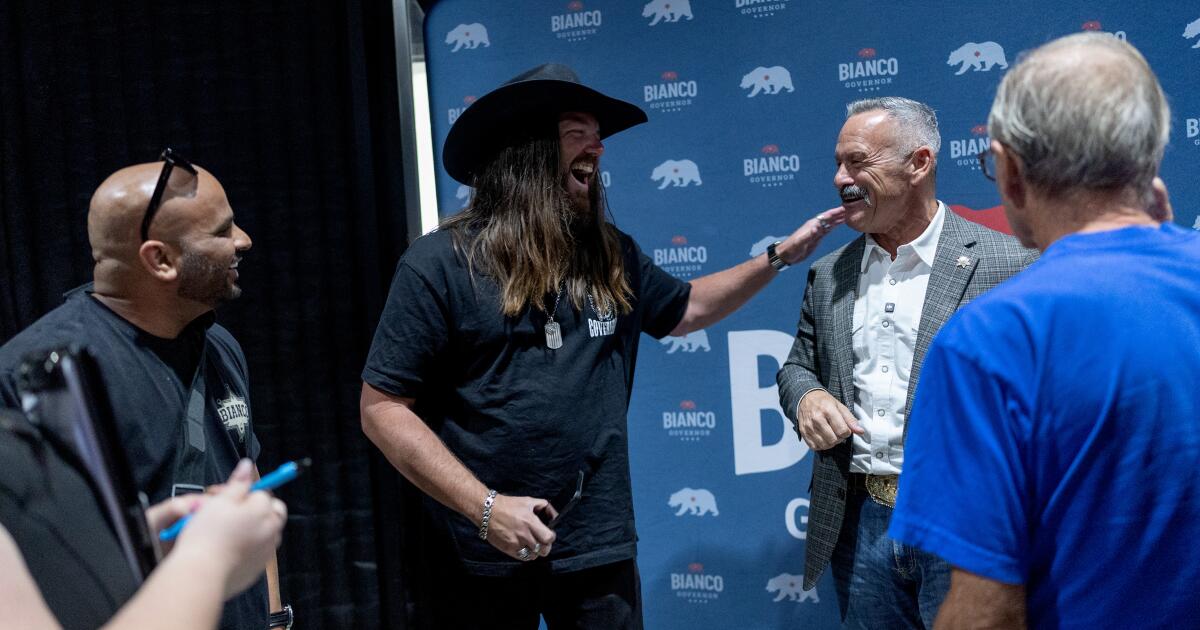
Commentary: Will or won’t he? A lot rides on a Trump endorsement in California governor’s race

A SoCal native is set to pilot NASA’s lunar mission — and become the first Black person to reach the moon

No Luka Doncic, no problem for LeBron James and Lakers in blowout win

Florida High School Football Rankings: Top 25 teams – Oct. 21

How old is Bo Nix? What to know about Oregon quarterback ahead of 2024 NFL Draft

Cleary's 21 help Le Moyne down Central Connecticut State 69-64 in OT

99th annual Pony Swim held in Virginia

Indiana Members Credit Union announced as new anchor tenant at Bottleworks District

EU to urge Israel to scrap death penalty bill as ‘grave regression’

Army reviewing after helicopters hovered alongside Kid Rock’s swimming pool as he saluted

Emanuel pushes back on ‘straight White man’ question, says ideas matter most in 2028

French police make two more arrests over foiled attack on Bank of America

‘What’s going on?’: US judge calls aspects of new Pentagon press policy ‘weird’
-

 Sports1 week ago
IOC addresses execution of 19-year-old Iranian wrestler Saleh Mohammadi
-

 Miami, FL5 days ago
Jannik Sinner’s Girlfriend Laila Hasanovic Stuns in Ab-Revealing Post Amid Miami Open
-

 South-Carolina2 days ago
South Carolina vs TCU predictions for Elite Eight game in March Madness
-

 New Mexico1 week ago
Clovis shooting leaves one dead, four injured
-

 Politics1 week ago
Schumer gambit fails as DHS shutdown hits 36 days and airport lines grow
-

 Minneapolis, MN5 days ago
Boy who shielded classmate during school shooting receives Medal of Honor
-

 Tennessee1 week ago
Tennessee Police Investigating Alleged Assault Involving ‘Reacher’ Star Alan Ritchson
-

 Science1 week ago
Record Heat Meets a Major Snow Drought Across the West