Florida
Killer cop or the wrong man? DNA halts Florida execution. For now.


Ex-officer James Duckett had been set to be executed by lethal injection on March 30 for the rape and murder of an 11-year-old girl while he was on duty in Florida. But DNA testing has stopped it.

Tennessee set to execute woman for first time in over 200 years
If Christa Pike’s execution is carried out, she would be the first woman executed in Tennessee in 200 years and the 19th woman in modern U.S. history.
When 11-year-old Teresa Mae McAbee was kidnapped, raped, strangled and drowned in the small Florida city of Mascotte nearly 40 years ago, a surprising suspect emerged: a rookie cop named James Duckett.
The one undisputed fact of the case is that Duckett was on duty on May 11, 1987, when he encountered Teresa at a convenience store. The little girl had walked there to buy a pencil.
Duckett maintains that he told Teresa that she needed to go home, and that’s the last time he saw her. Prosecutors argue that Duckett was a monster in disguise who abused the badge and brutally raped and killed Teresa before dumping her body in a lake.
Jurors accepted the state’s narrative, convicting Duckett of murder largely based on circumstantial evidence and recommending the death penalty.
Now nearly 40 years later, DNA in the case stands to either save Duckett’s life or seal his fate.
Duckett, 68, had been set to die by lethal injection at a Florida state prison on Tuesday, March 31. But with less than a week to go, the Florida Supreme Court issued a rare stay of execution pending the results of the DNA testing. And on Monday, March 30, the court upheld the stay, effectively stopping any chance that the execution would happen as scheduled.
Though the execution is on hold for now, it’s not on hold for good.
As Duckett awaits his fate, USA TODAY is looking deeper at the case, the recent court actions and why the DNA hasn’t been tested until now.
What happened to Teresa Mae McAbee?
On May 11, 1987, the fates of 29-year-old rookie cop James “Jimmy” Duckett and 11-year-old Teresa Mae McAbee became intertwined.
Teresa had walked to her local Circle K convenience store to buy a pencil around 10 p.m. in Mascotte, Florida, a rural city just west of Orlando that had fewer than 2,000 residents at the time.
Duckett was on patrol for the Mascotte Police Department. The married father of two sons, who had been on the force for seven months, was making his regular rounds and stopped at Circle K, spotting Teresa talking with a 16-year-old boy outside the store, according to court records.
Duckett has always maintained that he talked to Teresa and the teen, telling each to go home. But the boy and his uncle later said that Duckett put Teresa in his patrol car and drove off.
Teresa’s mother arrived at the Circle K around 11 p.m. looking for her daughter. The store clerk told her that Teresa may have gone with Duckett, and the mother began searching the area. When she couldn’t find Teresa, she contacted police and later filed a missing persons report with Duckett, the only officer on patrol at the time.
The next morning, less than a mile from the Circle K, a fisherman found Teresa’s body in Knight Lake. A medical examiner later found that she had been raped, strangled and was still alive when her attacker drowned her. Bodily fluid, presumably from the killer, was found on her underwear − DNA that was saved.
Duckett became a suspect when a sheriff’s investigator, Sgt. Chuck Johnson, thought the officer was acting nervous at the scene of the body recovery, “was not curious about the death,” and told a “rehearsed-sounding story” about his interaction with Teresa and the events of the night before. Duckett was charged with murder five months later.
What happened at James Duckett’s trial?
At trial, prosecutors called James Duckett a “cold-blooded killer” and said that unlike him, Teresa didn’t have a judge or jury.
“She had a police officer named Duckett pick her up and put her in the car and take her down to Knight Lake, and he sentenced her to be raped, and he sentenced her for threatening to tell on him and taking away his power, his almighty power of the badge,” they told jurors, according to court records. “She threatened to tell when she was hurt … so he sentenced her to die. He served as executioner.”
Among the state’s evidence: a pubic hair found on Teresa that an FBI analyst said was consistent with Duckett’s, Teresa’s fingerprints on the hood of Duckett’s car, tire tracks at the scene of the murder that police say matched Duckett’s patrol car, and a key witness who testified that she saw Duckett drive off with a small person in his patrol car shortly after he spoke with Teresa.
Prosecutors also put three young women on the stand who testified that they were underage when Duckett sexually harassed or abused them.
Duckett’s attorneys have been working to poke holes in the trial evidence, saying that Teresa’s fingerprints were on the car hood because she sat on it at the Circle K, that a second hair found on the girl’s body was inconsistent with Duckett’s, and that Duckett’s tire tracks were at the scene because drove there after the body was found.
They also argue that the state’s key witness agreed to give bogus testimony in exchange for getting out of jail early and that there was no evidence to corroborate the stories of the three young women who testified that Duckett had been inappropriate with them.
Duckett’s attorneys also argue that there were far likelier suspects in the case, including the teen Teresa was talking to before she vanished and various men who were boyfriends or friends of her mother’s.
“For reasons beyond his control, James Duckett was chosen as the suspect, and other more likely suspects were allowed to walk away,” his attorneys argue in court records. “Rather than find the real perpetrator, the state chose to proceed with a circumstantial evidence case against Mr. Duckett.”
Just before he was sentenced to death, Duckett pleaded with the judge in the case to spare his life.
“I did not do this,” he said, according to court records. “When the person who did this repeats it, I want to see the face of the person telling the victim’s mother, father, sister or brother, ‘I am sorry. We thought we had the right one before.’”
An execution scheduled, then stopped
After spending nearly 40 years on death row, James Duckett’s execution was scheduled for March 31 after Florida Gov. Ron DeSantis signed his death warrant last month.
Duckett’s attorneys fought to stop the execution so that DNA testing could be conducted on the semen collected from the crime scene. On March 26, the Florida Supreme Court agreed to issue a stay of execution pending results from the testing.
The results, which came in on March 27, were inconclusive, possibly because so little of the DNA collected was left to be analyzed. But Duckett’s attorneys had argued that a different lab would be more likely to extract useable results.
The Florida Supreme Court could have lifted its stay because the initial results were inconclusive. Instead, the court decided to uphold it on March 30 in a 6-1 ruling, stopping Duckett’s execution for now.
Duckett’s attorney, Mary Wells, told USA TODAY that the stay was “a significant step toward preventing the irreversible harm that will result if the State of Florida executes an innocent man.”
“DNA testing … has the potential to conclusively establish Mr. Duckett’s innocence,” she said. “When the outcome of the results is whether a man lives or dies, there is no valid scientific basis for prohibiting a second examiner to analyze the results.”
The state’s Attorney General’s Office had argued in court that the stay should be lifted because the DNA results were inconclusive and that Duckett sought DNA testing far too late.
“Duckett waited until after a warrant was signed to seek DNA testing for a murder he committed over 38 years ago where he knew about the (DNA) slide at least since the relinquishment in 2003,” they wrote. “But he did not seek DNA testing as soon as the science was sufficiently advanced. A truly innocent man would have sought … DNA testing as soon as it was available.”
What happens now?
In its order upholding the execution stay, the Florida Supreme Court ordered Lake County Circuit Judge Brian Welke to provide the higher court with a status report by the end of day on April 2
Welke is expected to decide whether there should be further testing of the DNA. Welke is the judge who initially granted Duckett’s request to test the DNA.
In his dissenting opinion to uphold the stay, Florida Supreme Court Justice Adam Tanenbaum wrote that Duckett’s DNA fight amounts to “a Hail Mary pass” and that given the inconclusive test results, there is “nothing further for (Welke) to do at this point.”
“Indeed, as has been the case for decades, there is no exonerating evidence at all to justify any further delay in the defendant’s execution, which has been a long time coming,” Tanenbaum wrote. “Justice for the victim and her family has been delayed far too long. The defendant’s time is up.”
Amanda Lee Myers is a senior crime reporter who covers cold case investigations and the death penalty for USA TODAY. Follow her on X at @amandaleeusat.



The Treasure Coast has 13 breweries, 4 distilleries, 1 winery and 1 cider house.
Looking for somewhere to kick back and chug a frosty brew or smooth glass of wine?
The Treasure Coast has plenty of breweries, cideries, wineries and distilleries.
Here is every one in Martin, St. Lucie and Indian River counties. If we missed any, email valeria.bartra@tcpalm.com.
ST. LUCIE COUNTY
Four friends — David BuShea Jr., Nick Bischoff, Mike Sturgis and Danny Horton — opened the Treasure Coast’s first brewery in Fort Pierce’s historic Edgartown neighborhood north of downtown in 2013. That’s is now Pierced Ciderworks. They moved downtown to a larger, 25,000-square-foot space on Second Street in 2017. The brewery went from a three-barrel system to a 20-barrel system. It hosts bingo nights, trivia nights, holiday celebrations and live music performances. Its signature and most popular beer is the Sunrise City pale ale.
Gary Roberts opened Summer Crush, the Treasure Coast’s first and only winery, on the same property as his nursery and landscaping business in 2012. He planted 6 miles of vines on 10 acres, using two native muscadine grape varieties: Carlos for white wines and Noble for red wines. His estate wines are made with only his grapes. For others, he supplements his homegrown grapes with the same two varieties from other Florida vineyards. Summer Crush has all the components of a boutique winery: a vineyard; cellar and crush pad; tasting room and gift shop; and festival and event area with a covered pavilion for concerts. Summer Crush specializes in muscadine and tropical fruit wines. Almost all the specialty wines can be made as the “estate” version, which contains 100% of Summer Crush’s grapes. It also hosts live music and tribute band performances. Its signature wine is the Old Florida White table wine.
St. Lucie County firefighters Jim Kelly and Robert Tearle, along with Tearle’s cousin, Jeffrey Blitman, opened the brewery in a St. Lucie West industrial park in 2017. They started homebrewing in 2011 and sold apparel to raise enough money to open a brewery. The 2,000-square-foot Port St. Lucie brew house, containing a 15-barrel system, is separated from the taproom by large glass windows. It often has food trucks. It hosts music bingo nights, ladies nights, beer and corn pong nights as well as live music performances. Its signature drink is its award-winning Puckr’d “Mother Pucker” beer; it also serves ciders, sangria and specialty drinks.
Fox & Crown is an authentic British pub with legit British food and beer, said owner Matthew Teun. His roots are English, and some of his family still lives there. The pub opened in 2025 and serves food imported from England that includes Scotch eggs, sausage rolls, fish and chips, bangers and mash, and steak and kidney pies. Even bags of potato chips — called “crisps” in England — are imported with flavors that include tomato ketchup, pickled onion and prawn cocktail. Teun also plans to brew beers with British and European influences, including a traditional pale ale, a traditional English IPA he named “London IPA” and a British red ale, which is sweeter than an Irish red ale. Guest taps include Wrexham Lager. It hosts weekly trivia nights, karaoke sessions and shows European football matches. Its signature drink is a pub ale called the Crown Standard Bitter.
Jon Nolli opened the Treasure Coast’s first cidery in Fort Pierce’s historic Edgartown neighborhood north of downtown in 2018. The 1901 home previously was owned by famed photographer Harry Hill and occupied by Sailfish Brewing Co. The current cidermaker is Rich Milton. Unique flavors include caramel apple, lime habanero, chocolate hazelnut and peanut butter jelly. It typically has a food truck near the outdoor back deck and an old, brown rat rod parked in front. Its signature year-round ciders are the ‘Merica Dry and the Coco Loconut. It hosts yoga events, bluegrass jam nights, bingo nights, yappy hour and other live music events.
Florida Atlantic University friends Jose Herrera, Tyrone Bradley, Chris Trentine and Nik Schroth started Islamorada Brewing Co. in the Florida Keys in 2014, then opened a second location near the St. Lucie County airport in 2016. That 25,000-square-foot production facility and taproom allowed for 10 times more brewing. They later expanded to add a distillery and changed its name to Islamorada Brewing & Distillery. Its signature beers are the Sandbar Sunday, Islamorada Ale and Channel Marker IPA. It hosts regular and music bingo nights, flip nights, fishing club meetups, line dancing and themed trivia nights.
Thomas Neidhart and his sons, T.J. and Michael, opened a second location of their brewery in Port St. Lucie in 2025. They opened their first location in Yaphank, Long Island, New York, in 2023. The food is overseen by their partner and close friend, Matt Rappa of Wading River, New York, who has owned multiple pizzerias and restaurants in his hometown. Neidhart’s daughter, Alyssa, is the face of the company. Southpaw Brewing is known for its craft beer, inventive craft cocktails and pub food, featuring crispy, flat-crust, brick-oven pizza. Southpaw also serves cider. It hosts national holiday events such as national French fry day, national mojito day and national chicken wing day. Its signature beer is the Lefty Lucie Lite Lager.
INDIAN RIVER COUNTY
Hogan Yards opened near the Vero Beach airport in June 2026. The unique entertainment complex has BBQ, games, pickleball, craft beer and live music in the former Hogan & Sons citrus packing house. Orchid Island Brewery provides the craft beer, and Pepper & Salt BBQ provides the Texas-style barbecue. The brewery uses ingredients grown on-site and from area groves. The owners — Tom and Tiffany Corr, Alden and Valerie Bing, and John and Heather Chianis —grow mangoes, finger limes and vanilla beans on-site to use in their beer. It hosts live music nights and its signature brew is Orchid Island Brewery’s Star Ruby Grapefruit IPA.
Pete and Lynn Anderson initially opened Sebastian’s first brewery in a U.S. 1 plaza in 2014 before moving two blocks north to the original Sebastian post office in 2017. The new location gave them better exposure and a bigger space to triple their beer production. The couple, who moved to Florida in 2004, previously lived on the West Coast and were exposed to the craft beer scenes of the Pacific Northwest and Northern California that had been around since the mid-1980s. They named the brewery after the human tendency to see familiar objects or patterns in otherwise random or unrelated objects or patterns, such as faces, and such photos decorate the walls. Its small kitchen offers hot dogs, flatbreads, paninis and other snacks. Its signature drinks are the 32958 Hazy IPA, also known as the Zipcode, and Mel’s Gold Ale. It hosts open mic nights, trivia nights and live music nights.
Mike Malone and Alan Dritenbas opened the brewery in a former World War II aviation supply warehouse just south of the Vero Beach airport. Malone now runs the business with his wife, Brooke. The name comes from the nickname for red mangrove trees whose roots continually “walk” outward toward the water. Its beer has won multiple awards at the Great American Beer Festival. The building uses large industrial fans instead of air conditioning. It had food trucks for years, but Linda Moore and Courtney Cotherman opened the Salvador Deli restaurant inside the brewery in 2024. Moore, who co-owns the Kilted Mermaid in Vero Beach, and Cotherman, who worked there for 10 years, started Salvador Deli together in 2022 for catering events. Its award-winning beers are the Barnacled Manatee Barleywine, Babycakes Oatmeal Stout, Walking Tree IPA, Treasure Kolsch, Straw Hat Blonde Ale and the Prop Root English Pale Ale. It hosts board game nights, yoga events, live music and trivia nights.
Developer Michael Rechter opened the brewery in 2017 in Vero Beach’s former diesel power plant, which was added to the National Register of Historic Places in 1999. He paid the city $500,000 for the building in 2016 and spent over $4 million in renovations. The original giant diesel engine is the backdrop. The brewery has a full-service kitchen, garden area, outdoor patio and mezzanine that allows customers to look down on the operations. Rechter opened a second location in Fort Lauderdale in 2019, which closed in 2022. It hosts paint parties, trivia Tuesdays and holiday events. Its signature beer is the Icon Gold lager.
Derek Gerry and Patrick Kirchner opened Sebastian’s second brewery within walking distance of what later became Pareidolia Brewing Co. in 2018. They started brewing beer together as members of the Boil Over Boys homebrewing club from their homes in Sebastian. The brewery’s name references their blue-collar lives. They make traditional brews, such as a German-style Kolsch, as well as their own creations, including a bloody mary beer. The brewery offers small bites at the bar and often has food trucks. It hosts food truck events, live music performances and Monday trivia nights.
Vero Beach natives Ray and Mandy Hooker opened Indian River Distillery in 2023 in a 4,000-square-foot city-owned building near the Vero Beach airport. It doesn’t carry beer or wine. Ray, third-generation, grew up in Sebastian and graduated from Sebastian River High School. He met Mandy at the former Long Branch Saloon in Vero Beach. The couple noticed distilleries were becoming more popular nationally, but none were opening locally. They learned how to run a distillery at a weekend workshop in Kentucky and took online classes through the Institute of Brewing and Distilling in London. It hosts live music nights on the weekends.
21st Amendment Distillery opened in downtown Vero Beach in 2023, in the building that formerly housed the Ironside Press. The name is a nod to the 21st Amendment that repealed Prohibition. It has a cigar bar and full-service restaurant with a menu featuring shareable bites people can eat while having a conversation. Owner Jeff Palleschi, who moved to Vero Beach about 14 years ago, wanted his distillery to spark more activity downtown, the way Sailfish Brewing Co. did in downtown Fort Pierce. It hosts ladies nights, pack walks, cigar nights and live music performances. Any of its signature spirits are marked by the “21” or “21 AD” on the menu.
MARTIN COUNTY
Palm City couple Chris and Amanda Cischke are behind this brewery that opened in 2019. Ocean Republic has up to 16 beers on tap at a time, as well as cocktails and an American pub-style food menu. They have about six flagship beers based on customer response, and they rotate the rest. The brewery’s menu was inspired by food the Cischkes ate while visiting breweries in California and Colorado. Ocean Republic has a non-traditional style of food service, with customers ordering at the bar, getting numbers and having the food brought to them. It hosts yappy hour, give-back nights and live music. Its signature beers are the Flo Cal lager and Grapefruit Thrasher IPA.
The “brewstillery” concept is rare in Florida, said co-founder Etienne Bourgeois. Frazier Creek serves beer, wine, spirits, seltzer, soda and cocktails. It has 35 taps, mostly for its own beer, non-alcoholic craft sodas and ready-to-drink cocktails — basically vodka-based seltzers. It also has guest taps for cider. There’s a variety of brewed beers: IPAs, sours, lagers, shandys, pale ales and imperial stouts. The 9,000-square-foot brewstillery includes a 3,500-square-foot taproom and 800-square-foot cocktail lounge. It opened in The Creek District of Arts & Entertainment in downtown Stuart in 2023. It hosts throwback parties, disco nights, pint wars, Latin nights, line dancing nights and more. Its signature and award winning drink is the Sippin’ Sunset.
Founder Reinhard “Reiny” Knieriemen was the head brewer at Twisted Trunk Brewing Co. in Palm Beach Gardens for nine years before he decided to open his own place in 2025. Sound Brewing is a microbrewery in a 3,000-square-foot building that’s split 50-50 between the brewhouse and taproom. It offers a small bar menu available to be delivered from next door at Taylor Beach House Cafe. Its signature beer is the Dawn Patrol Amber Ale and it hosts music bingo, trivia nights, moonlight markets and occasionally a special event such as vinyl nights.
TCPalm breaking news reporter Laurie K. Blandford contributed to this report.
Valeria Bartra is TCPalm’s food reporter. Contact her at valeria.bartra@tcpalm.com, 772-978-2246 or follow her on Instagram @vbartrajourno.
Florida
Florida leaders react to Sen. Lindsey Graham’s death, remembering his legacy of public service

Florida elected officials from both chambers of Congress, along with the state’s two U.S. senators, are mourning the death of U.S. Sen. Lindsey Graham, praising his decades of military service, national security work and bipartisan efforts on immigration.
U.S. Sen. Rick Scott called Graham “a good friend and a dedicated public servant,” saying he and his wife, Anne, were “shocked and heartbroken” by the news.
“Lindsey was a good friend and a dedicated public servant for the people of South Carolina and the United States,” Scott said. “Through his time in the Air Force and in Congress, Lindsey dedicated his career to America’s national defense and freedom around the world. I was grateful to work with him. He will be greatly missed as a legislator and a friend.”
Florida’s other Republican senator, Ashley Moody, also honored Graham, describing him as a uniquely gifted communicator and lawmaker.
“My family and I mourn the sudden passing of U.S. Senator Lindsey Graham,” Moody said. “There are people in this world who have the ability to change the air in a room through wit, humor, well-placed arguments, reason, or impassioned appeals. Lindsey Graham had the uncanny ability to pull them all off at once.”
South Florida lawmakers also reflected on Graham’s influence.
U.S. Rep. Carlos Giménez said Graham leaves behind “a legacy of dedicated public service, a commitment to national security, and an unwavering fight for freedom.”
Meanwhile, U.S. Rep. María Elvira Salazar highlighted Graham’s years-long work on immigration reform, noting he played a key role in discussions surrounding bipartisan immigration proposals, including the DIGNITY Act of 2025.
“Few people in Washington fought longer or harder to fix our broken immigration system than Lindsey Graham,” Salazar said, adding that she was grateful for his counsel and commitment to finding a legislative solution.
Republican Congressman Byron Donalds, who is running for Florida governor, said Graham dedicated his life to serving the country both in the U.S. Air Force and in Congress.
“He was an incredibly effective lawmaker who always led with courage and deep conviction,” Donalds said. “He always did what he thought was right even if it wasn’t popular, leaving behind a massive legacy of leadership that won’t be forgotten.”
Miami-Dade’s tax collector honored Sen. Lindsey Graham, praising his steadfast support for freedom, democracy, and human rights, especially for his outspoken stance against Cuba’s communist dictatorship. The tribute, shared in both English and Spanish, thanked Graham for his leadership, his hope-inspiring words, and his unwavering commitment to liberty, saying his voice gave hope to millions dreaming of a free Cuba.
Graham served in the U.S. Senate for more than two decades after representing South Carolina in the U.S. House. Throughout his career, he became one of the Senate’s most influential voices on national security, foreign policy and immigration.
His death prompted an outpouring of condolences from lawmakers across the country, including many in Florida who worked alongside him on defense, immigration and other legislative priorities.
Florida
Forget Florida, Retire To This East Coast City With River Views, Festivals, And Endless Outdoor Fun – Islands

Most retirees clock out of their last day at work, grab their suitcases, and book a one-way flight to a place like Florida that has warm weather year-round. Yet, just along the U.S.-Canada border, a different lifestyle awaits — one that includes all four seasons, river views, and community-involved events. Welcome to Caribou, Maine: the “Most Northeastern City in the U.S.”
The Aroostook River (as seen above) cuts through the middle of town, highlighting gorgeous waterfront views, dense foliage, and natural beauty that offers an ever-evolving backdrop with every season. From snowy Januarys to blooming Junes, retirees and visitors can stay active rather than just lie at the beach as many do in the Sunshine State.
Beyond the scenery, Caribou keeps a packed calendar of fun festivals running nearly year-round, from a winter wonderland carnival to weekly summer concerts downtown. In between events, it’s easy to fit in a daily walk on multi-use trails, kayak or canoe the river, or pick strawberries at a local farm. Caribou is a great alternative to consider for a family-friendly environment and small-town charm, especially for travelers (and retirees) who are looking to trade crowded beaches for quieter, closer-knit surroundings.
Fun festivals in Caribou, Maine
While Florida has beach towns that can pass for the Caribbean, one thing many retirees eventually miss is a sense of community. Caribou offers plenty of opportunities to connect with locals with a packed year-round calendar of events and festivals. The fun kicks off in February with the Winter Carnival and Snowmobile Festival, bringing everyone together in the heart of winter with races, bonfires, and fireworks. In summer, the Mi’kmaq Nation’s Mawiomi of Tribes brings traditional dancing and drumming to town, educating visitors on the Native American lifestyle through traditional meals, sunrise blessing ceremonies, and dancing.
Fall rounds things out with the Caribou Craft Fair, where roughly 140 artisans set up shop. The season wraps up with Oktoberfest, celebrating Bavarian heritage through craft beer brewing, live music, and delicious food. Finally, the city’s annual grand finale is Christmas in Caribou, showcasing detailed light displays, a Christmas tree lighting, and the charming Christmas Market. While these are all one-off events, the town ensures that locals and visitors are mingling often. Once the snow melts,”Thursdays on Sweden Street” shuts down the center of town for weekly live music, food vendors, and a beer garden.
A short drive out of town extends the calendar even further. New Sweden, about 15 minutes northwest, hosts the Swedish-heritage Midsommar Festival in June, while Fort Fairfield, a 14-minute drive southeast, throws the Potato Blossom Festival every July. Presque Isle, roughly 20 minutes out, adds the Crown of Maine Balloon Fest, giving travelers a seasonal event that’s worth planning a trip around.
Things to do in Caribou, Maine
Caribou offers plenty of ground — and water — to cover for anyone craving variety in the great outdoors. The Aroostook River is a summer highway for paddlers, with canoes and kayaks a common sight. Anglers can fish from the shoreline with a single baited hook during the season, which runs from April 1 to September 30. A few miles away, Collins Pond Park’s 1.5-mile walking and biking path loops right along the water, with a playground on-site for visiting families with grandchildren.
For those wanting to cover more ground, the Aroostook Valley Trail is a 28-mile multi-use path connecting Caribou to nearby towns, popular for biking, walking, and snowmobiling depending on the season. Just outside town, at around 20 minutes by car, the Aroostook National Wildlife Refuge, dubbed Maine’s “green heart”, offers miles of trails for hiking, birdwatching, and cross-country skiing. Spectators can catch live music and races at the Spud Speedway Race Track and Event Center, and families can pick their own berries at McElwain’s Strawberry Farm.
To reach Caribou, visitors can fly into Presque Isle’s Northern Maine Regional Airport (PQI), a 20-minute drive south, or Bangor International Airport (BGR), about three hours away. A once-daily CYR Bus Line route connects Bangor, one of Maine’s lesser-known little cities, to Caribou directly for those skipping the rental car.
-

 New York1 hour ago
How a Family of 5 Lives on $46,000 a Year in Wakefield
-

 Los Angeles, Ca1 hour ago
Southern California braces for 110-degree heat, thunderstorms this week
-
 Detroit, MI2 hours ago
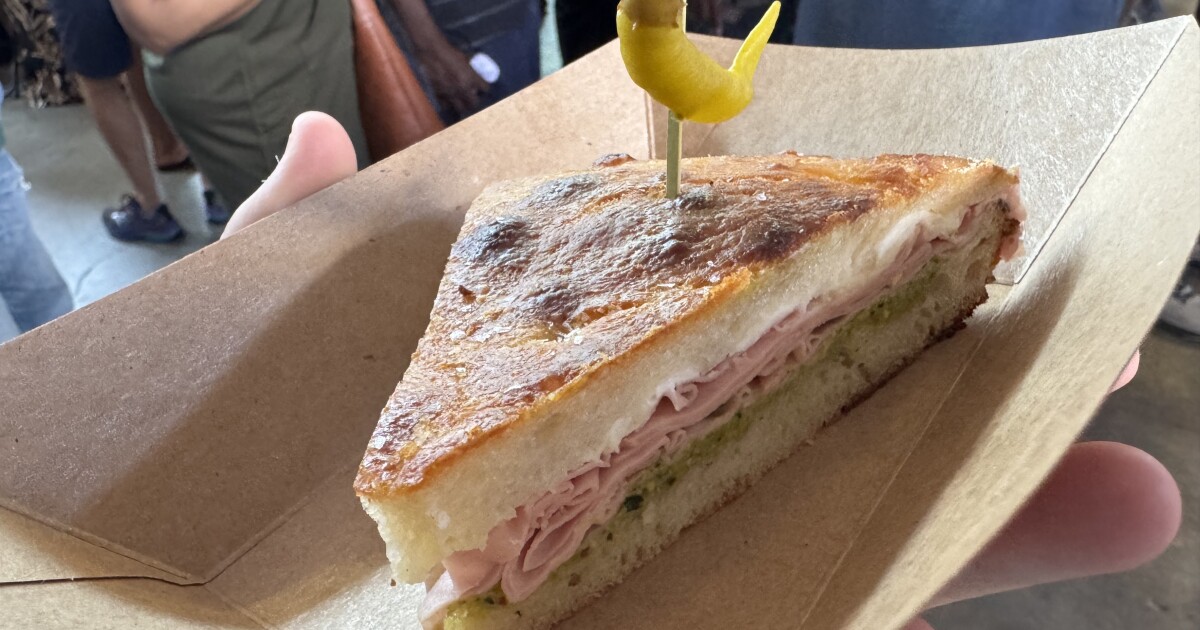
Detroit Sandwich Party returns to Eastern Market on Sept. 6
-

 San Francisco, CA2 hours ago
A Leak of San Francisco Police Drone Footage Exposes the New Reality of Urban Surveillance
-

 Dallas, TX2 hours ago
Viral East Dallas coffee shop fears major sales drop amid six-week road closure
-

 Miami, FL2 hours ago
3 hurt in fire on Lincoln Road that started underground
-

 Boston, MA2 hours ago
Rideshare driver charged in Logan airport passenger assault to appear in court
-

 Denver, CO2 hours ago
Denver area events for July 13

