Oregon
How should the Owyhee Canyonlands be protected? One coalition urges action on monument designation. • Idaho Capital Sun


This article originally appeared on Inside Climate News, a nonprofit, independent news organization that covers climate, energy and the environment. It is republished with permission. Sign up for their newsletter here.
OWYHEE CANYONLANDS, Ore. — Drive 50 miles from Boise, past the suburbs, exurbs and farms into Oregon, and you’ll find yourself in the largest conservation opportunity left in the continental U.S.
In the Owyhee Canyonlands, Western sagebrush landscapes surround rock formations reminiscent of the Colorado Plateau, leading some to liken it to the Grand Canyon. It stretches across roughly 7 million acres of high desert in Oregon, Idaho and Nevada. Roughly a third of that landscape is high-quality wilderness — more land than in many existing national parks — with no roads or cell service.
Some of the last pristine sections of the rapidly declining sagebrush habitat that once dominated much of the Western U.S., the Owyhee Canyonlands — named for the phonetic pronunciation of Hawaii after three island natives were lost in the wilderness and never found — have remained wild despite little federal protection. “Its remoteness protected it,” said Ryan Houston, the executive director of the Oregon Natural Desert Association, an environmental group leading efforts to protect the area.
But the Owyhee is under threat. The population in Idaho’s Treasure Valley and Boise to the north of the canyonlands is growing, with suburbs expanding into the area. The south is home to a new mining boom, with the second approved lithium mine in the U.S. now under construction just over the Nevada border. In between, invasive weeds have invaded the area, sparking bigger and hotter wildfires that are turning portions of the region from sagebrush to grasslands, threatening the entire ecosystem and the cultural sites found throughout the canyonlands that are important to local Indigenous tribes.
For decades, groups have pushed to protect the Owyhees and come up short. Current legislation introduced by Oregon’s senators to protect the area has broad local support but stalled in Congress. So a growing grassroots coalition is taking matters into its own hands, urging President Joe Biden to designate just over 1 million acres in the Owyhee Canyonlands as a national monument under the Antiquities Act, which allows presidents to protect naturally or historically significant places without Congress.
“It used to be you could find a place like this, write a bill and protect it,” said Aaron Kindle, the director of sporting advocacy at the National Wildlife Federation, who has helped lead the conservation group’s involvement in the monument push. But times have changed, he said, so communities and conservationists are turning to the nation’s highest office, rather than just representatives from their state.
They believe now is their best chance to protect this stretch of land in eastern Oregon. In his first few weeks in office, Biden issued an executive order tasking his administration to conserve 30 percent of America’s lands and waters from development by 2030, establishing conservation as key to addressing the climate crisis. That led to the America the Beautiful initiative, which outlined how to work with local community stakeholders to protect biodiversity, the natural resources needed to address climate change and Americans’ access to wild spaces.
The initiative has signaled to local communities, tribes and environmental groups a willingness of the Biden administration to work with them to protect culturally and environmentally important spaces from unwanted developments like mining for uranium and lithium, fossil fuel production and the development of renewable energy projects, all of which are possible in the Owyhee Canyonlands, where the federal government owns much of the land.
Since 2021, the Biden administration has established five new national monuments, but advocates worry the time is running out for the nation to conserve more land in an election year.
“If somebody other than Biden is elected, the opportunity for a monument is lost,” Houston said.
It’s a sentiment shared across the country, with local advocates urging Biden to designate nine national monuments in seven states. On May 2, Biden expanded the size of the San Gabriel Mountains and Berryessa Snow Mountain national monuments in California, the latest in his conservation efforts. All but two of the proposed new monuments would be in the western half of the country, which holds most of the conservation opportunities remaining in the continental U.S. in the vast undeveloped federal lands overseen by the Bureau of Land Management.

As Congress has become more polarized over the past decade, less land has been protected, with conservation becoming a hot-button topic despite broad public support. Republicans often oppose protections that might limit grazing, mining and drilling on public lands. That has led to presidents, typically Democrats, conserving more land using the Antiquities Act, with Biden on pace to set the record for the most new national monument proclamations by a first-term president.
“Congress is just not a very effective tool for protecting land anymore, legislation is not working as well as it used to for conservation,” said Kate Groetzinger, the communications manager for the Center for Western Priorities, a conservation and advocacy organization focused on Western public lands that has tracked Biden’s climate and conservation efforts in the West. “So national monuments really are the most effective tool that we have as a country to protect biodiversity and ward off this extinction crisis.”
GET THE MORNING HEADLINES DELIVERED TO YOUR INBOX
‘A lot of culture and a lot of bloodshed’
Karl Findling doesn’t mince words.
The former firefighter has lived, hunted, fished and hiked in the Owyhee his whole life. “The reality on the ground is that it’s not in good shape,” he said. It’s a point he drives home when guiding visitors through the canyonlands and speaking at public meetings throughout the region.
He’s seen the land change firsthand. After college, Findling worked on the BLM’s fire crew in the area during the summer. The biggest fires he ever saw then burned little more than 30,000 acres in the Canyonlands. They now reach 10 times that size.
To the untrained eye, it all appears to be a vast untouched landscape, with rolling hills covered in reddish-purple grass in the spring. But those like Findling who have lived here for decades see the rapid change the Owyhee is undergoing. The verdant hills show an invasive species — cheatgrass — has invaded the area, outcompeting native vegetation by fueling bigger and hotter wildfires that enable them to spread further into the Canyonlands — a story common across the West, from the sagebrush country in the north to the Sonoran and Mojave deserts in the south.

In pockets of the Owyhee, you can still find seas of sagebrush rising like small trees amid a proliferation of native bunch grasses and wildflowers, vital habitat for 350 different species. But every year, the country loses around 1 million acres of sagebrush to wildfires, cattle grazing, invasive grasses and human development.
Where wildfires have burned, much of the sagebrush is gone. Gone, too, are the pockets of dirt providing space for the native vegetation to grow, replaced by invasives like cheatgrass and medusahead — a succulent with green snake-like branches that extend from its base and grow yellow flowers.
The disappearing sprawls of sagebrush in the high desert of Oregon means fewer uninterrupted migratory corridors that animals like pronghorns, elk and mule deer depend on to move between their summer and winter ranges, and less crucial habitat for the species that are only found in it, like the sage grouse. In the Owyhees alone, there are 28 endemic species found nowhere else in the world.

The region has long been viewed as nothing more than a desert, said Reginald Sope, a councilman for the Shoshone-Paiute of the Duck Valley Indian Reservation. That was why the U.S. government put reservations there, he said. But now mining operations are looking to dig lithium and uranium — minerals needed for the renewable energy transition — in the southern edge of the Owyhees, near the Duck Valley Reservation, he said.
“This might be a desolate area to [other] people, but to us that’s home,” Sope said, noting that the Shoshone-Paiute of the Duck Valley Indian Reservation trace their people’s inhabiting the area to the beginning of time.
But protecting the area has grown increasingly difficult over the years, said Buster Gibson, the director of the Fish and Game Department for the Shoshone-Paiute Tribe in northern Nevada, whose homelands are in the Owyhee and support new protections for the area. Every year, off-road vehicles exploring the region cut new roads there, he said, threatening not just the ecological intactness of the landscape, but also the tribe’s historical sites. For years, those sites have been robbed, he said, akin to an “ethnic cleansing of our history.”
“It contains our battlegrounds, our prayer sites, our burial sites,” Gibson said. “There’s a lot of culture and a lot of bloodshed here.”
A monument designation — and the resources that come with it — might help to save what’s left before it’s too late.
‘Southern Utah dipped in chocolate’
For decades, groups have advocated for the protection of the Owyhee Canyonlands. Oregon has broad support for conserving the state’s natural resources, but the state has lagged behind its neighbors in the amount of land it has protected, conserving just 172,600 acres over the past 10 years, according to an analysis by the Center for Western Priorities.
“The rural divide is real,” said Houston, with the Oregon Natural Desert Association. Much of the state’s population and environmentalists are centered in cities far to the West, hundreds miles away from the Owyhee, while the county that holds the greatest portion of the canyonlands has a population of just over 30,000.
That divide has halted previous attempts to protect the area. Not long after a 2015 effort to have the Owyhee Canyonlands designated a national monument, a group of armed right-wing militants occupied the Malheur National Wildlife Refuge — not far from where the monument would be — for 41 days in 2016. Led by Ammon Bundy of the ranching family that helped to kill the previous year’s monument proposal, the group promoted the idea that the federal government is required by the constitution to turn over most federal public land to individual states. The idea of a national monument received strong pushback from local ranchers, who have for decades grazed their cattle on public lands in the area.
“At the end of the day, [this land] belongs to the people of America, and it shouldn’t be just whoever picks up the sword and has control in the White House to be able to designate something unilaterally,” said Elias Eiguren, a local rancher who is the treasurer of the Owyhee Basin Stewardship Coalition, which formed to fight the push to make a national conservation area there. “So our group came together and our message was … ‘no monument without a vote of Congress.’”
Despite the coalition’s opposition to the monument push then, they recognized land management in the Owyhee needed to change. Eiguren has lived his whole life in the Owyhee, and the invasive grasses and wildfires are impossible to ignore, he said, so the coalition began working with the environmental groups. They found common ground with the help of Sen. Ron Wyden, a Democrat from Oregon, who worked with the various interests in the area to craft a proposal everyone could get behind.
It led to a bill proposed in Congress by Wyden and Jeff Merkley, Oregon’s other senator, also a Democrat, which would designate the most intact parts of the canyonlands in Oregon — just over 1 million acres—as wilderness areas and form a group comprised of 18 appointed members who would guide projects relating to the natural resources in the area and their management. It would also convey about 30,000 acres to the Burns Paiute Tribe and establish flexible grazing management of the area aimed to better balance conservation and the needs of ranchers.
But some fear the likelihood of the bill passing is slim given partisan politics in the House of Representatives. That’s led the coalition of environmental groups, tribes, local businesses and towns — many of which were involved in the bill’s crafting — to lobby Biden to designate the area outlined in the proposed legislation as a national monument if the bill cannot pass.
Eiguren said the coalition prefers the legislation — as many of the other groups involved do — and is not supportive of the current monument push because it bypasses Congress. “We’re opposed to a monument,” he said. “But if a monument is imposed on us, we still want an opportunity to be involved in how it is actually applied in the future.”
Presidential use of the Antiquities Acts to conserve landmarks is nothing new. Since the act’s passage in 1906 by President Theodore Roosevelt, all but three Republican presidents have used the act to establish new national monuments. Many have been designated after Election Day before a new president takes office. In total, 17 presidents since 1906 have used the act to designate 163 national monuments.
The use of the act, however, is often controversial. Bears Ears National Monument was created in southern Utah by President Barack Obama before he left office, but it was radically shrunk in 2017 by President Donald Trump, then restored to its original size by Biden in 2021. Last year, after years of advocacy from local tribes, communities and environmentalists hoping to protect the area around the Grand Canyon from increased uranium mining, Biden created the Baaj Nwaavjo I’tah Kukveni — Ancestral Footprints of the Grand Canyon National Monument — in northern Arizona surrounding Grand Canyon National Park. But lawsuits, including one from Arizona Republicans, seek to reverse the designation.
Proponents of the proposal in Oregon recognize the risk of legal action against the designation of a monument there but are confident they can avoid it.
In terms of conservation for the Owyhee Canyonlands, the bill in Congress or a monument designation would achieve largely the same goals, protecting around 1.2 million acres of land from further development and allowing for current livestock grazing operations to continue. But the monument designation would not be able to transfer land to the Burns Paiute Tribe or enact the flexible grazing plan, leading advocates of the monument designation to call for Congress to pass separate bills focused on just those aspects.
If the Owyhee Canyonlands are designated as a national monument, the average visitor wouldn’t notice the change. And that’s the point, Houston said. It would stay a place where people could get lost in the high desert wilderness. But they would notice if the landscape is not protected, he said, as new mines break ground and the sagebrush habitat vital for so many iconic species of the West disappear.

Perhaps the biggest change the monument would bring is how people view it, said Kindle with the National Wildlife Federation. “Once you’ve said ‘monument,’ the collective soul of the country says this is a special place,” he said. “It changes the mindset.”
To those advocating for the Owyhee’s protection, that change in mindset is vital. Places like the Owyhee Canyonlands aren’t made overnight, Kindle said, and intact landscapes like it are shrinking.
Tim Davis, executive director of Friends of the Owyhee, likens the canyonlands to “southern Utah dipped in chocolate.” The proposal impacts Oregonians, but many of them have never seen its canyons bearing the shapes of animals like frogs or its lush sagebrush-filled ranges. The people who recreate in it largely come from Boise, only a few hours away, and have little say in what happens in Oregon.
For now, the Owyhee Canyonlands remain intact. Flying above them, the only sign of human impact is the occasional herd of cattle or a two-track road. But growth is eating around the region’s edges, and nearly all the land in between remains leasable to developers.



CORVALLIS, Ore. — A Benton County man has been sentenced to more than six years in prison after prosecutors say he held his brother at knifepoint inside their family home, a confrontation that ended with police shooting the wrong person as the victim tried to escape, the Benton County District Attorney’s office said in a media release.
On Thursday, June 18, John Dakota Lyon pleaded guilty to Attempted Kidnapping in the Second Degree, Unlawful Use of a Weapon, and Coercion, according to a news release from the Benton County District Attorney. He was sentenced to a total of 77 months in prison and two years of post-prison supervision.
The case stems from the morning of Jan. 6, when Maverick Lyon was home visiting his parents during winter break from college. Prosecutors said Dakota Lyon, his brother, was living at the home after recently being released from the Department of Corrections.
In February 2023, Dakota Lyon was sentenced to 58 months in prison for convictions of Attempted Assault in the First Degree and Unlawful Use of a Weapon, the release said.
On Jan. 6, prosecutors said Dakota Lyon accused Maverick Lyon of conspiring with their father to do harm to him. Dakota Lyon armed himself with a large kitchen knife and, while holding onto Maverick Lyon’s shirt, pulled him throughout the house, implying he would harm him with the knife, according to the district attorney’s office. Despite Maverick Lyon’s pleadings, prosecutors said Dakota Lyon refused to release him or put the knife down.
Prosecutors said Maverick Lyon convinced Dakota Lyon to allow him to grab his own kitchen knife under the guise that they would leave the residence to confront their father together. Their father, who saw and heard what was happening through a surveillance system set up at the home, called 911 to report the crime, the release said.
Multiple Albany Police Department officers arrived and were able to see two men through a back door window, including one with a knife, according to the district attorney’s office. After a brief conversation between officers and the men, prosecutors said Maverick Lyon broke free and rushed out the back door.
The district attorney’s office said Maverick Lyon still had a knife in his hand as he began to break the plane of the door, and officers were standing near the door. Prosecutors said Maverick Lyon began dropping the knife, but officers, fearing for their lives and the lives of other officers, fired their weapons. Maverick Lyon was struck several times.
An earlier Officer Involve Shooting review by the Benton County District Attorney’s Office found the officers’ use of force was justified, the release said.
Officers rendered first aid, and while being treated, Maverick Lyon said, “You shot the wrong guy,” according to the district attorney’s office.
Dakota Lyon was taken into custody without further incident, and the knife he was believed to have been possessing was located near him, prosecutors said. He has been in custody since Jan. 6.
After surgery and a lengthy recovery period, Maverick Lyon “appears to be doing well,” the release said.
The district attorney’s office said methamphetamine may have played a role in Dakota Lyon’s actions. A urine sample taken from him that day tested positive for methamphetamine, and he was known to use methamphetamine in the past and was believed by those close to him to have recently begun using methamphetamine again, according to the release.
“The tragic shooting was a direct result of Dakota Lyon’s actions. As Dakota marched Maverick around the house at knife point, Maverick feared for his life and wanted nothing more but to escape his drug crazed older brother. But for Dakota’s actions, police would not have been called, Maverick would not be a victim of kidnapping, unlawful use of a weapon, and coercion, and the police would not have shot Maverick,” Chief DDA Amie Matusko, who prosecuted the case, said in the release.
At sentencing, Dakota Lyon’s attorney, Christian Strahl, acknowledged Dakota Lyon’s responsibility in Maverick Lyon’s shooting, the release said. Strahl indicated the remorse Dakota Lyon felt, saying Dakota Lyon wished he could have taken the bullets instead of Maverick, according to prosecutors.
“While this sentiment is appreciated, true accountability would be remorse in having raised a knife towards his brother and regret that the lives of Maverick and the family are forever changed,” Matusko said.

The biggest and final weekend of official visits is finally here for the Oregon Ducks. The program has made the most of its prior rounds of visits, adding five commitments this month alone.
Dan Lanning and his staff will get a chance to lock in a top-five recruiting class this cycle with another tremendous list of visitors this weekend. Oregon will welcome back a pair of committed gems in the class, including quarterback Will Mencl and edge rusher Rashad Streets. However, the biggest visitors are those who have yet to decide on their college future.
Here’s a look at which recruits are expected to be in Eugene this weekend, as well as where they rank in the Rivals Industry Ranking.
- 5-star WR Xavier Sabb (No. 30)
- 4-star QB Will Mencl (No. 46) (Oregon commit)
- 4-star EDGE Rashad Streets (No. 47) (Oregon commit)
- 4-star WR Tae Walden Jr. (No. 69)
- 4-star LB Brayton Feister (No. 135)
- 4-star DL Brayden Parks (No. 166)
- 4-star TE Anthony Cartwright III (No. 343)
- 4-star RB Caden Waye (No. 359)
- 3-star IOL Lex Mailangi (No. 697)
It’s a loaded weekend for the Ducks, and they are well positioned to land several of the visiting recruits this summer. With Mencl and Streets both in town as well, two of the most vocal recruiters in Oregon’s class, don’t be surprised if the Ducks manage to earn a commitment or two before the weekend is over.
On the heels of adding wideout Dakota Guerrant to their class, the Ducks are the frontrunners for Xavier Sabb, who is making the trip across the country from New Jersey. Sabb, whose brothers both play at Alabama, is one of Oregon’s favorite targets in the cycle, and one that Mencl has publicly called for the Ducks to bring to Eugene.
As a junior, Sabb played both receiver and safety at Glassboro High School. He made 59 catches for 896 yards and 13 touchdowns last season and was named Gatorade Player of the Year in New Jersey. After visiting Alabama last weekend, Oregon will get the last word on Sabb’s recruitment and could add a pair of elite receivers to pair with their star quarterback.
The Ducks are also in great position to finalize a commitment with both linebacker Brayton Feister and tight end Anthony Cartwright III. Cartwright will commit on June 28, and Oregon is already viewed as the leader in the race for the 6-foot-5 pass-catcher from Detroit. Feister is fresh off a visit to Georgia, and the Bulldogs made a big push. However, the Ohio native and No. 10 linebacker in the class has always been strongly linked to the Ducks. An official visit this weekend could be enough to push the recruitment to the finish line.
There are a couple of question marks making their way to campus as well. Wide receiver Tae Walden Jr. and defensive lineman Brayden Parks are both leaning elsewhere, but the Ducks have a reasonable shot in both recruitments. Auburn has led the way for Walden, but a strong visit to LSU last week did make a difference. Oregon could do something similar this week, but as of now, he is thought to wind up in SEC territory.
Parks has been a Notre Dame lean, but the momentum over the past few months has swung between the Irish and the Ducks. Oregon gets the final say this weekend, and it could make the difference. Parks didn’t commit after he visited South Bend last weekend, leaving the door open for the Ducks to swoop in at the final hour before the dead period.
Oregon has been a leader for Mater Dei offensive lineman Lex Mailangi as well, but recent visits to Cal and UCLA have narrowed the gap. The Ducks could use another lineman in their class, with Gus Corsair being the only interior lineman committed. The Ducks have some work to do to regain the lead in the race.
Caden Waye is a late add to the list. Although he has had the Ducks at the top of his list since he narrowed his recruitment in the winter, his list has changed after a trip to UCF last weekend put the Knights in his top three. Oregon already has four-star running back CaDarius McMiller committed and is pushing hard for four-star Landen Williams-Callis. Waye is a bit of a wild card for the Ducks, so it will be interesting to see how his visit to Eugene goes.
Contact/Follow @Ducks_Wire on X (formerly Twitter) and like our page on Facebook to follow ongoing coverage of Oregon Ducks news, notes, and opinions.

PORTLAND, Ore. (KOIN) — Oregon State Police are investigating a deadly officer-involved shooting that took place in Lincoln County on Wednesday.
Officers from the Newport Police Department, as well as OSP, responded to the 1500 block of the Siletz River Highway just before 4 p.m. to conduct a follow-up investigation, which later escalated into a fatal shooting.
The suspect is dead, and no officers or members of the community were injured, OSP said.
The investigation is ongoing.
-

 Sports4 minutes ago
2026 World Cup Odds: How Far Can Mexico Go After Winning Group A?
-

 Technology12 minutes ago
6 in 10 identity crimes now begin with a new account
-
 Business15 minutes ago
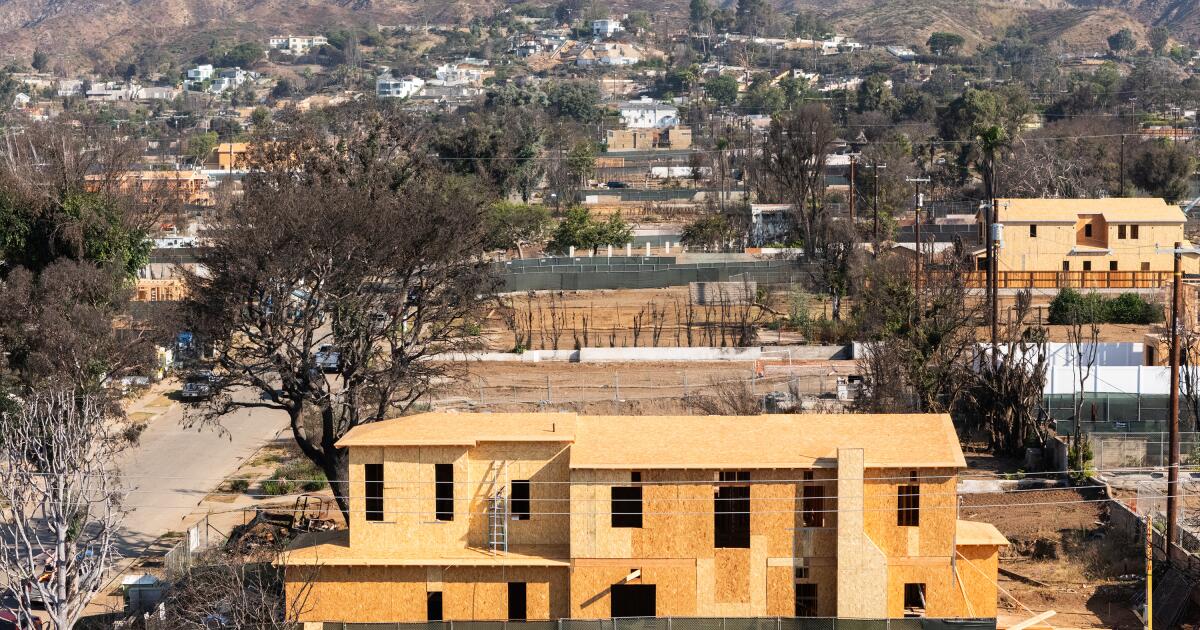
January 2025 wildfire victims seek tougher penalties against State Farm over claims handling
-
 Entertainment20 minutes ago
Review: ‘Sugar,’ with Colin Farrell as an alien private eye, gets a new and improved second season
-
 Politics30 minutes ago
Political watchdog fines Newsom for failing to report $5.5M in solicited donations on time
-
 Sports42 minutes ago
Goalkeeper Raúl Rangel’s elite play and South Korea’s mistake help Mexico advance
-

 World49 minutes ago
US-Iran talks postponed as Israel attacks Lebanon
-
 News1 hour ago
Luigi Mangione’s lawyers withdraw plans for psychiatric defense

