Entertainment
Bob Spitz proves the Rolling Stones are rock’s greatest band in magnificent new biography


By early 1963, the Station Hotel in London had become an epicenter of the burgeoning British blues scene. On a blustery, snowy night that February, the Rolling Stones’ classic early lineup took the stage for one of the first times, dazzling the audience with ferocious renditions of blues standards like Muddy Waters’ “I Want to Be Loved” and Jimmy Reed’s “Bright Lights, Big City.”
Multi-instrumentalist Brian Jones, the band’s founder and leader, synchronized guitars with Keith Richards, who favored a distinctive slashing and stinging style. Drummer Charlie Watts, the group’s newest member, a jazz aficionado and an accomplished percussionist, propelled the music forward with a rock-solid beat.
Anchoring the rhythm section with him was bassist Bill Wyman, who was recruited more for his spare VOX AC30 amp that the guitarists could plug into than for his musical skills. The stoic bassist proved a strong and innovative player. Together, he and Watts would go on to form one of rock’s most decorated rhythm sections.
Ian Stewart’s energetic boogie-woogie piano style rounded out the sound. Months later, manager Andrew Loog Oldham kicked him out of the band for being “ugly,” although Stewart continued to record, tour and serve as the band’s road manager until his death in 1985.
This April 8, 1964, file photo shows the Rolling Stones during a rehearsal. The members, from left, are Brian Jones, guitar; Bill Wyman, bass; Charlie Watts, drums; Mick Jagger, vocals; and Keith Richards, guitar.
(Associated Press)
Fronting the group was Mick Jagger. Channeling the music like a crazed shaman, Jagger shimmied and sashayed, owning the stage like few lead singers have before or since. By the end of the night, the Stones had the crowd in a frenzy. Although only 30 people had made it to the gig because of the treacherous weather conditions, the hotel’s booker had seen enough: He offered the Stones a regular gig.
“The Rolling Stones had caught fire. The music they were playing and the way they played it struck a chord with a young crowd starved for something different, something their own… It was soul-stirring, loud and uncompromising,” writes Bob Spitz in “The Rolling Stones: The Biography,” his magisterial work that charts the 60-year journey of “the greatest rock and roll band in the world.”
Spitz, the author of strong biographies on the Beatles and Led Zeppelin, as well as Ronald Reagan and Julia Child, captures the drama, trauma and betrayals that have kept the Stones in the public’s consciousness for more than six decades. It’s all here: The Stones’ evolution from a blues cover band to artistic rival of the Beatles; the musical peaks — “Aftermath,” “Let It Bleed” and “Exile on Main Street” as well as misfires like “Dirty Work”; Keith’s descent into a debilitating heroin addiction that nearly destroyed him and the band; the death of the ‘60s at the ill-fated Altamont free concert; Marianne Faithfull, Anita Pallenberg, Bianca Jagger, Jerry Hall and other lovers, partners and muses; the breakups, makeups and crackups; and perhaps most important, the unbreakable bond between Jagger and Richards at the center of it all.
Although Spitz unearths little new information, he excels at presenting the Stones in glorious Technicolor. Spitz homes in on the telling details and anecdotes that give the band’s story a deep richness and poignancy.
Take “Satisfaction,” the Stones’ 1965 classic and first U.S. chart topper. The oft-told story is that Richards woke up in the middle of the night, grabbed the guitar that was next to his bed, and recorded the iconic riff and the phrase “I can’t get no … satisfaction” on a cassette recorder in his Clearwater, Fla., hotel room before falling back asleep. But as Spitz notes, the song initially went nowhere in the studio. That is until Stewart purchased a fuzz box for Richards a few days later, which gave the tune a raunchier sound that perfectly matched Jagger’s lyrics of frustration and alienation. A classic was born.
Piercing the Stones mythology
Spitz’s deep reporting often pierces the mythology surrounding the band. Contrary to the popular belief of many fans, for instance, Jones bears much of the responsibility for the rift with his bandmates and his tragic demise.
The most musically adventurous member of the group — he plays sitar on “Paint It Black” and dulcimer on “Lady Jane” — Jones wasn’t a songwriter. That stoked his jealousies and insecurities, along with frontman Jagger stealing the spotlight from him. A monster of a man, Jones impregnated multiple teenage girls and physically and emotionally abused several women, including Pallenberg. Perhaps that’s why she left him for Richards. Over time, Jones made fewer contributions in the studio and onstage, becoming a catatonic drug casualty. The Stones fired Jones in June 1969 but would have been justified doing so a couple years earlier. He drowned in his pool less than a month later.
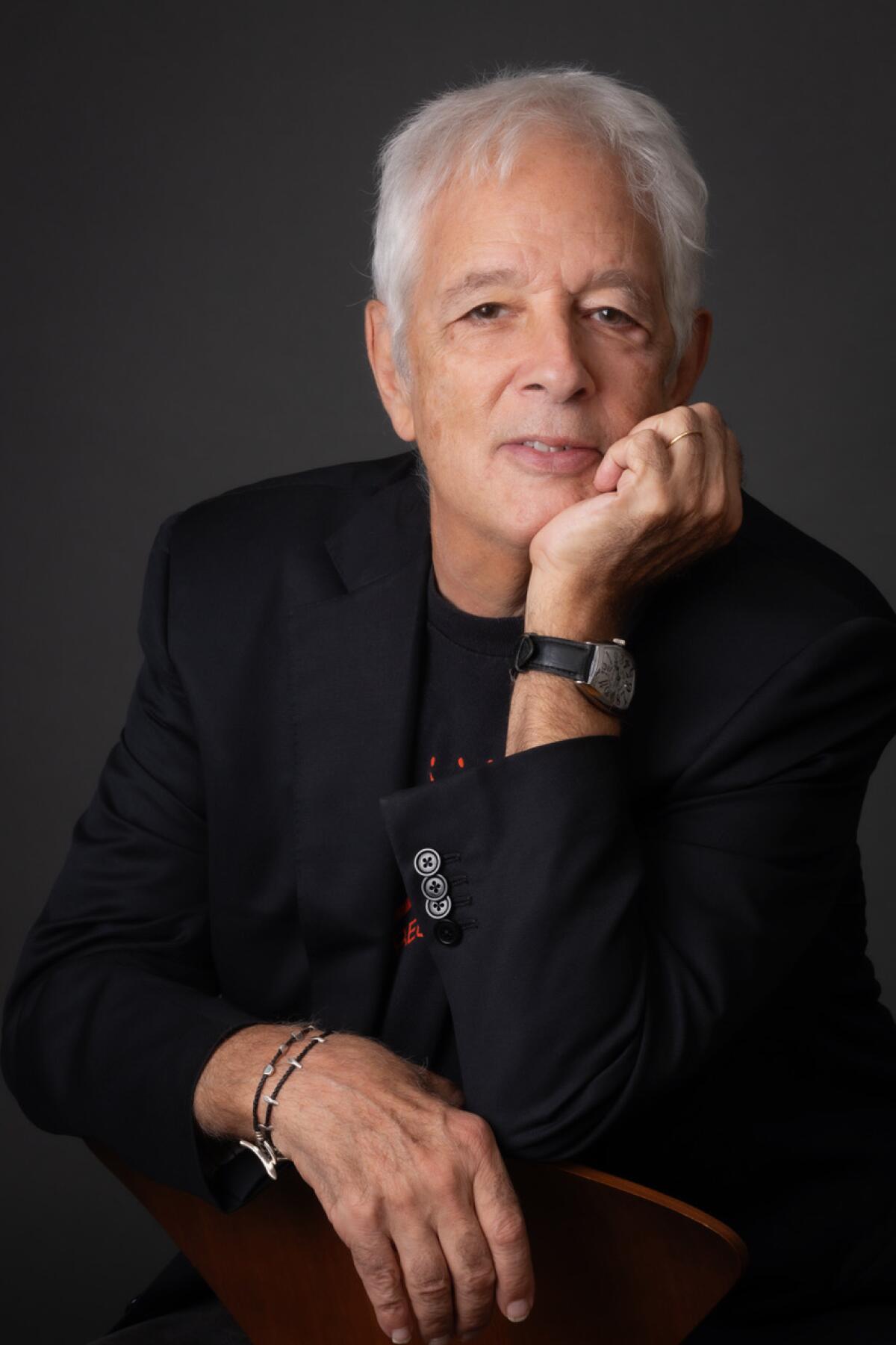
Author Bob Spitz
(Elena Seibert)
Similarly, Stones lore has long romanticized the making of “Exile on Main Street” in the stifling, dingy basement of Richards’ rented Villa Nellcôte in the South of France, where the Stones had decamped to avoid British taxes. In this telling, Richards, deep in the throes of heroin addiction, somehow managed to come up with one indelible riff after another built around his signature open G tuning — taught to him by Ry Cooder — leading the band to create one of the best albums in rock history. That’s not entirely accurate, according to Spitz.
Yes, Richards came up with the licks for “Rocks Off,” “Happy” and “Tumbling Dice.” But it’s equally true that a strung-out Richards missed myriad recording sessions, invited dealers, hangers-on and other distractions to Nellcôte, and repeatedly failed to turn up to write with Jagger. Far from completing the album in the druggy haze of a French basement, the band spent six months on overdubs at Sunset Sound in Los Angeles, where Jagger contributed many of his vocals.
Beatles vs. Stones
One of the more interesting themes Spitz develops is the symbiotic relationship between the Beatles and Stones, with the Fab Four mostly overshadowing them — until they didn’t.
John Lennon and Paul McCartney wrote “I Wanna Be Your Man” and gave it to the Stones, whose 1963 rendition, with Jones on slide guitar, became the group’s first UK Top 20 hit. The Lennon-McCartney songwriting partnership inspired Jagger and Richards to begin penning their own songs. In early 1964, the Beatles came to the U.S. for the first time, making television history with their appearance on “The Ed Sullivan Show” and playing Carnegie Hall. A few months later, the Stones kicked off their inaugural American tour at the Swing Auditorium in San Bernardino. In 1967, the Beatles released “Sgt. Pepper’s Lonely Hearts Club Band,” a psychedelic masterpiece. The Stones responded with “Their Satanic Majesties Request,” a psychedelic mess.

The Rolling Stones: The Biography cover
As the Beatles began to splinter, Spitz writes, the Stones sharpened their focus. The band released “Beggars Banquet” in late 1968 and “Let It Bleed” the following year, albums every bit as innovative and visionary as “The White Album” and “Abbey Road.” For the first time, the two groups stood as equals.
When the Beatles broke up in 1970, the Stones kept rolling. With Jones replaced by virtuoso guitarist Mick Taylor — whose fluid, melodic style served as a tasty foil to Richards — they produced what many consider their finest works, “Sticky Fingers” and “Exile on Main Street.” More impressively, the band, with Taylor’s successor, Ronnie Wood, has continued to dazzle audiences with incendiary live shows, touring as recently as 2024 behind the late-career triumph “Hackney Diamonds.” The Beatles, by contrast, retired from the road in 1966 and devoted their energies to the studio.
Hundreds of books have been written about the Rolling Stones, but few sparkle quite like Spitz’s. For anyone who loves or even likes the Stones, it’s indispensable.
Like most of the band’s biographers, Spitz gives short shrift to the post-“Exile” period after 1972. He curtly dismisses 2005’s strong “A Bigger Bang” and 2016’s “Blue & Lonesome,” a back-to-basics album of blues covers, as “adequate endeavors that signaled a band living on borrowed time.” That critique is both off target and under-developed. Spitz ignores the band’s legendary live album, “Brussels Affair,” recorded in 1973, or why the band waited decades before officially releasing it.
These are small quibbles. Spitz has written a book worthy of its 704-page length; another 50 or so pages covering the later years would have made it even stronger. To quote the Rolling Stones: “I know it’s only rock ‘n roll, but I like it, like it, yes, I do.”
Marc Ballon, a former Times, Forbes and Inc. Magazine reporter, teaches an advanced writing class at USC. He lives in Fullerton.


Lots of disturbing movies take place at summer camps. “Friday the 13th,” “Sleepaway Camp,” “Care Bears Movie II: A New Generation,” the list goes on, and it just keeps going because shoving dozens of kids into an emotional pressure cooker at the edge of civilization with minimal supervision and no escape is usually a bad idea. And that’s before you give them all bows and arrows.
Avalon Fast’s sophomore feature isn’t a typical summer camp horror movie. It’s a trippy, melancholic tragedy about healing psychic wounds, and finding out they’re already infected. Try to imagine an angsty, indie teen drama that’s parasitically burrowing its way into a Florence + The Machine music video. Now imagine it’s in theaters now and it’s called “Camp.”
“Truth or Dare” is a crappy game, even on “Love Island,” but it’s even crappier at the start of “Camp.” The halfhearted young friends of Emily (Zola Grimmer) can barely muster enough gusto to come up with a dare, and when they give up, their fallback “truth” is just asking her for her biggest regret. It may have been a haircut. It may have been the time she ran over a four-year-old with her car. Either way it’s a lousy icebreaker.
As if her night couldn’t get any worse, Emily’s best friend overdoses in her car, sending her spiraling into grief and misery. Months go by and her father arranges to get her a camp counseling gig, looking after other troubled youths at a place called only “Camp.” (I’d say the least plausible part of Fast’s film is that the domain name “camp.net” wasn’t already taken, but shut my mouth, because it really isn’t.)
The kids are non-entities, a vague distraction from her worries, but her fellow counselors are badasses. They smoke. They drink. They say things like, “I feel like doing drugs” and look, you gotta give ‘em credit, when they say they’re going to do something they do it. I can’t even take the recycling downstairs most of the time and here these girls are, saying they feel like doing drugs and then doing the damn drugs, making me feel like a lazy jerk.
There’s just one problem. Or maybe there isn’t. Emily’s new cohort, led by the alluring and oddly motherly Clara (Alice Wordsworth), begins each summer with a ritual to make their wishes come true. Nev (Lea Rose Sebastianis) wishes to have sex with their boss, Dan (Austyn Van De Camp), “really, really hard” and wouldn’t you know it, her wish was essentially a command.
Avalon Fast knows that’s wrong, but she knows her characters don’t care very much. Dan starts trudging across the camp grounds, confused and disturbed. He was saving himself for marriage, the poor guy, and looks like he’s on the verge of something terrible. But sacrificing Dan’s virginity gave Emily and her friends a taste of power, and it manifests in sparkly animated hand flourishes, which do nothing, it seems, except look cool. But it’s their power and they’re taking it, and they’ll take a lot more.
The problem with describing the plot of Fast’s “Camp” is that it places way, way too much emphasis on the plot. This movie doesn’t run from scene to scene, it gradually sinks into emotional rot. Emily thinks she’s getting better, finding friends and — in her own way — finding her spirituality. It’s just a selfish, detached spirituality and sees no value in anyone else’s feelings. Or anything else about them. What looks like a film about finding your way back from the darkness is, instead, a labyrinth that Emily probably can’t solve. She may not even want to.

“Camp” is a dreary, disturbing day dream of a movie, the kind you have when you’re all in your feels and close to getting heatstroke. It’s not about getting better, it’s about getting worse, and how that sometimes feels like getting better. You may not have worked through your baggage, you may not have processed your trauma, but at least everything looks simple. You can just while away your days with excess, abandoning all empathy, even for yourself.
It’s a sad film, “Camp,” and it’s a little tricky. Fast is working with familiar horror movie clichés, and falling into the old routine where witchcraft is initially empowering, then horrifying, and that probably doesn’t do real-life witches many favors. Then again, neither do a lot of the classic witch films — especially “The Craft,” the goth 1990s elephant in the room — and most of them aren’t as emotionally salient as Fast’s interpretation, although they’re typically more “fun.”
“Camp” isn’t a fun movie. That’s not a criticism, it’s just the way it is. Avalon Fast’s gloomy, lo-fi aesthetic occasionally segues into ornate, gorgeous imagery, proving the filmmaker — and cinematographer Eily Sprungman — are in total creative control. Fast wants us to feel Emily’s despair and the futile moral ambiguity of her distractions. It’s a cautionary tale, perhaps, about not hanging out with the wrong crowd, or taking solace in mind-altering experiences, but more than anything it’s a sympathetic mirror, and it’s pointed at anyone who ever got lost.


As La Cruz continues to break down barriers for the LGBTQ+ community in reggaeton, the rising Venezuelan star enjoys living out his gay fantasies in his music videos. Take the sultry video for his 2023 breakthrough single, “Quítate La Ropa,” which sees shirtless men perreando (twerking) before him in a locker room.
But at the same time, La Cruz has come to understand that his platform as a gay reggaeton artist coincides with a time when conservatism is sweeping the globe — and queer rights are receding.
“It fills me with happiness to represent a community that has been denigrated, treated badly and pushed into a corner for many years,” a bedheaded La Cruz says over Zoom from his New York City hotel room. (He had just performed at a Pride event the night before.)
“It’s a fact that [LGBTQ] rights are becoming progressive, but they’re rolled back even faster than they advance,” he adds. “This is very painful and concerning. This is happening in every country in different ways. During these difficult times, I’m going to keep putting my heart into my music more than ever.”
La Cruz is the stage name of Alfonso La Cruz. The native of La Guaira, a coastal city in Venezuela, pursued a music career after relocating to Spain in 2015. Following a brief stint on the singing competition “Operación Triunfo” three years later, La Cruz was closeted and found his momentum stifled. In 2022, he took the brave step of singing about his affection and lust for other men in his debut album, “Hawaira.”
Venezuelan reggaeton singer La Cruz released his new EP, “El Nene, Vol. 2,” on June 11.
(Maria Camila Pinzon)
Backed by the beats of reggaeton, a genre that had historically excluded the LGBTQ+ community, La Cruz found both his groove and his tribe with hits like “Te Conocí Bailando” and “Quítate La Ropa.” Early supporters included Colombian superstar Karol G, as well as Mexican American R&B singer Omar Apollo.
Alongside Puerto Rican provocateurs like Young Miko and Villano Antillano, La Cruz has continued to queer the heteronormative urbano space. He has also pushed his sound to broader horizons in his new EP, “El Nene, Vol. 2,” which includes “Sírveme,” a Brazilian funk banger with drag pop star Gloria Groove — and “Te Perdí,” a touching tribute to the victims and survivors of the 2016 Pulse nightclub shooting in Orlando, Fla.
La Cruz’s EP dropped on June 11, the day before the 10th anniversary of that tragedy, which largely impacted the queer Latino community. In an interview with The Times, he opened up about being a gay reggaetonero and “Te Perdi,” his tribute to the 49 people lost at Pulse.

It’s been three years since you first went viral with “Quítate La Ropa.” What have you learned about yourself during that time?
There are songs that have brought me a lot of love and I’m thankful to my fans that consider that song to be a classic. It’s brought me a lot of blessings. At this moment, I feel like I have the best opportunities in my life. However, I feel like the industry is a bit uncomfortable with an artist that’s openly gay and wants to be a part of this. That hasn’t stopped me at all. It’s the gasoline in my motor. It’s what pushes me to keep working hard. My fans are what’s building my career and I won’t let them down. I’m sticking with this until the end.
You connected with Karol G early in your career. Did she give you any advice when you met her?
I want to say publicly that I would love to open for her concerts on her Viajando Por El Mundo Tropitour. I’m very close to her. I love her so much. She has always treated me with so much love. I hope that something between me and her can happen sometime. I know everything happens in due time. I told her that I love the way she is and how she connects with her fans. When I see her singing and performing, I feel like she’s a sister to me. A big piece of advice that she gave me and that I’ll always carry with me is to never lose the humility and closeness that I have with my fans. The key to success is humility. I never want to be out of reach. I want people to see me and say, “I want to achieve my dreams like he has.”
How did your collaboration “Sírveme” with Gloria Groove come together?
I love her so much! I’ve always been a big fan of hers. I’ve gotten close to a lot of artists in Brazil and Gloria has been one of them. We didn’t think twice about making this song. Gloria was coincidentally traveling to the amusement parks in Orlando. I told her: “Baby, let’s go! I’m ready for you in Miami.” She told me: “Baby, I’m going to Miami!” We met one afternoon to create this song. She paused her vacation to go to the studio with me. It was very beautiful. I love my Brazilian fans.
With “El Nene, Vol. 2,” why was it important for you to also shed a light on the 10th anniversary of the Pulse nightclub shooting?
In 2016, when I recently arrived in Spain and my brother recently arrived in the U.S., we had a call with our family. My brother said, “There was a shooting close to where I live and it was in a gay club.” My family has supported me since I first told them about my sexuality. I thought that that could’ve happened to me.
I’m following up on this tragedy because it shaped my life. As the years go on, information about this attack has faded away. Each day people are talking less about it. It’s a tragedy that’s super important to remember, like 9/11 and the [2017] Las Vegas shooting, because it’s one of the worst attacks in U.S. history. Why are we not talking about it anymore? We have to keep talking about things so that they don’t happen again.
What inspiration did you pull from the Pulse tragedy for your song “Te Perdí”?
On this path, I’ve gotten to know the stories of people that survived that shooting. For example, there was a boy with his mother that lost her life and he survived. There’s a lot of stories of love from that club that have [since] come out. When I went to the studio, I was inspired by loss, or a love that’s gone away, with respect and love for the community that supports me. It is my gift, to be a voice for this situation that should never be repeated. There are people that don’t know about this tragedy and I want to let the world know that this happened. I hope that the victims’ families and the people that survived are living lives of peace and calm.

RICHMOND, Va. (WRIC) — In this episode of 8News Reel Talk, Julia Broberg sits down with Hekla Petursson and Catori Ryan to talk about “Toy Story 5.”
The hosts gave their reviews and provided the following star ratings:
Catori: ★★★★
Hekla: ★★★★★
Julia: ★★★★.2
To watch more livestreams and digital video content, head to the WRIC+ Originals page. You can also watch full on-demand videos on your smart TV using the WRIC+ app.
-

 Arkansas2 minutes ago
DeGray Lake Resort State Park offers a week’s worth of summer fun in Arkansas
-

 California8 minutes ago
This 1947 adobe home has found a new life as a ‘modern California hacienda’
-

 Colorado15 minutes ago
Colorado Springs police searching for missing 11-year-old
-

 Connecticut18 minutes ago
Opinion: More to do on gun violence prevention in CT
-

 Delaware23 minutes ago
After changing Delaware’s library system forever, she’s stepping away
-

 Florida30 minutes ago
Florida tattoo shop refuses service to military and veterans for being ‘war criminals’
-

 Georgia33 minutes ago
What would it take for Missouri football to stun Georgia in 2026?
-

 Hawaii38 minutes ago
Scientists say major earthquakes feel frequent, but activity is on track

