West
Oregon Supreme Court stops 10 GOP lawmakers from running for re-election, siding with Democrat's ballot ban

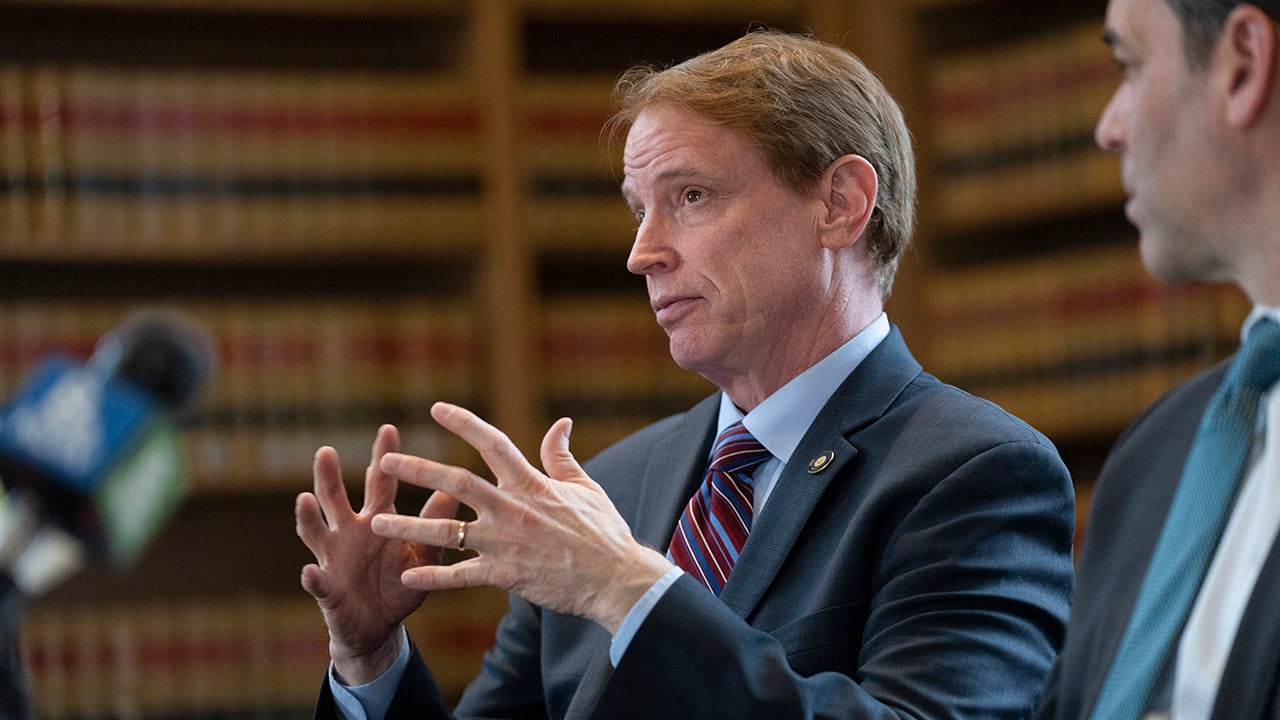
The Oregon Supreme Court on Thursday decided that 10 Republican state senators who participated in a record-long boycott last summer to block bills extending access to abortion for minors, transgender procedures and medical intervention, as well as another measure on ghost guns, cannot seek re-election this year.
The Oregon Senate Republican Caucus charged that the “Democrat-stacked supreme court sides with Democrats and union cronies on Measure 113 despite plain language of Constitution.” The caucus stressed that the state high court’s decision is “effectively ending the service of 10 Republican senators, who represent one-third of the Oregon Senate.”
The ruling upholds Democratic Oregon Secretary of State LaVonne Griffin-Valade’s announcement last August to disqualify the 10 lawmakers from the ballot under a measure aimed at stopping such boycotts. Measure 113, passed by voters in 2022, amended the state constitution to bar lawmakers from re-election if they have more than 10 unexcused absences.
Last year’s boycott lasted six weeks — the longest in state history — and stalled hundreds of bills. Five lawmakers sued over the secretary of state’s decision: Sens. Tim Knopp, Daniel Bonham, Suzanne Weber, Dennis Linthicum and Lynn Findley. They were among the 10 GOP senators who racked up more than 10 absences.
IOWA SECRETARY OF STATE INTRODUCES BILL THAT COULD LIMIT 14TH AMENDMENT BALLOT CHALLENGES AGAINST TRUMP
Oregon Senate Republican Leader Tim Knopp speaks as Democratic Senate President Rob Wagner listens during a news conference on Wednesday in Salem, Oregon. (AP Photo/Jenny Kane)
“We obviously disagree with the Supreme Court’s ruling. But more importantly, we are deeply disturbed by the chilling impact this decision will have to crush dissent,” Senate Republican Leader Knopp said Thursday.
“I’m disappointed but can’t say I’m surprised that a court of judges appointed solely by Gov. [Kate] Brown and Gov. [Tina] Kotek would rule in favor of political rhetoric rather than their own precedent. The only winners in this case are Democrat politicians and their union backers,” Weber added.
“Every legal mind I’ve heard from, regardless of political leanings, has affirmed that when there is only one interpretation for the plain language of the law, that is final,” Bonham added. “The language incorporated into the Oregon Constitution was clear and yet the Supreme Court ruled that voter intent, which cannot be determined by any metric, supersedes the Constitution. There is no justice in a political court.”
In deciding to remove the GOP lawmakers from the ballot, Griffin-Valade had directed her office’s elections division to implement an administrative rule based on her stance.
During oral arguments before the Oregon Supreme Court in December, attorneys for the senators and the state wrestled over the grammar and syntax of the language that was added to the state constitution after Measure 113 was approved by voters.
Democratic senators sit at their desks during a roll call at the Oregon state Capitol in Salem on June 6, 2023. (AP Photo/Amanda Loman, File)
The amendment says a lawmaker is not allowed to run “for the term following the election after the member’s current term is completed.” The senators claimed the amendment meant they could seek another term, since a senator’s term ends in January while elections are held the previous November. They argue the penalty doesn’t take effect immediately, but rather, after they’ve served another term.
The two sides also wrestled with the slight differences in wording that appeared on the actual ballot that voters filled out and the text of the measure as included in the voters’ pamphlet.
The ballot said the result of a vote in favor of the measure would disqualify legislators with 10 or more unexcused absences from holding office for the “term following current term of office.” It did not include the word “election,” as the text of the measure that appeared in the pamphlet did. What appeared in the pamphlet was ultimately added to the state constitution.
GOP LAWMAKERS BARRED FROM RE-ELECTION IN OREGON AFTER 6-WEEK WALKOUT, STATE SECRETARY SAYS
The state argued that in casting a “yes” vote in support of the measure, voters intended that legislators with that many absences be barred from running after their current term is up.
All parties in the suit had sought clarity on the issue before the March 2024 filing deadline for candidates who want to run in this year’s election.
The state Senate convenes at the Oregon state Capitol in Salem on May 11, 2023. The Oregon Supreme Court said Thursday that 10 Republican state senators cannot run for re-election. (AP Photo/Amanda Loman, File)
Oregon voters approved Measure 113 by a wide margin following Republican walkouts in the Legislature in 2019, 2020 and 2021, according to The Associated Press.
The 2023 walkout, which paralyzed the Legislature for weeks in preventing the state Senate from reaching a two-thirds quorum, ended after concessions from Democrats on a sweeping bill related to expanding access to abortion for minors and transgender procedures and medical intervention that Republicans had deemed too extreme and an affront to parental rights.
The initial measure would have allowed doctors to provide abortions regardless of a patient’s age, with medical providers not required to notify the parents of a minor in certain cases.
As part of the deal to end the walkout, Democrats agreed to change language concerning parental notifications for abortion. Under the compromise, if an abortion provider believes notifying the parents of a patient under 15 years old would not be in that patient’s best interest, the physician would not have to notify the parents — but would need another provider to concur. However, no second opinion would be needed if involving a parent or guardian would lead to the abuse or neglect of the patient.
Democrats said the measure will still ensure abortion access and protect caregivers from measures restricting abortion or sex reassignment procedures passed by other states. It will also require that health insurance covers “medically necessary” sex reassignment procedures for treating gender dysphoria.
Democrats also agreed to drop several amendments to a bill that would punish the manufacture or transfer of undetectable firearms. The now-removed clauses would have increased the purchasing age from 18 to 21 for semiautomatic rifles and placed more limits on concealed carry.
The Associated Press contributed to this report.
Read the full article from Here

San Francisco, CA
Discovery Bay driver arrested for San Francisco fatal vehicle collision | Contra Costa Herald

Killed pedestrian, struck 3 more people
By San Francisco Police Department
On May 25, 2026, at approximately 12:13 am, San Francisco Police officers responded to the area of 16th and Mission Streets regarding a vehicle collision.
Officers were advised that a collision occurred between a vehicle and a pedestrian.
Officers arrived on scene and located a pedestrian victim being treated by paramedics for life threatening injuries. Paramedics transported the victim to a local hospital.
Despite lifesaving efforts of medical staff, the victim was later declared deceased at the hospital.
A preliminary investigation revealed that a vehicle collided with a pedestrian and struck three additional victims.
The three victims were medically assessed on scene for non-life-threatening injuries.
Through the course of the investigation, officers located the suspect vehicle and detained the occupant of the vehicle.
The Traffic Collision Investigations Unit (TCIU) responded to scene and conducted their investigation.
Through the course of the investigation, TCIU investigators developed probable cause to arrest the driver identified as 57-year-old Samuel Powell of Discovery Bay on June 30, 2026.
Powell was arrested and charged for vehicular Manslaughter 192(c)(2) PC and the driver’s responsibility to exercise due care for the safety of any pedestrian within the roadway 21955(b)(3) CVC.
Although an arrest has been made, this remains an open and active investigation. Anyone with information is asked to contact the SFPD at 415-575-4444 or text a tip to TIP411 and begin the message with SFPD.

After an extended wait of no activity from the Denver Nuggets in this year’s free agency period, the team has finally made its first new signing.
That signing just so happens to be the No. 2 pick from the 2018 NBA Draft, Marvin Bagley III.
According to ESPN‘s Shams Charania, the Nuggets and Bagley have agreed to a one-year, veteran minimum deal for the 2026-27 season, effectively providing some solid depth in the frontcourt.
Free agent center Marvin Bagley III has agreed to a one-year deal with the Denver Nuggets, sources tell ESPN. A critical frontcourt addition for the Nuggets. pic.twitter.com/enHBVxgfYl
— Shams Charania (@ShamsCharania) July 2, 2026
With Denver’s first free agency signing now officially in the books, here’s what the move to bring in Bagley might mean for the Nuggets moving forward into free agency and this offseason, as well as entering next season.
Marvin Bagley Brings Frontcourt Depth to Denver’s Lineup
Bagley split his time between the Washington Wizards and Dallas Mavericks this past season to put together one of his better years of production in recent memory.
In the 60 combined games he played, Watson averaged 10.5 points, 6.1 rebounds, and 1.4 assists while shooting a career-high 61.8% from the field and 46.2% from three on a little less than one attempt per game.
Bagley’s a big who’s game centers more around his offensive skillset. He spent most of his time shooting last season at the rim or in the mid-range, shooting a stout 64.1% on two-pointers last season that can bring a bit of an interior presence into Denver’s frontcourt.
Defensively, he leaves a little bit more to be desired. And he’s still not quite the most impressive three-point shooter, even coming off his most efficient season from deep.
But for the cost of a veteran minimum contract, he acts as a nice budget-friendly addition who can shoulder some of the load offensively, and has shown value as an offensive rebounder as well. It’s tough to find much better for the price Denver’s paying.
While entering the league slotted in primarily as a power forward, it’s been in the past few seasons that Bagley’s settled in more as a full-time five; having spent 95% of his minutes during the 2025-26 campaign playing at the five.
That might give you a bit of a hint as to how the Nuggets plan to use him this next season, though they might also have some stretches where he’s placed alongside Nikola Jokic at the four for a bit of a larger frontcourt lineup.
The Writing’s On the Wall for Jonas Valanciunas
Looking at what Bagley’s addition might mean for the Nuggets’ current roster, no one in the picture gets more impacted by Jonas Valanciunas.
Valanciunas was Denver’s primary backup behind Jokic at the five last season following his trade from the Sacramento Kings, and entered this offseason with an uncertain future because of his contract situation.
The veteran big man has an expiring $10 million contract heading into the 2026-27 season, but one that’s not fully guaranteed, giving the Nuggets the opportunity to release him and save $8 million, while incurring a dead cap hit of $2 million that can be stretched over multiple years.
Such a move can give the Nuggets further cap flexibility that they’ll need this offseason to re-sign key pieces like Peyton Watson and Spencer Jones, which to this point haven’t been done, but becomes a bit easier now that Denver can take that next step in pivoting off of Valanciunas.
Perhaps Denver might also look deeper into a trade involving Zeke Nnaji, now that they’ve got a cheaper option in Bagley that might even sit ahead of him on the initial depth chart. However, it remains to be seen if the Nuggets have any takers on the two years remaining on his contract. To this point, they haven’t found anyone to bite.
When factoring in Valanciunas and Nnaji though, Bagley’s addition now brings the Nuggets to a total of 10 players signed onto traditional contracts for the 2026-27 season.
That leaves them with four open spots left to utilize in the days and weeks ahead. How they decide to use that space remains to be seen, but at the very least, the Nuggets’ long-awaited first offseason signing has now officially come to light.
Sign up for our free Denver Nuggets On SI newsletter, and get breaking Nuggets news delivered to your inbox daily!
 Add us as a preferred source on Google
Follow

(2024 reader photo of fireworks damage on Nino Cantu SW Athletic Complex turf)
Here’s the annual announcement from Seattle Parks – we’ve excised the non-local parks:
Seattle Parks and Recreation will turn on field lighting on ballfields throughout the city on the evening of Friday, July 3 and Saturday, July 4 to protect the surfaces. The ballfield lights will be turned on at approximately 9 PM.
The lights will be turned on to discourage the use of fireworks. Fireworks are illegal in the city of Seattle and will destroy the artificial turf on the fields or surrounding facilities. The approximate replacement cost for the synthetic surface based on per average full-size field (110,000 square feet) is $1.2 million. All the fields have been renovated in the past several years and benefit field users including soccer, football, baseball, ultimate frisbee and lacrosse.
The fields will be monitored from 9 PM to 3 AM
Lights at the following synthetic fields will be turned off at 3 AM on July 3 and 4:
Delridge Playfield, 4458 Delridge Way SW
Hiawatha Playfield, 2700 California Ave. SW
South Park Playfield, 8319 8th Ave S
Walt Hundley Playfield, 6920 34th Avenue SWLights will be turned off at the following grass fields at 11 PM on July 3 and 4:
West Seattle Stadium, 4432 35th Ave. SW
Comparing this to last year’s announcement, the lights will be on longer the night before the 4th, and the “monitoring” will be an hour later.
-

 San Francisco, CA6 minutes ago
Discovery Bay driver arrested for San Francisco fatal vehicle collision | Contra Costa Herald
-

 Dallas, TX13 minutes ago
Erling Haaland’s Dallas Western wear purchase goes viral
-

 Miami, FL16 minutes ago
Miami’s FIFA Fan Fest draws thousands to Bayfront Park to watch Team USA win World Cup match against Bosnia
-

 Boston, MA21 minutes ago
2026 Yukon Denali Ultimate gets pricey, but tops the charts
-

 Denver, CO28 minutes ago
Nuggets Sign Marvin Bagley to 1-Year Deal: What It Means
-

 Seattle, WA30 minutes ago
FOURTH OF JULY 2026: Here’s where Seattle Parks will leave the lights on longer
-
 San Diego, CA36 minutes ago
USA fans pack San Diego bar to cheer on USMNT’s dominant World Cup knockout win
-
 Milwaukee, WI43 minutes ago
Hundreds rally on Milwaukee’s South Side against ICE arrests and in solidarity with immigrants

