Connect with us

West

Newsom vetoes bill to establish first-in-nation AI safety regulations in California

Published

on

Newsom vetoes bill to establish first-in-nation AI safety regulations in California

California Gov. Gavin Newsom, a Democrat, on Sunday vetoed a bill to create safety measures for large artificial intelligence models, which would have been the first such law in the nation.

The governor’s veto delivers a major setback to attempts to create guardrails around AI and its rapid evolution with little oversight, according to The Associated Press. The legislation faced staunch opposition from startups, tech giants and several Democratic lawmakers.

Newsom said earlier this month at Dreamforce, an annual conference hosted by software giant Salesforce, that California must lead in regulating AI as the federal government has failed to put safety measures in place, but that the proposal “can have a chilling effect on the industry.”

S.B. 1047, the governor said, could have hurt the homegrown industry by setting up strict requirements.

DEMOCRAT SENATOR TARGETED BY DEEPFAKE IMPERSONATOR OF UKRAINIAN OFFICIAL ON ZOOM CALL: REPORTS

Advertisement

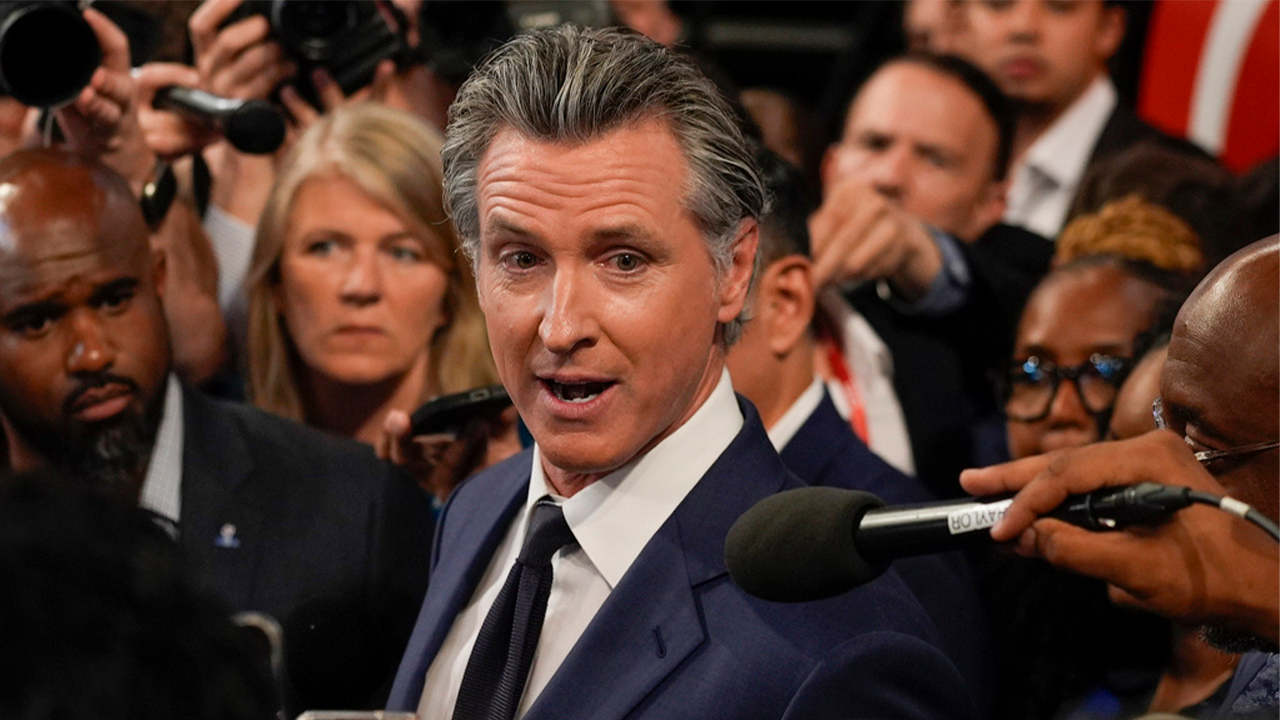
California Gov. Gavin Newsom vetoed a bill to create safety measures for large artificial intelligence models in the Golden State. (AP Photo/John Bazemore)

“While well-intentioned, SB 1047 does not take into account whether an AI system is deployed in high-risk environments, involves critical decision-making or the use of sensitive data,” Newsom said in a statement. “Instead, the bill applies stringent standards to even the most basic functions — so long as a large system deploys it. I do not believe this is the best approach to protecting the public from real threats posed by the technology.”

Newsom announced instead that the state will partner with several industry experts to develop safety measures for powerful AI models.

S.B. 1047 would have required companies to test their models and publicly disclose their safety protocols to prevent the models from being manipulated for harmful purposes, such as, for example, wiping out the state’s electric grid or helping to build chemical weapons, scenarios that experts say could be possible in the future as the industry continues to rapidly evolve.

The legislation also would have provided whistleblower protection to industry workers.

Advertisement

Democratic state Sen. Scott Weiner, who authored the bill, said the veto was “a setback for everyone who believes in oversight of massive corporations that are making critical decisions that affect the safety and the welfare of the public and the future of the planet.”

“The companies developing advanced AI systems acknowledge that the risks these models present to the public are real and rapidly increasing,” he said in a statement. “While the large AI labs have made admirable commitments to monitor and mitigate these risks, the truth is that voluntary commitments from industry are not enforceable and rarely work out well for the public.”

Wiener said the debate around the bill has helped put a spotlight on the issue of AI safety, and that he would continue pushing to advance safety measures around the technology.

Tech billionaire Elon Musk supported the measure.

800-PLUS BILLS LEFT ON NEWSOM’S DESK ILLUSTRATE CALIFORNIA’S OVERREGULATION PROBLEM: EXPERTS

Advertisement

Newsom announced that, rather than adopt the legislation, the state will partner with several industry experts to develop safety measures for powerful AI models. (Don Campbell/The Herald-Palladium via AP)

The proposal is one of several bills passed by the state Legislature this year seeking to regulate AI, combat deepfakes and protect workers. State lawmakers said California must take actions this year, pointing to the results of failing to rein in social media companies when they might have had an opportunity.

Supporters of the bill said it could have presented some transparency and accountability around large-scale AI models, as developers and experts say they still do not have a full understanding of how AI models behave.

The bill sought to address systems that require a high level of computing power and more than $100 million to build. No current AI models have met that criteria, but some experts say that could change within the next year.

“This is because of the massive investment scale-up within the industry,” Daniel Kokotajlo, a former OpenAI researcher who stepped down earlier this year over what he described as the company’s disregard for AI risks, told The Associated Press. “This is a crazy amount of power to have any private company control unaccountably, and it’s also incredibly risky.”

Advertisement

The U.S. is behind Europe in regulating the growing technology that is raising concerns about job loss, misinformation, invasions of privacy and automation bias, supporters of the measure said. The California bill was not as comprehensive as regulations in Europe, but the supporters say it would have been a step in the right direction.

Last year, several leading AI companies voluntarily agreed to follow safeguards set by the White House, which include testing and sharing information about their models. The California bill, according to its supporters, would have required AI developers to follow requirements similar to those safeguards.

But critics of the measure argued that it would harm tech and stifle innovation in the Golden State. The proposal would have discouraged AI developers from investing in large models or sharing open-source software, according to the critics, which include U.S. Rep. Nancy Pelosi, D-Calif.

Two other AI proposals, which also faced opposition from the tech industry, did not pass ahead of a legislative deadline last month. The bills would have required AI developers to label AI-generated content and prohibit discrimination by AI tools used to make employment decisions.

California state Sen. Scott Wiener said the debate around the bill has helped put a spotlight on the issue of AI safety. (Scott Wiener )

Advertisement

California lawmakers are still considering new rules against AI discrimination in hiring practices.

The governor previously said he wanted to protect the state’s status as a global leader in AI, citing that 32 of the world’s top 50 AI companies are in the Golden State.

Newsom has said California is an early adopter of AI, as the state could deploy generative AI tools in the near future to combat highway congestion, provide tax guidance and streamline homelessness programs.

Earlier this month, Newsom signed some of the strictest laws in the country to fight against election deepfakes and adopt measures to protect Hollywood workers from unauthorized AI use.

Advertisement

The Associated Press contributed to this report.

Read the full article from Here

Continue Reading
Click to comment

Leave a Reply

Your email address will not be published. Required fields are marked *

This site uses Akismet to reduce spam. Learn how your comment data is processed.

New Mexico

Tanya Tucker to perform at New Mexico State Fair

Published

on

Tanya Tucker to perform at New Mexico State Fair


ALBUQUERQUE, N.M. — Country Music Hall of Fame inductee Tanya Tucker will perform at the 2026 New Mexico State Fair, officials announced Tuesday.

Tucker will take to the stage Friday, Sept. 18, after the Chevron PRCA rodeo. The Grammy Award-winning icon has racked up 10 No. 1 country hits since her first hit, “Delta Dawn,” at age 13.

“We couldn’t be more thrilled to bring the legendary Tanya Tucker to the New Mexico State Fair,” said Dan Mourning, general manager of the New Mexico State Fair. “Tanya is one of the greatest icons in country music history and is the perfect fit for the Fair.”

Tucker has 23 Top-40 albums and 56 Top 40 singles on the Billboard country music charts. She has won two Country Music Association awards, two Academy of Country Music awards, three CMT Awards and two Grammys for Best Country Album and Best Country Song.

Advertisement

Tickets are set to go on sale on Friday at 10 a.m.

Here is the full 2026 New Mexico State Fair rodeo-concert lineup:

Friday, Sept. 11

Turnpike Troubadours with Chevron PRCA Xtreme Bulls

Saturday, Sept. 12

Advertisement

Ian Munsick with Chevron PRCA Xtreme Bulls

Wednesday, Sept. 16

Chevron PRCA Standalone Rodeo

Thursday, Sept. 17

Everclear with Chevron  PRCA Rodeo

Advertisement

Friday, Sept. 18

Tanya Tucker with Chevron PRCA Rodeo

Saturday, Sept. 19

The Warning with Chevron PRCA Rodeo

Sunday, Sept. 20

Advertisement

Chevron PRCA Rodeo – Matinee


Source link

Continue Reading

Oregon

Oregon gas prices highest since Sept. 2025 as oil surges on Hormuz disruptions

Published

on

Oregon gas prices highest since Sept. 2025 as oil surges on Hormuz disruptions


Crude oil prices surged after U.S. and Israeli strikes on Iran and stalled tanker traffic through the Strait of Hormuz, pushing gas prices sharply higher across the country, though Oregon and Washington are seeing smaller increases than many other states.

The national average price for regular gasoline jumped 43 cents over the past week to $3.54 a gallon.

Oregon’s average rose 31 cents to $4.26 a gallon, the 42nd-largest week-over-week increase among states.

Washington also increased 31 cents, ranking 44th-largest.

Advertisement

READ ALSO | Oil prices spike amid Iran war; Oregon gas remains above national average

The current national average is at its highest price since July 2024. Oregon’s average is at its highest since Sept. 2025.

“When crude oil prices shoot up, pump prices follow suit because crude oil is the basic ingredient in gasoline and diesel. It’s impossible to predict how high prices might go, but expect elevated oil and gas prices as long as the conflict in Iran continues and tankers are stalled in the Strait of Hormuz,” said Marie Dodds, public affairs director for AAA Oregon/Idaho.

AAA notes that, in general, every $1 increase in the price of crude oil leads to a 2.4- to 2.5-cent increase in the price of gasoline.

Crude oil typically accounts for about 47% of the cost of a gallon of gasoline, with refining at 16%, distribution and marketing at 20%, and taxes at 17%, according to the U.S. Energy Information Administration.

Advertisement

About 20% of the world’s oil and refined products flow through the Strait of Hormuz, a narrow passageway of the Persian Gulf bordered by Iran.

Tankers traveling through the strait carry oil from major producers including Saudi Arabia, Kuwait, Bahrain, the UAE, Qatar, Iraq and Iran. Any disruption can affect global oil supplies. While the U.S. does not rely on Iranian oil, China and India do.

Seasonal factors are also adding upward pressure. Gas prices typically rise starting in mid-to-late winter and early spring as refineries undergo maintenance ahead of the switch to summer-blend fuel, which is more expensive to produce and less likely to evaporate in warmer temperatures.

National gas price comparison/AAA chart

Most areas have a May 1 compliance date for refiners and terminals, while most gas stations have a June 1 deadline to switch to selling summer-blend. Some refineries begin maintenance and the switchover in February.

Advertisement

In Oregon, the average price for regular gas began 2026 at $3.42 a gallon. The highest price of the year so far is today’s $4.26, and the lowest was $3.33 on Jan. 20. Nationally, the average began 2026 at $2.83 a gallon. The highest price of the year so far is today’s $3.54, and the lowest was $2.795 on Jan. 11.

AAA reported that U.S. gasoline demand decreased from 8.73 million barrels per day to 8.29 million for the week ending Feb. 27, compared with 8.88 million a year ago.

Total domestic gasoline supply decreased from 254.8 million barrels to 253.1 million. Gasoline production increased last week, averaging 9.3 million barrels per day compared with 9.2 million barrels per day the previous week.

Crude oil prices have been volatile. West Texas Intermediate surged to near four-year highs around $95 per barrel this week but fell to the $80s today as President Trump signaled the conflict with Iran may end soon.

On the West Coast, all seven states remain in the top 10 for the most expensive pump prices nationally.

Advertisement

California has the highest average for the fifth week in a row at $5.29 a gallon and is the only state at or above $5.

Washington is second at $4.69, Hawaii third at $4.59, Nevada fourth at $4.30 and Oregon fifth at $4.26. Arizona averages $3.97 and Alaska $3.95.

All 50 states and the District of Columbia saw week-over-week increases. California had the largest jump at 62 cents, while Hawaii had the smallest at 19 cents. AAA said Oregon and Washington prices also rose last month after an outage of the Olympic pipeline.

The cheapest gas in the nation is in Kansas at $2.96 a gallon and Oklahoma at $3.01. Kansas is the only state with an average in the $2 range this week. The gap between the most expensive and least expensive states is $2.33 this week, up from $2.05 a week ago.

Compared with a month ago, prices are higher everywhere: the national average is up 62 cents and Oregon’s average is up 68 cents.

Advertisement

Compared with a year ago, the national average is up 45 cents and Oregon’s average is up 53 cents.

Diesel prices also spiked. The national average for diesel rose 89 cents over the week to $4.78 a gallon, while Oregon’s average jumped 72 cents to $5.02.

A year ago, the national average for diesel was $3.63 and Oregon’s average was $3.86.


Source link

Advertisement
Continue Reading

Utah

‘They’re trying to change the rules’: Republicans ramp up fight to stop new maps in Utah

Published

on

‘They’re trying to change the rules’: Republicans ramp up fight to stop new maps in Utah


Utah’s Republican-controlled legislature is escalating its fight against the state’s anti-gerrymandering law after a series of court rulings threatened the congressional map that has long favored the GOP.

In the latest move, lawmakers passed a new rule over the weekend that blocks many voters from withdrawing their signatures from a petition that sought to repeal Proposition 4 ahead of a Monday deadline, undermining efforts by grassroots groups to preserve the reform. That could affect the result of the petition after some voters said they were misled by Republicans who asked them to sign.

The move comes as redistricting battles intensify across the US ahead of the midterm elections. Courts in several states are weighing lawsuits over congressional maps, while Donald Trump has urged Republican governors to redraw districts in ways that could strengthen GOP control of House seats.

On 25 August 2025, third district judge Dianna Gibson ruled that Utah lawmakers had unconstitutionally overridden Proposition 4, the 2018 voter-approved initiative that created an independent redistricting commission, set neutral mapping criteria and required greater transparency in the process.

Advertisement

Gibson sided with the League of Women Voters of Utah and Mormon Women for Ethical Government, striking down the state’s 2021 congressional maps and reinstating Proposition 4 as a binding law, which allows independent bodies to redraw the districts. The ruling aligned with public opinion as well, according to the conservative Sutherland Policy Institute, which found that 85% of registered Utah voters support involving an independent commission in redistricting.

Gerrymandering’s impact has been most severe in Salt Lake county, Utah’s youngest and most populous county, which heavily leans Democratic. The 2021 Republican-drawn maps split the county across all four districts, diluting urban Democratic votes and entrenching GOP dominance.

“Salt Lake county was chopped into pieces,” said Katharine Biele, president of the League of Women Voters of Utah. “This new map reunifies the county, so people there have a fair chance to be heard.” By consolidating the county into a single district, the revised map restored genuine electoral competition; it could also give Democrats a fair chance to win one of Utah’s four congressional seats in the midterm elections.

But the sense of optimism many in Salt Lake City felt in August has steadily faded as Republicans have passed layers of legislation aimed at weakening or repealing Proposition 4. After the district court ruling last year, Utah’s Republican leadership quickly rejected the decision. Some lawmakers even threatened to impeach Judge Gibson.

As it became clear that Proposition 4 could deliver an additional seat to Democrats, the fight drew national attention. Trump and JD Vance both weighed in, framing the dispute as part of a broader struggle over election rules, with Trump immediately taking to social media, calling the proposition “unconstitutional” and the judges part of the “Radical Left”.

Advertisement

“What’s really frustrating is seeing that instead of listening to the people, and to the courts who are trying to keep them in line, they’re just trying to change the rules,” said Elizabeth Rasmussen, executive director of Better Boundaries, an advocacy group that had been running an awareness effort urging petition signers to withdraw their signatures before the Republican’s latest legislation.

In late January, Utah Republicans passed legislation adding two seats to the state’s supreme court. The state’s governor, Spencer Cox, quickly signed the bill into law, expanding the court from five to seven justices. Critics argue the move amounts to court expansion aimed at blunting the impact of rulings related to Proposition 4.

“Disagreement with judicial decisions is normal,” Rasmussen said, referencing criticism from the Trump administration and frustration expressed by the governor. “But impeaching a judge because you lost is not. Trying to rewrite the rules after the fact is not. Court-packing is not how this system works.”

(The Guardian reached out to the Utah governor’s office for comment multiple times but had not received a response at the time of publication.)

In early February, with the deadline to file for re-election just over a month away, two Utah Republican members of Congress, representatives Celeste Maloy and Burgess Owens, filed a federal lawsuit challenging the state court’s order to reinstate the district court-approved map. They argued that the ruling violated the US constitution and asked the US district court for Utah to restore the map passed by the Republican-controlled legislature in 2021.

Advertisement

Later that month, a three-judge federal panel rejected the GOP-led effort to block the new House map. The judges denied Republicans’ request for a preliminary injunction, allowing the revised map to be used in this year’s election and giving Democratic candidates a potential opportunity to win a US House seat. (The Guardian reached out to the Utah GOP for comment in December but had not received a response as of publication.)

Biele, of the League of Women Voters of Utah, sharply criticized Republican lawmakers, calling the move an abuse of power. “Every time they lose, or get a ruling they don’t agree with, they change the rules so it works for them,” she said.

But in a final push to overturn Proposition 4, Utah Republicans announced last Monday that they had submitted enough verified signatures to qualify a repeal measure for the November ballot, with a deadline to verify on 9 March. Once verified, county clerks were expected to publish the names of signers, triggering a 45-day window during which voters could withdraw their signatures – a process later threatened by the weekend legislation to make it harder to do so.

Rasmussen, executive director of Better Boundaries, said the bill was pushed through with little public scrutiny. “This bill was obviously planned to pass as the clock ran out with very little public input,” she said. “It was introduced at 11pm on a Friday, the last night of the legislative session, and was signed into law only 12 hours later.” She added that the move reflects a broader problem.

“This type of legislative behavior is what happens when there aren’t any checks on power.”

Advertisement


Source link

Continue Reading

Trending