Nevada
Some 2024 General Election takeaways: Bad for libraries, good for Gov. Veto • Nevada Current


The presidential election was far from the only thing being decided by Nevada voters last week. Here’s a look at some other takeaways that have emerged as the dust settled on the 2024 general.
Lombardo remains Gov. Veto
Democrats appear to have slipped further from obtaining a veto-proof supermajority, though they remain in healthy control of the Nevada State Legislature, unofficial election results show.
Going into the general election, Democrats had a supermajority in the Assembly and were one seat shy of a supermajority in the Senate.
In the Nevada State Senate, where 10 of 21 seats were up this year, the makeup will remain the same as it was going into Election Day.
Democrats successfully flipped Senate District 15. Democrat Angie Taylor, who served one term in the state Assembly, defeated Republican Mike Ginsburg for a seat formerly represented by Republican Heidi Seevers O’Gara (formerly Seevers Gansert), who opted not to run for re-election.
That gain appears to have been offset by Senate District 11. As of Monday morning, the Associated Press, which the Nevada Current uses for race projections, had not yet called the SD11 race between Democratic incumbent Dallas Harris and Republican challenger Lori Rogich. But Harris was trailing Rogich by around 850 votes.
State Sen. Carrie Buck, a Republican seen as vulnerable in competitive Senate District 5, fended off her Democratic challenger.
If current results hold, Democrats will be two seats shy of a supermajority in the upper chamber.
In the Nevada State Assembly, Republicans appear to have successfully broken the Democratic supermajority by defending their 14 seats and flipping one seat red.
Republican Rebecca Edgeworth defeated Democrat Sharifa Wahab in Assembly District 35, according to the AP. Edgeworth, who raised significantly more funding than Wahab, was part of a cadre of candidates backed by Gov. Joe Lombardo.
AD35 was previously represented by Democrat Michelle Gorelow, who opted not to run for re-election amid controversy about her ‘yes’ vote on a funding bill that benefitted a nonprofit she later took a job with.
Other competitive open seats will see new representatives but not switch parties. Republicans failed to flip Assembly District 29. There, Democrat Joe Dalia defeated Republican Annette Dawson Owens. Similarly, Democrats failed to flip Assembly District 4. There, Republican Lisa Cole defeated Democrat Ryan Hampton.
Republican Assemblywoman Heidi Kasama and Democratic Assemblywomen Elaine Marzola, Selena La Rue Hatch, and Shea Backus all successfully defended their competitive seats from challengers.
Meanwhile, Democratic Majority Floor Leader Sandra Jauregui appears to be on track to squeak out a win over Republican challenger Rafael Arroyo in Assembly District 41. The race has not been called by the AP but Jauregui is up by around 350 votes.
Jauregui’s race is one of two Assembly races the AP had not called as of Monday morning. The other, Assembly District 12, is between Democratic incumbent Max Carter and Republican challenger Nancy Roecker. Carter is up by less than 300 votes.
If current results hold, Democrats will be one seat shy of a supermajority in the Assembly.
According to Ballotpedia, Nevada is one of a dozen states with a divided government, meaning neither major political party controls both chambers of the state legislature and the governorship.
Moms for Liberty headed to school board
The Clark County School Board will soon have two trustees associated with Moms for Liberty — an advocacy group known for protesting vaccine mandates, advocating against diversity equity and inclusion policies, and pushing anti-trans narratives.
Lorena Biassotti, who co-founded the Moms for Liberty Clark County chapter, and Lydia Dominguez, a former member of the chapter who left the group in the weeks before the general election, were both elected to the nonpartisan board. Both defeated former teachers — Kamilah Bywaters and Eileen Eady, respectively.
Biassotti and Dominguez will be sworn in as trustees in early January.
Joining them will be political newcomers Emily Stevens and Tameka Henry. Stevens expressed some conservative positions on educational issues like charter and private schools but is not associated with Moms for Liberty and did not campaign on cultural issues like banning books and trans athletes. Henry, a vocal critic of Moms for Liberty backed by progressive groups, ousted School Board President Evelyn Garcia Morales.
The Clark County School Board has seven voting members and four appointed members. The newly seated school board will almost immediately be thrust into the process of selecting Clark County School District’s next superintendent.
Applications for the district’s top job are being accepted until Feb. 5, according to a timeline posted by CCSD. The school board is expected to conduct its first round of interviews on Feb. 17, with semi-finalists interviewed on March 5 and the top two candidates selected on March 13.
Final interviews are scheduled for the week of March 17, with the official hiring scheduled for March 27.
Also in education…
- Biassoti and Dominguez secured victories in the general election, but a third Moms for Liberty candidate fell far short of being elected. Tim Underwood, who told the Current that his trans child’s death by suicide solidified his decision to fight trans-inclusive policies within public schools, lost to Tricia Braxton in the Nevada State Board of Education District 1.
- Danielle Ford, who served one term as a Clark County School Board trustee before losing re-election, won a seat on the State Board of Education. Ford defeated Rene Cantu in District 3. Cantu currently represents District 2 on the board but due to redistricting that took place after the last election now lives in District 3.
- Nevada Question 1, which asked voters to remove the Board of Regents from the state constitution, failed — 55% no, 45% yes.
Bad day for libraries
The Washoe County Library System is set to lose about a quarter of its current funding after voters in the county rejected a countywide ballot question there.
The library system is anticipating a $4.5 million budget cut, according to News 4, leading to the elimination of 23 staff positions, the system’s entire $1.4 million book budget, and $200,000 of the system’s technology budget in June. Libraries are likely to reduce their weekend and evening hours.
The ‘Renew Washoe Libraries’ initiative would have continued the dedication of a small percentage of existing tax revenue to public libraries. The failure of the ballot question will not decrease what residents pay, it will simply de-obligate the money to be spent elsewhere.
The shortfall and cuts could be offset by the Washoe County Commission in its general fund budget. An online petition calling for just that is already being circulated.
Meanwhile, voters in Henderson rejected Henderson Library District Question Num. 1, which would have raised property taxes by 2 cents per $100,000 of assessed value to be used to operate and maintain libraries, as well as to build new facilities in newly developed areas of the city.
Henderson residents also rejected additional funding for firefighters.
No, yes, no, yes, yes, yes, yes
Nevada Question 3, which would have switched the state to an open primary/ranked choice system of voting, received more total votes than any of the other six statewide ballot questions, according to unofficial vote totals as of Monday morning.
This year, Question 3, which failed, was the most voted-on ballot measure, receiving more total votes than other high-profile questions on voter identification requirements and abortion rights. Question 3 received 1.372 million total votes, about 3,000 more than Question 7, the voter ID measure which passed and received 1.369 million total votes.
The Nevada State Republican Party took strong positions on both questions, opposing Question 3 and supporting Question 7.
Question 6, which proposes enshrining abortion rights in the state constitution and passed, received the third most total votes. Voters will have to approve it again in 2026 before it becomes part of the constitution.
Question 1, which sought to remove the Board of Regents from the state constitution, failed. The question, which was criticized for being confusing to voters, received the fewest number of total votes. About 55,500 fewer people voted on Question 1 than Question 3.
The remaining three ballot questions — two on removing antiquated language from the state constitution and one exempting diapers from sales tax — all passed.
Voters are not required to weigh in on every race or ballot measure, and many voters opt not to. For comparison, Nevada’s presidential race saw approximately 68,600 more total votes than the most voted-on ballot question.
Every vote matters
Only 63 votes separate incumbent North Las Vegas City Councilwoman Ruth Anderson Garcia and her challenger Robert “Twixx” Taylor in the nonpartisan race, according to unofficial election results posted by the state. That’s equivalent to about one third of 1 percent of votes.
That North Las Vegas City Council race appears to be the closest among this year’s municipal elections. However, it is larger than the 15-vote difference that separated two candidates in the nonpartisan Reno City Council Ward 1 primary earlier this year.
Nevada does not have automatic recounts, no matter how close the election results. Recounts must be requested and paid for by the candidate. They rarely, if ever, result in election results being reversed.


MESQUITE (FOX5) — Two people were transported to a hospital after an RV crashed and caught fire on Interstate 15 near the Arizona-Nevada state line, according to Mesquite Police.
Investigators believe the RV, which was traveling southbound, blew a tire, lost control, and entered northbound lanes. The vehicle made contact with the trailer of a semi-truck before bursting into flames.
Condition of those injured
One of the two people transported from the scene was listed in very critical condition. The semi-truck sustained minor damage, and its driver was not reported among those transported.
Investigation ongoing
Mesquite Police are investigating the crash. No additional information about the identities of those involved has been released.
Drivers traveling northbound are advised to use alternate routes. Updated road conditions are available at nvroads.com.
Copyright 2026 KVVU. All rights reserved.

From otherworldly red rocks to fossil beds and alpine lakes, Nevada’s state parks offer adventures far beyond the Las Vegas Strip.

Video: Visitors at Sand Harbor Beach April 29, 2020
People enjoy the warm weather at Sand Harbor Beach amid the coronavirus on April 29, 2020.
Andy Barron, RGJ
CLARK COUNTY, NV – Standing at the edge of a sea of rocks, I was transported to another world less than an hour outside Las Vegas.
Instead of water, waves of rusty red sandstone and creamy limestone crested in every direction of the Fire Canyon/Silica Dome Overlook at Nevada’s Valley of Fire State Park,
I wasn’t the only one who found it otherworldly. Park signage indicated this place portrayed the fictional planet Veridian III in the 1994 film “Star Trek: Generations.”
But Valley of Fire is very real, and it’s just one of the more than two dozen state parks offering travelers a different side of Nevada.
How many state parks are there in NV?
There are 27 state parks in Nevada.
“What’s really nice is a lot of them are pretty clumped together, so you can hit multiple of them in a few days,” said Tyler Kerver, Education and Information officer for Nevada Division of State Parks.
He said even he didn’t realize how many parks there were until he started working there.
How to choose
Kerver suggests exploring parks.nv.gov and narrowing options based on what you hope to experience.
“If I was going to hike or mountain bike, I’d probably look at the Lake Tahoe-area parks, like Spooner Lake (and Backcounty) and Van Sickle,“ he said. “Maybe you just want to relax by a lake with the family. We have a few campgrounds with reservoirs.”
On a recent RV trip, my family camped at Valley of Fire near Overton and also visited Cathedral Gorge State Park near Panaca and Kershaw-Ryan State Park in Caliente. The latter two are only about 20 minutes away from each other and roughly 2.5 hours away from Las Vegas.
“If you’re looking just to get out and explore, Cathedral Gorge is definitely a great area to set up kind of a base camp, and then you can get to not only Cathedral Gorge, but all the other parks around Cathedral Gorge, all within like a day or two,” Kerver said.
My kids enjoyed exploring Cathedral Gorge’s twisty slot canyons and taking it easy at Kershaw-Ryan, which felt like a little oasis in the desert with leisurely trails, manicured gardens, a spring-fed wading pool for young kids, and a tree-canopied picnic area, where we ate lunch.
Young explorers may enjoy Berlin-Ichthyosaur State Park near Austin, about 2.5 hours from Reno. The Smithsonian Institution describes ichthyosaurs as “extinct dolphin-shaped marine reptiles that flourished in the oceans” more than 65 millions years ago. Kerver said the park boasts the largest ichthyosaur fossil bed in the U.S.
“We do tours of the fossil house every summer, and you can walk right up to the actual fossils still laying in the ground,” he said. “Ice Age Fossils State Park is one of our newest ones in North Las Vegas, and that one is kind of similar … We have mammoth, bison, dire wolves, all kinds of cool fossils.”
One of Kerver’s personal favorites is Cave Lake State Park, near Ely. “It’s pretty cool, like Alpine summer camp,” he said.
What is the prettiest place in Nevada?
Pretty is subjective, but many people consider Lake Tahoe to be one of the state’s most beautiful areas.
Sand Harbor State Park, in Lake Tahoe, is the most visited park in the system with 1.2 million visitors a year, according to Kerver.
“Sand Harbor State Park is one of the only beaches in Lake Tahoe where you get lifeguards, an on-site restaurant, ample parking,” he said. “You can reserve your spot ahead of time, and you can’t really find that anywhere else in the Lake Tahoe Basin.”
Desert scenery is just as pretty, in a different way.
I couldn’t imagine a more spectacular campsite setting than the one we had at Valley of Fire, Nevada’s second-most visited state park. It also offers sparkling facilities.
“We get the reputation for having some of the cleanest bathrooms,” Kerver said. “We take that pretty seriously.”
How much does it cost to go to a Nevada state park?
Entry fees vary by park but are typically between $10 to $15.
Kerver said the parks pride themselves on accessibility.
“It’s not only ADA-accessible,” he said. “We’re maintaining a lower fee level than a lot of other places, so it’s still cheaper to get in … We really want to make sure that they are some of the least expensive places to visit and that they remain accessible to everyone.”
To save even more, travelers planning to visit numerous Nevada state parks or who live within driving distance may want to consider a $100 annual permit, which can be assigned to up to two vehicles.
USA TODAY reporter Eve Chen was provided access by RVshare. USA TODAY maintains editorial control of content.

Genoa was a Mormon trading post in 1851, a decade before Nevada was a state, and it has never been in a hurry since. Up and down the eastern slope of the Sierra Nevada and out across the Great Basin, the towns that grew up around silver strikes, railroad water stops, and dam construction camps mostly emptied out when the work ran dry, and what stayed behind is a string of places where the clock loosened its grip. Opera houses still host the occasional show. Saloons still pour for whoever walks in. The eleven towns below trade Nevada’s neon for porch time, dark skies, and roads with almost nothing on them.
Genoa
The Genoa Bar and Saloon has been pouring drinks since 1853, which makes it the oldest bar in the state, and most of its counter and fixtures date to the 1860s. That is the pace of the place in one building. Genoa itself is Nevada’s oldest permanent settlement, and Mormon Station State Historic Park preserves a reconstructed log trading post on the site of the original 1851 station, with a small museum and grounds that fill up for community events through the summer. Genoa Town Park carries the warm-month concert schedule. When the afternoon calls for it, David Walley’s Resort sits a short walk off, with mineral hot springs that have drawn soakers to this corner of the Carson Valley for well over a century.
Ely
At the Nevada Northern Railway Museum, the locomotives are not models behind glass; the collection is one of the most complete original short-line operations left in the country, and the steam excursions run on the same track the copper trains used. That is Ely’s main event, and it sets the tempo. The Ward Charcoal Ovens State Historic Park, just outside town, preserves six beehive-shaped stone kilns that fed the smelters during the mining boom, close enough to reach for an afternoon. The White Pine Public Museum fills in the rest, with mining, ranching, and Native history. Back on Aultman Street, the Hotel Nevada and Gambling Hall has anchored downtown since it opened in 1929, when it was briefly the tallest building in the state, and it still pours a cold one for anyone coming in off Highway 50.
Tonopah
On a clear, moonless night at the Clair Blackburn Memorial Stargazing Park, you can pick out more than 7,000 stars with your eyes alone. Most cities show you 25 or 50. The park, off Highway 95 with concrete pads laid out for telescopes, is reason enough to time a visit around the new moon. By day, the Tonopah Historic Mining Park spreads across 100 acres of the original silver works, with tunnels and headframes from the boom that built the town. The Mizpah Hotel, restored and operating since its 1907 opening, holds the Pittman Café for breakfast and the Jack Dempsey Room for a sit-down dinner, named for the heavyweight champion who once worked the hotel as a bouncer.
Virginia City
The Comstock Lode silver strike of 1859 turned Virginia City into one of the richest mining centers in the West almost overnight, and the wooden boardwalks and stacked 19th-century storefronts climbing the hillside are what the money left behind. The Virginia and Truckee Railroad runs short excursions along the old mining route, and the Chollar Mine tour takes you underground into the works themselves. The Bucket of Blood Saloon has been serving since 1876, built on the footprint of an earlier saloon right after the Great Fire of 1875 cleared the block. It is an easy place to lose a slow afternoon over a beer.
Boulder City
Gambling is illegal here by city ordinance, one of only two Nevada towns where that is true, a rule that traces straight back to why the town exists. The federal government built Boulder City in the early 1930s to house the workers raising Hoover Dam, laying out organized streets and civic buildings, and the planned layout still shapes a walkable downtown. The dam itself draws most visitors, best taken in without rushing. The Boulder City-Hoover Dam Museum, inside the historic Boulder Dam Hotel, tells the Depression-era construction story, and the Coffee Cup Café is the institution where locals linger over breakfast. At Hemenway Park, desert bighorn sheep come down to graze against the backdrop of Lake Mead country.
Caliente
The Caliente Railroad Depot, a restored Mission Revival building from the Union Pacific era, now does double duty as the town’s visitor center and the anchor of its main street. The name comes from the hot springs that first drew settlers, and cottonwoods shade a town that sits well off the southern Nevada rush. Two miles south, Kershaw-Ryan State Park tucks shaded picnic areas, spring-fed wading pools, and trails beneath steep canyon walls. The Barnes Canyon trail network gives mountain bikers and hikers desert terrain to work through at their own speed, and Meadow Valley Wash supports cottonwood stands and wildlife unusual for country this dry.
Eureka
Sixteen smelters once belched enough smoke over Eureka to earn it the nickname “Pittsburgh of the West,” back when 9,000 people and a hundred-odd saloons crowded the canyon. About 600 people live here now, and the boom-era buildings have the streets mostly to themselves. The Eureka Opera House, built in 1880 on a block cleared by the previous year’s fire, still stages performances under its restored interior. The Eureka Sentinel Museum occupies the original 1879 newspaper building, presses and type cases left where they sat. The Jackson House Hotel has put up guests since the 19th century, and the Owl Club Bar and Steakhouse feeds travelers and locals along Highway 50, the stretch a magazine once branded the Loneliest Road in America.
Gardnerville
Basque sheepherders settled the Carson Valley, and their cooking is still the reason to plan dinner in Gardnerville, served family-style at long tables in the valley’s old boarding-house tradition. The town grew as a ranching center under the Sierra Nevada, and the Carson Valley Museum and Cultural Center, housed in a former high school, lays out that agricultural and pioneer history. Lampe Park gives the community its gathering ground, with a quiet stream and walking paths and a calendar of seasonal events. Jobs Peak rises over the whole valley, a granite wall that turns gold at the end of the day.
Wells
The Angel Lake Scenic Byway climbs out of the desert flats into the East Humboldt Range, ending at a glacial lake cupped high against the peaks, good for a morning of fishing or a slow walk along the alpine shore. Wells grew up as a railroad town, and the Front Street Historic District still shows the bones of that era, when this was a working junction on the transcontinental line. The Trail of the 49ers Interpretive Center on 6th Street covers the emigrant routes that funneled through here on the way west, the California Trail travelers who passed through long before the rails did.
Winnemucca
The Humboldt River made Winnemucca a crossing long before the railroad came through, and the Humboldt Museum tells that regional story through Native, ranching, and transportation exhibits. The town’s other inheritance is Basque: sheepherders settled here in numbers, and the dining room at the Martin Hotel still serves the lamb and the family-style spread that the town celebrates each summer at its Basque Festival. The Winnemucca Sand Dunes draw the off-road and open-desert crowd just outside town. For something quieter, Water Canyon climbs along a running stream into terrain more rugged than the valley floor lets on.
Lovelock
The Pershing County Courthouse is round, one of the few circular courthouses still in use anywhere in the country, and it sits at the center of town with its early-20th-century architecture intact. Behind it, Lovers Lock Plaza invites visitors to clip a padlock to a chain as a token of commitment, a small local tradition that has become the town’s signature stop. The deeper history is just outside town at Lovelock Cave, where excavations turned up evidence of human use going back thousands of years. Rye Patch State Recreation Area, along the reservoir on the Humboldt River, handles the boating, fishing, and lakeside afternoons.
Wide Open Spaces And Unhurried Places
What these towns share is not scenery so much as arithmetic: the work that built them mostly left, and the people who stayed kept the opera houses, the saloons, and the depots running at a fraction of the old traffic. That is why a steam train in Ely or a 7,000-star sky over Tonopah feels unhurried in a way a manufactured attraction never quite manages. The pace was not designed. It is what is left when the boom moves on and the place decides to stay anyway.
-

 Seattle, WA49 seconds ago
UPDATE: Water-rescue response off west end of Alki Beach
-
 San Diego, CA8 minutes ago
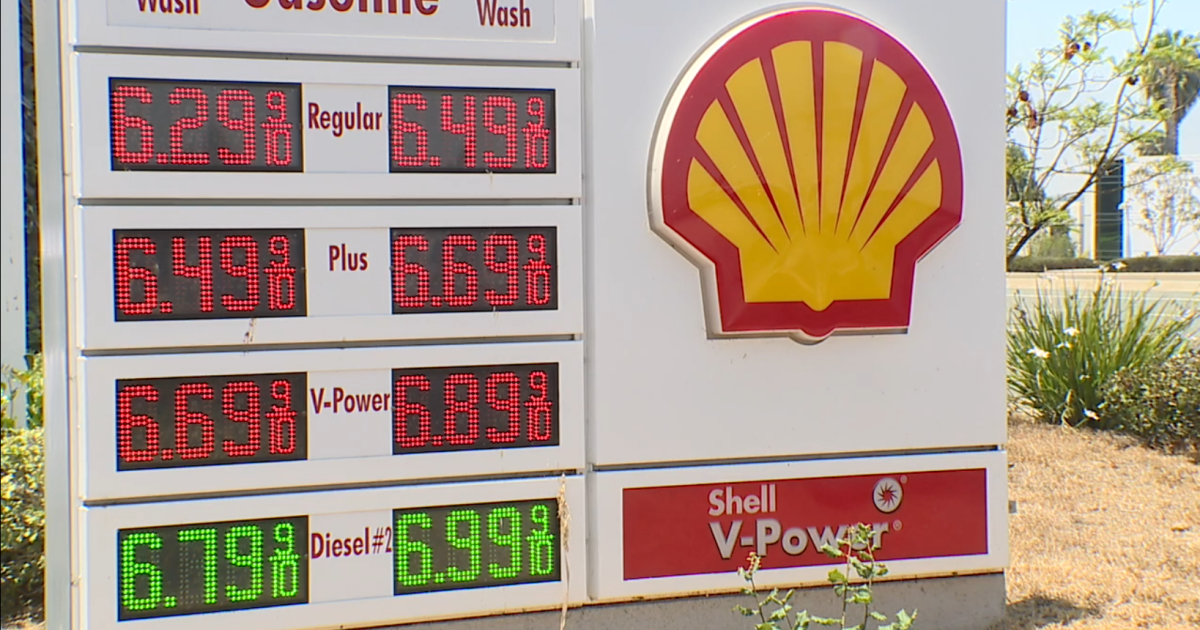
San Diego County Gas Prices Still Dropping
-

 Milwaukee, WI11 minutes ago
Two Milwaukee officers hurt over Fourth of July weekend
-

 Atlanta, GA16 minutes ago
Big Tigger leaving radio show after Sandy Springs arrest
-

 Minneapolis, MN23 minutes ago
Teen In Critical Condition After Water Rescue At Minnehaha Falls
-

 Indianapolis, IN26 minutes ago
Rolling Deep With Some Of Indy’s Local Motorcycle Clubs
-

 Pittsburg, PA31 minutes ago
Sinkhole closes portion of road near UPMC Passavant hospital
-

 Augusta, GA38 minutes ago
Coroner investigating inmate death from Charles B. Webster Detention Center

