Nevada
Here are the winners in Southern Nevada’s local government primaries – The Nevada Independent


Former Rep. Shelley Berkley (D-NV) and Las Vegas City Councilwoman Victoria Seaman emerged victorious in a high-profile Las Vegas mayoral race primary that’s turning out to be more about politics than is reflected by the race’s nonpartisan label.
Las Vegas City Council incumbents Brian Knudsen and Olivia Diaz won their seats outright after Tuesday’s primary, but an open seat on the council has now become a contest between two former Assembly colleagues.
And another state lawmaker will vie for a seat on the Clark County Commission, the most powerful local government body in the state, against a well-funded Republican attorney who has run close races against powerful Democrats in the two past cycles.
Here’s a look at how Tuesday’s primaries turned out for Southern Nevada local government candidates, including in Henderson, North Las Vegas and Boulder City.
Las Vegas Mayor
Las Vegas City Council
Clark County Commission
Other Southern Nevada local government races
Las Vegas Mayor
Berkley topped the field of 14 mayoral candidates running in Tuesday’s primary and will advance to a November runoff. As of Thursday afternoon, she had won 35 percent of the vote and garnered around 5,000 more votes than Seaman, who was 7,000 votes ahead of fellow City Councilman Cedric Crear.
The position of Las Vegas mayor is nonpartisan, meaning that candidates don’t list a party preference and all registered voters are allowed to vote in the primary. The top two vote-getters in the primary advance to the general election, unless one candidate receives more than 50 percent of the vote, in which case that person is considered elected to the office.
If elected, Berkley would return to politics a dozen years after she lost a high-profile race to unseat Sen. Dean Heller (R-NV) in 2012, which ended her 14-year congressional career. Seaman has represented Ward 2 on the city council since 2019.
Though the position is nonpartisan, the race between Seaman and Berkley is likely to have strong partisan undertones.
Seaman, a former Republican assemblywoman, openly appealed to Republican voters during the primary and said she plans to vote for former President Donald Trump in this year’s presidential election. Berkley, a lifelong Democrat, said she will vote to re-elect President Joe Biden.
In a forum hosted by The Nevada Independent last month, Berkley and Seaman feuded over crime levels in the city, with Seaman saying crime — particularly property crime — is “out of control in the city.” The Las Vegas Metropolitan Police Department, however, reported a 10 percent decrease in property crimes in the first three months of 2024 compared with the same period last year, according to a statewide crime database.
At a victory party Tuesday, Seaman said she would be a “law and order mayor” so that Las Vegas does not “end up like our neighboring cities because of far-left liberal policies.”

Las Vegas City Council
Two incumbent city council members easily won their re-election bids outright, while a third primary will head to a runoff after no candidate received a majority of the vote.
Assemblywoman Shondra Summers-Armstrong (D-Las Vegas) and former Assemblyman C.H. Miller (D-North Las Vegas) will face off in the November election for Ward 5 after being the top two vote-getters on Tuesday, raking in 31 percent and 19 percent, respectively. The Ward 5 seat will be vacated by Crear, who had been in office since 2018.
Summers-Armstrong, who is in her first term as an assemblywoman, received endorsements from an assortment of veterans and law enforcement groups, as well as the Culinary Union and the Service Employees International Union’s Nevada chapter, which represents health care and public service workers.
Miller, meanwhile, had the backing of Sen. Catherine Cortez Masto (D-NV), the Southern Nevada Building Trades Unions and other labor organizations.
In addition, Ward 3 Councilwoman Olivia Diaz will avoid a runoff after clearing the 50 percent threshold Tuesday.
Diaz’s re-election race was among the most high-profile city races, as she went up against Melissa Clary, who’s been active on historic preservation projects in the city, in a rematch of their 2019 race.
Diaz improved upon her 2019 performance when she won by less than 100 votes in the general election. As of Wednesday evening, Diaz led Clary by more than 1,000 votes and 20 percentage points.
PACs linked to Laborers Local 872, the union that represents Las Vegas construction workers, gave more than $50,000 to Clary’s campaign as of the end of March (slightly less than half of her total fundraising haul) after previously giving $100,000 to Diaz (out of around $600,000 raised in total) ahead of the 2019 election.
Diaz told The Nevada Independent earlier this year that she thinks the union’s change in support resulted from a vote she made in 2020 that went against the Laborers’ position.
The city council had voted 4-3 in 2020 to repeal a 2018 ordinance requiring developers to take additional steps to meet with residents before beginning redevelopment projects on golf courses and open spaces. Union members supported the repeal — arguing it was necessary to protect union jobs — but Diaz was one of the three members to oppose the repeal. Union officials did not return repeated interview requests from The Indy.
In Ward 1, Brian Knudsen, the mayor pro tem who has been in office since 2019, easily won re-election, winning more than 60 percent of the vote in a three-candidate field.
Clark County Commission
Primary season was sleepy for the Clark County Commission, considered the most powerful local government board in the state because of its oversight on business, infrastructure and certain funding allocations for a majority of Nevada’s population. But things are expected to heat up in the general election.
The primary featured three county commission races, with Republican and Democratic primaries in the District C race determining which candidates will face off in November. Commissioner Ross Miller, a Democrat, is not seeking re-election.
Democrat Shannon Bilbray-Axelrod and Republican April Becker advanced to the general election for the District C seat. Bilbray-Axelrod — who received 72 percent of the vote against Hunter Cain in the primary — is a four-term assemblywoman who left her seat to run for a county commission position. Bilbray-Axelrod’s biggest donor at $10,000 was Plumbers & Pipefitters Local No. 525, a plumbing and service technician union.
Becker — an attorney who received 69 percent of the vote Tuesday night — ran an unsuccessful campaign against Rep. Susie Lee (D-NV) in the 2022 general election for Congressional District 3. Becker received donations from three political action committees run by Tommy White, a leader for Laborers’ International Union of North America Local 872 for a total of $20,000. Becker had nearly $300,000 in hand at the end of the last campaign finance period.
Meanwhile, Ryan Hamilton won the District A Republican primary Tuesday and will face Democratic incumbent Michael Naft in the November election.
Among Naft’s top donors giving the maximum of $10,000 donations were the parent company of the Oakland Athletics, state Treasurer Zach Conine’s Let’s Get to Work Nevada PAC and MGM Resorts International. Hamilton’s largest donor at $5,205 was James Thomson, an adviser to the president of regional development at UNLV and former CEO of the RAND Corp., a policy consulting firm.
Two other seats on the commission are up in 2024, but did not require primary elections because not enough candidates filed. In District B, Democratic Commissioner Marilyn Kirkpatrick is running for re-election against Libertarian candidate Jesse Welsh, while Democratic Commissioner William McCurdy II is running for re-election in District D against Republican candidate David Gomez in a heavily Democratic district.
Other Southern Nevada local government races
Henderson
Incumbents on the Henderson City Council, which governs the second most-populated city in Nevada behind Las Vegas, found success Tuesday, with council members Jim Seebock and Dan Stewart winning outright with more than 50 percent of the vote. Council races are nonpartisan, with the top two vote-getters advancing to the general election unless a candidate wins more than 50 percent of primary votes.
Meanwhile, Councilman Dan Shaw faced a more competitive race that will likely lead to a runoff with runner-up Monica “Doc” Larson. Shaw received 42 percent of the vote, 9 percentage points more than Larson.
North Las Vegas
Councilwoman Ruth Garcia Anderson will proceed to a general election runoff to retain her nonpartisan city council seat in Ward 2. Garcia Anderson will face Robert “Twixx” Taylor, who has owned various small businesses and is a health advocate, in November after the two each received about 39 percent of the vote.
Councilman Richard Cherchio did not face any opponents in the Ward 4 primary and will be elected to another term.
North Las Vegas residents also voted to pass both Questions 1 and 2 on the ballot, which will renew a property tax of less than 30 cents for every $100 in property valuation to fund police, parks, fire and other emergency and community services.
City leaders initially wanted the measures to be considered at a single-issue December special election, but the vote was postponed to coincide with the primary over concerns from state election officials that a December election arrangement would attract too low of participation.
Boulder City
Boulder City Councilwoman/Mayor Pro Tem Sherri Jorgensen won her seat in the primary.
Denise Ashurst, a retired veteran, will face incumbent Matt Fox for the second open seat on the Boulder City Council.
Mesquite
Mesquite is the fastest-growing city in Nevada, with a 10.5 percent population increase from 2020 to 2023. No incumbents won outright in two Mesquite City Council races.
Mayor Al Litman, who has been mayor since 2014, will face Jesse Whipple, who is on the city’s master plan committee, in the general election for mayor.
Seat 2 on the Mesquite City Council is also up for election, with Kevin Parrish and Ronald Shackelford advancing to the general election.



LAS VEGAS (KLAS) – An earthquake struck in the northern part of Nevada on Monday, causing at least some “light” to “moderate” damage in some of the immediate surrounding areas, according to reports gathered by the United States Geological Survey (USGS).
The 5.7 magnitude earthquake struck shortly before 6:30 p.m. PST on Monday near Fallon, Nevada, about 12 miles southeast of Silver Springs, the USGS reported.
The area is just 40 miles northeast of the state capital, Carson City, and 400 miles northwest of Las Vegas.
Data gathered by the USGS shows reports of “light” to “moderate” damage observed around the epicenter of a 5.7 magnitude quake, along with “strong” to “very strong” shaking. The jolts were enough to shatter glass and scatter products along the floor of a grocery store in the town of Fallon, as seen in images shared with the Associated Press.
Trina Enloe told the news agency that she was sitting with one of her daughters as she did homework in their dining room when the quake hit.
“You could hear the rumbling just coming before it even got to us,” Enloe said. The shaking continued for about a minute, she added, during which some cast-iron candle holders were knocked over. Enloe didn’t see any cracks or damage in her home, though.
Those in Nevada with similar experiences are advised to contribute a report through the USGS’s “Felt Report” platform.
The Associated Press contributed to this report.

RENO, Nev. (KOLO) – An earthquake was felt across northern Nevada Monday night. The United State Geological Survey reports the magnitude at 5.5. It was centered about 12 miles southeast of Silver Springs. Several aftershocks were reported in the area, the largest measuring at magnitude-3.6.
People reported feeling the quake across northern Nevada and into California.
There are no reports of any damage so far.
Copyright 2026 KOLO. All rights reserved.

LAS VEGAS (KSNV) — The Nevada Supreme Court has upheld an interim suspension for Pahrump Justice of the Peace Michele Fiore as she faces an investigation into complaints of possible misconduct.
In a unanimous ruling filed Friday, the high court said Fiore’s challenge is moot because the Nevada Commission on Judicial Discipline is still investigating the complaints against her, and hasn’t imposed any official punishment or filed formal charges.
“We conclude Judge Fiore has not demonstrated the Commission abused its discretion in determining that an interim suspension was warranted,” the ruling states.
The Nevada Commission on Judicial Discipline suspended Fiore after a jury found her guilty in a 2024 federal trial on six counts of wire fraud and a count of conspiracy to commit wire fraud.
Prosecutors alleged that she solicited donations on the premise that they would go toward statues of two fallen Las Vegas police officers while she was a city councilwoman, but instead used the money on personal expenses, including plastic surgery and her daughter’s wedding.
Fiore, who denied the allegations, received a pardon from President Donald Trump last year. She filed for re-election in January.
The Judicial Discipline Commission kept her suspension in place with pay, writing that Trump’s pardon did not preclude it “from considering a judge’s ongoing conduct.”
Fiore filed a petition with the high court challenging the commission’s jurisdiction to discipline her for conduct from before she became a justice of the peace, though the commission says it “based the suspension on an allegation that Judge Fiore has engaged in misconduct during her time as a judicial officer,” according to the Supreme Court.
In a statement released Friday, Fiore said she was willing to wait for the commission’s investigation to play out.
“While we are disappointed the Supremes chose not to address those issues now, this is not the end of the fight, it is simply the next step,” Fiore’s statement reads.

Federal judge says Delaware labor officials must give data to ICE

FBI says suspects tried to rob Offset outside a Florida casino when he was shot in the leg

GA commission offers utility relief for TSA agents as shutdown lingers

Hawaii Offers Case-by-Case Tax Relief After Kona Low Storms – Honolulu Today

Illinois Holocaust Museum honors Holocaust victims for Yom HaShoah

Florida High School Football Rankings: Top 25 teams – Oct. 21

How old is Bo Nix? What to know about Oregon quarterback ahead of 2024 NFL Draft

Cleary's 21 help Le Moyne down Central Connecticut State 69-64 in OT

99th annual Pony Swim held in Virginia

Indiana Members Credit Union announced as new anchor tenant at Bottleworks District

Video: How Stephen Miller Is Adjusting Trump’s Immigration Agenda

Biden DOJ weaponized FACE Act against pro-life Americans, 882-report alleges

Mass drone warfare is Europe’s rising security threat
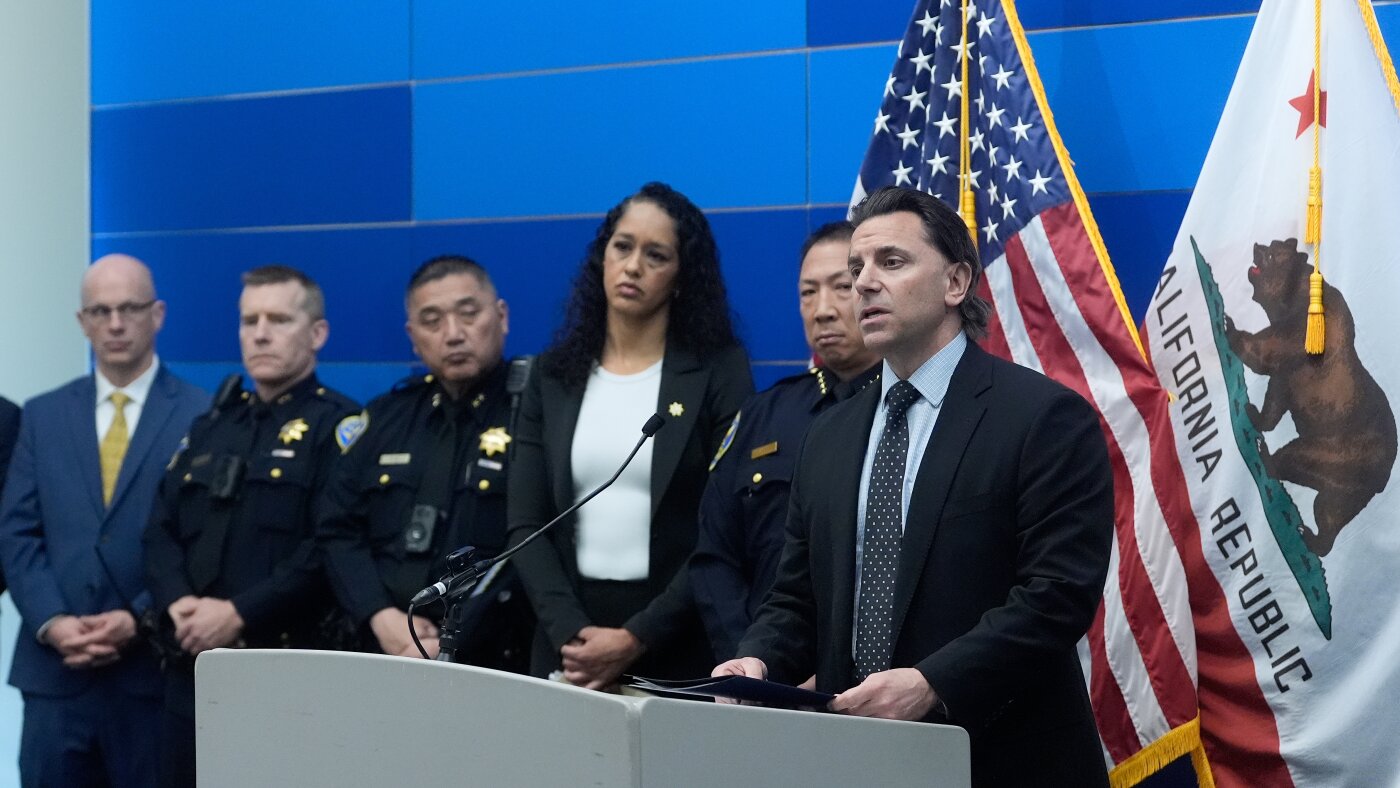
Man accused in Molotov cocktail attack of OpenAI CEO’s home charged with attempted murder

Embattled Rep Tony Gonzales announces plans to resign amid sexual misconduct allegations
-

 Atlanta, GA1 week ago
1 teenage girl killed, another injured in shooting at Piedmont Park, police say
-

 Georgia1 week ago
Georgia House Special Runoff Election 2026 Live Results
-

 Arkansas4 days ago
Arkansas TV meteorologist Melinda Mayo retires after nearly four decades on air
-

 Pennsylvania1 week ago
Parents charged after toddler injured by wolf at Pennsylvania zoo
-
 Milwaukee, WI1 week ago
Potawatomi Casino Hotel evacuated after fire breaks out in rooftop HVAC system
-

 Austin, TX7 days ago
ABC Kite Fest Returns to Austin for Annual Celebration – Austin Today
-

 World1 week ago
Zelenskyy warns US-Iran war could divert critical aid from Ukraine
-

 World1 week ago
Indonesia receives bodies of peacekeepers killed in southern Lebanon