West
Nearly a dozen cars stolen with kids left inside over Thanksgiving, car safety group warns

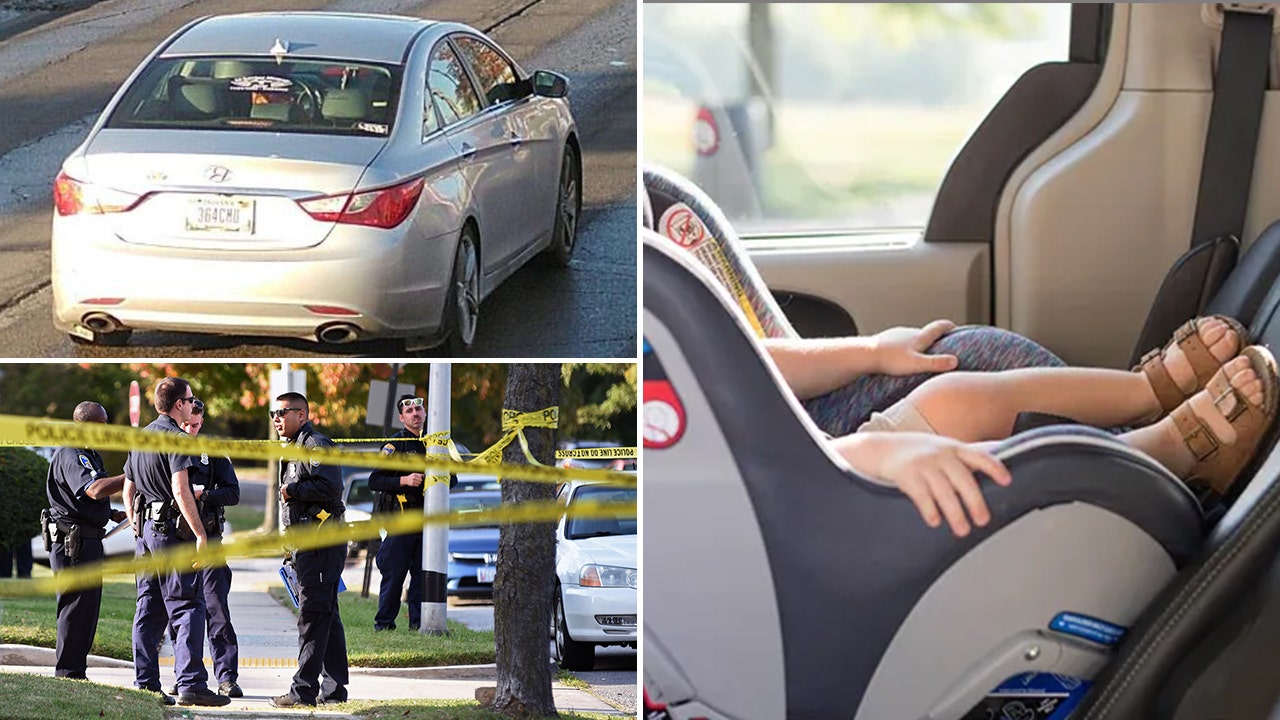
A child car safety group is warning parents not to leave children unattended in their vehicles this holiday season after nearly a dozen cars were stolen over Thanksgiving with kids left inside.
Kids and Car Safety, a group that compiles data on car thefts with children alone inside, says that there were 11 such incidents over Thanksgiving impacting 17 children under 14. So far this year, 107 children have been left unattended in vehicles that were subsequently stolen with them inside, according to data documented by the group, which also compiles data on child hot car deaths.
While most victims are eventually reunited with their families, the trauma of these events can be devastating, leaving emotional scars on children and families while placing significant demands on law enforcement, said Janette Fennell, president of Kids and Car Safety.
SHOCKING VIDEO SHOWS FLORIDA CARJACKER ABANDON KIDNAPPED CHILD ON SIDE OF ROAD
An infant that was in a carjacked SUV in 2016 was found unharmed in Baltimore City. Police officers are pictured at the scene where the baby and car seat were left. (Kenneth K. Lam/Baltimore Sun/Tribune News Service via Getty Images)
Tragically, two cases this year resulted in fatalities when parents attempted to stop car thieves who had unknowingly taken their child, she said.
“With colder weather, we see a sharp rise in car thefts involving children left unattended in vehicles,” Fennell says. “This is a critical moment to raise awareness. Parents and caregivers need to understand how quickly these preventable tragedies can occur. Together, we can prevent these avoidable situations and protect our loved ones.”
Fennell says the numbers of cars stolen with kids left inside has been steadily increasing since the group first started crunching the numbers in 2012, when the group recorded 68 cars stolen.
Then numbers peaked at 265 in 2022 before dipping to 162 in 2023, the group says.
CHILD HOT CAR DEATH PUSHES PARENTS WHO LOST DAUGHTER TO SOUND ALARM ABOUT ‘PREVENTABLE TRAGEDY’
Over Thanksgiving, there were three separate incidents in New York City. In one case in California, a vehicle with three children inside was stolen.
On Dec. 2, a vehicle was reported stolen with a 4-month-old and 5-month-old in the backseat, according to the Indianapolis Metropolitan Police Department.
On Dec. 2, a vehicle was reported stolen with a 4-month-old and 5-month-old in the backseat, according to the Indianapolis Metropolitan Police Department. (Indianapolis Metropolitan Police Department.)
Even in the safest neighborhoods, car thefts can happen in seconds, especially when vehicles are left running or unlocked, Kids and Car Safety says.
Most incidents happen at convenience stores, residential driveways and places where thieves know people feel safe leaving their vehicle momentarily unattended.
Often, many thieves are unaware a child is inside until after the vehicle has been taken, compounding the danger. These cases commonly result in children being dumped on the side of a roadway and even high speed chases, AMBER Alerts and crashes, the group says.
Child sits in car seat (Kids and Car Safety)
Kids and Car Safety says that children should never be left alone in a car — even for a minute. The group also advises parents to use drive-thru or curbside pickup services whenever possible and call ahead for assistance when going to stores, noting that many businesses are happy to accommodate families with young children.
The group also advises parents to keep car doors locked and keys with them when pumping gas with children in the vehicle.
“These simple steps can save lives and ensure your holiday season remains safe and joyful,” Fennell says.
Read the full article from Here


HONOLULU (HawaiiNewsNow) – A man accused of attempting to run over police officers in Kalihi was arrested Friday.
According to the Honolulu Police Department, at around 6 p.m., officers observed a man working on a vehicle that was partially blocking the roadway.
Officers said as they approached to investigate, the suspect, a 42-year-old man, quickly entered the vehicle and then allegedly drove directly toward one officer, then reversed toward a second officer.
HPD said the suspect vehicle did hit an unmarked police vehicle.
No officers were injured.
The suspect was arrested on suspicion of attempted murder in the first degree on a law enforcement officer and resisting an order to stop.
The investigation is ongoing.
Copyright 2026 Hawaii News Now. All rights reserved.

Courtesy Zach Zaugg
AMMON — As the community celebrates the Fourth of July with numerous aerial fireworks ringing through the night, a fire has broken out near the Ammon foothills.
According to WatchDuty, a wildfire mapping application, a fire has been reported near South High Willow Lane, and another near East Comish Drive and East 65th South.
WatchDuty watchers report that forward movement of both fires has been stopped, and crews are working on containment.
EastIdahoNews.com has reached out to Bonneville County Fire District 1 and is waiting for more information about the fire.
EastIdahoNews.com will update this story once more information becomes available.
=htmlentities(get_the_title())?>%0D%0A%0D%0A=get_permalink()?>%0D%0A%0D%0A=htmlentities(‘For more stories like this one, be sure to visit https://www.eastidahonews.com/ for all of the latest news, community events and more.’)?>&subject=Check%20out%20this%20story%20from%20EastIdahoNews” class=”fa-stack jDialog”>
The Montana Lottery offers multiple draw games for those aiming to win big.
Here’s a look at July 3, 2026, results for each game:
Winning Mega Millions numbers from July 3 drawing
05-09-29-47-57, Mega Ball: 16
Check Mega Millions payouts and previous drawings here.
Winning Big Sky Bonus numbers from July 3 drawing
02-09-24-28, Bonus: 16
Check Big Sky Bonus payouts and previous drawings here.
Winning Millionaire for Life numbers from July 3 drawing
07-08-24-42-47, Bonus: 03
Check Millionaire for Life payouts and previous drawings here.
Feeling lucky? Explore the latest lottery news & results
When are the Montana Lottery drawings held?
- Powerball: 8:59 p.m. MT on Monday, Wednesday, and Saturday.
- Mega Millions: 9 p.m. MT on Tuesday and Friday.
- Lucky For Life: 8:38 p.m. MT daily.
- Lotto America: 9 p.m. MT on Monday, Wednesday and Saturday.
- Big Sky Bonus: 7:30 p.m. MT daily.
- Powerball Double Play: 8:59 p.m. MT on Monday, Wednesday, and Saturday.
- Montana Cash: 8 p.m. MT on Wednesday and Saturday.
- Millionaire for Life: 9:15 p.m. MT daily.
Missed a draw? Peek at the past week’s winning numbers.
This results page was generated automatically using information from TinBu and a template written and reviewed by a Great Falls Tribune editor. You can send feedback using this form.
-

 Connecticut3 minutes ago
Several state parks, beaches close Friday due to capacity
-

 Delaware10 minutes ago
Beloved farm owner, 65, fatally crushed by one of his own camels in Delaware
-

 Florida13 minutes ago
Publix? Walmart? What Florida stores are open and closed on July 4
-

 Georgia18 minutes ago
Georgia baseball has nation’s No. 1 transfer class
-

 Hawaii25 minutes ago
Man accused of trying to run over police officers in Kalihi arrested
-

 Idaho28 minutes ago
Fire burning near Ammon foothills – East Idaho News
-
 Illinois33 minutes ago
Illinois Launches Holiday DUI Crackdown
-

 Indiana40 minutes ago
Storm chance late on the Fourth, then heat tones down early next week | July 4, 2026

