Montana
Owner of Montana's largest newspaper settles suit for giving personal information to Facebook

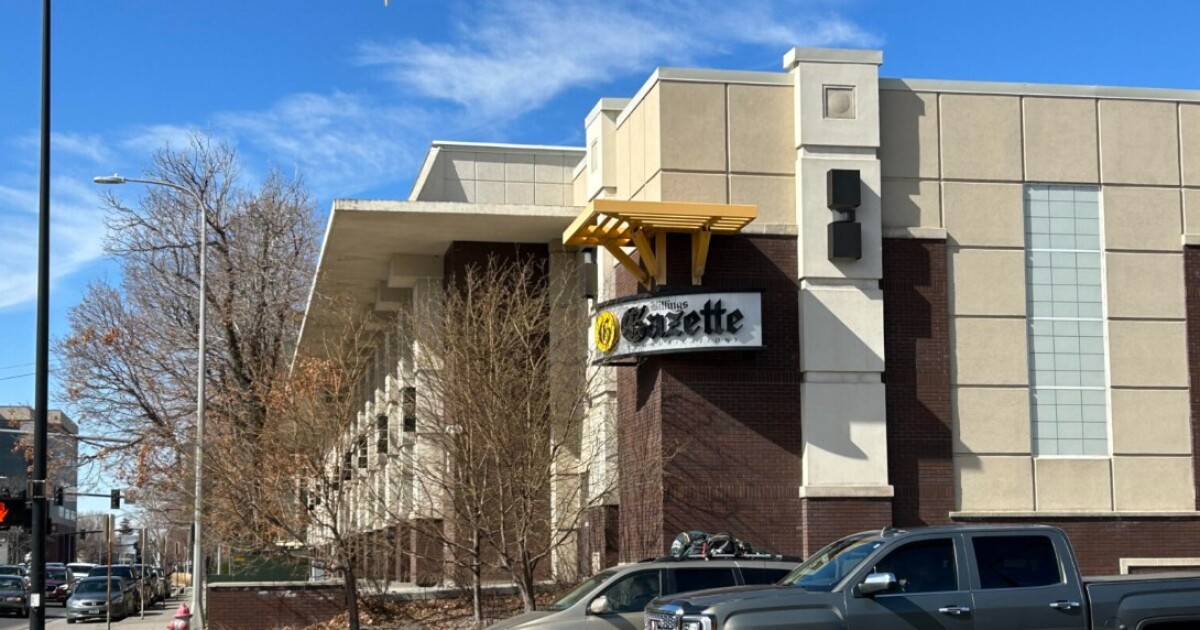
BILLINGS – More than 1.5 million subscribers, comprising many Montana residents, could be part of a class-action settlement by the state’s largest newspaper company, Lee Enterprises, for sending personally-identifying information to the parent company of Facebook in order to target content, including advertising.
According to a settlement reached in a federal court in Iowa, where Lee Enterprises is headquartered, the company will pay $9.5 million for releasing personal information to Meta without customers’ consent.
Lee owns five daily newspapers in Montana, including The Billings Gazette and Missoulian, among its 85 daily newspapers across the country.
In addition to the class-action lawsuit settlement, Lee has also reported that it will likely be financially impacted due to a recent cybersecurity ransomware attack, reports the Daily Montanan. Also, a private investor who has recently been critical of the management team after it projected profits, but instead saw a loss of $17 million,says he wants to purchase the company.
Facebook settlement
As part of the court filing, the company says it doesn’t agree with all the conclusions, but is settling the class-action lawsuit, which could reach more than 1.5 million current or past subscribers. According to its most recent 10-K filing with the Securities and Exchange Commission, as of Sept. 29, 2024, Lee reported that had a combined 1.1 million print and digital subscribers.
It also reported that 51% of its revenue comes from digital advertising in February 2025.
The court filings say that Lee voluntarily installed an invisible online tracker from Meta/Facebook that allowed the disclosure of a “Facebook Identification Number” to the social media giant. That, the group of plaintiffs said, violated federal law that guarantees privacy protection. The goal of the software, according to the lawsuit, was to build profiles of the Lee subscribers or content users “with the hope of improving the effectiveness of advertising targeting those users.”
If the deal is approved by the court, former and current subscribers who were affected would be sent a class-action settlement notice and be eligible for a portion of the amount, which will be estimated to be around $5.7 million for the approximately 1.5 million people — or around $3.80 per person. For subscribers or customers with an invalid email address, postcards may be sent.
In court documents, Lee and a group of plaintiffs agreed to settle the dispute, saying that a protracted lawsuit could take years and millions to resolve. Furthermore, Lee maintains that it did nothing wrong, although other companies who used such tracking tools have been found liable for using the same technology that discloses personal information.
Ransomware attack
It is not the only piece of bad financial news for the newspaper company based in Davenport, Iowa. In SEC filings earlier this month, it announced that a ransomware attack on the company that shut down some printing and electronic edition publications, as well as threatened to release sensitive financial information, was likely to have a material impact on the company’s bottom line.
On March 6, Lee confirmed the attack, which began on Feb. 3. Hackers encrypted many of the “critical applications” the company used while “exfiltrating” or taking financial data. Lee said that many of the company’s functions have been restored, but that the business processes of the company have been delayed.
“Additionally, certain back-office functions remain delayed including billing our clients, collections, and payments to vendors. We anticipate the business processes to be fully restored in the coming weeks,” the company said.
Lee confirmed it had cybersecurity insurance, and also that its sole lender, Berkshire-Hathaway Finance, had waived an interest payment as well as lease payments, which the newspaper company said added $3.7 million of additional capital.
As of Friday, many of the Lee publications still had notices on their websites that warned customers of problems, delays or interruptions.
New owner?
Even as courts and cyberattacks were occupying headlines about Lee, on Thursday, the chain of newspapers also reported that a billionaire investor who had recently purchased a chunk of the publicly traded stock had submitted a letter to the company’s board of directors wanting to purchase the company outright.
Hoffmann Companies, which owns a diverse number of companies including dairies, investment properties and manufacturing facilities, says it wants to buy Lee Enterprises. The same company has recently purchased an interest in the Dallas Morning News, as well as purchasing former Lee-owned newspapers in California, including the Napa Register. In a letter to Lee’s board, David Hoffmann said that other hedge-fund investors have not been concerned with the journalism of the company, rather just squeezing profits from the newspapers.
“We believe this commitment represents a sharp contrast to other potential acquirors such as non-local hedge funds and investment firms primarily concerned with increasing profits over jobs, local concerns, and the power of quality journalism,” the letter said. The letter and a news story about the offer was published on Lee newspaper websites on Thursday.
Hoffmann is already Lee’s second-largest shareholder. Lee currently has nearly $450 million in debt, largely from the acquisitions of other newspapers that has more than doubled the company’s reach. In its most recent earnings report, Lee’s profits were down year-over-year, but it did note that digital revenue has now eclipsed print revenue, a sign that the Hoffmann interest letter noted.
After news of the potential deal broke, Lee stock shot up nearly $1 per share and as of Friday, the value of Lee stock hovered around $10.66 a share, a 6% increase in value.
Editor’s note: The reporter of this story was formerly a Lee employee from 2004 to 2020.
Billings Gazette selling downtown building


Iron (MN) Cherry High School athlete Isaiah Asuma announced his commitment to Montana State on Monday, adding to an already impressive recruiting class for the reigning FCS national champions.
“I committed to Montana State because I love what the football program has been and has to offer,” Asuma said. “I love Bozeman, and I really fell in love with the coaching staff and what they had for future plans for me. I really think they can develop me for the next level.”
The 5-foot-11, 180-pounder, who is also a standout basketball player for the Tigers, received an offer from the Bobcats on April 17, after speaking with head coach Brent Vigen when he was in Bozeman for a Junior Day.
“My family and I had a conversation with Coach Vigen in his office, and he was just telling me that he really liked my game and really thought I could make an impact for them! That was when he offered me. Being around him a couple of times now, we have developed a good relationship, and I love who he is as a person and a coach. He’s always gonna shoot you straight, and he’s never gonna lie to you.”
Let’s do it, Cat Nation. 💙💛🤍#AGTG #COMMITTED pic.twitter.com/20f54Xvmrz
— isaiahasuma (@AsumaIsaiah) June 22, 2026
Asuma has yet to take his official visit with the Bobcats, but even after just a few visits to Bozeman, he saw enough and decided to announce his commitment.
“I have not taken my official visit yet, but I have been out there two times, and I love Bozeman. The first time I went out there, I fell in love with it. I come from a small town in Minnesota, so that’s like nothing I’ve ever seen before out there. It is pretty amazing!”
Last season, the Tigers finished 4-5, but Asuma had a great season, finishing with 1,233 passing yards, 13 touchdowns, 1,044 rushing yards, and 12 rushing touchdowns, while adding 58 tackles and four interceptions.
“Last season was solid, but we were a .500 team. I had a good individual year, and since I go to a smaller school, I played both quarterback and free safety.”
This season, he is hoping to lead the Tigers to a winning record, as well as have another big season, which could be a challenge as they will have a young squad.
“The offseason has been good. I just started summer practice and weights again with the team, in addition to training with my trainer, Dre Sherril, with explosive agility stuff and weightlifting. My goals for this upcoming season are to try to rush for 1,000 yards again and be a .500 team. Our team is super young this year, so I’m just hoping to have a solid year again.”
Asuma adds to a Bobcats recruiting class that includes three-star wide receiver Kase Betz, defensive lineman Dax Yeager, offensive lineman Kade Leibrand, EDGE Dominick Webb, defensive back Kei’Dryn Edmond, offensive lineman Maciah Keene, tight end Carter Zollar, running back DaKari Releford, among others.
‼️College coaches‼️ https://t.co/stoR6ZJROU
— isaiahasuma (@AsumaIsaiah) April 28, 2026
Follow FCS Football Central on social media for ongoing coverage of FCS football, including on X, Facebook, and YouTube.
Follow

The Montana Lottery offers multiple draw games for those aiming to win big.
Here’s a look at June 26, 2026, results for each game:
Winning Mega Millions numbers from June 26 drawing
05-13-30-33-52, Mega Ball: 06
Check Mega Millions payouts and previous drawings here.
Winning Big Sky Bonus numbers from June 26 drawing
07-08-20-22, Bonus: 12
Check Big Sky Bonus payouts and previous drawings here.
Feeling lucky? Explore the latest lottery news & results
When are the Montana Lottery drawings held?
- Powerball: 8:59 p.m. MT on Monday, Wednesday, and Saturday.
- Mega Millions: 9 p.m. MT on Tuesday and Friday.
- Lucky For Life: 8:38 p.m. MT daily.
- Lotto America: 9 p.m. MT on Monday, Wednesday and Saturday.
- Big Sky Bonus: 7:30 p.m. MT daily.
- Powerball Double Play: 8:59 p.m. MT on Monday, Wednesday, and Saturday.
- Montana Cash: 8 p.m. MT on Wednesday and Saturday.
- Millionaire for Life: 9:15 p.m. MT daily.
Missed a draw? Peek at the past week’s winning numbers.
This results page was generated automatically using information from TinBu and a template written and reviewed by a Great Falls Tribune editor. You can send feedback using this form.
-

 Boston, MA5 minutes ago
Beyond the frame: ‘Where’s Boston?’ revisited through new oral histories – Boston News, Weather, Sports | WHDH 7News
-

 Denver, CO8 minutes ago
Arizona Cardinals will face Denver Broncos QB Bo Nix for 1st time
-

 Seattle, WA13 minutes ago
3 Primary Reasons Seattle Seahawks Will Repeat as NFC West Champs in 2026
-

 Milwaukee, WI23 minutes ago
Venezuela earthquakes: Milwaukee donation drive to help families affected
-

 Atlanta, GA28 minutes ago
DR Congo advances to knockouts after defeating Uzbekistan 3-1
-

 Minneapolis, MN35 minutes ago
Minneapolis LGBTQ+ literature haven Quatrefoil Library celebrates 40 years
-

 Indianapolis, IN38 minutes ago
Turning hot and humid through midweek | June 27, 2026
-

 Pittsburg, PA43 minutes ago
Late homer by Eugenio Suarez gives the Reds a win in Pittsburgh – Redleg Nation

