Montana
Judge denies retired Montana Highway Patrol chief's motion to find AG in contempt • Daily Montanan


Attorney General Austin Knudsen won’t be facing a contempt order from court in a wrongful discharge lawsuit.
A former Montana Highway Patrol chief who is suing Knudsen and the state argued that the attorney general should be found in contempt for allowing the Department of Justice to disseminate confidential personnel information — an allegation the DOJ denied.
A district court judge denied the motion to set a contempt hearing last month. Lawyers for the state called the motion “unorthodox” and “a red herring.”
In the lawsuit, former Highway Patrol Col. Steve Lavin alleged he was wrongfully terminated after he launched a management review and workplace climate survey.
As part of that lawsuit, lawyers for Lavin alleged the DOJ shared private information about Lavin with political consultant Jake Eaton and The Political Company, and Eaton more widely released it in an email to clients.
The Political Company provided fundraising consulting to Knudsen, a Republican re-elected as attorney general in November.
In the email, Eaton criticized Lavin as “an inept leader” albeit “super nice guy.”
The court filing from Lavin’s lawyers didn’t specify which part of the email it considered private personnel information.
Eaton is not party to the lawsuit, but he earlier told the Daily Montana the criticisms in his email came from social media and gossip circles, not the DOJ.
In its response to the motion, Brown Law Firm lawyers representing Knudsen argued the state shouldn’t have to argue for Eaton, a third party, who acted as a private individual “with no official judicial or ministerial duties.”
Regardless, they also said Eaton’s explanation to the Daily Montanan that his sources did not include the DOJ make the contempt motion moot.
Plus, they said, the timing didn’t add up for such a motion.
They said the lawsuit was still “in its infancy,” their deadline to answer hadn’t even passed before the contempt motion came up, and it could “only be classified as a poorly masked attempt to force defendants to appear prior to their statutorily prescribed deadline.”
The lawyers argued that when contempt isn’t committed in open court or within the purview of the presiding judge, an affidavit outlining the facts constituting contempt needs to be presented, and one was not. So they said the judge should deny the motion.
In the order last month, Lewis and Clark County District Court Judge Michael McMahon agreed with the state’s argument about the need for an affidavit outlining “a statement of the facts.”
The order denied the plaintiff’s request that the court set a hearing “to allow defendants to answer why they should not be held indirect civil contempt.”
The order said the contempt motion was not supported by an affidavit, required when contempt is alleged outside the view of the court. It also said the Montana Supreme Court had found procedures must be followed in such cases.
In a phone call, lawyer Ben Reed, representing Lavin, said the team’s interest in raising concerns about the email was to ensure the dispute remained focused on the allegations of wrongful termination — and stayed between the parties in the case without interference from outsiders.
“We simply wanted to bring these issues to the attention of the court and make it clear that the case is about what’s in front of the court, and not about what’s not (in front of the court), and to try and keep third parties from joining into the chorus,” Reed said.
Reed, of the Delli Bovi, Martin and Reed firm, also said the plaintiffs will carry on with the lawsuit.
“We’re confident that we can move on in good order and according to the rule of law,” Reed said.
Spokespeople from the DOJ did not respond to requests for comment. In response to the allegations in the lawsuit, the DOJ earlier said Lavin agreed to retire after the Highway Patrol “lost confidence” in him.
In their court filing about the motion for contempt, they said the lawsuit is only about employment.
“Defendants view this as an employment matter — one where the plaintiff signed a release as part of a negotiated severance agreement, which is a complete defense to plaintiff’s claims in this matter,” said the lawyers for Knudsen. “Plaintiff is merely trying to distract from that fact with a red herring motion.”




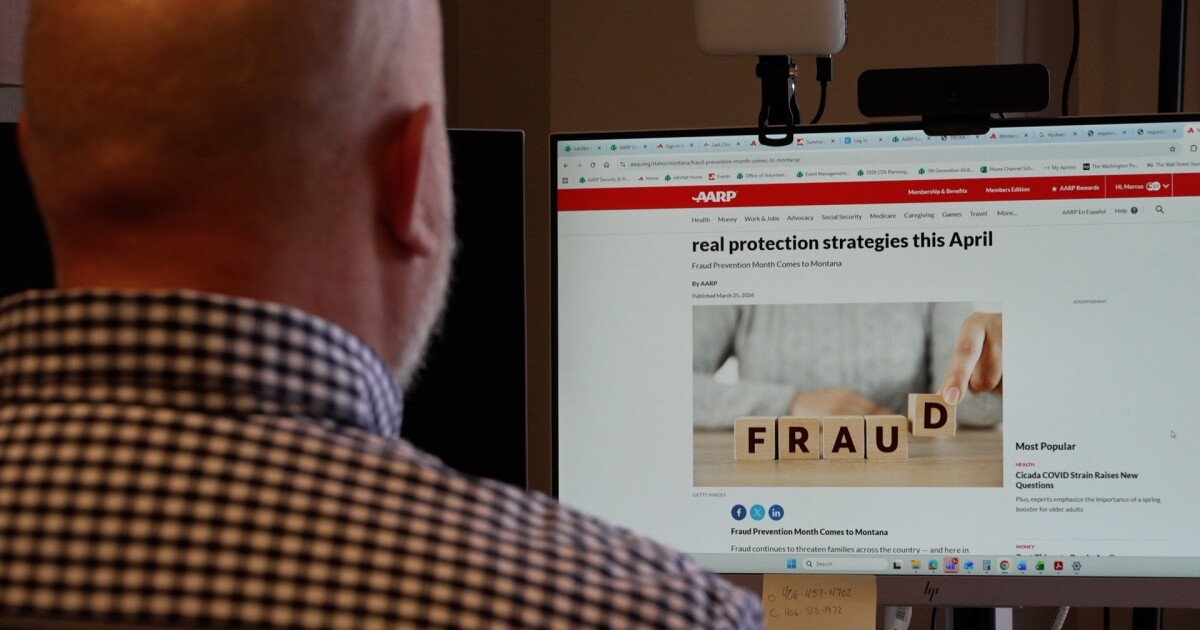
On March 26th, the city of Helena proclaimed April as Fraud Prevention Month, encouraging people to be aware of scams and to take preventative measures. April also marks the American Association of Retired Persons Fraud Prevention Month. While anybody can be impacted, older Americans are most at risk.
“It can completely change their life, as far as losing their life savings,” said AARP director of outreach and community engagement Marcus Meyer. “It can take an emotional toll on them, where they may become paranoid or not trustworthy.”
In 2024, the Federal Trade Commission data showed over 6,000 Montanans reported fraud losses, totaling over $23 million dollars. The Department of Justice says they’re seeing a huge uptick in numbers, getting calls every day.
Scams and fraud can come in many shapes and sizes, from calls, texts, emails, social media, and even AI. Thankfully, there are signs to look for to avoid them altogether.
Evan Charney, MTN News
“A sense of urgency, so wanting you to act now, make some sort of payment where it’s untraceable,” Meyer said.
Experts say if you see a potential scam, consider if it’s too good to be true.
Officials in the Division of Criminal Investigation with the Department of Justice remind residents that legitimate government agencies will never ask for immediate payment, whether that be through gift cards, cryptocurrency, or even a text.
“Just most recently, I got one saying that I had a violation from MHP, and that I had to pay all this money,” explained DCI Edler Justice Unit agent Jeremy Alvarez. “It came on my work phone, and I’m like… Montana Highway Patrol doesn’t do that.”
For those with concerns, there are plenty of resources available to be made aware of scams, take preventative measures, and make reports of incidents.
The division of criminal investigation works with local law enforcement to investigate reports, tracking where the money goes, and providing assistance where they can.
Evan Charney, MTN News

Throughout the month of April, AARP is holding conferences and webinars to raise awareness. Here in Helena, they’re hosting a shred event at the UPS store so people can shred their documents with personal information to reduce their risk.
More information about these events and resources can be found here.

Thirteen miles west of Thompson Falls and the banks of the Clark Fork River, a dirt road leads to a cluster of weathered green buildings and rusted remains of mining operations long quiet, until recently.
The humming comes from furnaces blasting pieces of slag into molten metal. This is Stibnite Hill, a smelting facility nestled in the Coeur D’Alene mountains. Inside, Plant Manager Rob Hill is in charge.
“This is what’s called sodium antimonate. It’s like wet sand. We run it with coal and soda ash into this furnace. It’s about 60 percent antimony.”
Hill works for United States Antimony Corporation, or USAC. It’s a small company that has quietly operated here since 1969. Now, that’s changing.
Antimony is an ingredient used in certain military applications, including flame retardants, infrared sensors and nuclear weapons.
Antimony is an ingredient used in certain military applications, including flame retardants, infrared sensors and nuclear weapons. As the Trump administration’s policies to bolster domestic mineral extraction have rolled out, the lesser-known metalloid took center stage.
“We became literally the only game in town so we really had to start running,” Hill says.
Stibnite Hill contains the only smelting facility for this material in the country. As a result, USAC was recently charged with replenishing domestic stockpiles. The project raises hopes and concerns for locals who have experienced the impacts of mining industries in western Montana.
For several decades, the U.S. has relied on foreign imports for antimony. Recent trade wars have compromised those imports.
In 2023, China, Russia and Tajikistan controlled about 90 percent of global antimony production. In December 2024, China banned all exports of it to the United States. That ban has since been lifted, but trade today remains stringent.
Last year, United States Antimony Corporation won a $248 million sole-source contract to resupply the federal government. CEO Gary Evans says they were the only company qualified to bid.
Last year, United States Antimony Corporation won a $248 million sole-source contract to resupply the federal government.
CEO Gary Evans says they were the only company qualified to bid.
“When the government needed more antimony ingots, which are used as an inventory supply for future wars, they contacted us.”
The company grew significantly over the last three years. Their revenues more than doubled in 2025, as did their stock value. Most of that growth came prior to their first antimony deliveries to the federal government.
Montana Gov. Greg Gianforte attended the groundbreaking ceremony and issued a press release supporting the company’s growth.
“We’ve been able to basically take an older, sleepy company and revitalize it with a new board, new management team and new directions,” Evans says.
The goal is to smelt 400 tons of antimony per month, ideally with ore mined from Montana, Idaho or Alaska. The expansion project cost $20 million and will add about 25 new jobs.
The goal is to smelt 400 tons of antimony per month, ideally with ore mined from Montana, Idaho or Alaska. To meet demands, the company must expand production capacity up to 500%.
The expansion project cost $20 million and will add about 25 new jobs.
One January morning, Plant Manager Rob Hill stands next to a cylindrical stone furnace, roaring with heat.
“What we need to do is get the antimony out of it,” he says. “We just load it into there, heat it up, it melts down. We’ll pour this whole thing up, this whole furnace will pour into these molds …”
In the next room, wooden pallets are stacked with dozens of shiny, grey antimony ingots.
“There’s over 100,000 pounds sitting here right now,” Hill says.
Their primary role today is smelting, but officials say they plan to reopen the underground antimony mine here too. Company officials say some surface mining has already begun.
Just down the road, Kevin Bush owns the Wild Coyote Saloon, a restaurant, bar and campground. He says the uptick in activity has been good for business.
“I thought it was good, we needed jobs in this area, so yeah, I had no problems with it.”
Inside the saloon, Plains-local Medric Jones sips a drink with his wife. He grew up a half hour from Thompson Falls and remembers mines supplying most of the jobs around.
“That’s jobs for the people in the middle of nowhere. It’s jobs for these people, us people,” Jones says.
But the legacy of mining in the region also spurs concerns. Prospect Creek, a tributary of the Clark Fork River that runs adjacent to Stibnite Hill, is already on the state’s list of impaired waterways due to mining pollution.
Cesar Hernandez is with grassroots conservation organization, the Cabinet Resource Group.
“The organization I represent is not against mining, but if it has to be done it needs to be done right,” Hernandez says.
He’s concerned about any mining projects approved under an era of weakened environmental protections and mining regulations.
“This isn’t just an issue of jobs and big money, but there will be increasing impacts from whatever goes on up at the mine.”
U.S. Antimony Corporation officials responded to these concerns saying they plan to “put the land back” in better shape than it was before.
Back in Thompson Falls, Robert Hill reflects on his 32 years with the company. He says the rapid growth has been impactful.
“This little backwoods Montana rural company is suddenly a hub of some very, very important materials, and we’re a name and we are not used to that. We really aren’t. It’s a unique position to be in, for sure,” Hill says.
The full expansion is estimated to be complete by the end of April. They plan to provide $75 million worth of antimony to the government in 2026.
Requests for interviews with local government officials about the project were denied.
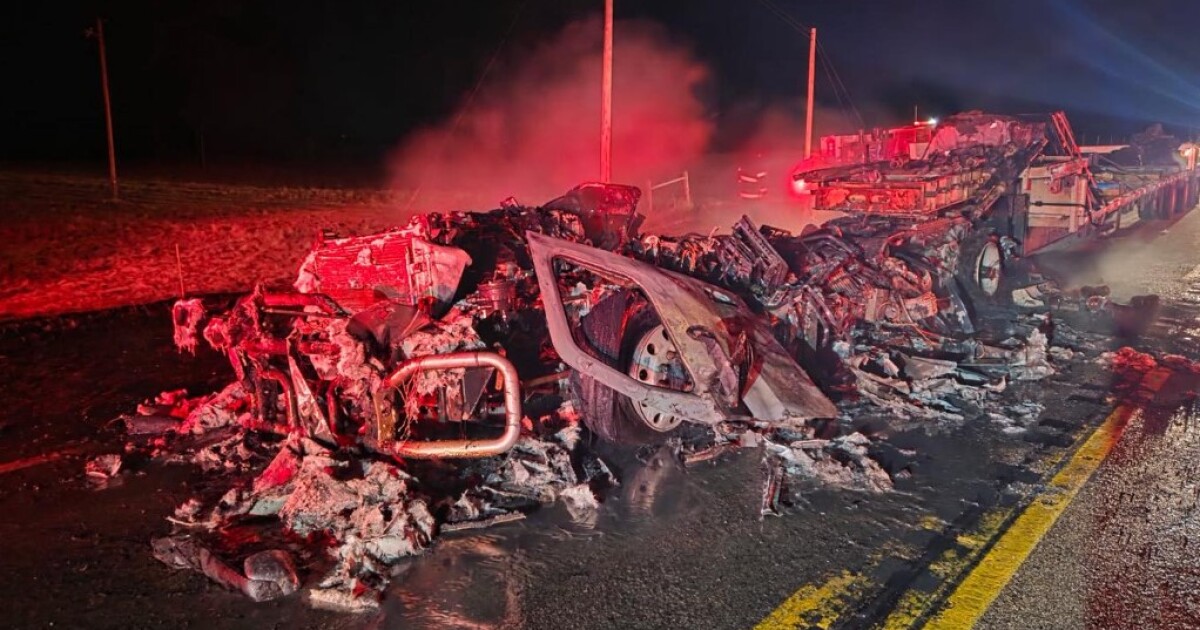
Fergus County – A Montana semi-truck driver is lucky to be alive after his truck was shot at early Sunday morning and erupted in fire, according to a social media post from the Fergus County Sheriff’s Office.
The incident happened on Highway 191, south of Eddies Corner.
The driver called dispatch for shots being fired, but before first responders arrived, the truck started on fire.
All occupants in the semi were able to escape to a nearby field, but the truck was completely destroyed.
Deputies later found the vehicle matching the suspect’s description and the person was arrested at gunpoint.
Investigators say there is no on-going threat to the public and the investigation continues.

Louisiana State Police investigating deadly crash after driver allegedly evades police

Tennessee forward & Maine native J.P. Estrella enters transfer portal

Maryland House passes bill to end automatic charging of some juveniles as adults

UConn vs. Michigan score, live updates: March Madness ends with NCAA men’s basketball championship

Massachusetts landscapers may be charging more this spring due to rising gas prices

Florida High School Football Rankings: Top 25 teams – Oct. 21

How old is Bo Nix? What to know about Oregon quarterback ahead of 2024 NFL Draft

Cleary's 21 help Le Moyne down Central Connecticut State 69-64 in OT

99th annual Pony Swim held in Virginia

Indiana Members Credit Union announced as new anchor tenant at Bottleworks District

Map: Minor Earthquake Strikes Near San Diego

Trump claims he’d win as the president of Venezuela — just needs to ‘quickly’ learn Spanish

US Supreme Court clears path for Steve Bannon criminal case dismissal

Trump reiterates threats to bomb Iran’s power plants and bridges

Trump threatens Iranian infrastructure over Strait of Hormuz | BBC News
-

 Atlanta, GA2 days ago
1 teenage girl killed, another injured in shooting at Piedmont Park, police say
-

 South-Carolina1 week ago
South Carolina vs TCU predictions for Elite Eight game in March Madness
-

 Vermont1 week ago
Skier dies after fall at Sugarbush Resort
-

 Movie Reviews5 days ago
Vaazha 2 first half review: Hashir anchors a lively, chaos-filled teen tale
-

 Politics1 week ago
Trump’s Ballroom Design Has Barely Been Scrutinized
-

 Atlanta, GA1 week ago
Fetishist ‘No Kings’ protester in mask drags ‘Trump’ and ‘JD Vance’ behind her wheelchair
-
 Entertainment5 days ago
Inside Ye’s first comeback show at SoFi Stadium
-

 Politics1 week ago
JD Vance says he was ‘obsessed’ with UFOs, believes aliens are actually ‘demons’