



Miley Cyrus Claims Dad Billy Ray Once Smoked Pot on ‘Hannah Montana’ Set
Montana
Alpine Air CEO questions Postal Service data for air service in Montana • Daily Montanan


The U.S. Postal Service said it shifted the majority of mail in Montana that was going through air to ground transport several months ago, but the chief executive of the air transport company said the federal agency relied on bad data to do so.
Alpine Air CEO Michael Dancy said this week he doesn’t believe the Postal Service will be able to meet its own standards for one- or two-day mail either despite its pledges to do so.
“I think they’ve just decided that it’s OK to fail delivery standards in the state of Montana,” Dancy said.
Alpine Air has worked with the Postal Service in Montana for some 35 years.
A spokesperson for the Postal Service said again that it isn’t changing Priority Mail and Priority Mail Express in Montana.
“The contract move was simply to transition to more reliable surface transportation,” said spokesperson Kim Frum in an email.
Last month, the Postal Service abruptly stopped air service in Montana and then went silent in the midst of air cargo negotiations with Alpine Air despite the company’s offer to reduce its contract by $3 million.
The Postal Service has been in financial trouble, and in 2021, it released a plan to get its budget on track and, it said, “forge a bold vision for transformation” and provide “service excellence.”
It had projected a loss of $160 billion during the course of 10 years. Its plan, which included reductions in air service and investments in ground transportation, estimated a net income of $0.2 billion instead.
But implementation in Montana has been fraught with controversy.
Both U.S. Sens. Jon Tester, a Democrat, and Steve Daines, a Republican, have urged the Postal Service to reverse course in the decision about air service and have been critical of other effects on Montana.
“Once again, it appears that the USPS is turning its back on rural America and attempting to solve its budget woes on the backs of our nation’s rural citizens,” said Tester in a July 18 letter to the Postmaster Louis DeJoy.
But the Postal Service stepped away from negotiations anyway, and Dancy said since then, he took a closer look at the federal agency’s plan, “Delivering for America.” And he said he found it lacking when it comes to information about air transport.
For one thing, he said, the data about air transport reflects information for all air carriers, not just postal carriers, and it doesn’t reflect Alpine Air’s record in Montana.
The report described air transport as “very unreliable,” and it said the following: “Air transport has major uncertainties and risks (weather, flight delays, etc.) that can drastically impede service performance.”
Before the pandemic, it said ground transportation met a 92% on-time performance rate, but air transportation had 89.4% on-time performance.
Dancy, however, said Alpine Air counts a 99% on-time rate, and it produced the same even during the pandemic, when it was deemed an essential service.
The Postal Service’s plan, however, doesn’t make note of the 99% rate. The agency spokesperson said its plan “looks at the network as a whole and does not single out specific providers/states.”
Dancy also questioned the ability of ground transportation to deliver top service in the winter given Montana’s weather and roads, a factor Tester noted in his letter as well.
In its plan, the Postal Service said it will invest another $11 million in vehicles, but this week, the agency did not provide the Daily Montanan performance data for ground transportation related to Montana.
“Unfortunately, your request for ground data is not publicly available information,” Frum said. “However, what I can tell you is in keeping with the DFA plan, the majority of the mail for this contractor, much like others nationwide, was transitioned to existing ground transport several months ago.
“The remaining minimal volume wasn’t enough to justify continuing the service.”
The Postal Service did not directly address whether it can continue to meet delivery standards during the winter months or when mailing distances are on the longer side, such as across the country.
Last week, as a member of the Senate Appropriations Committee, Tester secured provisions for rural postal service in the appropriations package. Those include language directing the Postal Service to provide a briefing regarding the end of air service contracts that affect priority and express mail in Montana and other rural states.
Dancy, for one, is skeptical one- or two-day service is still possible in a state the size of Montana.
“There’s just no way they can do that,” he said. “And they know there’s no way they can do that. But that’s what they’re representing.”

Montana
‘Hannah Montana’ Alum Mitchel Musso Reveals Why He Missed 20th Anniversary Special With Miley Cyrus

Hannah Montana star Mitchel Musso was noticeably absent from the show’s 20th anniversary special earlier this year — and now he’s revealing why.
“Of course they asked me [to be in it],” Musso, 34, revealed on the “Joe Vulpis Podcast” on Wednesday, June 24. “But, it wasn’t presented correctly [to me].”
Musso appeared in more than 70 episodes of the classic Disney Channel comedy series, playing Miley Stewart’s (Cyrus) best friend Oliver Oken alongside Emily Osment’s Lilly Truscott.
The star explained to host Joe Vulpis that he truly valued the opportunity to play Oliver again since he’d mostly been living outside the spotlight for the past decade. Instead, Disney opted for a retrospective look back at Hannah Montana.
Mitchel Musso, Emily Osment and Miley Cyrus on “Hannah Montana.” Joel Warren / Disney Channel / Courtesy Everett Collection
“I’ve been waiting ten years,” he stressed. “The people, they say, 20. My break’s been 10. It’s too long of a wait to do it in a way that isn’t even close to, in my opinion, correct.”
The Hannah Montana 20th Anniversary Special aired in March and featured Cyrus, 33, looking back on memorable moments from the show, alongside host Alex Cooper and celebrity guests such as Chappell Roan and Selena Gomez.
In his new interview, Musso said he would relish the chance of actually getting to play Oliver again in a proper Hannah Montana episode.
“I need a wig,” he joked. “I’d want the hair, which is fine. I’ve worn [wigs] plenty of times on Disney. I’ve worn plenty of wigs. … I’d want to feel the part again. I’d want to put on that little polo again, and wear the … plaid shorts with the goofy shoes.”
The actor went on, “I’d want to play the character, yeah. Once I saw myself doing it, I’d say, ‘Oh, there you are!’ Let’s get out there and let’s do it.”
Musso was not the only major Hannah Montana cast member missing from the anniversary special, as Osment, 34, could not appear due to her filming obligationa on CBS sitcom Georgie & Mandy’s First Marriage.
“We’re at Georgie & Mandy … and that’s why I was not able to be part of the 20-year reunion, because we are here shooting our show,” she said in a social media video at the time. “But I wanted to say hello and thank you to everybody that has stuck by us for all these years. I’m so grateful that you guys all still love the show. I’m so proud to be a part of it.”
Ahead of the Hannah Montana 20th Anniversary Special airing in March, Musso paid tribute to the show with his own Instagram post.


Miley Cyrus is still fielding questions about Hannah Montana more than a decade after its end — and she has some hilarious memories to share. During the Thursday, June 19, episode of her mom Tish Cyrus and sister Brandi Cyrus’ “Sorry We’re Cyrus” podcast, the Grammy winner, 32, opened up about a moment that never […]
“Hannah Montana wrapped around my heart and never really let go. We literally grew up with ya’ll — long days, crazy schedules, learning lines, cracking up between takes, and figuring out life while the cameras rolled,” he wrote. “It taught me so many wonderful values, but the most important ‘to me’ is that laughter can get you through the tough days. That confidence still sticks with me every single day.”
He also shouted out his costars, writing, “Miley, Emily, Jason [Earles], Billy Ray [Cyrus], Moises [Arias], and the whole crew at Disney — you became my family through all the real, messy, beautiful moments. Thank you for believing in a goofy kid from Texas who wore some questionable outfits with a haircut like that. To all of you, thank you for welcoming me into your homes and hearts 20 years ago and still allowing me to be here today. I’m honored we get to share all of this together.”
Hannah Montana originally aired for four seasons between 2006 and 2011. Classic episodes, as well as the Hannah Montana 20th Anniversary Special, can be streamed via Disney+.

ELK PARK — A father and his four sons reported missing near Elk Park were found safe after their vehicle became disabled, according to Butte-Silver Bow County Sheriff Ed Lester.
They were found walking along a roadway around 5 p.m. north of Maney Lake, according to Lester.
Rescuers from 15-90 Search and Rescue, the United States Marshals Service, the United States Forest Service, and the Bureau of Land Management (BLM) were able to reach the group and transport them to safety.
“We are very happy that everyone is safe. We appreciate the hard work of the rescuers and the coordination among Jefferson, Anaconda-Deer Lodge, Powell, and Silver Bow counties,” Lester said in a statement.
(original report) Law enforcement and search and rescue teams are searching for a missing father and his four sons near Elk Park, just off Interstate 15, after the group failed to return from a fishing trip north of Butte.
The group has been missing for nearly 24 hours. Three of the four boys are Type 1 diabetics in need of insulin.
WATCH: Law enforcement and search and rescue teams near Butte, Montana are searching for a missing father and four sons. Three of the boys are Type 1 diabetics in urgent need of insulin
Search expands for missing Butte family as friend reveals 3 of 4 boys are Type 1 diabetics
Courtney Mosier, a family friend who drove from Helena to assist in the search, said the urgency of the situation is critical.
“There (are) four little boys that range from ages 14 to 10. Three of the little boys are Type 1 diabetics. They need their insulin. They need their sugar. They need to be found immediately,” Mosier said.
Mosier has known the father, Paul Klimpel, her whole life and said his outdoor experience is a reassuring factor.
“Paul is an avid outdoorsman. Like I said, I’ve known him my whole life. If the truck broke down, Paul would be able to fix it. So, luckily they’re with a really, really, really good adult. We just need to find these children,” Mosier said.
Meagan Thompson
According to a press release from Butte Sheriff Ed Lester, police are searching for the group in the Brown’s Gulch, American Gulch, Flume Gulch, and Bernice area north of Butte. Officials are also searching the Homestake and Delome Lake areas.
The last known location of the group came from a cell phone ping near Maney Lake.
“The last ping from one of the little boys’ cell phone was up near Maney Lake so that’s where the family is at currently right now,” Mosier said.
Butte-Silver Bow County Sheriff’s Office Butte-Silver Bow Sheriff’s Office

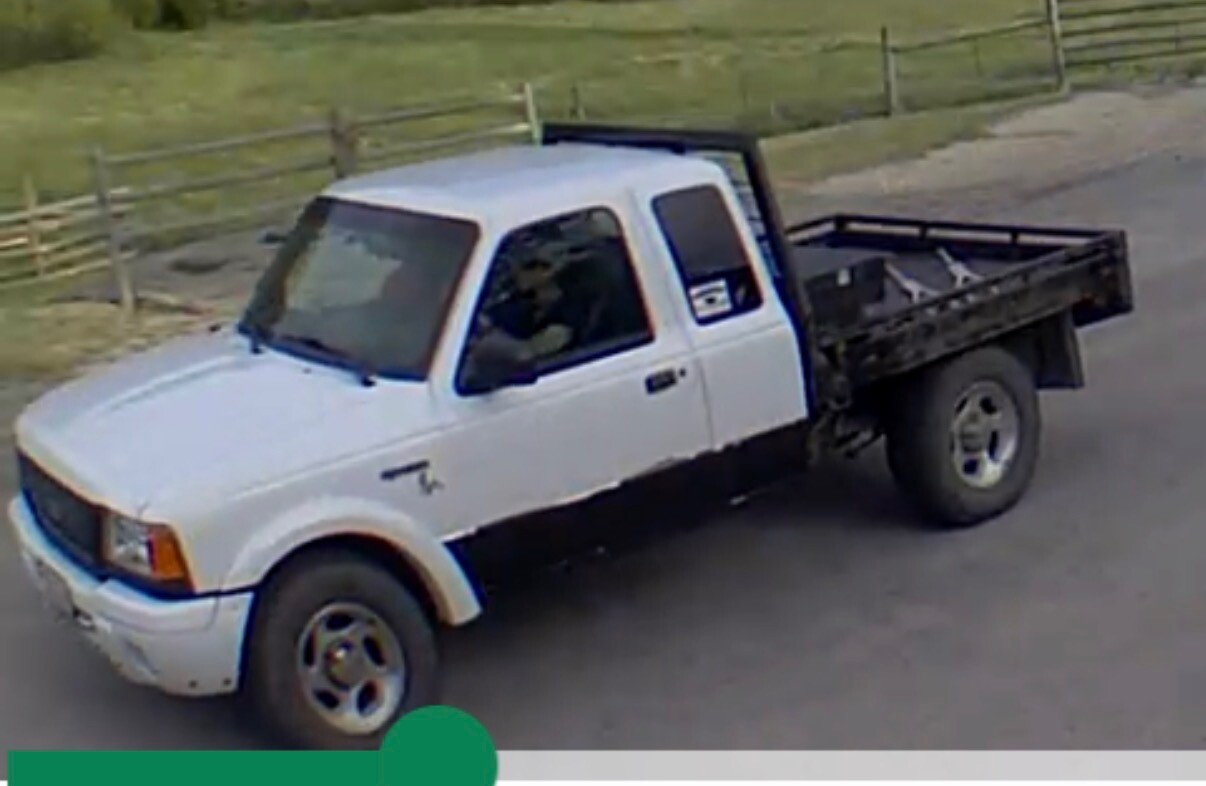
Anyone who spots a white Ford Ranger flatbed pickup is encouraged to call law enforcement at 406-497-1120.
This story was reported on-air by a journalist and has been converted to this platform with the assistance of AI. Our editorial team verifies all reporting on all platforms for fairness and accuracy.
Montana
Social media star Montana Tucker to host Maccabiah Games delegation parade | The Jerusalem Post

Ahead of the 2026 Maccabiah Games, an event often called the “Jewish Olympics” and the largest Jewish sporting competition in the world, which are set to begin next week, social media influencer, dancer, and singer, Montana Tucker expressed her excitement to be hosting the delegation parade at the event and said that the games were taking place at a critical point for the global Jewish community.
“Israel has gone through a lot, Israelis have gone through a lot, Jews have gone through a lot around the world,” Tucker told The Jerusalem Post on Tuesday. “What’s going on is not just happening in Israel; it’s really happening all around the world with our Jewish community. So, an event like the Maccabiah Games is showing the world that we are strong, we are united, and we don’t give up, and we keep fighting.”
According to Maccabiah, the games bring together more than 10,000 athletes from at least 80 countries in Israel every four years to compete in over 45 sports. The Maccabi World Union says the games are the second-largest sporting event in the world after the Olympics.
The 2026 Maccabiah Games, the 22nd of their kind, were initially scheduled for last year but were postponed due to the security situation involving Iran and its regional proxies.
“This was supposed to happen last year, and about a month away, we had to cancel it due to the war,” Tucker recalled. “And so I am so grateful that it is happening this year, because we truly do need this now more than ever.”
She also said she was excited to debut her new song “We’re Not Strangers” at the event.
“It’s all about unity and building bridges and bringing people together. And some of the lyrics say ‘we may pray to different saviors, but we’re not strangers,’” she told the Post. “Our world is so divided right now. I think that we really just need to come together and have more unity and compassion and understanding of one another. And if we really talk to people who look differently than us, act differently than us, have a different religion than us, we’ll realize we’re actually more similar than we think.”
Montana Tucker: Sport ‘truly unites the world’
Sports, she said, was an ideal method to build these bridges, adding she viewed it as something that “truly unites the world.”
The Maccabiah Games this year, though, will be the first since the Hamas-led massacres in southern Israel on October 7, 2023. The attacks sparked a regional eruption with Israel fighting wars against Hamas in Gaza, Hezbollah in Lebanon, and the Islamic regime in Iran.
“We always have to talk about what happened on October 7,” Tucker said. “We should never stop talking about it. And I think it is so important that Maccabiah is utilizing this platform to talk about it. I know they actually have a former hostage, Daniella Gilboa, who’s going to be performing, which is so powerful.”
Tucker also highlighted the value of the games, saying they were a powerful tool to dispel disinformation about the Jewish state.
“What’s shown on the news nowadays is just all the negativity. Most of it is just propaganda and lies about what Israel is, and I think the Maccabiah just debunks every possible propaganda and lie about Israel,” she said. “When people say the word ‘Israel,’ it comes with so many different connotations, and I think we can show them this. This is Israel. This is what being Jewish means.”
A key element in showing the world what Israel and being Jewish mean, she reiterated, meant showcasing Jewish unity at a time when, in the wake of the October 7, the global Jewish community has faced a worldwide rise in antisemitism.
The games themselves are being held under the slogan, “More Than Ever,” according to Maccabiah, to emphasize “the importance of strengthening the bond between [Jewish] communities worldwide and the State of Israel.”
-

 Colorado3 minutes ago
Colorado Springs officials provide details of recent closure, repair work on Uintah Street
-

 Connecticut8 minutes ago
Connecticut man charged with murdering Duxbury woman is an
-

 Delaware15 minutes ago
Officer shoots, kills 19-year-old in Wilmington, Delaware, during foot chase, police say
-

 Florida18 minutes ago
Gators among top-20 rated teams in EA Sports College Football 27
-

 Idaho28 minutes ago
Dorothy Moon reelected to third term as Idaho GOP chair
-

 Georgia30 minutes ago
The Farmer’s Dog Partners with the University of Georgia College of Veterinary Medicine to Advance Veterinary Nutrition Training
-

 Hawaii33 minutes ago
Sewer rate hikes proposed – West Hawaii Today
-

 Illinois45 minutes ago
Man buys winning $1.3 million jackpot ticket at suburban gas station

