Montana
A look at the GOP field for U.S. Senate in Montana

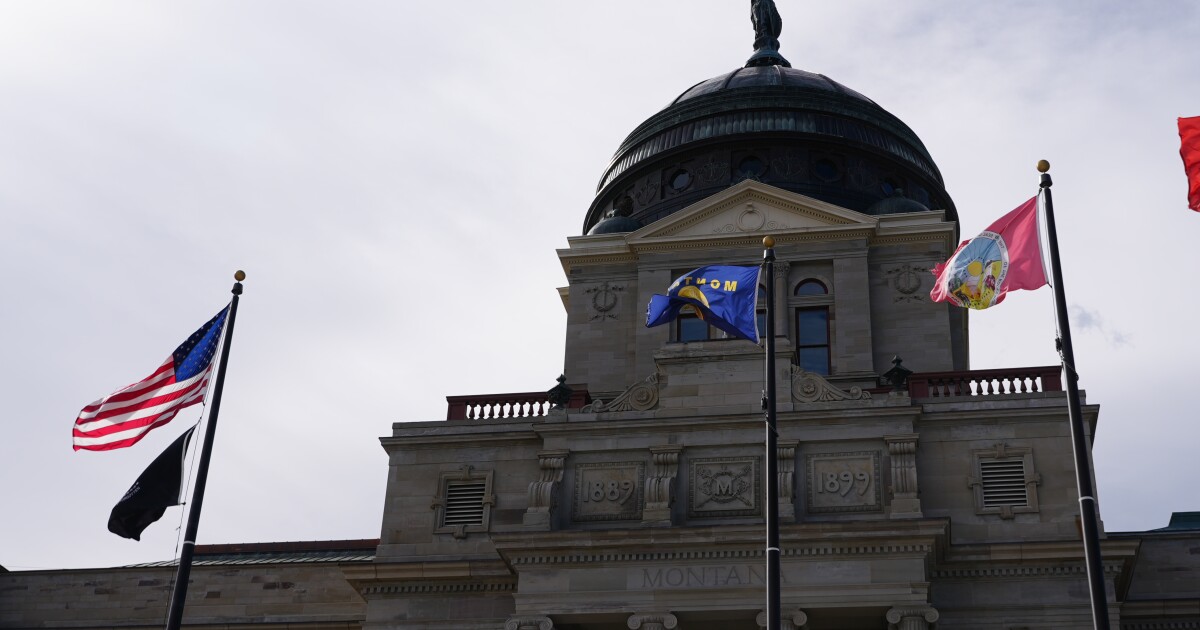
HELENA — The race for the Republican nomination in Montana’s U.S. Senate race wasn’t expected to get much attention – until everything changed a few minutes before the filing deadline. U.S. Sen. Steve Daines dropped out of the race and threw his support behind Kurt Alme, Montana’s former U.S. attorney.
(Watch the video to hear from the Republican candidates for U.S. Senate.)
A look at the GOP field for U.S. Senate in Montana
Alme told MTN he first learned Daines was considering leaving the Senate only a few days before the end of the state’s candidate filing period.
“Sen. Daines called and shared that he and Cindy would like to retire, but they were concerned about losing the seat and the Senate to the Democrats, so he said he would only step down if someone like me would agree to step up and run,” he said. “So because of the importance of maintaining the seat for the Republicans, I told the senator that if he were to decide to retire, that we would be interested in stepping up.”
Alme resigned from the U.S. Attorney’s Office on March 4, the last day of candidate filing. He officially filed to run for Senate at 4:52 p.m., eight minutes before the deadline. Daines withdrew his candidacy at 4:57 p.m., then quickly endorsed Alme. Alme also received support from Montana’s other U.S. senator, Sen. Tim Sheehy, as well as from Gov. Greg Gianforte.
MTN asked Alme if he felt there was any frustration from voters over the last-minute switch. He echoed Daines’ explanation of the move, saying it was intended to keep a big-name Democratic candidate like former Sen. Jon Tester or former Gov. Steve Bullock from entering the race and bringing in large amounts of campaign spending.
“All I’m focusing on is the race we have in front of us and trying to get to the finish line and be sure we represent the people of Montana well, and do everything we can to earn their vote,” said Alme.
Jonathon Ambarian
Alme, 59, was born in Great Falls and lived in Dillon, Victor and Helena before graduating high school in Miles City. Today he lives in Billings. He describes himself as a “commonsense conservative.” This is his first time running for elected office, though he has spent a number of years working in government – and he says he’ll lean on that experience as he pursues his policy priorities.
Trump appointed Alme as Montana’s U.S. attorney in 2017, and he served through the end 2020. When Trump returned to the White House in 2025, he reappointed him.
“This last year, we had focused our team on violent criminals and drug traffickers, and we had prosecuted more defendants last year than we had prosecuted in more than 20 years,” he said.
In addition to public safety, Alme says he’s also prepared to tackle affordability. He served as director of the Montana Department of Revenue under Gov. Judy Martz in the early 2000s, and he was Gianforte’s first state budget director in 2021.
“I learned how to balanced budgets, and I learned how to put money back into the pockets of Montanans,” he said.
Alme also spent time as president of the Yellowstone Boys and Girls Ranch Foundation and as an executive vice president with the National Christian Foundation.
While Alme comes into the Senate race with by far the most backing from top Republicans, it is still a contested primary for the GOP nomination. Two other Republican candidates also filed to run on the afternoon of March 4.
Jonathon Ambarian

Lee Calhoun, a political newcomer from Whitefish, filed when Daines was still in the race. He told MTN he wanted to challenge Daines because he believed the senator’s policies favored big business. While Daines’ decision to drop out took away his biggest reason for running, he said the candidate switch led him to believe Alme wouldn’t be significantly different.
“A lot of people in Montana are really not pleased with that well-orchestrated song and dance that was pulled off,” said Calhoun.
However, Calhoun admits his chance of being elected is “very slim.” He says he has essentially suspended active campaigning, because he wasn’t able to find the campaign staff to support a more robust run. His campaign website is merely a blank page reading “Coming Soon,” and he says he won’t be fundraising or holding campaign events.
Still, Calhoun’s name will be on the ballot, and he says people are welcome to vote for him if they share his point of view.
“At the end of the day, since I’m not owned by anyone or any organization at this point, it would be an opportunity for the people of Montana to have a U.S. senator that’s not owned by people who are more like the modern-day Copper Kings,” he said.
Calhoun, 75, grew up in Pennsylvania. He moved to Montana about 10 years ago. In Whitefish, he started Northstone Solar, which designs and installs solar-energy systems for homes and businesses. He has since sold the business to one of his employees.
Calhoun calls himself an “Eisenhower Republican” and says he’s disagreed with the direction of the party for years. He believes the current tax structure favors the upper class and large corporations at the expense of the middle class and small businesses. He also wants the U.S. to move toward a universal health care system. Jonathon Ambarian
If elected, Calhoun says he would serve only one term.
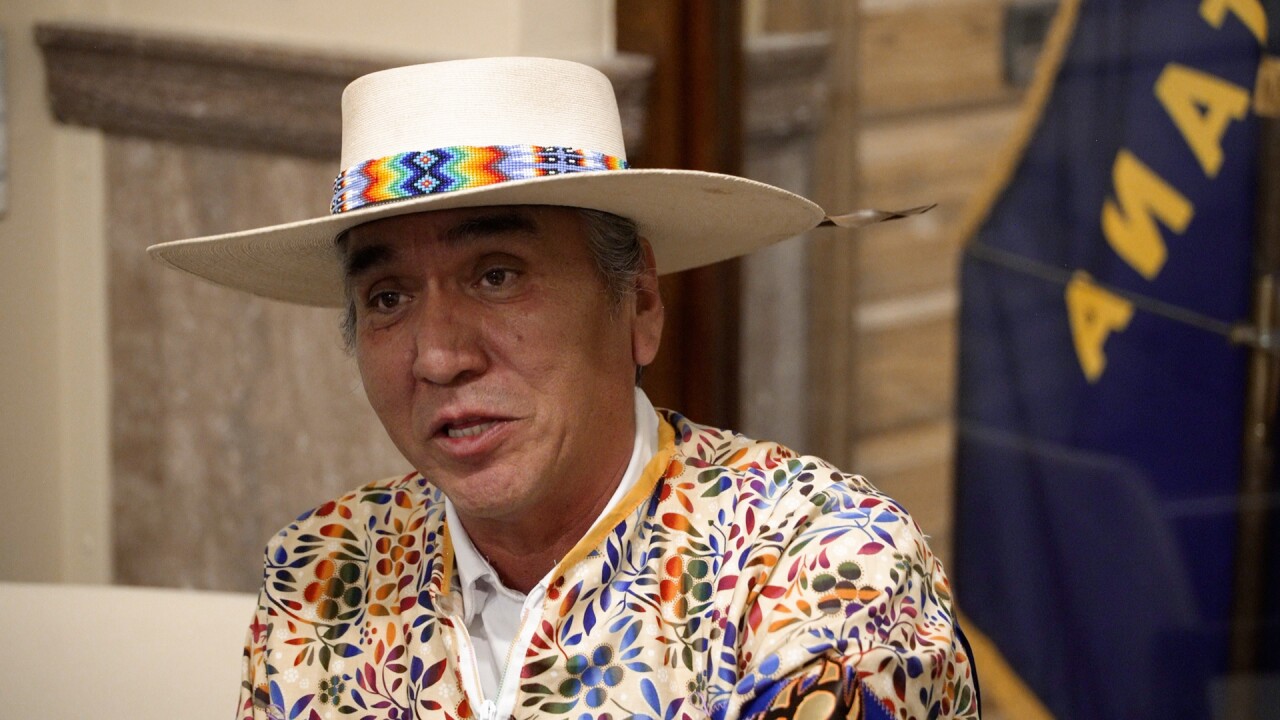
The third Republican on the ballot will be Charles Walking Child, of Helena. Walking Child operates an environmental contracting business. He has previously run in the Republican primaries for Montana’s eastern U.S. House seat in 2022 and U.S. Senate in 2024.
Walking Child has said he sees both major parties as failing to represent everyday Montanans, and that current elected Republicans are too focused on the wealthy.
MTN reached out to Walking Child for this story. He said he “will be giving no interviews, especially to fake news.”
The winner of the Republican primary will move on to the general election, along with one of five Democratic candidates and one of two Libertarians. An independent candidate is also seeking to qualify for the general election ballot.



The Montana Lottery offers multiple draw games for those aiming to win big.
Here’s a look at July 5, 2026, results for each game:
Winning Big Sky Bonus numbers from July 5 drawing
01-02-12-14, Bonus: 08
Check Big Sky Bonus payouts and previous drawings here.
Winning Millionaire for Life numbers from July 5 drawing
08-40-41-46-51, Bonus: 01
Check Millionaire for Life payouts and previous drawings here.
Feeling lucky? Explore the latest lottery news & results
When are the Montana Lottery drawings held?
- Powerball: 8:59 p.m. MT on Monday, Wednesday, and Saturday.
- Mega Millions: 9 p.m. MT on Tuesday and Friday.
- Lucky For Life: 8:38 p.m. MT daily.
- Lotto America: 9 p.m. MT on Monday, Wednesday and Saturday.
- Big Sky Bonus: 7:30 p.m. MT daily.
- Powerball Double Play: 8:59 p.m. MT on Monday, Wednesday, and Saturday.
- Montana Cash: 8 p.m. MT on Wednesday and Saturday.
- Millionaire for Life: 9:15 p.m. MT daily.
Missed a draw? Peek at the past week’s winning numbers.
This results page was generated automatically using information from TinBu and a template written and reviewed by a Great Falls Tribune editor. You can send feedback using this form.
Montana
10-year-old Chicago boy killed, 7 others injured in 2 separate Gary shootings minutes apart: police

GARY, Ind. (WLS) — Two separate shootings that happened minutes apart overnight left a child dead and at least seven others injured in northwest Indiana, police said.
Gary police said officers responded to reports of shots fired in the area of 19th Avenue and Hanley Street around 12:34 a.m. Sunday.
ABC7 Chicago is now streaming 24/7. Click here to watch
While officers were responding, they were told multiple victims had arrived at Methodist Northlake Hospital. Six people self-transported to the hospital, and their conditions were not immediately known.
Minutes later, around 12:49 a.m., officers started heading to the 200-block of Chase Street, about 4 miles away from the first scene, for a report of a gunshot victim. While on their way, officers learned that a 10-year-old boy and a 50-year-old man had been shot and went to Methodist Northlake Hospital.
The 10-year-old boy was pronounced dead at the hospital. The Lake County, Indiana Coroner’s Office identified him as Montana Weathers, of Chicago.
The 50-year-old man was transported to another Chicago-area hospital, where he remains in critical condition.
Police asked anyone with information on the 19th Avenue and Hanley Street shooting to contact Detective Corporal Melendez at 219-881-1209.
Police asked anyone with information on the Chase Street shooting to contact Detective Salazar with the Lake County Prosecutor’s Homicide Task Force at 219-755-3720.
Further information was not immediately available.
Copyright © 2026 WLS-TV. All Rights Reserved.

BOZEMAN, Mont. — The Bozeman Police Department received a report of a vehicle versus motorcycle collision on July 3 around 10 p.m.
The crash happened on Frontage Road and the westbound on ramp to Interstate 90.
Officials say officers and bystanders attempted lifesaving efforts on a motorcyclist who was seriously injured.
The motorcyclist was pronounced dead at the scene.
Preliminary findings indicate a Jeep was traveling eastbound on Frontage Road when the driver made a left-hand turn trying to enter the westbound I-90 on-ramp when the driver did not see the dirt bike.
Officials say there was no forward-facing headlamp or other lighting illuminated on the dirt bike, investigators examined the dirt bike for evidence of lighting equipment and found none.
According to a press release, there is no indication that the driver of the Jeep was impaired, and they are cooperating with the investigation.
The incident is currently under investigation.
-

 New York39 minutes ago
How a Museum Security Guard and Artist Lives on $51,000 in Parkchester
-

 Los Angeles, Ca42 minutes ago
Heat advisory issued as Southern California temps near triple digits this week
-

 Detroit, MI1 hour ago
Detroit Battery Safety Provider Reaches to the Skies with Med Hawk
-

 San Francisco, CA1 hour ago
A Locals-Approved Modern Guide to Fisherman’s Wharf: Seafood, Beer Gardens + Iconic Bay Views
-

 Dallas, TX1 hour ago
New glitzy Houston steakhouse Juliet opens next to Delilah this summer
-

 Miami, FL1 hour ago
Allapattah man faces charges over armed robbery after crash in Miami’s Liberty City
-

 Boston, MA1 hour ago
Somehow, This is a Fitting, Confusing End to Jaylen Brown’s Boston Celtics Career
-

 Denver, CO2 hours ago
Denver Broncos 2026 schedule

