Politics
Commentary: A second offering to Spencer Pratt, and 5 points about the L.A. mayor’s race


Well, I gave him a chance, offering my services.
I was willing to give the young novice a primer on what a mayor can and can’t do, and let him know City Hall is a reality show like no other he’s been on. But Spencer Pratt didn’t call me in response to my column last week.
I did, however, hear from a slew of his most ardent supporters.
Steven C. had this to say: “You’re a left-wing idiot, and … it’s time for you to retire. You’re a joke!!! You always have been!!! God bless Spencer Pratt and the 45th and 47th President of the United States Donald Trump!!!!!”
You may be onto something, Steven!!! I’ve been thinking about retiring!!!! But then a former reality TV star like Pratt comes along, launches unholy attacks on the huddled and unhoused masses, and tells Vanity Fair he had a chat with God, who told him He wants Pratt to be mayor of L.A!!!!! With people like this running for office, how can I retire?!!!!!
R.W. wrote to say: “You say Spencer has never done anything in his life…What credentials do you have? From what I’ve read about you, you are a lousy commie journalist who has never accomplished anything in your life!!”
Just recently, R.W., I replaced a broken toilet tank flush valve and I learned two Willie Nelson songs on the guitar. That’s not nothing.
Peter did not mince words: “Your piece on Pratt is a hit piece filled with bull— . You should go f— yourself before someone takes you out, which is the appropriate response to a s—bag like yourself. So please f— off and drop dead, which is exactly what you deserve.”
Peter, I did drop dead once. Cardiac arrest. While on the other side, I saw God, who told me to snap out of it because He was going to tell Spencer Pratt to run for mayor. Who knew God had a defibrillator?
All of these, by the way, were actual emails, and there were many more just like them. But it’s only fair to note that despite the fulminating knucklehead wing of Pratt’s posse, he’s tapped into a justifiable sense of frustration with City Hall, given homelessness, the Palisades inferno and budget issues that squeeze all manner of basic city services.
That’s why Mayor Karen Bass is paddling furiously, trying to keep her political career afloat. In the latest UC Berkeley-L.A. Times poll, Bass is at 26%, Nithya Raman at 25% and Pratt at 22%. That’s so tight, it appears that no one will get the 50% needed to win outright, and if we get a top-two runoff, it’s not clear who will go to the dance.
So as we close out the primary, with the election on Tuesday, five talking points come to mind.
Which candidate knows the city best?
Los Angeles has 114 distinct neighborhoods spread across 470 square miles (that’s 10 times the size of San Francisco), with an estimated 220 languages spoken. Diversity is a defining characteristic, and roughly half the population is Latino, which makes it a shame there’s no Latino candidate for mayor, especially given the raids and roundups by President Trump.
A mayor doesn’t have to speak six languages and know every corner of the city, but residents want to be seen and heard, and feel like they’re understood and represented.
Raman is well-versed on homelessness policy, and she’s spot-on about the need for greater urgency in problem-solving, but as my colleague Noah Goldberg reported, constituents in her district complain that they haven’t seen enough of her.
As I said, Pratt has wisely targeted municipal failure. But in the realm of outsider candidates with Republican credentials, Rick Caruso, who ran against Bass last time, was comfortable whether he was in the Valley, South L.A. or anywhere in between. And he easily connected with people. Would Pratt be a tourist in his own city?
By virtue of her job the last four years, Bass — who raised a blended Black and Latino family — knows the city best, although her unfavorability rating is a big problem.
What about the other candidates?
In the aforementioned poll, minister and housing activist Rae Huang had 9% and former educational technology businessman Adam Miller had 5%. Virtual unknowns, neither had a legit chance of winning, but they could be spoilers for one of the top three candidates.
I spoke to both, and if you’re undecided, you should read up on them before voting. On Huang’s website, the first words are “Homes are for people, not profit.” Miller wants to bring his success in the business world to City Hall, and when you consider his policy agenda along with his nonprofit work with veterans and homelessness, he’s a better candidate than Pratt.
But he wasn’t on a reality TV show.
Democrats ruined L.A. and California, right?
If only I had a nickel for every time a reader suggested that.
By 101 measures, Los Angeles is one of the great cities of the world and California has built the world’s fourth-largest economy while leading on climate change, so apocalyptic diagnoses are a bit off the mark.
Also, local elections are nonpartisan. You don’t run for mayor as a D or an R.
And yet it’s true that Democrats and their policies and sensibilities rule the day, and they have a lot to answer for in Los Angeles and in California.
But would the same critics suggest that in conservative cities like Fresno and Bakersfield, which have their own homelessness and other problems, Republicans are to blame?
When it comes to housing, poverty, healthcare and streets occupied by people who are addicted or mentally ill, the failures go back decades, touch all levels of government, and cross party lines.
Have I given up on Los Angeles?
When I pointed out that Pratt seemed unaware of these complexities, and of the structural limits of mayoral power, readers suggested he was rising to the challenge while I was giving up on L.A.
Not at all. I care about L.A. enough to hold its leaders to a higher accountability, and to scrutinize posers and pretenders who think they can do a better job.
My advice for the next mayor.
Fix what’s broken, celebrate what works and take responsibility for what doesn’t.
Now let me try one more time:
Spencer, give me a call.
You can’t tell us you had a conversation with God about running for mayor and not share more details.
Did God scold you for referring to the mayor as Karen “Basura,” which means trash in Spanish?
Did He say we should pull out of the ‘28 Olympics, or have any advice on how to fill potholes and fix sidewalks?
If you’re having regular conversations about City Hall with the Father, the Son and the Holy Spirit, we’re dying to know:
On homelessness, what would Jesus do?
steve.lopez@latimes.com


NEWYou can now listen to Fox News articles!
President Donald Trump is pushing for an unexpected replacement to fill the vacancy left by the late Sen. Lindsey Graham, R-S.C., in the Senate.
Trump wants South Carolina Gov. Henry McMaster to tap Graham’s sister, Darline Graham Nordone, to be appointed to the lawmaker’s suddenly open seat for the remainder of his term.
“I recommended, to Governor Henry McMaster, Lindsey Graham’s wonderful sister, Darline, to serve as interim Senator from the Great State of South Carolina,” Trump said on Truth Social on Monday. “This would be a fabulous tribute to Lindsey, who loved her dearly!”
Graham and his younger sister, Darline, had a unique bond, given that, after their parents died, the lawmaker legally adopted and raised her.
GRAHAM’S DEATH IGNITES GOP SCRAMBLE FOR SENATE SEAT AS TRUMP HINTS HE ALREADY HAS A FAVORITE
President Donald Trump wants to see Lindsey Graham’s sister, Darline Graham Nordone, appointed to his vacant seat in the Senate to act as caretaker for the remainder of his term. (Justin Sullivan/Getty Images)
Trump’s announcement comes as a scramble behind the scenes is taking place to fill Graham’s spot, and further, find a new GOP nominee to run in November to keep his seat in the hands of Republicans.
McMaster is expected to announce his pick for the seat at 4 p.m. on Monday. He has so far kept quiet about who he would prefer. Fox News Digital did not immediately hear back from McMaster’s office on who he is eyeing in the interim.
Meanwhile, a key Republican, Sen. Tim Scott, R-S.C., also wants to see Graham’s sister get the nod for his seat.
GRAHAM REPORTEDLY REFUSED MEDICAL HELP BEFORE SCHEDULED TV APPEARANCE
“Lindsey Graham’s sister, Darline Graham Nordone, would be a fantastic pick to serve out the remainder of the Senate term,” Scott said on X. “After speaking with Darline, there is no one better who understands Lindsey’s love for family, our state, and our country.”
Scott, earlier in the day, floated both former Rep. Trey Gowdy and former Sen. Jim DeMint as possible replacements in the interim. He hoped that McMaster would “put a placeholder and let the voters decide” later during a forthcoming special election.
“I think in the next several hours or next day or so we’ll figure out who that person is,” Scott said. “I love Trey Gowdy and Jim DeMint has been in the conversation.”
“[Graham’s] sister would be a wonderful placeholder as well,” he continued. “So we’ve got lots of candidates who could hold the place so that the voters decide. And remember the election starts August the 11th in South Carolina, three weeks from now, we’ll have a primary process.”
FROM ‘DISGRACE’ TO ‘FAMILY’: TRUMP’S REMARKABLE JOURNEY WITH LINDSEY GRAHAM
Sen. Lindsey Graham speaks with reporters aboard Air Force One with President Donald Trump and Secretary of Commerce Howard Lutnick on the way back to Washington, D.C., on Jan. 4, 2026. (Jim Watson/AFP via Getty Images)
Both Gowdy and DeMint have served in Congress — Gowdy in the House and DeMint in the Senate, preceding Scott. Graham Nordone, however, has never held public office.
Multiple sources close to Scott, who chairs the National Republican Senatorial Committee (NRSC) told Fox News Digital that he is pushing McMaster to choose one of the three to effectively be a placeholder and not seek a six-year term in the Senate.
CLICK HERE TO DOWNLOAD THE FOX NEWS APP
While the appointment race nears its conclusion, the race for the GOP nomination to run in South Carolina is still wide open.
Reps. Nancy Mace, R-S.C., and Ralph Norman, R-S.C., are already hinting at leaping into the special election, which is set for Aug. 11. Rep. Joe Wilson, R-S.C., said that he would stay in the House, but the rest of the Palmetto State’s GOP congressional delegation have not said what their plans are.
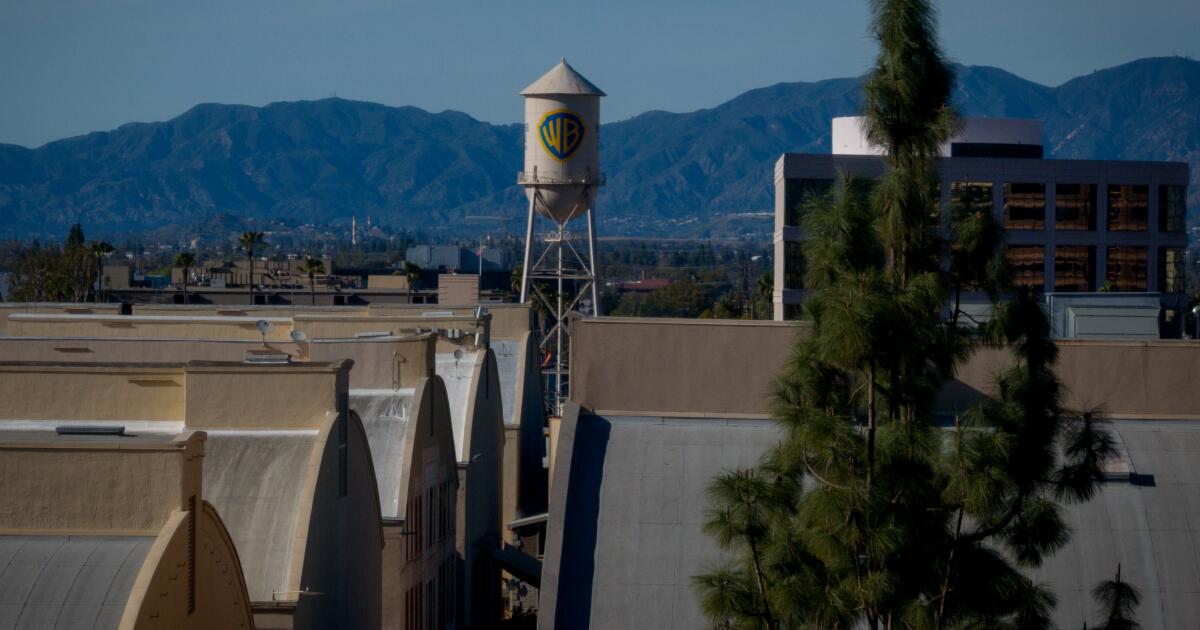
California Atty. Gen. Rob Bonta and 11 other Democratic state attorneys general filed a lawsuit Monday to block Paramount Skydance’s proposed $111-billion takeover of Warner Bros. Discovery — a last-ditch effort to derail a deal that would transform Hollywood.
Tech scion David Ellison’s proposed merger has been hurtling toward the finish line after securing approvals from the U.S. Justice Department and numerous foreign governments. President Trump, an ally of Ellison’s billionaire father Larry Ellison, favors the deal. He is eager for a big shakeup at CNN, which is currently controlled by Warner Bros.
David Ellison now faces his biggest challenge yet as he attempts to build a new entertainment behemoth.
A Paramount representative did not immediately comment.
The suit, filed in federal court in San Francisco, alleges that the proposed merger would violate the U.S. Clayton Act, a century-old antitrust law to prevent mergers that weaken competition and increase costs for consumers.
“Consolidation here not only leads to higher prices — it also leads to fewer opportunities for important stories to come to life, and fewer ways for audiences to encounter stories, ideas, and perspectives beyond their own experiences,” Bonta said in a statement.
“California and our sister states are fighting for free and fair markets, not rigged markets,” he said.
California and the 11 other states, including New York, New Jersey, Washington and Colorado, allege the merger would devastate the theatrical film business by combining two historic film studio rivals. The Ellison family would control such storied franchises as Harry Potter, Bugs Bunny, Batman, “Top Gun” and “Game of Thrones.”
The proposed purchase also would unite two prominent news organizations — CNN and CBS News.
The states have asked Paramount to delay the closing of its Warner Bros. takeover until the litigation can be resolved.
If Paramount refuses, Bonta said the coalition would seek a temporary restraining order asking a judge to hold up the merger, a move that would cause costly delays and escalate legal expenses for Paramount in their quest to finalize the deal.
Larry Ellison, co-founder of software giant Oracle, is bankrolling his son’s ambitions to acquire a second major entertainment company in less than a year. The Ellison family acquired control of CBS-owner Paramount in August and, at the time, David Ellison touted the move of Paramount’s headquarters from New York’s Times Square to Hollywood.
Now, Paramount is reportedly threatening to leave California in the face of Bonta’s legal action.
If the merger goes through, Paramount would own four streaming services, including Warner’s HBO Max and the dominant U.S. cable TV channel owner with HBO, TBS, HGTV, Animal Planet, Food Network, Comedy Central and Nickelodeon.
The U.S. Justice Department last month approved the merger, saying the combination would likely bolster competition — not harm it. The agency’s decision had been expected because of Larry Ellison’s strong support of Trump.
In a show of confidence earlier this year, the Ellisons agreed to increase the payout to Warner investors should the regulatory approval process drag on. Those extra 25-cent-per-share payments begin with the October-December quarter, and would add more than $650 million in deal costs each quarter — giving David Ellison an increased incentive to quickly close the deal.
The proposed merger has sparked fears in Hollywood that it will bring thousands of job losses — similar to past consolidations, including Walt Disney Co.’s 2019 takeover of Fox entertainment properties.
Some theater owners, hard hit by the pandemic and production slowdowns, have expressed concerns the merger would lead to fewer films being made.
The new colossus would significantly dampen competition, Bonta and the other Democrat prosecutors argue. They pointed to the wide-release movie film distribution business, where Warner Bros. and Paramount control about 27% of the market.
After the merger just four companies — Paramount-Warner, Disney, NBCUniversal and Sony Pictures — would control 86% of the films that were widely released, Bonta said.
Paramount has said the deal will boost competition — not hamper it. Ellison has promised to continue releasing 30 films a year with a combined Warner Bros.-Paramount studio, roughly the current output of the two studios.
Ellison also vowed to protect the HBO brand.
Another concern is the licensing of basic cable TV channels, including CNN and HGTV, to pay-TV providers such as Charter’s Spectrum, DirecTV and Google’s YouTube TV. Warner Bros. is the second largest cable channel owner and Paramount is the third largest. Together their channels would represent about 27% of the market.
The typical threshold for antitrust concerns is at least 30% marketshare.
More than 5,000 entertainment industry workers, including Jane Fonda, Ben Stiller, Bryan Cranston, Javier Bardem, Lin-Manuel Miranda and Mark Ruffalo, signed an open letter calling on Bonta to block the merger.
Some have expressed concerns about marrying CNN and CBS News following months of turmoil at CBS News since David Ellison hired journalist Bari Weiss as CBS News editor in chief. Last month, Weiss orchestrated a dramatic shakeup at the iconic “60 Minutes” news program, with top executives and three well-known correspondents tossed out.
The Ellison family recently shed its movie theater chain, which it picked up as part of the Paramount acquisition, to clear the way for the Warner deal.
California Atty. Gen. Rob Bonta is leading an effort by state attorneys general to block Paramount’s proposed takeover of Warner Bros. Discovery.
(Paul Kuroda/For The Times)
The deal also faces opposition outside the U.S.
. The British culture minister in late June said she was weighing whether to intervene in the deal due to concerns about maintaining a competitive media market. Britain’s Competition and Markets Authority also has opened an investigation into Paramount’s proposed merger.
In April, a federal judge in Sacramento granted a request from Bonta and seven other attorneys general for a preliminary injunction, which freezes the merger of Nexstar Media Group, which owns KTLA-TV Channel 5, and Tegna. The deal was designed to create the nation’s largest TV outlet group .
A larger group of state attorneys general also won a New York jury verdict against Live Nation Entertainment and its subsidiary Ticketmaster. Jurors found that Live Nation had illegally monopolized the live concert industry.
Bonta also has an ongoing case against Amazon for price fixing, which the company denies.
Still, legal experts say the states may face an uphill climb to detrail the Paramount-Warner Bros. merger because the arrival of Netflix, Amazon and Apple dramatically shifted the landscape.
The tech giants, which introduced consumer-friendly streaming options, have lessened the influence of traditional companies like Paramount and Warner Bros.
Paramount’s deal would mark the third time Warner has changed hands in the last decade.
AT&T bought the company in 2018 and then sold it to the smaller Discovery four years later. That deal left Warner Bros. burdened by debt, leading to deep cost cuts and setting the stage for the Ellison takeover.
Politics
Medical examiner releases preliminary findings in Lindsey Graham’s death as death certificate remains pending

Lindsey Graham’s sudden death prompts medical questions, political reactions
Fox News senior medical analyst Dr. Marc Siegel examines the shocking death of Sen. Lindsey Graham, R-S.C., at 71. Siegel discusses the emergency response, including chest pains and a delayed entry due to a deadbolt. He connects the death to a family history of heart attacks and considers how a long flight to Ukraine may have contributed to heart stress, dehydration, and a fatal arrhythmia.
NEWYou can now listen to Fox News articles!
The District of Columbia’s Office of the Chief Medical Examiner on Sunday released preliminary findings indicating Sen. Lindsey Graham suffered an aortic dissection due to arteriosclerotic cardiovascular disease before his death.
Graham, 71, was pronounced dead at George Washington University Hospital at 10:23 p.m. Saturday, according to a joint statement from the Metropolitan Police Department and the District of Columbia’s Office of the Chief Medical Examiner. An autopsy was performed Sunday.
The medical examiner emphasized that the findings are not final and that Graham’s death certificate will remain pending while toxicological and microscopic testing is completed.
“The preliminary examination findings were: Aortic Dissection due to Arteriosclerotic Cardiovascular Disease,” the medical examiner’s office said in a statement.
SEN. LINDSEY GRAHAM DEAD AT 71 AFTER ‘BRIEF AND SUDDEN’ ILLNESS, OFFICE SAYS
Sen. Lindsey Graham, R-S.C., speaks to reporters after a briefing by Trump administration officials on U.S. strikes on Iran at the U.S. Capitol in Washington, D.C., on March 3, 2026. (Nathan Posner/Anadolu)
The office emphasized that the findings are preliminary and that Graham’s death certificate remains pending. Officials said comprehensive toxicological and microscopic testing is routinely conducted when an autopsy is performed in the District and must be completed before the death certificate is updated with the cause and manner of death.
An aortic dissection is a tear in the inner layer of the aorta, the body’s largest artery, that allows blood to flow between the layers of the vessel wall, according to the Mayo Clinic. The condition is considered a life-threatening medical emergency that can lead to severe internal bleeding or organ damage.
Arteriosclerotic cardiovascular disease refers to the buildup of plaque inside the arteries, which can restrict blood flow and increase the risk of serious heart and vascular complications.
LINDSEY GRAHAM, SOUTH CAROLINA SENATOR WHO ROSE FROM SMALL-TOWN ROOTS TO GOP POWER BROKER, DIES AT 71
Sen. Lindsey Graham, Member of the US Senate, speaks to the people during the demonstration for human rights in Iran at Theresienwiese during the 62nd Munich Security Conference on February 14, 2026 in Munich, Germany. (Hannes Magerstaedt/Getty Images)
The release of the preliminary findings comes after Graham, 71, died Saturday night, shocking colleagues in Washington and across the nation.
Graham, a Republican who was first elected to the Senate in 2002 after serving four terms in the House of Representatives, became one of the chamber’s most influential voices on national security, foreign policy and the judiciary. He chaired the Senate Judiciary Committee during President Donald Trump’s first term and was one of the president’s closest allies on judicial nominations and defense policy.
A U.S. flag flies at half-staff over the Capitol on July 12, 2026, after the death of Sen. Lindsey Graham, R-S.C. Emergency dispatch audio reviewed by Fox News Digital documents the emergency response before his office announced his death. (Kevin Carter/Getty Images)
CLICK HERE TO DOWNLOAD THE FOX NEWS APP
Following news of Graham’s death, tributes poured in from lawmakers across the political spectrum, with colleagues remembering his decades of public service and his influence on some of the Senate’s most consequential debates.
The Office of the Chief Medical Examiner said it will update Graham’s death certificate after toxicological and microscopic testing is complete.
-

 Indiana4 minutes ago
ACLU of Indiana sues over conditions at Monroe County Jail
-

 Iowa10 minutes ago
Northwest Iowa woman taken to the hospital after rollover
-
 Kansas16 minutes ago
Pilot of crop duster plane survives crash Monday in NE Kansas
-

 Kentucky22 minutes ago
Kentucky State Police seeks public vote for national cruiser contest – Winchester Sun
-

 Louisiana28 minutes ago
Louisiana-based study: Bariatric surgery holds promise for young patients
-

 Maine34 minutes ago
High heat and humidity likely to bring storms to Maine
-

 Maryland40 minutes ago
Dog who called Maryland shelter home for 7 years finally adopted: “There wasn’t a dry eye in the house”
-

 Michigan46 minutes ago
Michigan reports 2,640 Cyclospora cases; Lettuce identified as possible source of outbreak

