Montana
Trump nominee from Montana defends work, views on ‘white culture’ at Senate hearing • Daily Montanan


Even in the politically charged atmosphere and divided country, a routine U.S. Senate Foreign Relations Committee hearing was charged and emotions ran high as Jeremy Carl, a resident of Bozeman, stood for questioning, as President Donald J. Trump’s nominee to become the Assistant Secretary of State for the United Nations and International Organizations.
If confirmed, Carl would spend much time focused on the U.N. and other world organizations, but during the hearing this week, senators from both parties blistered Carl for his views on “white culture,” comments that were described as “anti-Semitic” and a fringe social concept called “replacement theory;” just a fraction of his time was spent focused on international policies, instead questioning him on matters closer to home.
Carl, who has spent time in right-leaning academic institutions and think tanks, has a history of controversial statements centering on race, religion and gender, and was appointed by Republican Gov. Greg Gianforte to the board of Humanities Montana, over the protests of some cultural leaders.
Carl also served as the Deputy Assistant Secretary of State for the U.S. Fish and Wildlife Service in the first Trump administration.
In an explosive Senate hearing Thursday, the only two Republicans on the panel to speak for Carl were introductory remarks by both Idaho Sen. Jim Risch, the chairman, and Sen. Steve Daines, of Montana, whose comments noted they were both from Bozeman and both shared an admiration for former President Ronald Reagan. Meanwhile, Sen. John Curtis, a Republican from Utah, said he was not inclined to support Carl’s nomination after questioning.
During the roughly two-hour hearing, though three other nominees testified about their appointments to other positions, the bulk of the time was spent focused on Carl and his extensive social media posting, speeches and writings that blamed the Jews for victimhood, claimed that “white culture” was being erased, and that Jan. 6 protestors were treated worse than African-Americans during the Jim Crow era.
Carl’s answers to a barrage of questions ranged from doubling-down to apologizing to claiming that his comments were being taken out of context. At least three Democratic senators said they were dumbfounded that a person with Carl’s beliefs would even be nominated to serve as one of America’s highest-ranking representatives to the U.N., because of his views, which favor white culture and Christianity while discounting diversity.
Allegations of anti-Semitism
Even though Carl’s nomination would focus on international relations, much of the hearing focused on Carl’s extensive writings, and more than 1,000 posts to “X” (formerly Twitter) which U.S. Sen. Jeanne Shaheen, D-New Hampshire, said had been scrubbed.
“Mr. Carl, you have argued that feminism has led to a downfall in American society. You’ve written that the Civil Rights Act has warped our culture and that the United States should be a white, Christian nation,” Shaheen said. “You’ve written that a post-feminist America is one of the reasons for falling fertility and rapidly rising out-of-wedlock births.”
Shaheen, though, used an October 2024 appearance on a podcast, “Christian Ghetto,” to quote Carl’s words back to him:
“Jews have loved to play the victim. The Holocaust dominates so much of modern Jewish history. Jews love to see themselves as oppressed.”
“You continued to make anti-Semitic and racist comments even after your nomination was announced last year,” Shaheen said. “In this committee, we’ve heard from many nominees we don’t agree with, but since your nomination, you’ve tweeted more than 850 times, appeared on five podcasts and repeated this language. This is a pattern. So, how can the committee trust that you can represent the United States of America to the rest of the world in an unbiased manner, when you have taken no steps to restrain your conduct after the nomination?”
Carl replied that since he was nominated, he’s been working at the Claremont Institute, and that his job includes advocacy.
U.S. Sen. Jacky Rosen, a Democrat from Nevada, said that as the only synagogue president elected to the U.S. Senate, she was worried that an endorsement from the upper house of Congress would send a dangerous message that anti-Semitism should be tolerated.
“Mr. Carl’s vile and anti-Semitic threats are very real,” she said. “Some may try to excuse Mr. Carl’s remarks that they were taken out of context or that his own heritage (Carl has some Jewish ancestry, according to him) protects him from criticism. So let’s be clear: Identity does not excuse anti-Semitism. Identity doesn’t excuse racism. Identity does not excuse hateful rhetoric regardless of who said them. Words matter.
“To my colleagues that may consider voting in favor … understand what the vote signals — it tells America you’re willing to use your sacred vote not just to ignore but to endorse these hateful statements.”
Several senators read into the record or placed into the written records some of those statements, which included: “Hitler is always a convenient bad example.” Another that was referenced: “The Holocaust dominates so much of modern Jewish thinking today. Everyone has traumas in their past. How much are we going to relitigate them?”
Oppressed white race?
Two of the other prominent topics during Carl’s contentious hearing included theories that white people may be the most oppressed group in America, and a belief in a racially-based and unproven “great replacement theory” that holds that America is slowly and deliberately replacing white people of European descent with other ethnicities in America.
Sen. Chris Murphy, D-Connecticut, used one of Carl’s quotes as the starting point for his questioning: “Anti-white discrimination is the most pervasive and political salient form of racism today.”
“Do you believe that anti-white discrimination is more salient than discrimination faced by Blacks, Latinos, Muslims or other American groups?” Murphy asked.
Carl responded that since Trump took office a year ago, that has been changing quickly.
“Maybe you’ll suggest that everything is fine now. A year ago, were white Americans the most discriminated against group in America?” Murphy asked.
“This is my belief and I’m not running away from that. Of course, all races in different contexts can be subject to severe discrimination. But when we look at our legal structure, white Americans are very disenfranchised in overt ways. We see it in the Small Business Administration and other places,” Carl said.
“So your belief is that white Americans face more discrimination at least prior to the Trump administration fixing this than Black Americans,” Murphy asked.
“On average, that is correct,” Carl replied. “I am not running from that at all.”

Carl also has written about his concern that “white culture” is disappearing and being erased from America. Murphy asked for definitions of white culture as well as examples of the government erasing it.
“Anytime you have mass immigration, you’re going to have a change in cultures especially if they’re coming from culturally dissimilar backgrounds,” Carl said.
“What history is being erased?” Murphy asked.
“Things like going to a certain type of Christian church,” Carl said, giving examples of ethnic differences within Christianity, saying that white Christians worship differently than Chinese-American Christians or Black Christian churches.
As Murphy pressed Carl for more examples of white culture being erased, Carl suggested the recent “Super Bowl” halftime show, featuring American artist Bad Bunny performing in Spanish, was evidence.
“I’m not a racial nationalist. I’m a civic nationalist,” Carl said. “I am concerned with the common American culture that we had for sometime that through mass immigration Balkanizes and weakens us. I’m not running away from that comment, and I am not apologizing.”
U.S. Sen. Tim Kaine, a Democrat from Virginia, brought up references that Carl made, including that “whites are victims of cultural genocide.”
Sen. Cory Booker, a Democrat from New Jersey, said he was disturbed by Carl’s endorsement of the great replacement theory.
“Do you believe there is an active effort to replace Americans right now,” Booker asked.
“The Democratic Party through its policies has certainly shown signs of that,” Carl said.
Booker then referenced some of Carl’s writings about race in America, quoting Carl’s assessment of it as an “us versus them” situation.
“The only interpretation I can have is it’s white people against the others, which sounds deeply racist to me,” Booker said. “Would America be weaker if it were, say, 40% Jewish?”
“Not in and of itself,” Carl replied.
“Why did you qualify that?” Booker asked.
“Unity, as President Trump has said, rather than diversity is a greater strength,” Carl said.
“Why not say it doesn’t matter what percentage of population is Jewish?” Booker said.
“One of my weaknesses as some have pointed out is sometimes taking an idea too far. I made some comments about minimizing the effects of the Holocaust that were absolutely wrong. I am not going to sit here and defend them,” Carl said.
Booker continued to push Carl about what other statements he’d rescind, but Carl pushed back saying he didn’t have all of them, while others needed context.
“We’re sending you into a very diverse world, and you can’t say unequivocally that it doesn’t matter what our racial heritage is. You say it matters what the racial makeup of America is. Do you believe it matters?” Booker asked.
“Senator, let me repeat what President Trump says,” Carl began.
“I don’t want you to echo what President Trump says. I want you to answer my question: Does it matter what the racial makeup of America is?” Booker asked.
“I stand on my comment,” Carl said.
“What’s your comment?” Booker said.
Carl then reiterated Trump’s stance on unity versus diversity.
“You think this country’s greatness depends upon its ethnic diversity as long as white people have more numbers. That does not sound like a nation with the belief that all people are created equal,” Booker said. “And equal before the eyes of God. It sounds like you have a racial hierarchy. There is no way for me to read this any other way. This is the United States of America. One nation under God, but you cut us up and divide us along racial lines.”
Carl tried to interject over Booker, “Respectfully.”
“You do not respect me — because of the color of my skin,” Booker said. “You have said that Juneteenth is a racial hustle so don’t come here and hustle me.”
Republican has questions
Curtis, the junior senator from Utah, said that he was concerned about Carl’s comments as they related to Israel, but was also concerned with other U.S. interests.
“You have said that the U.S. spends too much time and energy on Israel to the determent of our own national interests. Share with me what U.S. interests have been harmed by sustained American support of Israel,” Curtis asked.
In his response, Carl invoked his work with former Secretary of State George Shultz and Charlie Kirk, and said he wished the United Nations would “stop being anti-Semitic all the time.”
But Curtis also worried that Carl’s worldview may lead to more strained relationships with countries normally considered America’s allies. Curtis said that he has concerns about Carl’s nomination, which could split the GOP and doom Carl’s chances.
United Nations
Much of the State Department position engages with the United Nations, a body Carl criticized as being bloated and out-of-step with American priorities.
“I will work to advance this vision by holding the U.N. and international organizations accountable, promoting transparency and ensuring the U.S. taxpayers’ contributions to these organizations delivers tangible results that align with our national interest,” Carl said.
He called slain conservative personality Charlie Kirk a longtime supporter and champion, and referenced his close alliance with Kirk several times, at one point saying that virtually no America has championed Israel more than Kirk.
“As President Trump has said, the U.N. has potential, but needs renewed focus as it has strayed far beyond its original purpose of solving international disputes peacefully,” he said.
Carl praised Trump officials for demanding accountability and leading the U.S. back to its purpose, citing a recent reduction in budget by 15% and layoffs of nearly 3,000.
At other times, he criticized the U.N., characterizing it as a being a body of “global legislators” as well as “independent sources of moral, legal and political authority.”
“All too often our resources are used to support programs and agendas that do not fundamentally cater to our interests,” Carl said.
Praising Trump and the administration for withdrawing from 66 international organizations, he accused America’s allies of not voting with the U.S. at the United Nations and then “privately signaling their support.”
Jan. 6 vs. Jim Crow
Another contentious topic of the confirmation hearing centered around comments that Carl made in which he said that the participants in the Jan. 6, 2021, insurrection were treated worse than people during the institutional racism of Jim Crow laws in America.
Booker pointed out that Capitol Police Officer Brian Sicknick, who was injured and later died in the attack, was a New Jersey resident. Booker spoke of Black Americans being beaten, lynched and murdered because of Jim Crow policies.
“It’s shameful. Sir, you have no decency. You have no honor. You say inflammatory things because you think it will ingratiate you to those who are paying your salary and you sit here before me and try to wrap yourself in an American flag,” Booker said. “You disgraced the ideas that we all swear an oath to uphold.
“God, I pray for us if we let someone like you represent us before the diverse nations of this world.”
Though Booker’s time to speak was ending and the meeting was running longer than scheduled, Carl replied, “I deplore Jim Crow and I don’t agree with you characterization of my views.”
On Friday, Humanities Montana confirmed that Carl had resigned from the board on Sept. 18, 2025.
Also on Friday, the Daily Montanan reached out to Daines for comment about Carl’s nomination, and whether he supported Carl, since he introduced him to the committee. The Daily Montanan also asked Daines whether he agreed with Carl’s positions in the committee hearing.
The Daily Montanan did not receive any response.



The Montana Lottery offers multiple draw games for those aiming to win big.
Here’s a look at July 8, 2026, results for each game:
Winning Powerball numbers from July 8 drawing
12-29-37-43-55, Powerball: 18, Power Play: 4
Check Powerball payouts and previous drawings here.
Winning Lotto America numbers from July 8 drawing
17-26-31-32-37, Star Ball: 01, ASB: 02
Check Lotto America payouts and previous drawings here.
Winning Big Sky Bonus numbers from July 8 drawing
03-13-16-17, Bonus: 10
Check Big Sky Bonus payouts and previous drawings here.
Winning Powerball Double Play numbers from July 8 drawing
06-27-33-44-69, Powerball: 23
Check Powerball Double Play payouts and previous drawings here.
Winning Montana Cash numbers from July 8 drawing
08-16-17-22-27
Check Montana Cash payouts and previous drawings here.
Winning Millionaire for Life numbers from July 8 drawing
16-18-43-48-50, Bonus: 01
Check Millionaire for Life payouts and previous drawings here.
Feeling lucky? Explore the latest lottery news & results
When are the Montana Lottery drawings held?
- Powerball: 8:59 p.m. MT on Monday, Wednesday, and Saturday.
- Mega Millions: 9 p.m. MT on Tuesday and Friday.
- Lucky For Life: 8:38 p.m. MT daily.
- Lotto America: 9 p.m. MT on Monday, Wednesday and Saturday.
- Big Sky Bonus: 7:30 p.m. MT daily.
- Powerball Double Play: 8:59 p.m. MT on Monday, Wednesday, and Saturday.
- Montana Cash: 8 p.m. MT on Wednesday and Saturday.
- Millionaire for Life: 9:15 p.m. MT daily.
Missed a draw? Peek at the past week’s winning numbers.
This results page was generated automatically using information from TinBu and a template written and reviewed by a Great Falls Tribune editor. You can send feedback using this form.

HELENA, Mont — Gov. Greg Gianforte is backing a new effort to keep data centers from driving up Montanans’ power bills.
This week, Gianforte announced Montana is signing on to the Ratepayer Protection Pledge — an initiative endorsed by President Trump.
Several major technology companies like Amazon, Google, Meta, Microsoft, OpenAI, Oracle, and XAI first signed the pledge back in March.
The pledge comes as data center development continues to grow — raising questions about how much new energy will be needed and who will pay for it.
NBC Montana spoke with Julia Haggerty, professor of geography and department head of earth sciences at Montana State University, about whether Montana’s power grid is ready for that growth.
“Not without resolution of significant transmission bottlenecks and massive amounts of new generation. So, while our grid is adequately, relatively adequately equipped to serve the needs of our current load base, it’s definitely not equipped to accommodate the new demands without a lot of expansion,” she said.
According to the pledge, data center developers will pay for new power generation, and infrastructure needed to support their operations.
“It does align with ongoing regulatory efforts to ensure that the cost of new generation associated with data centers is borne by the developers of those data centers and not customers,” Haggerty said.
The governor’s office says Gianforte’s support of the pledge is designed to encourage responsible data center investments while protecting Montana ratepayers from long-term costs.

-
Culture42 minutes ago
Which Version of the ‘Odyssey’ Should You Read?
-
 Lifestyle45 minutes ago
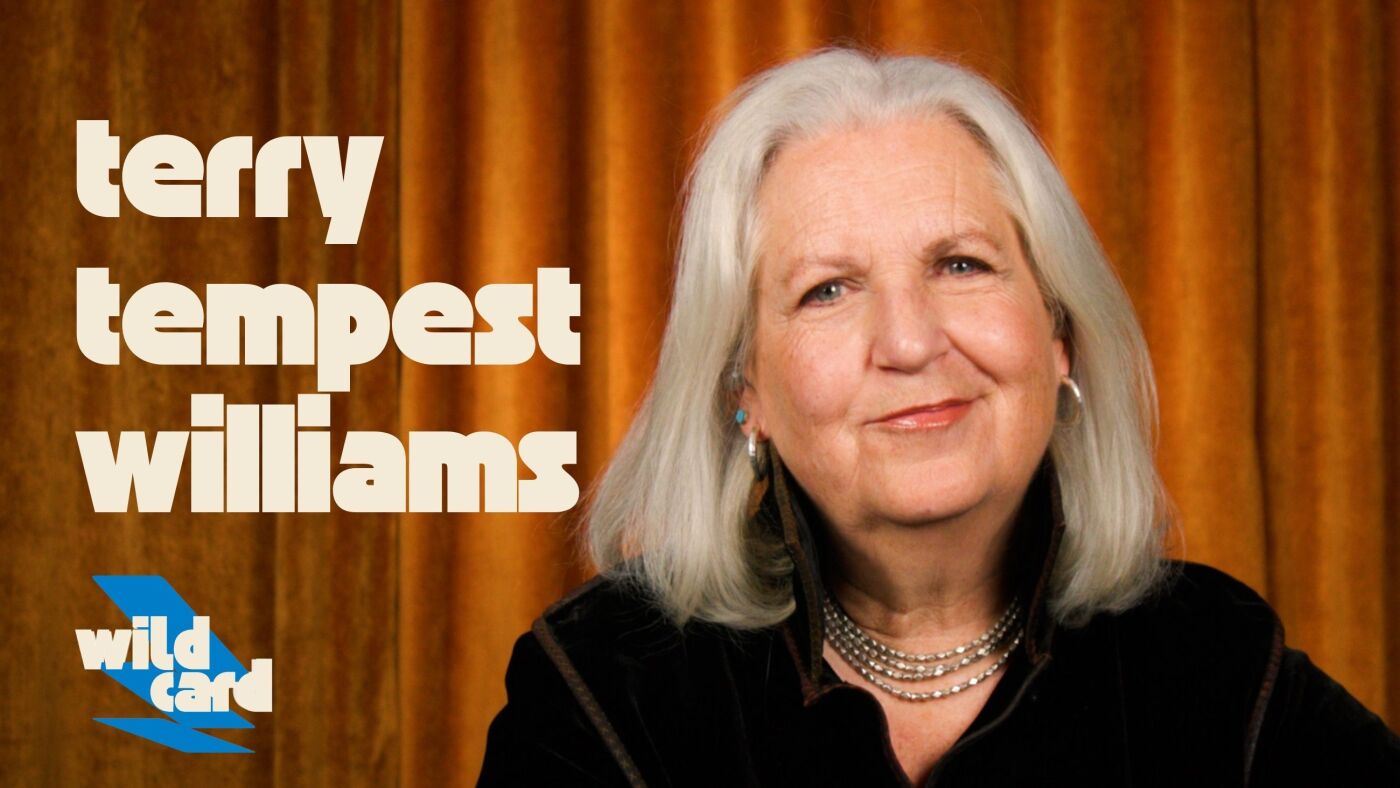
Terry Tempest Williams on why women with big ideas get labeled ‘crazy’ : Wild Card with Rachel Martin
-

 Technology57 minutes ago
Google’s Nest Thermostat has hit its best price of the year
-

 World60 minutes ago
Argentinian flight instructor jumps to death from plane, 22-year-old student forced to land alone
-

 Politics1 hour ago
Omar’s disclosures erased millions, leaving her with potential negative net worth. She won’t explain why.
-

 Health1 hour ago
Dr Oz links obesity to chronic disease surge, says GLP-1s can ‘jumpstart’ better health
-

 Sports1 hour ago
Pirates star pitcher makes unfortunate history after being taken out in middle of perfect game bid
-

 Technology1 hour ago
Medical identity theft follows you into the doctor’s office

