Business
The Google Insider Trading Case Hits Polymarket


Andrew here. Warning: If you bet on prediction markets about things you could know about from your work, it may be insider trading. That’s the lesson from new charges against an employee of Google.
Also, Jamie Dimon is thinking about spending $20 billion on acquisitions; we go through some possible targets. And take our quiz about the U.F.C. fight scheduled to take place at the White House.
Gaming prediction markets
In the public’s view, prediction markets are a way to bet on the N.B.A. playoffs, the Texas Senate race or what Costco executives will say on their next earnings call.
They’re also often seen as a hive of insider trading, a view reinforced by charges filed on Wednesday against a Google employee who made more than $1 million on Polymarket. The case raises more questions about how these platforms are policed — and who should do the policing.
What happened: The Google employee, Michele Spagnuolo (who used the handle AlphaRaccoon), was accused of betting on what people were searching for on Google — wagers he was sure to win because he had access to internal search data.
“Spagnuolo correctly predicted virtually all of the outcomes on these positions,” the Commodity Futures Trading Commission wrote in its complaint.
A Google representative said in a statement that using confidential information for making these kinds of bets was “a serious breach of our policies.”
Spagnuolo isn’t the only person charged with insider trading on Polymarket. Federal prosecutors in Manhattan last month accused Master Sgt. Gannon Ken Van Dyke, a U.S. Special Forces soldier, of betting on the capture of Nicolás Maduro of Venezuela, an operation he participated in.
Insider trading is an increasing problem for prediction markets. Polymarket has faced significant scrutiny because its unregulated offshore platform has long made it easy to bet anonymously. (Kalshi, which is regulated in the U.S., has also suffered from insider trading.)
Polymarket has started clamping down on that practice, according to The Information — though some longtime users have chafed at those efforts. “Polymarket will go down the drain if they make KYC mandatory,” one user wrote on the company’s Discord discussion forum, referring to “know your customer” practices.
What are policymakers doing? Critics have accused the C.F.T.C., the primary American regulator of prediction markets, of failing to adequately police the industry. (Mike Selig, the commission’s chairman, told ABC News that his agency actively patrolled for wrongdoing.)
Some lawmakers are seeking to crack down on insider trading, including Representative James Comer, the Kentucky Republican who leads the House Oversight and Government Reform Committee, and several bipartisan groups of senators.
Why it matters: Prediction markets have become big businesses. (Kalshi was most recently valued at $22 billion.) But a growing perception that they’re rife with cheating could threaten their popularity.
HERE’S WHAT’S HAPPENING
The Trump administration is reportedly preparing to fund U.S. drone companies. Shares in Unusual Machines, a drone start-up in which Donald Trump Jr. is an investor and advisory board member, are soaring in premarket trading after The Wall Street Journal, citing unnamed sources, reported on the potential investments. (The Times hasn’t independently confirmed the report.) The deals, aimed at bolstering domestic production, are still in the negotiation stage — equity stakes are a possibility — as the Pentagon vets the companies, The Journal adds.
Investors brace for Thursday’s inflation data. The Personal Consumption Expenditures report for April, which will be closely watched by the Fed, is expected to show on Thursday that headline inflation hit a three-year high of 3.9 percent. The wartime energy spike is a big culprit, and that’s likely to tie the Fed’s hands on interest rates. Lisa Cook, a Fed governor whom President Trump has tried to fire, is the latest policymaker to say that there’s even a rate increase in the cards.
Jensen Huang reportedly agrees to join the board of a Chinese university. Huang, the Nvidia C.E.O., is expected to be the latest U.S. business leader to join the advisory board of Tsinghua University School of Economics and Management, The Financial Times reports. Tim Cook, Apple’s departing C.E.O., is the chairman, and Michael Dell and Elon Musk are members. (Nvidia is trying to jump-start business in China as the Washington-Beijing trade war continues.) Laura Loomer, a right-wing agitator, quickly seized on the Huang news, calling it “a massive scandal!!!!” on social media, and a national security risk.
What might Dimon buy?
Jamie Dimon, the C.E.O. of JPMorgan Chase, is sitting on a pile of cash and says he’s open to a deal. He even put a number on it: up to $20 billion.
While that’s not a big sum relative to the bank’s assets, it got us thinking: Where could JPMorgan, whose last major acquisition was First Republic during the 2023 regional-banking crisis, go fishing for a company to buy? Brian O’Keefe asked Mike Mayo, a banking analyst at Wells Fargo.
Here are three possibilities:
Wealth management. Driven by solid margins and lucrative high-net-worth customers, this area of finance has experienced an M.&A. boom in recent years. (The First Republic deal already bolstered JPMorgan’s wealth-advisory ranks.) Such a move would tick a lot of boxes, Mayo said, adding, “It could be a high-end private bank, it could be kind of a mass-affluent brokerage firm, it could be wealth advisory.”
-
Mary Erdoes, who runs JPMorgan’s wealth management division, told analysts in February that her unit had reviewed 25 potential deals last year and passed on all of them.
Payments. JPMorgan has invested heavily in new payment platforms, including in JPM Coin, a digital token it has tested with Coinbase and Mastercard. The bank handles between $5 trillion and $10 trillion in transactions daily, Mayo said. “There could be more opportunities to enhance the efficiency, the effectiveness, the timeliness or the geographic reach in the payments area,” he added.
Digital banking. Dimon recently singled out Revolut, the British banking app that is plotting expansion into the U.S., as an emerging competitive threat. “To the extent that an acquisition could help JPMorgan become the next Revolut outside the United States, that would seem to be attractive,” Mayo noted.
There are some big asterisks to consider. Because of its size, JPMorgan would most likely be barred from buying another U.S. lender on antitrust grounds. For that reason, Mayo thinks that a deal, if there is one, would probably happen abroad.
Dimon himself is being coy. The bank may have amassed ample capital for acquisitions, but “it’s not burning a hole in our pocket at all,” Dimon said on Wednesday at an investor conference. “If it sits there for a while, no problem,” he added.
Dimon did not suggest any potential targets on Wednesday.
Here are some guesses:
-
Aberdeen Group, Invesco or Julius Baer in wealth management?
-
Revolut is too big, but how about Wise or Toast in payments?
-
Or what about Monzo or Bunq, fintech banks that have grown rapidly in Europe?
Meta will charge for its chatbot
Meta will begin charging customers for access to its A.I.-powered chatbot, a big change for a company best known for its free products — and the latest sign that even deep-pocketed companies are wrestling with the enormous cost of artificial intelligence.
On Wednesday, we looked at how companies were reining in the costs of consuming A.I., including by switching to cheaper models. Meta’s move shows that the companies supplying A.I. models are also reckoning with ballooning costs, and seeking revenue to make up for those losses.
Meta is spending a fortune on A.I. Last month the company increased its 2026 capital expenditure forecast to as high as $145 billion, and Meta’s C.E.O., Mark Zuckerberg, said it would spend at least $600 billion on A.I. infrastructure in the next few years.
Some investors have looked skeptically on that plan. The company’s stock is down 2.3 percent this year.
Meta will use paid subscriptions to offset some of its A.I. investment. The basic tier of the chatbot, Meta One Plus, will be $7.99 per month. A premium version, Meta One Premium, will cost $19.99. From Bloomberg, which reported the subscription news earlier:
Meta has long argued that its A.I. investments are already paying off in the form of highly targeted and efficient advertising, which is improved thanks to A.I. models. But the company is also looking for other ways to recoup its A.I. spending, and consumer chatbot subscriptions have become popular with several other A.I. competitors, including Alphabet Inc.’s Google and OpenAI. Both rivals offer similarly priced subscription tiers.
The company has sought to expand its subscription business, testing plans for WhatsApp, Instagram and Facebook. It has also tried to cut costs in other corners of its business. This month, Meta laid off 10 percent of its employee base, about 8,000 workers.
Investors, eager to see revenue gains from A.I., cheered Meta’s subscription-chatbot plan. The company’s stock price was up 3.7 percent at the market close on Wednesday.
-
Elsewhere, shares in the software maker Snowflake are soaring in premarket trading on Thursday after it reported strong quarterly results that suggested that A.I. agents weren’t clobbering its core subscription business. Salesforce’s analyst call on Wednesday, however, renewed fears that this sector was still vulnerable to A.I. disruption.
Quiz: U.F.C. on the South Lawn
This question comes from a recent Times article. Click an answer to see if you’re right. (The link will be free.)
President Trump is getting ready to celebrate his 80th birthday — and America’s 250th — with an evening of mixed martial arts. Preparations are underway to host Ultimate Fighting Championship matches in an octagon on the White House’s South Lawn on June 14. Construction of the temporary arena, along with a 90-foot-tall arch known as “The Claw,” featuring LED lights and audio equipment, began this week.
U.F.C. plans to spend around $60 million on the event, said Mark Shapiro, the president and chief operating officer of TKO Group Holdings, U.F.C.’s parent company, on a recent earnings call. (He added that U.F.C. would lose about $30 million on the event but that it would be “an investment for the long term.”)
The expenses include about $700,000 to repair the lawn after the fight, Dana White, the U.F.C. president and chief executive, told Sports Business Journal.
How many people will the temporary arena hold for the U.F.C. event at the White House?
THE SPEED READ
Deals
-
“SpaceX-Tesla Merger Is ‘Only a Matter of When,’ Early Investor Says” (Bloomberg)
-
Shares in the European food-delivery company Delivery Hero are down sharply on Thursday after Uber, which is pursuing a takeover bid for the company, raised its stake to nearly 37 percent. (WSJ)
Politics, policy and regulation
-
The attorneys general of New York and New Jersey subpoenaed FIFA over soaring World Cup ticket prices. (WSJ)
-
Gov. Gavin Newsom of California said he would impose a 100 percent tax on payouts to state residents from the $1.8 billion fund tied to the Justice Department’s settlement with President Trump. (Politico)
Best of the rest
We’d like your feedback! Please email thoughts and suggestions to dealbook@nytimes.com.




The luxury shopping center in Pacific Palisades will reopen next month after more than $100 million in renovations forced by the January 2025 wildfire that devastated the Los Angeles neighborhood.
Palisades Village will reopen Aug. 15, owner Rick Caruso announced Wednesday. The outdoor center survived the blaze that destroyed homes and other businesses but needed refurbishment to eliminate contaminants that the fire could have spread.
Crews are putting finishing touches on mall buildings after tearing them down to the studs, treating the wood and rebuilding the walls, Caruso said.
“Everybody’s working, and stores are moving their products in,” he said. “It’s a really cool feeling that people have really locked arms and are working together.”
An electrician installs lighting for a restaurant at Rick Caruso’s Palisades Village on Thursday. The shopping center is scheduled to reopen mid-August.
(Myung J. Chun / Los Angeles Times)
Pacific Palisades resident Allison Polhill, who is rebuilding the home of 30 years that her family lost in the blaze, said she is “thrilled” at the prospect of returning to the mall she used to frequent. Its comeback is a boost for the community, she said.
“Every single step that we make to reopen our commercial corridors is going to bring more people back into the Palisades,” said Polhill, who expects to move back into her home at the end of August.
A total of 6,822 structures were destroyed in the Palisades fire, including more than 5,500 residences and 100 commercial businesses, according to the California Department of Forestry and Fire Protection.
Caruso previously attributed the mall’s survival to the hard work of private firefighters and the fire-resistant materials used in the mall’s construction.
The $200-million shopping and dining center opened in 2018 with a movie theater and a roster of upmarket tenants, including Erewhon, which may be the only grocer in the heart of the fire-ravaged neighborhood when it opens.
Caruso’s company was able to fill the mall with tenants despite the long shutdown.
Palisades Village is 99% leased, with the majority of tenants returning, said Jackie Levy, chief financial and revenue officer. Nearly one-third of the shops and restaurants are new to the property.

A firefighter carries a hose back to his rig while walking through a destroyed home from the Palisades fire in Pacific Palisades on Jan. 7, 2025.
(Genaro Molina / Los Angeles Times)
Last year, Pacific Palisades-based fashion designer Elyse Walker said she would reopen her eponymous store in Palisades Village after losing her 25-year flagship location on Antioch Street to the inferno.
Other neighborhood shops destroyed in the fire that are reopening at the mall include K Bakery and Loomey’s Toys, which caters to children up to age 12 and used to be across the street from Palisades Elementary Charter School.
“It’s been a journey and I’m excited because I wasn’t sure that there was going to be a place to come back to,” said toy store owner Amanda Rastegar. “Hopefully we can bring some of that magic back.”
Rastegar’s home in the Palisades survived but was damaged by the fire. The family returned about eight weeks ago. Her last memory of the fire was a burning supermarket.
“I just couldn’t wrap my brain around what was happening,” she said. “By the time I left, Gelson’s was on fire.”
Among the returning tenants is Angelini Ristorante & Bar. Well-known Los Angeles chef Gino Angelini said he will be in the kitchen next month for a return of the Italian restaurant.
“We won’t do a big celebrity open,” he said. “We want to have a very soft opening and see our customers come back.”

Construction takes place at Rick Caruso’s Palisades Village on Thursday. The shopping center is scheduled to reopen mid-August.
(Myung J. Chun / Los Angeles Times)
An elaborate celebration would not feel “correct for me,” Angelini said, because the devastation has been “very sad” for so many.
Other new tenants include local chef Nancy Silverton, who has agreed to move in with a new Italian steakhouse called Spacca Tutto. Women’s activewear retailer LESET will open its first West Coast location.
Caruso said he is optimistic that customers will return to the center, even though many Pacific Palisades residents are still dispersed. One tracking system estimated that about 30% of the Village’s customer base was impacted by the fire, he said.
“That means 70% did not get impacted, so there’s a lot of customers still left out there,” Caruso said. Historically, the center drew customers from as far away as Beverly Hills and Calabasas, as well as Malibu, Brentwood and Santa Monica.
He also hopes many will be inspired to visit the revived mall.
“I believe in the goodness of people and I believe that people are going to want to support the Palisades,” he said. “They’re going to want to be there and support the businesses that have had the courage and the heart to reopen.”

Walmart is rapidly expanding its network of electric vehicle chargers designed for customers to use while they shop.
The network could help fill gaps in EV infrastructure in states with greater need for chargers. Walmart, which has more than 5,000 locations in the U.S. and hundreds in California, says more than 90% of Americans live within 10 miles of one of its stores.
The chargers also offer an incentive for customers to choose Walmart — Walmart Plus members will receive a 10% discount off an average price of $0.46 per kilowatt-hour of energy at the company’s chargers.
Walmart chargers are already available at more than 75 locations in 17 states, with Texas boasting the most charging stations, followed by Florida and Arizona.
Matthew Nelson, Walmart’s director of energy policy, said last week on LinkedIn that the network will soon reach 29 states, including California.
“We are delivering on the promise of affordable, reliable and convenient charging,” Nelson said in his post.
According to Walmart’s website, six charging stations are coming to California soon, though the company did not offer a specific timeline.
The chargers will be installed at stores in Antelope, Brea, Fresno, Stockton, Suisun City and Vallejo.
Most charging sites in California will include eight to 16 fast-charging stalls, said Walmart spokesperson Kelsey Bohl.
The company first announced plans in April 2023 to install its own EV chargers at Walmart and Sam’s Club stores, with a goal of installing thousands of chargers by 2030. Partnering with ABB E-Mobility and Alpitronic, it added 25 new charging sites this past May and six more in June.
“Walmart is building a leading retail-integrated EV fast-charging network, focused on delivering an affordable, reliable and convenient charging experience where customers already shop,” Bohl said in an emailed statement. “Customers can charge while they shop, access stations through the Walmart app they already use, and benefit from affordable pricing.”
The charging stations already available include 612 individual charging stalls using 400-kilowatt chargers. Each stall has a dual charging cord with both Combined Charging System and North American Charging Standard connectors. The standard connectors, designed by Tesla, are smaller and lighter than the combined systems.
The primary way to pay for the chargers is through the Walmart app, but the company is also experimenting with built-in credit card readers to allow those without the app to use the stations.
Customers can check charger availability on the Walmart app. The company said the chargers will be available 24 hours a day.

Robotaxis could be turning into robocops.
A self-driving Waymo reported two teens to San Mateo, Calif., police on Monday after they were found drinking alcohol and shooting toy guns in the back of the vehicle.
According to a social media post from the San Mateo Police Department, officers detained two 15-year-olds after the Waymo they were riding in contacted the department and stopped in a parking lot until law enforcement arrived.
“Parents do you know where your teens are?” the San Mateo Police Department wrote on Facebook following the incident. “Waymo does!”
Officers removed both teens from the vehicle and determined they were using toy guns to shoot Orbeez out the windows. Orbeez are small, water-absorbing beads sold at toy stores.
“Toy guns, water guns, and BB guns all pose real dangers, especially to an untrained eye,” the Police Department said. “The simple handling of them can cause fear in [passersby].” “
A video posted on Facebook shows at least five officers and a police dog responding to the scene and approaching the Waymo with their weapons raised.
Waymo did not immediately respond to a request for comment.
Waymo vehicles have internal cameras and microphones that may be used in an emergency or to “promote safety and security,” according to Waymo’s online support page.
The cameras are also used to ensure the vehicles are clean and to help find lost items, according to the support page.
The company said it does not use facial recognition or other biometric identification technologies to identify individuals.
“In more urgent circumstances, support may access live video during a trip,” the Waymo page said.
The San Mateo Police Department’s Facebook post has garnered nearly 60 comments, with one user accusing Waymo of “snitching.”
“At least they got a designated driver?!” one user commented.
-

 Alaska5 minutes ago
Outmigration, inflation, choice schools: Alaska school closures likely to continue without changes
-
 Arizona7 minutes ago
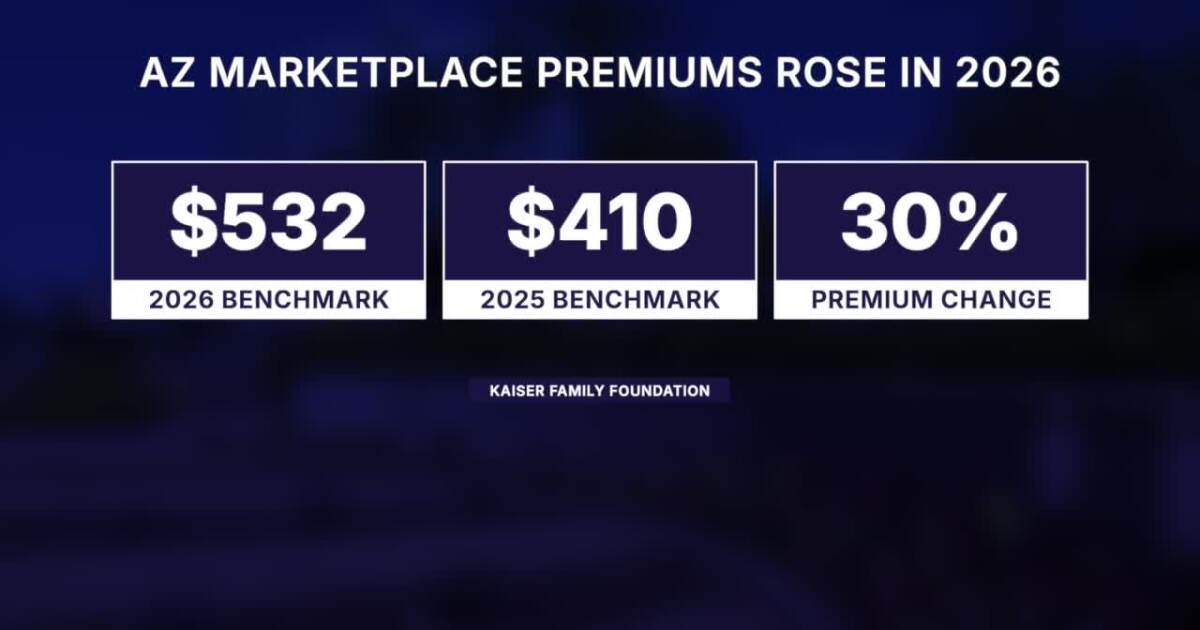
WATCH: Arizona’s health insurance marketplace is seeing dropping enrollment
-

 Arkansas12 minutes ago
ARKANSAS SIGHTSEEING: Randolph County can claim many firsts in Arkansas | Northwest Arkansas Democrat-Gazette
-

 California19 minutes ago
Toddler sustains brain injury in fall after California childcare worker threw him into the air, lawsuit says
-

 Colorado22 minutes ago
‘Saleabration’ comes back to Colorado Springs for third year
-

 Connecticut27 minutes ago
‘It’s a neighborhood effort’: Improvements made to Quinnipiac River Park
-

 Delaware34 minutes ago
Kids get hands-on learning during summer camp at Delaware County Technical School
-

 Florida37 minutes ago
Iranian drones in Cuba could threaten South Florida, officials warn

