Montana
2026 MHSA Montana All-Class State Wrestling Tournament Schedule & Brackets – FloWrestling


Unless you’re a fan of extreme cold, heavy snow, winter sports and early nightfall, you’re probably not going to be traveling to, or through, Montana during February.
But if you’re a local, and looking to stay warm and entertained, you’re in luck, as it now is time for one of the most anticipated championship event of the year, the Montana High School Association All-Class State Wrestling Tournament.
Since the mid-1950s, the history and tradition of high school wrestling in Montana have continued to grow, with girls wrestling officially joining the landscape for the 2021-2022 season and adding to the sport’s popularity and following.
The 2026 edition of the state event will take place Feb. 19-21 at the First Interstate Arena, one of the many versatile facilities that make up the 189-acre multi-use MetraPark in Billings, Montana.
Though this tournament won’t be broadcast live on FloWrestling or the FloSports app, each match will appear in the FloWrestling archives minutes after concluding.
The evolution of MHSA wrestling includes one classification in 1956, two in 1958, three in 1964 and four starting in 2007 (AA, A, B, C).
The state tournaments were held at separate sites until 1988, when the All-Class State Wrestling Tournament found its home at the MetraPark, with wrestling occurring on 12 mats.
The 12,000-seat First Interstate Arena hosts many of Montana’s largest concerts, family shows, rodeos, trade events, ice shows, motorsports events, agricultural events and more.
Check out this cool map of the wrestling floor.
Champions in girls wrestling were determined for the first time in 2021 when there was just one classification. In 2023, there were two. In 2024, there were three. Finally, in 2025, the girls got a fourth classification.
In 2025, eight team state championships were earned in Billings for the first time.
On the girls side, Billings Senior won the Class AA crown for the third consecutive season, while Custer County (Miles City) grabbed the Class A championship to deny Ronan a three-peat. In Class B, Baker won for the second consecutive season, and Simms took home the inaugural Class C trophy.
Individually, Kaura Coles from Kalispell Glacier won her third consecutive state championship and now has the opportunity to complete the four-peat in 2026 and become the state’s first four-time girls state champion. Coles was one of four girls to join the three-win club in 2025.
The boys side of the event saw legacy-building performances in the team competition.
Huntley Project took the top spot in the Class B standings for the fourth consecutive year, Billings West completed its own Class AA three-peat and Laurel won Class A for the second straight season. The final trophy, in Class C, went to Circle, which last won in 2022 to complete a nearly unprecedented five-peat.
As you get settled in for the new championship season, here’s everything you need to know about the 2026 MHSA All-Class State Wrestling Tournament, including links to the brackets.
What Are The Weight Classes For High School Wrestling In Montana?
In Pounds
- Girls: 100, 105, 110, 115, 120, 125, 130, 135, 140, 145, 155, 170, 190, 235
- Boys: 103, 110, 118, 126, 132, 138, 144, 150, 157, 165, 175, 190, 215, 285
2026 MHSA All-Class State Wrestling Tournament Brackets
Here’s where you’ll be able to find the brackets for the 2026 MHSA All-Class State Wrestling Tournament:
How To Watch The 2026 MHSA All-Class State Wrestling Tournament
Coverage of the 2026 MHSA All-Class State Wrestling Tournament won’t be broadcast live on FloWrestling and the FloSports app, but the matches will be available in the FloWrestling archives minutes after they conclude.
News, notes, stats and more will be available on both platforms.
If you’re going to be in the area and want to catch the action in person, tickets will be available at the venue. All-session (three days) tickets for adults are $29. Single-session (Friday or Saturday) are $16. After 4 p.m. (Thursday or Friday) will be $10. After 3 p.m. (Saturday) will be $10. There will be a $2 service fee added to all tickets.
Student tickets will be $24, $14, $8 and $8, respectively.
More spectator and ticket information is available here.
2026 MHSA (MT) State Championships – ARCHIVE ONLY
2026 MHSA All-Class State Wrestling Tournament Schedule
Here’s a look at when everything is going down in Montana:
All Times Mountain
Tuesday, Feb. 17
- 7 p.m. – Coaches’ meeting via Zoom
Thursday, Feb. 19
- 10 a.m.-1 p.m. – MetraPark opens for practice; Scales available for weight checks
- 1 p.m. – Boys & Girls weigh-in time; Grooming/skin checks
- 1 p.m. – Workers’ meeting
- 1 p.m. – Ticket gates open for spectator admission and sign/banner hanging
- 2 p.m. – Officials’ meeting
- 3 p.m. – Boys Round 1; Girls Round 1 & Round 2
Friday, Feb. 20
- 7 a.m. – Ticket gates open for spectator admission
- 8:50 a.m. – Assemble for Parade of Athletes
- 9 a.m. – Parade of Athletes
- 9:10 a.m. – National anthem
- 9:20 a.m. – Boys Round 1 Consolation & Quarterfinals; Girls Round 1 & Round 2 Consolation; Girls Quarterfinals
- 2:30 p.m. (approx.) – Boys Round 2 Consolation; Girls Round 3 Consolation
- 5 p.m. (approx.) – Boys and Girls Semifinals
- 5:15 p.m. (approx.) – Official weigh-ins
Saturday, Feb. 21
- 7 a.m. – Ticket gates open for spectator admission
- 8:50 a.m. – National anthem
- 9 a.m. – Boys and Girls Consolation Quarterfinals
- 11 a.m. (approx.) – Boys and Girls Consolation Semifinals
- 1 p.m. (approx.) – Boys and Girls Consolation Finals
- 3 p.m. – Parade of Finalists; Boys and Girls Finals (four mats)
What Teams Won At The 2025 MHSA All-Class State Wrestling Tournament?
Here are the 2025 team state champions in Montana:
Girls
- Class AA – Billings Senior
- Class A – Custer County (Miles City)
- Class B – Baker
- Class C – Simms
Boys
- Class AA – Billings West
- Class A – Laurel
- Class B – Huntley Project (Worden)
- Class C – Circle
Read more: 2025 MHSA Montana State Championship Results And Brackets
Did You Know: Butte High School Wrestling Was On Another Level
The record for team state titles in Montana is 17, held by Butte High School, which won a record 13 consecutive championships from 1980-1992, but hasn’t been back to the mountaintop since 2003.
Havre and Glasgow rank second all-time with 14 titles.
Individually, 42 boys have won four state titles, with Zach Morse becoming the latest in 2025.
For the girls, three-time defending Class AA champion Billings Senior owns the most titles with three, while three schools have two.
Individually, seven girls have won three championships, with four adding their names to the list last season.
2025-2026 FloWrestling High School Wrestling Rankings
Top 20 as of Jan. 12, 2026
Curious about how the top wrestlers from each state stack up against competitors from across the country?
Click here to see the latest high school rankings from FloWrestling.
CHANCE (The Unbelievable Story Of Chance Marsteller)
Chance Marsteller was a wrestling prodigy destined for greatness, but the journey to the top was anything but smooth. Learn all about Marsteller now.
Trackwrestling Has Joined The New FloWrestling
Trackwrestling officially has merged with FloWrestling, bringing its powerful tournament tracking tools and live data into a modern, all-in-one platform.
Fans can follow every bout with pro-grade brackets, mat schedules, team rosters and detailed wrestler profiles—all seamlessly integrated within FloWrestling.
This move delivers a faster, smarter and more connected experience for the wrestling community. Through the updated FloSports app, users can track live results, explore brackets and even sign up for free alerts so they never miss a match.
FloWrestling Archived Footage
Video footage from all events on FloWrestling will be archived and stored in a video library for FloWrestling subscribers to watch for the duration of their subscriptions.
Join The State Wrestling Conversation On Social



There’s something special about a record or CD that feels nostalgic, and if you need another reason to support locally owned record stores in Montana, this is it.
This Saturday, April 18, is Record Store Day 2026, and independent record stores in Montana and across the country are gearing up for one of the biggest days of the year. It’s a one-day event where customers can find exclusive in-store only releases.
For record collectors, it’s a chance to find special releases that are in limited supply. I’m planning to get in line in hopes of scoring a copy of the Billy Strings NPR Tiny Desk concert on vinyl.
That’s just one of over 300 limited-edition releases that will be available on Record Store Day. You can find a complete list of 2026 releases on the Record Store Day website.
Records
Record stores in Montana aren’t just a place to buy music. They’re a part of the fabric of the communities they serve. Cactus Records in Bozeman is considered a local landmark and the go-to spot for music lovers in town.
Sure, it’s much easier to stream music digitally, but it isn’t the same as holding a physical copy in your hands.
Record Store Day is about showing up and supporting local. Keeping these independent shops alive and thriving in a world that’s increasingly digital. Every purchase you make this Saturday goes directly back into those stores, and helps make sure they’re still here the next time you’re looking for something new.
If you plan on heading to a local record store on Saturday, don’t be surprised if you see people getting in line early. It’s a big day for vinyl lovers and music fans in Montana. I hope you find what you’re looking for.
The Ultimate Guide to 7 of Montana’s Best Record Stores
If you’re a music lover, you need to visit these awesome record stores in Montana.
Gallery Credit: Jesse James
The Best Places To Live In Montana In 2026
Find your perfect Montana city in 2026 with our guide to the state’s most livable and desirable places.
Gallery Credit: jessejames
The Most Iconic Small Town Bars and Saloons in Montana
From historic saloons to local dive bars, these are some of the best watering holes across Big Sky Country.
Gallery Credit: Jesse James
The Montana Lottery offers multiple draw games for those aiming to win big.
Here’s a look at April 13, 2026, results for each game:
Winning Powerball numbers from April 13 drawing
38-43-59-63-64, Powerball: 15, Power Play: 3
Check Powerball payouts and previous drawings here.
Winning Lotto America numbers from April 13 drawing
01-18-19-35-50, Star Ball: 09, ASB: 03
Check Lotto America payouts and previous drawings here.
Winning Big Sky Bonus numbers from April 13 drawing
14-20-25-29, Bonus: 04
Check Big Sky Bonus payouts and previous drawings here.
Feeling lucky? Explore the latest lottery news & results
When are the Montana Lottery drawings held?
- Powerball: 8:59 p.m. MT on Monday, Wednesday, and Saturday.
- Mega Millions: 9 p.m. MT on Tuesday and Friday.
- Lucky For Life: 8:38 p.m. MT daily.
- Lotto America: 9 p.m. MT on Monday, Wednesday and Saturday.
- Big Sky Bonus: 7:30 p.m. MT daily.
- Powerball Double Play: 8:59 p.m. MT on Monday, Wednesday, and Saturday.
- Montana Cash: 8 p.m. MT on Wednesday and Saturday.
- Millionaire for Life: 9:15 p.m. MT daily.
Missed a draw? Peek at the past week’s winning numbers.
This results page was generated automatically using information from TinBu and a template written and reviewed by a Great Falls Tribune editor. You can send feedback using this form.


Hawaii Offers Case-by-Case Tax Relief After Kona Low Storms – Honolulu Today

Illinois Holocaust Museum honors Holocaust victims for Yom HaShoah

Fantasy Football Video: Will the Raiders reunite Fernando Mendoza with an Indiana WR in the 2026 NFL Draft?

Are tornadoes in Iowa possible today? Here’s what forecasters say

Kansas City murder suspect added to FBI’s Ten Most Wanted Fugitives list

Florida High School Football Rankings: Top 25 teams – Oct. 21

How old is Bo Nix? What to know about Oregon quarterback ahead of 2024 NFL Draft

Cleary's 21 help Le Moyne down Central Connecticut State 69-64 in OT

99th annual Pony Swim held in Virginia

Indiana Members Credit Union announced as new anchor tenant at Bottleworks District

Video: How Stephen Miller Is Adjusting Trump’s Immigration Agenda

Biden DOJ weaponized FACE Act against pro-life Americans, 882-report alleges

Mass drone warfare is Europe’s rising security threat
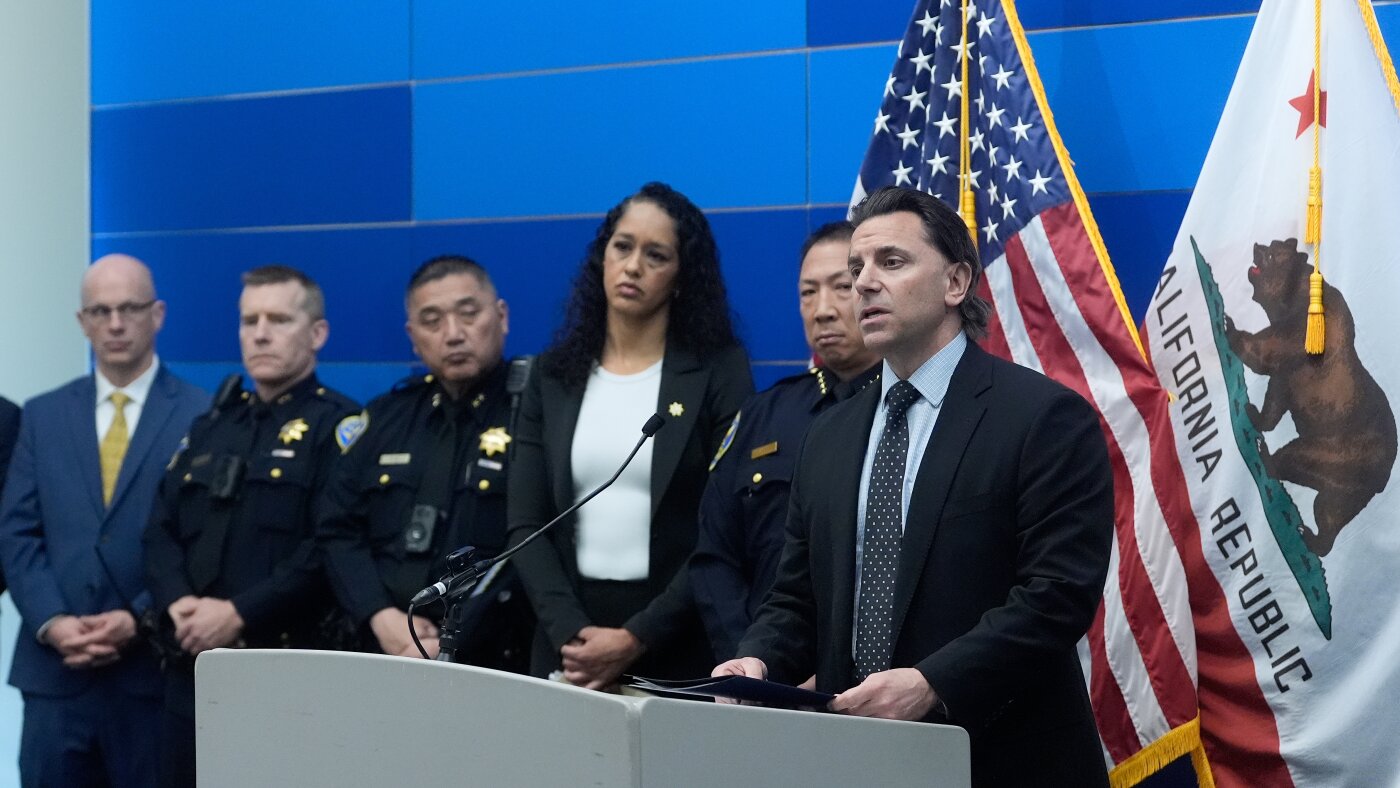
Man accused in Molotov cocktail attack of OpenAI CEO’s home charged with attempted murder

Embattled Rep Tony Gonzales announces plans to resign amid sexual misconduct allegations
-

 Atlanta, GA1 week ago
1 teenage girl killed, another injured in shooting at Piedmont Park, police say
-

 Georgia1 week ago
Georgia House Special Runoff Election 2026 Live Results
-

 Arkansas4 days ago
Arkansas TV meteorologist Melinda Mayo retires after nearly four decades on air
-

 Pennsylvania1 week ago
Parents charged after toddler injured by wolf at Pennsylvania zoo
-
 Milwaukee, WI1 week ago
Potawatomi Casino Hotel evacuated after fire breaks out in rooftop HVAC system
-

 Austin, TX7 days ago
ABC Kite Fest Returns to Austin for Annual Celebration – Austin Today
-

 World1 week ago
Zelenskyy warns US-Iran war could divert critical aid from Ukraine
-

 World1 week ago
Indonesia receives bodies of peacekeepers killed in southern Lebanon