Idaho
What did they just say? Here's your Idaho legislative glossary

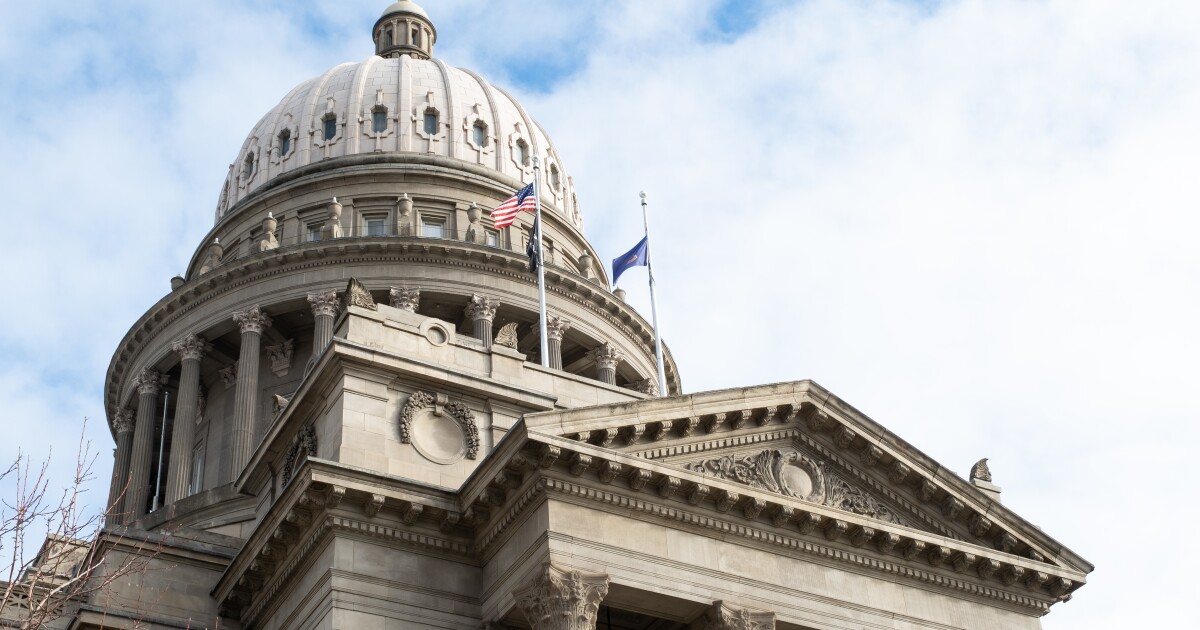
Like just about every facet of society, the Idaho legislature has its own sort of dialect complete with acronyms and terms you don’t really find outside of state government.
If you’re having trouble following along, or are simply curious about what the heck these wacky words mean, we’ve got you covered. If you can’t find the term you’re looking for, ask us and we might add it to the list!
For now, here are some of the most common asked about terms related to the Idaho legislature arranged in alphabetical order because we’re nice like that:
- CEC: Shorthand for Change in Employee Compensation, or state employee pay raises. Any proposed salary increase goes through two committees before it’s considered by the House and Senate.
- General Orders/14th Order of Business: These terms belong to the House and Senate respectively. When they come up, it means it’s time to amend some bills, which can be fraught with danger in the most nerdy way possible.
- House/Senate Pages: Legislative employees made up mostly of high school students. Duties include distributing documents to lawmakers, setting up committee rooms and other tasks as assigned.
- JFAC (Joint Finance-Appropriations Committee): Legislators often refer to the committee by pronouncing it [JAY-fack]. Potentially the most powerful committee within the legislature, it compiles and proposes budgets for each state agency.
- Legislative Services Office: Also called LSO, the Legislative Services Office is staffed by nonpartisan state employees. It serves all legislators by offering budget analyses, audits of state agencies, IT help and bill drafting.
- Radiator capping: The practice of amending a bill by completely altering its name, substance and effect, leaving just its original bill number. See above referenced danger.
- Reading Calendars: Bills must be read three times in the House and Senate before they may be considered and voted on. The first, second and third “reading calendars” list each bill and give lawmakers and the public an idea of when they may be discussed.
- RS: This is shorthand for what’s known as a “routing slip.” Basically, think of it as a baby bill. Legislative committees must vote to introduce an RS before it can be an official bill under consideration.
- Senate President Pro Tem: The President Pro Tem plays a similar leadership role in the Senate, though the body is presided over by the lieutenant governor. In the absence of the lieutenant governor, the president pro tem takes their place.
- Speaker of the House: The Speaker of the House oversees the vast majority of events in the chamber. All state representatives vote to confirm the speaker, though they are nominated from within the majority party.
- Sponsor: Sponsors are lawmakers who take the responsibility of presenting a particular bill in committee, as well as on the House and Senate floors. The sponsor may or may not have written the legislation.
- Veto: An action that can be taken by a governor to prevent a bill from becoming law. Legislators may override a veto and pass said bill into law with a two-thirds majority vote.
Follow James Dawson on Twitter @RadioDawson for more local news.
Copyright 2023 Boise State Public Radio



MINIDOKA COUNTY, Idaho (KMVT/KSVT) — The Idaho Transportation Department says a major crash has blocked all eastbound lanes of a busy highway in Minidoka County.
The crash has blocked the eastbound lanes of Idaho Route 24 at milepost 2 in between Rupert and Exit 211, according to ITD.
The department advised drivers to expect delays and exercise caution.
This is a developing story; KMVT will provide further updates as they come in.
Copyright 2026 KMVT. All rights reserved.

An Idaho bill that could make it a crime for transgender people to use restrooms aligned with their gender identity is now before the state Senate, advancing one of the most punitive bathroom proposals in the country.
Keep up with the latest in LGBTQ+ news and politics. Sign up for The Advocate’s email newsletter.
House Bill 752, already approved by the Idaho House in a 54–15 vote, was taken up this week by the Senate, where Republicans hold a 29–6 majority. If enacted, the measure would require people to use bathrooms, locker rooms, and similar facilities based on their sex assigned at birth in both government buildings and private businesses open to the public.
Related: Idaho Republicans pass bill making it a felony for transgender people to use public bathrooms
Related: Idaho Republicans pass House bill forcing doctors to out transgender kids
The penalties escalate quickly. A first violation would be a misdemeanor punishable by up to a year in jail. A second offense within five years could be charged as a felony, carrying a prison sentence of up to five years.
“The Legislature has a fundamental duty to protect the bodily privacy and safety of Idaho citizens,” Sen. Ben Toews, the bill’s sponsor, said in a Monday committee hearing, according to the Idaho Capital Sun. “House Bill 752 provides a clear, proactive tool to secure sex-separated private spaces in our state, while accommodating common-sense realities.”
Supporters of the measure have called the bill necessary as a matter of safety and privacy in sex-segregated spaces. But opponents of the legislation, including civil liberties groups, some lawmakers, and law enforcement voices, say the proposal creates an enforcement problem that risks turning suspicion into probable cause.
Related: Thousands of paper hearts flood Idaho capital as lawmakers pass anti-LGBTQ+ bills
Related: Idaho Republicans are trying to strip localities of nondiscrimination ordinances that protect LGBTQ+ people
Transgender people are warning that bills like this put them in danger of being assaulted. For example, the boyfriend or husband may see a transgender man following their girlfriend into a restroom, because the trans man has to use restrooms according to his sex assigned at birth, and could confront them.
In committee testimony, transgender Idahoans described how that could unfold. Nikson Matthews, a transgender man, told lawmakers that someone who recognizes or suspects he is trans could call police, prompting officers to respond to what would otherwise appear to be “a bearded man using the men’s bathroom.” If an officer decides he violated the law, Matthews said, “I could go to jail for up to a year for peeing, washing my hands, or even being in the bathroom.”
Related: Idaho Republicans pass bill making it a felony for transgender people to use public bathrooms
The alternative, he said, could be worse. Being forced into women’s facilities, Matthews warned, risks confrontation or violence. “Every single day when I’m out in public, I have to decide,” he said. “Do I feel like going to jail today, or do I feel like being attacked?”
Idaho
I worked as the owner of Idaho Falls’ oldest bar for a day. Here’s what it was like. – East Idaho News

Shane Dial, owner of Ford’s Bar in Idaho Falls, shows EastIdahoNews.com reporter Kaitlyn Hart what it’s like to own a 120 year old bar. | Jordan Wood, EastIdahoNews.com
IDAHO FALLS – EastIdahoNews.com is highlighting different careers and today, I’m Workin’ It with Shane Dial at Ford’s Bar.
Originally opened in 1906, Ford’s Bar has carried the same name through multiple owners for 120 years. It is a staple of the nightlife scene in Idaho Falls, and it’s often said that you haven’t partied until you’ve been to Ford’s.
Shane Dial, who’s been with the bar for the last five years, showed me how to open the bar, make a lemon drop martini, operate the music, the importance of working with law enforcement to manage unruly customers, and more.
Thank you to Shane Dial for letting us come learn what it’s like to be him for a day!
Check out the bar’s Facebook page here.
Watch our experience in the video above, and watch other Workin’ It videos here.
=htmlentities(get_the_title())?>%0D%0A%0D%0A=get_permalink()?>%0D%0A%0D%0A=htmlentities(‘For more stories like this one, be sure to visit https://www.eastidahonews.com/ for all of the latest news, community events and more.’)?>&subject=Check%20out%20this%20story%20from%20EastIdahoNews” class=”fa-stack jDialog”>

Will Louisiana’s U.S. Senate candidates debate? Bill Cassidy says no to Moon Griffon.

Maine Senate advances ‘right to repair’ electronics bill

‘Mattresses all over the place’: Maryland begins yearly operation to clean state highways – WTOP News

Showers, thunderstorms expected to hit SE Michigan Thursday — What to know

Here are 8 Massachusetts Easter egg hunts to bring the kids to this year

Florida High School Football Rankings: Top 25 teams – Oct. 21

How old is Bo Nix? What to know about Oregon quarterback ahead of 2024 NFL Draft

Cleary's 21 help Le Moyne down Central Connecticut State 69-64 in OT

99th annual Pony Swim held in Virginia

Indiana Members Credit Union announced as new anchor tenant at Bottleworks District

LaGuardia Crash Timeline: Moments Before Air Canada Plane Collided With Fire Truck

Chicago alderwoman apologizes for ‘wrong place at the wrong time’ comment on slain student

Fake Euronews website targets Hungary election with false claims

An air traffic controller was juggling extra roles during the LaGuardia plane crash

Iran War: Pentagon set to send thousands of elite 82nd Airborne troops to region | BBC News
-

 Detroit, MI6 days ago
Drummer Brian Pastoria, longtime Detroit music advocate, dies at 68
-

 Georgia1 week ago
How ICE plans for a detention warehouse pushed a Georgia town to fight back | CNN Politics
-

 Movie Reviews6 days ago
‘Youth’ Twitter review: Ken Karunaas impresses audiences; Suraj Venjaramoodu adds charm; music wins praise | – The Times of India
-

 Education1 week ago
Video: Turning Point USA Clubs Expand to High Schools Across America
-

 Sports4 days ago
IOC addresses execution of 19-year-old Iranian wrestler Saleh Mohammadi
-
 Science1 week ago
Industrial chemicals have reached the middle of the oceans, new study shows
-

 Science1 week ago
How a Melting Glacier in Antarctica Could Affect Tens of Millions Around the Globe
-

 Culture1 week ago
Test Your Memory of Great Lines From Classic Irish Poems