Idaho
Pinecone Project aims to recover Idaho’s forests after Wapiti Fire • Idaho Capital Sun


One organization is aiming to help forest managers recover the trees lost in one of Idaho’s most devastating fires this summer.
On Nov. 3, the nonprofit Daughters of the American Revolution launched a fundraising campaign to raise money to help restore scorched south and central Idaho forests.
The Wapiti Fire, which began on July 24 by a lightning strike two miles southwest of Grandjean, spanned about 130,000 acres across the Boise National Forest, Sawtooth National Forest and the Salmon-Challis National Forest.
Coined the Pinecone Project, the funds raised will be used to hire professional tree climbers for the Sawtooth National Forest who will pick pinecones off trees to harvest mature seeds that will be used to grow and eventually replant trees back into the Sawtooth National Forest.
As of Monday, the Pinecone Project had raised a total of $11,500, including cash and check donations outside of the PayPal fundraiser, lead organizer Janice Beller said.
Beller is the Idaho state leader of the nonprofit. Like others in the organization, she is a descendant of someone who participated in the American Revolution. Conservation is important to the organization and important to her as a fifth generation Idahoan, she told the Idaho Capital Sun.
“Stanley is one of my favorite places in the world, and it has been in my family for years — literally generations,” she said. “When Stanley burned this summer, it just broke my heart and really had a kind of a profound impact on many members within Daughters of the American Revolution.”
‘We have a lot of need for seed’: Sawtooth forester says
Beller said a member of her leadership team reached out to a Stanley forest ranger to ask how they could help restore the forest. That’s when she learned about the shortage in seeds at Lucky Peak Nursery, located off Highway 21 outside of Boise.
Nelson Mills, the timber and silviculture program manager for the Sawtooth National Forest, said his biggest challenge is that forest staff hasn’t collected enough its seeds to replenish its seed bank at Lucky Peak Nursery.
Forest service staff right now have enough seeds to cover 50 to 80 acres of trees suitable for the Stanley area at its nursery, Mills said. However, that is not nearly enough to recover the forest from the Wapiti Fire.
Mills said that wildfires are a natural part of the ecosystem, but catastrophic wildfires like the Wapiti Fire will require artificial tree restoration. Of the 130,000 acres that were burned in the Wapiti Fire, 485 acres have been identified as requiring immediate reforestation need because the seed bed was completely burnt, Mills said. When a more formal assessment is done this winter, forest staff will likely find more acres in need of seedling planting, he said.
In addition to the seed shortage, harvesting pinecones is a complicated, risky and expensive process, Mills said.
The main way to collect pinecone seeds is by hiring professional tree climbers for $2,500 a day. Equipped with harnesses and spurred boots, they climb trees between 75 and 120 feet tall to collect pinecones at the perfect ripeness.
Timing is crucial, as ripeness varies by species and elevation, typically occurring between mid-August to mid-September, Mills said. An unripe pinecone won’t have a viable embryo, an overripe pinecone opens and releases its seeds, and pinecones that have fallen on the ground have been exposed to mold — making the seeds unsuitable for use, he said.
The pinecones are then transferred to Lucky Peak Nursery where they are tested, processed, cleaned and sown to make baby lodgepole pines, ponderosa pines and Douglas firs.
Mills said Project Pinecone creates flexibility for foresters because it is not congressionally appropriated. If it’s not a good pinecone producing year, he said foresters can wait until the next year, or look at other species in a different area.
“Everybody is stepping up through all phases of this reforestation issue to make a solution and grow forests back specifically in the Stanley basin that was affected by the Wapiti Fire,” Mills said. “It is an amazing collaborative effort, and I am just so thankful that people want to get together and grow a forest ecosystem.”
Fundraiser to last until spring 2025
Beller said the fundraiser will last until May, when she plans to hold a ceremony to present the funds to the Stanley community and forest officials. She said she is encouraging individuals to donate, as it is tax deductible, and people who donate more than $10 will receive a wooden magnet with the project’s logo.
The total goal of the project is to raise $15,000, which would pay for six days of pinecone picking.
The fundraiser is partnering with Boise Cascade, which committed to a day’s worth of pinecone picking to the project.
“Boise Cascade’s roots run deep in the state of Idaho, and we are honored to contribute to this incredible project to help restore some of Idaho’s most cherished forest lands that were burned during the brutal fire season of summer 2024,” Boise Cascade Vice President of Human Resources and contributions committee chair Angella Broesch, told the Sun. “As one of the largest producers of wood products in North America and a leading wholesale distributor of building products in the U.S., our company is committed to contributing to responsible forestry practices and protecting our environment.”
Having surpassed the halfway point of its goal, Beller said the successful donations show how much people from Idaho and outside of Idaho care about the Stanley area.
“We’ve heard so many people say that it’s truly the heart of Idaho, and it means a great deal to them and their families,” Beller said. “So to see everybody come together and contribute even just a little to bring it back is very humbling.”
GET THE MORNING HEADLINES.



ONTARIO, Oregon — A fire in a lot near W. Idaho Ave and South Oregon Street in Ontario has visibly damaged sheds and power lines.
Idaho News 6 arrived at the scene Sunday morning at around 12 p.m., finding nearby sheds across a fence line scorched, but standing. Power lines appeared to be damaged in the blaze.
No fire, police, or EMS were still on scene, and there were no surrounding road closures.
Idaho News 6 has reached out to officials and is awaiting additional information.

ADRIAN, Oregon — The Friends of the Owyhee organized a clean-up in Malheur County in Oregon, and volunteers came out to pick up trash and get rid of abandoned campers.
“We had two abandoned RV’S and a camper that were abandoned out on public lands,” said Tim Davis, who runs the Friends of the Owyhee. “They were sitting there for upwards of a year, and it is really clear that it is hard to get rid of these.”
WATCH| Check out the video to see volunteers demolish a camper—
Volunteers camp out for the Succor Creek Clean-Up in the Owyhees
Davis worked with the local sheriff’s office and the BLM to remove the campers, but he found it difficult because there was no place to take these recreational vehicles. The Gambler 500, an off-road group, brought out some people to demolish a camper with an excavator.
“That is awesome to see the turnout with the army of volunteers we have today,” said Brian Arndt of the Gambler 500 group. “We are going to be able to get the camper all in the dumpster, get it cleaned down to the frame, and then everything that can be recycled will be recycled.”
Volunteers camped out on Succor Creek Road on Friday night so they could get an early start on Saturday. Many volunteers will camp out again on Saturday night and finish the clean-up on Sunday.
“Malheur is the 12th largest county in the United States, and it’s 74 percent public land,” said Davis. “We have very few resources with the BLM; they are understaffed, they have one rec planner right now, so us, as public land owners, should be able to step up and keep this place clean.”
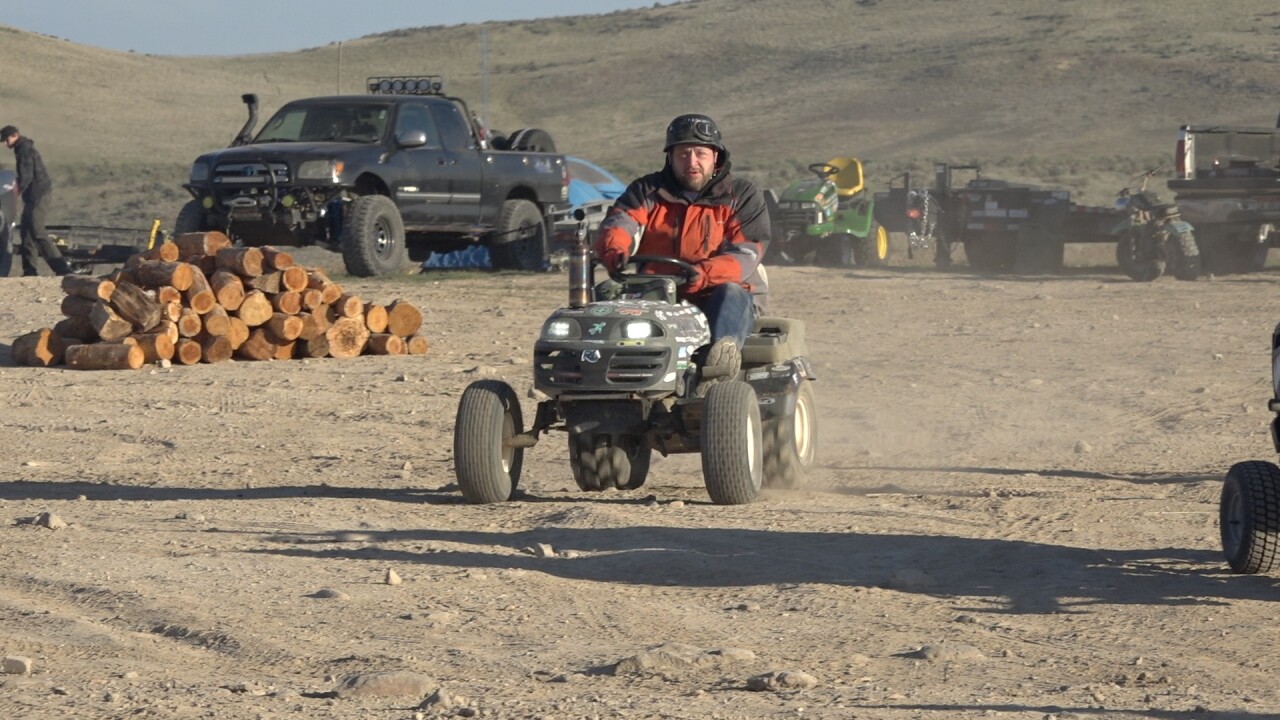
Lela Blizzard works as the lone recreational planner for the Vail District of the BLM, who says most sites have signs that say pack it in and pack it out. She says the BLM really needs the cooperation of the public because of how large it is, and she was happy to see how many volunteers showed up.
“I just want to tell them thank you because I know they are taking time out of their weekend to come out here to help us make sure the land continues to look nice for everyone who comes out to enjoy it,” said Blizzard.

Griz Ward is one of the volunteers, and he enjoyed camping out, but he also would like to see people pick up after themselves. When it comes to outdoor recreation, it is so important to be part of the solution and not part of the problem.
“If you come out here and play in the area, be respectful,” said Ward. “Pack it in and pack it out, leave no trace and do the right thing, or frankly, stay home.”
The Succor Creek Clean-Up also received a lot of support from the Treasure Valley, as they got donations from the Ontario Sanitation Service with the dumpsters, Tates Rents with the excavator, and United with porta-potties for the campsite.
Send tips to Idaho Backroads neighborhood reporter Steve Dent
Have an Idaho Backroads story idea? Share it with Steve below —

IDAHO — ‘No Kings 3’ protests will take place throughout Idaho on March 28, including in Boise and Twin Falls.
According to the Idaho 50501 Facebook page, there will be speakers & musicians playing at protests across the Treasure Valley.
Protests will take place in Boise, Caldwell, Nampa, Mountain Home, Twin Falls, and other Idaho cities.
NoKings.org
On March 28, Neighborhood Reporters Allie Triepke & Lorien Nettleton will bring coverage of the Boise & Twin Falls protests on Idaho News 6 at 10.

The iconic South African theater that took on apartheid

All the latest in AI ‘music’

US allows Russian oil tanker to reach Cuba amid blockade as Trump says island ‘has to survive’

Dem senator warns deportation could let Virginia woman’s illegal immigrant killer ‘escape accountability’

Sleeping 11 minutes longer each night shows surprising health benefit, study finds

Florida High School Football Rankings: Top 25 teams – Oct. 21

How old is Bo Nix? What to know about Oregon quarterback ahead of 2024 NFL Draft

Cleary's 21 help Le Moyne down Central Connecticut State 69-64 in OT

99th annual Pony Swim held in Virginia

Indiana Members Credit Union announced as new anchor tenant at Bottleworks District
Dem senator warns deportation could let Virginia woman’s illegal immigrant killer ‘escape accountability’

Newsletter: G7 ministers to hold talks on war’s economic fallout

ICE officers could remain at airports after TSA workers are paid

Scathing report claims nation’s oldest labor union ‘betrayed’ MAGA members through ‘shocking’ spending

Republican US lawmaker demands Congress vote on any Iran troop deployment
-

 Sports1 week ago
IOC addresses execution of 19-year-old Iranian wrestler Saleh Mohammadi
-

 New Mexico1 week ago
Clovis shooting leaves one dead, four injured
-

 Miami, FL4 days ago
Jannik Sinner’s Girlfriend Laila Hasanovic Stuns in Ab-Revealing Post Amid Miami Open
-

 Tennessee6 days ago
Tennessee Police Investigating Alleged Assault Involving ‘Reacher’ Star Alan Ritchson
-

 Minneapolis, MN4 days ago
Boy who shielded classmate during school shooting receives Medal of Honor
-

 Politics1 week ago
Schumer gambit fails as DHS shutdown hits 36 days and airport lines grow
-

 Science1 week ago
Record Heat Meets a Major Snow Drought Across the West
-

 Technology1 week ago
YouTube job scam text: How to spot it fast