Idaho
Mining is necessary, but must be done responsibly, Idaho Conservation League report says • Idaho Capital Sun


Mining has played an important role in shaping Idaho, but the Idaho Conservation League is working to raise awareness about the long-lasting environmental damage caused by mining in the Gem State.
A new report from the nonprofit, Unearthing Idaho: Mining and Environmental Impacts in the Gem State, provides guidance on balancing the demand for minerals with protecting Idaho’s environment. It was published to address concerns about new mining projects, increased exploration efforts and issues with abandoned mines, said Josh Johnson, the central Idaho director for the Idaho Conservation League.
Johnson acknowledged the need for mining, noting that resources like cars, cellphones and computers and renewable energy technology rely on mined materials, some of which come from Idaho.
“Mining is a huge part of Idaho’s history and in our heritage here,” Johnson told the Idaho Capital Sun. “We are blessed with a lot of natural resources, and there is a reason for us to use those mineral resources. But I think we need to recognize that this mining is not appropriate everywhere, and it needs to be done the right way.”
Johnson said the organization looks at mining projects in Idaho on a case-by-case basis, and that it does not generalize mining across Idaho. The report includes a list of best practices that it hopes mining companies will adopt.
A look at Idaho’s mining history
Though mining shaped Idaho’s history, it has created lasting environmental challenges.
Idaho’s mining history dates back to the late 1800s, when the region became part of a late gold rush, historian Troy Lambert told the Idaho Capital Sun. After the discovery of gold in 1860, mining soon became Idaho’s dominant industry, surpassing agriculture and livestock, according to Idaho’s 1899 inaugural mining report.
The rush for resources didn’t stop at gold. Many discovered silver, lead and copper deposits, particularly in North Idaho’s Shoshone County, which would go on to lead the nation in silver production for decades.
(Screenshot of Report of the Inspector of Mines for the State of Idaho, 1899)
For decades, Idaho spearheaded the mining industry, even offering mining programs through the University of Idaho’s School of Mines, established in 1917 to support the state’s demand for mining expertise. During World War II, Stibnite Mine near Yellow Pine became the nation’s leading producer of antimony and tungsten, which were used for bullet production and metal strengthening, according to the U.S. Geological Survey.
However, Idaho’s mining industry, like the rest of the nation’s, began to decline in the late 1900s for several reasons, including the rising costs of extracting deeper resources, the end of World War II mining subsidies and the introduction of environmental regulations like the Clean Air and Water acts from the 1970s, Lambert said.
This led to a declining interest in mining. By 2002, the University of Idaho closed its mining school, and many of those courses were restructured into other colleges on campus, university spokesperson Jodi Walker told the Sun.
The Clean Air and Water acts, in particular, significantly changed Idaho’s mining practices. Before these regulations, historical mining projects operated under the idea of “dilution as the solution,” assuming polluted water would naturally clean itself as it traveled downstream, Lambert said.
“For a long time it was just a really dirty process, especially the milling process … the outhouses over the stream,” Lambert said. “They poisoned the land, the water and all of that downstream. Those dirty mining practices are still having an impact on how we manage the environment in those areas today.”
Lambert said mining in Idaho was seen as a very noble profession, where men would risk their lives to work. While mining has died down in Idaho and the U.S. as a whole, Lambert said mining worldwide has not.
“If we don’t mine here, it’s gonna happen elsewhere in the world,” he said, adding that the U.S. has child labor laws and modern environmental standards to ensure more ethical and sustainable practices.

Report highlights mining projects that left, and could leave scars on Idaho
Today, mining makes up for less than 1% of the Gem State’s economy. There are six operating mines left in Idaho, with three phosphate mines in southeast Idaho and three metal mines in North Idaho.
But historical and modern mining projects continue to affect Idaho’s landscape. From lead contamination from the Bunker Hill smelter to coal mining runoff in British Columbia contaminating the Kootenai River — Idaho’s waterways and wildlife habitats are still suffering from the damage caused by mining, the report says.
The report includes a non-exhaustive list of mining projects across Idaho, that the Idaho Conservation League says warrant the attention of Idahoans. Some are mineral exploration projects, such as the CuMo Exploration Project outside of Idaho City, and others are in the permitting process, such as Stibnite Gold Mine.
Biden signs law to clean up abandoned mines across the western U.S.
The report, Johnson said, argues that while mining is necessary, it must be done responsibly. By offering a list of best practices, the Idaho Conservation League hopes to help mining companies and permitting regulators mitigate the environmental impact of new and ongoing projects.
There are still 8,800 abandoned mines in the state, according to the report. However, Johnson said a new federal law signed on Dec. 17 to clean up abandoned mines in the West is a step in the right direction. The law was sponsored by U.S. Sen. James Risch, R-Idaho. The next step to address mining issues would be to reform the General Mining Law of 1872, which Johnson said favors mining over any other use of public land.
“We’re not trying to shut down the mining industry in Idaho,” Johnson said. “What we’re trying to do is improve projects and say that some places in Idaho are really special and should be off limits to mining.”
GET THE MORNING HEADLINES.



ADRIAN, Oregon — The Friends of the Owyhee organized a clean-up in Malheur County in Oregon, and volunteers came out to pick up trash and get rid of abandoned campers.
“We had two abandoned RV’S and a camper that were abandoned out on public lands,” said Tim Davis, who runs the Friends of the Owyhee. “They were sitting there for upwards of a year, and it is really clear that it is hard to get rid of these.”
WATCH| Check out the video to see volunteers demolish a camper—
Volunteers camp out for the Succor Creek Clean-Up in the Owyhees
Davis worked with the local sheriff’s office and the BLM to remove the campers, but he found it difficult because there was no place to take these recreational vehicles. The Gambler 500, an off-road group, brought out some people to demolish a camper with an excavator.
“That is awesome to see the turnout with the army of volunteers we have today,” said Brian Arndt of the Gambler 500 group. “We are going to be able to get the camper all in the dumpster, get it cleaned down to the frame, and then everything that can be recycled will be recycled.”
Volunteers camped out on Succor Creek Road on Friday night so they could get an early start on Saturday. Many volunteers will camp out again on Saturday night and finish the clean-up on Sunday.
“Malheur is the 12th largest county in the United States, and it’s 74 percent public land,” said Davis. “We have very few resources with the BLM; they are understaffed, they have one rec planner right now, so us, as public land owners, should be able to step up and keep this place clean.”
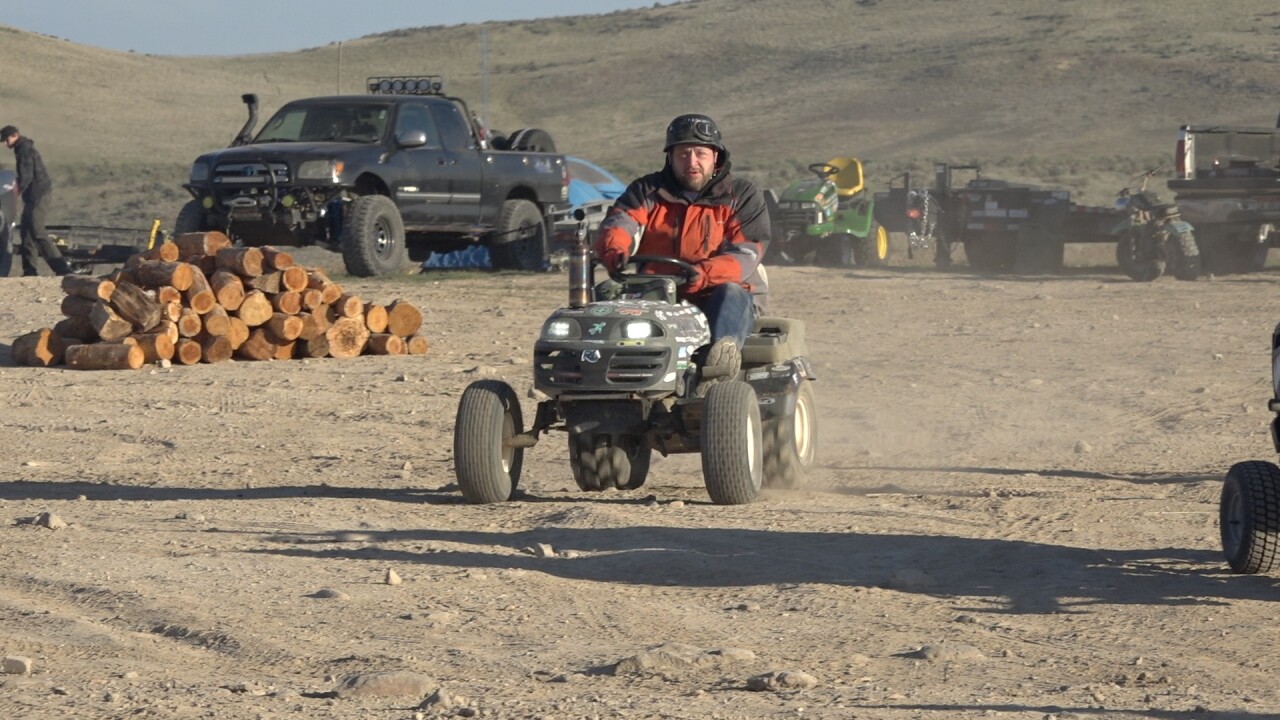
Lela Blizzard works as the lone recreational planner for the Vail District of the BLM, who says most sites have signs that say pack it in and pack it out. She says the BLM really needs the cooperation of the public because of how large it is, and she was happy to see how many volunteers showed up.
“I just want to tell them thank you because I know they are taking time out of their weekend to come out here to help us make sure the land continues to look nice for everyone who comes out to enjoy it,” said Blizzard.

Griz Ward is one of the volunteers, and he enjoyed camping out, but he also would like to see people pick up after themselves. When it comes to outdoor recreation, it is so important to be part of the solution and not part of the problem.
“If you come out here and play in the area, be respectful,” said Ward. “Pack it in and pack it out, leave no trace and do the right thing, or frankly, stay home.”
The Succor Creek Clean-Up also received a lot of support from the Treasure Valley, as they got donations from the Ontario Sanitation Service with the dumpsters, Tates Rents with the excavator, and United with porta-potties for the campsite.
Send tips to Idaho Backroads neighborhood reporter Steve Dent
Have an Idaho Backroads story idea? Share it with Steve below —

IDAHO — ‘No Kings 3’ protests will take place throughout Idaho on March 28, including in Boise and Twin Falls.
According to the Idaho 50501 Facebook page, there will be speakers & musicians playing at protests across the Treasure Valley.
Protests will take place in Boise, Caldwell, Nampa, Mountain Home, Twin Falls, and other Idaho cities.
NoKings.org
On March 28, Neighborhood Reporters Allie Triepke & Lorien Nettleton will bring coverage of the Boise & Twin Falls protests on Idaho News 6 at 10.
Idaho
Idaho Senate introduces new bill to give local municipalities authority to control rat populations

BOISE, Idaho — A new bill in the Idaho Senate aims to let local municipalities take action to control rat populations. This, after a previous bill to combat rat infestations across Idaho, died in the House.
Rats have been spreading throughout the Treasure Valley in recent years, but previous attempts at legislation to deal with the problem have failed.
WATCH: Senior Reporter Roland Beres provides an update on the new rat bill
New bill would allow local governments to combat rats
Residents in Eagle and Boise have been tracking an alarming rise in rat populations recently.
Rep. John Gannon (D – District 17) introduced new legislation today that would essentially permit local governments to act in order to control rat populations if they want to, without creating a mandate.
Gannon said some cities complained that they did not have the authority to do the job themselves.
The bill was introduced with a dose of humor.
“I’m going to support this. It’s very late in the session, but I think this might just squeak through,” said Sen. Ben Adams (R – District 12). “Well. Unless it encounters a trap along the way.”
ALSO READ | ‘I’ve never seen something that big’: Boise neighbors finding rats in their backyards
This story was initially reported by a journalist and has been, in part, converted to this platform with the assistance of AI. Our editorial team verifies all reporting on all platforms for fairness and accuracy.
Send tips to neighborhood reporter Riley Shoemaker
Have a story idea from Downtown Boise, the North End or Garden City ? Share it with Riley below —

Central California Women’s Facility Hosts Groundbreaking Film Festival, Showcasing Incarcerated and Formerly Incarcerated Filmmakers – News Releases

+)WAY TO WATCH Free New Mexico United vs Colorado Springs Switchbacks FC LIVE

Bridgeport firefighter is dead after Stratford shooting

8 Great Road Trips to Take in Delaware

Commandment wins the Florida Derby, now eyes Kentucky Derby and Triple Crown trail

Florida High School Football Rankings: Top 25 teams – Oct. 21

How old is Bo Nix? What to know about Oregon quarterback ahead of 2024 NFL Draft

Cleary's 21 help Le Moyne down Central Connecticut State 69-64 in OT

99th annual Pony Swim held in Virginia

Indiana Members Credit Union announced as new anchor tenant at Bottleworks District

Jeffries declines to break with indicted Democrat after ethics panel’s guilty verdict

Hundreds of thousands march through London in stand against the far right

2 students killed, 7 other people injured in Tennessee bus crash during school field trip

Dem senators dodge crucial question on illegal alien accused of killing Chicago college student

EU Parliament unblocks key political hurdle in digital euro talks
-

 Detroit, MI1 week ago
Drummer Brian Pastoria, longtime Detroit music advocate, dies at 68
-

 Movie Reviews1 week ago
‘Youth’ Twitter review: Ken Karunaas impresses audiences; Suraj Venjaramoodu adds charm; music wins praise | – The Times of India
-

 Sports1 week ago
IOC addresses execution of 19-year-old Iranian wrestler Saleh Mohammadi
-

 New Mexico6 days ago
Clovis shooting leaves one dead, four injured
-
 Business1 week ago
Disney’s new CEO says his focus is on storytelling and creativity
-

 Tennessee5 days ago
Tennessee Police Investigating Alleged Assault Involving ‘Reacher’ Star Alan Ritchson
-

 Technology6 days ago
YouTube job scam text: How to spot it fast
-

 Texas1 week ago
How to buy Houston vs. Texas A&M 2026 March Madness tickets