Idaho
Ground broken for second house of the Lord in Rexburg, Idaho


REXBURG, Idaho — With Rexburg to become Idaho’s first city with two temples, the Gem State isn’t losing its luster anytime soon.
Hundreds gathered for the groundbreaking of the Teton River Idaho Temple on Saturday, June 1, with clear skies and warm weather to contrast hail and rain in recent weeks. “The Lord is smiling down,” said one attendee.
Elder Ricardo P. Giménez, a General Authority Seventy and second counselor in the North America Central Area presidency, presided over the ceremony, joined by his wife, Sister Catherine Giménez.
Others in attendance included Elder Alvin F. Meredith III, a General Authority Seventy and president of nearby BYU–Idaho, and his wife, Sister Jennifer Meredith; Idaho Lt. Gov. Scott Bedke and his wife, Sarah Bedke; Rexburg Mayor Jerry Merrill and his wife, Marianne Merrill; and Sugar City Mayor Steven Adams and his wife, Michelle Adams.
In a prayer to dedicate the site for temple construction, Elder Giménez said: “Help us, O Father, to secure our foundation upon Jesus Christ, to be able to stand strong and secure because our spiritual foundation is solid and immovable. Because of this, we ask Thee, Father, for Thy help in our efforts to build ourselves and be prepared to partake of the eternal blessings available in Thy holy houses.”
Guidance back to a heavenly home
Noting the beauty of the groundbreaking event’s sunny climate, Elder Giménez shared that “we can see the hand of the Lord in the things that are important to Him.” He testified to those in attendance that the reason they were all there was because of the Savior, Jesus Christ.
“He’s behind everything in our lives,” said Elder Giménez. “He is the reason why we can receive strength, guidance, forgiveness, is because of His infinite love and His infinite sacrifice for us.”
In the temple, Saints can learn about the plan of salvation and make covenants that can strengthen them in their journey back to Heavenly Father and Jesus Christ.
Elder Giménez said, “Heavenly Father wants all of us to return home and to have joy and comfort in our lives. He will never, ever leave us alone. That’s why He has created the plan for us — so we can return home.”
The house of the Lord, he said, is a tool Saints have in these latter days to be guided in their mortal journey and receive strength to move forward.
“And yes, sometimes it’s going to be challenging,” he said, “but we trust, we love, and we keep moving forward. And one day, we will look back, and we will connect the dots, and we will understand — and every promise will be fulfilled.”

‘The cleanliness and beauty of this place’

Trixie Smith, a young woman from the Terreton Idaho Stake, shared with those at the groundbreaking that when she attends the temple to do baptisms for the dead, she seeks wisdom and guidance for hard decisions.
“I don’t always receive an answer,” she said, “but I never leave the temple feeling worse about the situation.” She continued, “You will never leave the temple and think, ‘Wow, I wish I didn’t do that today.’”
Although Rexburg will soon have two temples within 5 miles of each other, she said, “I can almost guarantee you that they will constantly be busy with faithful members of the Church coming to serve and participate in the gathering of Israel.”

Rebekah Russell of the Rexburg Idaho YSA 1st Stake shared that in 1855, Brigham Young sent a party of early Latter-day Saint pioneers to Idaho’s Upper Snake River Valley to see if it could be settled.
They returned and recounted the region’s harsh winters that seemed to take up most of the year. Yet Brigham Young told them: “That’s all right, perfectly all right. When we need that country it will be all right and we will settle it.”
Russell said, “And so pioneers continued to establish the city of Rexburg, bent on following the direction of a Prophet of God and bent on permanency.”
She invited listeners to draw closer to the Lord and make the temple a permanent addition to their lives, especially through frequent attendance and keeping temple covenants.
“I know that it is worth every ounce of our effort to be in the house of the Lord, even if it requires you to endure a bitter winter.”

Brent Kinghorn, patriarch of the Sugar City Idaho Stake, has called Sugar City home for over 80 years of his life. “To one who never thought there would be a temple in Rexburg, I’m overwhelmed to think we’re going to get one even closer to where we live.”
The collapse of the Teton Dam in 1976, he pointed out, sent a mighty wave of water from the Teton River Canyon and engulfed the region, including the temple site.
“I wonder … if perhaps that flood cleansed this location for a future temple,” said Kinghorn, “and that the work here that will be accomplished can do so because of the cleanliness and beauty of this place.”

How attendees were taught by the Spirit
Kassandra Mackley of the Rexburg Idaho YSA 4th Stake has been to the temple site several times before the groundbreaking, but she said it feels different now that the grounds have been dedicated.
“Knowing in just a few short years what this place is going to be is so beautiful,” she told the Church News. “Where are all of us going to be in a few years? If we can turn this place into a beautiful temple, what can the Savior do with us?”
Randy Lords, superintendent of the Madison School District in Rexburg, said he is excited that students will have more opportunities to serve in the house of the Lord.
“It’s fun to go to our schools and see students who have come from the temple before school to start their day,” he said. “So I think that we’re seeing a great push by the rising generation to be in the temple, to make covenants and to serve their ancestors.”

President Greg Venema, president of the Rexburg Idaho YSA 11th Stake, felt peace and comfort at the groundbreaking as he recognized the individual strength a temple will bring.
“This is the way the Lord is blessing us in this difficult time to be able to have temples close to remind us of the permanence of our covenants, to help us to get through whatever is coming.”
President Venema’s wife, Sister Bonnie Venema, felt the Spirit’s powerful witness that this was sacred ground preserved for a purpose.
“I love the idea of being still,” she said. “Attending the temple allows us probably one of the fewest places to just be still, and I think people can reverence this site by coming here and being still.”

History of the Teton River Idaho Temple
Church President Russell M. Nelson announced a temple for Rexburg North, Idaho, on Oct. 3, 2021. Rexburg had a population of approximately 39,500, making it the smallest city in the world to have a second temple announced.
The Teton River temple will be the sixth house of the Lord to be built in the same city as another operating temple. It will also be built on the same street as the Rexburg Idaho Temple.
Located on a 16.6-acre site northwest of Second East and 2000 North in Rexburg, Idaho, the Teton River temple will have approximately 100,000 square feet.
This will be the ninth temple built in Idaho, which is currently home to more than 470,000 members of The Church of Jesus Christ of Latter-day Saints.





/cdn.vox-cdn.com/uploads/chorus_asset/file/25025988/merlin_3002642.jpg "Orem temple dedicatory prayer: Elder Christofferson notes the nobility, sacrifices of past generations")

ADRIAN, Oregon — The Friends of the Owyhee organized a clean-up in Malheur County in Oregon, and volunteers came out to pick up trash and get rid of abandoned campers.
“We had two abandoned RV’S and a camper that were abandoned out on public lands,” said Tim Davis, who runs the Friends of the Owyhee. “They were sitting there for upwards of a year, and it is really clear that it is hard to get rid of these.”
WATCH| Check out the video to see volunteers demolish a camper—
Volunteers camp out for the Succor Creek Clean-Up in the Owyhees
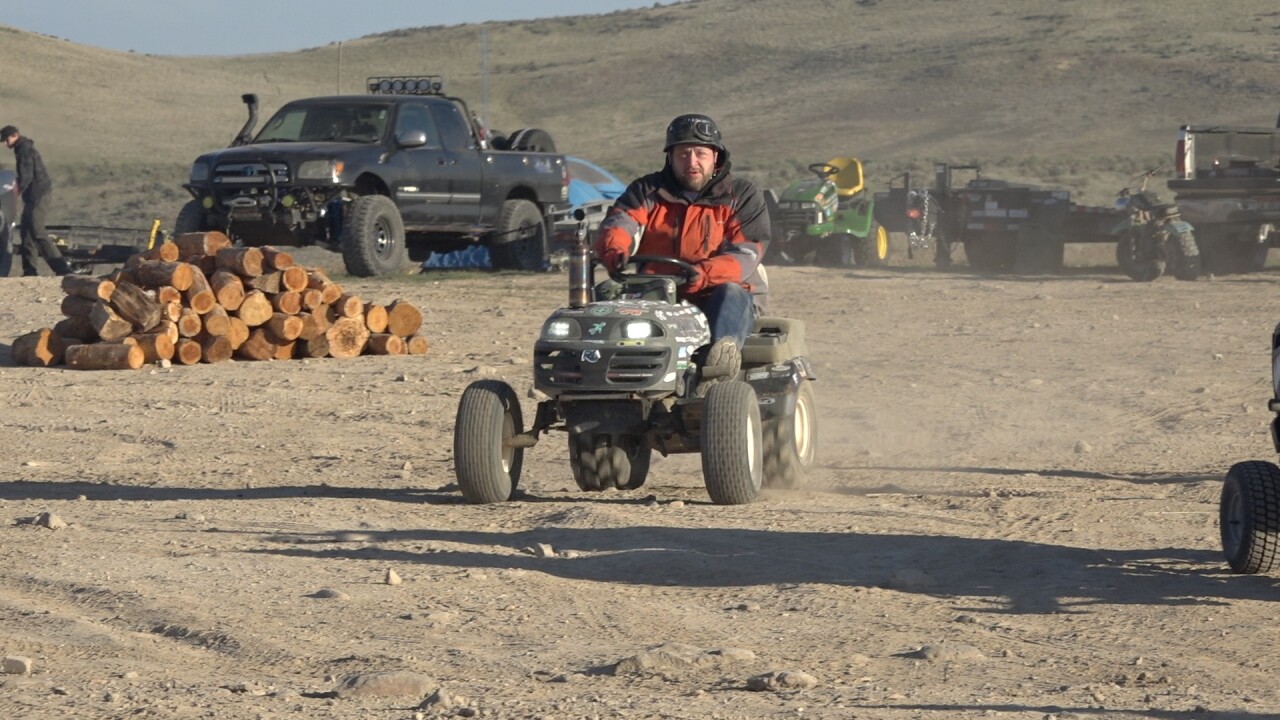
Davis worked with the local sheriff’s office and the BLM to remove the campers, but he found it difficult because there was no place to take these recreational vehicles. The Gambler 500, an off-road group, brought out some people to demolish a camper with an excavator.
“That is awesome to see the turnout with the army of volunteers we have today,” said Brian Arndt of the Gambler 500 group. “We are going to be able to get the camper all in the dumpster, get it cleaned down to the frame, and then everything that can be recycled will be recycled.”
Volunteers camped out on Succor Creek Road on Friday night so they could get an early start on Saturday. Many volunteers will camp out again on Saturday night and finish the clean-up on Sunday.
“Malheur is the 12th largest county in the United States, and it’s 74 percent public land,” said Davis. “We have very few resources with the BLM; they are understaffed, they have one rec planner right now, so us, as public land owners, should be able to step up and keep this place clean.”
Lela Blizzard works as the lone recreational planner for the Vail District of the BLM, who says most sites have signs that say pack it in and pack it out. She says the BLM really needs the cooperation of the public because of how large it is, and she was happy to see how many volunteers showed up.
“I just want to tell them thank you because I know they are taking time out of their weekend to come out here to help us make sure the land continues to look nice for everyone who comes out to enjoy it,” said Blizzard.

Griz Ward is one of the volunteers, and he enjoyed camping out, but he also would like to see people pick up after themselves. When it comes to outdoor recreation, it is so important to be part of the solution and not part of the problem.
“If you come out here and play in the area, be respectful,” said Ward. “Pack it in and pack it out, leave no trace and do the right thing, or frankly, stay home.”
The Succor Creek Clean-Up also received a lot of support from the Treasure Valley, as they got donations from the Ontario Sanitation Service with the dumpsters, Tates Rents with the excavator, and United with porta-potties for the campsite.
Send tips to Idaho Backroads neighborhood reporter Steve Dent
Have an Idaho Backroads story idea? Share it with Steve below —

IDAHO — ‘No Kings 3’ protests will take place throughout Idaho on March 28, including in Boise and Twin Falls.
According to the Idaho 50501 Facebook page, there will be speakers & musicians playing at protests across the Treasure Valley.
Protests will take place in Boise, Caldwell, Nampa, Mountain Home, Twin Falls, and other Idaho cities.
NoKings.org
On March 28, Neighborhood Reporters Allie Triepke & Lorien Nettleton will bring coverage of the Boise & Twin Falls protests on Idaho News 6 at 10.
Idaho
Idaho Senate introduces new bill to give local municipalities authority to control rat populations

BOISE, Idaho — A new bill in the Idaho Senate aims to let local municipalities take action to control rat populations. This, after a previous bill to combat rat infestations across Idaho, died in the House.
Rats have been spreading throughout the Treasure Valley in recent years, but previous attempts at legislation to deal with the problem have failed.
WATCH: Senior Reporter Roland Beres provides an update on the new rat bill
New bill would allow local governments to combat rats
Residents in Eagle and Boise have been tracking an alarming rise in rat populations recently.
Rep. John Gannon (D – District 17) introduced new legislation today that would essentially permit local governments to act in order to control rat populations if they want to, without creating a mandate.
Gannon said some cities complained that they did not have the authority to do the job themselves.
The bill was introduced with a dose of humor.
“I’m going to support this. It’s very late in the session, but I think this might just squeak through,” said Sen. Ben Adams (R – District 12). “Well. Unless it encounters a trap along the way.”
ALSO READ | ‘I’ve never seen something that big’: Boise neighbors finding rats in their backyards
This story was initially reported by a journalist and has been, in part, converted to this platform with the assistance of AI. Our editorial team verifies all reporting on all platforms for fairness and accuracy.
Send tips to neighborhood reporter Riley Shoemaker
Have a story idea from Downtown Boise, the North End or Garden City ? Share it with Riley below —

Decorated Illinois guard Josh Gesky met with Saints ahead of draft

Hundreds gather at Indiana State Capitol for ‘No Kings’ protest

Body recovered from retention pond after reported drowning in Iowa Colony
![~!@[WATCHLIVE!TV]>> NOW Portland Thorns FC vs Kansas City Current Match 𝐋𝐈𝐕𝐄 Free Streams ON Tv Channel](https://i2.wp.com/unicornriot.ninja/wp-content/uploads/2018/09/LiveChannel334x212v2.png?w=80&resize=80,80&ssl=1 "~!@[WATCHLIVE!TV]>> NOW Portland Thorns FC vs Kansas City Current Match 𝐋𝐈𝐕𝐄 Free Streams ON Tv Channel")
~!@[WATCHLIVE!TV]>> NOW Portland Thorns FC vs Kansas City Current Match 𝐋𝐈𝐕𝐄 Free Streams ON Tv Channel

2026 top-50 recruit Chris Washington Jr. drawing interest from Kentucky Basketball

Florida High School Football Rankings: Top 25 teams – Oct. 21

How old is Bo Nix? What to know about Oregon quarterback ahead of 2024 NFL Draft

Cleary's 21 help Le Moyne down Central Connecticut State 69-64 in OT

99th annual Pony Swim held in Virginia

Indiana Members Credit Union announced as new anchor tenant at Bottleworks District

JD Vance says he was ‘obsessed’ with UFOs, believes aliens are actually ‘demons’
The EU's recipe for trade deals : easy on beef, tough on wine

Photos: ‘No Kings’ protests across the country

Jeffries declines to break with indicted Democrat after ethics panel’s guilty verdict

Hundreds of thousands march through London in stand against the far right
-

 Sports1 week ago
IOC addresses execution of 19-year-old Iranian wrestler Saleh Mohammadi
-

 New Mexico7 days ago
Clovis shooting leaves one dead, four injured
-

 Tennessee6 days ago
Tennessee Police Investigating Alleged Assault Involving ‘Reacher’ Star Alan Ritchson
-

 Technology7 days ago
YouTube job scam text: How to spot it fast
-

 Minneapolis, MN3 days ago
Boy who shielded classmate during school shooting receives Medal of Honor
-

 Science1 week ago
Record Heat Meets a Major Snow Drought Across the West
-

 Politics1 week ago
Schumer gambit fails as DHS shutdown hits 36 days and airport lines grow
-

 Texas1 week ago
How to buy Houston vs. Texas A&M 2026 March Madness tickets