West
Idaho moves to ban use of public funds for transgender surgeries and hormone therapy

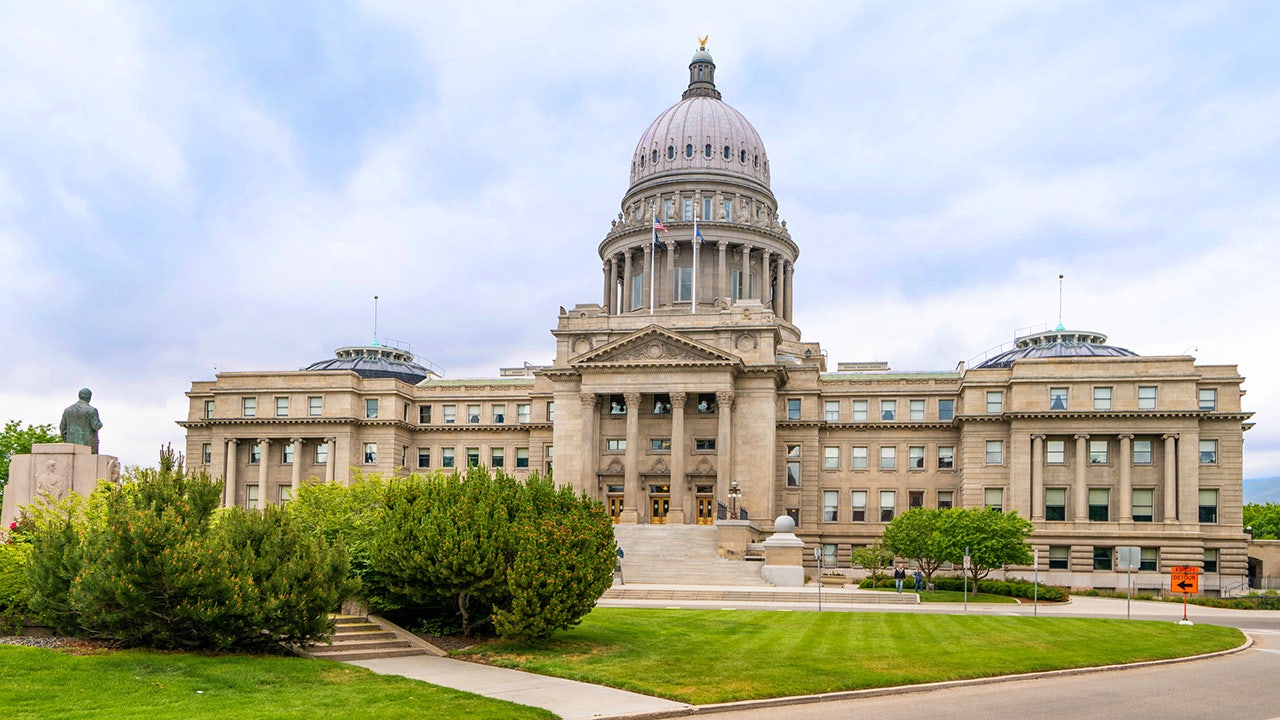
Idaho is expected to pass a bill this week that would ban public funds from going towards transgender sex change surgeries and hormone therapy treatment on state-owned properties.
It would also bar state properties, facilities or buildings from being used for surgical procedures pertaining to “gender transitions,” the bill text states.
House Bill 668, which cleared the state House in a 58-11 vote last week, states public funds “shall not be used… for purposes of altering the appearance of an individual in order to affirm the individual’s perception of the individual’s sex in a way that is inconsistent with the individual’s biological sex regardless of whether the surgical operation or medical intervention is administered to a minor or an adult, except for exempted surgical operations or medical interventions.”
BRYAN KOHBERGER ASKS COURT FOR CHANGE OF VENUE AFTER DELAYS IN IDAHO STUDENT MURDERS TRIAL
A general view of the Idaho State Capitol building on May 23, 2021 in Boise, Idaho. (AaronP/Bauer-Griffin/GC Images)
The bill now heads to the Republican-controlled Senate. If it passes, Gov. Brad Little, a Republican, would have to sign off on it. Little has signed bills in recent years opposing similar issues affecting transgender people. Last year, he signed a bill criminalizing sex reassignment surgeries for minors. He also signed a bill prohibiting transgender students from using public restrooms that do not align with their biological sex.
The public funds would specifically target Medicaid, the country’s primary federal health insurance program.
The bill also states that physicians and other medical professionals “in the course and scope of employment by the state or a county or local government may provide the surgical operations or medical interventions.”
IDAHO MURDERS CASE: JUDGE TO CONSIDER BRYAN KOHBERGER ATTORNEY’S REQUEST FOR SUMMER 2025 TRIAL START DATE
Pro-transgender activists clash at pro-women rally in Texas. (Fox News Digital)
If the bill passes, it would make Idaho the 10th state to ban federal funds from going toward transgender surgical procedures and treatment.
According to the Associated Press, Idaho has had to defend itself against several lawsuits over denying gender transition treatments and surgeries. In one case, the state was ordered to provide a transgender inmate with gender-transition surgery, and the inmate was later awarded roughly $2.5 million in damages.
“This is a taxpayer protection bill in my view,” Rep. Bruce Skaug, R– Idaho, one of the bill’s sponsors, said during a hearing last week.
Idaho banned transgender sex changes for minors. (AP Photo/Timothy D. Easley)
If the bill becomes law, the penalties for violations include fines ranging from $300 to $10,000 and the possibility of a prison sentence of up to 14 years.
At least 23 states, including Idaho, have passed laws banning transgender sex changes and hormone treatment for minors. This month, a leading scientific organization in the U.S. — the American Psychological Association — representing more than 150,000 licensed psychologists, announced a new policy urging clinics to provide “unobstructed access” to gender-transitioning treatments for children.
Read the full article from Here

Montana
EXCLUSIVE: 2 ‘Exceptionally Rare’ Ski-In, Ski-Out Montana Mansions Head to Auction in Big Sky—and Could Sell for a Serious Steal

A pair of stunning Montana ski homes are going under the hammer in the exclusive resort of Big Sky—where they could sell for well below their market value, having been offered up with no reserve.
Currently listed for a combined total of $13 million, the “exceptionally rare” dwellings are both located within the exclusive Spanish Peaks Mountain Club community—and come complete with full access to all of the incredible amenities that the private club has to offer, including “a Tom Weiskopf-designed 18-hole Championship Golf Course, a 10-hole Par 3 course, preferred access to Montage Big Sky, and a private clubhouse featuring dining, a bar, fitness center, pro shop, pool, and hot tub.”
Now, the properties will be sold off to the highest bidder when they are auctioned off with Trayor Lesnock, founder and president of Platinum Luxury Auctions, in cooperation with listing agents Greg Smith and Amelia Turbyfill of Engel & Völkers.
The larger of the two residences, which are both currently owned by Mark and Jennifer Kozubal, was placed on the market for $7.25 million in 2025, having been completed in 2023. It was more recently listed for the reduced price of $6.68 million.
Spanning more than 4,200 square feet, it features five bedrooms and five bathrooms, as well as a beautiful chef’s kitchen, ideal for hosting large groups. There are also “multiple living areas designed for entertaining and hosting family and friends,” according to the listing.
Combining classic Alpine style with “sleek, modern finishes,” the property offers both comfort and elegance, as well as incredible privacy, thanks to its plum location at the end of a quiet street.
Boasting incredible proximity to both the club’s golf courses and the Big Sky slopes, the property features an array of amenities designed to create a relaxing sanctuary where owners and their guests can retreat after a busy day of sporting activity.
“After a day on the ski slopes or a round of golf, relax in your private hot tub, cozy up by the fireplace, or cook a meal in the chef-inspired kitchen,” the description states.
The second property offers just under 3,000 square feet of living space, including four bedrooms and 3.5 bathrooms—as well as “direct ski-in, ski-out access with groomed connectivity to Big Sky Resort terrain,” according to its listing.
Much like the other residence, the second dwelling—which was brought to the market in January with an asking price of $6.25 million—has been designed specifically for those with a passion for outdoor living, providing the ideal setting in which to unwind after a long day of skiing or golfing.
“The residence includes open-concept living spaces designed for gathering after skiing, hiking, or riding, complemented by warm mountain finishes throughout,” the listing notes.
For those seeking to enjoy year-round life on the mountain, the property has been outfitted with a number of unique features that ensure a comfortable, luxurious experience no matter the weather, including “whole-home humidification and water purification systems.”
Beyond the impressive infrastructure, other alluring amenities include a “full-home audio and visual system,” as well as a dedicated eight-locker ski boot room that opens directly onto the nearest ski trail.
“Outdoor amenities include beautiful landscaping and a stone fireplace seating area positioned along the ski trail, with expansive views to the surrounding mountains,” the listing description continues.
However, perhaps the most tempting aspect of both properties is the fact that they could be sold for well below market value—presenting a truly rare opportunity for buyers to secure property in an area where luxury home sales are booming and price tags are regularly set in the seven-figure range.
“Opportunities like these are exceptionally rare in Big Sky,” seller Mark Kozubal explains. “These two Spanish Peaks Highlands homes offer true ski-in/ski-out access to a lightly used lift that connects directly into Big Sky Resort, creating an almost private ski experience with little to no wait.
“Combined with the privacy, beauty, and prestige of Spanish Peaks, these properties stand apart as truly unique mountain residences.”
Both properties are conveniently located within one of the most exclusive enclaves in Big Sky, offering proximity to both the area’s stunning ski resorts and the Yellowstone Club, which has long been one of the most star-studded neighborhoods in the area.
Among those celebrities who are rumored to have purchased properties at the Yellowstone club are NFL star Tom Brady, musician Justin Timberlake and his actress wife Jessica Biel, and Microsoft billionaire Bill Gates.
“Spanish Peaks is one of the premier private residential clubs in the West,” the club’s website notes. “Here, you can experience world-class skiing and golf, fine food and drink, spectacular natural beauty and so much more. This is mountain living at its best.”
Auctioneer Lesnock emphasizes that the opportunity to secure homes in such a luxury-leaning market for what could be a truly bargain price is not something that happens very often.
“Single-family homes within Spanish Peaks have solidly maintained an entry point of at least $5 million, so the ability for buyers to ‘name their price’ in these without reserve auctions represents a substantial purchase opportunity compared to this status quo,” he explains.
“In addition to the high caliber of each property, the community’s world-class golf, ski and wellness amenities are integral parts of the overall formula that continues to attract affluent, second-home buyers to Spanish Peaks from around the world.”
As for why the owners have chosen to pursue an auction, rather than waiting for the homes to sell in a more traditional manner, Lesnock says this process will help them to secure a sale in a timely manner, without having to hang around for months on end in the hopes that a buyer will come forward.
“Under the luxury auction process, we’re giving buyers not only that economic purchase opportunity, but also the guarantee of a seamless, non-contingent sale, free of the haggling and aggravations that can plague traditional, luxury property transactions,” he shares.
“The sellers also benefit in accord, knowing they have a date-certain sale and a clear path to their ‘Next Step.’”
Get real estate news in your inbox

RENO, Nev. — As electric vehicle ownership continues to climb in Nevada, experts say one question is becoming increasingly important: Can the state’s charging infrastructure keep pace?
New consumer research from, Yardi Matrix, found Nevada ranks sixth in the nation for electric vehicle growth, with registrations increasing nearly 420% over the past five years.
At the same time, Nevada is outperforming much of the country when it comes to charging access for renters. About 14% of multifamily housing units in the state offer EV charging, placing Nevada ahead of more than half of the nation.
Still, researchers say one key difference separates Nevada from some neighboring states.
Unlike California and several other states, Nevada does not require new multifamily housing developments to include electric vehicle charging infrastructure or EV-ready parking spaces.
Instead, developers decide whether to install chargers, often viewing them as an amenity that can help attract and retain tenants.
States take the wheel: Report looks at fragmented EV policies after federal rollbacks
“What you see in those other states is a state mandate that says if I’m going to build, I have to be ready or capable,” said a market analyst with Yardi Matrix, Douglas Ressler. “Nevada follows California vehicle sales very closely, but it lacks a multifamily EV building code mandate.”
Nevada has relied on incentives and rebates rather than statewide requirements to encourage EV infrastructure.
As more Nevadans switch to electric vehicles, charging access at apartment communities will become increasingly important, particularly for renters who cannot install chargers at home.
If Nevada were to require EV-ready infrastructure in future apartment developments, lawmakers would likely need to pass legislation establishing statewide requirements for new multifamily construction.
For now, researchers say Nevada’s growing EV market will continue to test whether voluntary investment by developers can keep pace with rising demand.

DONA ANA COUNTY, N.M. – (KFOX14/CBS4) — Some El Paso Electric customers in New Mexico are speaking out against a proposed rate increase that could raise the average monthly household bill by more than $40 by late next year.
The New Mexico Public Regulation Commission, which will decide whether to approve the proposal, held a public comment hearing earlier this week in Las Cruces.
During the meeting, customers and community members questioned the size of the request and whether the utility is doing enough to serve customers in southern New Mexico.
“This is a border town. It is a college town. It is a retiree town. It’s a military town. We’re not rich like Santa Fe, and the rates just keep going up and up and up,” said Kathy Lucero, a Las Cruces resident.
“We ratepayers and energy consumers should not be asked to subsidize these excessive profits,” said Lynn Moore, a Dona Ana County resident.
El Paso Electric is asking for a $70.4 million increase to its base rates for customers in New Mexico.
El Paso Electric seeks $70.4M hike; average NM bills could rise nearly $42 a month
The utility says the request is needed to recover costs from more than $400 million in New Mexico system investments, including upgrades, reliability improvements and rising costs.
After the hearing, Israel Chavez, a local civil rights attorney, said accessibility is also a concern as the utility asks customers to pay more.
“El Paso Electric closed its office on Water Street. There is no physical office to go to if you live with a disability, if you don’t have the technology to access your utility bill or to talk to somebody, there is no place to go unless you go to El Paso. And I think it’s wrong for El Paso Electric to cut services and then increase rates,” Chavez said.
In a statement addressing concerns about access, El Paso Electric said, “El Paso Electric continues to provide reliable service, along with a range of customer support resources to meet diverse needs, including assistance with account access, bill understanding, and payments.”
The utility added, “We recognize that changes like this can have its challenges, particularly for customers who may face barriers to technology or prefer in-person support. However, we remain committed to ensuring our customers feel supported and have access to the help they need when they need it.”
El Paso Electric said customers can still manage their accounts online, call customer care, or use authorized payment kiosks throughout its service area.
The New Mexico PRC has not made a final decision on the rate request.
If approved, the increase would start taking effect next year in two phases.
FULL PUBLIC COMMENT HEARING
Final community meeting on proposed EPE rate hike in New Mexico draws mixed reactions
Sign up to receive the top interesting stories from in and around our community once daily in your inbox.
-

 Louisiana10 seconds ago
AASHTO Journal – Louisiana DOTD Completes I-20 Rehabilitation Project
-

 Maine5 minutes ago
Amtrak train strikes, kills man in Old Orchard Beach, Maine
-
Maryland12 minutes ago
Celebrate America 250 at Maryland State Parks with Fun Events Planned All Weekend
-

 Michigan15 minutes ago
University of Michigan Regent Jordan Acker apologizes after investigation confirms
-

 Massachusetts20 minutes ago
Crash disupts traffic on Interstate 195 in Seekonk
-

 Minnesota27 minutes ago
Minnesota primary voting starts for major 2026 races
-

 Mississippi30 minutes ago
Retirement savings gap hits seniors. How to avoid outliving your money
-

 Missouri35 minutes ago
24 Missourians charged in national health care fraud investigation

