West
Idaho moves to ban use of public funds for transgender surgeries and hormone therapy

Idaho is expected to pass a bill this week that would ban public funds from going towards transgender sex change surgeries and hormone therapy treatment on state-owned properties.
It would also bar state properties, facilities or buildings from being used for surgical procedures pertaining to “gender transitions,” the bill text states.
House Bill 668, which cleared the state House in a 58-11 vote last week, states public funds “shall not be used… for purposes of altering the appearance of an individual in order to affirm the individual’s perception of the individual’s sex in a way that is inconsistent with the individual’s biological sex regardless of whether the surgical operation or medical intervention is administered to a minor or an adult, except for exempted surgical operations or medical interventions.”
BRYAN KOHBERGER ASKS COURT FOR CHANGE OF VENUE AFTER DELAYS IN IDAHO STUDENT MURDERS TRIAL
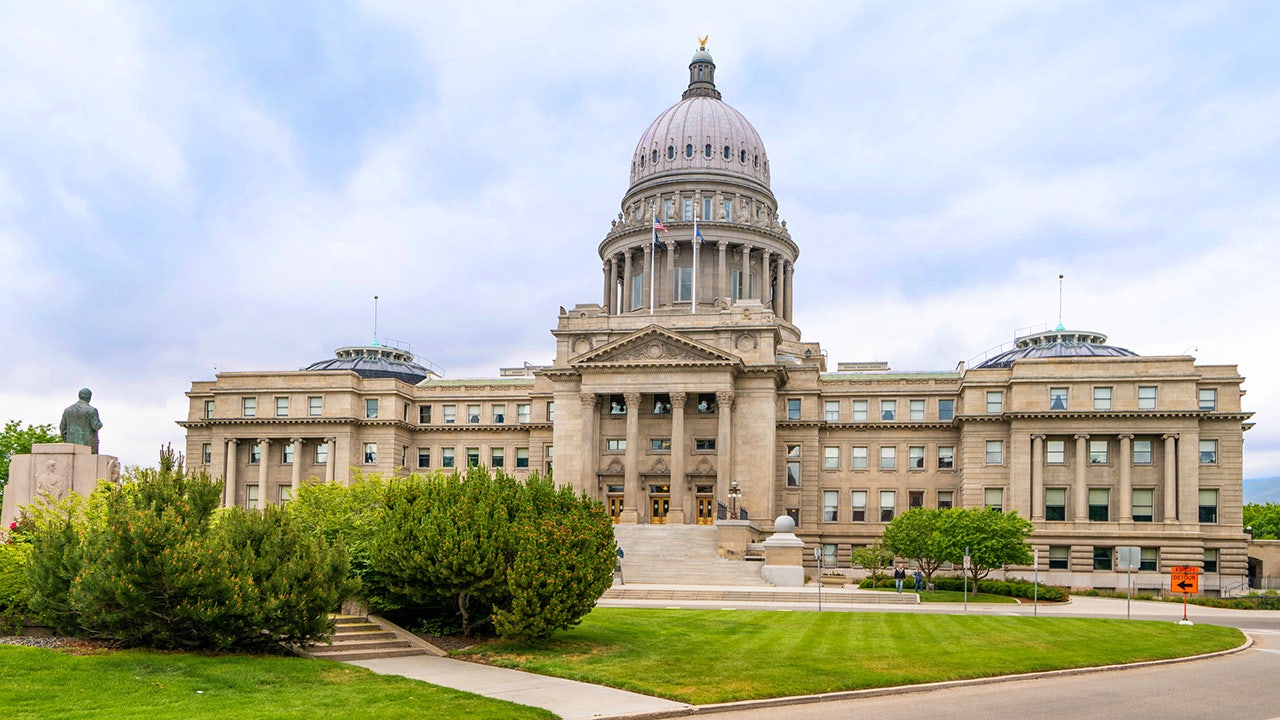
A general view of the Idaho State Capitol building on May 23, 2021 in Boise, Idaho. (AaronP/Bauer-Griffin/GC Images)
The bill now heads to the Republican-controlled Senate. If it passes, Gov. Brad Little, a Republican, would have to sign off on it. Little has signed bills in recent years opposing similar issues affecting transgender people. Last year, he signed a bill criminalizing sex reassignment surgeries for minors. He also signed a bill prohibiting transgender students from using public restrooms that do not align with their biological sex.
The public funds would specifically target Medicaid, the country’s primary federal health insurance program.
The bill also states that physicians and other medical professionals “in the course and scope of employment by the state or a county or local government may provide the surgical operations or medical interventions.”
IDAHO MURDERS CASE: JUDGE TO CONSIDER BRYAN KOHBERGER ATTORNEY’S REQUEST FOR SUMMER 2025 TRIAL START DATE
Pro-transgender activists clash at pro-women rally in Texas. (Fox News Digital)
If the bill passes, it would make Idaho the 10th state to ban federal funds from going toward transgender surgical procedures and treatment.
According to the Associated Press, Idaho has had to defend itself against several lawsuits over denying gender transition treatments and surgeries. In one case, the state was ordered to provide a transgender inmate with gender-transition surgery, and the inmate was later awarded roughly $2.5 million in damages.
“This is a taxpayer protection bill in my view,” Rep. Bruce Skaug, R– Idaho, one of the bill’s sponsors, said during a hearing last week.
Idaho banned transgender sex changes for minors. (AP Photo/Timothy D. Easley)
If the bill becomes law, the penalties for violations include fines ranging from $300 to $10,000 and the possibility of a prison sentence of up to 14 years.
At least 23 states, including Idaho, have passed laws banning transgender sex changes and hormone treatment for minors. This month, a leading scientific organization in the U.S. — the American Psychological Association — representing more than 150,000 licensed psychologists, announced a new policy urging clinics to provide “unobstructed access” to gender-transitioning treatments for children.
Read the full article from Here



EAGLE MOUNTAIN — An Eagle Mountain man currently on pretrial release in 4th District Court who is accused of abusing his dog has been arrested again for allegedly punching the same animal.
Keith Reaves Davis, 43, was booked into the Utah County Jail on Wednesday for investigation of aggravated cruelty to an animal.
Utah County sheriff’s deputies were called Wednesday afternoon to a grocery store on a report that a man was beating his dog after it had gotten off its leash and was stopped by a bystander, according to a police booking affidavit.
“I reviewed security camera footage from the grocery store, and an individual matching the description of the suspect was seen holding the dog in the air by one paw and repeatedly striking the dog on the right hind leg area. I observed the male strike the dog several times before dropping the dog from approximately 1-2 feet. The strikes appeared to be as hard as the male could hit,” the arresting deputy wrote in the affidavit. “The dog did not cry out or whimper as if the dog was accustomed to the abuse.”
When questioned, Davis “admitted to striking the dog because it was not behaving,” the affidavit states.
An animal control officer who responded to the scene to take custody of the dog noted it was the same dog he had taken from Davis exactly three months earlier during another animal abuse investigation.
In that case, Davis was charged in 4th District Court with aggravated cruelty to an animal, a class A misdemeanor; and public intoxication, a class C misdemeanor, after deputies received a tip from a neighbor that a dog was being abused at Davis’ home, according to charging documents. When questioned, Davis “acknowledged hitting his dog as punishment,” the charges state.
Deputies also reviewed videos that the neighbor had filmed. The neighbor told investigators “there was blood from the dog on the ground of the garage and (the neighbor) can hear the dog screaming as if it’s being hurt. Deputies got the videos from the (neighbor) and you can hear very loudly the dog screaming and crying with a lot of loud banging noises. In one of the videos, you can hear the dog sounding like it is being choked by a collar and is grasping for air,” a police booking affidavit states.
Davis’ next court hearing in the April case is scheduled for July 28.
In their latest booking report, sheriff’s deputies note that they “believe further harm will be inflicted on this dog if it is released back to the male a second time,” and have recommended the dog not be returned to Davis.
The Key Takeaways for this article were generated with the assistance of large language models and reviewed by our editorial team. The article, itself, is solely human-written.


Washington DC air quality could deteriorate Friday
Wildfire smoke from Canada may push DC to Code Red Friday (AQI 151–200); even healthy people may feel effects.
Washington DC’s air quality has worsened this week as wildfire smoke from Canada traveled hundreds of miles south, prompting air quality alerts and creating hazy skies across the region.
There’s belief by some forecasters that the worst is yet to come.
Here’s what they say about Friday’s forecast, which Capital Weather says could feature “the worst air quality in years” in DC.
Could air quality reach Code Red levels in Washington DC?
Washington DC’s air quality reached Code Orange this week, meaning conditions are unhealthy for sensitive groups, including children, older adults and people with heart or lung disease.
Forecasters warn conditions could deteriorate further Friday as a thicker plume of wildfire smoke settles over the region. The Maryland Department of the Environment’s forecast suggests parts of the DC metro area could reach Code Red — an AQI of 151 to 200 — if the heaviest smoke reaches the surface.
“A weak cold front will move south Thursday night and Friday morning, ushering in a significant amount of smoke into Maryland that will persist all day Friday due to weak, recirculating winds,” officials said.
Capital Weather Gang reported that smoke concentrations are expected to peak Friday afternoon into Friday evening, when air quality could deteriorate to levels not seen in three years.
Other forecasters indicate the highest concentrations of smoke are expected late Friday before conditions gradually improve over the weekend.
What do Code Red air quality levels mean?
Many areas north of DC are already in a Code Red, meaning anyone could experience health effects from the air quality, not just sensitive groups.
On the Air Quality Index (AQI) scale, Code Red represents levels between 151 and 200. At those levels, even healthy people may experience eye or throat irritation, coughing or difficulty breathing after prolonged exposure.
If the DC area were to reach that level, residents should limit their time outdoors. If you must spend an extended period outdoors, DC Health recommends wearing a well-fitting N95 or KN95 mask.
People with asthma, heart disease or other respiratory conditions, as well as children, older adults and pregnant people, may be especially vulnerable to wildfire smoke and should take extra precautions. Anyone who develops symptoms such as coughing, shortness of breath, chest pain or difficulty breathing should move indoors and seek medical attention if symptoms become severe.
-

 North Dakota6 minutes ago
Vernon Krause
-

 Ohio11 minutes ago
Man pleads guilty to inappropriate conduct with minor in Howland
-

 Oklahoma18 minutes ago
Local Star Goose Hutchens Reclassifies, Will Join Oklahoma for 2027 Season
-

 Oregon24 minutes ago
Meet Miss Oregon at the Ross Ragland Theater Next Month – KOBI-TV NBC5 / KOTI-TV NBC2
-

 Pennsylvania30 minutes ago
Wildfire smoke puts Pittsburgh under Code Red air quality alert
-

 Rhode Island36 minutes ago
These 8 Towns In Rhode Island Were Ranked Among US Favorites In 2026
-

 South Dakota47 minutes ago
South Dakota confirms three cyclosporiasis cases as CDC investigates growing outbreak
-

 Tennessee54 minutes ago
How did your school district do? New TCAP scores released across Southeast Tennessee

