West
I was stranded in an EV at midnight. Progressives don't want you to know about my nightmare

NEWYou can now listen to Fox News articles!
It only takes a weekend trip to a wedding two hours outside of a big city to realize this country is nowhere near ready for the Democrats’ clean energy revolution. It’s too bad they’re unwilling to accept reality.
Democrats are pushing us toward an America powered by wind, solar, and other green alternatives to gas, oil, and coal. It makes us more reliant on electricity. But as I detail in my book “What’s Killing America: Inside the Radical Left’s Tragic Destruction of Our Cities”, the eco-reality favored by the Left is lightyears ahead of our reality.
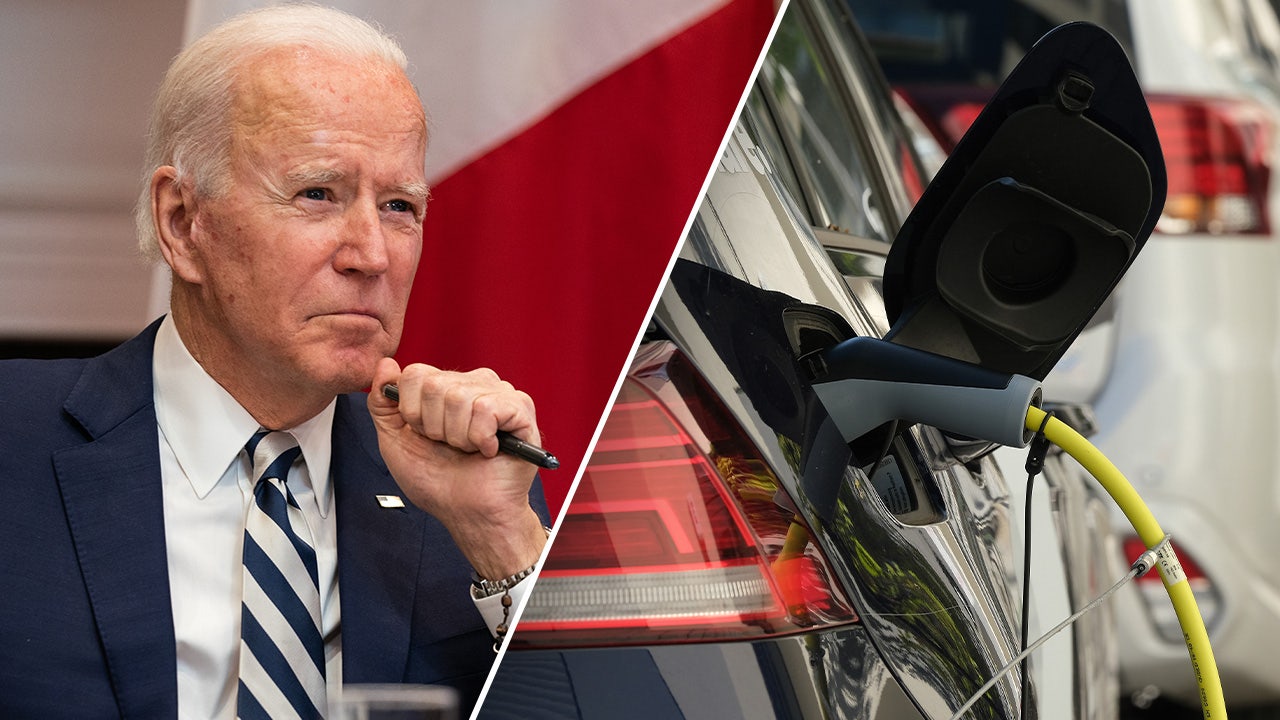
A major piece of the Democrats’ clean energy revolution is a mandate towards electric vehicles (EVs). At least 13 states, including Washington, California, New York, and Virginia, plus D.C., mandate new car sales to be EVs by 2035. The goal is to convert everyone to electric — by force. But to date, the country only has 168,426 charging stations, with a goal of 500,000 by 2025. A lot of good that will do. The International Council on Clean Transportation says the U.S. will require 2.4 million charging stations by 2030 (which includes at-home, public, and workplace) based on EV market trends.
BIDEN’S EV INSANITY JUST GOT EVEN WORSE
Last week, Hertz rental cars made headlines for ditching its EV fleet for more gas-powered vehicles. I lived their reason, learning a harsh lesson about our weak EV infrastructure while driving to a wedding in Cle Elum, 90 minutes east of Seattle.
I don’t own a car, so I rented one from Hertz. I was dubious of the EV they gave me, but I had no choice: they rented out the gas-powered car that I reserved and I was out of options.
As I drove to the wedding venue, I was nearly glued to the dashboard, watching a dwindling battery percentage. Just when I thought everything would be OK, I encountered hills. EV batteries do not like hills.
When I arrived at the venue, my dashboard said the battery would only last 43 more miles. I needed double that to make it back to Seattle. From the vows to the post-ceremony dinner, I was panicked, downloading apps that mapped out the nearest EV power stations, hoping I could make this work.
EVS SIGNIFICANTLY LESS RELIABLE THAN GAS-ENGINE CARS, CONSUMER REPORTS FINDS
There was a nearby EV plug-in location with a dozen open spaces — for Teslas. I wasn’t driving a Tesla. Without a standard EV plug, if you don’t have an adapter, you’re out of luck. The closest location compatible with my car was a diner in the middle of nowhere, 30 miles away.
I nervously headed out, watching the battery react to every hill, and every press of the gas pedal. The car misled me about how far I’d get. After 30 minutes, I had 9.5 miles to the charger and a battery that could handle 17 more miles.
WINTER WEATHER PRESENTING EV OWNERS WITH ‘FRUSTRATING’ CHALLENGES
Pro-tip: when driving an EV, do not make any mistakes — like missing a poorly lit off-ramp to your plug-in station on a highway where the next opportunity to get off and head back is two miles away (and two miles back), when your battery has only about one mile left to give. I was forced to pull over, cruising to a stop in the middle of nowhere. The battery had died as I was pulling off the freeway. Moments later, the lights and heat went out. It was pitch black and about 30 degrees.
I don’t know if you’ve ever tried getting a tow truck to pick you up in the middle of nowhere, but it turns out they will accept your business, quote you $300, and say they’ll pick you up in 20 minutes only to tell you 45 minutes later that they are canceling.
After two hours of mostly yelling at Hertz customer service and cursing the lack of EV infrastructure in the state, I got an Uber after two hours of waiting. A driver named Hussein took pity on me and agreed to pick me up. He couldn’t arrive soon enough. My cell phone battery hit 13%, and, as with my EV, I had nowhere to plug it in.
CLICK HERE FOR MORE FOX NEWS OPINION
When the Uber arrived, I abandoned the EV. It was now Hertz’s problem. I got home, $108.91 later (plus a generous tip). This is your future in the Democrats’ EV world.
In Washington state, relatively straightforward transit projects take years and are always over budget. Does anyone think any state can install the hundreds of thousands of charging stations needed for an hours-long ride? Even the large urban areas with Democrat-controlled government aren’t installing charging stations at large scale. And can we even afford it? Washington State is spending $41 million to install just over 180 charging stations. As of September 23, the state only had 1,820 charging stations. Is the technology advanced enough that the current charging stations, with clunky and heavy plugs, will not need a major upgrade within the next decade?
FILE – Man pushing stranded Tesla in Chicago in frigid winter temperatures (‘Fox & Friends’ screengrab)
We’d better start embracing staycations because road trips are out of the question. Forget long drives to see medical specialists. And you better not forget to plug in each night or you’ll find yourself without a battery juice when driving home from work.
The battery technology isn’t where it needs to be to make EVs worthwhile, and the prices aren’t low enough for most families to comfortably purchase (you can thank Bidenomics for that). Yet Democrats continue to force EVs on us.
Even if the infrastructure existed, our power grids couldn’t handle it.
Temperatures in Washington state hit historic lows this month and our power grid wasn’t prepared. As temperatures dropped to 17 in Seattle, Puget Sound Energy, the state’s largest supplier of electricity and natural gas, asked customers to lower their thermostats and limit the use of hot water to “reduce strain on the grid.”
Our grid couldn’t handle a weekend of below-normal temperatures. But we should expect it’ll handle a near future of EVs? Heaven forbid it get cold when our cars are plugged in.
CLICK HERE TO READ MORE FROM JASON RANTZ
Read the full article from Here


ANACONDA, Mont. — The owner of an Anaconda bar has been identified as the victim of a fatal shooting over the weekend.
A Facebook post from Carmel’s Sports Bar and Grill identified the victim as Shane Charles. The post said obituary and funeral services are pending.
The suspect has been identified as Mark Ray Lock.
The suspect in the shooting has been identified as Mark Ray Lock.Photo: NBC Montana
Lock appeared from Anaconda-Deer Lodge Detention Center. He was born in 1965 and is a resident of Birch Street in Anaconda.
He is charged deliberate homicide with a penalty enhancement for use of a deadly weapon.
Prosecutors allege that Lock shot Charles at the bar once with a handgun. He was then disarmed by a patron and ran from the bar.
Lock could face life in prison or potentially the death penalty.
He will be appointed a public defender.
A preliminary hearing is set for July 17.
Bail has been set at $1 million.
BE THE FIRST TO COMMENT
If Lock were to post bond, conditions of his release would include having to relinquish all of his weapons.

By Marianne Dhenin
This article was originally published by Truthout
Grassroots canvassers are hitting the streets to urge voters to defend abortion rights in their states this November.
It has been four years since the Supreme Court’s decision in Dobbs v. Jackson Women’s Health Organization eliminated the federal constitutional right to abortion, leaving people in the U.S. to navigate a confusing patchwork of abortion protections, restrictions, and outright bans depending on jurisdiction. Organizers have ramped up efforts to improve access since the ruling, and thanks to that work, measures to protect and ensure reproductive freedoms are expected to be on the ballot in three states come November: Idaho, Nevada, and Virginia.
“When Idaho’s trigger ban went into effect in August of 2022, people needed to talk about it, and we came together informally and then eventually [there was] the idea that, ‘Hey, we need to draft a ballot initiative. We need to raise money for some attorneys. We need to get our act together,’” Melanie Folwell, executive director of Idahoans United for Women and Families, told Truthout. That organization was founded soon after and has led the campaign to get the Idaho Reproductive Freedom and Privacy Act Initiative on the ballot this year. The initiative would decriminalize abortion and provide that “every person has the right to … make personal decisions about reproductive health care,” including abortion, contraception, and more.
Idaho was one of 13 states with trigger bans on the books when Dobbs came down. Those bans were passed after the Supreme Court’s 1973 decision in Roe v. Wade upheld a constitutional right to abortion, meaning they could not be enforced as long as that decision stood. But when Roe was overturned, the bans came into effect.
Other restrictions and bans have followed Dobbs as the Trump administration and right-wing lawmakers move to eliminate reproductive health care. Nationwide, 30 states now have bans, hostile legislation, or lack reproductive rights protections, according to the Center for Reproductive Rights.
Effects of Idaho’s Abortion Ban
When Idaho’s ban first came into effect, it prohibited abortion with exceptions for the life of the pregnant person and some survivors of rape and incest. Then in 2023, the state’s Republican supermajority narrowed the rape and incest exceptions to apply only during the first trimester. Today, the ban is among the strictest in the nation.
Most Idahoans who need access to an abortion are now forced to travel out of state, including some pregnant patients facing medical emergencies. Access to other reproductive health care has also become more difficult as OB-GYNs leave, feeling it no longer safe to practice in a state with a near-total abortion ban that includes criminal and civil liabilities for providers found in violation of the law. Some hospital labor and delivery departments have shuttered altogether — including, Folwell said, the one where she gave birth to her daughter about two decades ago.
As maternity care deserts worsen across Idaho, so-called crisis pregnancy centers are moving into the gaps. Those fake clinics are meant to look like real health centers, but they operate without medical licensing and aim to scare, shame, or pressure visitors out of accessing abortion care.
Other states with abortion bans have experienced similar consequences.
“Access to reproductive health care has been so relentlessly politicized for power and influence and gain for decades now in this state, and unfortunately, women in Idaho, and people looking to grow a family, plan a family, [or] just be a person in Idaho are finding that the impacts of all that political football are very personal,” Folwell told Truthout.
Hundreds of Idahoans stepped up to collect the signatures required to move the abortion-decriminalizing Idaho Reproductive Freedom and Privacy Act Initiative forward.
More than 105,000 Idahoans (or about 10 percent of the state’s voting population) signed — well over the required 6 percent. Officials have until June 30 to certify the number of valid signatures before the initiative can be officially placed on the November ballot.
Struggles for Abortion Rights in Virginia and Nevada
Similar efforts are ongoing in Virginia and Nevada, where constitutional amendments protecting abortion have already been put on the states’ respective ballots. In Nevada, Question 6, or the Right to Abortion Initiative, would ensure access to abortion until the point of “fetal viability,” generally estimated to be around 24 weeks. It is the second time Question 6 will appear on ballots; under state law, a ballot measure must pass twice to become a part of the state constitution. In 2024, it passed with 64 percent of the vote.
“This campaign was a grassroots-led effort powered by state partners, activists, and our over 50,000 battle-born members,” Reproductive Freedom for All Director of State Campaigns Caroline Mello Roberson said in a press release when Question 6 first passed in 2024. “We’re excited to continue working to ensure that reproductive freedom is a reality for all Nevada families and lock our rights into law in 2026.”
Meanwhile, if passed, the Virginia Right to Reproductive Freedom Amendment would establish “the right to make and effectuate one’s own decisions about all matters related to one’s pregnancy.” Passing the amendment would also make Virginia the only state in the South with abortion protections. Currently, most Southern states enforce either a total ban on abortion or bans beginning at six or 12 weeks.
“Anybody in Florida, anybody in Tennessee, they would have to drive to Virginia to get the access they need, and that is not an easy thing to do. But I think it’s also meaningful to be able to perhaps provide that not just for Virginians but also for people in the South,” Sara Sanatkar, canvass and field manager at Repro Rising, told Truthout. Repro Rising is one of several Virginia organizations in Virginians for Reproductive Freedom, the coalition leading the campaign for a state constitutional amendment that would protect abortion rights. That coalition also came together in response to Dobbs.
Canvassers Mobilize a Grassroots Upswell for Abortion Rights
Though the political climates differ between the three states expected to vote on reproductive freedom this November, canvassers hitting the streets to mobilize community members are carrying similar messages. Organizers told Truthout that people relate to personal stories from their neighbors about how access to reproductive health care or restrictions placed on it has shaped their lives. They also tend to agree that decisions around reproductive health care should remain between an individual and their loved ones.
“We can all agree that when it’s time to make a difficult decision about your future, your health, your life, your hopes and your dreams, that decision should be made at your kitchen table with your people and not with the government, not with a politician, with a seat at that table,” Folwell told Truthout. “That is a message that resonates broadly across all kinds of people, across all kinds of places.”
The canvassing taking shape now in Idaho, Virginia, and Nevada is just the current leg in marathon organizing efforts. Passing legislation to better protect abortion rights has been a goal for advocates and organizers since the Supreme Court agreed to take up Dobbs, and the campaigns that grew into this year’s ballot measures coalesced soon after and are rooted in organizing relationships that run even deeper. But those leading the campaigns warn organizers elsewhere not to be discouraged by the time it takes to make change.
“We’ve seen over and over again, and not just in really progressive states, when voters have the opportunity to make their voices heard on reproductive freedom, they do,” Han Jones, campaign manager with Virginians for Reproductive Freedom, told Truthout. “I would encourage folks to take the long road that it sometimes is and keep working because this is something that people want, and it’s something that we can fight for.”
Hannah Servedio, director of organizing at Virginians for Reproductive Freedom, told Truthout that advice goes for anyone concerned about the rollbacks of reproductive rights across the country. Each of the reproductive rights ballot measures slated for this November started with community members coming together and committing to change.
“You don’t need the title of ‘organizer’ to be an organizer,” they said. “You can just decide that you’d like to work with other people who care about this issue and organize your community — you can take that role on for yourself.”
Now, with only months left in the final leg of their campaigns, organizers in Idaho, Nevada, and Virginia are hard at work ensuring their yearslong efforts will pay off come Election Day.
Mary Olivia Rentner, communications director at Virginians for Reproductive Freedom, told Truthout that though the work is tireless, it never stops feeling fulfilling: “To have this moment where there is actionable change happening, where we can actually see the future of our Commonwealth being shaped by people who aren’t going to let our rights be taken away, who are going to protect the care that is life-saving and life-changing, and protect the doctors and nurses who provide it, it brings me a lot of hope about the differences that we can make within our communities, within our state, and within the country.”
This article was originally published by Truthout and is licensed under Creative Commons (CC BY-NC-ND 4.0). Please maintain all links and credits in accordance with our republishing guidelines.

ALBUQUERQUE, N.M. – Americans now say they need $1.46 million to retire comfortably, up $200,000 from last year, according to a study discussed by Oakmont Advisory Group.
David Hicks of Oakmont Advisory Group said the number can feel overwhelming, but he said people should focus on starting and adjusting a plan instead of panicking.
“The average retiree actually has less than $300,000 saved for retirement, so that’s about a $1 million gap there,” Hicks said.
Hicks said the $1.46 million figure reflects what people think they need, but he said retirement planning depends on each person’s savings, income and timeline.
He said longer life spans now mean many people need to plan for 20, 25 or even 30 years in retirement.
“When you start saving when you’re younger, it makes a lot of difference in the future,” Hicks said.
Hicks said 57% of people do not start saving until after age 30, and he said about a third do not start until their 40s.
Hicks pointed to Fidelity benchmarks that suggest workers should aim to save one times their salary in their 30s, three times in their 40s, six times in their 50s and 10 times by retirement.
“Don’t wait another year. Don’t wait another month. Just start that process of saving,” Hicks said.
Hicks also said the study found people who work with a financial adviser improve their chances of retirement success by about 50% and report more confidence about their plans.
-
Indiana25 seconds ago
WHAS11
-

 Iowa7 minutes ago
Iowa basketball star slides down CBS NBA Draft board in new mock
-

 Kansas10 minutes ago
Kansas Tourism announces 2026 Sunflower Summer attraction lineup
-

 Kentucky15 minutes ago
Wilson County leaders look to regulate data center developments
-

 Louisiana22 minutes ago
Insider loans? Audit raises red flags over Louisiana orphan well program
-

 Maine30 minutes ago
A Weekend in Maine | Cup of Jo
-

 Maryland37 minutes ago
Montgomery County Voter Guide: Primary Election Candidates, Polling Places
-

 Michigan40 minutes ago
Michigan health director Elizabeth Hertel stepping down from position


