Select an option below to continue reading this premium story.
Already a Honolulu Star-Advertiser subscriber? Log in now to continue reading.

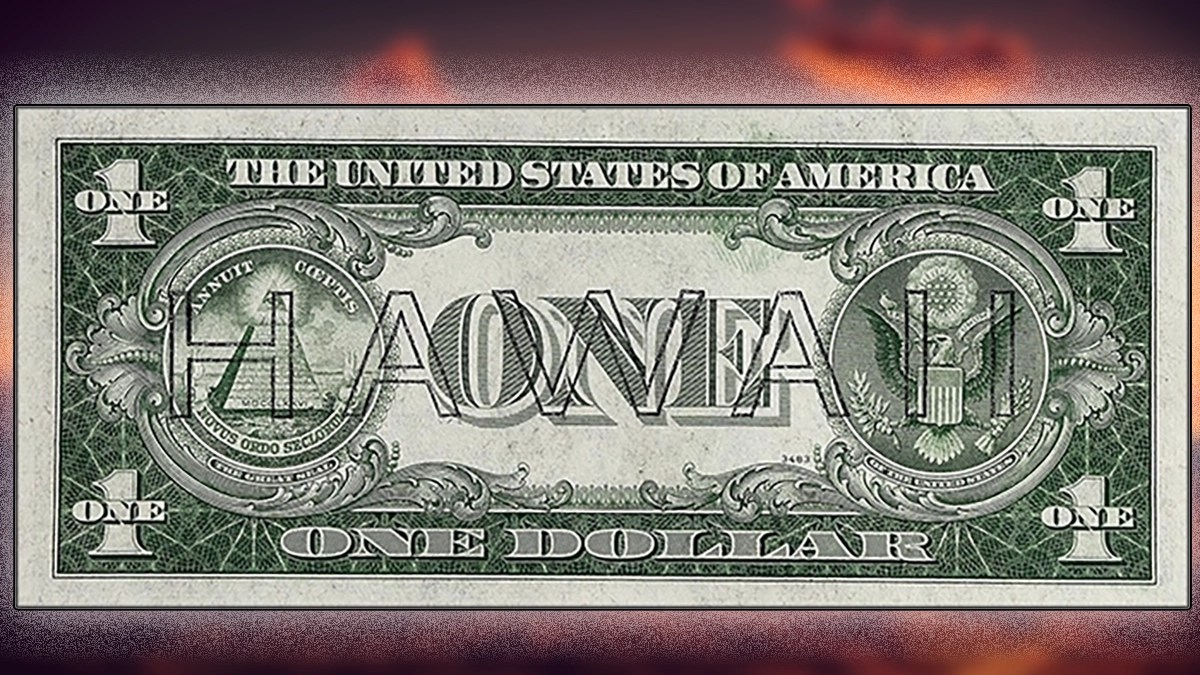
Hawaii Overprint Currency Notes (or Hawaii Wartime Notes; or United States Currency, Hawaiian Series; or Emmons Notes) were an emergency currency issued by the United States Treasury Department in the territory of Hawaii starting on June 25, 1942, and continuing until the lifting of currency restrictions on October 21, 1944.
Following the Japanese attack on Pearl Harbor on December 7, 1941, the island territory of Hawaii was placed under martial law. Fearing an imminent invasion, Hawaiian Territorial Governor J.B. Poindexter, who had been appointed to the position on March 1, 1934 by President Franklin D. Roosevelt, ceded most of his administrative powers to the United States Army. The military government was installed by General Thomas H. Green of the U.S. Army Judge Advocate General’s Corps. Lieutenant General Walter Short appointed himself military governor and was relieved 10 days later. Replacing Short was Lieutenant General Delos C. Emmons.

Martial law imposed severe restrictions on the islanders, such as the suspension of the civilian court system and the systemic discrimination and incarceration of ethnic Japanese residents – the latter carried out because the American government believed that people of Japanese ethnicity would side with the Japanese military during the war. It also brought about the adoption of a strict monetary policy on the islands.
A chief architect of the new currency policy was Lt. General Emmons, who issued the so-called “money order” on January 9, 1942. It forbade the withdrawal or possession of any more than $200 of the emergency issue by an individual in one month, or $500 for a business. The government also prohibited the export of these notes from Hawaii. Violators of these rules were subject to a fine up to $5,000 and up to five years imprisonment, enforced under the Uniform Court of Military Justice.
Hawaiian residents acted immediately, depositing their money in local banks en masse. Among the deposits were Treasury-issued Gold Certificates – no longer in use due to President Franklin D. Roosevelt’s executive orders of 1933. Some of the money was damaged, having been squirreled away in damp hiding places. To ensure total compliance, the Federal Government extended the deadline for redemption to August 1.
In short order, civilian and military authorities sought Treasury Department assistance, and entered into negotiations to produce a currency issue specifically made for circulation in Hawaii. The color brown was used for expediency’s sake and to allow for the immediate identification of the restricted use notes.
In early March 1942, a Treasury detail arrived on the island, bringing with them $20 million USD in the new notes in exchange for the $20 million in regular currency held by the local banks.
On June 25, 1942, Governor Poindexter posted the following regulations concerning the new circulation of currency notes on the islands:
Regulations Relating to Currency
These regulations are issued under the authority vested in the governor of Hawaii pursuant to Executive Order Number 8389, as amended; Section 5 (b) of the Trading with the Enemy Act, as amended by Title III of the First War Powers Act, 1941. General Orders Number 118, Office of the Military Governor, June 25, 1942, and pursuant to all other authority vested in the undersigned governor of Hawaii.
Title I
(1) Effective at once, all United States currency now in circulation in the territory of Hawaii will be withdrawn from circulation and will be replaced with new United States currency prepared for the territory of Hawaii by the United States Treasury Department. The new currency will be the same in all respects as ordinary United States currency except that the word “Hawaii” will be overprinted in boldface type on each of the face of the note and the word “Hawaii” will be overprinted in large open-face type on the reverse side of the note. Such currency will be referred to in these regulations as “United States Currency, Hawaiian series.”
(2) All United States currency physically within the territory of Hawaii, except United States Currency, Hawaiian Series, shall be exchanged on or before July 15, 1942 for United States Currency, Hawaiian Series. Prior to July 15, 1942, any person in the territory of Hawaii may freely exchange United States currency in circulation for United States Currency, Hawaiian series, at any bank in the territory without charge.
(3) Effective July 15, 1942, the acquisition, disposition, holding, possession, transfer of, or other dealing, or with respect to, any United States currency except United States currency, Hawaiian series, with the Territory of Hawaii is hereby prohibited.
(4) Effective July 15, 1942, no person shall hold, or in any manner permit the holding of, United States currency of any series in any safe deposit box within the territory of Hawaii, and no person shall thereafter deposit, or in any manner permit the deposit of, any such currency in any safe deposit box within such territory.
(5) All United States currency hereafter brought into the territory of Hawaii shall be immediately delivered to such person as may be designated at the appropriate port of entry in Hawaii for exchange for United States currency, Hawaiian series, Such exchange will be made without charge.
(6) No United States currency, Hawaiian series, shall be exported or otherwise physically taken from the territory of Hawaii. Any person desiring to export or otherwise take United States currency from the territory of Hawaii may exchange United States currency, Hawaiian series, for other United States currency without cost by making appropriate application to such person as may be designated at the port of exportation or withdrawal from Hawaii and by complying with the procedure prescribed by such designated person in connection therewith.
(7) Banks within the territory of Hawaii and such other persons as may from time to time be specified shall, when so directed, file reports in triplicate on Form TFR-H25 with the special Treasury Custody committee as to the amount of United States currency of any series held by them in any capacity. Whenever the currency held by any bank or other person within the territory of Hawaii is deemed to be in excess of the currency needs of such bank or person, or in excess of that required under existing circumstances in the territory of Hawaii, such bank or person, upon the receipt of appropriate notice, shall forthwith deliver to the special Treasury Custody committee in Hawaii, or to a bank when so directed, such amounts of currency as may be prescribed and shall receive in lieu of such currency in equivalent dollar credit with such banking institution in the territory of Hawaii or within the continental United States as the delivering bank or person may specify. Currency delivered to the special Treasury Custody committee pursuant to this provision shall be received for the account of the United States.
Title II
(1) Exception to any of the provisions may be made by means of licenses, rulings, or otherwise, when it is considered that such exception is in accord with the purpose of these regulations and is necessary or desirable in order to avoid unusual hardship or is necessary or desirable in view of the needs of the military or naval forces of the United Nations. Applications for any such license may be filed with the office of the governor of Hawaii on Form TFR-H28, and the general procedure to be followed in handling applications for licenses will be that employed in the administration of Executive Order number 8389, as amended. Unless the contrary is expressly provided, no license shall be deemed to authorize any transaction prohibited by reason of the provisions of any law, proclamation, order, or regulation other than these regulations. The decision with respect to the granting, denial, or other disposition of any application for a license shall be final.
(2) Rulings, instructions, interpretations, or licenses may, from time to time, be made or issued to carry out the purposes of these regulations and reports required in addition to those specifically called for herein with respect to any property or transactions affected hereby.
(3) These regulations shall not be deemed to authorize any transaction prohibited by or pursuant to Executive Order number 8389, as amended, except such transactions as are necessarily incidental to the performance of acts specifically required by these regulations, and these regulations shall not be deemed to affect, alter, or limit General Orders number 51, Office of Military Governor, January 9, 1942.
(4) As used in these regulations: (a) The term “currency” shall not be deemed to include coins. (b) The term “person” means an individual, partnership, association, corporation, or other organization.
(5) These regulations and any rulings, licenses, instructions, or forms issued hereunder may be amended, modified, or revoked at any time.
Attention is directed to the penalties prescribed in General Orders number 118, and to those contained in Section 5 (b) of the Trading with the Enemy Act, as amended.
J.B. Poindexter
Governor Of Hawaii
Poindexter saw the new regulations as a way to economically defend the territory. The new Hawaii Overprint Currency Notes were issued as $1 Silver Certificates and $5, $10, and $20 Federal Reserve Notes. As Poindexter laid out, the notes featured overprinted design elements on the front and back; that design element, and the rules restricting their use and export, would limit their circulation to the Hawaiian islands. And in the event that the territory would be captured by the Imperial Japanese forces, the money in circulation on the island would immediately be rendered worthless to the enemy.
This did not, however, prevent the circulation of the notes, though initially conceived as for Hawaii only, from spreading to islands liberated by the United States in the Pacific Theater of the war.
In March 1944, the Federal Reserve Bulletin published this statement regarding the use Hawaiian notes in the Pacific theater:
The distinctive characteristics of the “Hawaiian dollar” are of equal value for offensive purposes as well as defensive. It is in the interests of our government to be able to identify easily the currency which is being used in areas of combat, in order to facilitate the isolation of this particular currency if it should fall into enemy hands.
It would have been possible of course, to achieve practically all of the advantages of the use of the “Hawaiian dollar” by the use of the yellow seal currency used in North Africa, Sicily, and Italy. It was felt, however, that since these Central Pacific islands have closer direct military and financial relations with Hawaii than with the mainland and since the “Hawaiian dollar” has all the advantages of the yellow seal currency, it was preferable to use the “Hawaiian dollar” in the Central Pacific operations.
With the war against Japan pushing further out into the Pacific, and agitation against military government on the rise in Hawaii, the Federal Government introduced a series of measures to relieve the situation.
On October 21, 1944, the Treasury Department announced the end of the Hawaii currency rules:
The Treasury Department today announced the revocation of the Hawaiian currency and securities regulations. This action brought to an end the financial ‘scorched earth’ program in Hawaii.
The special Hawaiian regulations which were revoked today were designed to prevent the enemy from making effective use of the financial resources of the islands in the event of a successful invasion. Under these regulations, the ordinary United States currency was withdrawn from circulation and a new series with the distinctive brown seal and the word “Hawaii” over-printed was issued. Securities were required to perforated with the letter “H.” Thus, in the event the islands were occupied, it would have been difficult for the enemy to have realized any gain from the easily identifiable currency and securities which were not destroyed.
The action taken today was in line with the treasury policy of relaxing wartime controls as soon as conditions permit. With the danger of invasion definitely removed, the precautionary measures prescribed by the regulations are no longer necessary and hereafter unperforated securities and ordinary United States currency may be marketed and circulated in Hawaii. It was emphasized, however, that the revocation of these regulations will not affect the validity of the perforated securities and the special currency issued under the “scorched earth” program.
On October 24, 1944, President Roosevelt followed up the Treasury’s announcement by signing Executive Order 9489, which ended martial law on the island but kept the territory under military control.
In total, the Treasury issued 65 Million Hawaii Overprint Currency Notes with a total face value of $400 million. The motes circulated primarily on the Hawaiian islands but later saw use across the Pacific Theater. The notes were issued by the San Francisco Federal Reserve Bank. The notes are issued as Series 1935A Silver Certificates ($1) and Series 1934 and 1934A for the $5, $10, and $20 Federal Reserve Notes. All denominations bear the facsimile signatures of Treasurer William A. Julian and Treasury Secretary Henry Morgenthau, Jr.
The currency notes have “HAWAII” printed on each end of the front, along with brown seals and seal numbers, and large overprinted HAWAII on the reverse. The Hawaii notes were exchanged for mainland issued currency at the port of entry and those arriving on the island were informed that the Hawaii notes were not permitted to leave the territory until the export restriction was lifted. The currency restrictions were lifted on October 21, 1944.
The two months following the end of the war, massive amounts of Hawaiian currency notes were redeemed. By November 5, 1945, some $200 million in face value of Hawaii notes had been burned at the Oahu Cemetery crematorium in Nuuanu Valley, Honolulu, and the Aiea Sugar Mill in Oahu. Notes redeemed on the U.S. mainland were also turned over to the Treasury Department, where they were also burned.
Nevertheless, not all of the notes were burned. With the lifting the currency restrictions, some of the notes circulated on the U.S. Mainland through the end of the 1940s and even throughout the ’50s. The United States Navy even paid overseas vendors in Hawaii notes through the 1960s.

The most plentiful of the Series 1935A Hawaii issues. Some 35,052,000 issued.

9,416,00 issued.

10,424,000 issued.

Approximately 950,000 issued.
* * *
Banyai, Richard, “Hawaii Wartime Notes”, Numismatic Scrapbook Magazine, July 1974.
https://www.presidency.ucsb.edu/documents/executive-order-9489-authorizing-and-directing-the-secretary-war-designate-military
* * *


HONOLULU (HawaiiNewsNow) – Earth, Wind & Fire is scheduled to perform at the Blaisdell Arena for one night in June to help fund local flooding relief efforts.
The concert is set for Saturday, June 13, at 8 p.m. Organizers said there will be no opening act, and all proceeds will be donated to help those impacted by the Kona low storms.
Earth, Wind & Fire was founded in 1969 by musician Maurice White. They have since created eight number-one hits and sold more than 100 million albums worldwide.
Out of 23 albums released, eight have earned Double Platinum status, and the group has won 9 Grammy Awards.
Earth, Wind & Fire was inducted into the Rock and Roll Hall of Fame in 2000.
Hawaii residents will have the first opportunity to purchase tickets during an exclusive online-only presale beginning Friday, April 3, at 10 a.m.
Mainland attendees and Blaisdell Box Office customers will be able to purchase tickets starting Friday, April 10, at 10 a.m.
Up to eight tickets may be purchased by one patron. Children younger than five years old will not be allowed to attend.
Copyright 2026 Hawaii News Now. All rights reserved.

Already a Honolulu Star-Advertiser subscriber? Log in now to continue reading.

SCITUATE, MASS. (WHDH) – The Scitutate community is fondly remembering a couple killed in a helicopter crash in Hawaii Thursday during a post-retirement trip.
Patrick “P.J.” Haskell, 59, and his wife Margaret Rimmler, 65, lived in a Scituate neighborhood near the ocean. They took a trip to Hawaii last week after Haskell permanently retired from the insurance business he ran with his father for decades.
“We figured Massachusetts was close enough for us, and then when we hear it was our next door neighbor – it was shocking. Absolutely shocking,” said Steve Osborne, a neighbor.
Neighbors said Rimmler worked in the tech marketing field for years, and Haskell had big plans for retirement involving his garden and bee hives.
“He loved his gardening, and he had an overabundance of vegetables in the summertime,” said Mary Talbot, a neighbor.
“I had just spoken to him last week, and he had checked the bees and they all made it through the winter,” Osborne said.
On Thursday afternoon, the sightseeing helicopter the couple was flying in crashed near a remote beach off the coast of Kauai, killing them and one other person. Experts say the area’s geography of tall seaside cliffs and sharp mountain ridges can make for turbulant air and hazardous flying conditions.
In a memorial posting, Haskell Insurance Agency wrote, “Patrick recently retired and along with Margaret, deserved many more years together…Patrick’s kindness and selfless nature impacted all who knew him. He extended respect and compassion to everyone he encountered.”
Neighbors said the couple will be sorely missed.
“They were just the nicest people, the nicest people,” said Osborne. “Every time I look out over there it’s just so sad.”
Federal authorities are investigating the cause of the helicopter crash.
(Copyright (c) 2026 Sunbeam Television. All Rights Reserved. This material may not be published, broadcast, rewritten, or redistributed.)





South Carolina vs TCU predictions for Elite Eight game in March Madness


Jannik Sinner’s Girlfriend Laila Hasanovic Stuns in Ab-Revealing Post Amid Miami Open


Clovis shooting leaves one dead, four injured


Boy who shielded classmate during school shooting receives Medal of Honor


Tennessee Police Investigating Alleged Assault Involving ‘Reacher’ Star Alan Ritchson


Trump gives Iran 48-hour ultimatum to reopen Strait of Hormuz or face strikes on power plants


Do You Know the Comics That Inspired These TV Adventures?


YouTube job scam text: How to spot it fast