San Francisco, CA
What’s on now at San Francisco museums, April 2026


Closing soon
Coming soon
The gallery scene
Ashley Voss updates a local gallery guide weekly. Check out the guide’s Instagram account and website.
At the Museums
To artists: The city is launching its competition for the 2027 Art on Market Street Poster Series. Deadine is April 17. From the city’s website: “The 2027 Program will feature the work of four artists/artist teams with each series on view for a period of three months…” You can learn more here.
To art supporters, there are donations to be made and fêtes to attend:
- MOAD is having a Spring Affair luncheon Wednesday, April 8. The honorees include the Crankstart Foundation, Kaiser Permanente and the artist Mildred Howard. For more information, click here.
- SFMOMA is having its bash Wednesday, April 29, from 6 p.m. to 1 a.m. Tickets and perks here.
It’s a difficult time for many of the city’s museums and cultural centers. The Mission Cultural Center for Latino Arts has suspended operations. City Hall promises action, but in the meantime, it’s a significant loss of children’s programming, exhibits, and events. You can donate here.
SFMOMA
Monday, Tuesday, Friday, Saturday and Sunday, 10 a.m. to 5 p.m; Wednesday, closed; Thursday, noon to 8 p.m.
Reimagined: The Fisher Collection at 10, a rehanging and consideration of the collection. This online countdown leading up to the reopening on April 18 is fun to poke around in.
It’s a spectacular collection and KQED has a good piece on the reinstallation.
Already two exhibitions–Alexander Calder and Claes Oldenburg + Coosje van Bruggen: Thinking Big have opened to the public.
-

Claes Oldenburg and Coosje van Bruggen, Sculpture in the Form of a Match Cover, 1987; The Doris and Donald Fisher Collection at the San Francisco Museum of Modern Art; © Claes Oldenburg and Coosje van Bruggen. Photo by Katherine Du Tiel -
Claes Oldenburg and Coosje van Bruggen, Geometric Apple Core, 1991; The Doris and Donald Fisher Collection at the San Francisco Museum of Modern Art; © Claes Oldenburg and Coosje van Bruggen. Photo by Ian Reeves


Three more floors of the collection open on April 18:
Ways of Seeing: Fourteen Artists (on Floor 4)
Calder, Kelly, LeWitt: Fundamentals of Form (on Floor 5)
Memory and Matter: Personal and Collective Histories (on Floor 6)
In all, the Fisher Collection will be highlighted in five exhibitions across four floors of the museum.
I will remind you later this month, but a lot of events are planned for the weekend of the 18th when all will be unveiled.
The museum’s finalists for the SECA awards: Sholeh Asgar, Windy Chien, CrossLypka, Soleé Darrell, Hughen/Starkweather, Xandra Ibarra, Em Kettner, Charles H. Lee, Yameng Lee Thorp, Aspen Mays, Adia Millett, Lorena Molina, Tricia Rainwater, Chanell Stone, Livien Yin, Jes Young.
The winners will be announced in April and a show of their work will go up in December. The award highlights Bay Area artists who have yet to receive “substantial recognition from a major institution.” It’s interesting to look at their work. Any favorites? I’m partial to Livien Yin and her big oils of everyday life.
“Rose B Simpson: Behold,” is on view on SFMOMA’s fourth-floor terrace a bronze sculpture visible from multiple locations. And good news! It has been extended through February 7, 2027.
Also new: “Samia Halaby: Kinetic paintings,” four new works in SFMOMA’s Evelyn and Walter Haas Jr. Atrium.

“Alejandro Cartagena: Ground Rules” is on view until April 19.
-
Alejandro Cartagena, Rivers of Power #71, from the series Rivers of Power, 2010–16© Alejandro Cartagena, courtesy the artist -
Alejandro Cartagena, Suburban Bus #56, from the series Suburban Bus, 2016; © Alejandro Cartagena, courtesy the artist -
Alejandro Cartagena, Invisible Line DAUGHTER #34, from the series Invisible Line, 2010–17; © Alejandro Cartagena, courtesy the artist -
Alejandro Cartagena, Carpoolers #21, from the series Carpoolers, 2011–12; © Alejandro Cartagena, courtesy the artist


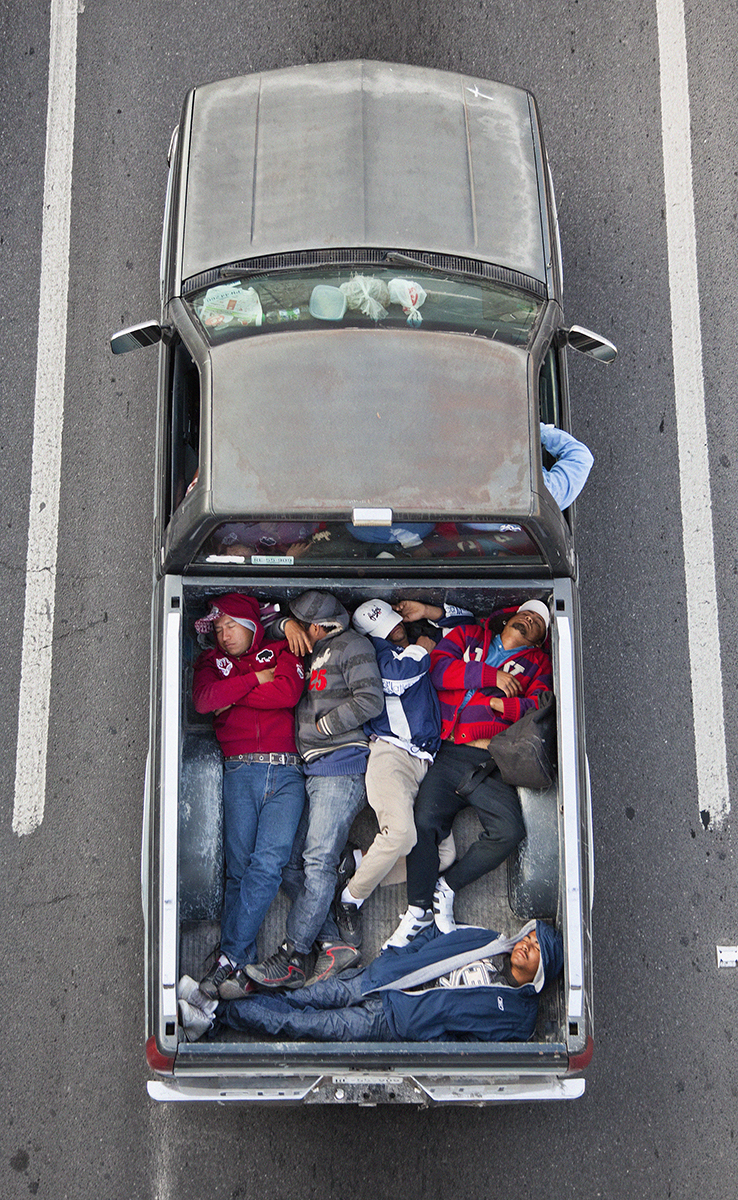
Mission Local’s Marina Newman went to Cartagena’s talk in November, to discover that the photographer has moved away from photography.
“KAWS: Family” is open until May 3, 2026. The exhibit features more than 100 artworks created over three decades. KAWS (Brian Donnelly) began painting graffiti in Jersey City and Manhattan, but in 1996 received his BFA in illustration from the School of Visual Arts.
We sent Charles Lewis III to take a look.
“In his younger days, Donnelly would snatch subway advertisements, integrate his own characters and then replace the advertisements, making it seem as if his designs were always a part of the image,” Lewis writes. In the new show, he writes “for KAWS, family is about the art of marketing.”
The New York Times has a 2021 profile of KAWS here. He’s controversial, to say the least.
The exhibit includes a 36-foot-tall inflatable sculpture on SFMOMA’s rooftop.

The photo exhibit, “(Re)Constructing History,” fills three rooms on the third floor. The title plays on Carrie Mae Weems’ featured series “Constructing History,” asking viewers to consider “the layers of history we encounter through a seemingly fixed image.”
A contemporary Black artist — including Nona Faustine, Carla Williams, and Dawoud Bey — anchors each room.
-
Carrie Mae Weems, The Tragedy of Hiroshima, from the series Constructing History, 2008; promised gift of Paul Sack to the Sack Photographic Trust; © Carrie Mae Weems. -
Nona Faustine, From Her Body Came Their Greatest Wealth, Wall St, NYC, 2013; San Francisco Museum of Modern Art, purchase through a gift of Ty Ahmad-Taylor and Accessions Committee purchase, by exchange, through a gift of Michael D. Abrams; © Nona Faustine. -
Rephotographic Survey Project, Rick Dingus for the Rephotographic Survey Project, 1978. Witches Rocks, Weber Valley, Utah., 1977–79; San Francisco Museum of Modern Art, Accessions Committee Fund purchase; © Rephotographic Survey Project. -
Dawoud Bey, Untitled #17 (Forest), from the series Night Coming Tenderly, Black, 2017; San Francisco Museum of Modern Art, Accessions Committee Fund purchase; © Dawoud Bey. -
Carla Williams, Side, from the series How to Read Character, 1990, printed 2024; San Francisco Museum of Modern Art, Accessions Committee purchase, by exchange, through a gift of Michael D. Abrams; © Carla Williams.


“People Make This Place: SFAI Stories” is open through July 5, 2026, at SFMOMA. The exhibit looks at the the San Francisco Art Institute’s importance to the local arts eco-system and includes work from 50 alumni and former faculty in the museum’s collection.
“New Work: Sheila Hicks” on the fourth floor illustrates how Hicks turns fiber into sculpture.
Asian Art Museum
“Two Home Countries” by Japanese contemporary artist, Chiharu Shiota, opens April 2 with lots of planned events on Free First Sunday. One will be a talk with the Hyde Street Mural Artist Kayan Cheung-Miaw.
And here is some of the work you will be seeing from Shiota.
-
Chiharu Shiota, Inner Home, 2024. Metal frame, wire, beads. Photograph by Sunhi Mang. © ARS, New York, 2025 and the artist -
Sketch for KINKAKUJI by Chiharu Shiota. © ARS, New York, 2025 and the artist -
Installation view of Chiharu Shiota_ Two Home Countries at Japan Society Gallery, New York, 2025. Photo by Waso Danilenko -
Chiharu Shiota, Out of my Body, 2022. Installation – leather, bronze. Aros Museum, Aarhus, Denmark. Photo Anders Sune Berg. © ARS, New York, 2025 and the artist


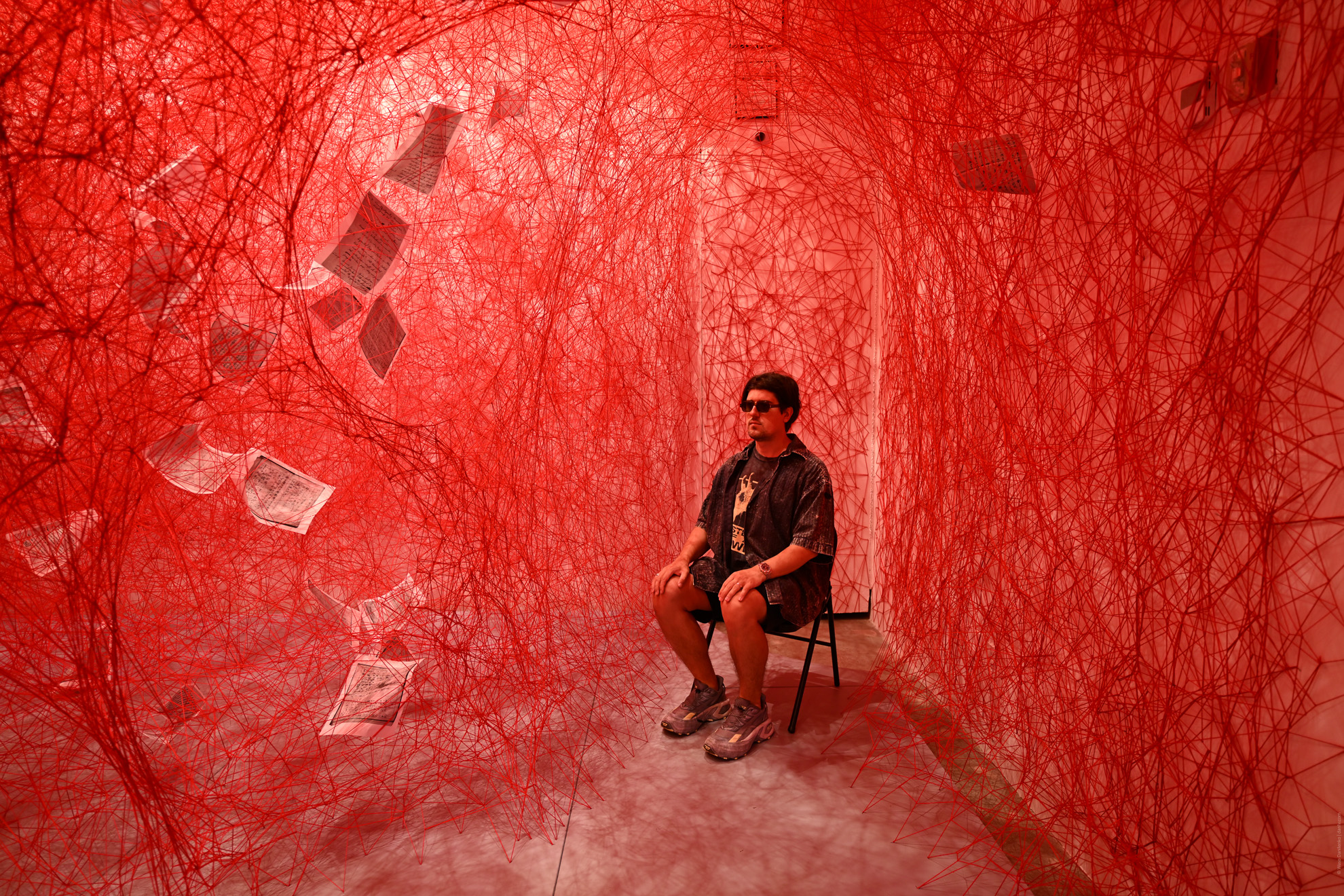

Here is a video of Shiota talking about her webs.
Here is the Hyde Street mural by artist and activist Kayan Cheung-Miaw who will be at the museum on Sunday. “This Asian American Life” shows scenes from Chinatown from the POV of a child. It is part of a public-art series on Chinatown’s mothers, workers and tenants.

“Echoes in the Small Mountain: Park Dae-sung and the West Coast” is open until July 26.
Dae-sung (b. 1945) is “credited with reinventing the techniques of traditional Korean ink painting,” according to the museum’s website. The paintings are based on California landscapes and are spectacular.
“Jitish Kallat: Covering Letter (Terranum Nuncius)” invites visitors to reflect on the things that unite humanity.

You will also see cutting-edge claywork from Japan in “New Japanese Clay.”
The museum has a series, “Takeout Tuesdays,” where you can meet online to talk about a piece of art with docents and others.
General admission is free on the first Sunday of every month and the special exhibitions are discounted. Here is more information for free and reduced-cost admission. The museum also hosts a robust list of events.
de Young Museum
Tuesday to Sunday, 9:30 a.m. to 5:15 p.m.
Saturdays are free for residents of the Bay Area’s nine counties.
“Monet and Venice” opens Saturday and to help you prepare we have a review by Julie Zigoris. She writes, that the French painter had all but decided to give up his water-lily project when his wife Alice, suggested a trip to Venice – thereby rescuing the water lily project and giving us some exquisite paintings from Venice.
It is meant to be in dialogue with “Venice Drawn” at the Legion of Honor and will be on view through July 26.
“Boom and Bust: Photographing Northern California,” featuring photographs of “San Francisco before and after the 1906 earthquake and fire, the construction of the Golden Gate Bridge and Bay Bridge, and the development of San Francisco’s South of Market neighborhood.” It is on through August 2.
-
Janet Delaney, “Mercantile Building, Mission and 3rd Street,” 1980.. Photograph by Jorge Bachmann, courtesy of the Fine Arts Museums of San Francisco -
Arnold Genthe, “The Street of Painted Balconies, from the Chinatown Series,” ca. 1896 -
Daniel Postaer, “San Francisco, Fillmore Street,” 2012 -
Willard E. Worden, “An Awe-Inspiring View of the Burning City from a Hastily Improvised Campsite West of Van Ness Avenue and Fort Mason, in the District Now Known as the Marina,” 1906 -
Willard E. Worden, “The Cliff House (Low Tide),” 1904 -
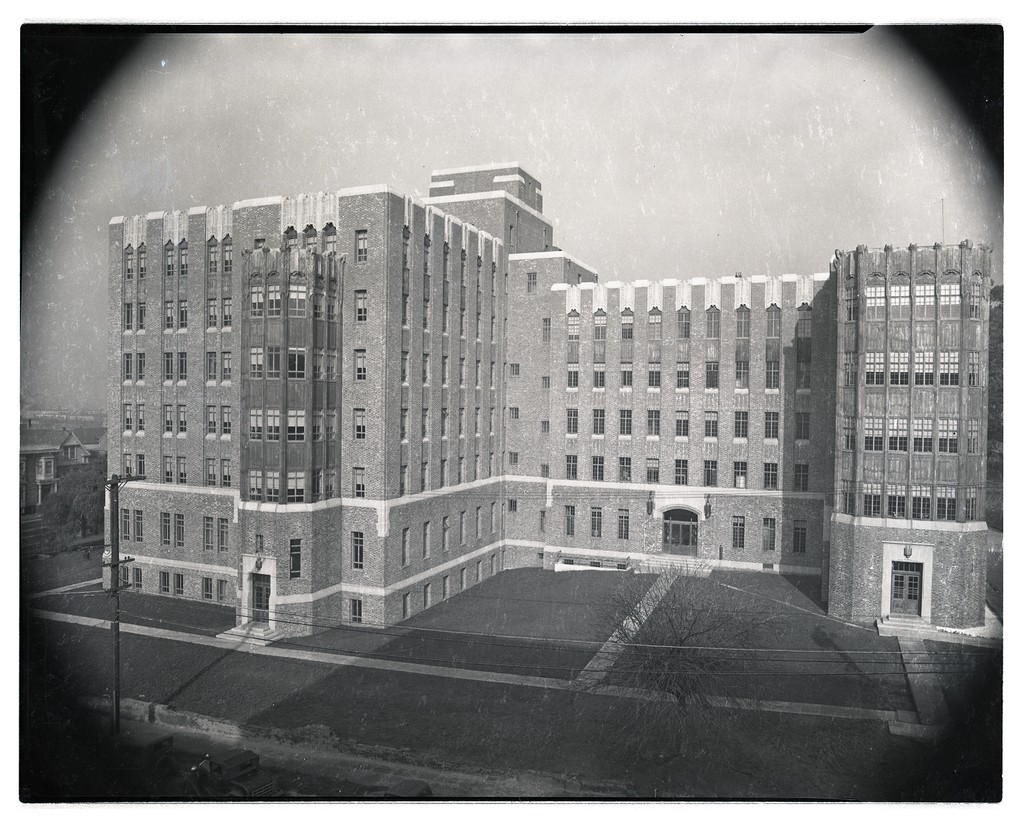
San Francisco General Hospital Buildings 80 and 90 circa 1937. Photo courtesy UCSF, San Francisco General Hospital archives. -
Carleton E. Watkins, “The Golden Gate from Telegraph Hill, San Francisco,” 1868



Artist Rose B. Simpson’s show “LEXICON” will be on until Feb 7, 2027.
Noma Faingold writes in her review, “Coming from a long line of Native American ceramic artists of the Santa Clara Pueblo (Kha’po’oe Ówîngeh), based just south of Española, New Mexico, pottery is in Simpson’s DNA. While she still lives at the pueblo and has her studio close by, she has forged a different creative path, while examining the past, present and future.”

Simpson’s exhibit is all part of the opening of four galleries dedicated to Arts of Indigenous America, which draws on the permanent collections, new acquisitions and artists like Simpson.
The New York Times has an excellent piece by Carolina A. Miranda on the development of the Arts of Indigenous America galleries.
“Leilah Babirye: We Have a History” is the Ugandan artist’s first solo show in the United States. It closes May 26, 2026, Babirye creates sculptures in ceramic, wood and discarded objects.
I don’t know her work, but am excited to get to know it. Here is an introductory video with Babirye and the curator of SFMOMA’s African collection, Natasha Becker. Contemporary artists like Babirye are being invited to have their work in conversation with the museum’s excellent permanent collection.
Museum of Craft and Design (MCD)
Thursday to Sunday, noon to 5 p.m.
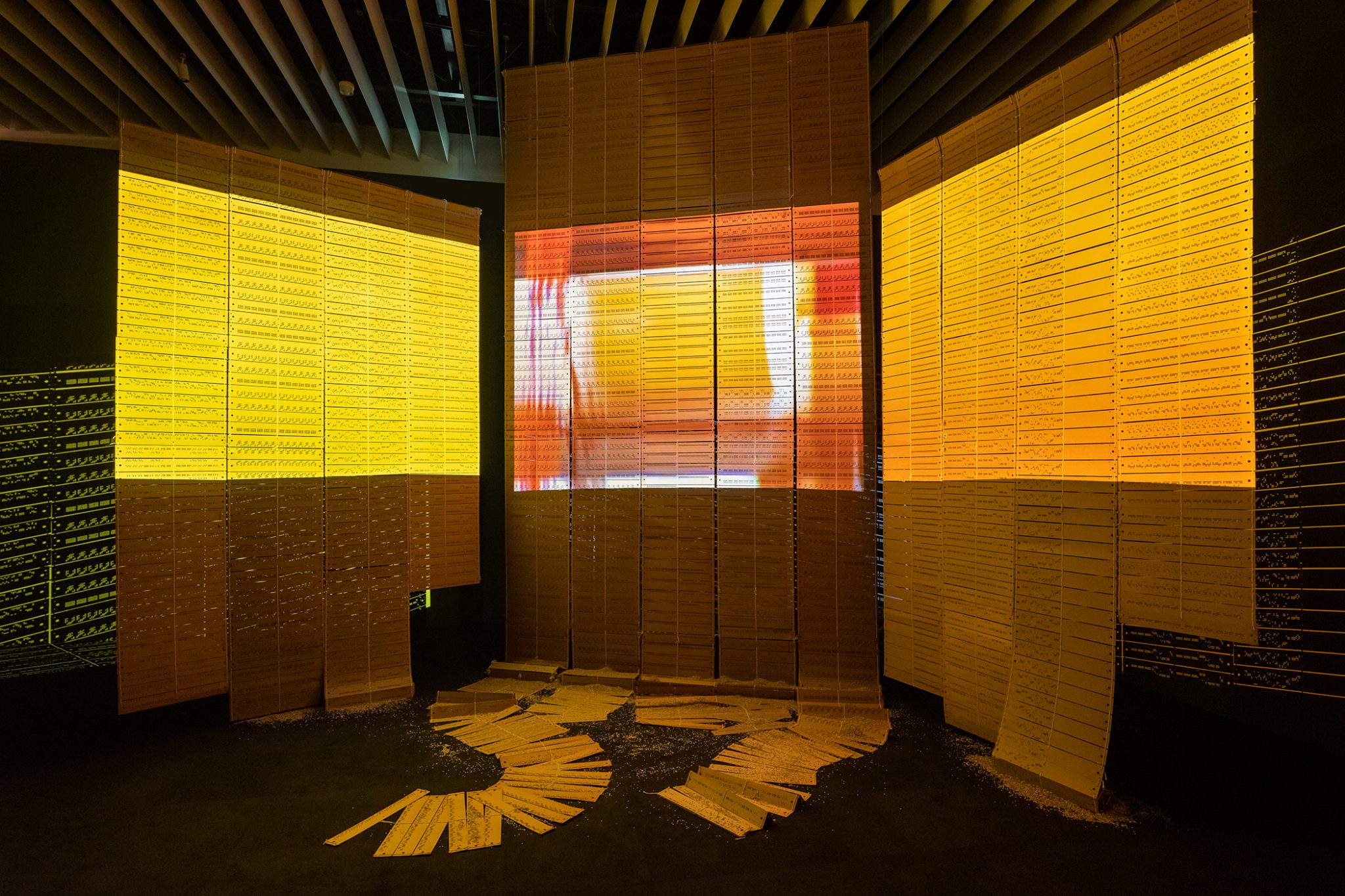
“Video Craft” is open until August 16. From the website: “‘Video Craft’ explores the formal and technical properties that video, film, and early moving image technologies share with more traditional craft media like ceramics, textiles, and glass.”
The images look stunning.
-
Greg Climer, The Animated Quilt of Nathan and Bryan,
2022. Courtesy of the artist. -
Senga Nengudi, Warp Trance, 2007. Installation view,
Another Energy: Power to Continue Challenging—16
Women Artists from around the World, Mori Art Museum,
Tokyo, 2021
Photo by Furukawa Yuya. Photo courtesy of Mori Art
Museum, Tokyo. -
Ahree Lee, Bojagi, 2015, Digital video with sound, 15m.
Courtesy of the artist. -
Richard Vijgen, Hyperthread, 2024, various yarns. Photo
courtesy of Studio Richard Vijgen.



Legion of Honor Museum
Tuesday to Sunday, 9:30 a.m. to 5:15 p.m.
“Drawn to Venice” will be on until Aug. 2, 2026. The exhibition is designed to be “in dialogue with ‘Monet and Venice,’ on view until July 26, 2026, at the de Young.” See our review of the latter here.
-
Bust of a Girl Holding an Apple. Drawing. Giovanni Battista Piazzetta (Italian, 1682-1754). Museum purchase, Bruno and Sadie Adriani, Ludwig A. Emge, Ruth Haas Lilienthal, Roscoe and Margaret Oakes Income Fund, and Lucie Stern Fund. -
Portrait of a Lady as Diana. Drawing. Rosalba Giovanna Carriera (Italian, 1671-1757). Gift of Mr. and Mrs. Prentis Cobb Hale Jr.


The exhibit includes 30 drawings and prints from 16th-century Venice, including landscapes and figure studies, from such artists as Giovanni Battista Tiepolo (1696–1770), Rosalba Carriera (1673–1757) and Canaletto (1697–1768).
“Ferlinghetti for San Francisco” draws from the museum’s collection of prints, etchings and lithographs. Here is a 2012 profile from SFGate of the poet, artist, activist and founder of City Lights Book Store. The show is open until July 19, 2026.
Ferlinghetti died in 2021, but what a life. Even before arriving in San Francisco, he had earned a master’s degree from Columbia University and a doctorate from the Sorbonne.
If you get into Ferlinghetti‘s history, visit the Counter Culture Museum, City Lights Book Store and the Beat Museum.
-
Lawrence Ferlinghetti -
Lawrence Ferlinghetti

You can view the Legion of Honor’s full list of exhibitions here.
The museum offers Free Saturdays to residents of the Bay Area’s nine counties.
The Tenderloin Museum
Open Tuesday to Saturday from 10 a.m. to 5 p.m.
On April 2, “Finding Our Way Home: Mary TallMountain in the Tenderloin’ opens.
A friend just saw “The Compton’s Cafeteria Riot” and loved it. It is at the museum’s venue at 835 Larkin St and runs every Friday and Saturday at 7 p.m. You can get tickets here. Chris Carlsson writes about the 1966 riots and resistance on FoundSF, a great resource for history.
The San Francisco Chronicle wrote about the Tenderloin Museum’s planned expansion to 10,000 square feet from 3,000, adding a room for San Francisco’s neon history, including a sign from Hunt’s Donuts, once based in the Mission District and known as the “epicenter of crime.”
There is a lot more going on at the Tenderloin Museum, including the permanent collection that explores the neighborhood’s history and upcoming events, such as a walking tour focused on the area’s LGBTQIA+ history. Other walking tours are listed here.
SOMArts
“Tabi Tabi Po: Come Out with the Spirits!” featuring the works of artist and muralist Cece Carpio is open and on view until March 29.
-
Cece Carpio
Anagolay
Acrylic on canvas
2019 -
Cece Carpio
Gumeng at Mula’s White Lies
Acrylic on wood
2025 -
Cece Carpio
Ylang at Ylang
Acrylic on Canvas
2025


Museum of the African Diaspora
Tuesday, Wednesday, Friday, Saturday, and Sunday, 11 a.m. to 5 p.m. Thursday, noon to 8 p.m.
“Beauty Plus” by photographer Jasmine Ross at MOAD opened March 18 and will run through May 31 as part of the museum’s Emerging Artists Program.
-
Jasmine Ross
Lady #5, 2025
4 x 5 color film printed as museum-grade archival pigment print on Hahnemühle Fine Art Paper -
Jasmine Ross
No Returns/Life’s Work, 2025
4 x 5 color film printed as museum-grade archival pigment print on Hahnemühle Fine Art Paper. -
Jasmine Ross
What’s Left #1, 2025
4 x 5 color film printed as museum-grade archival pigment print on Hahnemühle Fine Art Paper. -
Jasmine Ross
Ms. Purple, 2025
4 x 5 color film printed as museum-grade archival pigment print on Hahnemühle Fine Art Paper


MOAD also announced MoAD Announces its Spring Affair for Wednesday, April 8. The honorees include the Crankstart Foundation, Kaiser Permanente and the artist Mildred Howard. For more information, click here.
Also on at the Museum of the African Diaspora, “Unbound: Art, Blackness and the Universe,” which runs through Aug. 16, 2026.
Teresa Moore reviews “Unbound” this writing, “Over three floors, she (curatorial chief Key Jo Lee) presents an African diaspora that is “unbound” from earthly and chronological conceptions of diaspora.”
-
Didier William Dark Shores,2024. Courtesy of the artist and Altman Siegel -
Rodney Ewing. Light Years: A Cenotaph for a Better Place,2025. Courtesy of Rena Bransten Gallery, SF and the artist. -
Oasa DuVerney BLACK POWER WAVE as Bodhisattva Manjushri Sankofa, 2023, Courtesy of the artist and Welancora Gallery


The Letterform Archive
Thursday,1 to 8 p.m. and free to all; Friday to Sunday: 11 a.m. to 6 p.m.; closed Monday to Wednesday.
This place looks to have many interesting offerings, including a new portfolio of French sign painters‘ alphabets and a collection of Chinese lettering manuals.
“Good Luck 2026” opened recently and will be up until April 4. Here is an explainer from the website: “Building on our first show in 2025, the exhibition returns for the Year of the Fire Horse with an expanded focus on the cultural ties between San Francisco and New York City’s Chinatowns through a cross-country exchange with our partners on the East Coast, the W.O.W. Project, Midnight Project, and lucky risograph who organize the NYC-based Lunar New Year exhibition From Chinatown, With Love.”

“Piet Zwart: Brand Architect” opened Nov. 8.
From the website: “From the 1920s to the 1960s, Zwart profoundly influenced both the Netherlands and the international graphic design community, and many of his works are celebrated as milestones in design history.”
There are many great examples of his work in this piece by Steven Heller, a former senior art director at The New York Times.
And here is more from the Letterform Archive when it reprinted “Inside NKF: Piet Zwart’s Avant-Garde Catalog for Standard Cables, 1927–1928.” It also publishes his seminal essay, “from old to new typography.”
The new, he writes, “rejects a predetermined formal structure, but builds up forms according to the function … the new typography incorporates active red as a functional element: as a signal, an eye-catcher.” Sounds like an interesting fellow.
See all events and programming here.
“Localization: 15 Years of LetterSeed” opened in mid-August. It explores Korean typography.

The Letterform Archive is a nonprofit arts center focused on graphic design.
California Academy of Sciences
Monday to Saturday, 9:30 a.m to 5 p.m; Sunday, 11 a.m. to 5 p.m; Thursday, NightLife (21+ with ID): 6 to 10 p.m. (Last entry is always one hour before closing time.)
There’s a lot going on here.
The newly renovated Wilson Family Nature Lab is open with lots of hands-on learning.
-
WelcomeWinterNight 2024. Courtesy of the California Academy of Science -
Nature Lab Opening. Courtesy of the California Academy of Arts -
WelcomeWinterNight 2024. Courtesy of the California Academy of Science -
WelcomeWinterNight 2024. Courtesy of the California Academy of Science


“Big Picture” competition winners are on view.
Make sure to plan ahead and see the admission and ticketing page for more information. Also, see how you can get a free or reduced rate for your next visit.
Counterculture Museum
Wednesday to Sunday, 11 a.m. to 6 p.m.
We have more museums in town. This one is at the corner of Haight and Ashbury streets with a whole lot of San Francisco history.
I could see a whole weekend, or a couple of weekdays, spent between the Counterculture Museum, the Beat Museum and the “Ferlingetti for San Francisco” show at the Legion of Honor. It would be like a graduate seminar on the late ’50s, ’60s and ’70s.
Beat Museum
Thursday to Sunday, 11 a.m. to 7 p.m.
The Beat Museum is at 540 Broadway, across the street from City Lights, the bookstore founded by Lawrence Ferlinghetti.
“We are dedicated to carrying on the Beats’ legacy by exposing their work to new audiences, encouraging journeys — both interior and exterior — and being a resource on how one person’s perspective can have meaning to many,” according to a statement from the museum.
This sounds like a great place to visit.
500 Capp St.
Friday and Saturday, noon to 5 p.m.: Free self-guided tours. Saturday at 4 p.m.: A guided tour for $20.
500 Capp Street and Root Division are collaborating on “Open Your Eyes to Water,” a solo exhibition of the work of San Francisco-based visual artist Trina Michelle Robinson that spans both venues.
-
2. A still from Transposing Landscapes- A Requiem for Charles Young, 2025 -
Memory Index_ Imagined Family Heirlooms -
Trina Michelle Robinson Studio Portrait


Yerba Buena Center for the Arts
Wednesday to Sunday, 11 a.m. to 5 p.m.; free on Wednesdays and second Sundays.
“The Prince of Homburg: A Solo Exhibition by P. Staff” runs until June 24. From the website: “Loosely inspired by Heinrich von Kleist’s 1810 play of the same name, the work explores exhaustion as a response to structural oppression. The centerpiece of the installation is a 23-minute video…”
San Francisco State University’s Fine Arts Gallery
The gallery is open Tuesday to Friday, noon to 4 p.m.
“Slow Burn” is on. “Guest curated by Lorena Molina, ‘Slow Burn’ centers how BIPOC artists use slowness as a form of refusal and a way to highlight the systems of oppression that structure their lives,” according to the press release.
-
Ana Mendieta- Title Untitled (Blood Sign #2/Body Tracks) Video, 1974 (Courtesy of Walker Art Center) -
Elaine Nguyen Title: Ngoại ăn, Ngoại có sức khỏe, -
Maria Gaspar Title: Disappearance Jail (excerpt series)
Hundreds of perforated Archival Inkjet prints on rice paper, 5 x 7, 2021-Ongoing (Courtesy of the Artist)
Photo documentation credit: Clare Britt -
Tesora Garcia. Tesora’s Third Eye


San Francisco State University’s Global Museum
It’s a teaching lab and open to the public during the school year – Oct. through May. 11 a.m. to. 4 p.m., Tuesday through Thursday, and by appointment. Location: Fine Arts Building, Room 203
Now on: “Craft or Commodity?” And “Please Touch!” “Both exhibits focus on themes of responsible stewardship of cultural heritage, decolonizing museum work, and expanding accessible museum experiences,” writes Marley Townsend, a graduate student in Museum Studies.
The Walt Disney Family Museum
Thursday through Sunday, 10 a.m. to 5:30 p.m.
“Happiest Place on Earth: The Disneyland Story” is open. The museum described it as a “treasure trove of Disney history” taking “will take “guests behind the scenes of one of the most groundbreaking endeavors of the 20th century — the creation and opening of Disneyland in Anaheim, California.”
The museum is showing rare objects featured in the book “Walt Disney Treasures: Personal Art and Artifacts from The Walt Disney Family Museum.” The objects will change every two months.
Visit the museum’s website for more information on admission costs and reduced ticketing options. The special exhibits are free with a suggested $5 admission fee.
Exploratorium
Closed Mondays. Sunday, 10 a.m. to noon (members/donors only); noon to 5 p.m. for everyone. Tuesday to Saturday, 10 a.m. to 5 p.m. Thursday, 6 to 10 p.m. for 18+.
Experience After Dark at Pier 15. Every Thursday evening, immerse yourself in more than 700 interactive exhibits. For people 18 and older. The museum advertises a carefree environment with new themes each night. Here is information for reduced admission.
The Chinese Historical Society of America
The museum is closed for renovations, according to its website.
The Mission Cultural Center for Latino Arts
Closed until further notice.
See the center’s website for offerings.
Institute for Contemporary Art
The Institute is now nomadic and leaving its permanent home. You can read more about the decision here.
Jewish Contemporary Museum
The museum closed in December for at least a year as it works out its financial situation. You can learn more here. Laura Waxmann wrote a good piece for the San Francisco Chronicle about the difficulties museums are facing.
Its closure is a reminder to visit our museums.



San Francisco, CA
San Francisco fishermen recount harrowing rescue after boat capsizes near Alcatraz

SAN FRANCISCO – While one person died after a cabin cruiser sank in the San Francisco Bay on Tuesday afternoon, a harrowing rescue near Alcatraz Island saved 16 lives.
The U.S. Coast Guard and the San Francisco Fire Department continue to search for three missing people who went overboard after the vessel went down around 3:30 p.m.
Clifford Joseph Boisa, 79, of Sutter County, was pronounced dead following the incident. However, 16 others were brought to safety, many of them rescued by civilian boaters who rushed to help. Among the Good Samaritans were fishermen Mike Montoya and Justin Marceline, who were aboard the Khea, a 22-foot Boston Whaler.
At a Wednesday afternoon press conference, Coast Guard Incident Commander Jarod Toczko praised the fishermen and a nearby kiteboarder for their heroic actions.
A rush to help
Dig deeper:
Montoya and Marceline were on the water when they noticed signs of trouble nearby.
“I turned around and I saw a plume of either smoke or steam,” Montoya said. “I just knew that somebody was in distress.”
Montoya told his partner they needed to move their boat closer to investigate. When they arrived, they found people struggling to stay afloat in the Bay’s frigid waters.
The rescuers began throwing life jackets and flotation devices to those in the water, pulling victims aboard as quickly as possible. Many of the victims were exhausted and unable to pull themselves out of the water.
Witnesses recount people ‘trapped’ inside
What they’re saying:
As they pulled survivors aboard, Montoya said he saw people trapped inside the cabin of the sinking vessel, banging on the windows.
“We were throwing fishing weights at the window, trying to get it to break, and we handed a guy a fishing weight that was in the water, and he didn’t have a life jacket on,” Montoya said.
In total, Montoya and Marceline pulled nine people onto their boat and brought them to safety.
Marceline was prepared to jump into the Bay to help more victims, but Montoya stopped him, warning of debris and other dangers beneath the surface.
“My first thought was to kick my shoes off and get down to my underwear and jump in and start to get the elderly people off the boat, because it was elderly people helping elderly people and it wasn’t going fast enough,” Marceline said.
Memorial service turns tragically fatal
Survivors told the fishermen they had gathered on the water for a memorial service. Authorities later confirmed that the victims and survivors were relatives and close friends holding a memorial when the boat went down.
Toczko said the 50-foot cabin cruiser was capable of carrying the number of people on board, but noted that investigators must consider several factors regarding the boat’s stability.
The investigation into what caused the vessel to sink is ongoing.

San Francisco supervisors authorized a resolution Tuesday urging California lawmakers to expand the city’s automated speed camera program, which currently has 33 cameras operating in the city under a state pilot.
The board’s 10-to-1 vote on Tuesday, with District 10 Supervisor Shamann Walton voting against it, will not add cameras immediately, but formally asks the state to explore changes to the program. The San Francisco Municipal Transportation Agency has identified at least 80 additional high-need locations that could benefit from automated enforcement, according to a report filed with the Public Safety and Neighborhood Services Committee.
Richard Zieman, whose son Andrew, a paraeducator, was killed in November 2021 by a speeding driver outside Sherman Elementary School on Franklin Street, told Mission Local that city officials should do more. “They waited for a tragedy,” Zieman said. Parents and school leaders had repeatedly asked the city to slow traffic on Franklin Street, where drivers barreled downhill toward the Marina, said Zieman.
Supervisor Matt Dorsey, who introduced the resolution, has said the city’s first year of automated speed enforcement shows that the technology works. The SFMTA reported nearly an 80 percent reduction in drivers traveling at least 10 miles per hour over the speed limit at camera locations after the program launched in March 2025. San Francisco was the first city to implement the pilot authorized under Assembly Bill 645.
The pilot, however, is capped by state law at 33 camera locations. Tuesday’s resolution asks California lawmakers to consider allowing more, prioritizing corridors on San Francisco’s High Injury Network, including Franklin Street.
Walk San Francisco, a pedestrian advocacy group which spent roughly eight years advocating for the state legislation that created the pilot, called the resolution an important first step toward broader expansion.
“Thirty-three cameras is nowhere near the number of cameras we need for people to realize that San Francisco is a safe-speed city,” said executive director Jodie Medeiros. “This tool is working. People are lowering their speeds.”
District 6, represented by Dorsey, currently has seven of the city’s 33 cameras, most of them in SoMa. The district also records the highest number of crashes involving injuries or fatalities in San Francisco, making it a focal point in the debate over expanding automated enforcement.
The resolution advanced unanimously from the Board of Supervisors’ Public Safety and Neighborhood Services Committee last week, where Dorsey said the cameras have made streets “feel safer” and argued the early results show “why we should have even more of this life-saving technology.”
Zieman, whose son’s death prompted traffic-calming improvements and eventually a speed camera near Sherman Elementary, said the issue is urgent.
“There are probably other Franklin streets out there,” he said. “I just hope they don’t wait for someone else before they expand the program. It’s too late for Andrew.”

One person is dead and two others are missing near Alcatraz Island in San Francisco Bay after a boat with 19 people aboard capsized Tuesday afternoon, officials said.
A vessel was reported to be on fire around 600 yards off Alcatraz around 3:35 p.m., and police found a capsized three-deck pontoon boat, San Francisco Fire Chief Dean Crispen said.
The incident was initially reported as a fire, but no first responders reported witnessing a blaze, Crispen said.
Everyone on the boat is believed to have been adults, Crispen said. A dog was also on board and is dead, he said.
Thirteen people were safely rescued, and another three were transported to hospitals, Crispen said.
Firefighters are “in full rescue mode,” with 11 boats and divers as part of the response, Crispen said.
“We are going to continue for hours to make sure that we find these two missing people, if possible,” Crispen said.
“It seemed like a recreational-type vessel, but that’s all we know at this point,” Crispen told reporters.
The vessel reportedly launched from a yacht club, and investigators were still gathering information, he said.
Helicopter footage from NBC Bay Area showed responding rescue boats and debris floating in the water. Video from the station appeared to show some of the rescued with blankets on shore.
Local police departments and private vessels also responded to the incident, Crispen said.
“This is an all-hands-on-deck search and hopefully rescue,” San Francisco Mayor Daniel Lurie said.
When first responders arrived, some people were in the water, others were on the sinking boat, and others were falling into the water, Crispen said.
Alcatraz Island is the site of the famous prison located in San Francisco Bay, around 1 mile offshore. It was closed as a federal prison in 1963 and is now a National Park.
Crispen said the search would be extensive.
“Our standard operating procedure is to continue to search, as long as it’s safe enough for us to search,” he said.
He said divers were in the water, helicopters were above, and officials were searching areas where survivors in the water would tend to move to.
“This search will go on for some time,” Crispen said.
-

 North Carolina3 minutes ago
North Carolina’s Charming Raleigh Suburb Is A Fast-Growing Town With River Views And A Historic Downtown – Islands
-

 North Dakota9 minutes ago
‘I think I was cheated’: Men speak out after birth switch discovery
-
Ohio15 minutes ago
Ohio Lottery Powerball, Pick 3 Midday winning numbers for July 15, 2026
-

 Oklahoma21 minutes ago
Failed report, recorded calls offer look inside Oklahoma County Jail
-
Oregon27 minutes ago
Oregon Lottery Powerball, Pick 4 results for July 15
-

 Pennsylvania33 minutes ago
Fifth Time’s The Harm: Pennsylvania Gov. Shapiro Again Signed A Budget With No Money For Transit — Streetsblog USA
-

 Rhode Island39 minutes ago
Jamestown Swarm Chaser has unique talent for catching, moving bees
-

 South-Carolina45 minutes ago
South Carolina Lottery Powerball, Pick 3 results for July 15, 2026

